Latest Posts

Rate the dress: tan and red in 1875

Last week I showed you a flower-strewn frock by Jean-Phillipe Worth, one that might have been a little too frilly and feminine, but which most of you found fabulous.

While I don’t think Worth, original or JP, quite as infallible as some of you did, I wasn’t surprised that this frock received high accolades.  One of two of you flat-out hated the dress, and there were a few complaints about the symmetrical placement of motifs over the bust, the overall fussiness of the bust, and the colour of the creamy silk and blonde lace (I definitely don’t agree that the dress has faded over time – all the different layers of dark ivory matched too well, and were too true, for age to have changed them substantially), but the frock still managed an 8.7 out of 10.

Can this week match that?

This fortnight’s theme on the HSF is Literature, and I was rather at a loss as to how that could fit in with Rate the Dress.  In looking for inspiration, I found this afternoon dress  from the Museum of Fine Arts Boston.  The tan  silk is the colour of aged paper, and the red trim reminds me of the covers of so many books.  Just looking at it makes me want to curl up with a fine bit of literature.
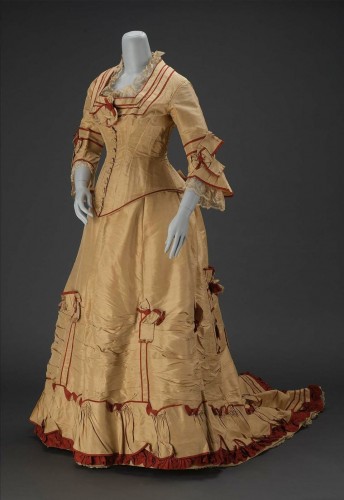
Afternoon dress, about 1875, American (Boston, Massachusetts), Made by Miss M. T. Splain, MFA Boston

Afternoon dress, about 1875, American (Boston, Massachusetts), Made by Miss M. T. Splain, MFA Boston

The years have rather sadly crushed the dress, but hopefully you can imagine it in its original pristine condition, and judge it on that.

What do you think of that tan silk paired  dark red piping which highlights the square neck, the 18th century inspired sleeves, the pointed basque bodice, the ruffled hem, some rather random ruched areas, and the liberal scattering of bows?  Does it remind you of your favourite old book, or just look old and faded?

Rate the Dress on a Scale of 1 to 10
Things that you can make with squares and rectangles and triangles

People often say to me “Oh, I can’t believe you do historic sewing.  That must be so complicated!”.  It really isn’t!  Partly this is because it’s just a different skill set, but not a harder one, but partly because the shapes used for a lot of historic garments are actually pretty basic.

So what can you make with squares and rectangles and triangles?

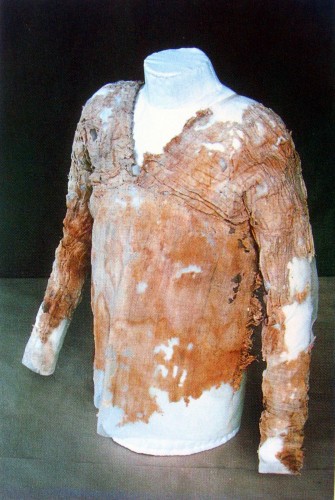
The oldest extent garment is all squares and rectangles:

Pleated tunic, Ancient Egyptian. 1st dynasty, c. 3100-2890 BC.  Werner Forman Archive/ University College London, Petrie Museum

Pleated tunic, Ancient Egyptian. 1st dynasty, c. 3100-2890 BC. Werner Forman Archive/ University College London, Petrie Museum

As is pretty much every tunic and chemise since then, from the middle ages to the early 19th century:

Chemise presumed to have been worn by Marie Antoinette during her imprisonment, 101 x 83 x 67 Musee Carnavalet, Paris, France

Chemise presumed to have been worn by Marie Antoinette during her imprisonment, 101 x 83 x 67 Musee Carnavalet, Paris, France

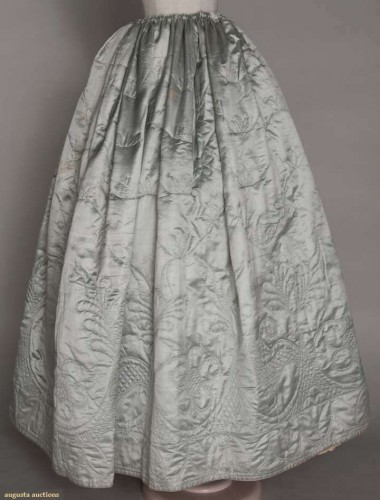
Most petticoats are just rectangles of fabric pleated into waistbands:

Quilted petticoat, 1770-1780s,  silk satin with cream calamanco lining, Augusta Auctions

Quilted petticoat, 1770-1780s, silk satin with cream calamanco lining, Augusta Auctions

As are mid-19th century skirts, for all their tiers of rectangular ruffles:

Day dress, 1855, Centraal Museum

Day dress, 1855, Centraal Museum

Fichus and handkerchiefs and buffons and neckerchiefs and pocket handkerchiefs (what’s the difference?  I’ll be discussing them in an upcoming terminology post.) are all made of squares or rectangles or triangles:

Marquise de Grecourt, nee de la Fresnaye by Jean-Laurent Mosnier, ca. 1790

Marquise de Grecourt, nee de la Fresnaye by Jean-Laurent Mosnier, ca. 1790

Muffs are essentially just layers of rectangles:


Evening muff, fourth quarter 19th century, American, fur, silk, Metropolitan Museum of Art

Evening muff, fourth quarter 19th century, American, fur, silk, Metropolitan Museum of Art

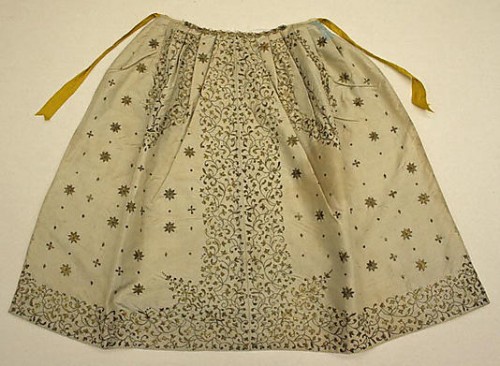
Many aprons are rectangles:

Apron, 18th century, British, silk, metallic, Met

Apron, 18th century, British, silk, metallic, Metropolitan Museum of Art

As are many reticules, purses and variants thereof:

Bag, Great Britain, UK, Linen, silk, silver and silver-gilt threads; hand sewn, hand embroidered, hand plaited, V&A

Bag, Great Britain, UK, Linen, silk, silver and silver-gilt threads; hand sewn, hand embroidered, hand plaited, V&A

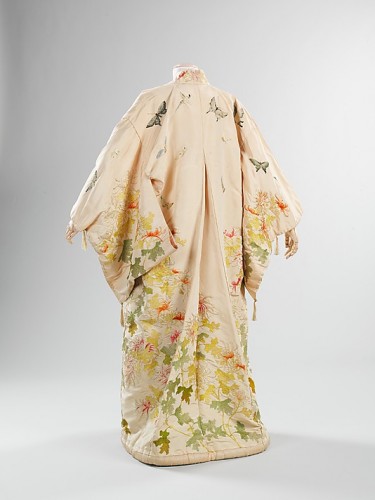
Plus, there are all the ethnic costumes based on basic shapes (just remember if you make one of these is should still be pre-1938):

Kimono with Western influence, probably by Iida & Co.:Takashimaya  (Japanese, founded 1831), ca. 1910, Japanese, silk, Metropolitan Museum of Art

Kimono with Western influence, probably by Iida & Co.:Takashimaya (Japanese, founded 1831), ca. 1910, Japanese, silk, Metropolitan Museum of Art

And all the Western clothes inspired by these costumes:

Paul Poiret, ca 1920 Coat, sold by Beaussant Lefèvre

Paul Poiret, ca 1920 Coat, sold by Beaussant Lefèvre

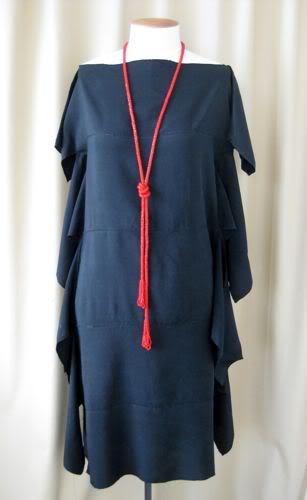
Vionnet loved to play with squares and rectangles, as in the ‘Chiton’ dress that I’ve replicated.

My version of Vionnet's 'Chiton' dress

My version of Vionnet’s ‘Chiton’ dress

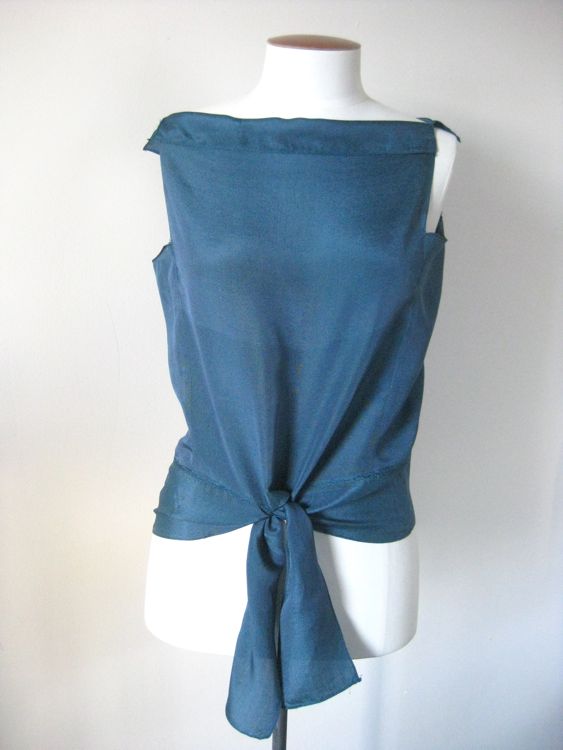
My Deco Echo blouse, while more historically plausible than strictly historical, is also made of squares and rectangles.  And there is a full tutorial on how to make it if you want to make your own!

The Deco Echo blouse

The Deco Echo blouse

So there are lots, and lots of options to make something that is based on squares and rectangles and triangles.  What are you making?

Tutorial: how to clean fabric shoes with leather linings

My tutorial on how to dye fabric shoes has been one of the most popular posts on this blog, and I thought another post on shoe care might be of use.

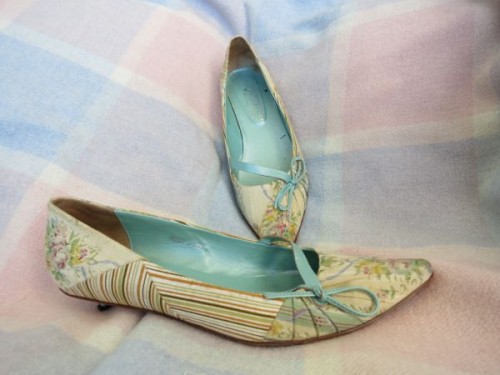
I recently acquired a pair of darling fabric shoes with fabric linings, but they were a bit grubby and needed cleaning.

How to clean fabric shoes thedreamstress.com

They came with a little strap and bow detail, but I didn’t like it and took it off.

How to clean fabric shoes thedreamstress.com

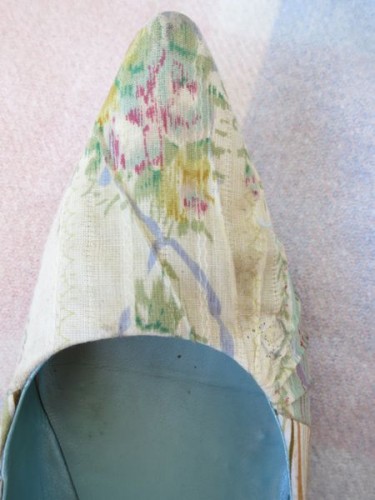
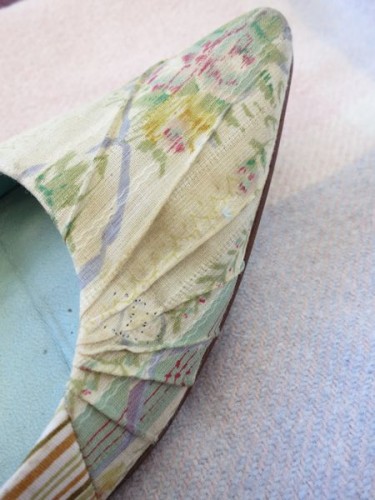
Once I took it off you could really see how grubby the shoes were, and how desperately they needed a clean:

How to clean fabric shoes thedreamstress.com

Clearly you can’t put leather-lined shoes through the wash, as most tutorials say to do for fabric shoes (they shouldn’t by the way, you should never wash any type of shoes in the washing machine as it will destroy the glue that attaches the sole to the fabric).

Here is how to clean fabric shoes properly and safely, whether they are leather lined, or just full fabric.

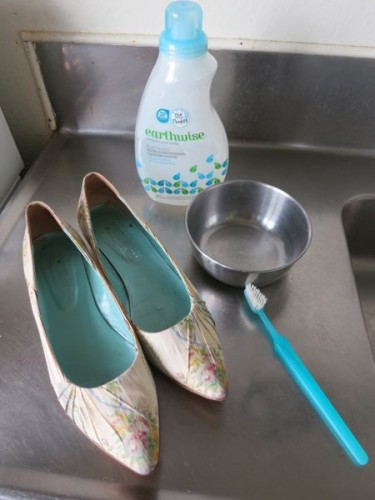
You will need:

  • Your fabric shoes – this method works best for flat fabric shoes, it is not recommended for velvet or brocade shoes.
  • Lukewarm water
  • A soft toothbrush
  • Delicate liquid laundry detergent (I’m using Earthwise fragrance-free delicate laundry detergent)
  • Paper towels
  • A bowl

How to clean fabric shoes thedreamstress.com

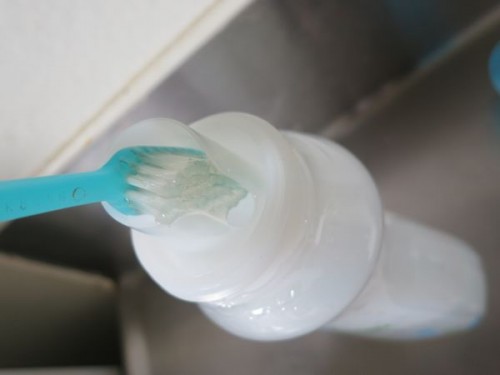
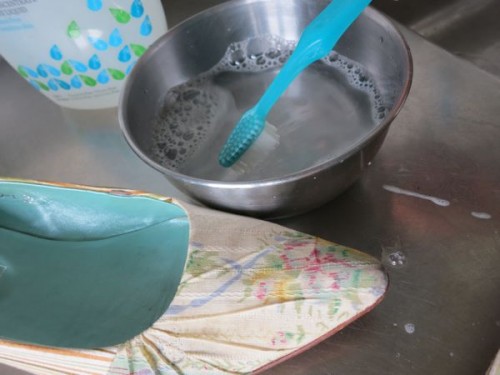
Fill your bowl with lukewarm water, and put a bit of laundry detergent straight on your toothbrush:

How to clean fabric shoes thedreamstress.com

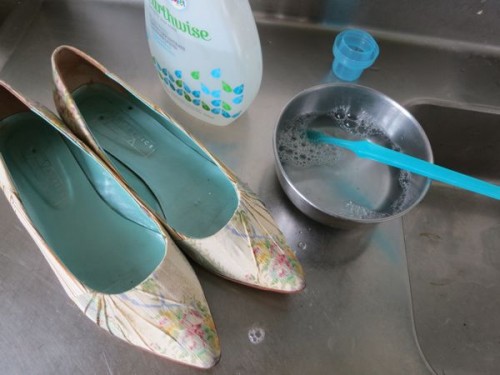
Swish your toothbrush around in your bowl of lukewarm water, until the laundry detergent is well dissolved in the water:

How to clean fabric shoes thedreamstress.com

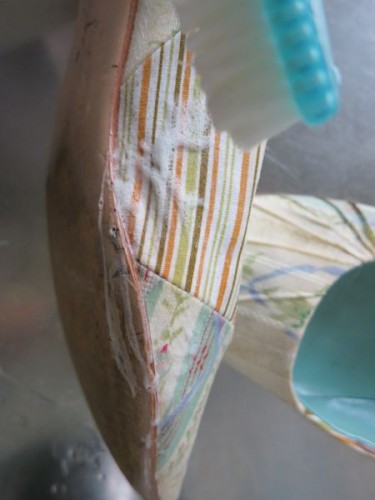
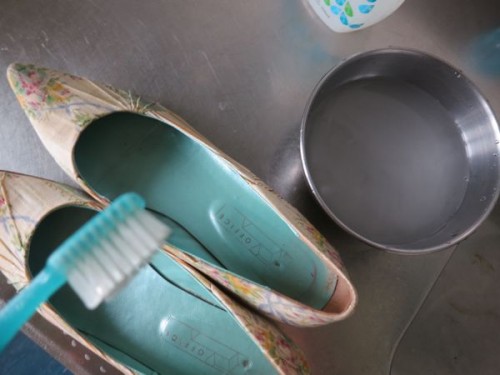
Shake most of the water off of your toothbrush.  You want to clean the shoes while keeping them as dry as possible, so it’s important to get most of the water off of your toothbrush, so the shoe gets barely damp. With your damp toothbrush, scrub the soiled areas of your shoes, using back-and-forth strokes that follow the grainline of the fabric.  This will create a bit of sudsing on the surface of your shoe.

How to clean fabric shoes thedreamstress.com

Brush and scrub the entire surface of your shoe, scrubbing most on any areas that are heavily soiled, and dipping your toothbrush back in the bowl to dampen it as needed.  Your shoes will get damp – you just want to use as little water as possible.

You can see that my shoes are looking cleaner already:

You want to clean the shoes while keeping them as dry as possible, so it's important to get most of the water off of your toothbrush, so the shoe gets barely damp.

Once your shoes are thoroughly scrubbed and looking much cleaner, rinse your bowl and toothbrush, and re-fill the bowl with clean, non-soapy water.

You want to clean the shoes while keeping them as dry as possible, so it's important to get most of the water off of your toothbrush, so the shoe gets barely damp.

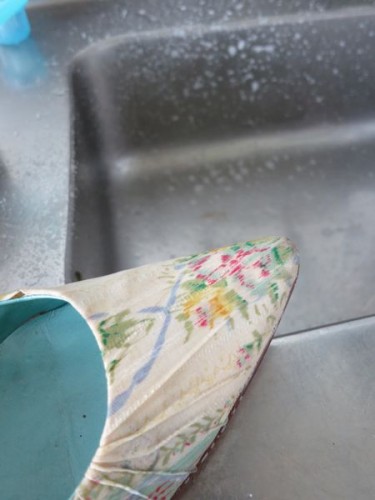
Brush the toothbrush until it is barely, barely damp, and then, still brushing vertically, use it to brush from the back of the shoe toward the front with short, brisk strokes which brush any excess detergent off the shoe.  You can see all the spray that has flicked off of mine on to the sink:

You want to clean the shoes while keeping them as dry as possible, so it's important to get most of the water off of your toothbrush, so the shoe gets barely damp.

Keep rinsing your toothbrush to get rid of excess detergent as you brush off the detergent, and then tapping it as dry as possible.

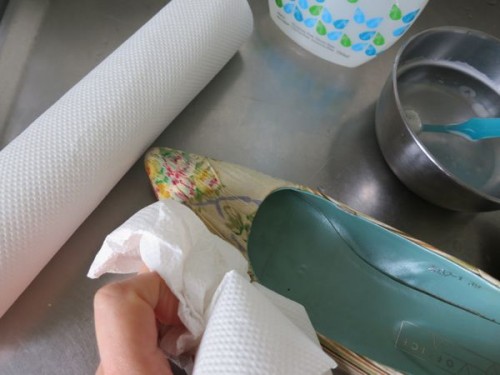
Once your shoes are fully brushed, pat and wipe them down inside and out with a paper towel to get rid of any extra dampness:

You want to clean the shoes while keeping them as dry as possible, so it's important to get most of the water off of your toothbrush, so the shoe gets barely damp.

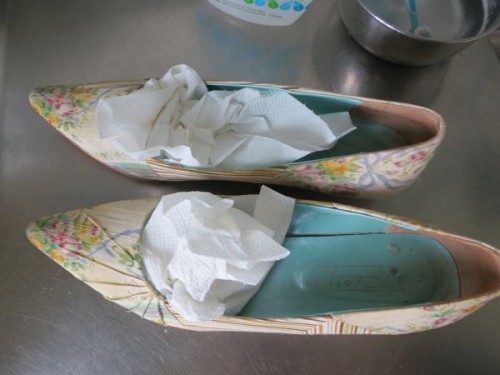
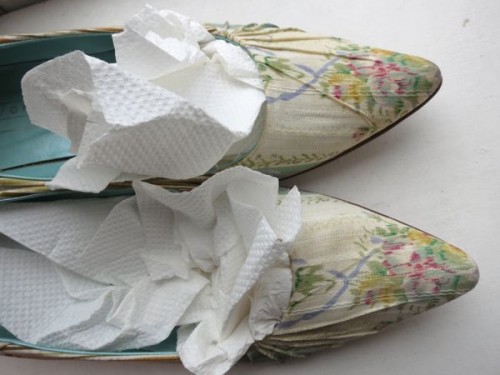
Then wad up a few pieces of paper towel, and use them to stuff the shoe to help it hold its shape, and to collect any extra moisture:

How to clean fabric shoes thedreamstress.com

Then put your shoes to dry in a well ventilated area, away from direct heat and sun.

How to clean fabric shoes thedreamstress.com

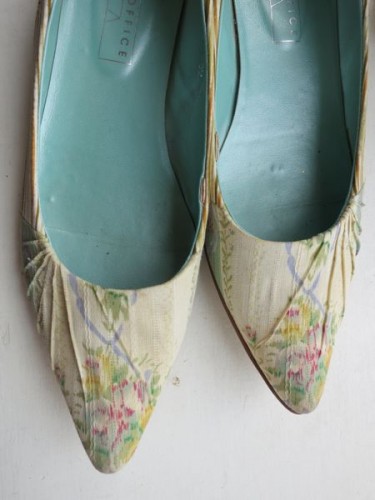
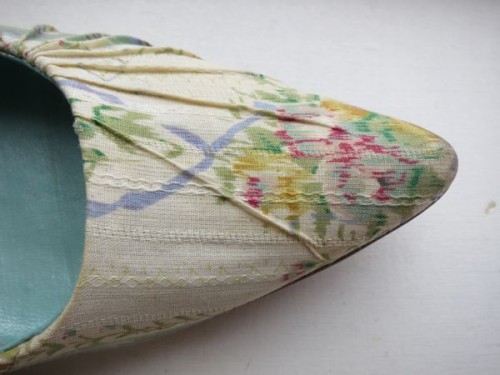
Once they are fully dry, you can appreciate how much cleaner and prettier they look!

How to clean fabric shoes thedreamstress.com

I am  so  pleased with how much better my shoes look.  It’s pretty subtle in photographs, but so obvious in person!

How to clean fabric shoes thedreamstress.com

I hope this was helpful!  It certainly made a difference with mine.

Do come back tomorrow and see what else I am going to do to them to make them even more fabulous