Latest Posts

Why reproducing a garment is pretty much the most awesome thing ever

One of the first things I learned when I learned to sew was how to make a pattern from a garment I already owned and reproduce that garment.

It’s still one of my very favourite skills, and something I use all the time.

There are so many reasons why being able to pattern-up and reproduce a garment you already own is awesome.

First, you know it will fit perfectly.  You may spend a little extra time making a pattern rather than using a commercial pattern, but you’ll gain that time back in not having to worry about fit.

Next, you know the item will suit you.  For all that I know my body, what I wear, and what looks good on me, I’m still occasionally seduced by a pretty pattern cover, and invest time and money in making something that isn’t going to get a lot of wear.  When I reproduce a garment, that never happens.

Not only will a reproduced item suit you, but you know it’s going to work in your wardrobe.  I sometimes make items that I love, and which fit beautifully, but which I just don’t find myself wearing a lot.  That has never happened with an item I’ve reproduced, because I already know I wear the original all.the.time!

Finally I love reproducing garments because I am a romantic and a conservator.  I adore my grandma’s blue dress, and wish I could wear it every day, but I know that every time I wear it I am damaging it.  I turned the dress into a pattern, made it up in black wool crepe, and can wear the new version every day with the same warm, happy connection to my grandmother, and with the knowledge that it looks great and the original is being preserved for another generation to study and enjoy.

Even if you aren’t quite so romantic, everyone has a favourite dress or pair of jeans that they wear until they fall almost to shreds, and when you learn to take a pattern from them you can keep wearing that garment forever (maybe even in a better fabric!).

Here are a few of my favourite reproductions:

The white cape stole from Elise:
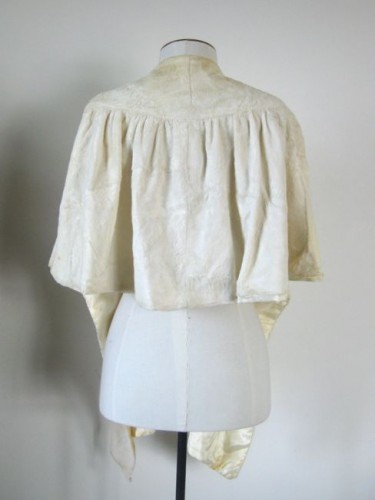
The gathered back of the cape-stole

Re-made in golden yellow silk velvet as the ‘Capelet of Yay’:
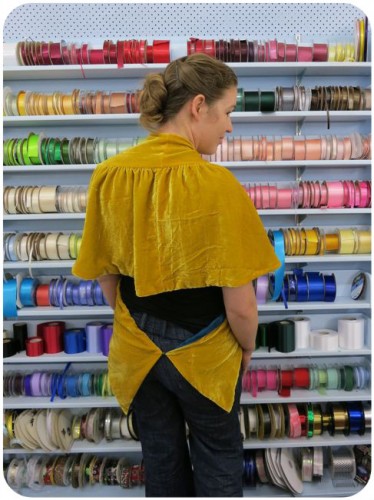
With additional back-fastening options

Grandma’s very fragile blue dress:
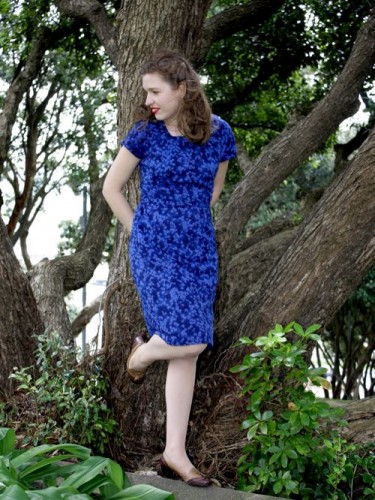
This is not a tree climbing appropriate outfit!

And re-created in black wool crepe:
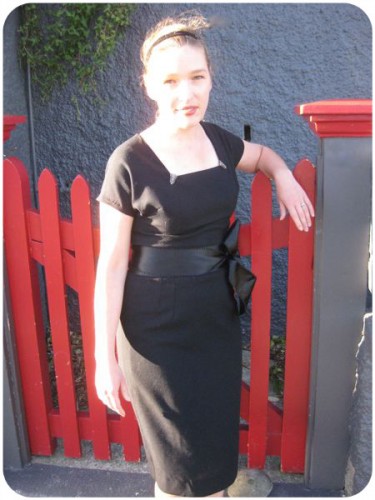
The blue dress in black

And finally, and most recently, I turned re-created this purple jacket in white:
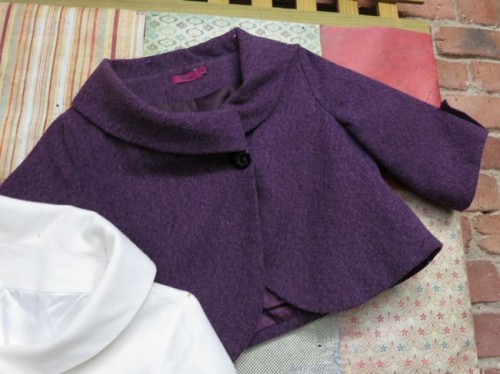
Little purple jacket
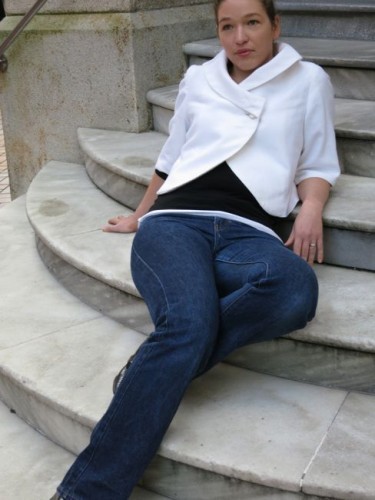
With slightly less contrast-y buttons

So, do you know how to take a pattern from a garment you already own and re-create it?  What’s your favourite thing you’ve made with this technique?

If you don’t know how to take a pattern from a garment you own and recreate it, and you are in Wellington, my ‘Replicate a Garment’ class is on at Made on Marion Fridays 20 & 27th July.  See you there I hope!
 

The 1900s tea gown: beginnings

I’m doing this a bit backwards as clearly you know that the tea gown is done (albeit done in a sort of “sew in haste, unpick at leisure”).  However I did take photos and notes as I sewed, and as I haven’t found many other tea-gown recreations done by other historical costumers, and as I did quite a bit of research, I thought it might be helpful if I posted about my process.

So, a tea gown!

We already know exactly what a tea gown is.  That was the starting point for my research.  In order to make one, I needed to know exactly what I was making.  That out of the way, I needed to design my own tea gown.

I knew what I wanted in a tea gown:

  • ca. 1900, really the height of the tea gown fashion
  • over-robe, open front effect
  • Watteau pleats & 18th century inspiration
  • A mix of fabrics and textures

After assembling a pinterest board of research and inspiration, I went with three main pieces of inspiration:

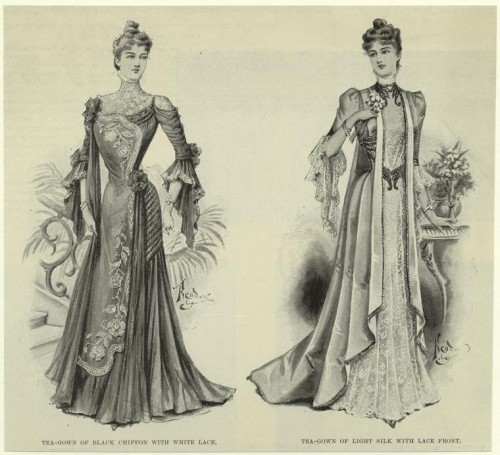
First my primary inspiration frock:

Tea-gown of light silk with lace front (on the right). (1899) via the NYPL digital gallery

I love the lace contrasted with the satin, the elbow length sleeves and lace cuffs, the pleating at the front and going round the side of the skirt, and the suggestion of a Watteau back.  I also love the fabulous things going round the neck and waist, but suspect they are more the sort of thing that was a flight of fashion-drawing fancy than a real effect.  They are do-able, but improbable.

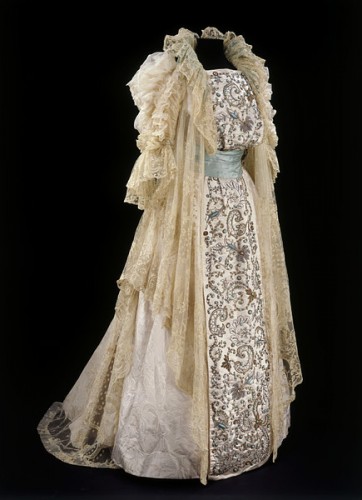
I like to take inspiration from both fashion sketches and extent garments  when recreating historical fashions. It lets me see both the possibility of design and imagination and the desired aesthetic and effect in the fashion plate, and the reality of the ideal in the extent garment.  For my extent tea gown I mainly looked at this Rouff gown from the V&A:

Tea gown with front panel of Indian embroidery, ca. 1900, House of Rouff (designer), collection of the V&A

It has the same gorgeous contrast of satin and lace that you see in the first design sketch.  I love the colours: ivory and turquoise and gold and blond lace.  I also love the lower neckline, it’s just a bit more modern easy than the high neckline.  I also like how clearly you can see the pigeon breast, and the simple sash.  I’ll be borrowing all those elements.

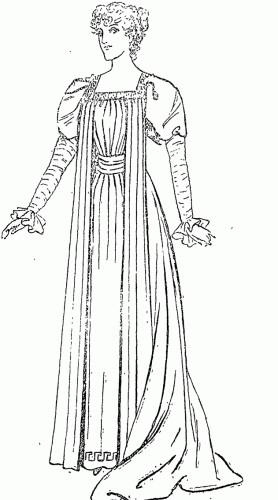
And finally, for a little additional inspiration, a fashion sketch from 1900.  This has the same lower neckline as the V&A gown, and the simpler sash.  I also love the greek key motifs (though I won’t be using them on mine, but still, greek keys are always good!), and that the sketch comes from a NZ newspaper (though it was almost certainly done by an international artist, and just included in a syndication deal).  It’s good to give my tea-gown a Kiwi link!

A graceful tea gown for evening wear, Auckland Star, 27 January 1900

So my gown will look very much like the first design, but with a lower neck, a slight pigeon breast, and a simpler sash.

Next I’ll tell about how the thing actually gets put together, and how I began draping it.

Rate the Dress: Gingham Ballgown

Last week most of you liked the 1880s girls party dress with its excellent pockets.  Not all of you though: some thought the colours sickly sweet, or the silhouette too adult, so it came in a very good but not fabulous 7.9 out of 10.

It’s midwinter here in NZ.  It’s cold and wet and grey and icky.  But in the northern hemisphere, it’s lovely and warm, and those of you in Canada are celebrating Canada Day (Happy Canada Day Canadians!) and those of you in the US are celebrating July 4th (Happy Independence Day Americans!).

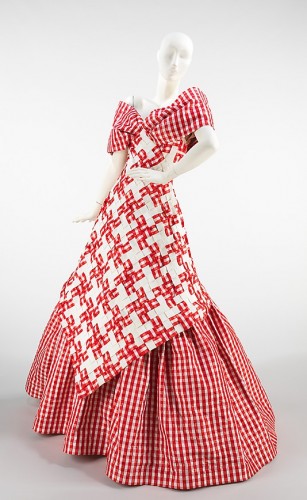
So, in the spirit of midsummer picnics and midsummer balls, with red and white for Canada and firework-pinwheel thingees for America, I present a  gingham ballgown by Arnold Scaasi from the collection of the Met.  Yes, it is from the 1980s.  This is, by far, the most modern Rate the Dress I have ever shown you, and I am fascinated to find out what you think of it.

Ball Gown, Arnold Scaasi, 1988, American, silk, Metropolitan Museum of Art

What do you think? Fascinating and fabulous and fun: a great blend of evening drama and glamour with a sense of humour? Or a tacky take on 80s exuberance?

Rate the Dress on a scale of 1 to 10.