Latest Posts

Tea Gown, House of Worth (French, 1858—1956), ca. 1910, French, silk, rhinestones, metal, Brooklyn Museum Costume Collection at The Metropolitan Museum of Art, 2009.300.3277

Rate the Dress: a Worth tea gown for the wealthiest woman

I gave you an extra few days for Rate the Dress, because last week’s was so late. And I’m still feeling very rushed and busy, so have picked a Rate the Dress that’s all about relaxing, albeit in the poshest way possible.

Last Week: an 1860s fancy dress

Last week’s Rate the dress was fancy in a different way to this weeks: fancy dress, rather than fancy, fancy. But what we could see of the trim and construction was also quite fancy: indicating a very well made, high quality item, for a client with money to spend on a one-off costume.

But that didn’t translate to likes: the ratings were all over the place, from 2 to 10. The final result?

The Total: 6.4 out of 10

Personally, I have a sneaking suspicion it would have rated much higher if we could have seen how it was worn: fully accessorised and styled.

This week: a tea gown by the House of Worth

Tea gowns were always status symbols: the Victorian & Edwardian versions of designer jeans and T-shirts. Too fancy to do any work in, but far too informal to wear anywhere but indoors amongst your closest friends. But this tea gown is the fanciest of the fanciest: made by the House of Worth, worn by the wife of one of the richest men in the world.
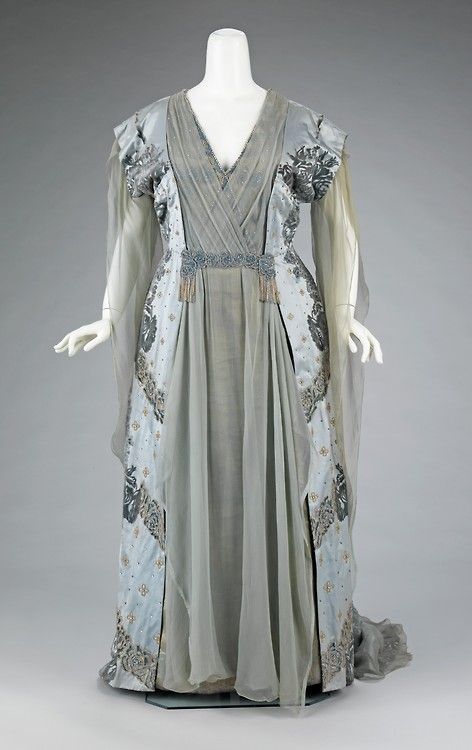
Tea Gown, House of Worth (French, 1858—1956), ca. 1910, French, silk, rhinestones, metal, Brooklyn Museum Costume Collection at The Metropolitan Museum of Art, 2009.300.3277

Socialite Jane Norton Grew (1868—1925) married J.P. Morgan Jr in 1890. Raised in privilege, a Boston ‘Brahmin’ and the daughter of a banker, Grew would have been used to the ultimate in fashion and high society. By marrying in to the banking Morgan family she could expect to continue a life of luxury.

However, wealth and luxury didn’t necessarily translate into obvious ostentation. Like her husband and father in law, Jane preferred to keep out of the public eye. Even within her own social circle, the blond beauty did not aspire to be the leading light. She was reserved and formal (her husband referred to her as ‘cold roast Boston’), and the little public records of her life show no attempts to be noteworthy.

It’s no surprise then that Jane’s preferred design house was the House of Worth. By the early 20th century Maison Worth had ceased to be the clothier of the trendsetter and innovator, and was instead the lead couturier to the impeccable conservative.

Tea Gown, House of Worth (French, 1858—1956), ca. 1910, French, silk, rhinestones, metal, Brooklyn Museum Costume Collection at The Metropolitan Museum of Art, 2009.300.3277

However, the few surviving Worth garments belonging to Jane are among the bolder and more interesting for their years. Did Jane have a secret flair, or did she only keep the more outre of her purchases, which she rarely had occasion to wear?
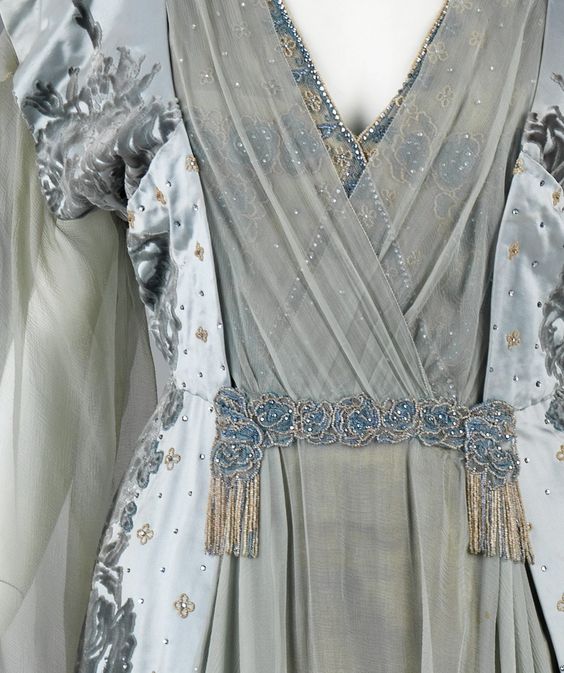
Tea Gown, House of Worth (French, 1858—1956), ca. 1910, French, silk, rhinestones, metal, Brooklyn Museum Costume Collection at The Metropolitan Museum of Art, 2009.300.3277

What do you think of this dress, with its medley of soft blues, combinations of different design influences, and use of a bold silk, typical of the House of Worth’s long association with the French silk industry.

Rate the Dress on a Scale of 1 to 10

A reminder about rating — feel free to be critical if you don’t like a thing, but make sure that your comments aren’t actually insulting to those who do like a garment.  Phrase criticism as your opinion, rather than a flat fact. Our different tastes are what make Rate the Dress so interesting.  It’s no fun when a comment implies that anyone who doesn’t agree with it, or who would wear a garment, is totally lacking in taste. 

(as usual, nothing more complicated than a .5.  I also hugely appreciate it if you only do one rating, and set it on a line at the very end of your comment, so I can find it!  And 0 is not on a scale of 1 to 10.  Thanks in advance!)
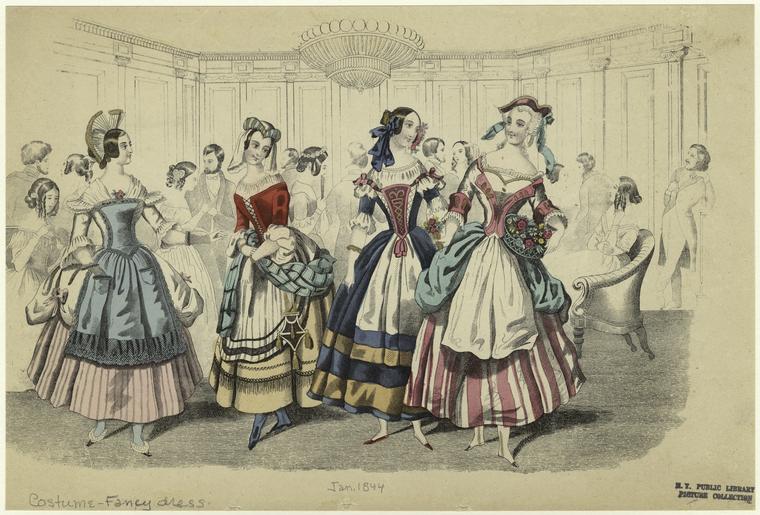
Fancy Dress, 1850s, NYPL catalog ID (B-number): b17567042

Rate the Dress: a fancy dress in search of accessories

Apologies for the rather delayed Rate the Dress. We just had a three day weekend for Labour Day, and my internal calendar is completely confused.

On top of that, it’s the busiest time of year at work: the major show of the year + prepping for graduation + interviewing candidates for next year, all in a three week period! And if that wasn’t enough excitment, it’s a very important year in the Baha’i Faith: 200 years since the birth of the Bab. There have been nonstop commemorations and celebrations, and I’ve been dashing from work to receptions at Parliament one day, and then dashing home to do flower arranging for another event the next…

I really wanted to have a fancy dress for this week’s Rate the Dress, and this was the most striking example I could find that hasn’t been featured before. It is missing something though…

Last Week: a 1920s child’s frock  

You found last week’s hand painted frock utterly charming. If there was any tiny fly in the ointment it was that it was almost too sweet, or that you weren’t sure about the bonnet. It was very of its time, but possibly a little much.

The Total: 9.7 out of 10

Practically perfect, but for a B for the bonnet.

This week:  an 1860s fancy dress

This week’s ‘Rate the Dress’ is either a fancy dress, or a theatre costume. But what did it represent? That part is not clear. Without the styling and accessories that went with it, it’s clearly dress-ups, but not immediately identifiable.

Fancy dress, silk, 1860s, Les Arts Decoratifs via Europeana Fashion UF 50-30-15 AB

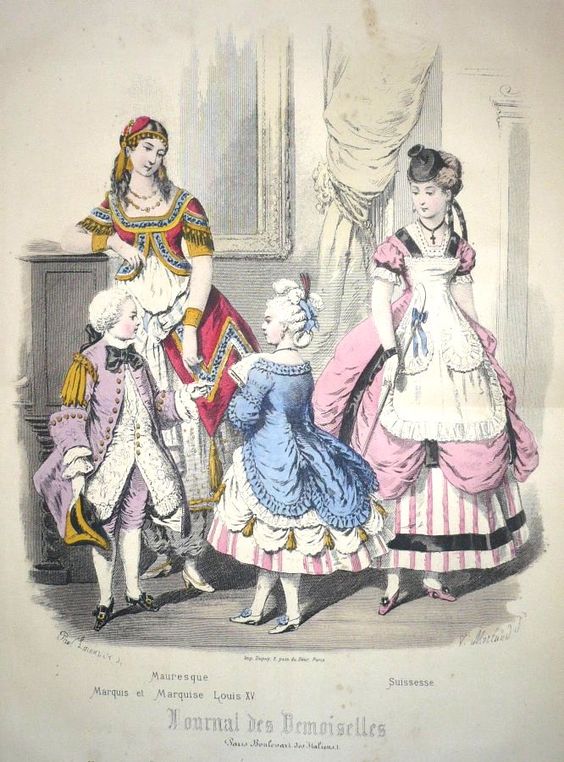
My best guess is that it was either meant to be an 18th c lady as in the first plate below, a shepherdess (also rather 18thc ish) as in the second plate, or perhaps a national costume, like the Swiss Girl in the last plate.

Fancy Dress, 1850s, NYPL catalog ID (B-number): b17567042
Le Monitor De La Mode, December, 1853, v. 36, plate 79, Tessa LAPL.org rbc4264 (1)
Journal des Demoiselles, Fancy Dress, ca 1870

What do you think? What was this dress meant to be, and how fetching would the wearer have looked, and felt, in it? Would she have been the belle of the costume ball, or that weird outfit that no-one quite gets (you know that costume. You’ve probably been the one in that costume at least once. I’ve been the one in that costume for sure…)

Rate the Dress on a Scale of 1 to 10

A reminder about rating — feel free to be critical if you don’t like a thing, but make sure that your comments aren’t actually insulting to those who do like a garment.  Phrase criticism as your opinion, rather than a flat fact. Our different tastes are what make Rate the Dress so interesting.  It’s no fun when a comment implies that anyone who doesn’t agree with it, or who would wear a garment, is totally lacking in taste. 

(as usual, nothing more complicated than a .5.  I also hugely appreciate it if you only do one rating, and set it on a line at the very end of your comment, so I can find it!  And 0 is not on a scale of 1 to 10.  Thanks in advance!)

Regency Ladies Reading

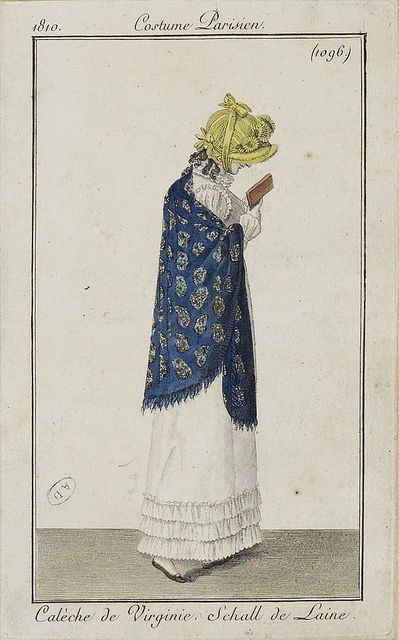
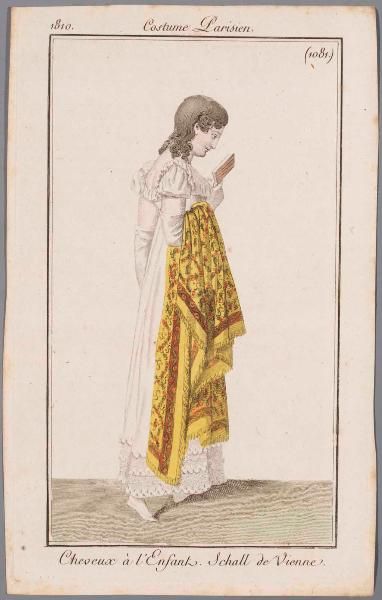
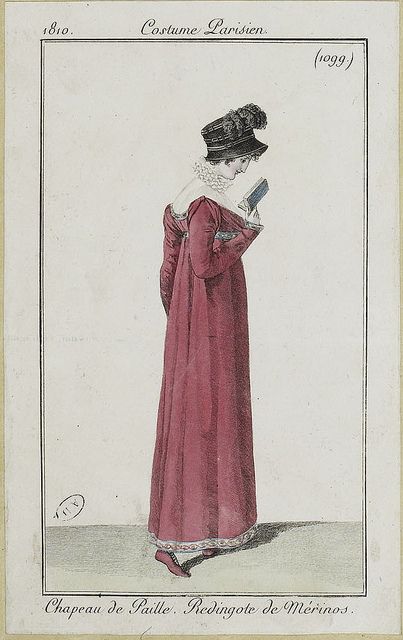
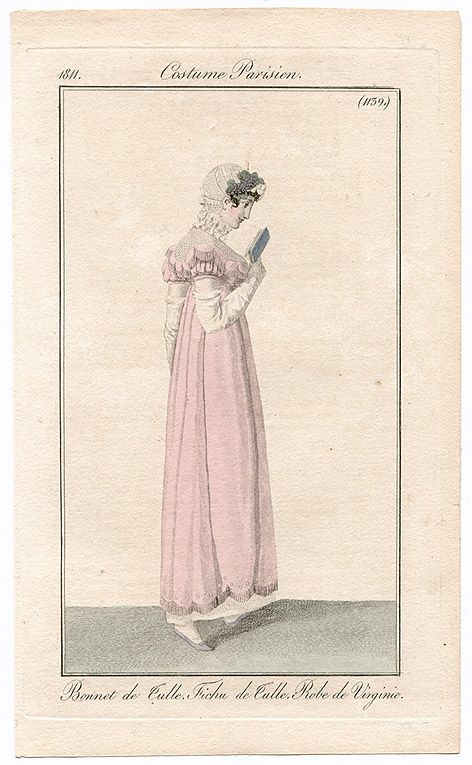
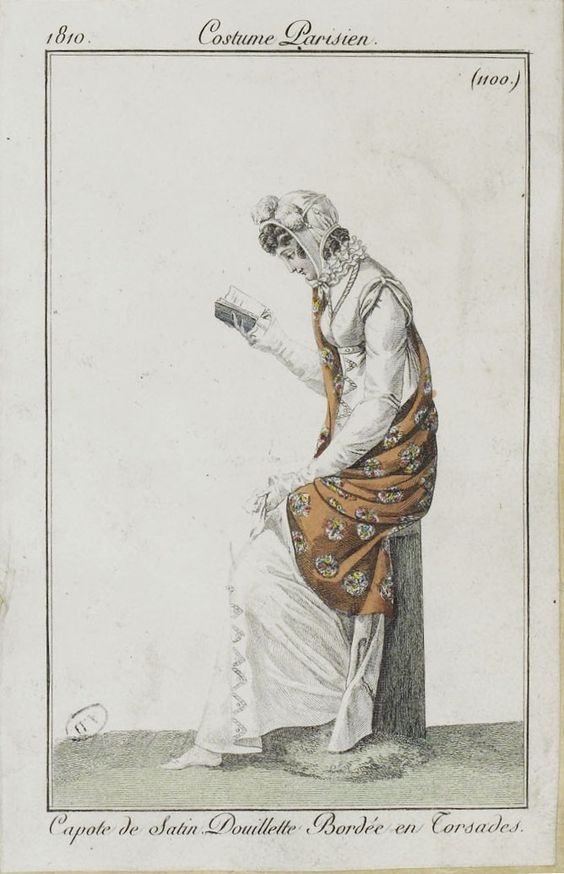
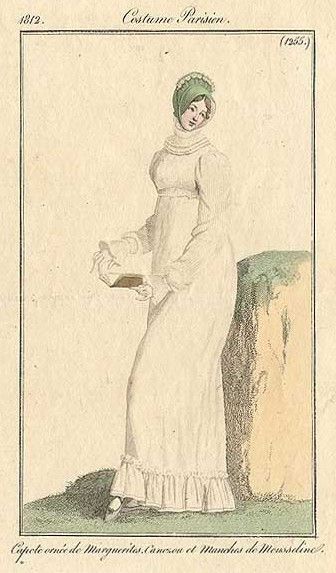
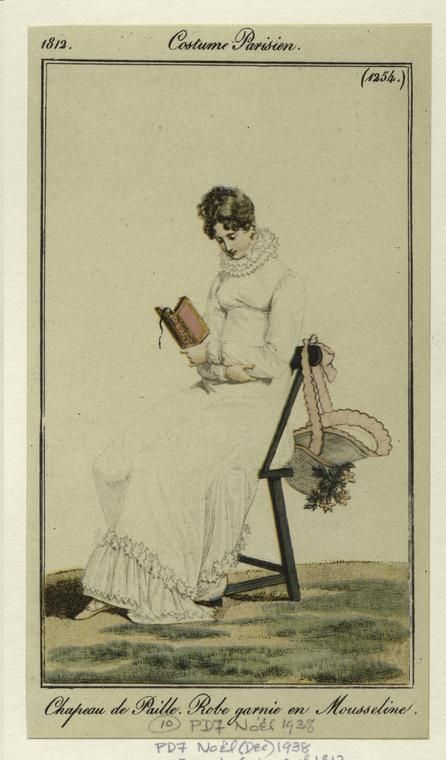
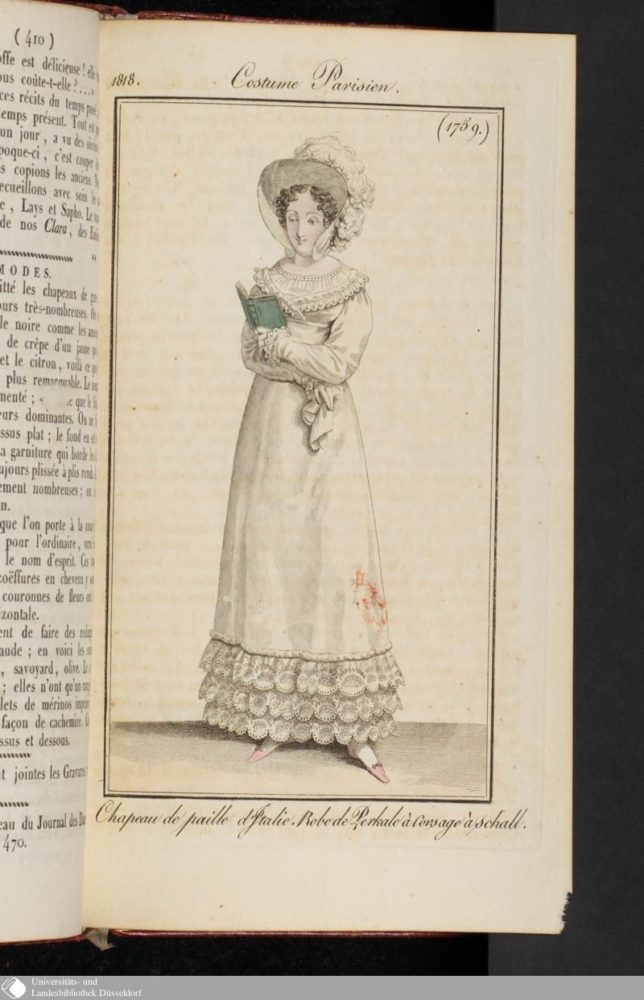
Fashion plates, like fashion magazines (and some corners of instagram…) today, sell not only aspirational fashions, but also aspirational lifestyles.

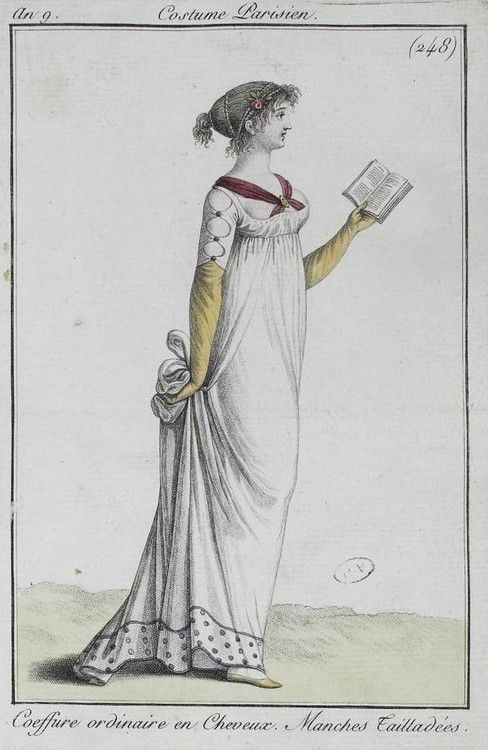
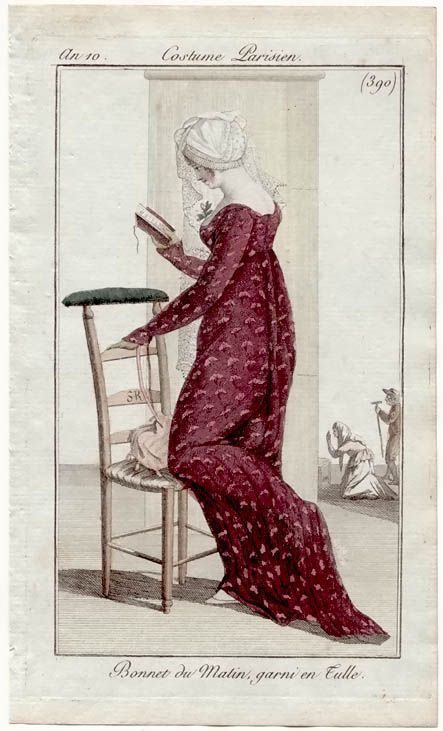
There is a series of Costume Parisien fashion plates, stretching from the 1790s to 1820, that shows an fashionable lifestyle that I can very much see myself ascribing too…

I call it Regency Ladies Reading*.

Costume Parisiene, ca. 1795,  Bibliothèque des Arts Decoratifs.
Costume Parisien, ca. 1795, Bibliothèque des Arts Decoratifs.
Costume Parisien, ca. 1800, Bibliothèque des Arts Decoratifs.
Costume Parisiene 1801,  Bibliothèque de Arts Decoratifs
Costume Parisien 1801, Bibliothèque de Arts Decoratifs
Costume Parisiene 1802,  Bibliothèque de Arts Decoratifs
Costume Parisien 1802, Bibliothèque de Arts Decoratifs
Costume Parisien, 1802, Bibliothèque des Arts Decoratifs

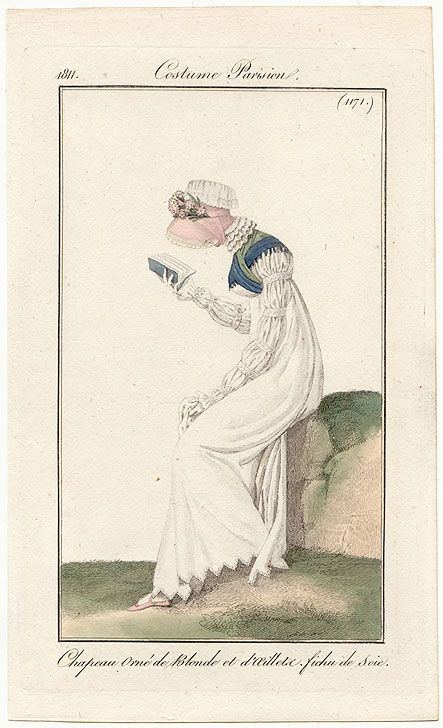
1810-11 was by far the high point of the style. The fashion illustrator hit on a post he liked, and built numerous outfits, all modelled by ladies intent on their literature, around it.

Costume Parisiene 1810,  Bibliothèque de Arts Decoratifs
Costume Parisien 1810, Bibliothèque de Arts Decoratifs
Costume Parisien 1810,  Bibliothèque de Arts Decoratifs
Costume Parisien 1810, Bibliothèque de Arts Decoratifs
Costume Parisien 1810,  Bibliothèque de Arts Decoratifs
Costume Parisien 1810, Bibliothèque de Arts Decoratifs
Costume Parisien 1810,  Bibliothèque de Arts Decoratifs
Costume Parisien 1810, Bibliothèque de Arts Decoratifs
Costume Parisien 1811,  Bibliothèque de Arts Decoratifs
Costume Parisien 1811, Bibliothèque de Arts Decoratifs
Costume Parisiene 1810,  Bibliothèque de Arts Decoratifs
Costume Parisiene 1810, Bibliothèque de Arts Decoratifs
Costume Parisiene 1811, Bibliothèque de Arts Decoratifs
Costume Parisien, 1812
Costume Parisien 1812, NYPL digital archives
Costume Parisien, 1818

*Somewhat inaccurately, because the fashion plates originated in France, and some predate the English Regency. I suppose I could call it ‘Empire Ladies Enlarging Their Minds’….