Latest Posts

Rate the Dress: Lanvin does 1910s poofs

Last week’s crazy floral border print 1860s Rate the Dress certainly evoked a range of responses, and some interesting speculation on how much the ensemble had been altered, and when.  One thing you could almost all agree on was that the bodice was a bit blocky and awkward, but other than that there was no consensus.  Some of you LOVED the skirt fabric so much the bodice didn’t matter, some of you hated the fabric full stop, and some of you thought the fabric was amazing, but that it couldn’t make up for the terrible bodice.  All in all, the dress came in at a very disappointing 6.3 out of 10, showing that fashion has to be a bit more restrained and a bit better  made to get the nod from more of  you voters.

This week I present a dress with two sets of images: one, carefully presented and perfectly steamed and arranged into shape, and another, an excellent set of reference images, clearer and brighter, but lacking the elegant crispness of the first.  It’s an excellent opportunity to see a dress prettily staged, in a way few institutions have the resources to achieve, and in the raw, with all the ravages of time visible.

This Lanvin dress, shown first in perfect presentation, is characteristic of her very soft, whimsical, feminine style, and her interest in history.

While the overall silhouette, raised waistline and asymmetrically wrapped skirt of this evening dress are typical of the 1910s, Lanvin took her inspiration from the fashions of the second half of the  18th century for the details of the garment.  The black tulle peeking from the sleeves is reminiscent of engageantes, and the layers of the draped surplice bodice evoke a fichu.  The puffed overskirt is a reference to the poofs and drapes of a bustle over-skirt.

What do you think?  The first image gives a better picture of how the dress would have looked when first worn, the second may help explain the details.  It’s certainly a quirky frock, but does quirk have it’s own charm, and is this a case when it keeps fashion history interesting and unique?

Rate the Dress on a Scale of 1 to 10
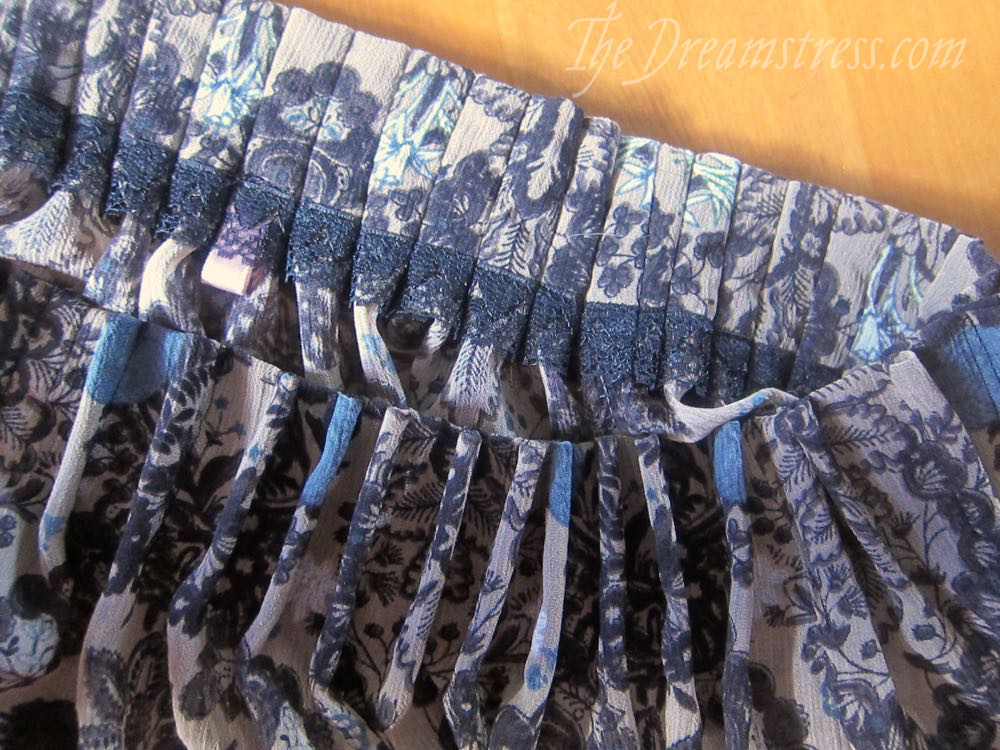
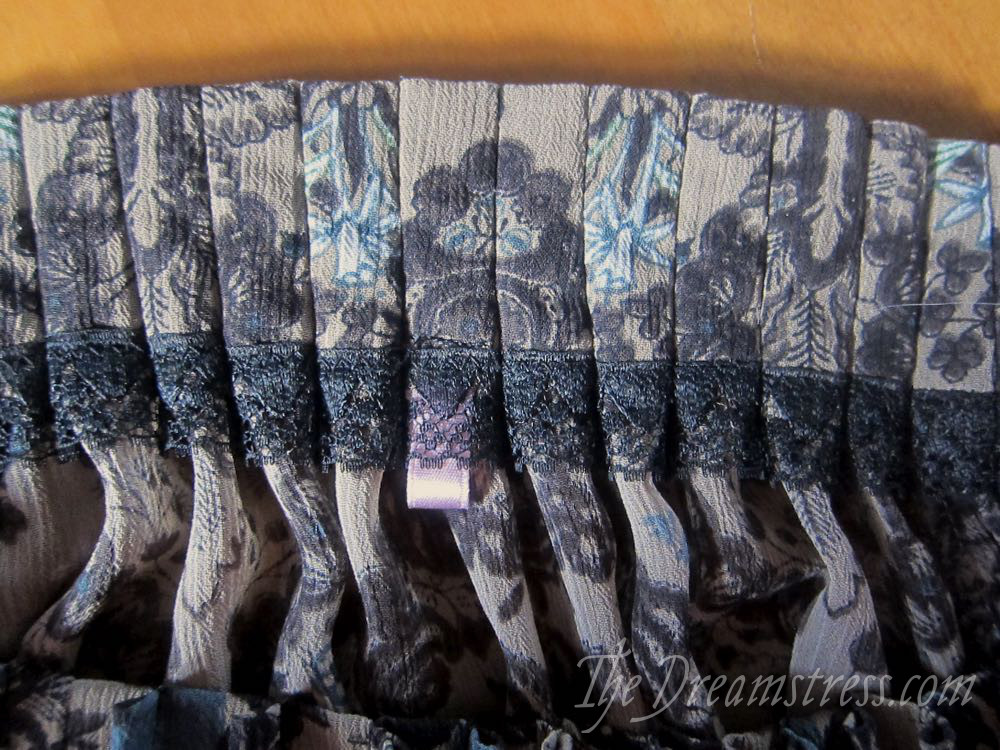
How to apply lace as an edge finish for the Scroop Henrietta Maria dress thedreamstress.com

Tutorial: How to apply lace as an edge finish for the Henrietta Maria Dress/Top

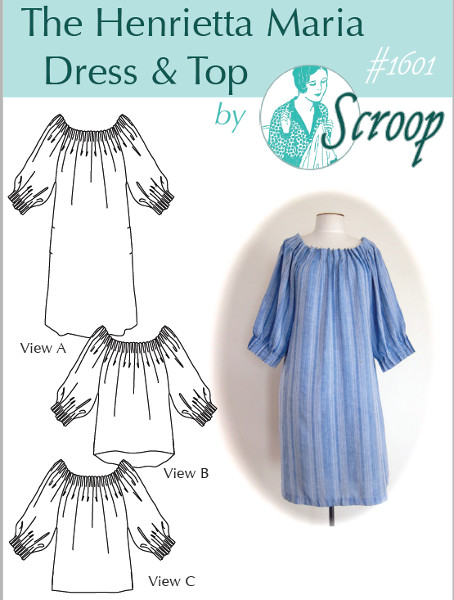
One of the finishes I suggest for the Scroop Henrietta Maria dress and top is a lace edge finish.  It’s a really fun and easy technique, and yields a gorgeous finish.

Scroop Henrietta Maria

Since it’s not a technique everyone is familiar with, I thought I’d do a tutorial.

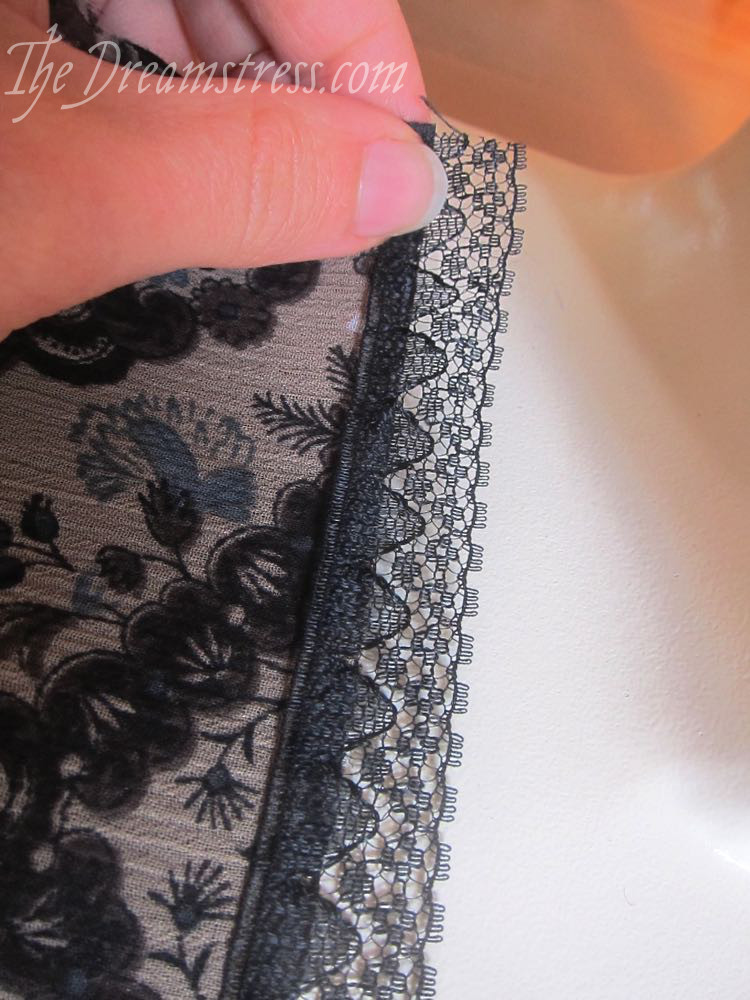
The concept is very simple: basically, you sew lace along the raw edge of a fabric, to cover the raw edge and keep it from unravelling. You can use it on seam allowances, and on hems so you only have to turn them once. On the Henrietta Maria, I like to use it on the neck and sleeve edges.

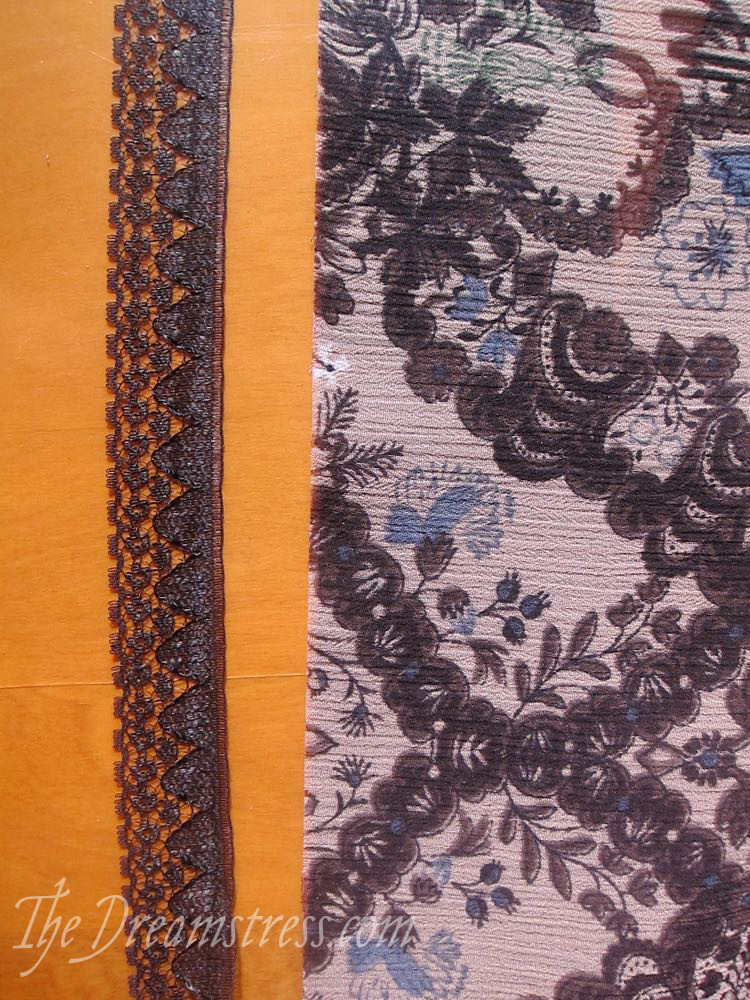
For this tutorial all you need is a narrow (approx 2cm/3/4″), soft lace to finish your edges, and whatever you want to apply them to. I’ll be using a Henrietta Maria dress to demonstrate.

How to apply lace as an edge finish for the Scroop Henrietta Maria dress thedreamstress.com

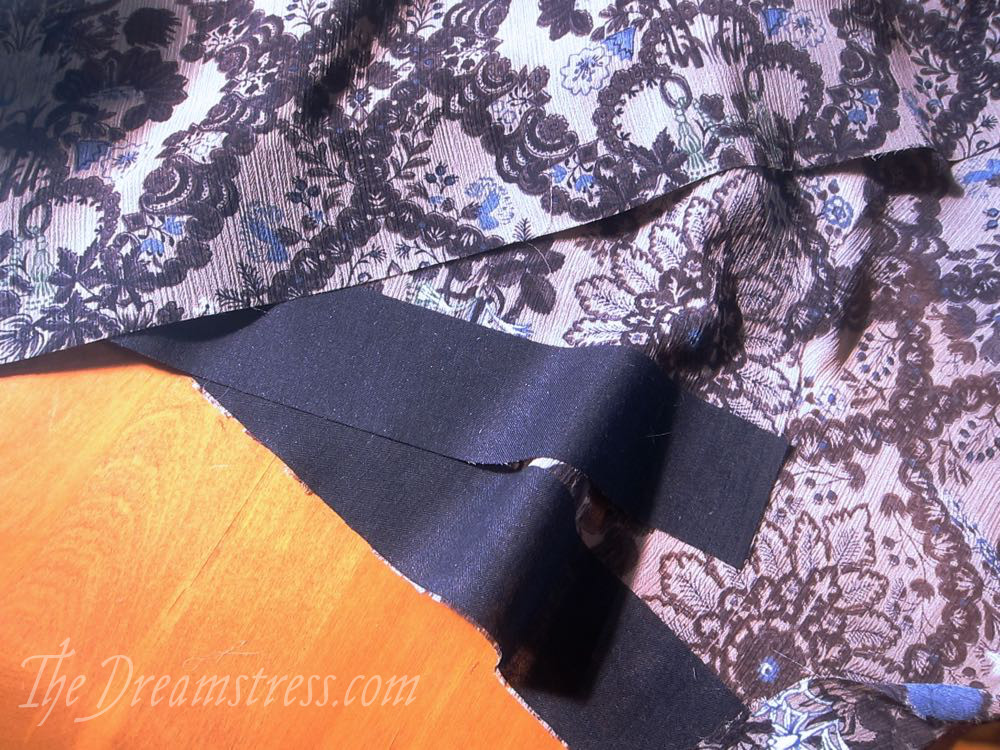
Start by applying your interfacing pieces to the wrong side of your sleeve and body pieces:

How to apply lace as an edge finish for the Scroop Henrietta Maria dress thedreamstress.com

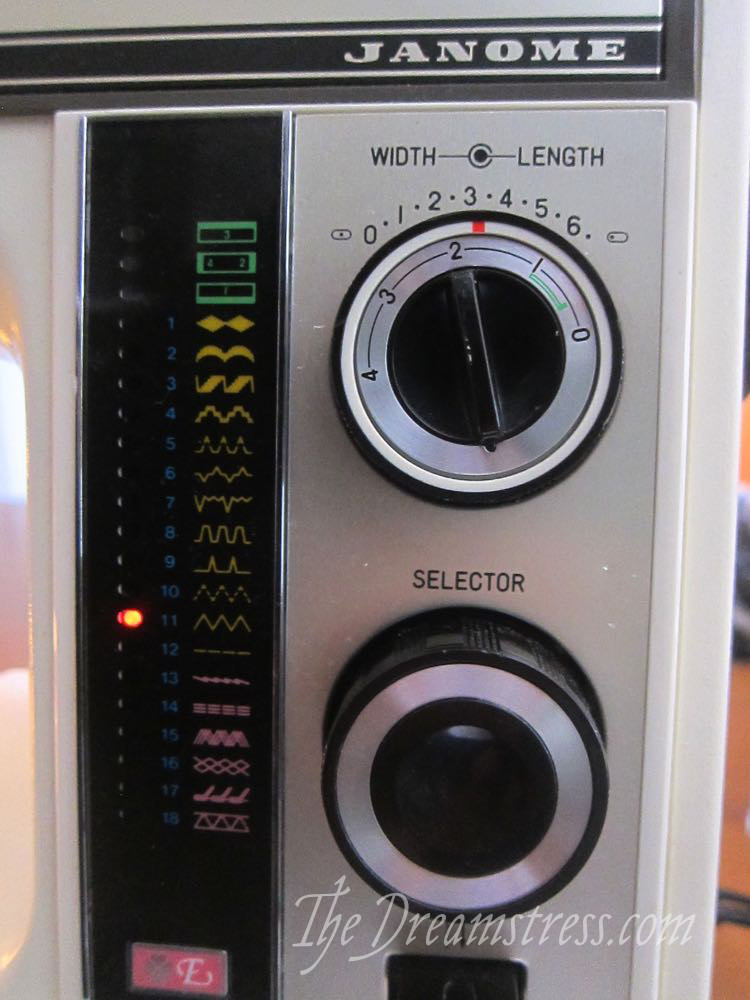
Set your sewing machine to a small length, medium width/height zig-zag. I have mine set to 1.8 & 3, respectively.

How to apply lace as an edge finish for the Scroop Henrietta Maria dress thedreamstress.com

Today, for maximum nostalgia factor, I’m using my beloved Janome SW 2018E, the New Zealand sister of the first sewing machine I ever owned.

To prep your lace and fabric, overlap your lace over the RIGHT side of your fabric for about 7mm/1/4″ (use the motifs on your lace to pick an appropriate line).

How to apply lace as an edge finish for the Scroop Henrietta Maria dress thedreamstress.com

You can pin it, but I find it easiest to just hold and control as I sew.

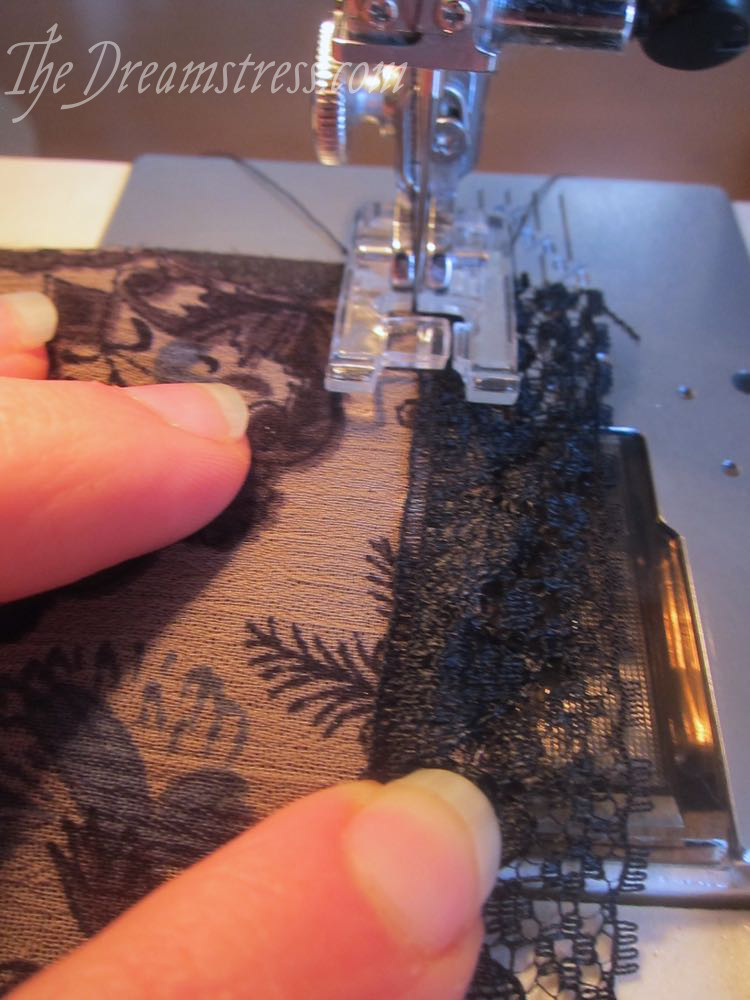
Place your fabric and lace on the sewing machine, with the needle falling just off the edge of the lace on the left side of the zig-zag stitch:

How to apply lace as an edge finish for the Scroop Henrietta Maria dress thedreamstress.com

Zig-zag!

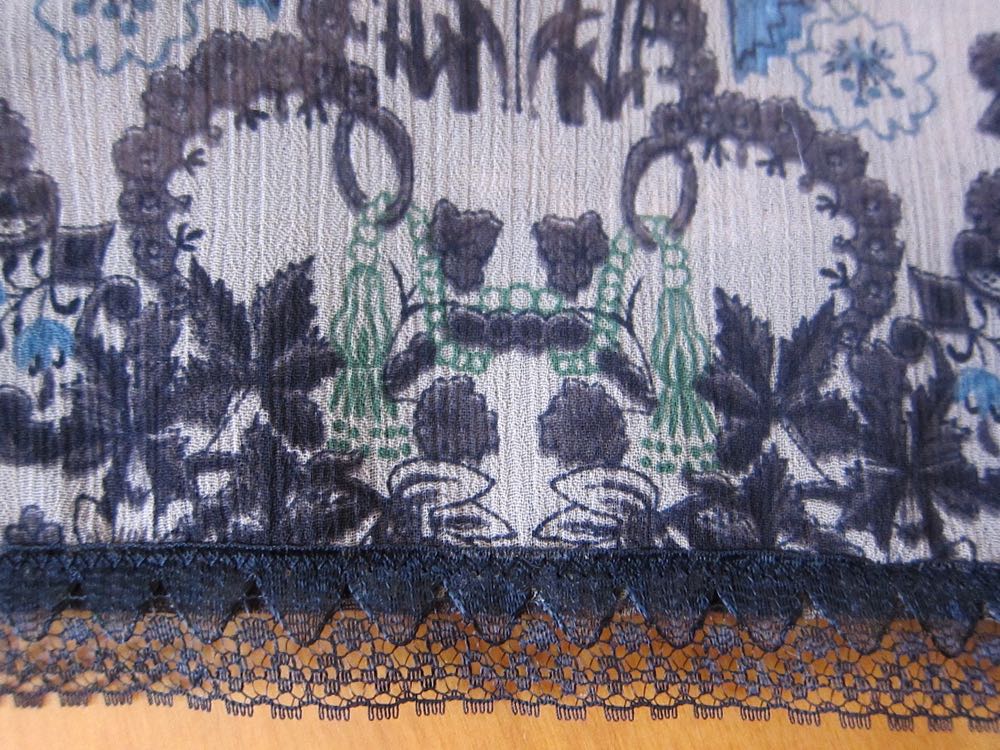
How to apply lace as an edge finish for the Scroop Henrietta Maria dress thedreamstress.comFinished, it looks like this:

How to apply lace as an edge finish for the Scroop Henrietta Maria dress thedreamstress.com

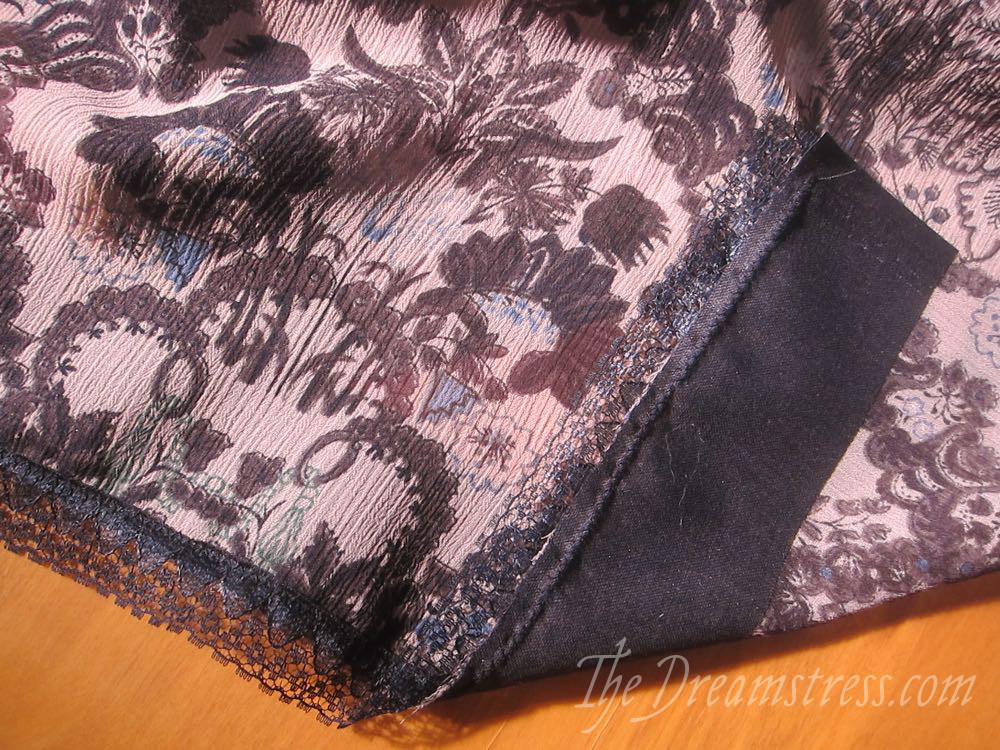
And from the wrong side:

How to apply lace as an edge finish for the Scroop Henrietta Maria dress thedreamstress.com

The zig-zag stitches do their job of preventing the fabric from unravelling, but the overall finish just looks much more elegant than a straight zig-zag stitch.

It’s particularly effective once all the tucks are sewn in:

How to apply lace as an edge finish for the Scroop Henrietta Maria dress thedreamstress.com

How pretty is that!

How to apply lace as an edge finish for the Scroop Henrietta Maria dress thedreamstress.com

Next up: how to sew an elastic waistband into the Henrietta Maria dress, and a photoshoot featuring the finished frock (possibly with some historical posts in between, to keep things lively and because I swore I wouldn’t be one of those bloggers who launches a pattern line and then never blogs about anything else 😉 ).

Rate the Dress: 1860s florals and swags

I’ve been on a bit of a roll lately – two extremely popular Rate the Dresses in a row!  Last week’s Florentine noblewoman in green sailed in with a spectacular  9.3 out of 10, just missing out on pipping the princess from a fortnight before to the post – much to my disappointment, as I personally LOVE the green dress, and give it a perfect 10.  (actually, if we include my scores, the princess drops to 9.3 and this bumps up to 9.4 😉 )

Oddly enough, my favourite things about the painting – the reality of the partlet strings, and the faithfulness with which the artist rendered the sitters hands, rather than turning them into generic, idealised hands, were also the things it was most criticised for.

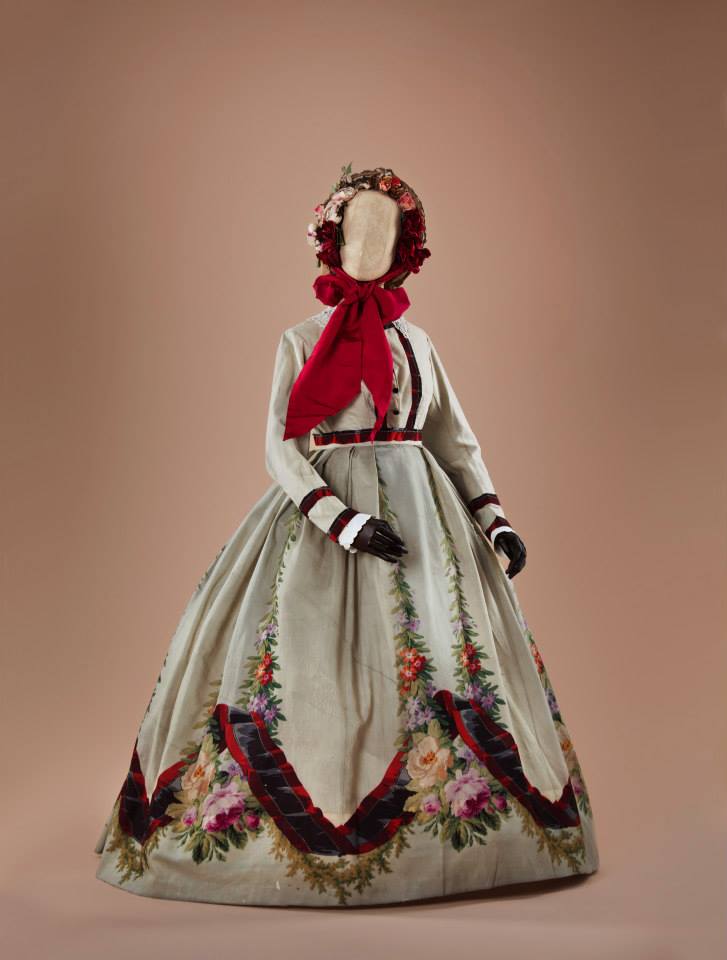
This dress, from the (envy-inspiring) collection of Alexandre Vasilliev, would be a fairly unremarkable example of 1860s fashion, in a classic pairing of red and grey, were it not for the spectacular trompe-l’oeil floral and ribbon pattern bordering  the skirt.

Dress, early 1860s, Collection of Alexandre Vasilliev

Dress, early 1860s, Collection of Alexandre Vasilliev

The lush floral pattern, whether it is printed on or woven-in, is an extravagant display of the technological advances in dyeing, printing and fabric weaving that characterised the mid-19th century.  The design, with its lavish use of colour, is absolutely typical of mid-century taste, and links the simpler silhouette and main overall colour of the dress to the desire for the new that would make any innovation, no matter how ostentatious, popular.

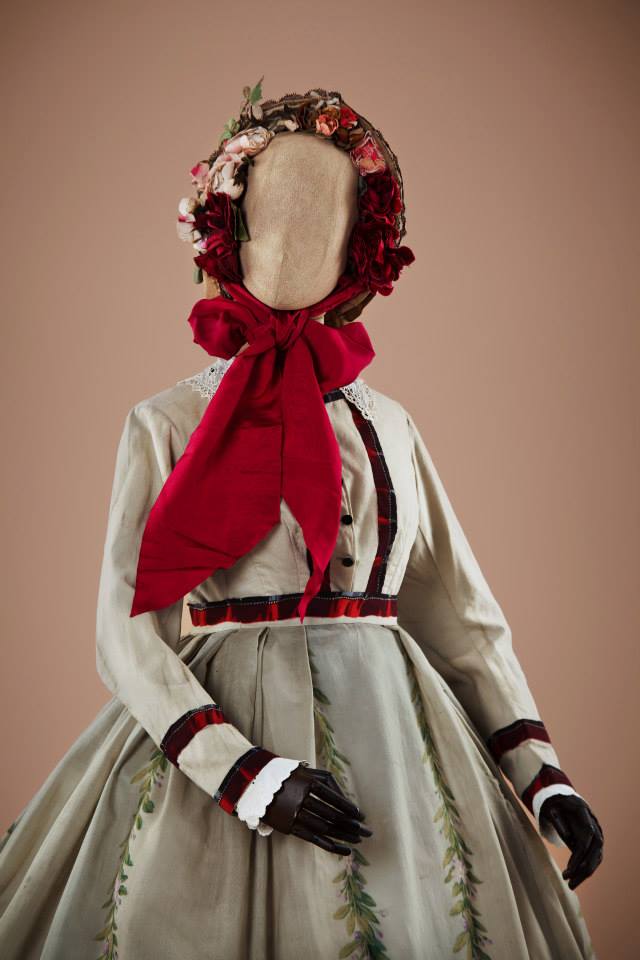
Detail of dress, 1860s, Alexandre Vaselliev

Detail of dress, 1860s, Alexandre Vaselliev

The florals and colours of the dress are echoed in the bonnet it is shown with, linking back to  the natural imagery and the ribbon motif.

Dress, early 1860s, Alexandre Vaselliev

Dress, early 1860s, Alexandre Vaselliev

What do you think?  A good balance of modesty and ostentation, or gauche and showy?

Rate the Dress on a Scale of 1 to 10