Latest Posts

Rate the Dress: Wartime stripes & tassels

Last week I showed you a floral 1880s dress with a modest but-revealing silhouette, and some rather unusual trim choices.  It got compared to everything from real-life steampunk, to Star-Trek does 1880s, but  overall, the lace insets and velvet bows were NOT a hit, and the dress scored a pretty dismal 6.1 out of 10.  Slightly better than the week before, but hardly brilliant.  Can  this week’s frock do better?

This week I’m showing you a dress that  has many of the same themes as last week: a  demure and almost restrained silhouette, a simple fabric, and a few touches of quirky trim.

This Harvey Nichols dress from 1916 (from the Helen Larson collection that the FIDM Museum is hoping to purchase – hop on over to their blog to read about and support their fundraising efforts)  is typical of the mid-teens WWI influenced fashions.  The dark colours reflect the dye shortages (Germany was the primary dye supplier for most of the world immediately prior to WWI), the shorter, fuller skirts a  more practical silhouette  and conservative mindset.
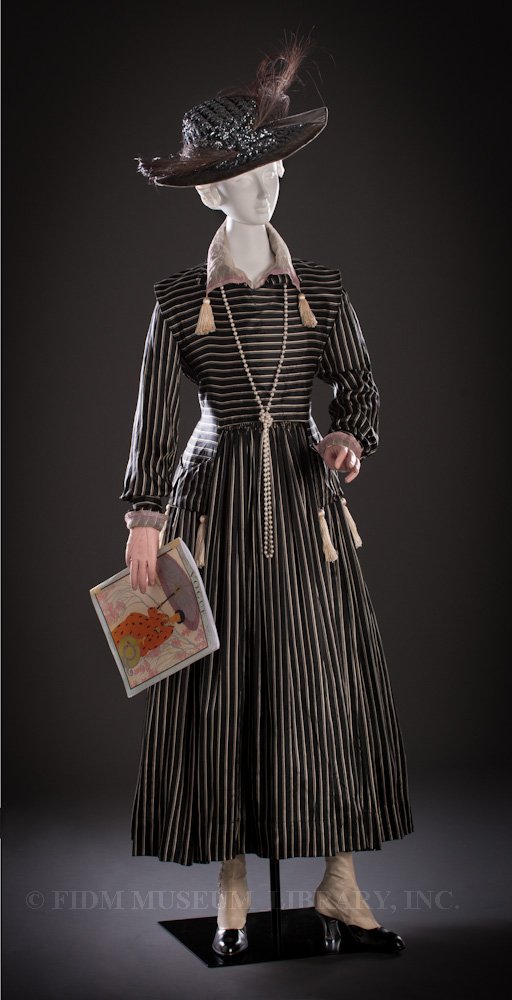
While the restrained colours and simple shape are very much a product of the times, so are  the whimsical details that bring a bit of interest to the outfit, without compromising practicality, or using a great deal more fabric.
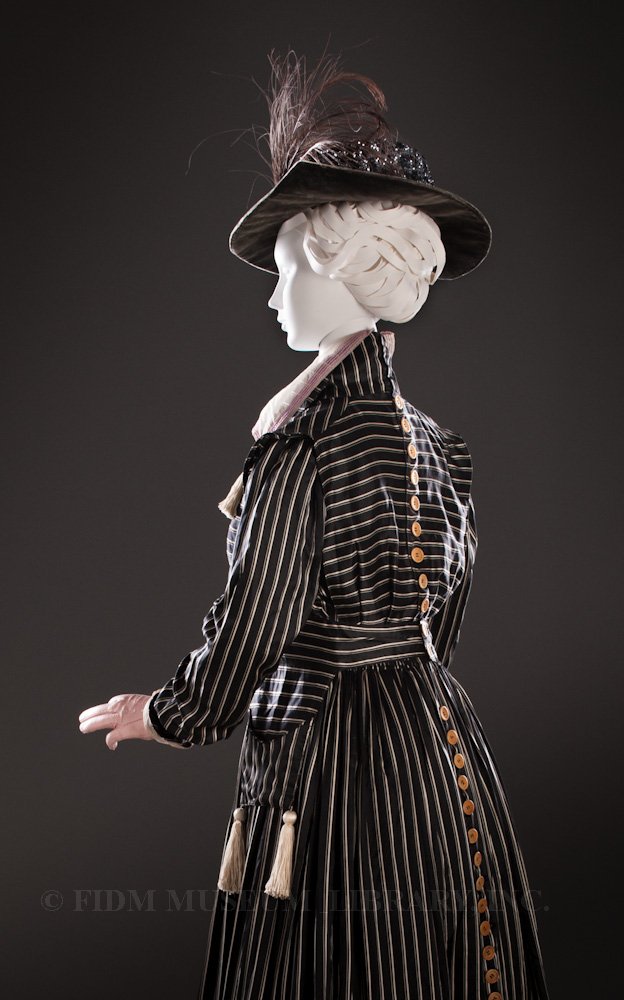
The perky  little collar and cuffs add colour while using very little dye, the tassels add movement, and the dress takes full advantage of the stripes placement across the pockets and belt.  Finally, an extravagance of buttons gives interest to the back view.

What do you think of this bit of wartime luxury?  Elegant and fun, or drab and childish?

Rate the Dress on a Scale of 1 to 10.

Clamdigging shorts (with asides)

In Dunedin just after New Years, my host asked if I would like to go clam-digging.  I’ve never been clam-digging before – there are no clams in Hawaii, and (as far as I can tell) very few within a reasonable drive of Wellington.  I am extremely enthusiastic both about new experiences and foraging for food (Mr D says “It’s so weird being with you in Hawaii.  You just go into the bush and find stuff and eat it), so I was quite excited.

Dunedin has clam  beaches (clam fields?  What do you call an area where one goes to harvest clams?  (harvest?  catch?  what do you call the act of collecting clams?)) a reasonably short drive from the city centre, so we headed out away from the city to find one.

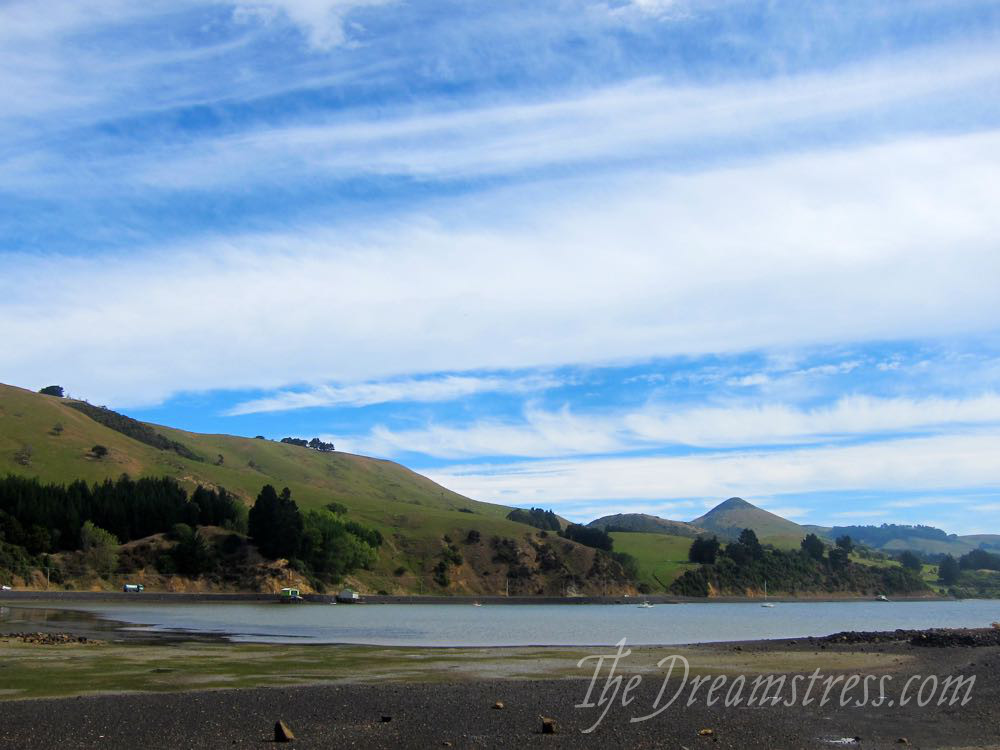
Out and about around Dunedin, NZ, thedreamstress.com

We drove out along the coast, around still bays and past rocky islands, by spreading sand beaches, and between cone-shaped volcanic hills.

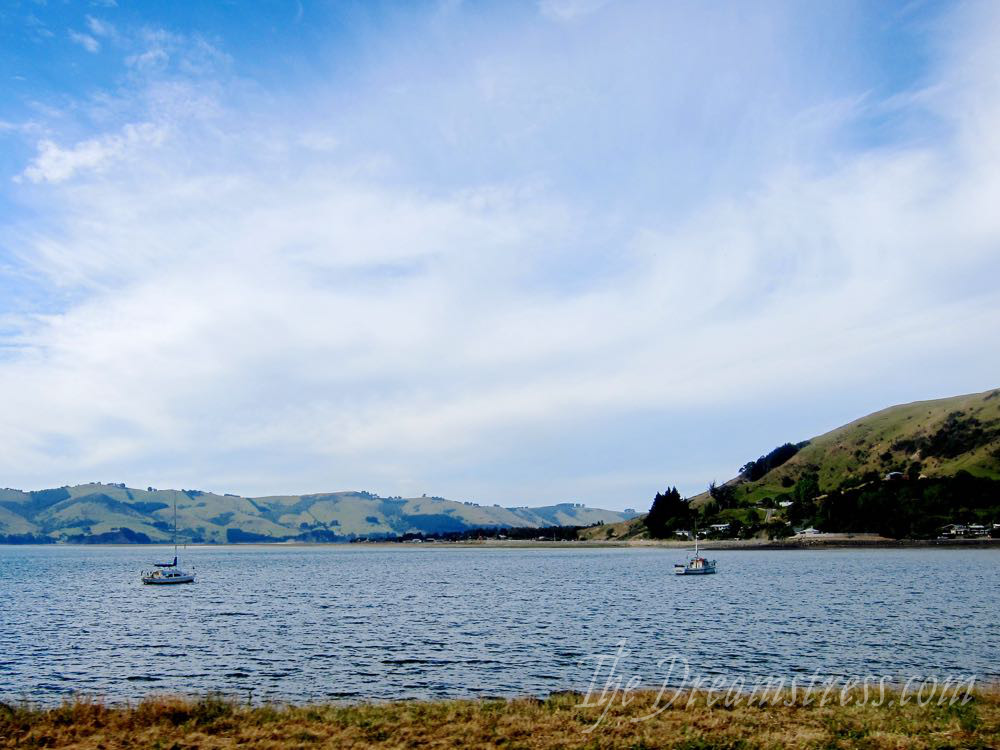
Out and about around Dunedin, NZ, thedreamstress.com

Out and about around Dunedin, NZ, thedreamstress.com

Finally, we came to our chosen bay, with stretches of sand and shallow sea-grass islands revealed by the ebbing tide.

Out and about around Dunedin, NZ, thedreamstress.com

Just a few meters into the water were the clams: solid lumps that shifted under the sand as you walked.

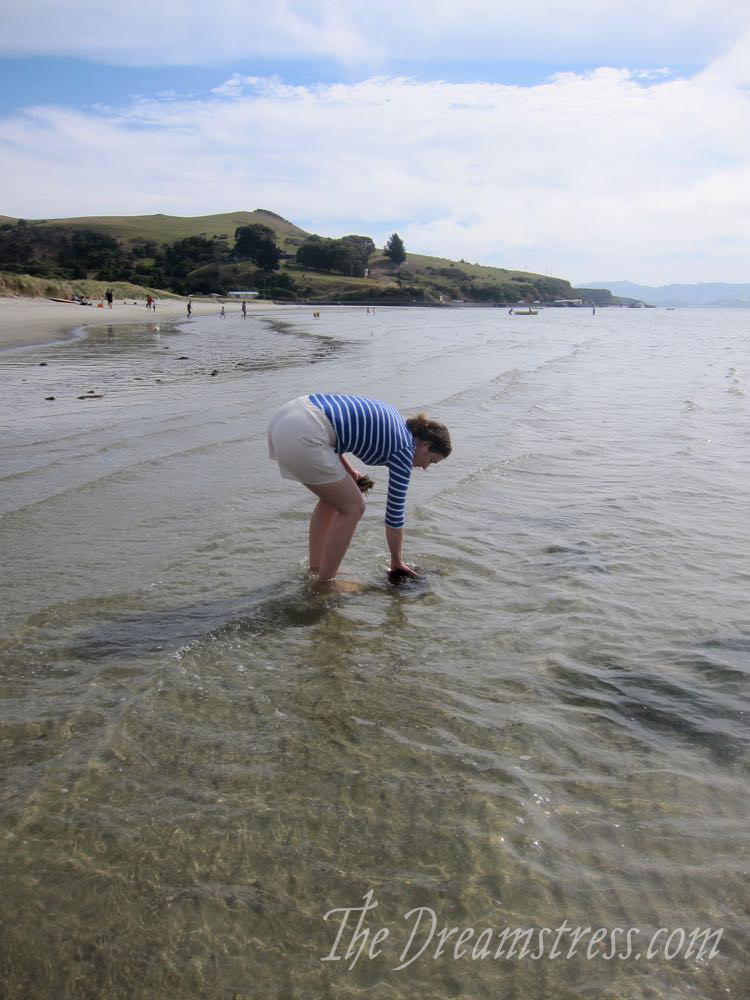
Having dipped my toes in the frigid water at the main beach in Dunedin, I was significantly less than enthusiastic about wading about calf deep in water feeling for clams with my toes, but I needn’t have been worried.  In the shallow waters of the bay, the temperature had increased to very comfortable levels, and I quickly decided that 1) I love clam-digging and 2) I wish I had brought my togs!

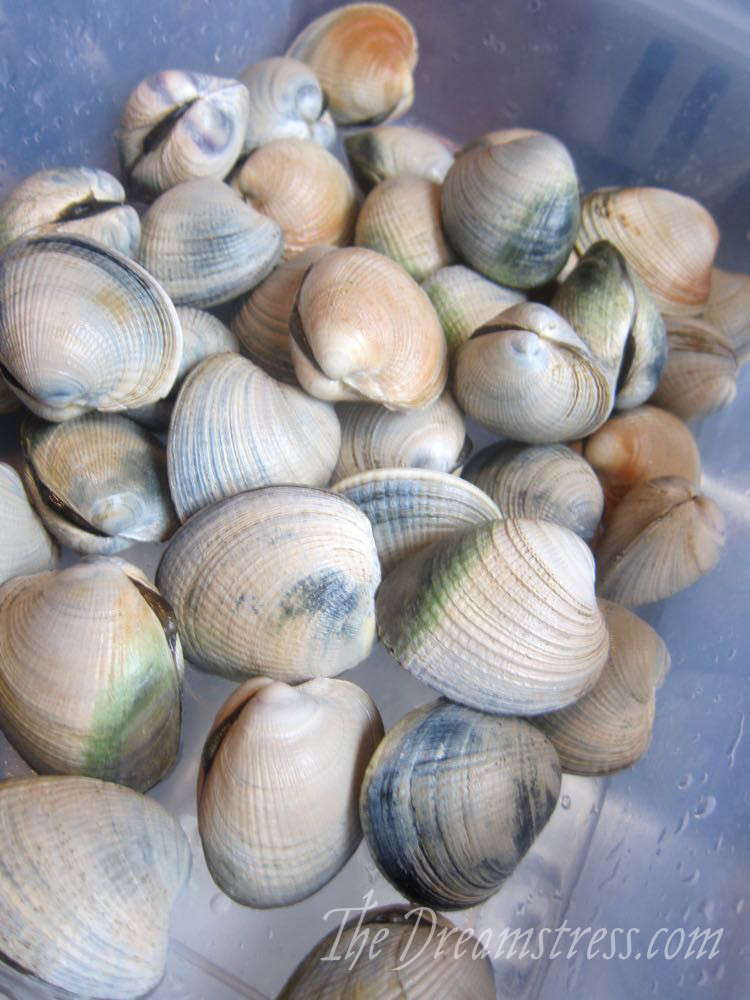
All too quickly we’d accumulated a sufficient haul of clams (30 – well within the 150 per person daily quota), and returned any little ones to the sea.

Clamdigging in Dunedin, thedreamstress.com

Then it was time for fun: exploring the beach and enjoying the sea and sand.

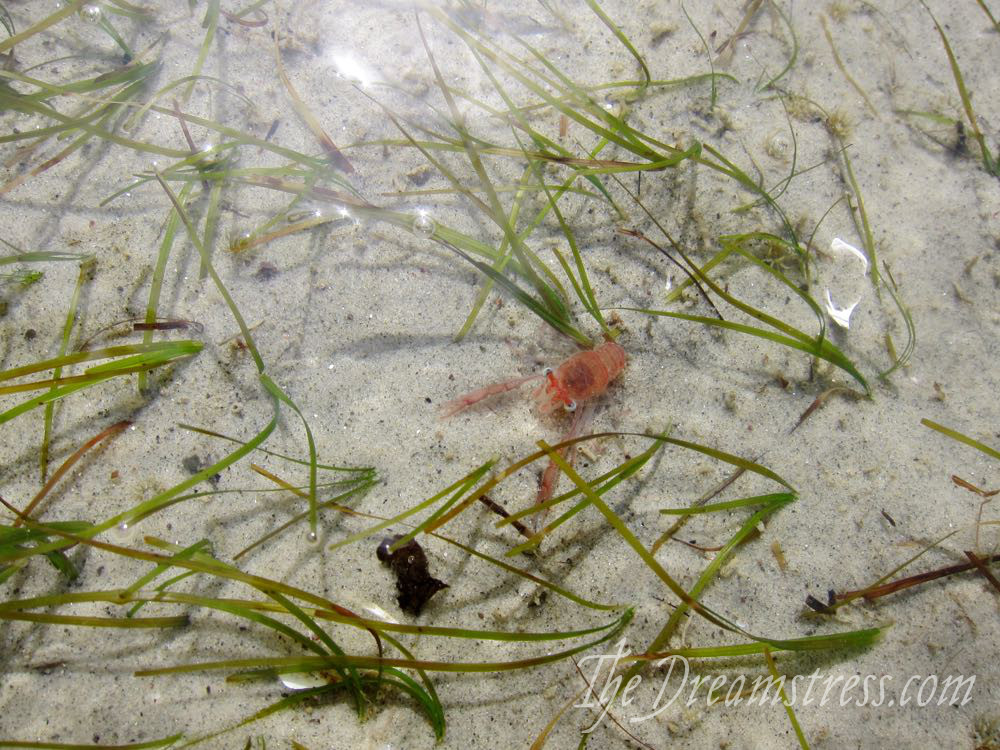
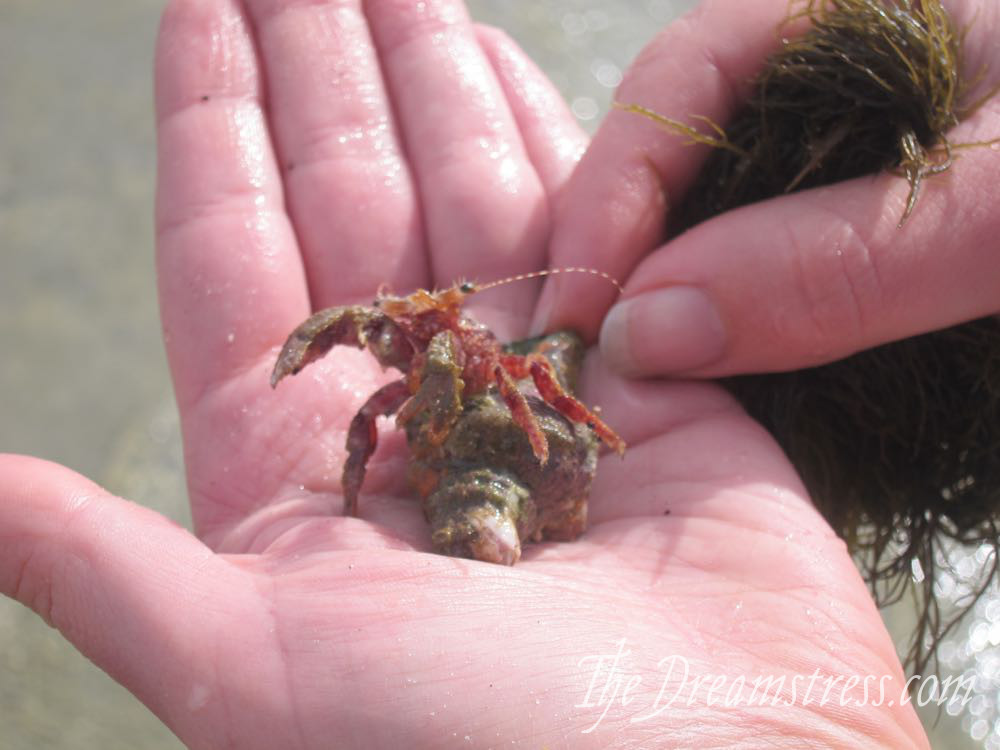
I found this little cutie in the crystal clear shallows:

Clamdigging in Dunedin, thedreamstress.com09And kung-fu hermit crab a little further along the beach:

Clamdigging in Dunedin, thedreamstress.comAnd if you are wondering about the wadge of seaweed in my hand, that’s my other exciting find.

Clamdigging in Dunedin, thedreamstress.com

It’s a NZ seaweed, and I was sure that it was basically the same as limu manauea  (limu ogo) in Hawaii.  I was right – it turns out that it is indeed the local New Zealand gracilaria seaweed (look at me, just tossing out scientific names like textile terms!)

Clamdigging in Dunedin, thedreamstress.com

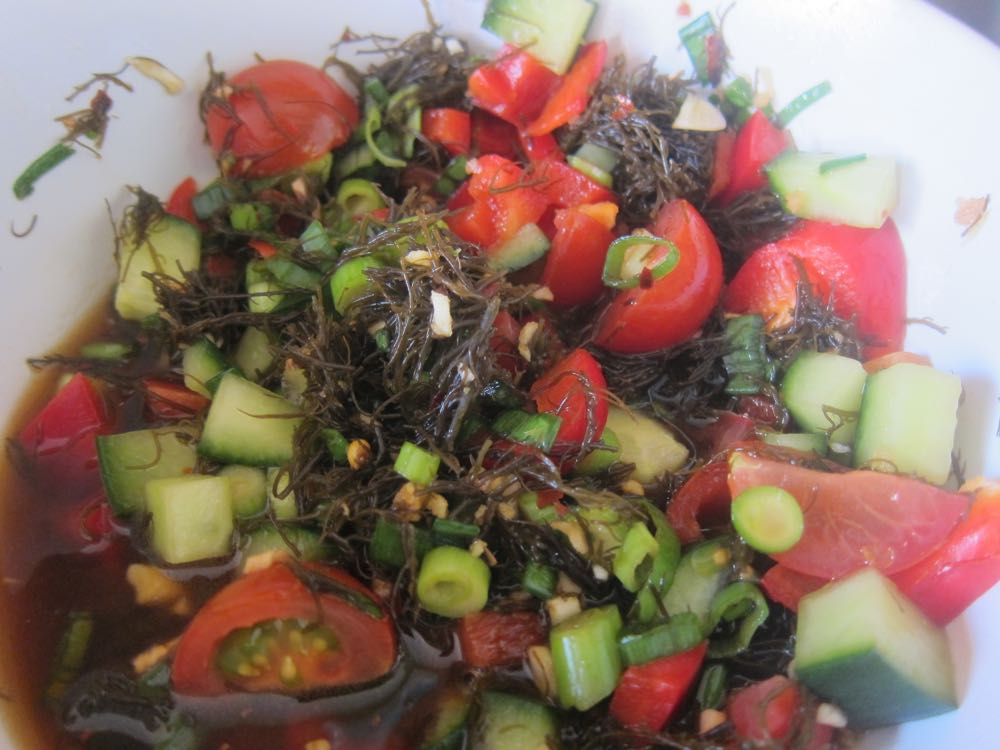
Just like Hawaii’s gracilaria varieties, it makes a delicious seaweed salad.  This Hawaiian girl was extremely happy for the next few days!

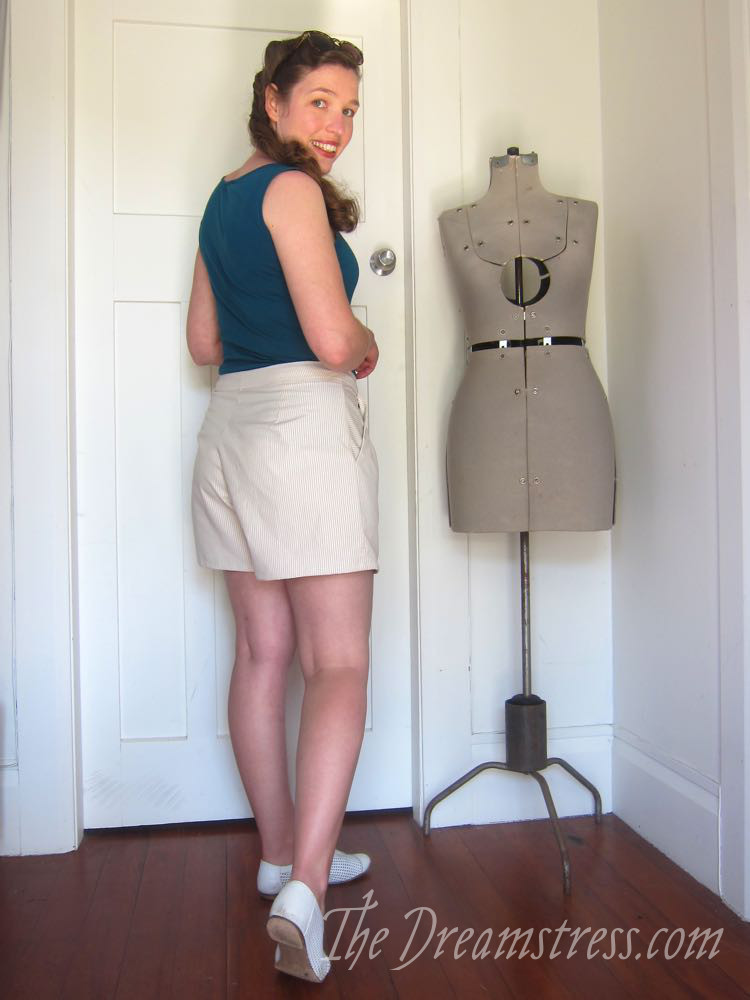
Between the sea, the sand, the sun, and finding food and friends, I was in absolute heaven.  And I had the perfect outfit for it too (look at me, cunningly bringing it back around to sewing!  😉 )

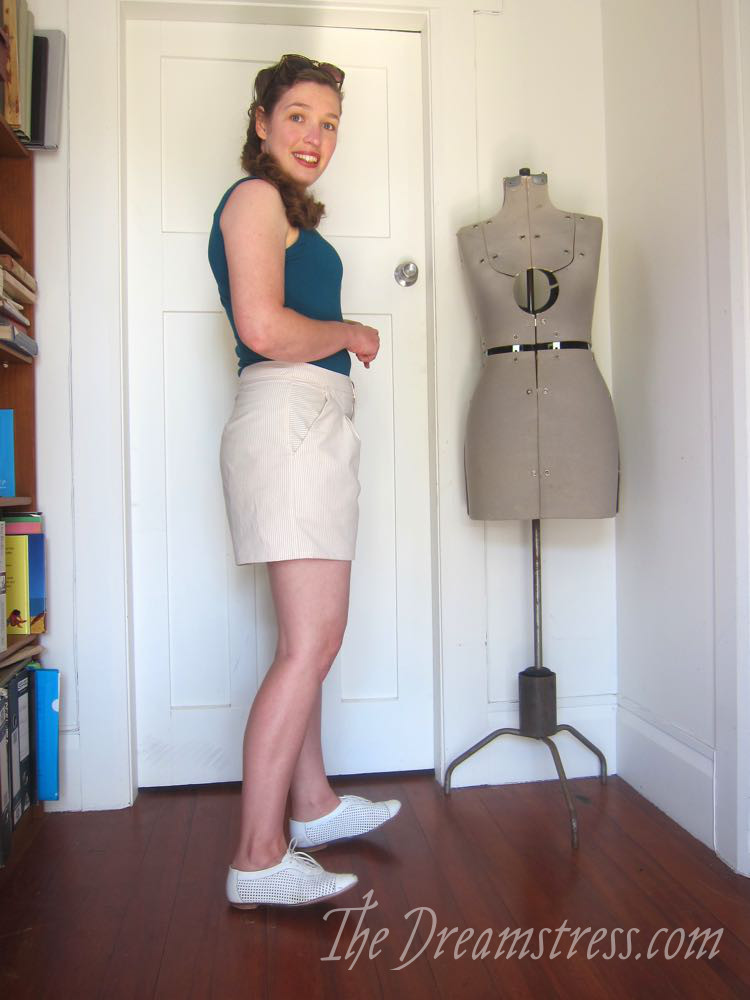
Clamdigging shorts in Dunedin, thedreamstress.com14

I am constantly on the lookout for a good shorts pattern: one that sits high enough on my hips, but not all the way at my true waist, and is low enough on my legs, and has enough curves to fit my curves, and is roomy enough to accommodate all the crazy things I want to do in a day, and has BIG pockets to hold all the interesting things I accumulate in a day.

Clamdigging shorts in Dunedin, thedreamstress.com

Having failed in my attempts to find such a pattern, and completely failed in my attempts to just suck it up and buy shorts (not a happy experience), I just made my own pattern.

Clamdigging shorts in Dunedin, thedreamstress.com

I’m going to tweak it a teeny tiny bit next time, but basically, I love them.

Clamdigging shorts in Dunedin, thedreamstress.com

This pair is made from the same fabric as my Hepburn in Hakatere trousers.  I had exactly enough left over.

Clamdigging shorts in Dunedin, thedreamstress.com

Happiness!


(dang it, now I really want to go swimming!)

The HSM 2016: Challenge #2: Tucks & Pleats

February’s challenge for the Historical Sew Monthly 2016 (due by the end of Feb) is Tucks & Pleats:  make a garment that features tucks and pleating for the shape or decoration.

Tucks and pleats have been used for shaping and decoration almost as long as clothing has been around.  This 5,000 year old tunic is  one of the  (if not the) oldest extant garments, and the pleating of the sleeves is used to give it shape and interest:

Pleated tunic, Ancient Egyptian. 1st dynasty, c. 3100-2890 BC. Werner Forman Archive/ University College London, Petrie Museum

Pleated tunic, Ancient Egyptian. 1st dynasty, c. 3100-2890 BC. Werner Forman Archive/ University College London, Petrie Museum

My first reasonable historical costume was a 16th century working class Flemish outfit, for which I learned to do roll-pleats, in imitation of the deliciously round, full pleats shown in paintings like Breugal’s Wedding Dance.  According to my research at the time, we still don’t have any evidence that rolled pleats were used in 16th century Flanders, but they certainly do give the look.

Pieter Brueghel the Younger or workshop (1564—1638), Peasant Wedding Dance, Replica of a lost work of Pieter Bruegel I, known from an engraving by Pieter van der Heyden, 1610

Pieter Brueghel the Younger or workshop (1564—1638), Peasant Wedding Dance, Replica of a lost work of Pieter Bruegel I, known from an engraving by Pieter van der Heyden, 1610

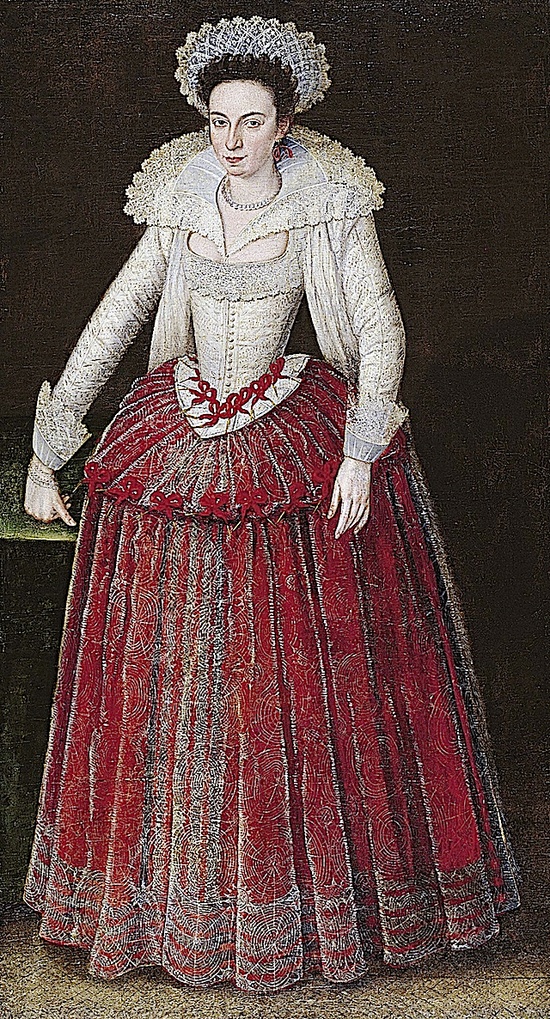
The large cartwheel tuck of turn-of-the-17th century fashion is something that I am still not brave enough to tackle.  It both fascinates and revolts me – but if I could replicate Arabella’s spiderweb embellished skirt, I’d definitely attempt it!

Lady Arabella Stuart by Marcus Gheeraerts the Younger, Norton Simon Museum, Pasadena, Ca, ca. 1605-10

Lady Arabella Stuart by Marcus Gheeraerts the Younger, Norton Simon Museum, Pasadena, Ca, ca. 1605-10

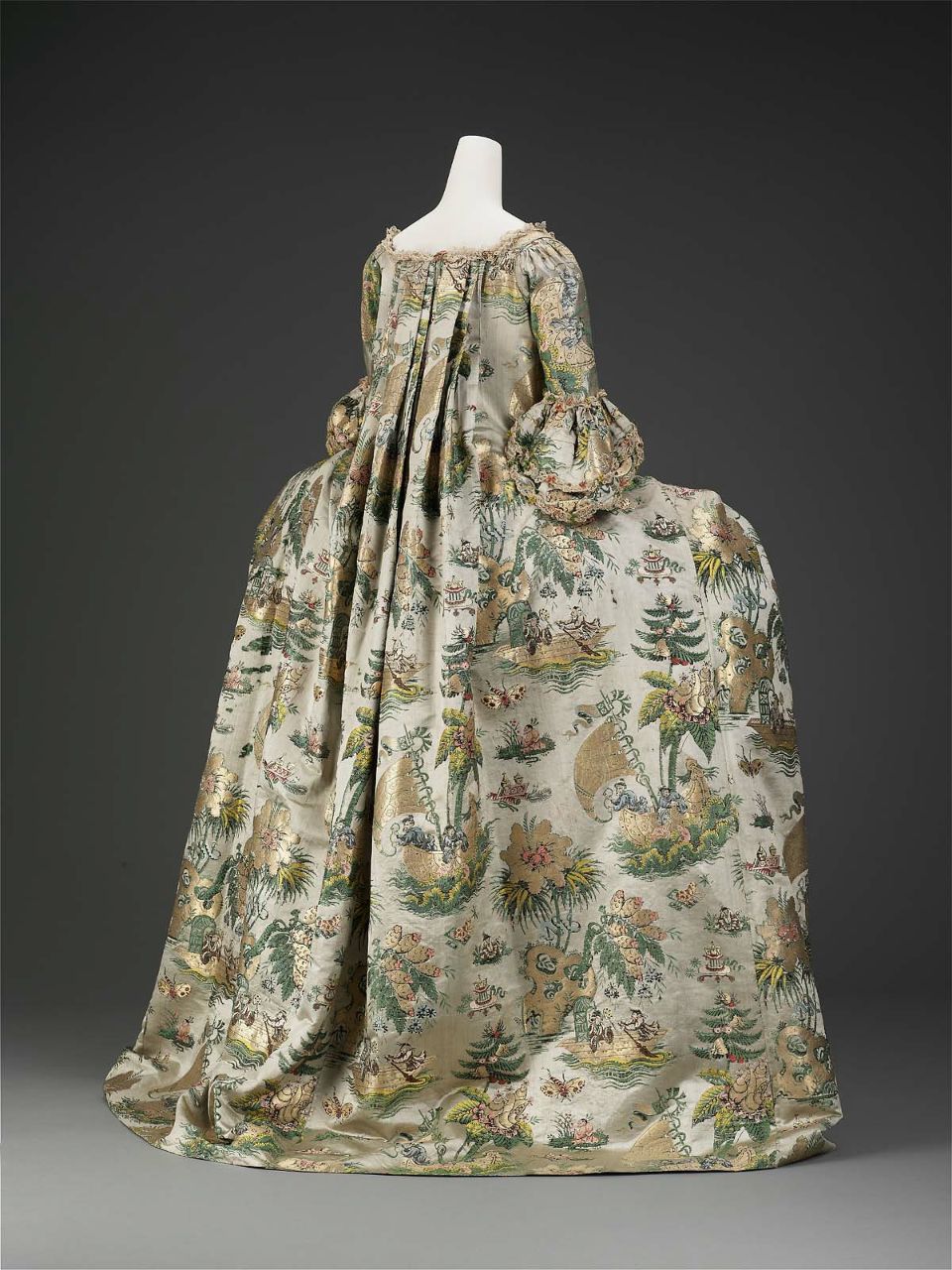
You cannot possibly have a discussion of pleats and tucks without a robe a la francaise – I am more than a little obsessed with the so called ‘Watteau’ pleating (which may be why I have a finished francaise, two half-started ones, a finished pet-en-l’aire, and fabric for three more… 😉 )

Dress, petticoat, and stomacher (dress) possibly Dutch, About 1735; dress restyled about 1770 France, Museum of Fine Arts, Boston

Dress, petticoat, and stomacher (dress) possibly Dutch, About 1735; dress restyled about 1770 France, Museum of Fine Arts, Boston

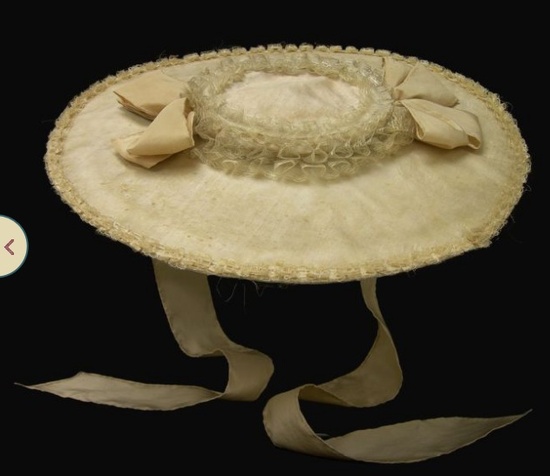
The 18th century did exceptional pleating in so many ways, like the trim on this hat:

Bergere Hat 1760-1785 English, silk over straw, replaced ties, Colonial Williamsburg

Bergere Hat 1760-1785 English, silk over straw, replaced ties, Colonial Williamsburg

Just look at the phenomenal pleat work on the back of this evening robe:

Evening overdress, 1797—99, British, silk, linen, Metropolitan Museum of Art, 2009.300.219

Evening overdress, 1797—99, British, silk, linen, Metropolitan Museum of Art, 2009.300.219

Continuing on my quest to include this in as many Rate the Dress inspiration posts as possible, the beautifully tucked paisley petticoat:

Petticoat, 1855—65, American, cotton, Metropolitan Museum of Art

Petticoat, 1855—65, American, cotton, Metropolitan Museum of Art

This dress wasn’t the most popular when I posted it as a Rate the Dress, but I still think that the way the shaping is achieved almost entirely through the use of tucks throughout the torso is amazing.

Dress, E Stauffer, New York, ca 1900, silk, Metropolitan Museum of Art, 1979.346.207

Dress, E Stauffer, New York, ca 1900, silk, Metropolitan Museum of Art, 1979.346.207

The loose pleating on the right fashion sketch inspired my tea gown:

Tea-gown of light silk with lace front (on the right). (1899) via the NYPL digital gallery

Tea-gown of light silk with lace front (on the right). (1899) via the NYPL digital gallery

And, of course there is Emily’s heavily pintucked dress with pleated ruffle:

Evening dress worn by Mrs Emily Jane Mildon (nee Whitley), 1902-1904, Collection of Te Manawa Arts and Cultural Centre

Evening dress worn by Mrs Emily Jane Mildon (nee Whitley), 1902-1904, Collection of Te Manawa Arts and Cultural Centre

To finish, pleats for men and women in the back of their jackets:

Journal des Dames et des Modes 1912

Journal des Dames et des Modes 1912