Latest Posts

Rate the Dress: ca. 1900 florals, lace and satin

Last week I showed you an all-white 1820s frock with a profusion of detailing.  I expected that you would dislike the slightly raised waistline, the mish-mash of design inspiration, and the plain white fabric, but, much to my surprise, most of you liked it! Some of you thought it was fussy, and that the hem was particularly misplaced, bringing the score down to 8.3 out of 10.

Since last week’s all white frock went over so well, we’re going to stick to pale tones this week, with just a bit of bright hues and florals to lift the design.

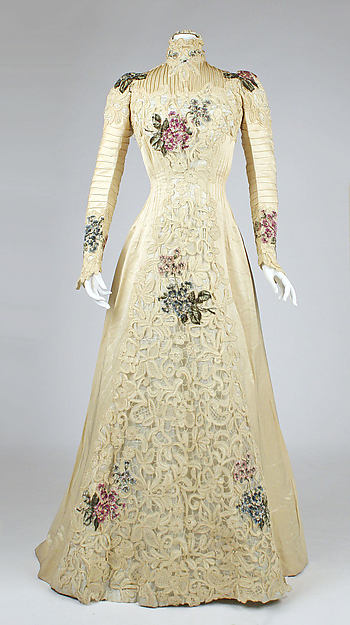
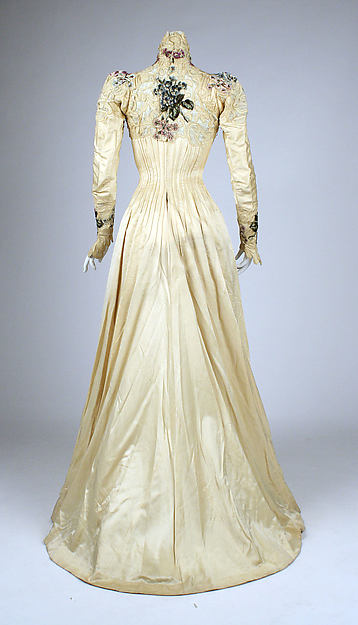
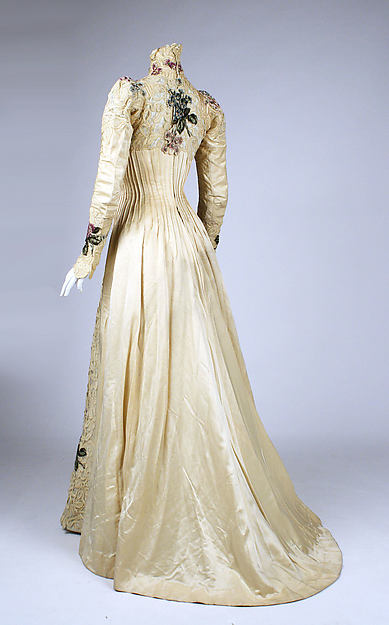
Sadly, the Metropolitan Museum of Art gives very little information about this gown, so we’re going to have to do a bit of guessing as we rate it:

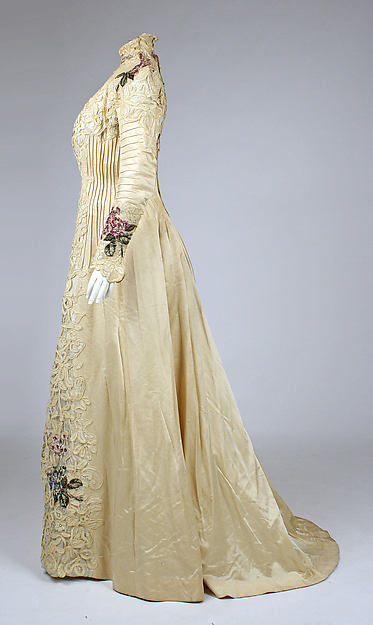
The dress is of silk satin trimmed with lace (probably linen), and is shaped almost entirely through the use of pintucks.  Long graduated pintucks in the torso  nip in the dress around the waist, and short horizontal pintucks down  the front of the sleeves help the sleeves to curve with the arm

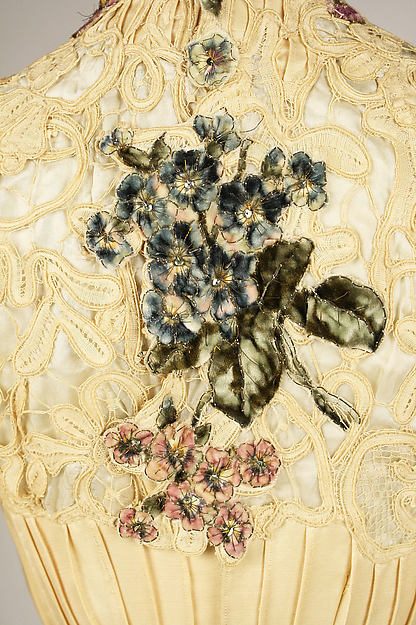
When I first saw the dress I thought the floral patterns might be warp-printing (chine a la branche), but a closer inspection reveals that they are appliques, and it almost looks as if they might be hand-painted.

The simple, smooth  silhouette without a waist seam, paired with very feminine trimmings and light colours, suggests that this gown may be a tea gown.

The relatively simple back closure, hidden under the floral appliques in the upper back, supports this, as it would make the dress easy to don.

While the dress is simple in some respects, the overall construction is very clever – the pintuck shaping is inspired, and the pink and blue flowers are carefully balanced across the dress.  Clever it may be, but does it work?

Rate the Dress on a Scale of 1 to 10.

The HSF/M ’15 Challenge #8: Heirlooms & Heritage

As sewers and historians we’re part of a long heritage of women and men who sewed and created to clothe and costume their world.  We carry on traditions of techniques that have been used for hundreds, if not thousands of years, and which helped to sustain whole communities and civilisations.

We’re the products of all those years of knowledge, and experimentation, and we use it to recreate and understand the past as best as we can.  We’re also the products of our own heritage – the history and traditions of all the people who gave birth to children who gave birth to children who gave birth to us.

For Challenge #8 of the Historical Sew Monthly: Heirlooms & Heritage we’re honouring history and the future by celebrating our own personal heritage, or creating something that will be a heirloom for the next generation of sewers and makers as we:

re-create a garment one of your ancestors wore or would have worn, or use an heirloom sewing supply  to create a new heirloom to pass down to the next generations.

For some of us our ancestry is important: perhaps you grew up with the traditions of your culture, or have, or have always wanted to, research and understand them more.

For others, ancestry is just the DNA that happened to go together to make you, and what matters is what you put into the future: the heritage you create on your own.

The challenge is for both groups of people: honour the history of your family, or create some history of your own.


Personally, I’m a little bit of both groups.  I’m close to my family, and thanks to aunts on both sides who have done some amazing genealogy work, I know quite a bit about my family history.

On one side I can trace my ancestors past the first one to arrive in the US (before the Mayflower no less!), back to England, and across generations and generations of minor nobility, and then back across the English Channel with William the Conquerer to France, and back through the French nobility, all the way to Charlemagne, and back through him as far as his line can be followed.

I don’t feel ‘proud’ of these ancestors particularly, but it does amaze me to think that you can start with me and name my mother, and her mother, and her mother, and her father, and so on and so forth (mostly fathers.  I’m afraid the records get a bit fuzzy on female names for a 400 year stretch in the Middle Ages) back for over 1,000 years.

I’m a bit of the other group because I do believe that what is important is not where I came from, but what I make of myself.  The history  I create is what really counts.

Whichever path you decide to take for this challenge: family history, new heirloom, or creating a heirloom using a piece of family history, I think the important thing is to make it count.  To create an item that really is worthy of the future, and that is the best possible representation of what you know and can do.  Something that you can be completely proud to have created, and that hopefully your descendants can also admire and cherish.

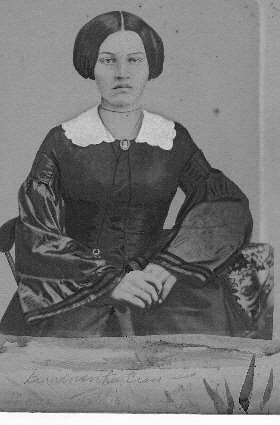
To finish up, my favourite family photo.  I’d hoped to recreate this for the challenge, but my sewing schedule  won’t allow it, so it will have to wait for another opportunity.,

This is my great-something grandmother in the 1860s.

My Great-Something Grandmother


I’ve always loved this photo because she looks quite a bit like me.  We’ve got the same slightly-too-prominent chin and nose (the chin is a very distinctive family trait), the same rounded oval of a face, and slightly too-full lips that droop at the corners when our face is still.  Even the small bust and wide ribcage are there – and the asymmetrical shoulders!  The similarities start to  get a bit creepy if you look too closely…

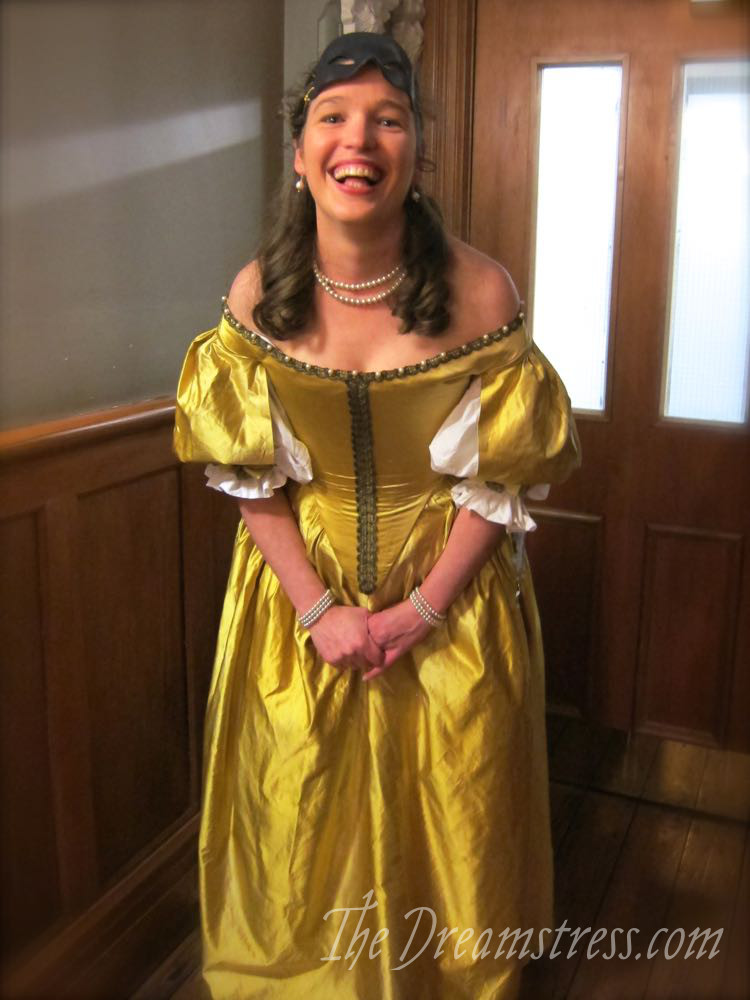
The 1660s Ninon gown – now with trimmings!

I’ve held off on trimming the Ninon gown for literally years, because I loved it so much untrimmed, and have been afraid I wouldn’t like it as much trimmed.

But I’ve finally sucked it up and done it, and (luckily!) I love it even more with trimming!
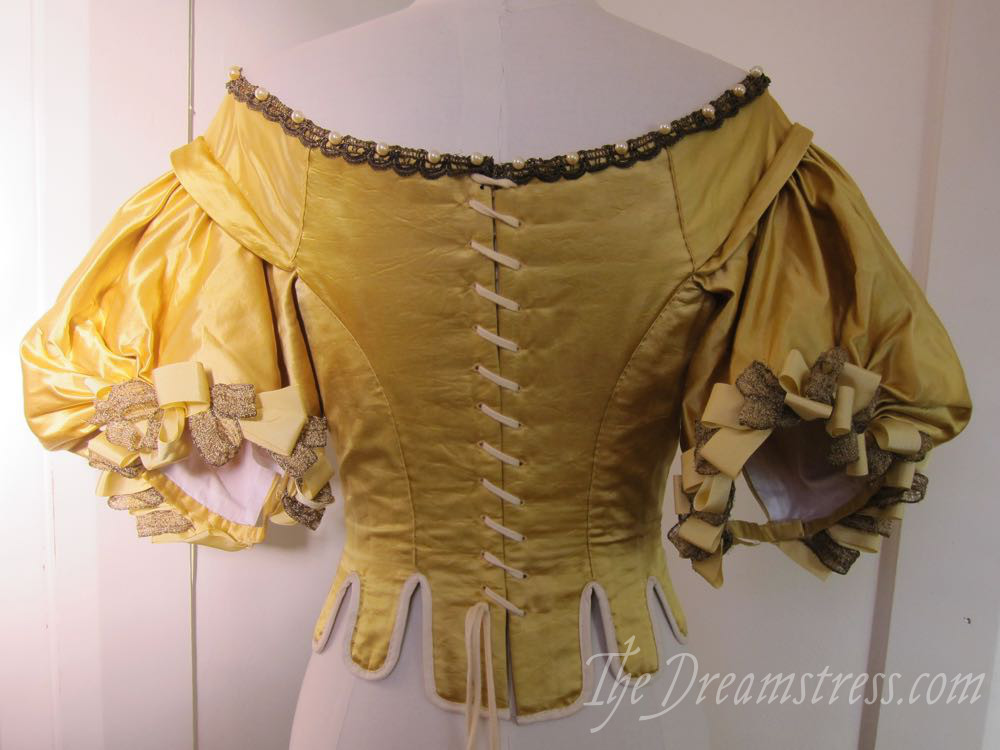
1660s Ninon bodice thedreamstress.com5

For trimming  inspiration I wavered between the Beaubrun portrait that had been my primary inspiration throughout the making of the dress:

Élisabeth (Isabelle) d'Orleans, Duchess of Guise by Beaubrun, 1670

Élisabeth (Isabelle) d’Orleans, Duchess of Guise by Beaubrun, 1670

And the van der Helst portrait of a couple, which appealed to me because of the simplicity of the trimmings (I know that a gazillion bows going up the front of your bodice doesn’t seem simple, but it’s really such a basic trim):
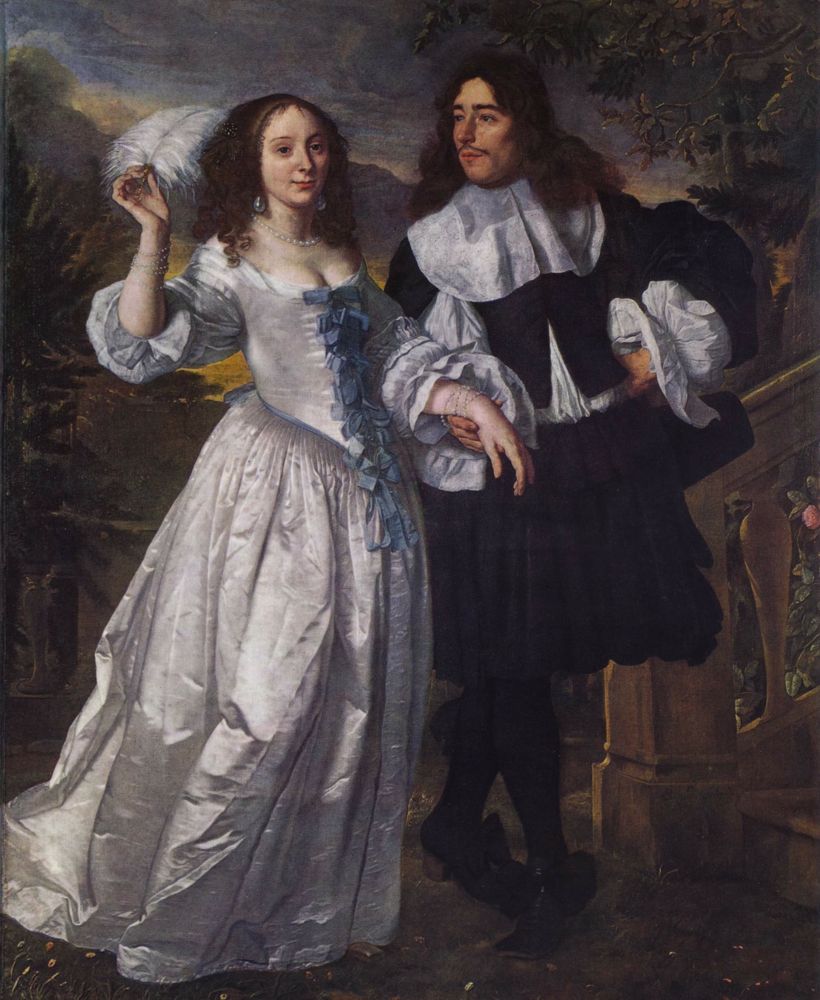
Portrait of a couple, 1661, Bartholomeus van der Helst

Portrait of a couple, 1661, Bartholomeus van der Helst

Walking couple (detail), 1660-61, Bartholomeus van der Helst

Walking couple (detail), 1660-61, Bartholomeus van der Helst

At first I leaned toward the ribbon for simplicity.  I’ve got some rather nice quality viscose ribbon that is a good match for the ribbons on van der Helst’s woman in colour, width and texture.  I made a bunch of bows from them  and pinned them up the front, and while they looked lovely, the were a little too obvious.

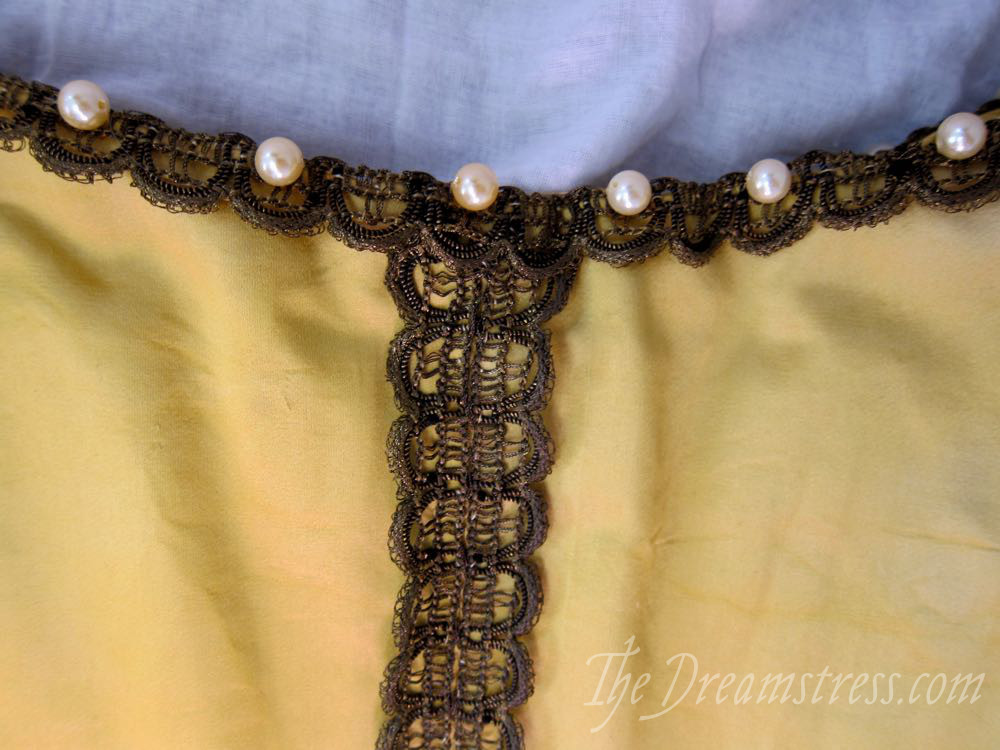
So I had a serious rummage in the trim stash to see if I could find anything that evoked the look of Élisabeth’s dress.  Her trim seems to be mostly jewels (because hey, if you are the richest woman in France, you might as well flaunt it), but I could use it as a guidelines to overall aesthetic.  I’d purchased some modern gold metal lace that was specifically intended for this gown a while back, but the bright  gold clashed with the yellow, and the lace was just too coarse for the quality of the silk.  Sigh.  Modern workmanship…

And then I found this passementerie:
1660s Ninon bodice thedreamstress.com3

Perfect!

This trim mostly came off of a large doily/table cloth type thing from the 1970s.  It had a red velveteen back and a brocade front, and the trim sewn round the edges.  I’ve seen similar smaller doilies in the exact same materials at op shops over the years, so it must have been a ‘thing’.  I haven’t picked up the smaller ones because the price didn’t match the amount of trim I’d get off of them (and at the time I wasn’t buying it for a purpose), and unpicking the trim was a headache and a half.  In retrospect,  I wish I had!

1660s Ninon bodice thedreamstress.com2

Look how beautiful the trim looks turned and sewn back up down the front?  I had almost  EXACTLY  enough to trim the dress down the front and around the neckline, with less than 3″ of trim left over.
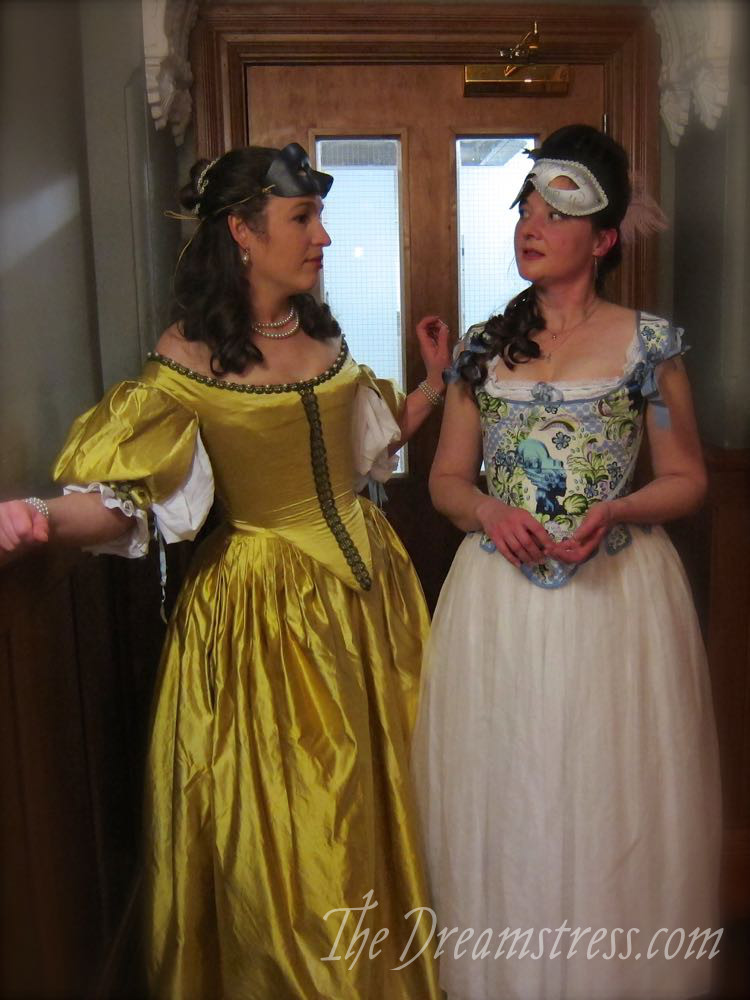
1660s Ninon at a Bastille Day Ball thedreamstress.com1

I really like the way the trim provides quite a strong contrast to the yellow,  while still being quite subtle.

To glitz it up a bit more, and to further evoke the jewels of  Ã‰lisabeth’s gown, and because I love pearls and basically think you can never have too many, I sewed faux pearls around the neckline:
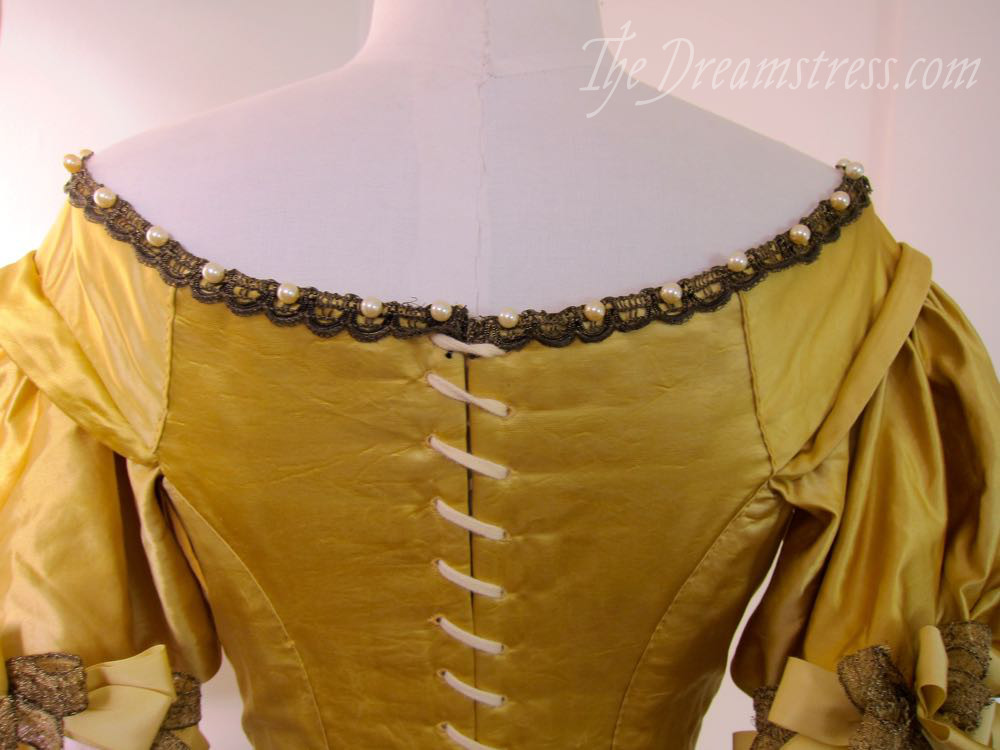
1660s Ninon bodice thedreamstress.com6

The pearls are courtesy of the ever wonderful Lynne, who gave me a whole jewellery box full of them.  I may go back and sew more between each pearl around the neckline, and maybe some down the front as well…

For the sleeves, I got creative.

1660s Ninon bodice thedreamstress.com7

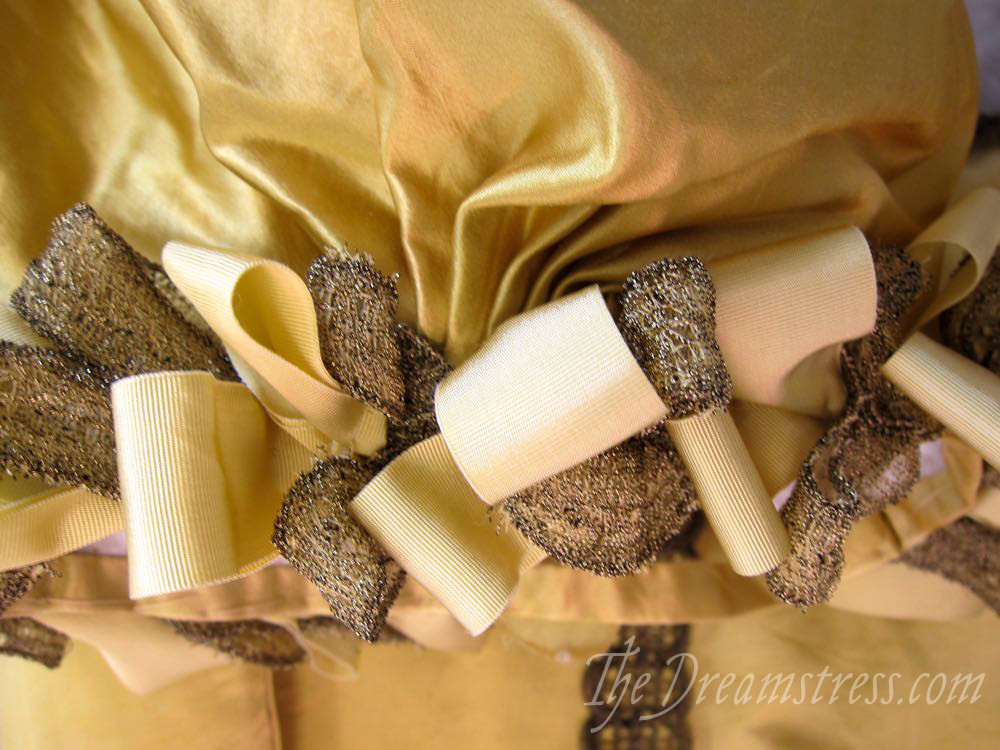
The yellow ribbon is a nice viscose grosgrain, and the gold lace trim is (believe it or not) the selvedges from some scraps of reasonable quality gold-lace fabric that I picked up in a bulk bag of fabric from an op-shop, and kept, just in case they could be useful.

Inspired by Élisabeth’s sleeve’s, I  formed the ribbons and lace into loops, and sewed them on to a length of ribbon, which I then sewed around the sleeve cuffs.  I love how they just peek out from the fullness of the sleeve.
1660s Ninon bodice thedreamstress.com4

I was afraid they would be very overpowering, but actually, they are quite subtle.  In retrospect I wish I’d included blue ribbons too, just like  Ã‰lisabeth’s, so they are a little less subtle.  Someday I may unpick and re-do.

I’m also on the lookout for more of the passementerie trim, so that I can sew the curved seams of the bodice front (though they aren’t entirely necessary, as there are plenty of examples without them.

But for now, a fully trimmed Ninon!

1660s Ninon at a Bastille Day Ball thedreamstress.com3

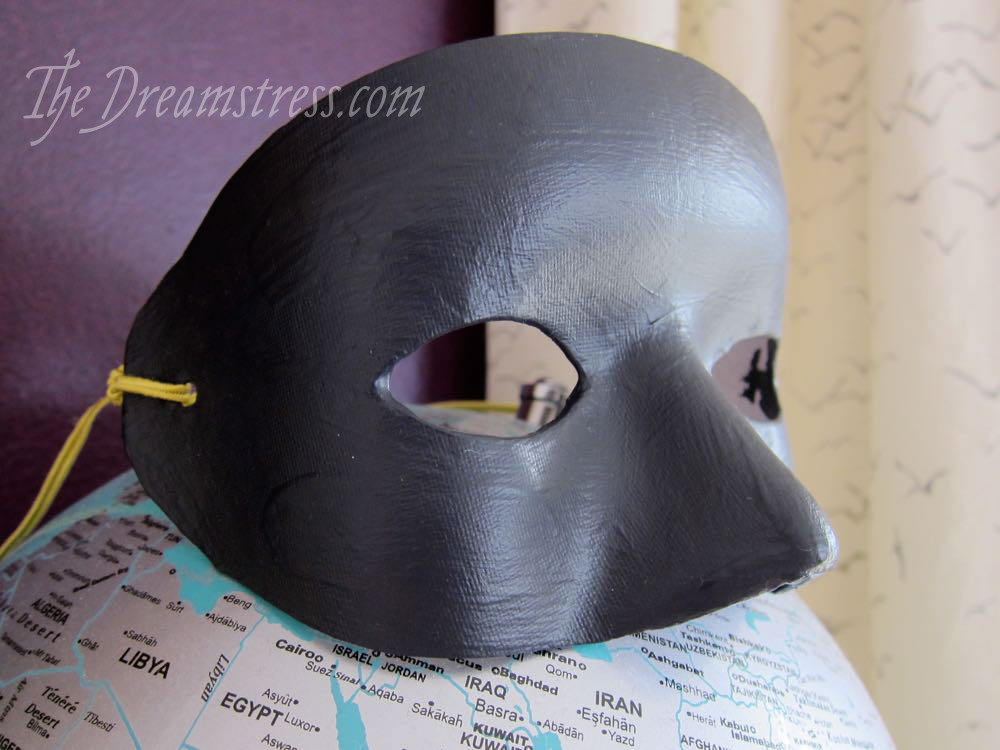
And, just in case anyone is wondering, the mask is a simple full-face paper mask, cut down to follow the simple curved shapes of the masks seen in 17th & 18th c masquerade portraits (though theirs had a lot less face shaping), and painted a dark purple-black, which I was delighted to discover is Resene ‘Bastille.’  How appropriate!
1660s Ninon bodice thedreamstress.com1

Happiness!

1660s Ninon at a Bastille Day Ball thedreamstress.com2