Latest Posts

Rate the Dress: Walking in Stripes in the late 1860s

Last week I showed you a Regency era fashion plate that featured  a decidedly interesting evening dress.  Opinions on the dress were decidedly divided: you either thought it was fabulous (with small caveats about the peplum and bodice trim), or hated it.  And you either thought it would be even more fabulous on a body, or far less fabulous!  So most scores were either well below 5, or well above 5, resulting in a rating of 7.4 out of 10.  Wackiness and all, I guess more of you liked it than not!

This week’s Rate the Dress in a little toned down compared to last week, but it does carry on the peplum theme.

This striped walking ensemble features a fitted bodice, a bustled skirt, and a separate belt with false peplum.

The dressmaker has made full use of the stripes: arranging them vertically, horizontally, and on the bias.  But the striped usage isn’t always what we’d expect: note how the bias chevrons down the front don’t form further ‘V’ shapes, but crook at angles across the point.  And the peplum stripes run parallel to the front edge, rather than angling  away and enhancing the effect of the skirt flare away from the waist.

What do you think?  Would a lady strolling down the sidewalk in this ensemble present a picture of scintillating interest as the stripes shifted and moved?  Is the potentially overpowering pattern and trim balanced by the subtle colours (in a generally unsubtle era)?

Rate the Dress on a Scale of 1 to 10.

The Port Vila Market

After my rather sombre previous post about Vanuatu, I thought it was time to show you something fun, and something that Vanuatu is doing SO RIGHT.

Or at least, fun for someone. I’ll confess up front that I’m writing this post because I know my parents will enjoy it!   And if you happen to enjoy it too  too, well, that’s an added bonus!

My parents are permaculture farmers in Hawaii.  They grow every tropic fruit you’ve ever heard of, and probably some you haven’t.  There are vegetables too: anything that grows well in the tropics without chemicals and fertilizers.  I grew up planting lettuce and picking mangoes and washing bok choi.  I love tropical fruits and vegetables: I love eating them, and I enjoy growing them (well, at least for a couple of months at a time when I’m home visiting).

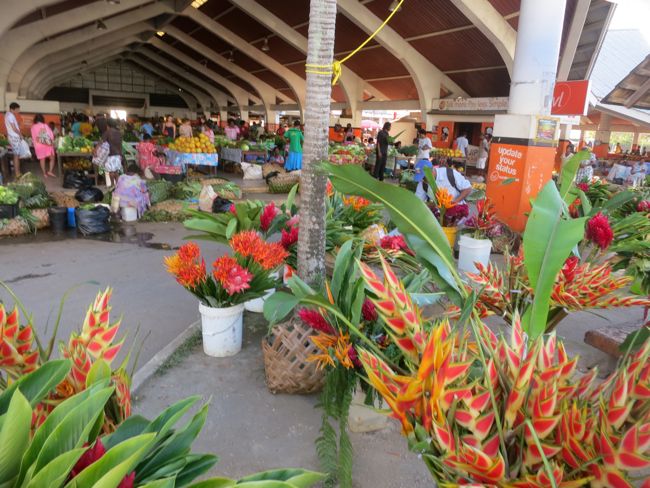
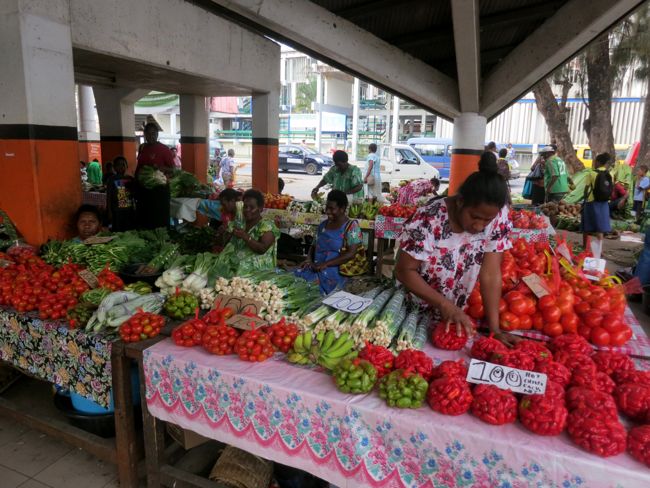
So when I discovered the fruit and vege market in Port Vila, I just about died of happiness.  Held in a huge open air pavilion on the waterfront, the market runs  24 hours a day from Monday morning to mid-day Saturday, and is table after table of tropical fruit and vegetables.  Visiting the market was my favourite activity in Vanuatu.
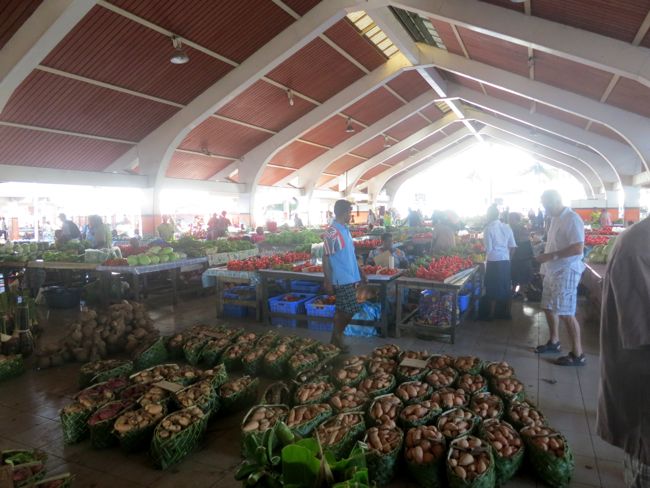
Market, Port Vila Vanuatu, thedreamstress.com

I loved it so much that we went to it almost every day we were there, sometimes multiple times.  We’d get off  a  bus in front of the market, I’d wander around it smiling from ear to ear, in a haze of delight, and then we’d go off and do whatever we were doing in town, and then come back through the market before catching a bus home.  There was shade, and space to wander and inspect, and wonderful smells and colours, and not a single stallholder ‘hawking’ their wares.
Market, Port Vila Vanuatu, thedreamstress.com

I think it would be impossible not to love the market.  At the front are the flower sellers, with buckets and buckets of ginger and heleconia, parrot beaks and parakeet flowers, marigolds and cockscomb.  And this was the middle of winter in Vanuatu, when tropical flowers are at their scarcest!  I can’t imagine what it would be like in summer!

And then, in the pavilion itself, a wonderland of fruit and vegetables.  And, as far as I could determine, almost everything in the market was organic!

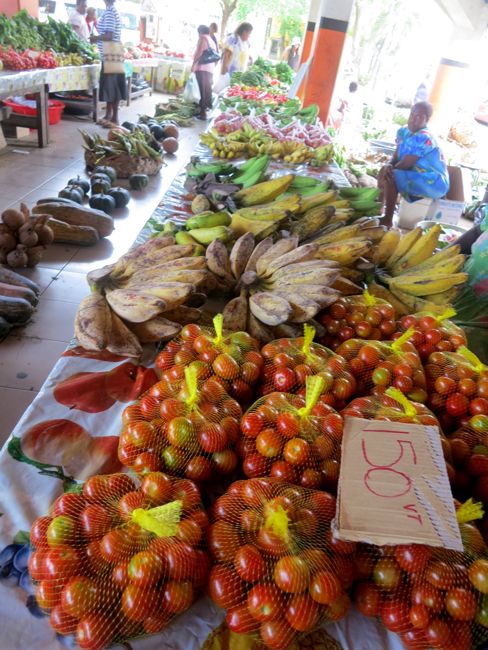
There were at least half a dozen different kinds of banana: ladyfingers and at least two kinds of cooking bananas, plantains and apple bananas, as well as more standard Williams-type varieties.
Market, Port Vila Vanuatu, thedreamstress.com

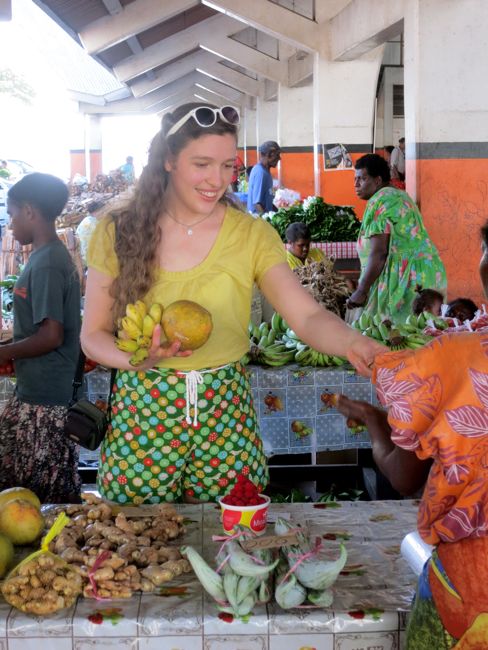
I bought a hand of tiny ladyfinger bananas: delicate and sweet.  I like bananas, but only in small doses, so ladyfingers are perfect Leimomi sized bananas.
Market, Port Vila Vanuatu, thedreamstress.com

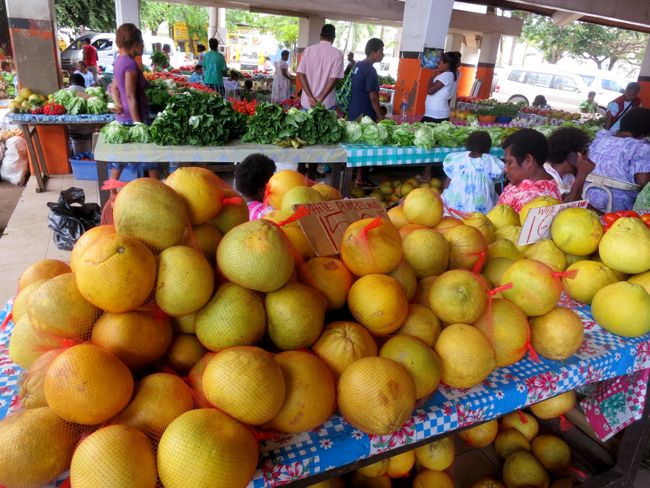
I also bought a single small pamelo (pamplemouse), and looked longingly at the huge piles  of pamelo on some of the tables.

If you are wondering about prices, 100 vatu is worth almost exactly US$1, or NZ$1.25, so a 100 vatu  hand of bananas  would be US$1, or NZ$1.25.
Market, Port Vila Vanuatu, thedreamstress.com

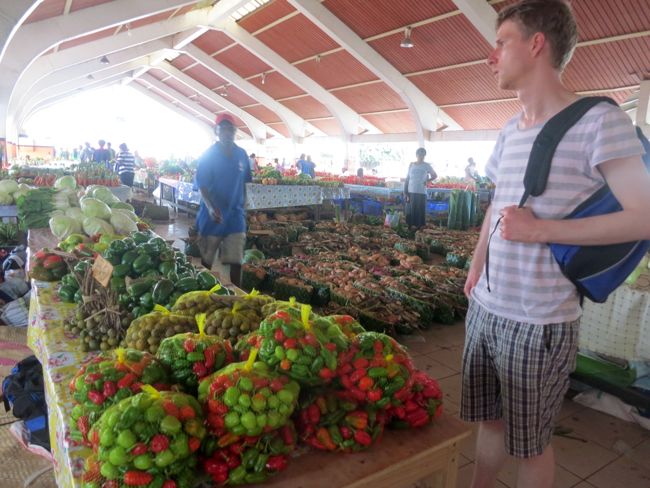
There were bags and bags of tomatoes, from small cherry tomatoes, to bigger sandwich tomatoes.  Equally popular were peppers: big bell pepper capsicums, small sweet peppers, and small hot peppers.
Market, Port Vila Vanuatu, thedreamstress.com

Market, Port Vila Vanuatu, thedreamstress.com

One of only two things I didn’t recognise in the market is shown in the photo above: it’s the bundles of round greenish fruit on stick stems (and the bag of the same fruit).  A lady  at one stall gave me one to try, but I’m afraid I thought it was horrible: like a blandly citrus flavoured Brazil nut.  I met a tourist from Thailand who was also familiar with lots of tropical fruit, and didn’t know what it was either. (but more than likely, the next time I talk to Mum she’ll say “Oh, those are x, they are a relative of x”!)

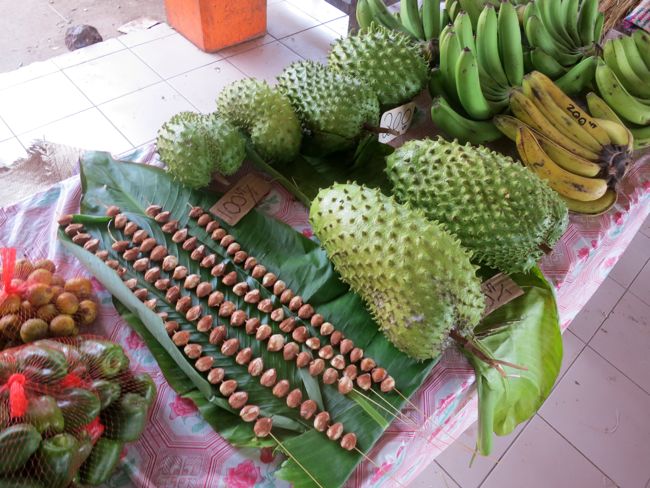
The other thing I didn’t recogise were some sort of nuts strung on to coconut stems.  I wanted to buy some and try them, but Mr D was too worried about germs, so I passed.
Market, Port Vila Vanuatu, thedreamstress.com

Most things though, I did recognise.  I know and love the soursop (guanabana) in the photo above.  In Hawaii I make it into the most delicious, delicate tropical ice cream.

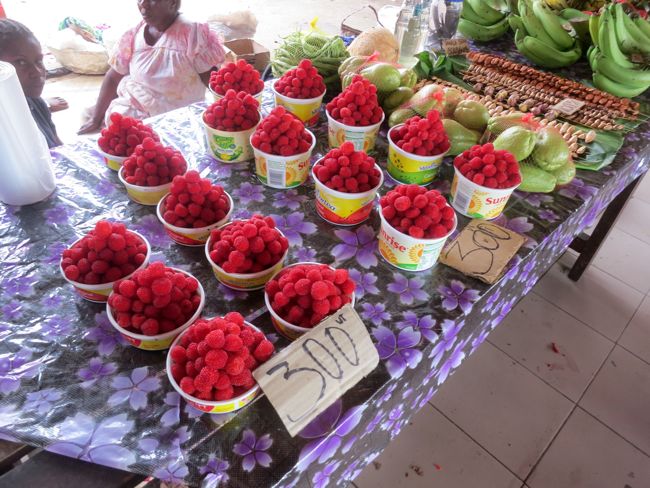
There were punnets of what I would call thimbleberries or ola’a, but the Vanuatuans called rasberrys (no, I’m not spelling that wrong).  I was amazed at how pristine they were, in their little tubs.  Thimbleberries are incredibly fragile, and it’s almost impossible to pick them without smashing them. I’ve since looked them up, and it turns out they are what is called West Indian Raspberries – not the thing North Americans call thimbleberries.
Market, Port Vila Vanuatu, thedreamstress.com

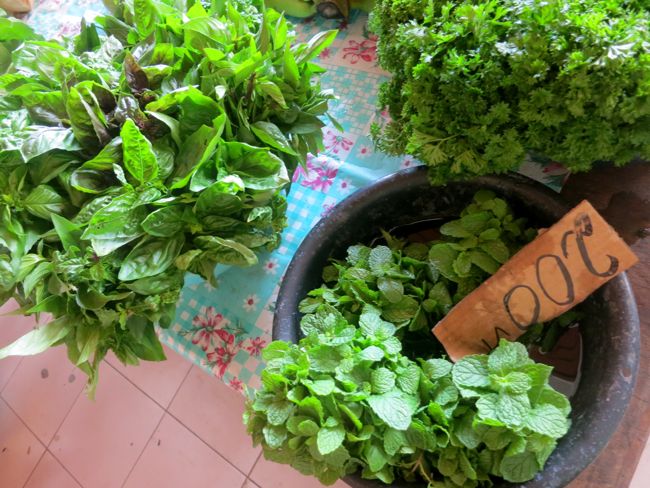
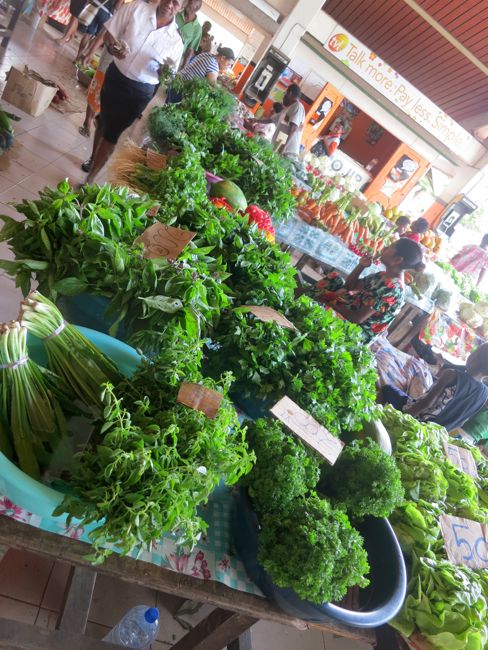
There were bundles of herbs: basil parsley, and mint, cilantro (coriander), chives and lemon basil…
Market, Port Vila, Vanuatu, thedreamstress.com

Market, Port Vila Vanuatu, thedreamstress.com

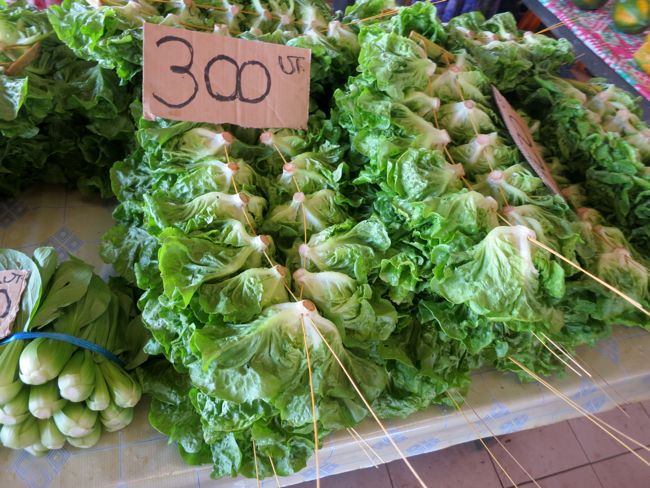
There were beautiful lettuces: romaine and cos, as well as softer leafy varieties.  I thought the ‘packaging’ for the lettuce was so clever: a dozen heads strung onto two bits of coconut frond centre, and crossed through the stem of one head at the end, to make a bundle that would be easy to pick up and carry.  I didn’t ask, but I’m sure the price must be  per head, not for a whole bundle.
Market, Port Vila Vanuatu, thedreamstress.com

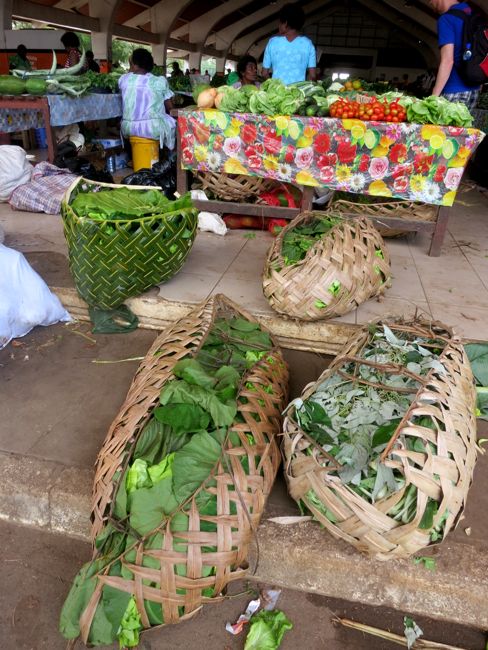
I also was fascinated and impressed by  how they store and transport the lettuce and other leafy greens in the tropical heat: in baskets of woven coconut fronts, lined with leaves to keep them cool and fresh, and covered with more leaves.
Market, Port Vila Vanuatu, thedreamstress.com

There were chayote, or choko, as they call them in NZ.  The resort we stayed at served a gorgeous steamed vegetable dish with chayote  and carrots and string beans.  It’s such a good vegetable for the tropics, with a very light, refreshing taste.
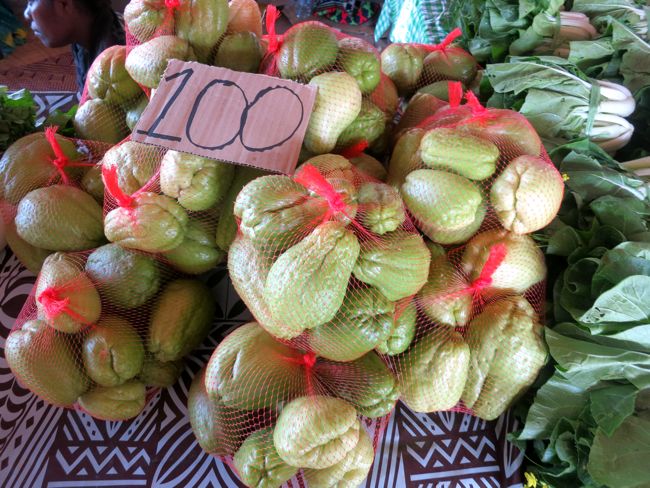
Market, Port Vila Vanuatu, thedreamstress.com

And beautiful daikon (Japanese radishes) with the greens intact.  One of my complaints about NZ is that they don’t sell daikon with the greens on, and I love daikon greens.
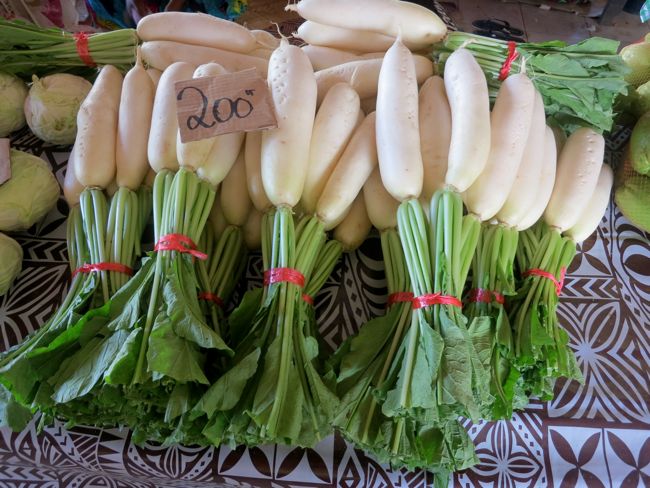
Market, Port Vila Vanuatu, thedreamstress.com

There were enormous cabbages, and lovely bok choi.
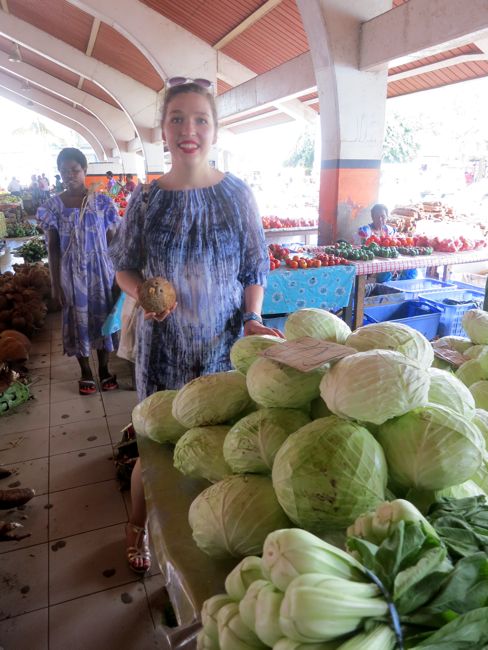
Market, Port Vila Vanuatu, thedreamstress.com

And huge, beautiful carrots, with wonderful flavour: really some of the best carrots I’ve ever tasted.
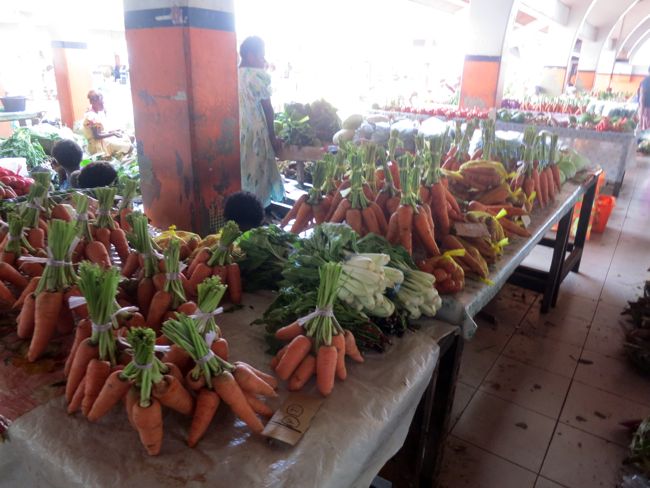
Market, Port Vila Vanuatu, thedreamstress.com

There were bunches of watercress, and piles of ginger and tumeric root:
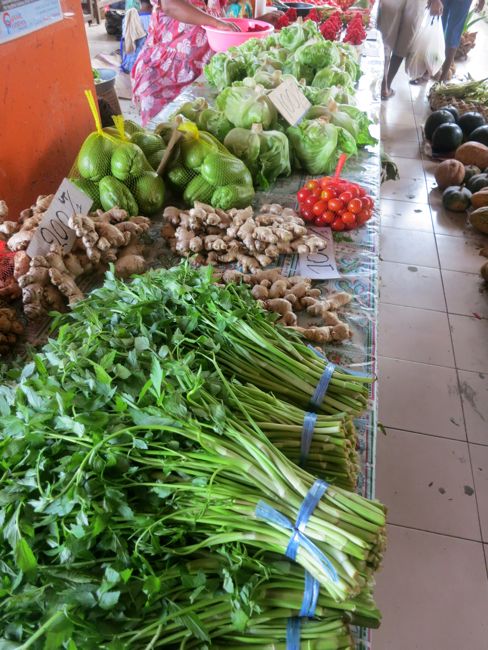
Market, Port Vila Vanuatu, thedreamstress.com

There were bundles of young fern greens, wrapped in banana leaves to keep them clean and fresh.
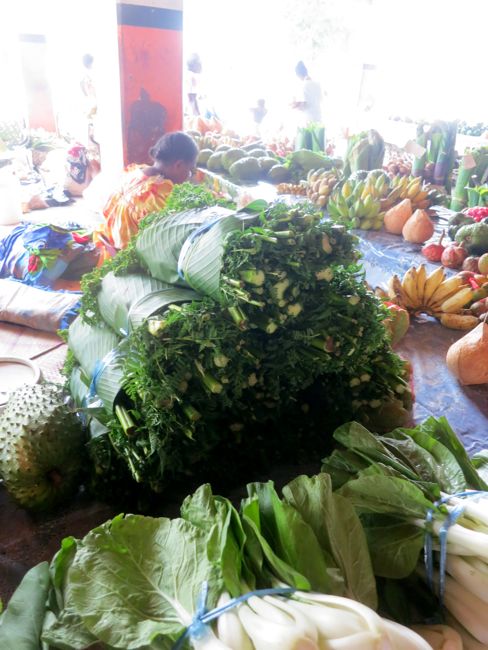
Market, Port Vila Vanuatu, thedreamstress.com

There were  peanuts, both washed and bagged (and possibly roasted), and raw, still attached the plant, in bundles (yep, that’s how peanuts grow!  That’s why they are sometimes called groundnuts).
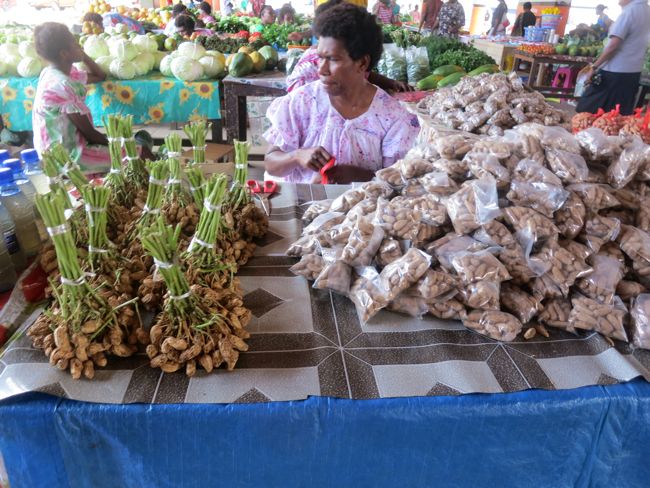
Market, Port Vila Vanuatu, thedreamstress.com

Peanuts seemed to be a very popular snack, based on the number of people we saw walking around with the bundles of plants with roots, and the empty bundles discarded all around the market (rubbish bins were few and far between, and it showed).
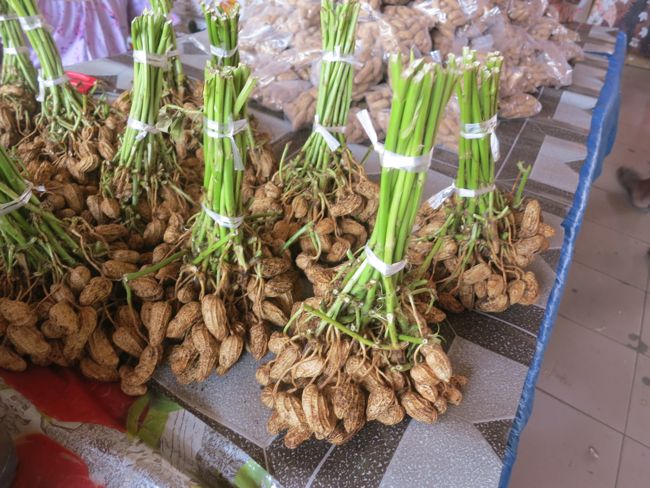
Market, Port Vila, Vanuatu, thedreamstress.com

The peanuts were snack food, but the market also sold the main starches of the Ni Vanuatuan diet, yams (yes, those are real yams, not the orange sweet potato that Americans persist in calling yams, or the oxalis roots that Kiwis have dubbed yams) and manioc(tapioca) roots, and taro (which I neglected to photograph).
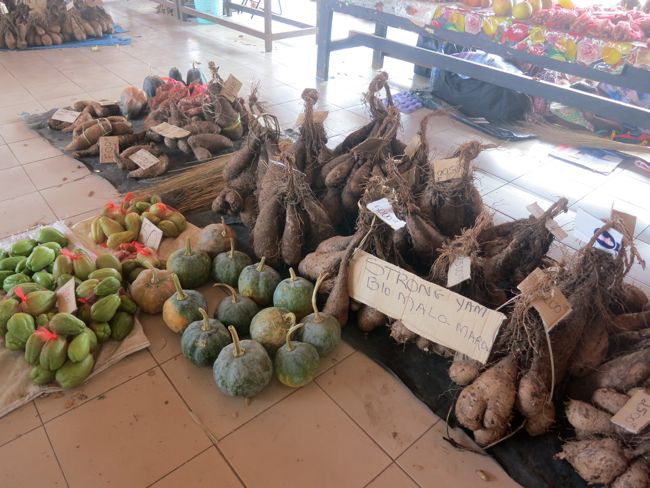
Market, Port Vila Vanuatu, thedreamstress.com

And orange and red kumara (sweet potato), which they called kumala
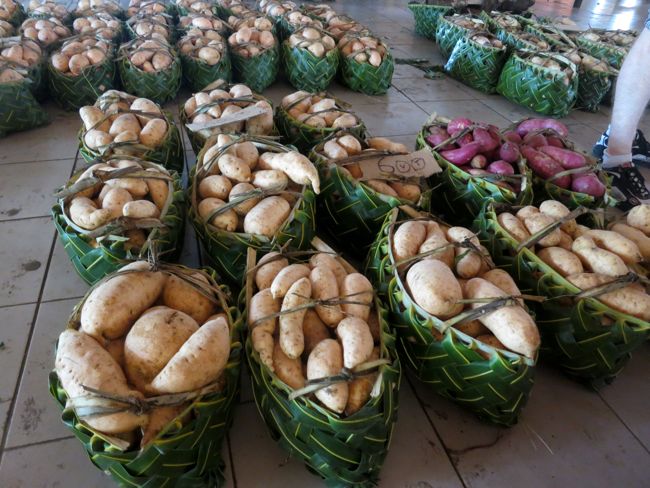
Market, Port Vila, Vanuatu, thedreamstress.com

And thick-skinned pumpkins:

Market, Port Vila Vanuatu, thedreamstress.com

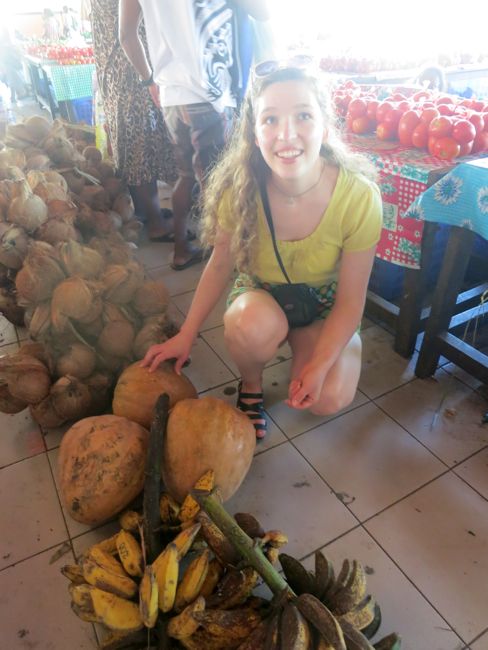
And, fascinatingly, bundles and bundles of what I realised were sprouting coconuts, stripped of most of their husk and sold 8 or 10 at a time (shown behind me in the photo above(.  It turns out sprouting coconut sponge is a traditional food in Vanuatu (clever them – imagine moist, coconut flavoured slightly sweet candy floss.  What I can’t understand is why it isn’t more popular in Hawaii!)

There were other staples for cooking with: bags of charcoal  (invariable in chicken feed sacks):
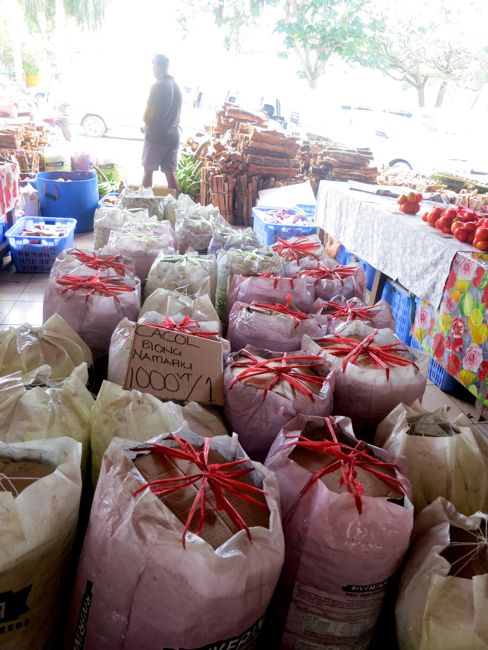
Market, Port Vila Vanuatu, thedreamstress.com

And faggots of wood:

Market, Port Vila Vanuatu, thedreamstress.com

My favourite thing though, as I could buy at least two a day, were green drinking coconuts with the husk cut away, for less than $1 each!
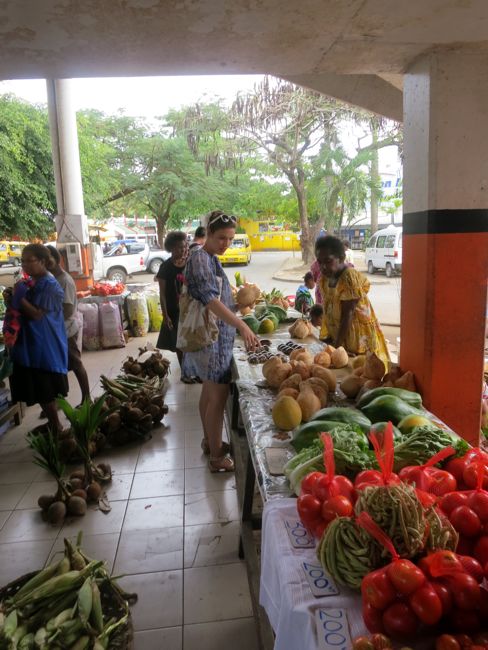
Market, Port Vila Vanuatu, thedreamstress.com

You could take them home whole, or ask the ladies sitting on the fringes of  the market, busily husking more coconuts to cut the top off for you, so that you could drink them then and there (to make Mr D happy I bought straws to drink them with so he didn’t freak out about germs and tropical diseases).
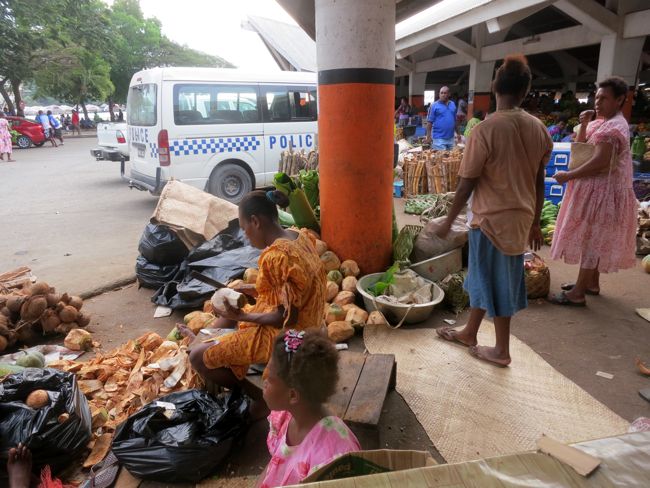
Market, Port Vila Vanuatu, thedreamstress.com


You may be wondering why  a city as small as Port Vila (under 50,000) has a 24 hour a day fruit and vege market.  It’s actually because Port Vila is so small and poor.  It’s cheaper and less work for market holders to set up for the week, and sleep behind their stalls, than it is for them to pack up and transport their goods back around the island home and then back again for the next market.  And I imagine few people had  fridges or ways to store the vegetables, so they had to be sold shortly after picking, and bought shortly before consuming.

As far as I could tell the stalls were collaborative village/family affairs, with multiple women (they were almost all women) watching each  stalls, and trading off napping on lauhala mats behind the stalls, eating their own meals and selling goods.  Periodically trucks would arrived, packed to the brim with new produce: bundles of coconuts and baskets of greens, which would be unloaded to replenish a stall.  Come midday Saturday all the trucks showed up, packed up whatever remained, and take it away, with new lots brought back Sunday night (hopefully with new women to run the stall for the week, and last weeks women having a break!).
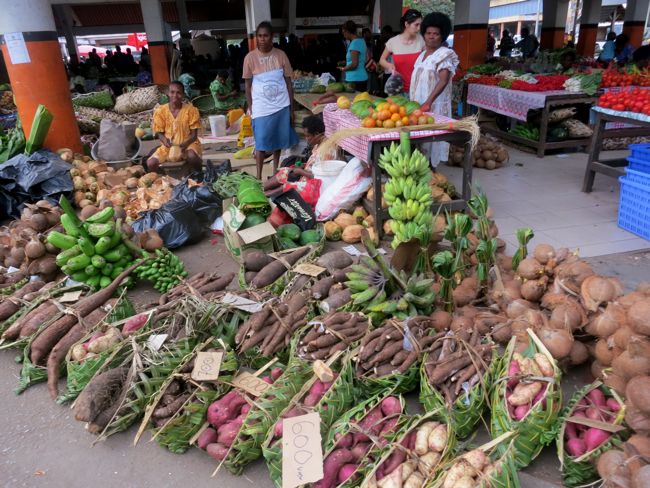
Market, Port Vila Vanuatu, thedreamstress.com

While it was popular with the tourists for its colours and the whole exotic factor, the market clearly existed primarily for the locals, which made me like it all the more.  I liked knowing that any money I spent  there went straight to a local family, and I liked the opportunity it gave me to interact, just a bit, with ordinary people.

My one huge regret about the market is that, staying at a resort, there was no opportunity for me to cook, and so little I could actually buy at the market.  I bought as many pieces of fruit and as many coconuts as I could safely eat in a day, but could only wish that I could buy the lettuces and daikon, the green beans and manioc (OK, manioc isn’t that nice, but once every 5 years its a fun novelty).  Maybe not the bitter melon though.

Mr D and I agreed that if we went back to Vanuatu we’d like to stay in accommodation with cooking facilities, so that we could really take advantage of the market.

The Happiest Place on Earth: Travels in Vanuatu

The first thing I noticed, climbing down the steep steps of the plane onto the tarmac in the tropical heat, was the smell.

Hawaii & Rarotonga smell of warmth, and flowers, and faintly, in the background, the clean, salty tang of the ocean.

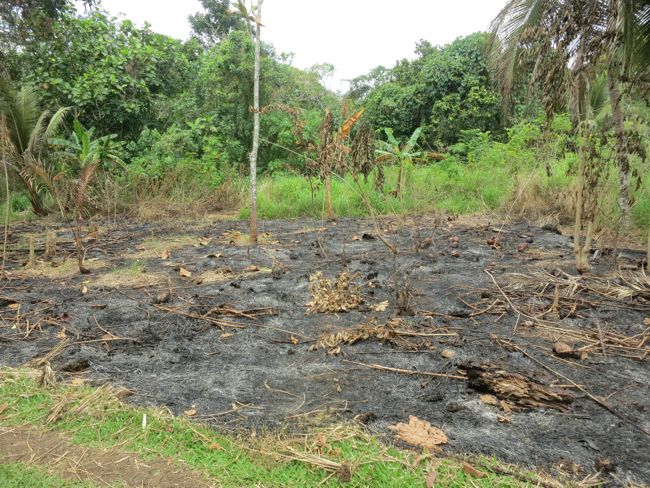
Vanuatu smelled of smoke.  It hung in the air, and caught in my lungs: burning vegetation and wood.  Flying over the island, or looking out over the island from any height, you could see the plumes and haze.  Small cooking fires, and larger patches of burning forest.

Travels in Vanuatu, thedreamstress.com

Travels in Vanuatu, thedreamstress.com

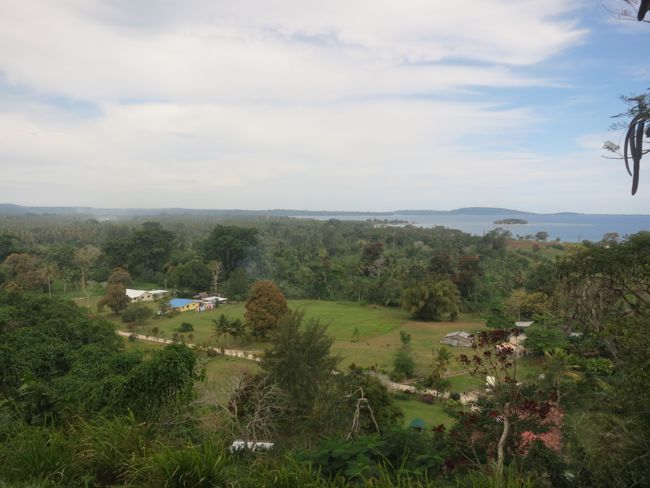
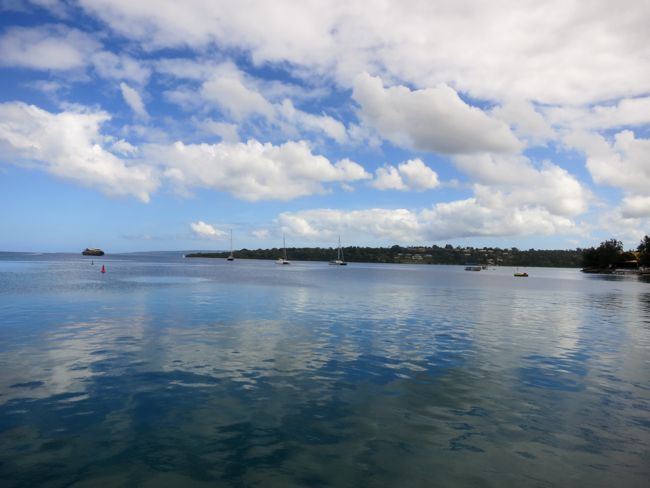
The next thing I noticed was the beauty.  Lush green hills, endless coconut plantations, a city centred on one of the most stunning  natural harbours in the world, dotted with miniature islands and fringed with white sand beaches.

Travels in Vanuatu, thedreamstress.com

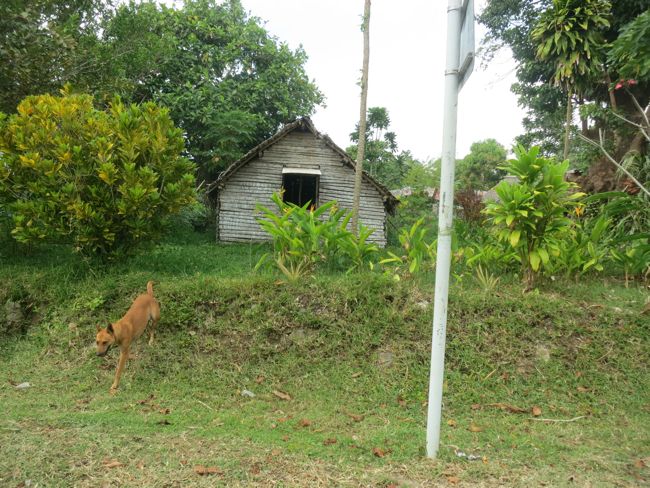
The final thing I noticed was the poverty.  I’ve never been to a third world country before, and Vanuatu is properly third world.  Most people live in shacks cobbled together from tin and cement, or wood and grass (well, technically palm fronds).  Huge portions of the population depend on subsistence agriculture: they eat what they grow, and if crops are poor, they don’t eat.

Travels in Vanuatu, thedreamstress.com

Travels in Vanuatu, thedreamstress.com

But yet, grass shacks aside, looking at the people, I don’t think that my life is really measurably better than theirs, or that Vanuatuan society would be much improved by the introduction of much in the way of first world standards.

I grew up poor in the subtropics.  No electricity and outhouses poor.  So I’m not just romanticising poverty.  To an extent, I know what I’m talking about.  Being poor in the tropics, when you don’t need a lot of clothes, and can grow your own food, is not like being poor where it is cold in the city.  Where you have a society that supports each other, where people step in for childcare, and when someone is sick, and for big projects, you need even less.

Vanuatu does need a better medical system, so there is less malaria.  And women’s rights should be advanced a great deal.  More education, with every child having access to school.  And I’m sure the dogs and cats would like it if flea treatments were a bit more common.

But other than that?  Life is much simpler in a place like Vanuatu, and there is a huge benefit to that simplicity.

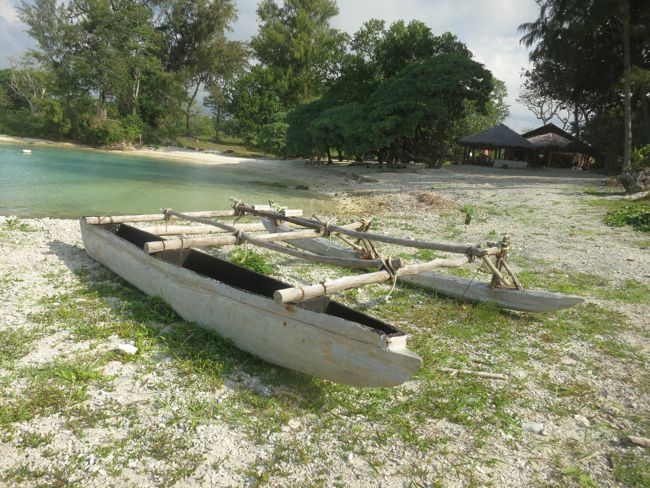
Travels in Vanuatu, thedreamstress.comA traditional outrigger, in front of a rural restaurant


No, I don’t pity the Ni-Vanuatu.  We have a lot in the West, with our carefully decorated houses, and large screen TVs, our dozens of pairs of shoes, and new model cars, but we gave up a lot as well.

The proximity of wealth to poverty did make me uncomfortable though, and worried me.  The beautiful resort we stayed at: all immaculate private fare set amongst manicured forests, on a stunning white sand beach, was surrounded by humble local houses.  And the children of those houses couldn’t use our beach, because the resort was adults only, and the lease on the resort had a clause prohibiting children on the beach.  On the bright side, most land is forever owned by the locals, and only used on 75 year leases.

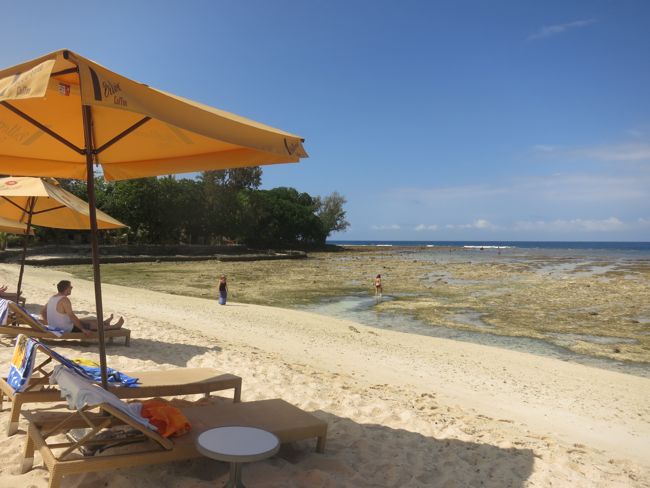
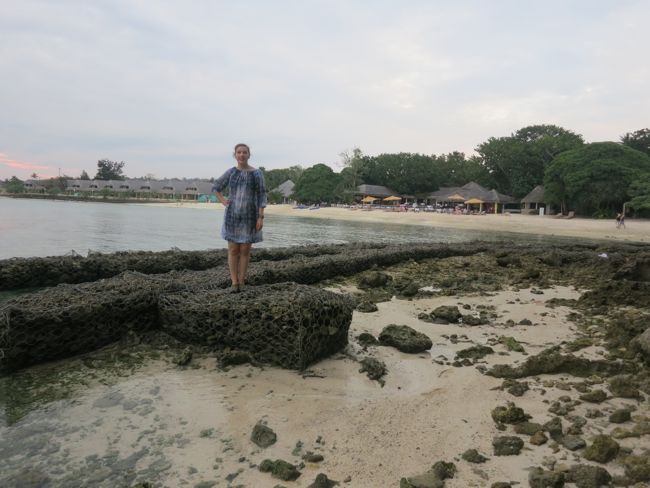
Travels in Vanuatu, thedreamstress.comThe resort beach at super low tide, with the seabed exposed.

 What must the locals think of us?  An endless stream of foreigners (mainly from Australia) lazing about on the beaches, drinking $10 cocktails, buying trinkets at the market, leaving meals of expensive imported ingredients or local delicacies half eaten, and watching shows of ‘kastom’ dances at night?


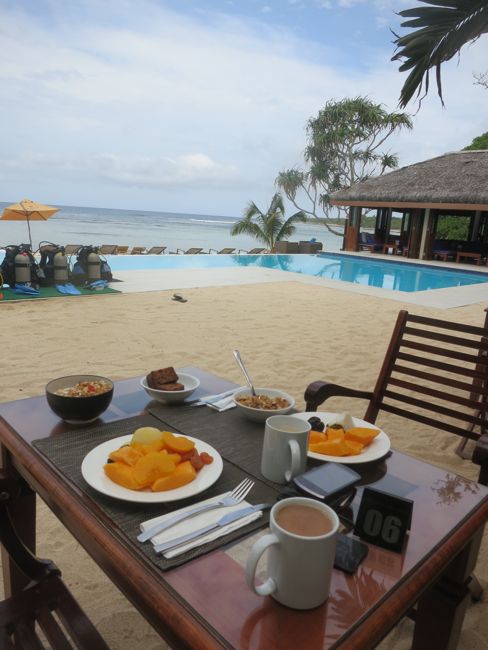
Travels in Vanuatu, thedreamstress.comBreakfast at the resort

On the one hand, tourism is a mainstay of  Vanuatu’s economy.  Our visit brought in much needed foreign dollars: absolutely vital in a place that imports far more than it can export.  As long as it isn’t siphoned away by corrupt government officials, our dollars would help send children to school, and build roads, and buy dinners.

On the other hand, how much are we changing Vanuatuan society?  Bringing in foreign ideas and expectations that may not always be beneficial.

One of the activities the resort offered was a ‘cultural tour’ of the local village.  I was really pleased that it was just a walk around the local houses, led by a local man that actually lives in the village, and that (save for a little performance that was mostly ‘If You’re Happy and You Know It at the preschool) there was no song and dance or special ‘lets pretend to show our customs’ for us.

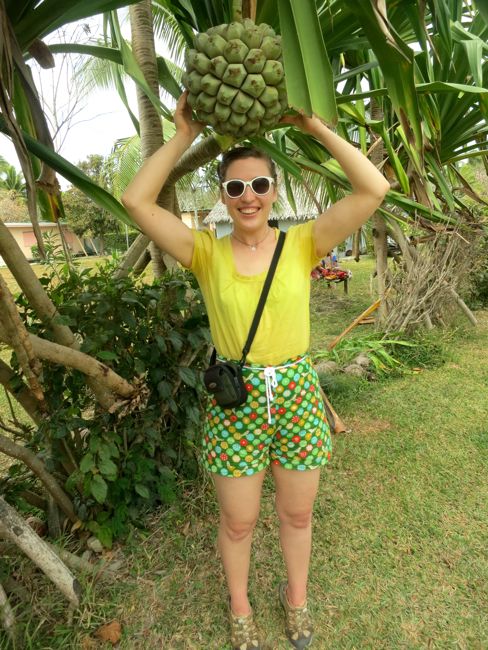
Travels in Vanuatu, thedreamstress.comOn the tour, with a giant pandanus fruit

At the same time, some tourists on the tour took candy with them to give the kids, and I wondered: if tourists are going through twice a week, giving away lollies to children, how quickly is that going to change children’s diets and expectations?  It seems a fun kindness at the time, but how much does it take to tip the balance from a diet and lifestyle that have served the Ni Vanuatuans for hundreds of years? We didn’t see a single overweight  Ni Vanuatu in 8 days, but how long will that last?

Travels in Vanuatu, thedreamstress.comOn the seawall in front of the resort at sunset

One of the really lovely things about Vanuatu was how safe it was.  I felt completely comfortable riding the buses (more on those later) by myself, and most crime is very rare (we were told that crime was mostly ‘leave two pairs of shoes outside your door, you might wake up and find only one left (because obviously you had more than you needed), but it would be the better pair’) (the exception to the lack of crime, sadly, is family violence, which is a crime as far as I’m concerned, and is problem: see my comment on the status of women).  It’s also a nice place to be a tourist: there is no begging, no cries of ‘buy this’ in the market, no up-pricing for tourists (even where I thought there should have been), no tipping even: those are all against Melanesian culture.

But already tourism has caused a change.  Some bus drivers will give you the hard sell on taking day tours with them, and that’s a new thing, and not a nice change.

Travels in Vanuatu, thedreamstress.com
In 2006  the New Economics Foundation ranked Vanuatu #1 in their Happy Planet Index, and Vanuatu still markets itself as ‘the Happiest Place on Earth’.  We saw it on benches, and locals mentioned it, giving different reasons for their happiness.  “With weather like this, of course we’re the happiest country on earth.”  “It’s the kava – relaxing with it every evening keeps us happy.”  “Ever since the first missionary came, we’ve been happy.” (I’m terrible.  I said “yes, I heard he was given  a very warm welcome“).

The HPI doesn’t really measure human happiness though – it measures the how happy we are in comparison to our impact on the environment.  Really happy, but terrible impact?  Poor score.  Pretty happy, low impact?  Good score.  Vanuatu may be happy, but it’s environmental credentials are at risk.  The islands can’t support a growing population and a Western lifestyle.  Slash and burn agriculture is OK if you have a few people and lots of land to cycle through, but if you do it constantly in the same spot, it leads to soil degradation and    erosion.

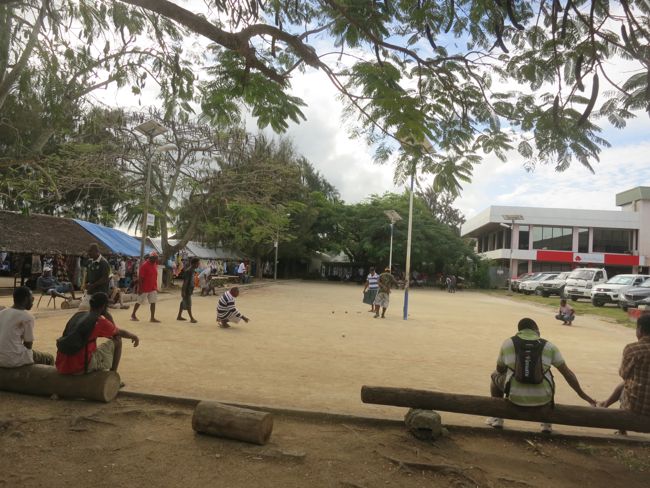
Travels in Vanuatu, thedreamstress.comPetanque players on the waterfront in Port Vila

How will Vanuatu fare in the future, balancing the  economy, environment, culture and heritage?

I don’t know.