Latest Posts

Cat in a Crinoline

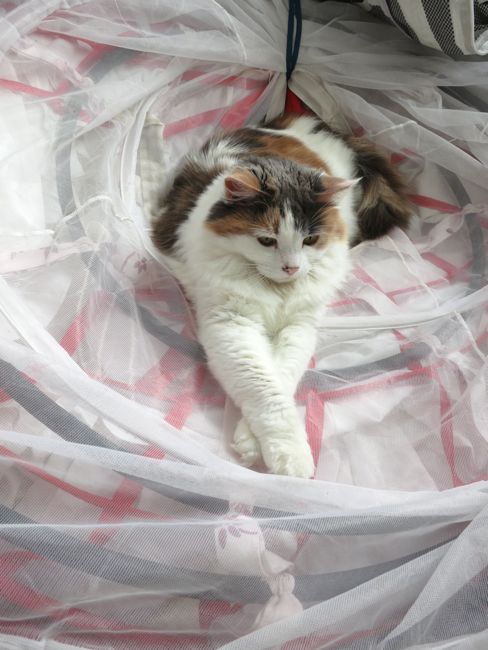
The other day I was sorting out my crinolines: tidying them away.  I set them down on the floor for a second, turned around to pick up a cord to tie them with, and turned back to find this:

Felicity the cat thedreamstress.com

One cat, comfortably ensconced on the crinolines.

She wasn’t moving either.

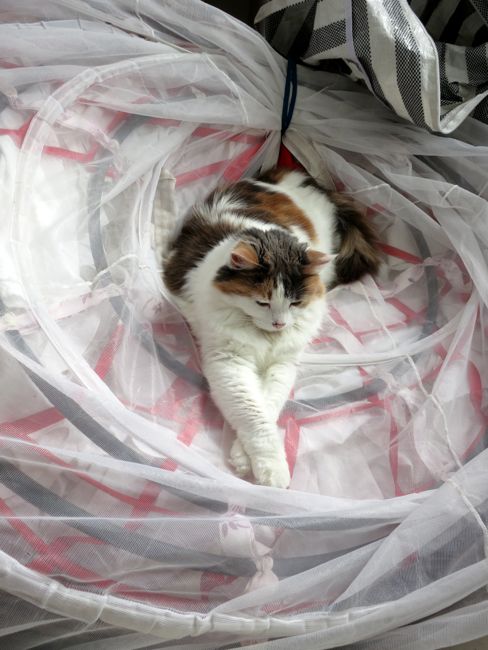
No pleas, treats, temptations, blandishments or threats could get her off.  She just sat there, paws crossed, and surveyed her circular domain.

Felicity the cat thedreamstress.com


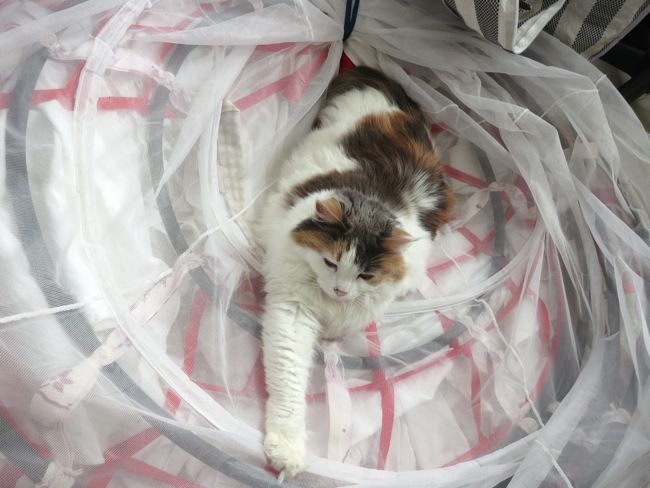
For an hour.  And a half.

Felicity the cat thedreamstress.com

Yep.  My cat sure knows how to be the centre of attention!

Rate the Dress: Toulmouche’s 1870s Blue Dress

Well, if last week’s stripey Doucet Rate the Dress taught me anything, it’s that I can never predict how you will react to a particular garment!

I thought last week’s dress was awkward, blatant, incredibly boring for something that should have been bold, and really poorly done, especially in the bodice and the stripe transitions.  It’s only saving grace was a really lovely collar/neckline, paired with an unusual and quite modern sleeve.  A handful of you agreed with me, but most of you were extremely enthusiastic (in full caps with exclamation marks) about the  outfit, and brought the rating up to a sparkling 9 out of 10 (you agreed with me on the shoes though, as the rating goes up to 9.2 if it is paired with them!).

This fortnight’s theme on the HSF is ‘Art’, which leaves the field wide open for all sorts of fabulous ‘Rate the Dress’ options.  This week I’ve picked  a frock artist: one more known for painting elaborate gowns than for capturing evocative likenesses.

While not as famous as Tissot among the costuming community, Toulmouche also created sumptuous records of  the (possibly slightly romanticised) fashions of the 1860-80s.  Here we have his aptly named  ‘The Blue Dress’, which shows a girl in the titular frock impatiently checking the clock: someone is late for a rendezvous.
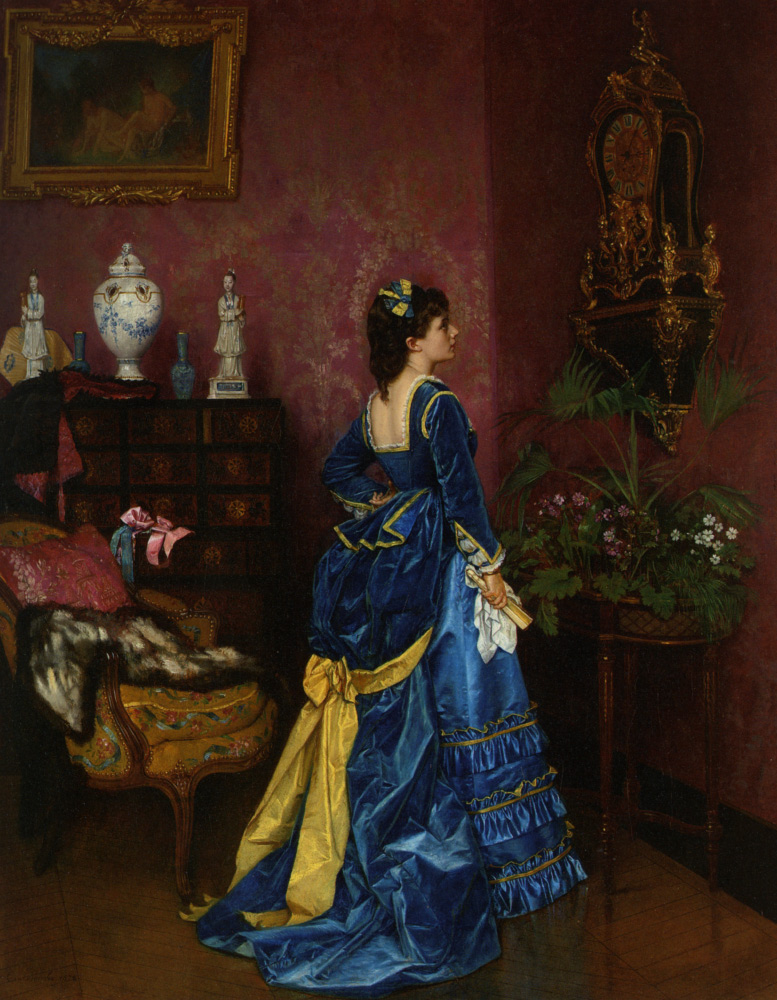
Auguste Toulmouche (1829-1890) The Blue Dress

Auguste Toulmouche (1829-1890) The Blue Dress

The gown has a shockingly low back, framed with a border of pale gold and a frill of delicate lace.  A hint of lace indicates that the front neckline is equally revealing.   The sleeves and peplum-tail of the skirt are also picked out in light gold.  There is a hint of Renaissance historicism in the white undersleeve.  A perfectly matched bow ornaments the model’s dark hair.
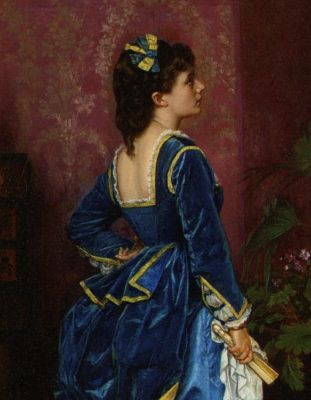
Auguste Toulmouche (1829-1890) The Blue Dress (detail)

Auguste Toulmouche (1829-1890) The Blue Dress (detail)

The bustled train is pulled back with a bow of the same light gold, revealing a lighter blue underskirt.

Auguste Toulmouche (1829-1890) The Blue Dress (detail)

Auguste Toulmouche (1829-1890) The Blue Dress (detail)

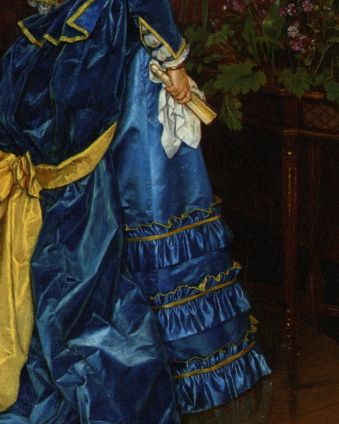
The heavy satin underskirt is trimmed with three rows of self-fabric ruffles, backed in the light gold.
Auguste Toulmouche (1829-1890) The Blue Dress (detail)

Auguste Toulmouche (1829-1890) The Blue Dress (detail)

What do you think?  Is the pairing of sweet hair bow, sophisticated neckline, sumptuous train and frilly skirt, plus historicism, just too much, or do all the elements build up to one glorious, harmonious outfit?

Rate the Dress on a Scale of 1 to 10.

The HSF ’14: Favourites for Challenges 5-8

It’s that time again!  Another four challenges done in  the HSF 2014  and time for me to share some of my favourites with you!

I picked things that are interesting, well made, and (most importantly for me) well considered and researched.  Whether they were items inspired specifically by the Historical Sew Fortnightly, or longstanding project that fin in perfectly anyway, all of my favourites demonstrate  the goals  of the Historical Sew Fortnightly; the quest to explore history, raise our skill levels and standard, stretch ourselves (or sometimes just get something done, rather than just procrastinating);  and  the spirit of the individual challenge.  They are all delights to look at visually, and the story behind each piece is just as delightful.

I’ve linked to the blog posts where there are posts, and copied the images of the items from  Facebook where there aren’t, so that you can at least see the amazingness.  Do follow the links to the blog posts for the full story on each item!

If you want to see the full facebook albums, you’ll need to belong to the Historical Sew Fortnightly FB group.  When you request to join the group you’ll be sent a message (check your Other folder) asking why you would like to be part of it.  Be sure to answer in full!

Challenge #5 —  Bodice

  1. Jeannete’s 1899 Jacket  –  How could I not choose this AMAZING jacket as my favourite for this challenge?  Made using the Wearing History Sophie jacket pattern, everything about this garment is phenomenal.  So impressive!
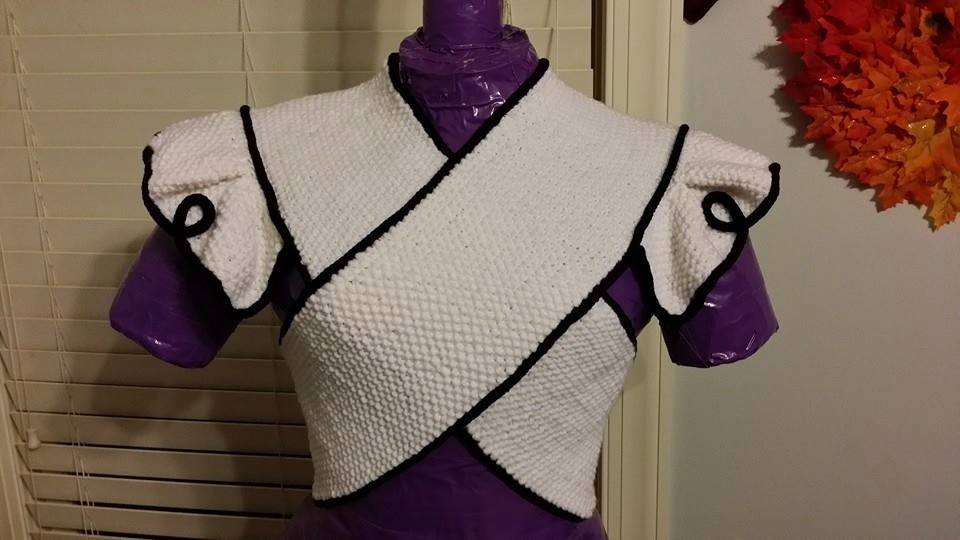
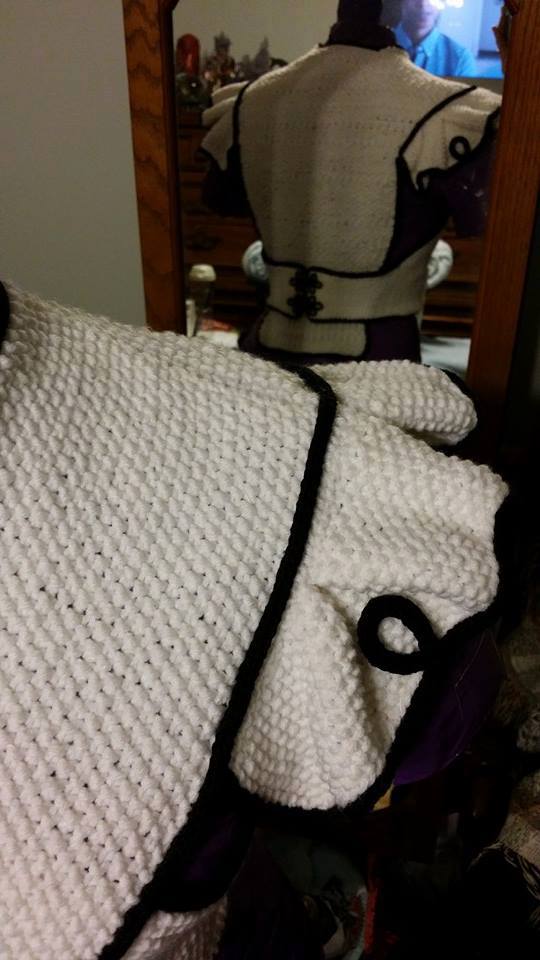
  2. Mary’s 1860s Little Women inspired Bosom Friend— A really fun and interesting interpretation of ‘bodice’.  Doesn’t it look deliciously warm and snuggly?Mary's 1860s bosom friend
    And check out how cunning the back is:
    Mary's 1860s bosom friend
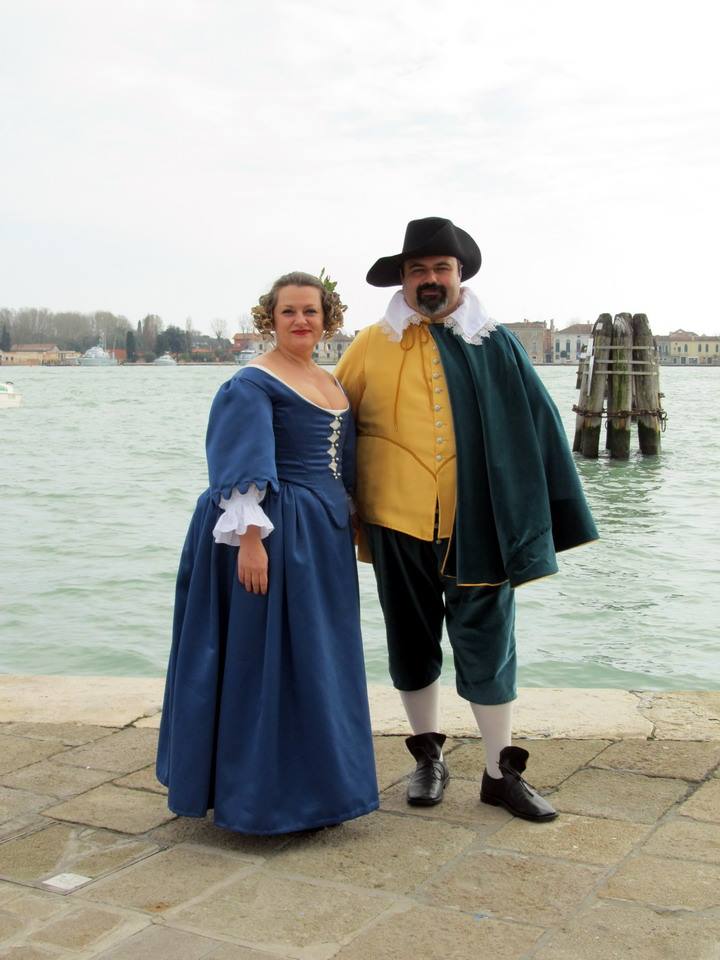
  3. Antonia’s 1640s Bodice  —  Of course, I had to feature one that was a bodice in the fullest, most historical sense of the word!  This ensemble, inspired by a portrait of Lady van Dyck, is just lovely, and she got to wear it in Venice (ENVIOUS!).  Oh, and she made her husband’s outfit, so his doublet makes this a double-accomplishment challenge!Antonia's 1640s bodice for the Historical Sew Fortnightly
    Special mention to: Anne’s 1660s bodice*, Erin’s 1850s-60s sacque*, & Fashion Through History’s Edwardian bust enhancer, all fabulous examples of all the ways we can think about the term ‘bodice’

Challenge #6 —  Fairytale

  1. Green Martha’s 1890s Red Riding Hood short cape   —  This cape is so wonderful it pretty much makes me hyperventilate with its awesomeness.  The soutache work!  The trees!  The little hooded figure!  And the wolf!  So, so, so amazing!  I couldn’t imagine a more perfect interpretation of the challenge.
  2. Running with Scissor’s 1920s Dancing Princess slippers  —  With shoes like these, of course you would have to go dancing every night!  Wearing them out would be a sad moment though.
  3.  Zeitenzauberin’s 18th century Star Money shift — A beautifully simple, beautifully made item which perfectly encapsulates the fairytale.And special mention to Wearing History’s 1002nd Arabian Nights Poiret inspired frock, and  Segolène’s 1908 fairy corset, two enchanting twists of fairytale garments.

Challenge #7 — Tops & Toes

  1. Karinne of Dutch Renaissance’s 16th century huik  —  Don’t know what a huik is?  She wrote a whole research paper so you can find out (which obviously, I love!)!  Huiks are pretty much the funniest, quirkiest piece of headwear one could imagine, and a wonderful thing to see recreated.
  2. Vagabondage’s 1940s knitting hat & souvenir shoes — I think it is wonderful  that she made something for her top, and something for her toes.  Both items are really cunningly conceived modern recreations of their period originals.
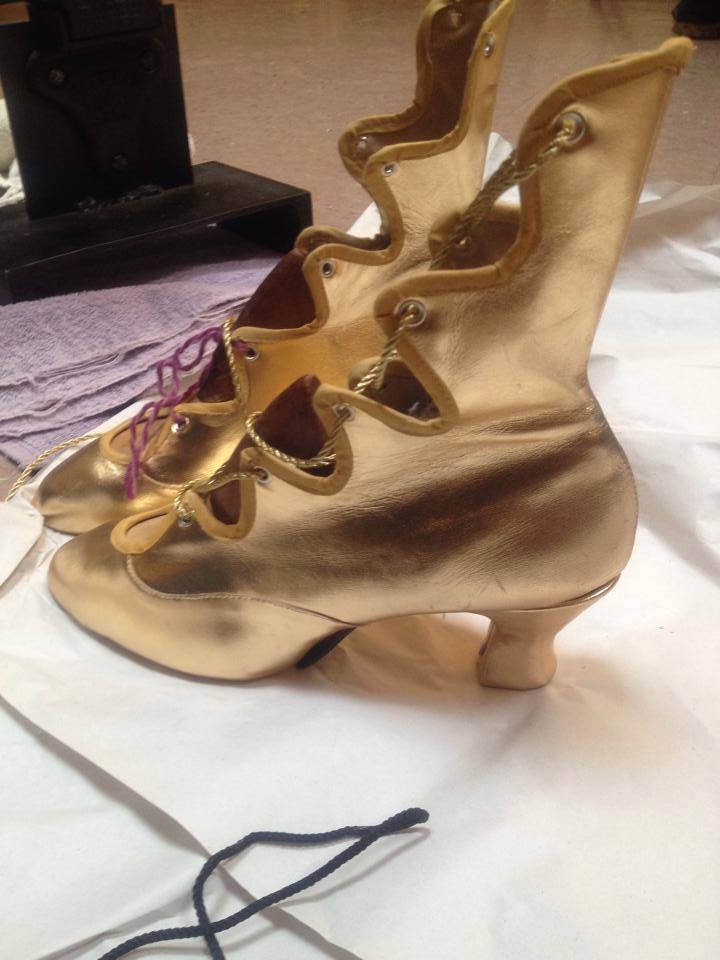
  3. Marna’s 1890s-1910s gold tango boots  — I liked the last entry because it was amazing and clever and something most of us could attempt and achieve, and this one because it is amazing and clever and WAAAAAY beyond what I’m ever likely to have the time and skills and materials to make.  These shoes are phenomenal – so utterly perfectly made!  The link goes to an album where you can see just how she did it, step by step!
    Tango boots, 1890-1915
    This challenge was simply dripping with amazing headgear, which made it very hard to pick my favourite topper, so hats off to three people who made simple, un-showy, but beautifully constructed items:  Isis’ Wardrobe  for her 18th century cap,  Antonia, for her  14th-15th century ‘St Brigitta’s caps’ reconstruction*, and Sewing Empire’s Regency cap á la Russe.

Challenge #8 — UFOs & PHDs

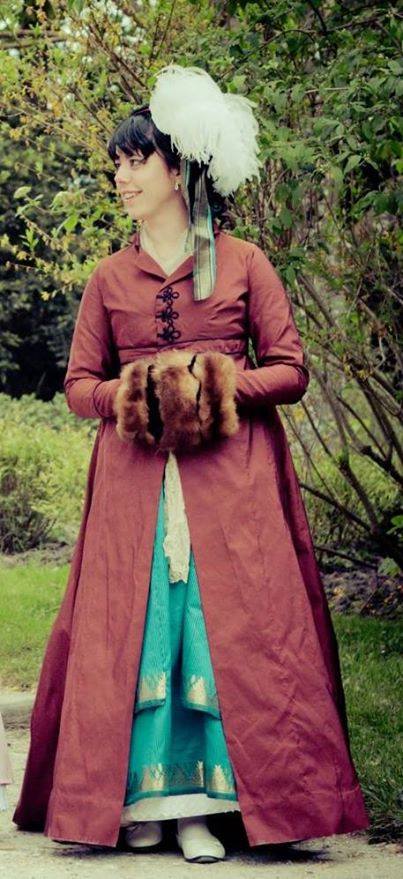
  1. Marie-Bastienne’s 1810s Redingote  —  She started this two years ago, and stuck it in the closet for the ensuing two years because she didn’t like how it was looking, which I can hardly believe, because the finished item is SO gorgeous!1810s Redingote for The Historical Sew FortnightlyJust look at the details on this:
    1810s Redingote for The Historical Sew Fortnightly
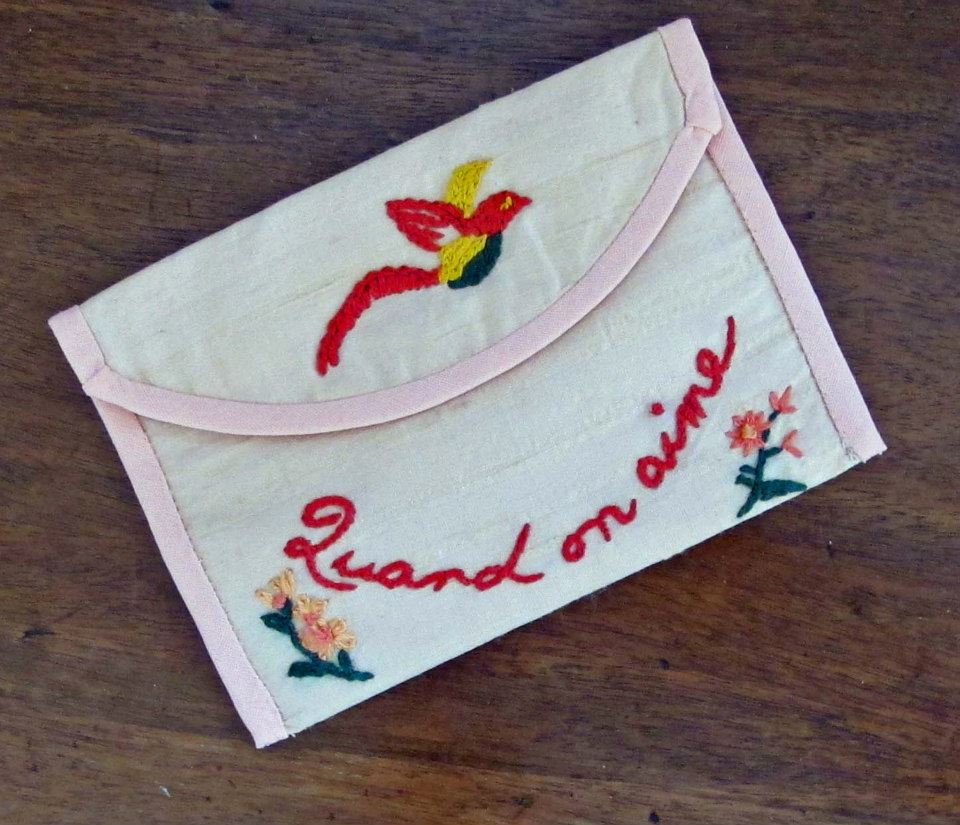
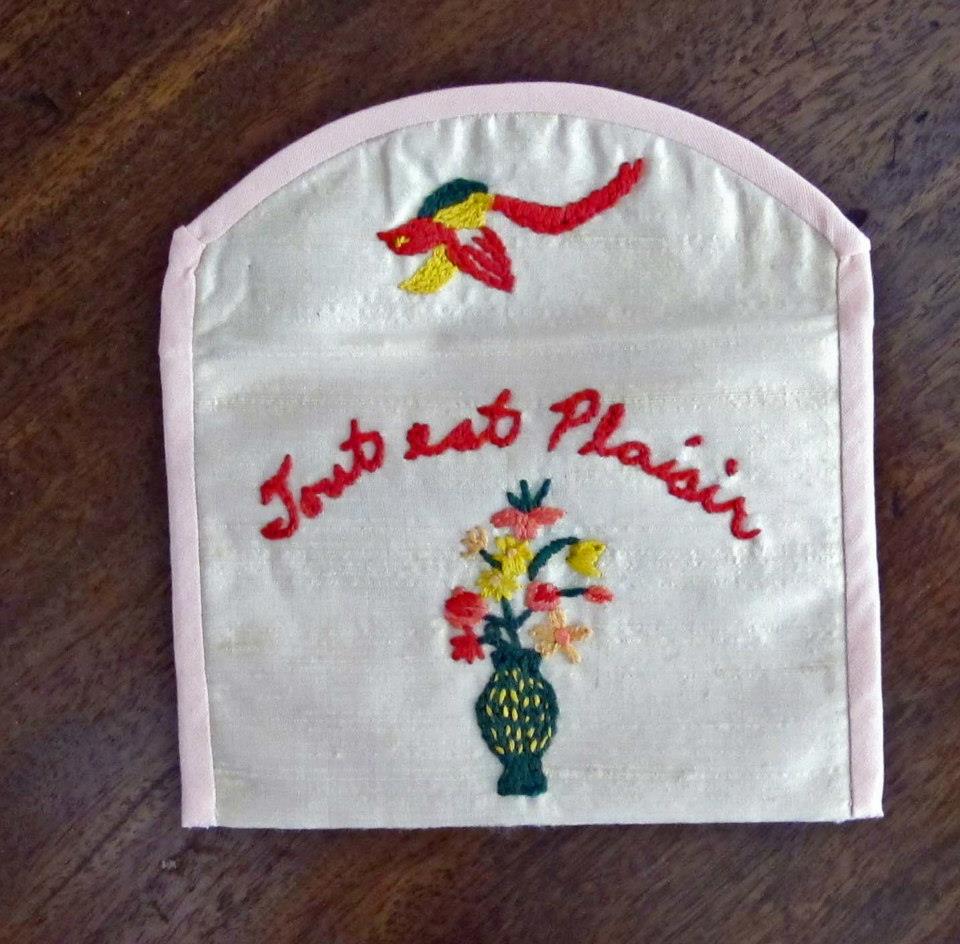
  2. Ann’s early 19th century pocketbook  — One of the oldest PHD’s completed (I think there is at least one older) at 15 years, this lovely pocketbook is both beautiful and useful.

    19th century pocketbook for the Historical Sew Fortnightly
    19th century pocketbook for the Historical Sew Fortnightly

  3. Ophelia’s 1880s ensemble — This outfit is elaborate and fabulous, and well, that pretty much covers it!

    There were dozens more beautiful PHDs that finally got finished, but I find I am completely out of steam, and have reached gorgeous costume ennui, so I’ll leave this post at that.