Latest Posts

Plausible-ish 14th century smock construction – maybe?

When I made my nettle shift/smock I wanted my construction to be reasonably historically accurate, but in researching 14th century smocks*  I discovered that there are so few visual images of smocks of that period, so few extent garments (none of which remotely match the visual record) and so few written mentions that we really don’t know how 14th century smocks were made.  The best guesses are based on extrapolating backwards from extent garments from later periods, and matching that up to the few period depictions and the single extent (sorta, it’s been missing since WWII so all we have is a black and white photograph) example (which doesn’t look at all like period depictions) and known sewing techniques from other garments.

Many reproduction medieval smocks/shifts/chemises are constructed like 16th-18th century shifts – a series of rectangles and triangles, with gussets under the arm, and side gores to allow the shift to flare.  It’s a frugal, practical and durable construction method.  However the single extent (sorta) 14th century smock, is side gore-less (and while there is a 13th century shift that does have side gores, both it and the 14th century example are sleeveless – very helpful).  So other patterns are certainly plausible.

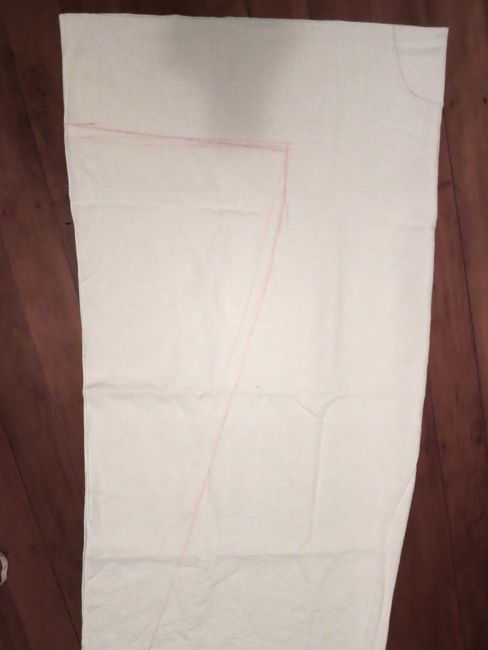
In addition to wanting my shift to be at least plausible, I also needed it to be as quick as possible.  I’m time poor at the moment.  So I opted for a more-or-less midpoint between the two patterns: a simple one piece T shape with flared sides.
Smock of raime (nettle) fabric thedreamstress.com

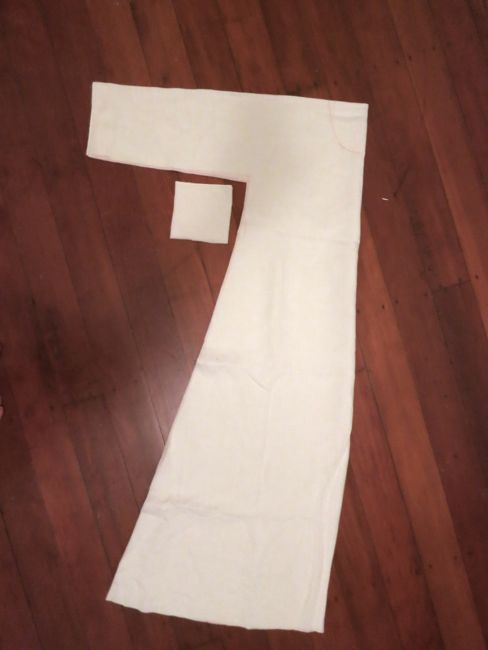
The T-shape is cut to the full width of the fabric, so I didn’t have to hem the sleeves, because they end on the selvedge edges.  The flared sides are slightly curved, because both extent medieval shifts have curved sides.  The only extra pieces are square gussets to set under the arms.
Smock of raime (nettle) fabric thedreamstress.com

As you can see, cutting the garment this way leaves a scrap of triangular fabric cut from under the arm, effectively ‘wasting’ fabric, which makes it slightly less historically plausible, as fabric was so valuable it would have been used as frugally as possible.
Smock of raime (nettle) fabric thedreamstress.com

With the pattern sussed, I sewed.

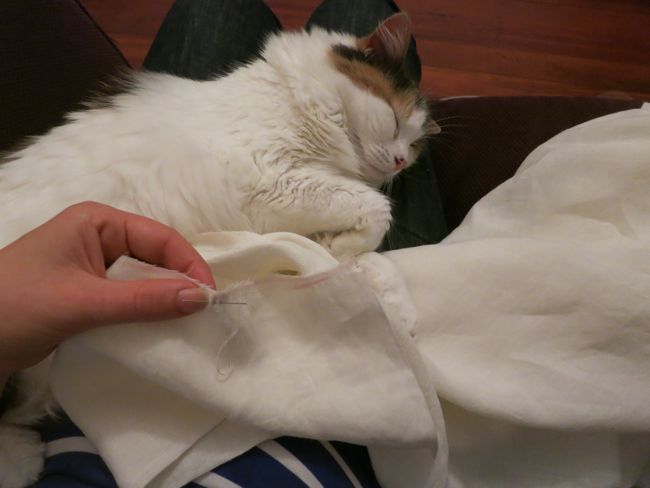
Felicity, as per our cat-owner sewing agreement, helped:
Smock of raime (nettle) fabric thedreamstress.com

The smock is sewn with silk thread (would linen be more accurate?  Likely, but since I was using ramie/nettle instead of linen I felt a little thread jiggery pokery was not really the biggest issue) with basic running backstitches.  The neck edge and hem are simply turned twice and stitched down with the same running backstitches.
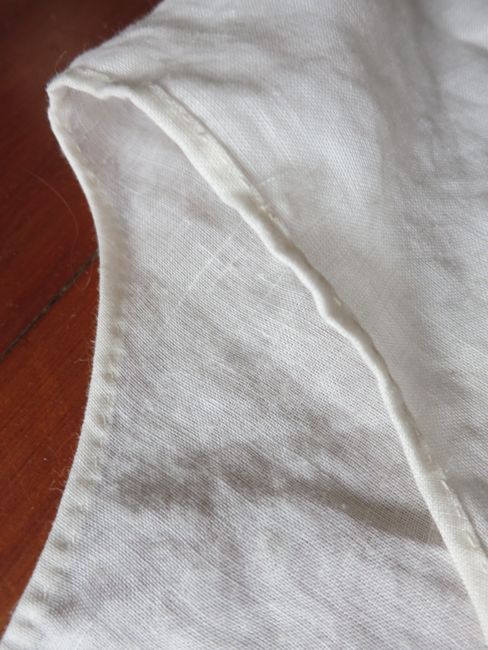
Smock of raime (nettle) fabric thedreamstress.com

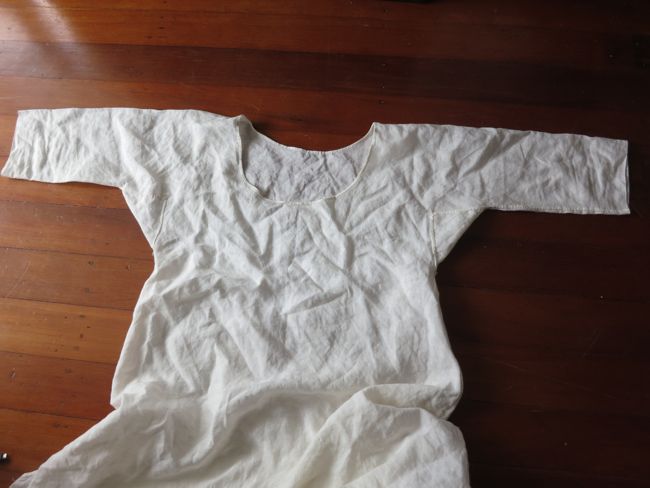
As I began setting in the sleeve gussets the problem with my pattern became immediately obvious.  Without a shoulder seam, there are stress points where the corner of the gusset meets the shift are going to be quite vulnerable to tearing.
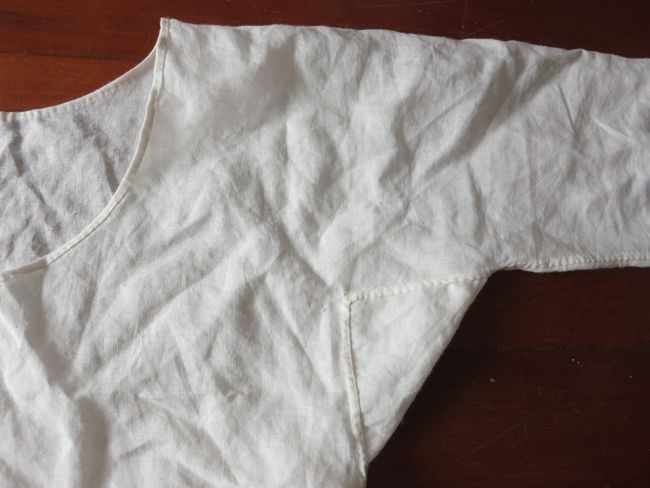
Smock of raime (nettle) fabric thedreamstress.com

A shoulder seam would have provided extra strength to this point, and made it easier to set the gusset, and would also have let me cut the sleeves alongside the smock, saving fabric, and giving me full-length sleeves, instead of 3/4 length sleeves.

14th century nettle shift thedreamstress.com

I could have skipped a gusset altogether, but that would have reduced my arm range in the smock, and it would still have been very vulnerable to underarm tears – perhaps even more so than with the gusset.  I suppose I could have cut across the underarm at an angle, as if the gusset was there.
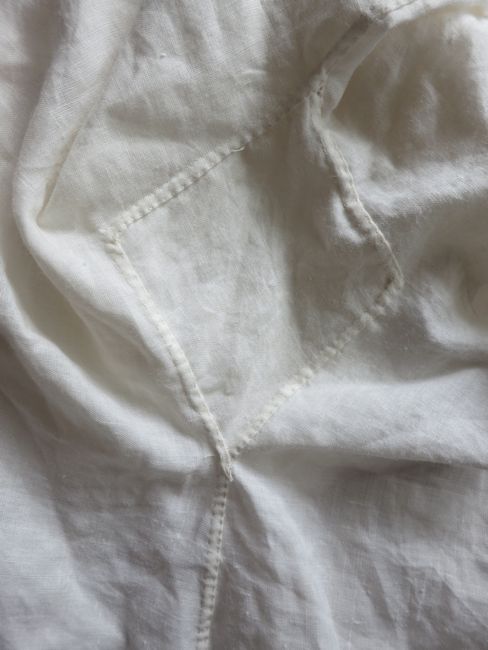
Smock of raime (nettle) fabric thedreamstress.com

In order to re-inforce the gusset, and stop the ramie from fraying (it frays badly) I flat felled all the seams, just as you would with an 18th century shift, though I haven’t been able to find information on whether that was done with medieval smocks (it’s seen on some examples of medieval wool garments, and makes sense with linen, so I’m guessing it’s more likely than not).
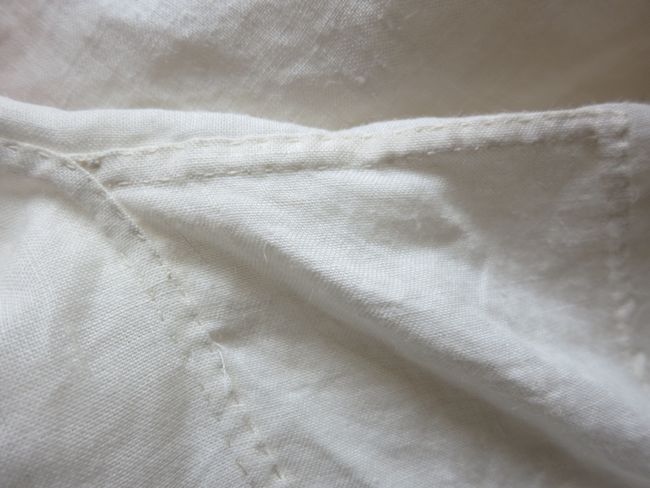
Smock of raime (nettle) fabric thedreamstress.com

Many of you asked about ramie/nettle fabric – I’ll be doing a full terminology post, but here is a close up of the fabric to try to show you the texture as much as possible.  You can clearly see that it is fuzzier and more fibre-y than linen:
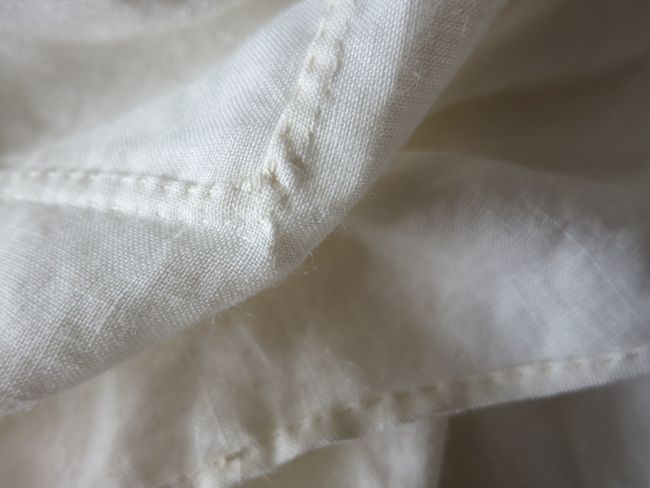
Smock of raime (nettle) fabric thedreamstress.com

Unlike linen, ramie doesn’t seem to soften press and meld together as you sew it. It’s much ‘drier’ and crisper, and I suspect will not wear as well.  It’s also itchier, so I’m glad that I didn’t put as much effort into this smock as I would one of proper handkerchief linen.
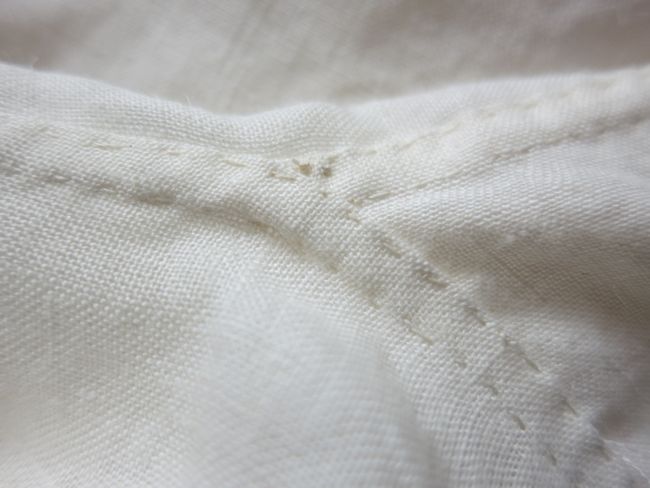
Smock of raime (nettle) fabric thedreamstress.com

Ramie is a lot like linen though, especially in that it finger-presses beautifully.  Sewing all those felled seams was a breeze, and turning and sewing the hem and neck was also easy.
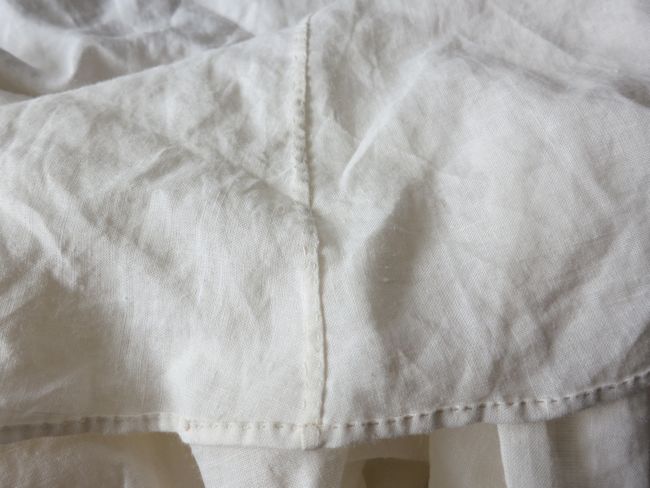
Smock of raime (nettle) fabric thedreamstress.com

I did wear the shift to climb trees and scramble up a steep hill and carry things around, and it held up very well (without even a dress over it to protect it), so the sleeve gussets aren’t as fragile as I thought they might be.
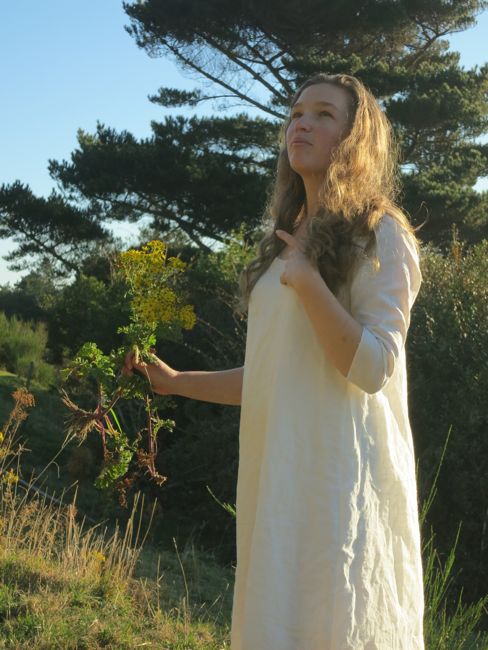
14th century nettle shift thedreamstress.com

However, having made this shift, I don’t think the construction is the most plausible method for medieval shifts, simply because it isn’t the best use of fabric (though I’d have to do more research on the width of medieval linens to find out what layout would be most likely), and because it leaves weak points in the garment, and I can’t imagine even the richest of medieval queens being thrilled about a shift that ripped out under the arms.  In the future, I will at least be constructing my shifts with separate sleeves and shoulder seams.


*translation: reading  all  my historical costuming books that mention medieval clothes at all,  all  the main medieval blogs, checking  all  my pinterest links, and finding almost  nothing, and finally just polling the brilliant minds of the Historical Sew Fortnightly facebook group for information
The HSF ’14: Challenge #12: Shape and Support

It’s the Historical Sew Fortnightly Challenge #12 – when we get to this we’ll be halfway through the year!

Challenge #12, due Tue July 1st, is Shape and Support.

Throughout history humans have changed their form and silhouette with garments that pulled in and pushed out.  Few eras of fashion have been entirely satisfied with the natural human body.  In this Challenge make a garment that changes and distorts the human form, whether it pulls it in, as with corsetry, or extends it, with ruffs and sleeve supports, fathingales and bustles and hoopskirts.  As long as the garment creates an extreme silhouette, it counts

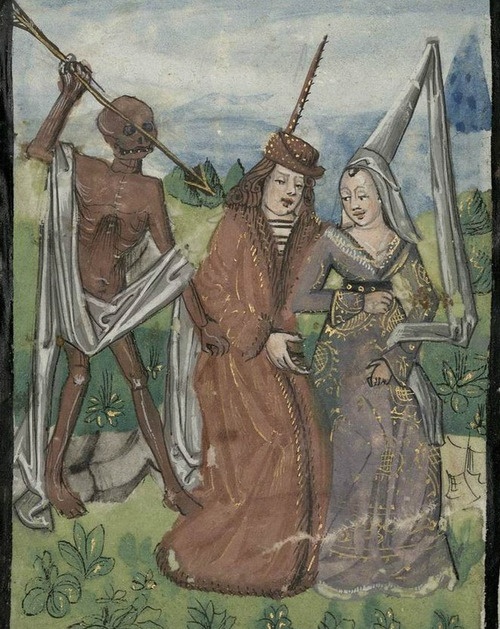
Throughout history we have extended our heads with mad hats:

Book of Hours, use of Amiens. 4th quarter of the 15th century

Book of Hours, use of Amiens. 4th quarter of the 15th century

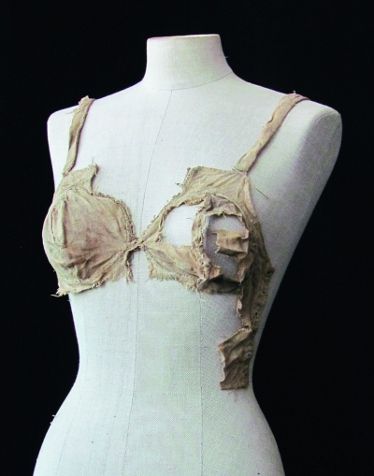
Lifted our bust and pulled in our waists with bust bags and corsets:

Bust bodice found in Lengberg castle, the end of 15th century (ca 1480 ?), University of Innsbruck, photo University of Innsbruck

Bust bodice found in Lengberg castle, the end of 15th century (ca 1480 ?), University of Innsbruck, photo University of Innsbruck

Corset, 1830—35, American  cotton, bone, metal, Brooklyn Museum Costume Collection at The Metropolitan Museum of Art 2009.300.3031

Corset, 1830—35, American cotton, bone, metal, Brooklyn Museum Costume Collection at The Metropolitan Museum of Art 2009.300.3031

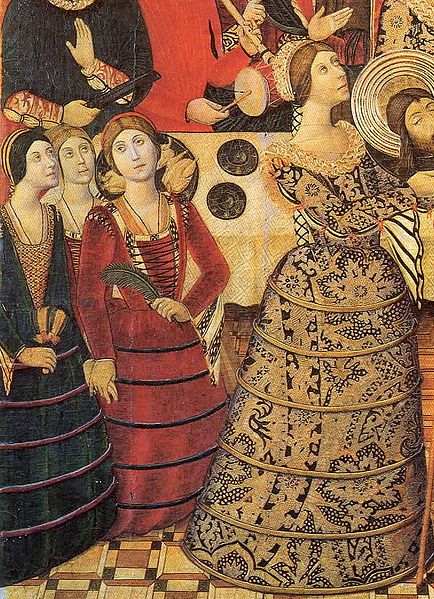
Turned our bottom halves into stiff cones with farthingales:

Catalonian dress of the 1470s

Catalonian dress of the 1470s

And our top halves into stiff cones with stays:

Extant stays (Queen Elizabeth's effigy 'pair o bodies') ca. 1603

Extant stays (Queen Elizabeth’s effigy ‘pair o bodies’) ca. 1603

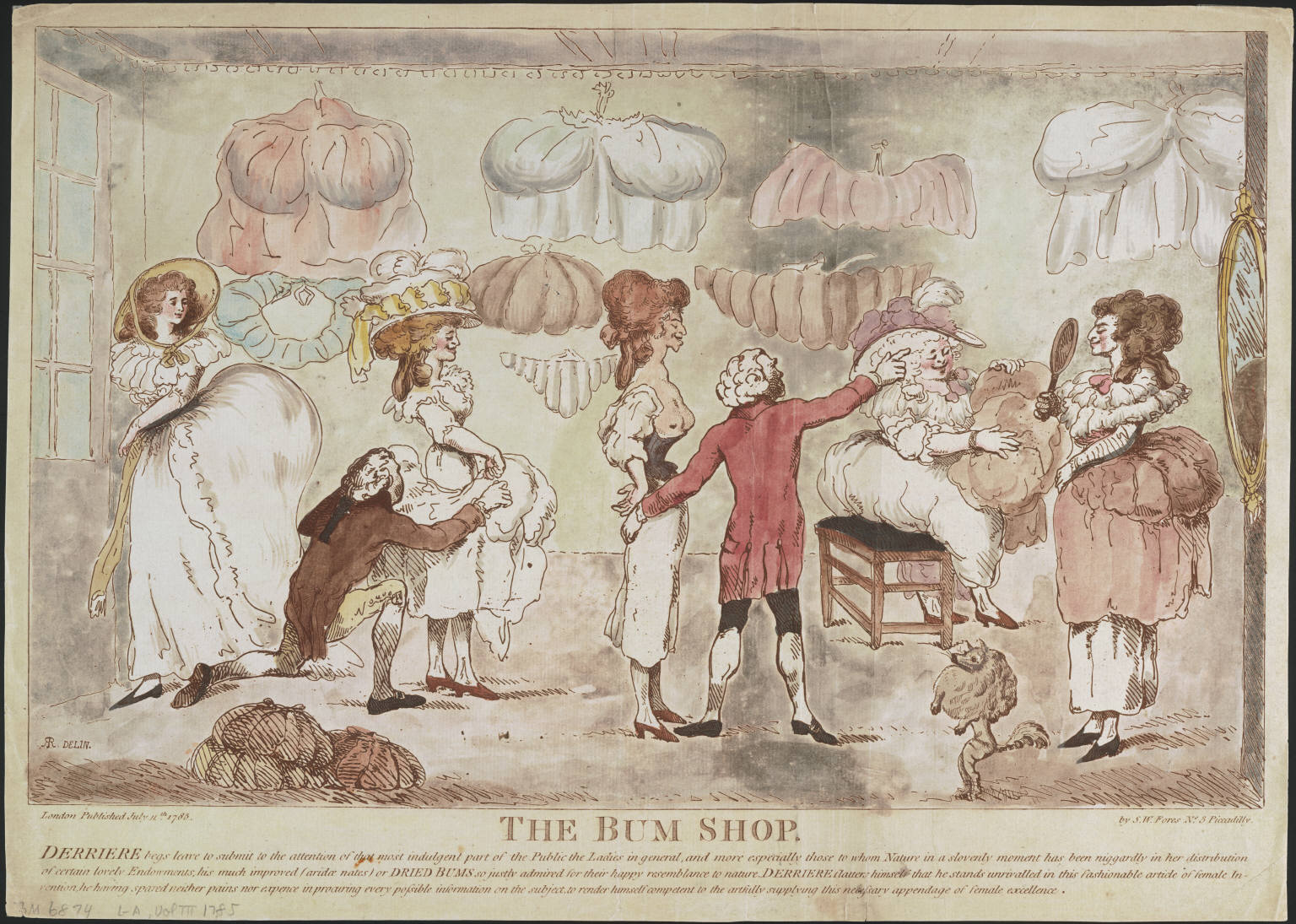
We’ve ‘improved’ our bums with bum rumps:

Bum rump, 1785, Lewis Walpole Library

Bum rump, 1785, Lewis Walpole Library

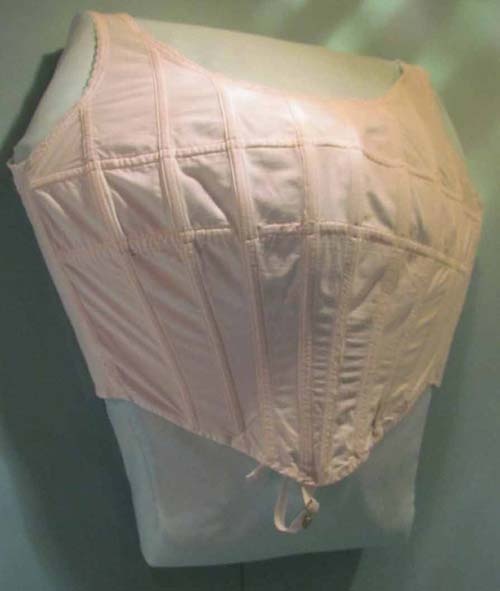
And our busts with bust enhancers:

Bust improver or reducer, made of cotton with metal boning, by Spirella Styles, (patented) 1907

Bust improver or reducer, made of cotton with metal boning, by Spirella Styles, (patented) 1907

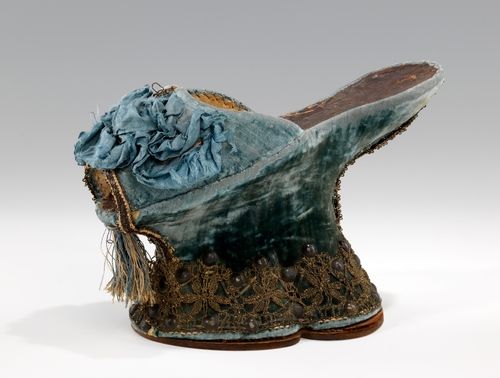
We’ve lifted our feet with heels and chopines:

Chopines, 1590-1610, Metropolitan Museum of Art

Chopines, 1590-1610, Metropolitan Museum of Art

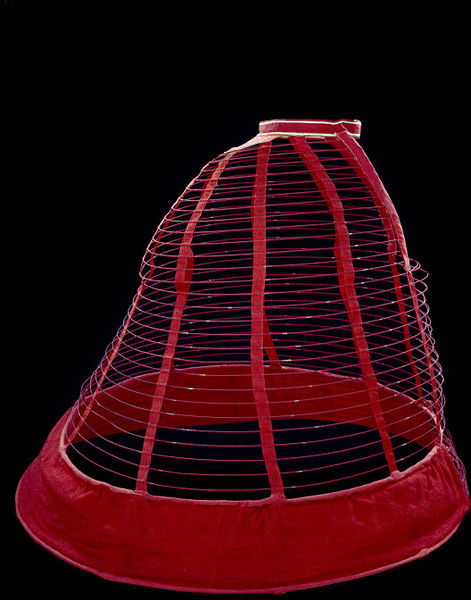
We’ve been cone shaped and bell shaped and elliptical:

Cage crinoline, Great Britain, 1860-1865, Spring steel, woven wool, linen, lined with cotton, and brass, T.150-1986

Cage crinoline, Great Britain, 1860-1865, Spring steel, woven wool, linen, lined with cotton, and brass, T.150-1986

Pinched in and pushed out in ever way, shape and form:

Corset, 1870-1880

Corset, 1870-1880

Nor have men been immune to body re-shaping.

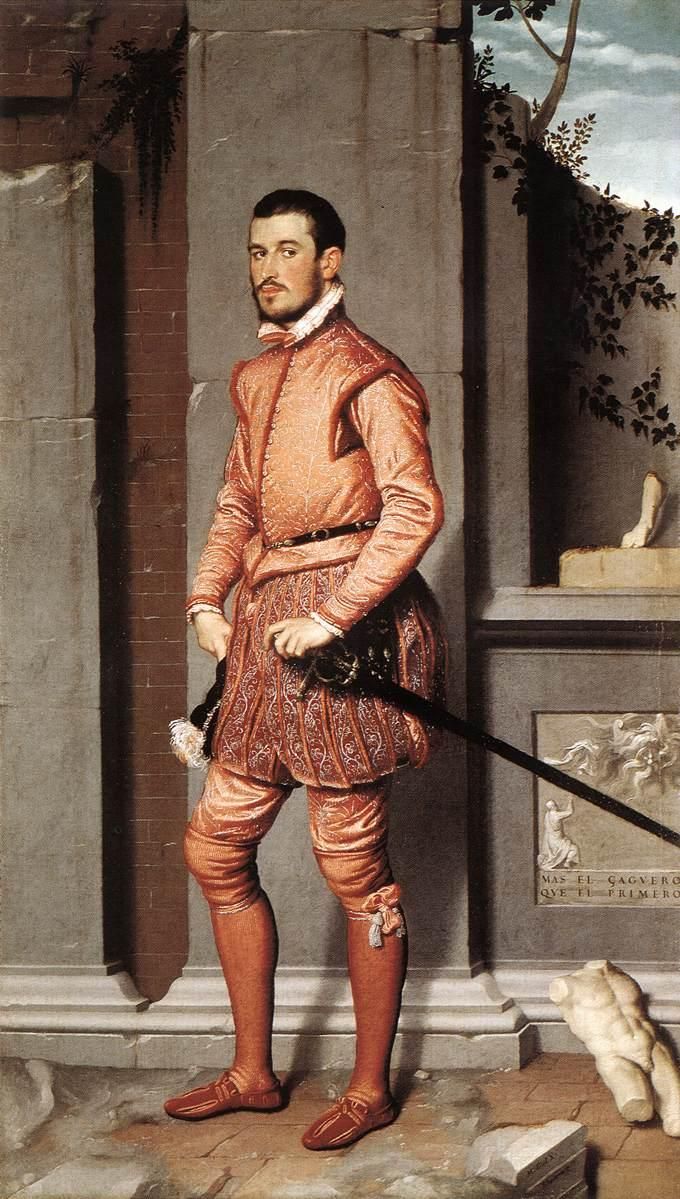
They have had padded doublets to turn their chests into pigeon breasts, and poofed pantaloons to balloon their thighs:

The Gentleman in Pink, Giovanni Battista Moroni , 1560

The Gentleman in Pink, Giovanni Battista Moroni , 1560

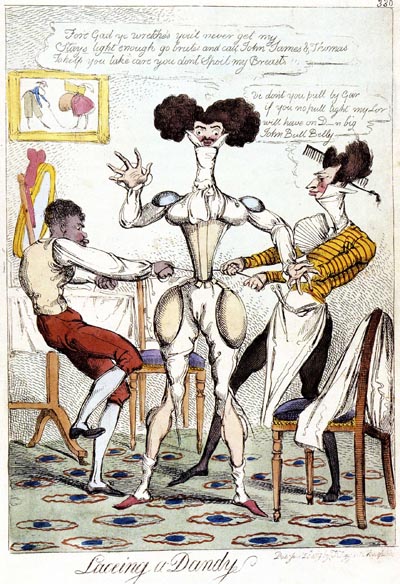
Men have laced in with Beau Brummel bodice (and padded thighs, hips, shoulders and calves by the look of it):

Lacing a Dandy, 1819

And stiffened their fronts with doublets:

Robert Rich, Earl of Warwick, Painted in 1633 by Daniel Mytens

Robert Rich, Earl of Warwick, Painted in 1633 by Daniel Mytens

They have tilted their chins with wide ruffs:

Portrait of a Young Man, by Federico Barocci (Il Baroccio), perhaps c. 1580-90 but possibly slightly later, ca. 1600

Portrait of a Young Man, by Federico Barocci (Il Baroccio), perhaps c. 1580-90 but possibly slightly later, ca. 1600

And both sexes have created full thighs and calves with symmetricals.

All these odd and peculiar contraptions, just to achieve the shape and silhouette that fashion deemed necessary and attractive!

Rate the Dress: Élisabeth-Alexandrine in a perky hat

In case you’ve noticed that I haven’t posted anything for 5 days, it’s due to WordPress problems – I haven’t been able to start or edit posts.  After a desperate bit of ‘throwing away tons of stuff and clearing the cache and updating all the software’ I think I have it working again!  (I hope!)  So here is your slightly belated Rate the Dress…

Last week’s Victorian Fairy Godmother dress might have impressed you a lot more if it was better displayed (once again, I’m still impressed at how good the auction house managed to display it at all – unlike a museum, they don’t have a finite collection and infinite amount of time to stye and document a garment), and if it wasn’t such a strange green-gold colour.  Many of you acknowledged that for the event, and for the person and age, it was probably a fantastic choice.  The ratings evened out at 6.8 out of 10 – reasonable, but certainly not a rave rating.

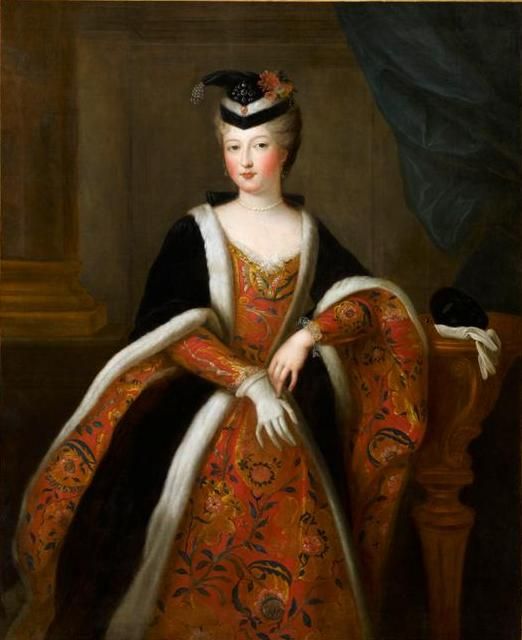
This week’s Rate the Dress is inspired by the HSF ‘Tops and Toes’ challenge, because Élisabeth-Alexandrine de Bourbon-Conde de Sens (or Alexandrine, as she was known) is wearing such a distinct and cunning headpiece.

Alexandrine was the granddaughter of Louis XIV and his noted mistress Madame de Montespan, and a daughter of the 6th Prince de Conde, and thus a princesse du sang.  She herself was a close friend of the most famous royal mistress of all: Madame de Pompadour.  She’s most notable for being un-notable.  She renovated a few houses, and otherwise had little impact.  In the fraught annals of the French, her lack of notoriety is perhaps a virtue in and of itself.

Elisabeth-Alexandrine de Bourbon-Conde de Sens, Circle of Pierre Gobert, c. 1730

Élisabeth-Alexandrine de Bourbon-Conde de Sens, Circle of Pierre Gobert, c. 1730

While Alexandrine isn’t that interesting as a person, her costume is quite fascinating .  The dress of vermillion bizarre silk, with its long slim sleeves.  The black wrap with fur trim, lined in the same bizarre silk as the dress?  The single short glove that she puts on.  And that funny hat.  What does it mean?  Was it some sort of ceremonial wear?

And what do you think of it?  Is the wild fabric balanced by the simplicity of the dress, and the austere black?  Is the hat fun and witty, or just odd?

Rate the Dress on a Scale of 1 to 10