Latest Posts

The 1905 Greek Key dress – a look at the details

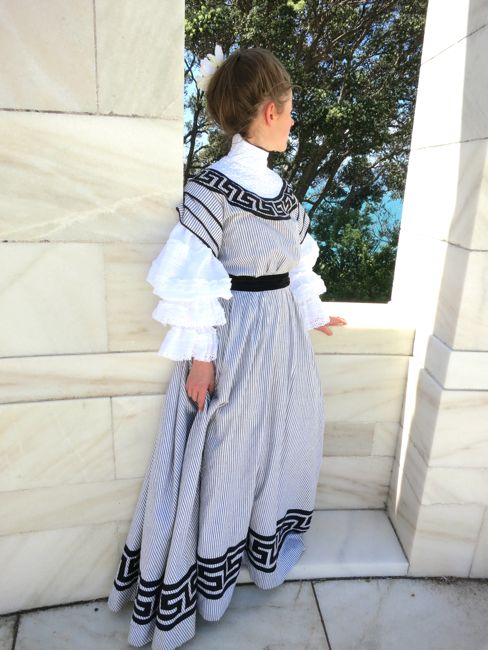
Some of you asked how I did the Greek key motifs* on the 1905 Greek Key afternoon dress, so I thought you might appreciate some construction details in regards to the dress – both with the Greek key motifs, and other things.

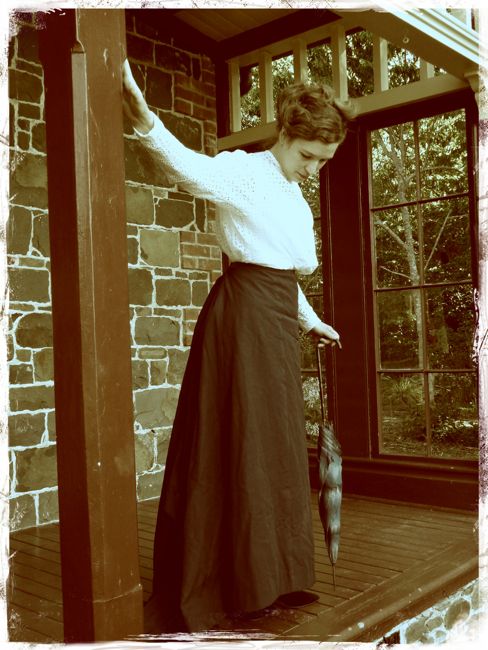
The 1905 Greek Key afternoon dress, thedreamstress.com


When I first received the dress the motifs were applied with stitch witchery or some other sort of fabric adhesive, and since they were 20 years old, the adhesion was starting to weaken.
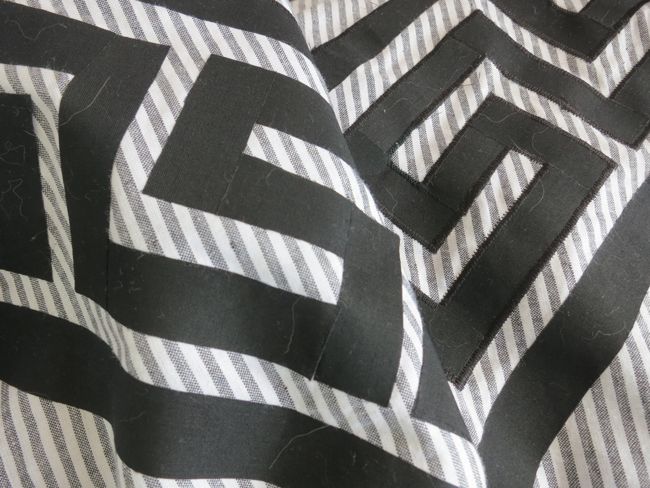
The 1905 Greek Key afternoon dress, thedreamstress.com


To strengthen the motifs, and finish the dress ‘properly’, I sewed them down using a very fine, tight zig-zag stitch on my sewing machine.  I sewed along one straight edge, right to the outside corner, sunk my needle, and lifted and turned.  At the inside corners I sunk my needle at the inside turn, and lifted and turned.  This leaves a tiny square of un-sewn-ness right at each inside corner, but covers all the raw edges, looks neat and tidy, and is strong enough to last for another 20 years – or 80.
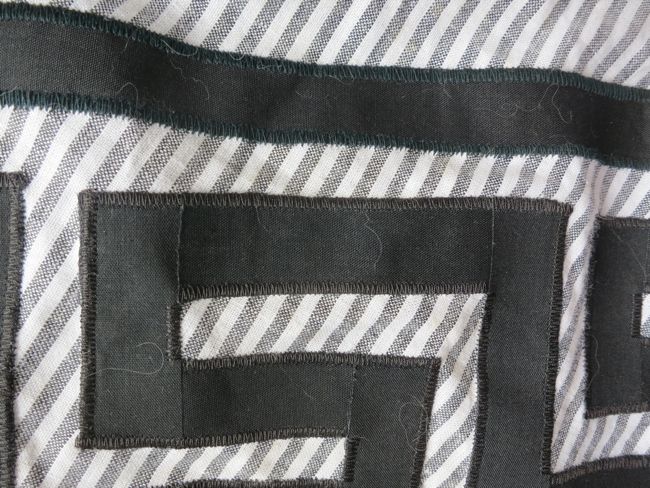
The 1905 Greek Key afternoon dress, thedreamstress.com

Doing this took A LOT of time.  It also used A LOT of thread.  3 spools I think…

I used it as an excuse to use up all my random spools of black thread, and you can even see  two different shades of black thread on the straight border applique and the greek key applique:
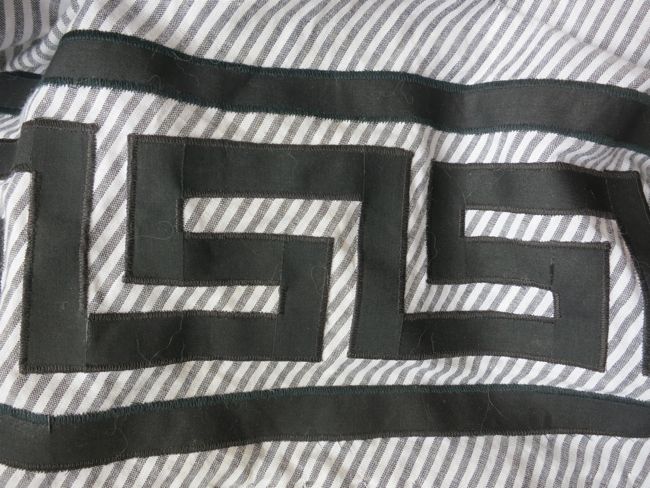
 

The 1905 Greek Key afternoon dress, thedreamstress.com
The outline of the applique stitching shows on the reverse of the skirt, and you can clearly see where I turned at each corner.
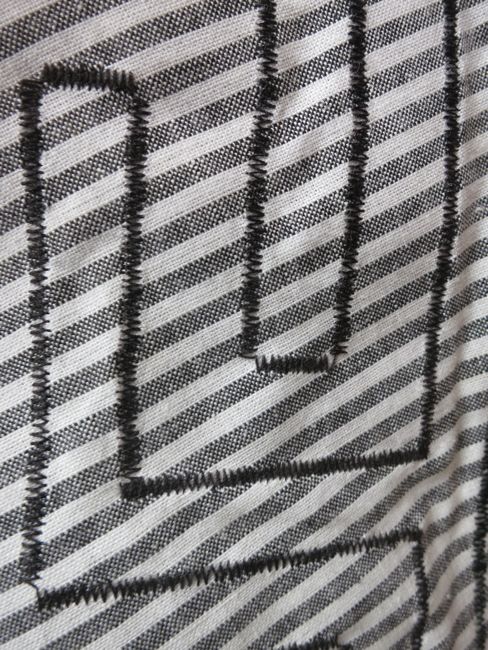
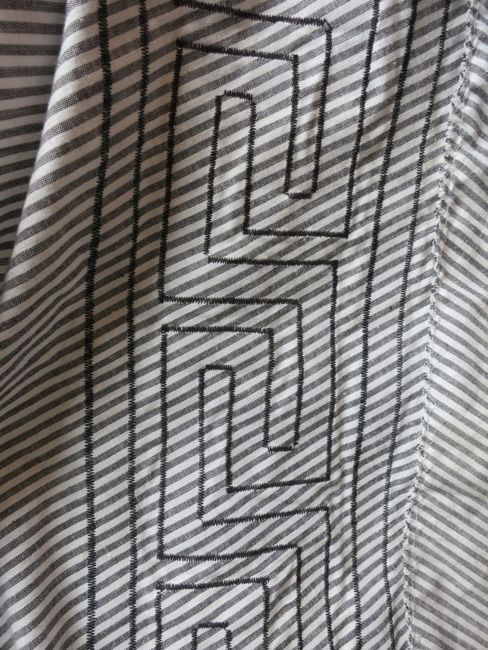
The 1905 Greek Key afternoon dress, thedreamstress.com

The 1905 Greek Key afternoon dress, thedreamstress.com


The hem motifs were a mend/job finish, but I completely re-did the yoke from the original.  Here is what it looked like when it started:
The 1905 Greek Key afternoon dress, thedreamstress.com


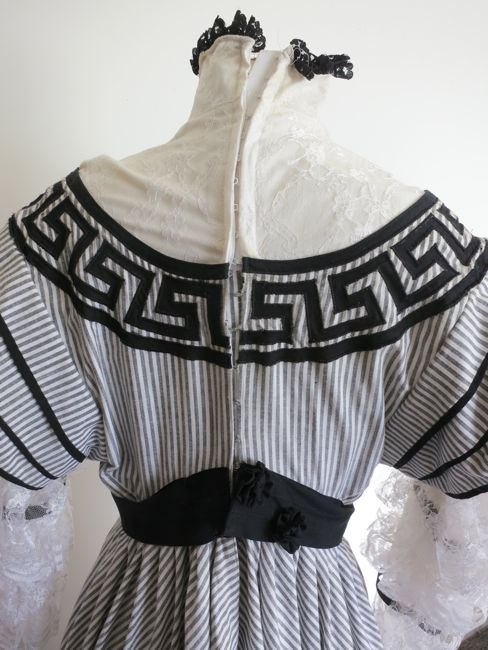
And my re-do:

The 1905 Greek Key afternoon dress, thedreamstress.com


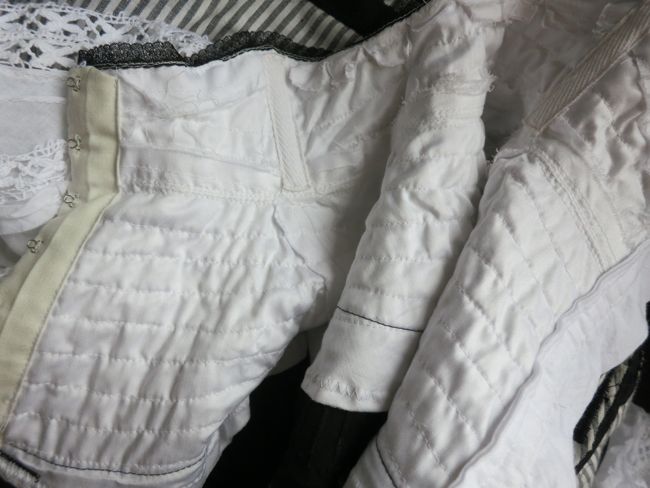
I unpicked the original yoke, checked it against Janet Arnold to make sure that the pattern was true, and then used it to cut a new pattern out of white cotton sateen.  I then stitched row after row of white cotton lace on to it, to imitate the effect of an all-lace fabric, such as was used in the original 1905 gown that Janet Arnold patterned.
The 1905 Greek Key afternoon dress, thedreamstress.com

Once again, lots of thread was used!

With the lace sewn down, I sewed on twill-tape channels for boning in the collar, and inserted the bones.

The back fastenings with hooks and eyes, so I used strips of scrap fabric to finish the raw back edges, and then hand-sewed on all the hooks.
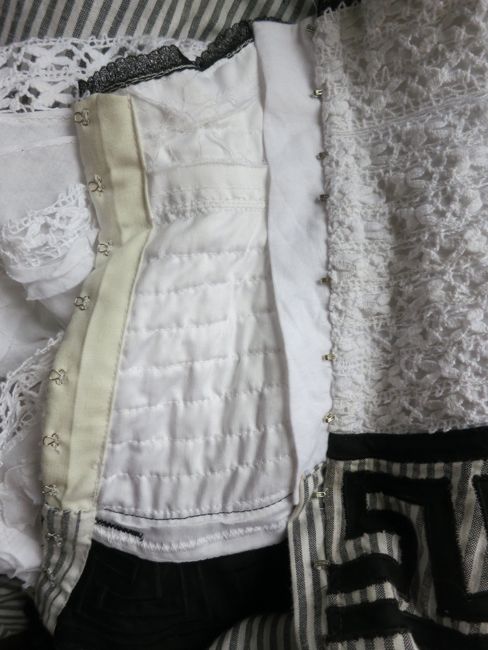
The 1905 Greek Key afternoon dress, thedreamstress.com


I was really worried about the collar being too tight, so I over-compensated, and it was actually far too large on A, but I’ve just tried it on another potential model who is a wee bit taller and a wee bit bigger, and it fit much better.
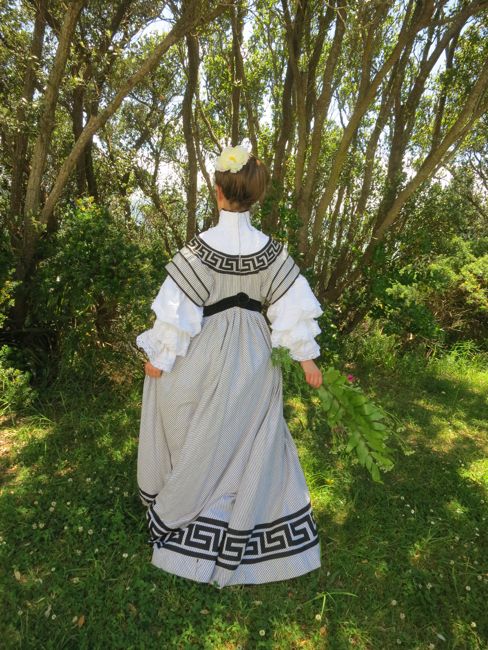
 

The 1905 Greek Key afternoon dress, thedreamstress.com


The waist of the back hooks is covered with a velvet rosette.  Arnold’s original actually has two small ones, but I forgot to check this as I was finishing the dress, and just made one large one to fasten the velvet sash I’d re-done.
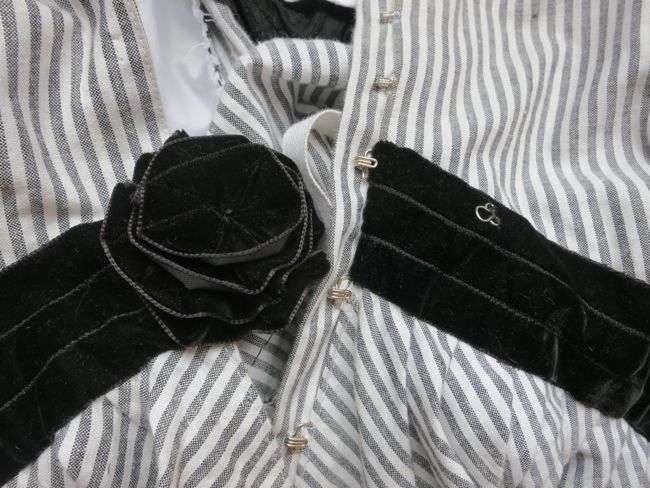
The 1905 Greek Key afternoon dress, thedreamstress.com

I also re-did the sleeves from the first gown.  I unpicked the the sleeves as they were, but rather than using them as a pattern I went back to Arnold.
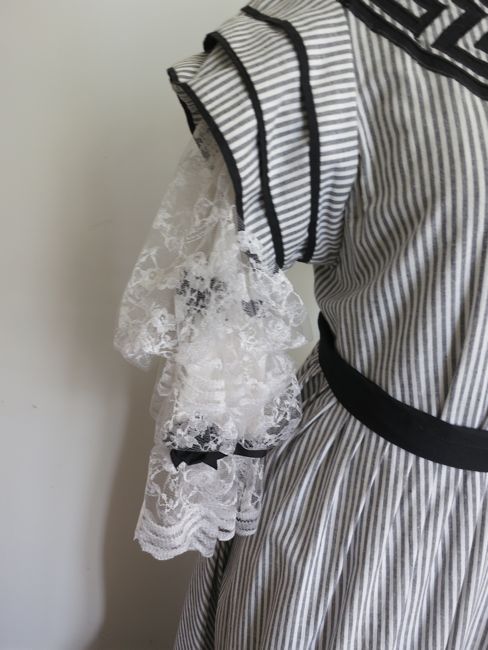
The 1905 Greek Key afternoon dress, thedreamstress.com


I patterned out Arnold’s sleeves, using a base of the white cotton sateen, as with the yoke, and for the fabric, white lawn with pintucks and bias-ruffles, and rows of the same cotton lace as the yoke.
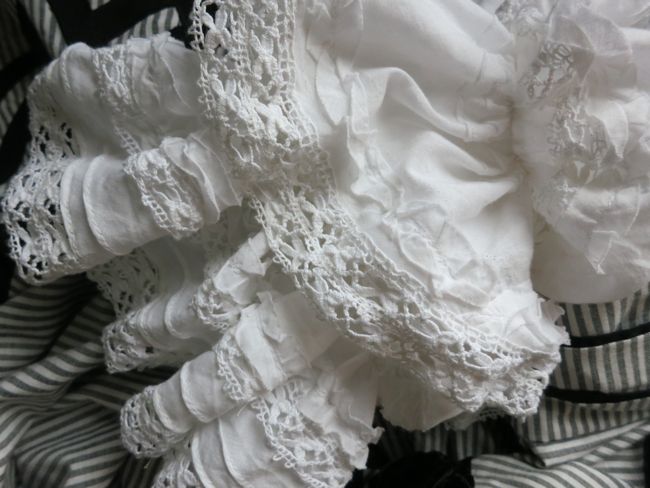
The 1905 Greek Key afternoon dress, thedreamstress.com


The fabric came pre-pintucked and ruffled, but with rows of nasty nylon lace, which I unpicked and replaced with the cotton lace.
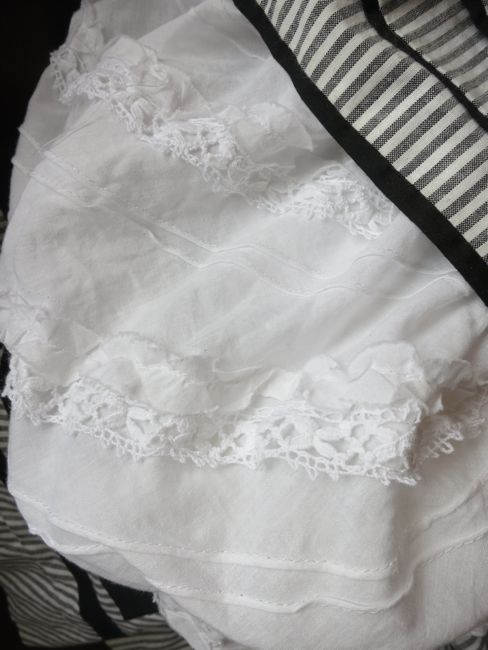
 

The 1905 Greek Key afternoon dress, thedreamstress.com


The finished effect was, well, big.  Quite a bit more poof than I envisioned!
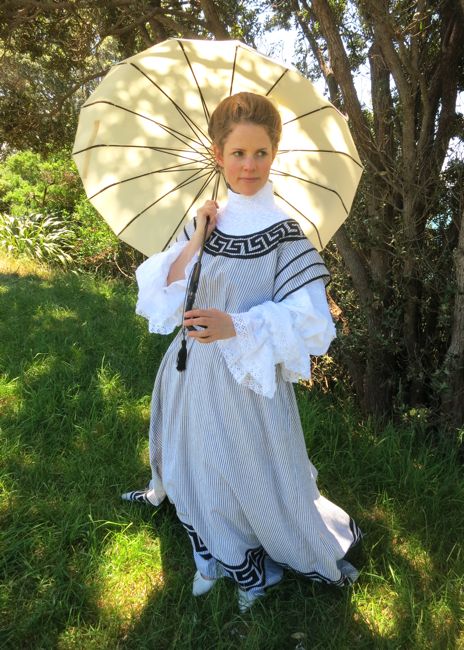
The 1905 Greek Key afternoon dress, thedreamstress.com


I mentioned before that the big-ness of the sleeves bugged me, and you all assured me that it needs to be there, but I’ve figured out what’s wrong.  It’s not that the sleeves are too poofy – it’s that they are too long.  They should end at the models fore-arm, not her wrist.  So I had a play yesterday, and I’m going to shorten the bottom ruffle a tiny bit, and the top poof a good few inches, and I think it will fix all the proportion things with the dress that are bugging me.

Still, tiny things aside, I think A looked gorgeous in it, and I do love it, both as it was, as it is, and as it will be!
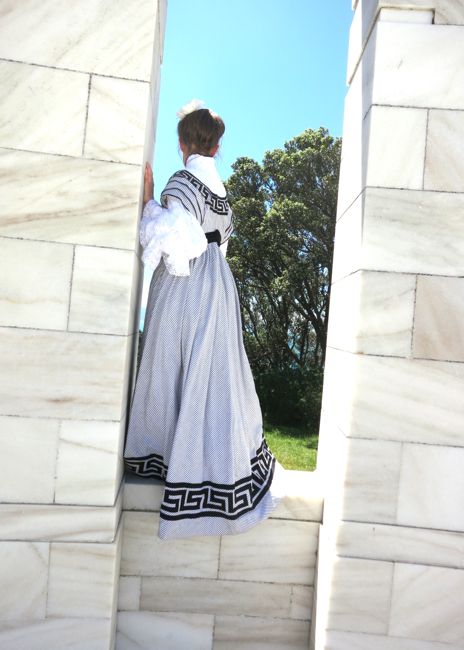
The 1905 Greek Key afternoon dress, thedreamstress.com


And I hope you found some of the construction details useful.

*Of course, I didn’t actually do the Greek Key motifs – Pamela did years ago, and I just stitched them down

Historical Sew Fortnightly ’14 Challenge #5: Bodice (and What is a Bodice?)

The Historical Sew Fortnightly Challenge #5 for 2014, due March 15,  is Bodice.

It’s pretty simple.  Make a bodice – a garment that covers the upper body.  You can either abide by the strictest historical sense, and make a ‘pair o bodies’ for earlier periods, or a matching but separate upper half, in later periods, or can explore the idea of bodices in a more general sense.

I’ll leave the ‘more general sense’ interpretation of bodice up to your judgement, but will explore the more historical sense, and how the definition and style of bodices have changed over time to give context and inspiration.

The word ‘bodice’ dates back to the mid 16th century, and comes from the term ‘pair of bodies‘ (or ‘pair o bodies’).  The ‘pair’ was referring to the two sides of the stiffened garment which laced together.

Extant stays (Queen Elizabeth's effigy 'pair o bodies') ca. 1603

Extant stays (Queen Elizabeth’s effigy ‘pair o bodies’) ca. 1603

In the 16th century a bodice could refer either to the boned under-stays, or to the boned and stiffened garment that went over it.  Ben Johnson conveys a sense of how the word arose in his 1601 satiric play The Poetaster, when one character  complements another on their “strait-bodiced city attire” which will “stir a courtier’s blood, more than the finest loose sacks the ladies used to be put in.”

16th century uses of the word bodice predominantly refer to women’s garments, but there are occasional descriptions of fitted, stiffened up garments for men as bodices.  Early usage of the term also almost always refers to a garment with separate sleeves, whether it was stays, which would have a full sleeved garment put over them, or a garment with detachable sleeves.

As the 17th century progressed a wider distinction arose between women’s outer garments for the upper body that were boned and stiffened in their own right (such as robe de cour bodices) and women’s boned and stiffened garments that were worn specifically as underwear under un-boned robed gowns (the mantua).  As the fashions progressed, ‘bodice’ became used only for the garments that were boned and stiffened in their own right, and not for the undergarments – the stays, nor for soft, unboned outer-garments, whether mantua or jackets.

Bodice, German, 1660s

Bodice, German, 1660s

This distinction was still being sorted out at the end of the 17th century, as demonstrated in 1688 by Randal Holme, in his Academy of Armory describing women’s dress as consisting of:

The STAYES, which is the body of the Gown before the Sleeves are put too, or covered with the outward stuff.

He also describes:

BONING THE STAYES, is to put the slit Bone into every one of the places made for it between each stitched line which makes Stayes or Bodies sitff and strong.

And:

COVERING the Bodies or Stayes, is the laying the outside stuff upon it…

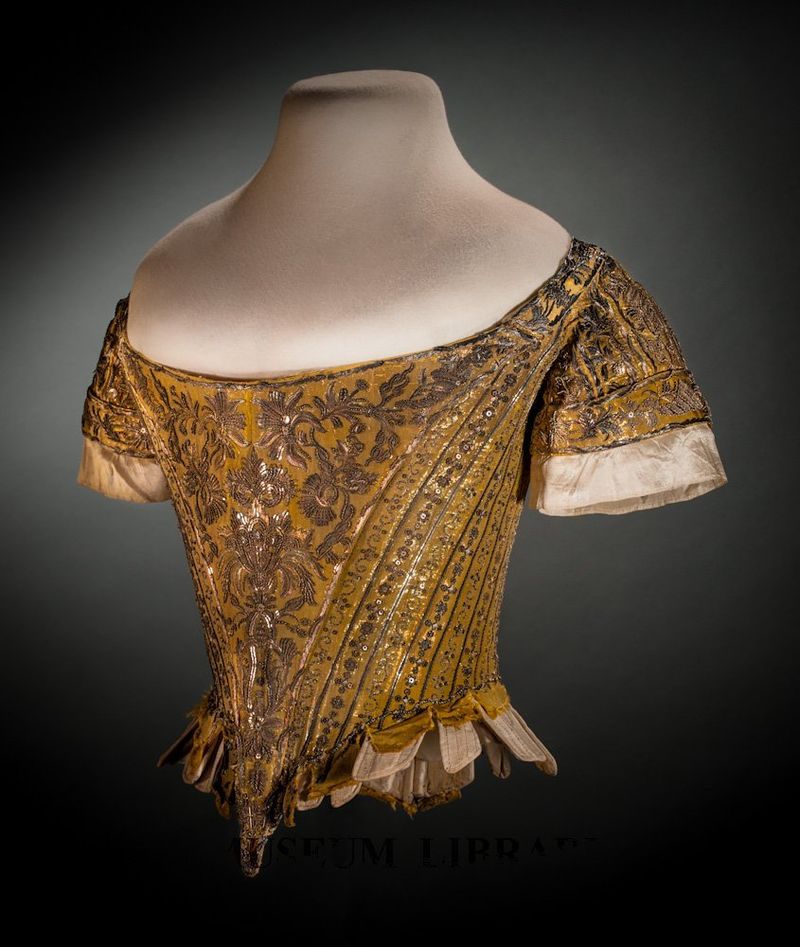
This meant that by the 18th century a robe de cour – literally called a ‘stiff bodied gown(or stiff bodiced gown, since the words were essentially interchangeable) was a bodice, but that a soft jacket such as a caracao or pet-en-l’air, worn over a set of boned stays, would not be considered a bodice, and the term bodice almost always referred to an outer-garment, where stays would be used for an under-garment.

According to a 1733 description:

The Princess of Orange’s dress was the prettiest thing that ever was seen — a corpse de robe, that is in plain English, a stiff-bodied gown.  The peers’ daughters that held up her train were in the same sort of dress — all white and silver, with great quantities of jewels in their hair and long locks’

Court Bodice, 1761, Helen Larson Historic Fashion Collection, FIDM

Court Bodice, 1761, Helen Larson Historic Fashion Collection, FIDM

This distinction morphed as fashions changed at the end of the 18th century.  Late 18th and early 19th century fashions were so exclusively focused on full gowns, with even court dress, though it retained the proscribed hoops and feathers in England, made as one gown, that there were few things that were described separately as bodices.  There are occasional sleeveless spencers that fit the 18th century definition of a bodice, albeit one without boning, and one which would be worn over a full gown.

Bodice (sleeveless spencer), silk, ca. 1800, Metropolitan Museum of Art, C.I.38.48.9_F

Bodice (sleeveless spencer), silk, ca. 1800, Metropolitan Museum of Art, C.I.38.48.9_F

Instead, it is in this period that bodice begins to be used as a generic term for the upper half of a women’s outfit, so that in the 1820s a  fashion plates might describe a dress with an ‘Anglo-Greek Bodice’ to indicate a style made with fichu-robings for day or evening wear.

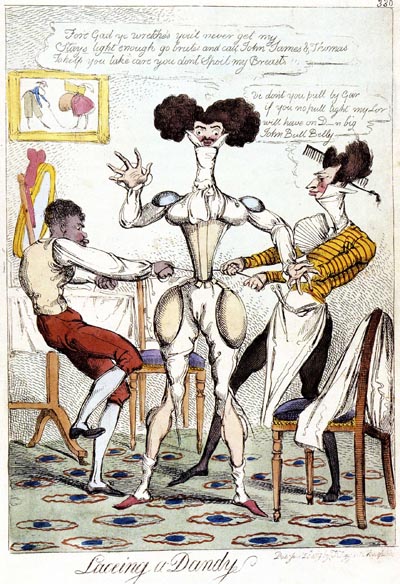
Between 1810 and 1820 ‘bodice’ made a brief return in menswear, in the form of the ‘Brummell bodice‘ – the men’s stays worn by fashionable dandies, after Beau Brummell.

Lacing a Dandy, 1819

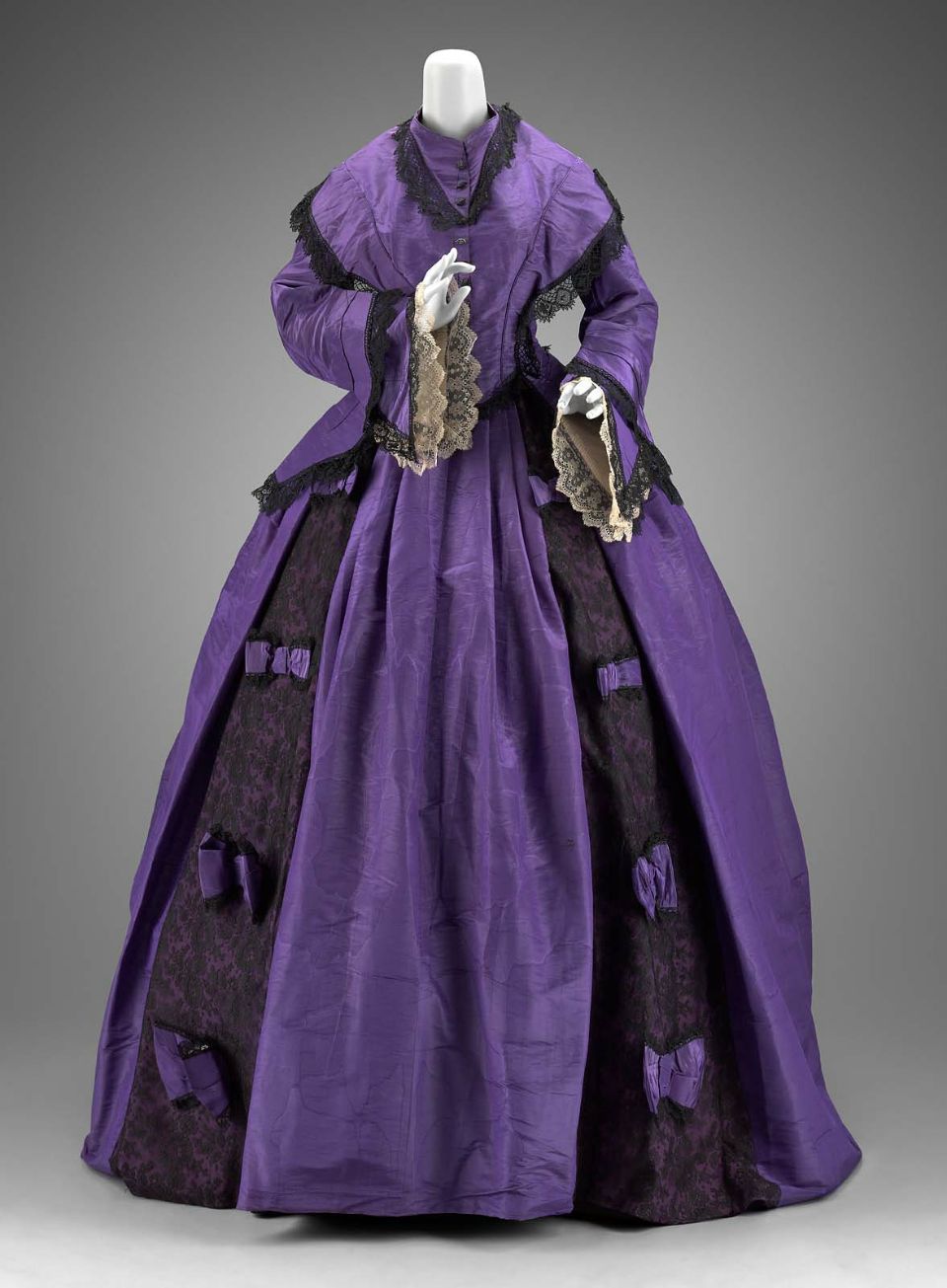
By the mid-19th century, bodices were once again woman’s exclusive provenance.  While the generic description of bodice as anything in the upper half of the garment was here to stay, the term did was more commonly used to refer to a separate but matching upper garment, which would be attached to the skirt with hooks when worn, creating the appearance of a one piece garment.

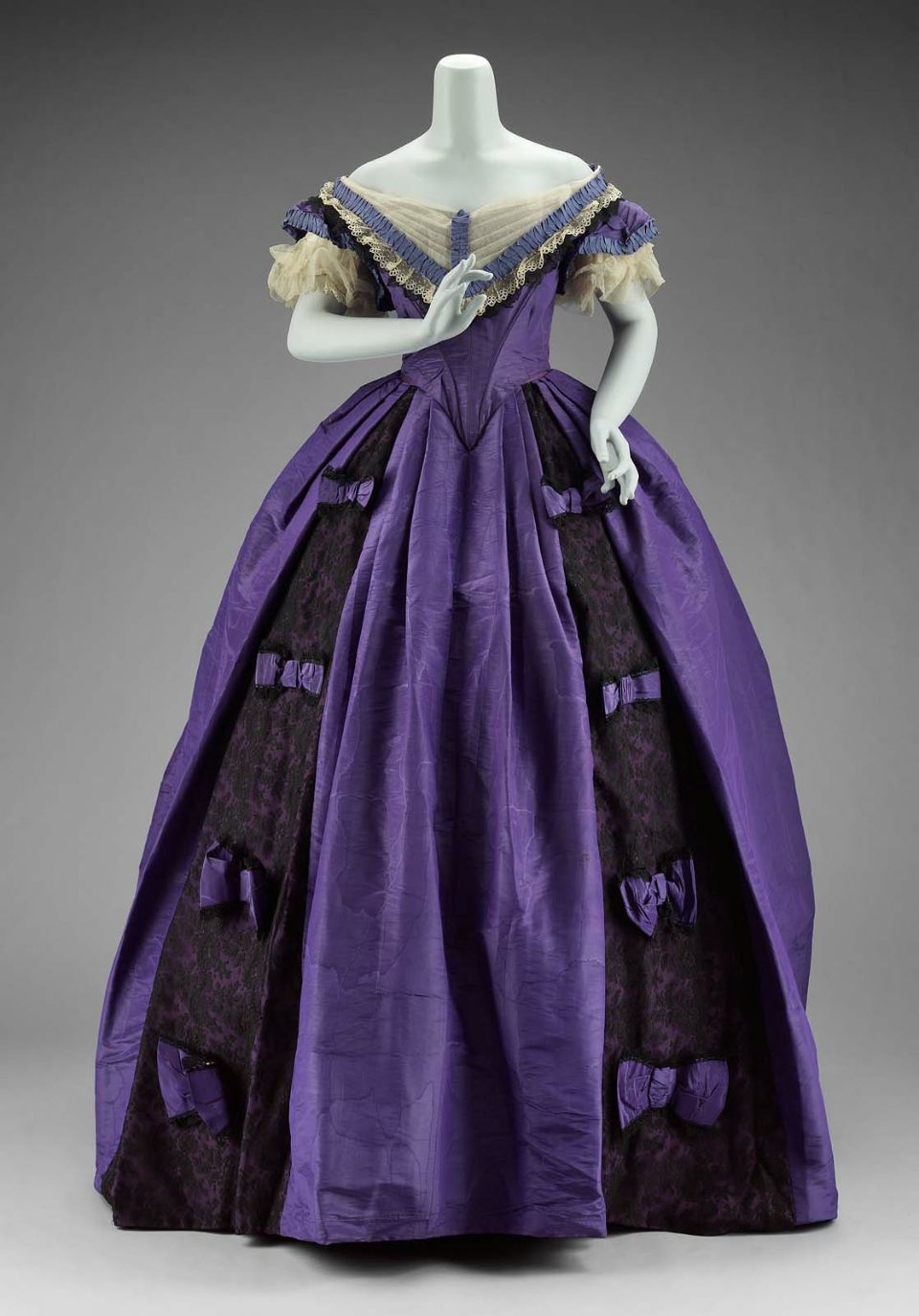
Ball gown bodice, 1865-66, Musees

Ball gown bodice, 1865-66, Musees

These garments were usually boned, and can be seen as a descendent of the stiff, laced 18th century bodices.  However, unlike their earlier counterparts, the new distinction between day and evening fashions allowed dresses to be made with one skirt, and two bodices: a low necked one for evening wear, and a high necked one for day wear.

Dress (evening bodice), 1860s Jessie Benton Fremont, American, MFA Boston

Dress (evening bodice), 1860s Jessie Benton Fremont, American, MFA Boston

Dress (afternoon bodice), 1860s Jessie Benton Fremont, American, MFA Boston

Dress (afternoon bodice), 1860s Jessie Benton Fremont, American, MFA Boston

Fashion magazines gave suggestions for both full ensembles, and for bodices which might be paired with any skirt design.  It was possible for a skirt to have a matching bodice, and for a woman to then purchase other, separate, unmatching bodices to go with it.

A "Low Bodice for Gown" from 1889. "This pattern can be carried out either in silk, moire, plush, velvet, brocade or satin.  The sleeves and folds may be either lace, gauze Aerophane, or China crepe"

A “Low Bodice for Gown” from 1889. “This pattern can be carried out either in silk, moire, plush, velvet, brocade or satin. The sleeves and folds may be either lace, gauze Aerophane, or China crepe”

It was only with the development of the waistline-less ‘Princess Dress’, and the return of one-piece gowns worn for anything but the most informal wear, which began in the late 1870s, that the bodice began to see a decline.  It lasted until the early 20th century, but with the revolution in fashion in the 1910s and 20s the bodice as a separate garment disappeared almost entirely as a fashion term.  Instead, we wear dresses with bodices, or shirts and blouses.  Only in the vocabularies of seamstresses (“I took the bodice from pattern A and the skirt from pattern B”), the occasional special-occasion garment with a separate bodice, and in specialised regional dress (dirndls etc.) does the bodice remain relevant.

 Sources:  

Buck, Anne.  Dress in 18th Century England, B.T. Batsford Ltd: London.  1979

Cumming, Valerie and Cunnington, C.W.; Cunnington, P.E,  The Dictionary of Fashion History  (Rev., updated ed.). Oxford: Berg Publishers. 2010

Hart, Avril and North, Susan.  Seventeenth and Eighteenth Century Fashion in Detail.  V&A Publishing: London.  2009

O’Hara, Georgina,  The Encyclopedia of Fashion: From 1840 to the 1980s.  London: Thames and Hudson Ltd.  1986

Riberio, Aileen.  Dress in Eighteenth Century Europe 1715-1789.  B.T. Batsford Ltd: London.  1984.

Riberio, Aileen.  Fashion in the French Revolution.  B.T. Batsford Ltd: London. 1988

Mansel, Philip.  Dressed to Rule: Royal and Court Costume from Louis XIV to Elizabeth II.  Yale University Press: London.  2005.

Waugh, Norah.  The Cut of Women’s Clothes: 1600-1930.  Faber and Faber: London.  1968