Latest Posts

Five for Friday: Songs for Sewing To

I love music. I own a lot of music, in a huge range of genres.  My collection is, to say the least, random and eccentric.  I wouldn’t say I know a lot about music, I rarely even know the proper name for songs, and I certainly don’t know anything when it comes to making it, but I still love it.

My life has theme songs: certain pieces of music that play in my mind when I do certain things.

Here is my soundtrack to sewing:

1. Classical KDFC.

I didn’t grow up listening to classical music.  For some reason the classical radio station in Hawaii picks the most depressing, morose, dirgelike (and possibly just flat out dirge) classical music.  So I thought classical music was dire.  Then, working in a costume shop in the Bay Area when I was at university, we sewed to the San Francisco classical radio station, and I discovered that actually, classical music (and baroque music, and romantic music, and impressionist music) are all awesome.  So awesome that in retrospect I’m impressed that the Hawaii station managed to find so much bad classical music.

I still sew to the San Francisco classical music station, particularly for historical sewing.  Radio NZ plays fantastic classical music, and I listen to it in the car, but well, I’m a creature of habit and a romantic.  Listening to KDFC reminds me of the skills I learned, and the fabulous people I worked with.  Plus, the ads keep me connected with the states, both for good, bad, and bafflement.

2.  And just to show you how random my musical choices are:  And another one bites the dust – every time I finish a spool of thread (and since I use A LOT of thread, I hear this song in my head A LOT)

3. There is a hippie song that goes “For every problem there is a simple logical solution.  For every mountain there is a road not hard to find.  These situations were made for us to conquer / for the betterment of all mankind.”  It had lyrics about renewable solar energy being the solution to coal emissions and petrol running out, etc.

When I’m teaching sewing and a student says “What do I do!  It’s not working!” I hear the chorus of that song in my head, because with sewing machines, every problem does have a simple logical solution.  Have you threaded the machine properly?  Have you put the bobbin in properly?  Did you put the foot down?  Are you on the right stitch?  Yes to all of these and it’s still not working?  Congratulations!  You have a 1% of sewing problems problem!

I can play the tune in my head.  I am SURE it exists.  Only not according to YouTube, or the internet, or anyone I’ve asked.  Which is pretty amazing, because everything exists on youtube or in google at one point or another.

I finally had to go ask my parents about it, and it turns out that it is by one of my father’s favourite bands, Spirit, and it actually dates from 1990 (which explains why some of the lyrics are so modern) and I’ve found it on the internet.  So you can go listen to it.  And suddenly, it has so little relation to the reason it plays in my head!

4. Vampire Weekend’s The Kids Don’t Stand a Chance is the perfect song for sewing tailored shirts too, all pinstripes and pure Egyptian cotton.  I always feel pleasantly wicked sewing to it.

5. And finally, the ultimate sewing love song.  Avalanche City’s You and I.

Listen closely at the 1:20 mark.

Oh yeah.
The 1770s Masquerade Stays

I’m hard at work on my item for the HSF Masquerade Challenge.

Remember my terminology post on marmottes?  (If you don’t, I highly recommend that you go read it, as it’s one of my favourite pieces of research ever).

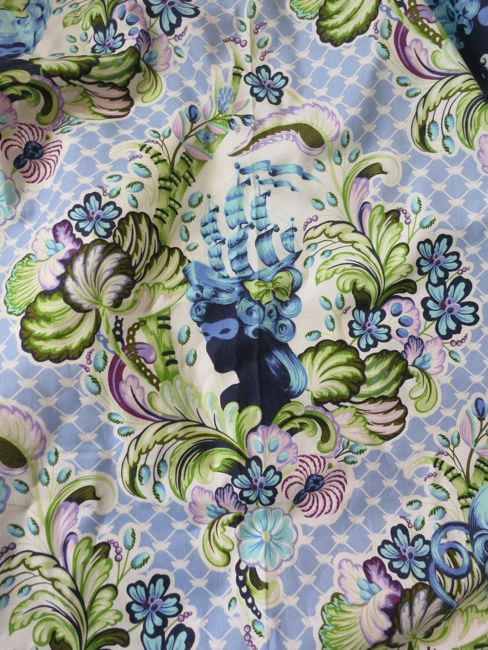
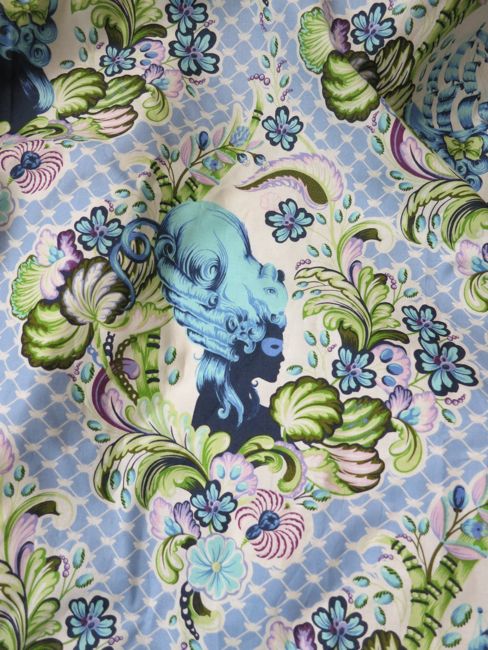
If you follow me on facebook you may remember that only a few days after I wrote it I found a fabric featuring marmotte themed 18th century hair:

18th century inspired masquerade fabric thedreamstress.com

ZOMG.

How awesome is that!?!

It’s crazy and fabulous and 18th century and masquerade-y.  And it has marmotte hair!

It also has ship hair (cute, but such a cliche)

18th century inspired masquerade fabric thedreamstress.com

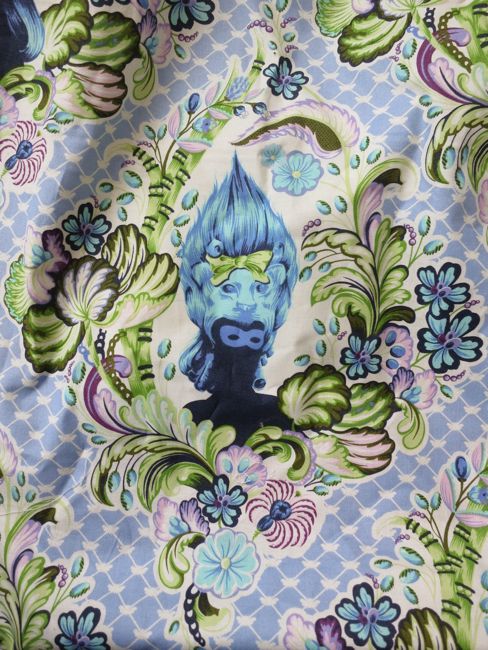
And lion hair (just weird):

18th century inspired masquerade fabric thedreamstress.com

Obviously I had to have it, but just as obviously, it’s not exactly suitable for anything historically accurate.

But for Masquerade?  For something where historicism blends with fantasy and alternative realities?  Perfect!

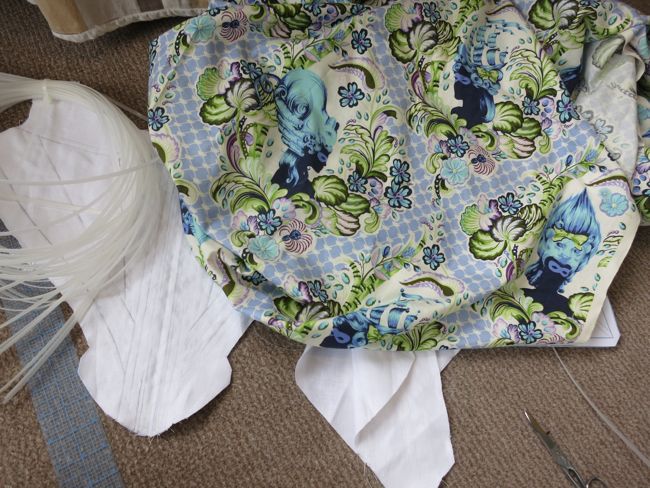
So I’m making 1770s stays, featuring this fabulous fabric.  Even if they won’t be accurate in any meaningful sense, I still intend the shape they give me to be accurate, so that I can wear them under 18th century clothing.

1770s stays beginnings thedreamstress.com

I’m using Ralph Pink’s version of the 1770s Norah Waugh stays pattern.  Saves me the time of drafting it up myself.

1770s stays beginnings thedreamstress.com

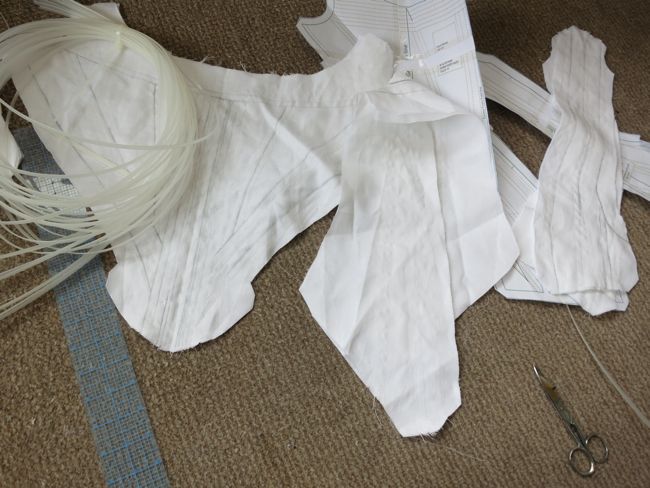
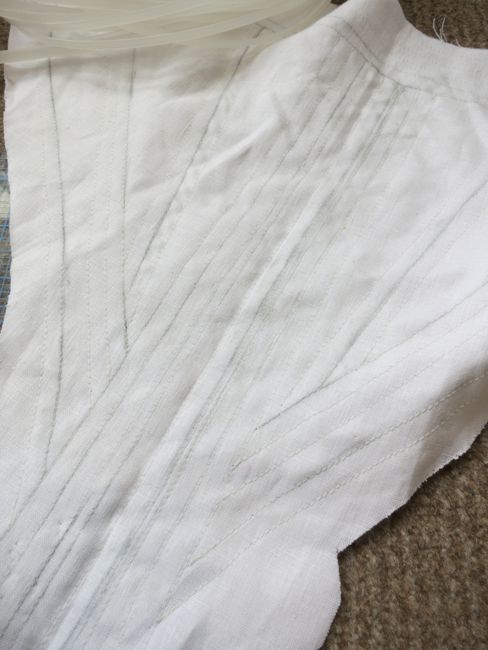
I’ve cut my lining, and sewn in all my boning channels.  Now I’m inserting boning.

1770s stays beginnings thedreamstress.com

Tomorrow I’ll do the back grommets (I’m REALLY cheating and using metal eyelets instead of working them by hand), and fit it on myself.  Mr D’s going to have to help with that as there is no front lacing.  Oh boy is that going to be a fun evening…

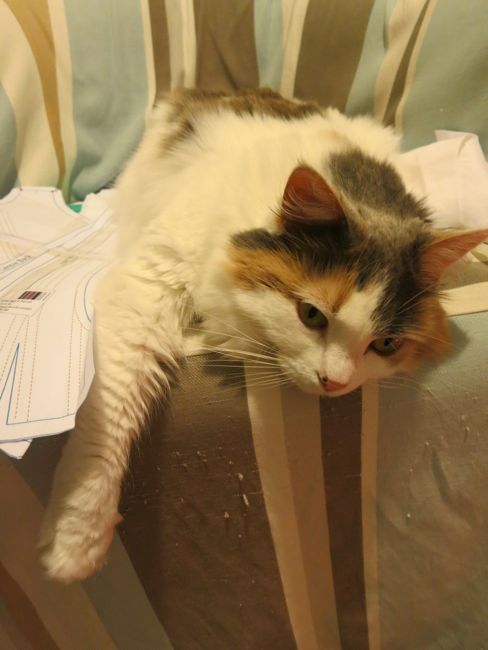
For now, Felicity is being ‘helpful’

Felicity the cat thedreamstress.com

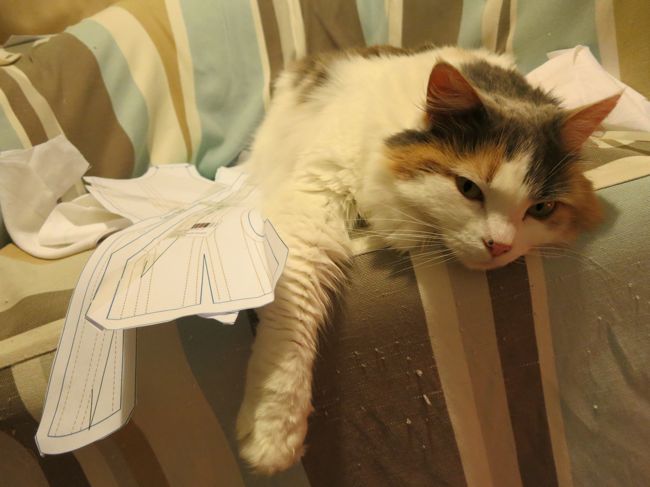
Actually, she looks kind a like a bored, sulking teenager in these photos.  Maybe I should do less staymaking and more throwing-of-toys?

Felicity the cat thedreamstress.com

You better

Rate the Dress: Lanvin does fancy fancy dress – maybe

Reaction to last week’s be-bowed pink and black confection was quite divided: you either loved pink and black and ruffles, or found it revoltingly saccharine.  There were also two camps of thought on what it represented.  Most of you thought commedia dell’arte.  Like Isabella though, my first thought was definitely 17th century, and I do think that even if she was meant to be a  commedia dell’arte figure, all the details of her dress were taken from 17th century costume – the match is just too spot-on.

Personally, in many ways I liked the outfit, but like Hana, the overall look left me a teeny bit cold.  It was just too perfectly matched and meticulous.  I think it would look amazing in real life though, on someone who wasn’t exactly the same colours as her dress and whose hair got a teeny but frizzy and windblown as she danced!  I’d probably rate it 7 10ths of a point lower  the 7.7 out of 10 that it actually rated.

This week let’s look at an actual extent fancy dress costume.

Well, maybe.

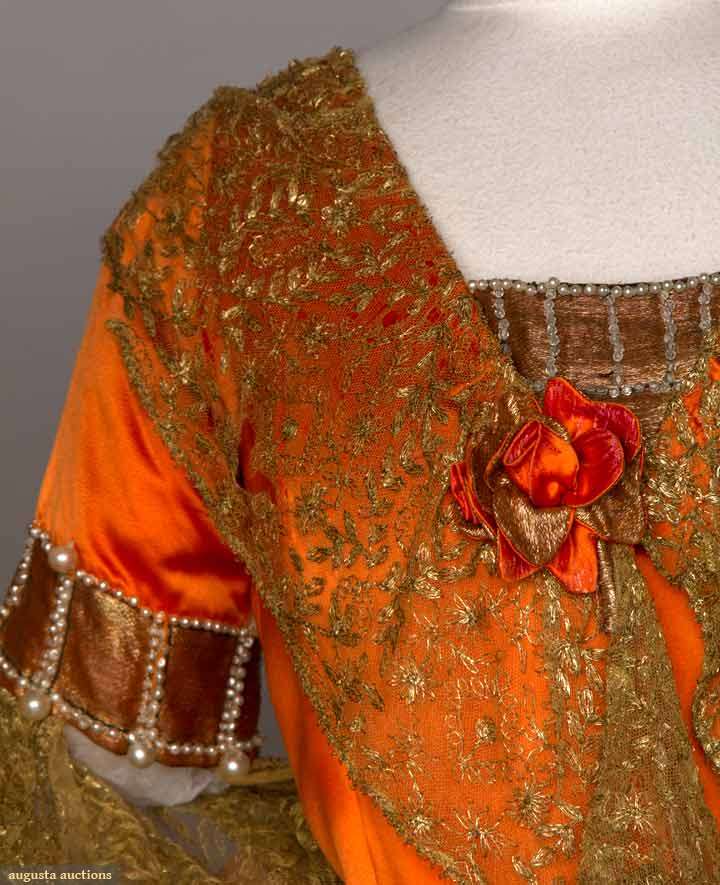
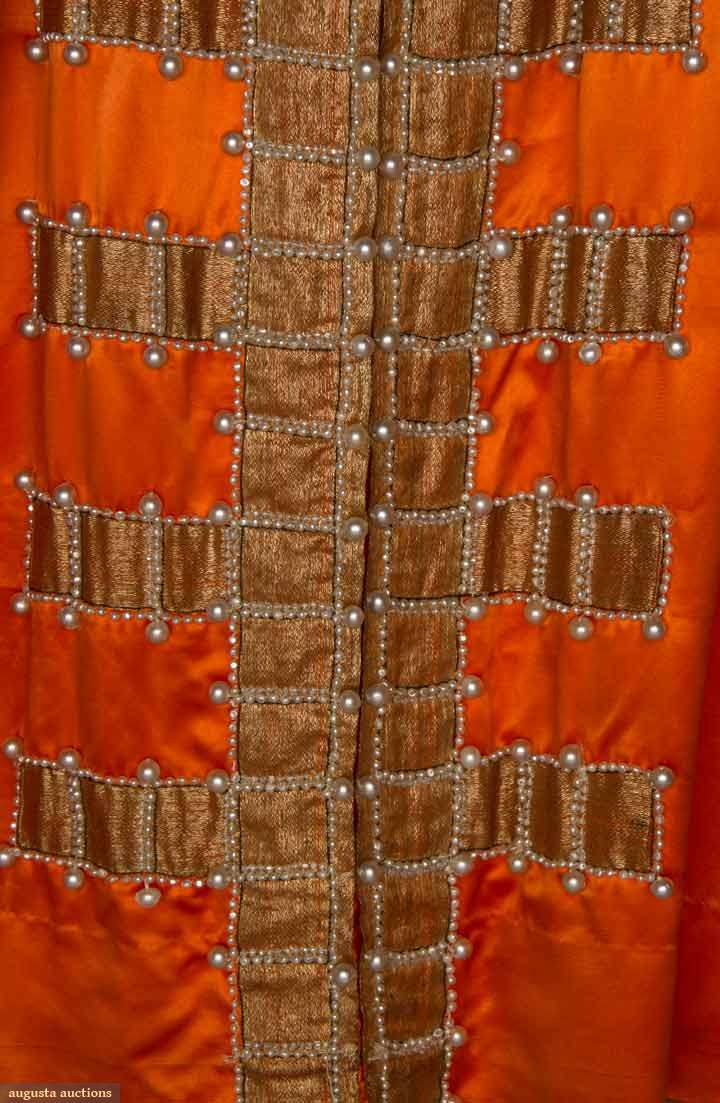
The sale record for this garment claims it is a fancy dress representing Elizabethan costume.  Lanvin, however, was noted for drawing on historical garments for inspiration, basing gowns on Velazquez portraits and Renaissance icons, so perhaps this was just a somewhat more theatrical creation.  I’m inclined to think the gown is fancy dress (the lace is rather unsubtle for Lanvin), but am not sure that it was meant to represent the era of Elizabeth I.  1920s fancy dress did have a particularly vague grasp of historical costume though!

Your task, dear readers, is to make your best guess as to what this gown was supposed to be, and to rate in on its aesthetics.

I’d recommend judging it on its merits from a period perspective.  Modern fancy dress is supposed to be witty and clever, but obvious.  From a 1920s perspective, historical fancy dress was meant to be “picturesque” and “quaint”, and even if we can’t guess the intended theme, in-period it may have been obvious.

The dress, whatever its theme, employs a classic Lanvin motif.  The same motif, a stylised crucifix that was one of the many religious symbols Lanvin utilised in her garments, appeared as early as 1922 on a white chiffon robe de style, was featured on a Lanvin advertisement from 1925, and continued to be used on Lanvin creations into the 1940s.

What do you think of the gown?  The vivid orange silk, paired with the rich gold lace, with the pearls for relief?  The historical-references meet Lanvin’s extremely refined, feminine 1920s aesthetic?

Rate the Dress on a Scale of 1 to 10.