Latest Posts

Swing Noir! Windy Lindy 2013

It’s that time of year again: the season when I lay aside historical costuming for a little while and turn to vintage frocks and dance until my feet hurt.  In other words, it’s Wellington’s Windy Lindy weekend.

This year the theme for the big ball (and more or less the weekend as a whole) was ‘Noir’, which I was SUPER excited about as I love film noir and neo-noir and Guy Noir.  In fact, I love them all so much that I’ve been campaigning for a Noir theme for two years.

I had visions of femme fatale costumes, all tilted hats with little face veils and broad shoulders and dark sequins, and even got one patterned up, but unfortunately I was sick in the run-up to Windy Lindy, and it fell the weekend after exams and projects were due at Massey University, so I was too busy sleeping or answering student emails to whip up anything fabulous.

Instead, I resorted to my wardrobe – it’s not like there isn’t enough in it!

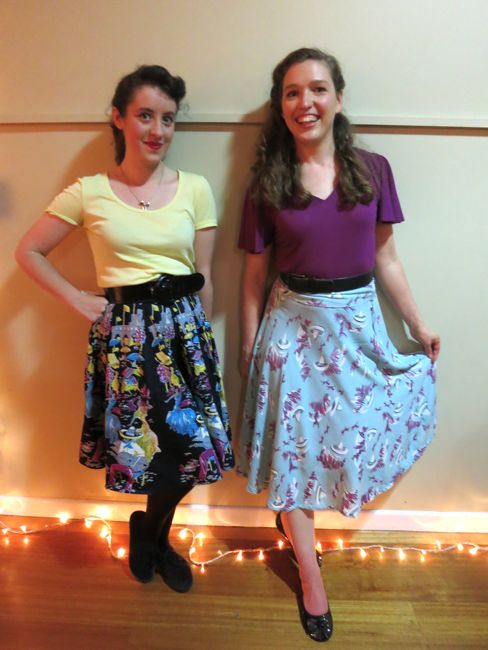
Friday night was competition night – with a lot of social dancing as well.  I wore it with the Rodeo & Wrangle & Ramble in Style skirt.   There was another dancer with a fabulous Mexican themed skirt – all dancing senoritas and fiesta banners.  So gorgeous!

Rodeo & Wrangle 1940s skirt thedreamstress.com

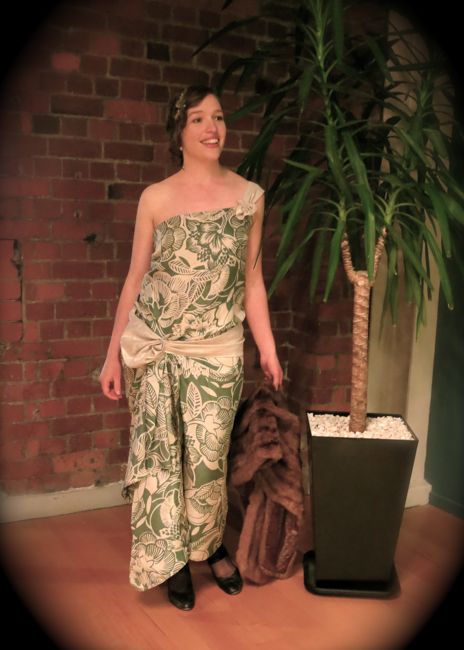
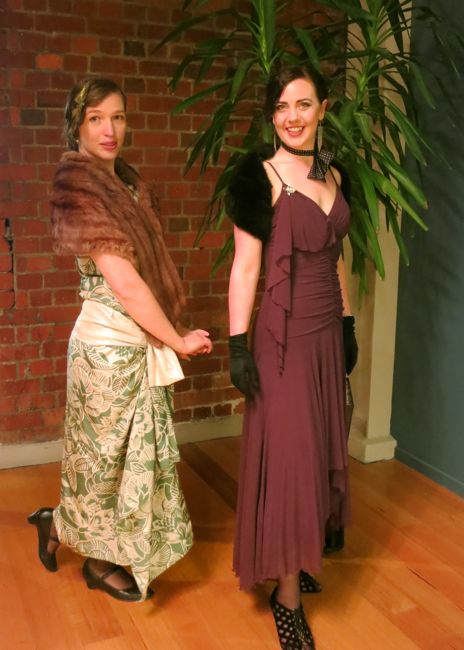
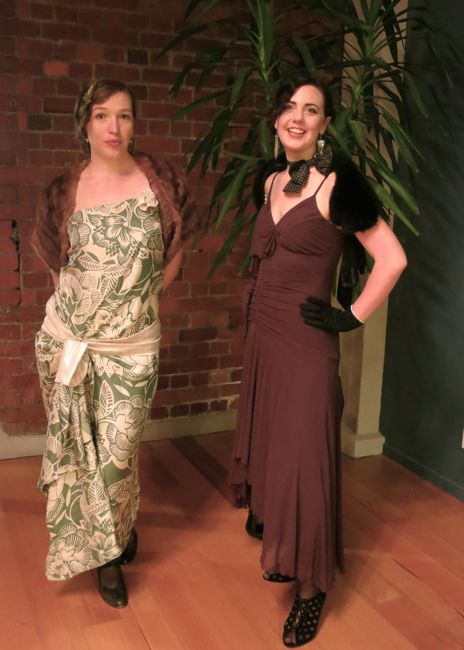
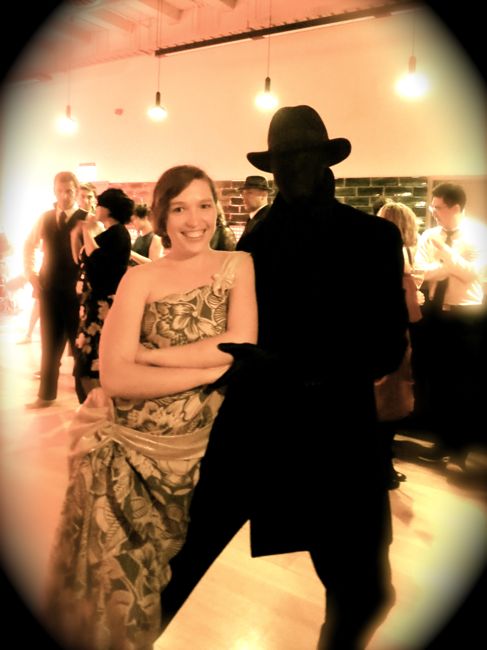
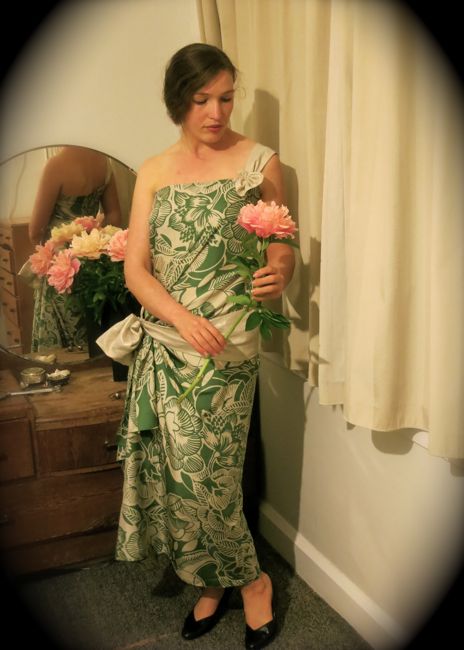
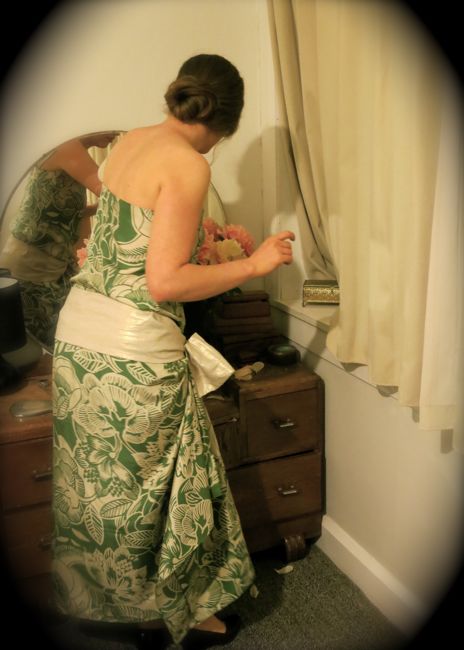
After a late night Friday I hauled myself out to lessons with the visiting teachers on Saturday, and then got dressed up for the big ‘Noir’ ball Saturday evening.  I wore the 1924  Hula Goddess dress because it’s always fun to wear something new, and I’m about to send it off to my sister in San Francisco.  It might be the wrong period for noir, but it definitely has a femme fatale vibe!

Hula Goddes 1924 dress thedreamstress.com

Hula Goddess 1924 dress thedreamstress.com

Hula Goddess 1924 dress thedreamstress.com

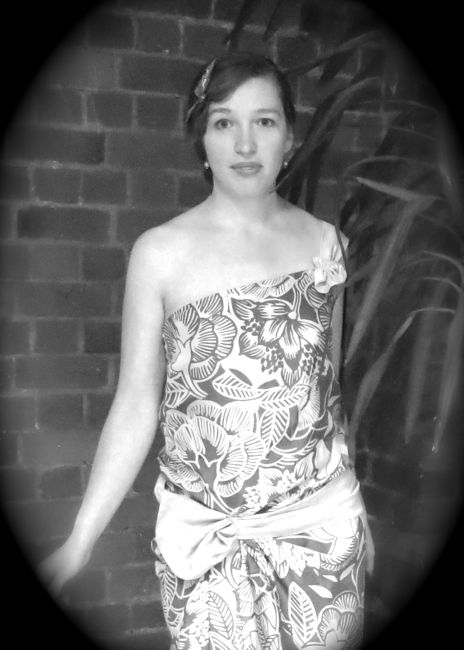
The lighting was terrible for frock photography, and I’m not thrilled with any of the shots I got, but this one has a nice early ’20s movie star vibe

Hula Goddess 1924 dress thedreamstress.com

There were some pretty awesome costumes at the ball, but the best one was definitely the ‘silhouette’.  Not only was it amazing, but he managed to dance all night in it!

Hula Goddess 1924 dress thedreamstress.com

Hula Goddess 1924 dress thedreamstress.com
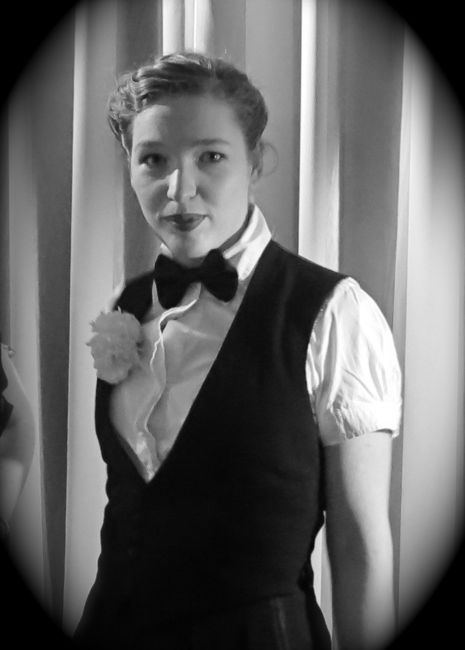
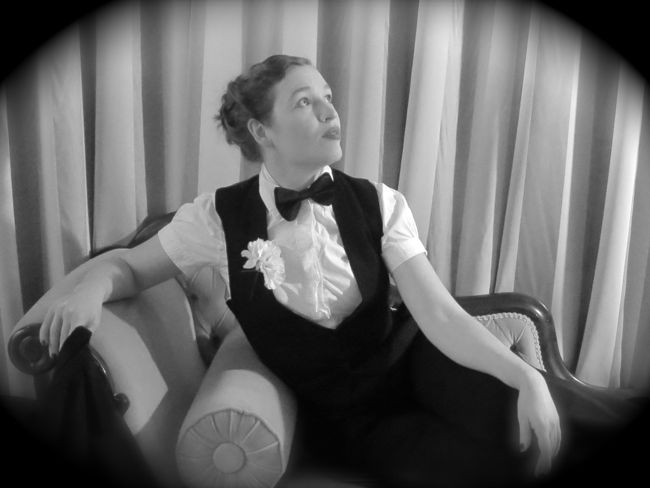
I made a stupid timing mistake, and missed my Sunday dance lessons (boo), but still had a fantastic, if rather tired, time at the Sunday night ‘Whodunnit’ ball.  I went Marlene in vintage tails – with a short sleeved shirt for danceability!

thedreamstress.com

Sadly, my camera ran out of batteries after only a few photos, and I didn’t manage to solve the murder mystery in time (Was it Frankie Manning in the Cotton Club with the gramaphone?  Or Ella Fitzgerald at Herräng with the cravat?  Or maybe ‘Shorty’ George Snowden did it with a fascinator at Venice Beach! (question: how exactly do you kill someone with a fascinator?))

thedreamstress.com

I was really impressed by how comfortable the vintage tails were to dance in.  I’ve always felt bad for me in their wool suits, but take off the jacket and I danced all night and stayed amazingly cool.  Also: pockets.  I think I need to make myself more vintage inspired menswear!

And now, back to my usual programming, with lots of sewing (stays!  And Edwardian blouses!  And the top half of the Chinoiserie outfit!), and lots of marking, and hopefully a bit more regular blogging as I’ve been rather remiss this last week.

HSF ’14: Challenge #2: Innovation

Since it will be a new year, the second Historical Sew Fortnightly challenge of 2014 (due Sat Feb 1) will be all about new things: Innovations.

Innovation is one of the biggest drivers in new fashions, today, and in the past.  New inventions, the introduction of new materials or new styles from abroad all create new trends.  Some of these fashions faded quickly, others had a lasting impact on what we wore.  To celebrate the way inventions, introductions and discoveries have impacted fashion, make an item that reflects the newest innovations in your era.  Because the Historical Sew Fortnightly is about learning as well as creation, I’d really encourage you to share the research you did into your innovation when you present the finished item.

There have been innovations in fabric that have changed fashion, like the introduction of Chinese silks into ancient Rome (much to the distress of Roman officials, who worried about the economic impact of all that Roman gold going East to pay for the silk coming West – to the point where they even hired notable authors and playwrights to write anti-silk propaganda).

Maenad in silk dress

Maenad in silk dress, Roman

Eastern silks created fashion waves again in the Middle Ages, as Chinese & Ottoman brocades & velvets made their way to Northern Europe, revolutionising elite fashions in the late Middle Ages & early Renaissance.

Mary Magdalene from the Braque Family Triptych (right panel), ca. 1450, by Rogier van der Weyden (early Flemish, 1399:1400-1464)

Mary Magdalene from the Braque Family Triptych (right panel), ca. 1450, by Rogier van der Weyden (early Flemish, 1399:1400-1464)

In the 18th century, it was cotton and not silk that revolutionised fashions, helping to bring in the softer, more relaxed look of Neoclassical fashions.  Cotton made garments like Marie Antoinettes infamous chemise a la reine possible.

Marie Antoinette in a muslin dress, 1785, Vigee Le Brun

Marie Antoinette in a muslin dress, 1785, Vigee Le Brun

More recently, the development of cellulose-based rayons provided a cheap alternative to silks, and paved the way for the first full-synthetic fabrics, like nylon.  While we mostly associate early rayons with the ’30s and ’40s, it was actually available for sale in New Zealand (and the rest of the Western world) from 1912.
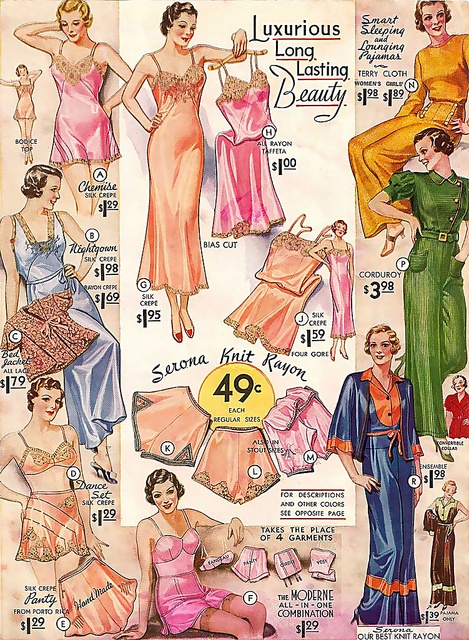
Pyjamas and lingere in rayon, 1934

Pyjamas and lingere in rayon, 1934

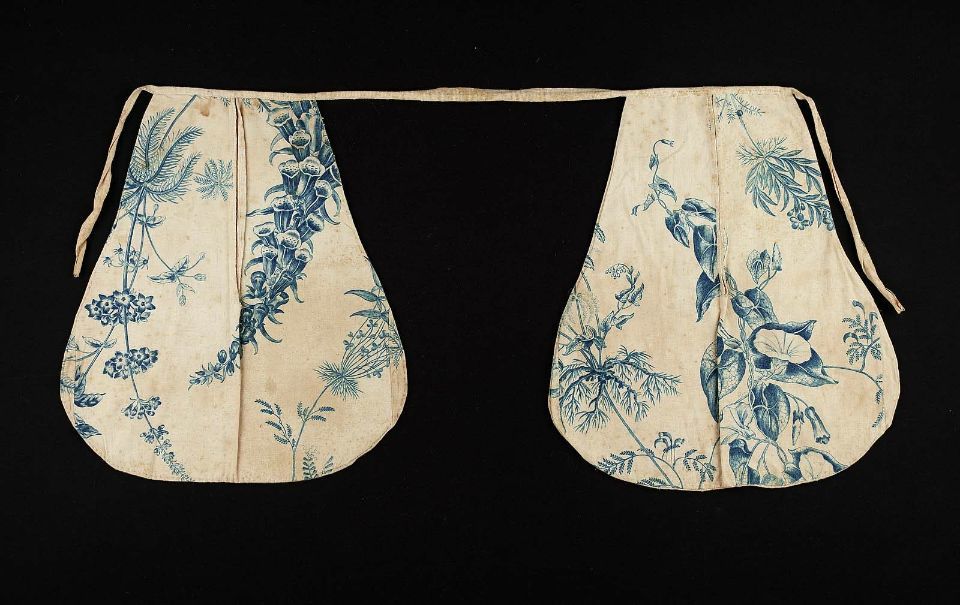
Innovations in dye have also drastically changed fashions.  While indigo dye was known in Europe from ancient times, and woad, which produced indigo dye (but in much smaller quantities than from the indigofera plants) was grown commercially as a dyestuff throughout the Middle Ages, the introduction of large quantities of indigo dye from India by Portuguese explorers in the early 16th century revolutionised the amount and depth of the blue colours that could be achieved with dye.  Other Western powers, wanting their own share of indigo, soon set up plantations in the West Indies and the American South.  Despite bans on indigo imposed to protect the woad dyers, everyone wanted the new dye, especially as it combined with the new cotton fabric to create the classic blue and white toile de jouy and calico prints.  Toile de jouy also owes its characteristic delicate details to another new innovation: engraved printing on fabric.

Pocket, printed cotton & linen, 18th c, American, MFA Boston

Pocket, printed cotton & linen, 18th c, American, MFA Boston

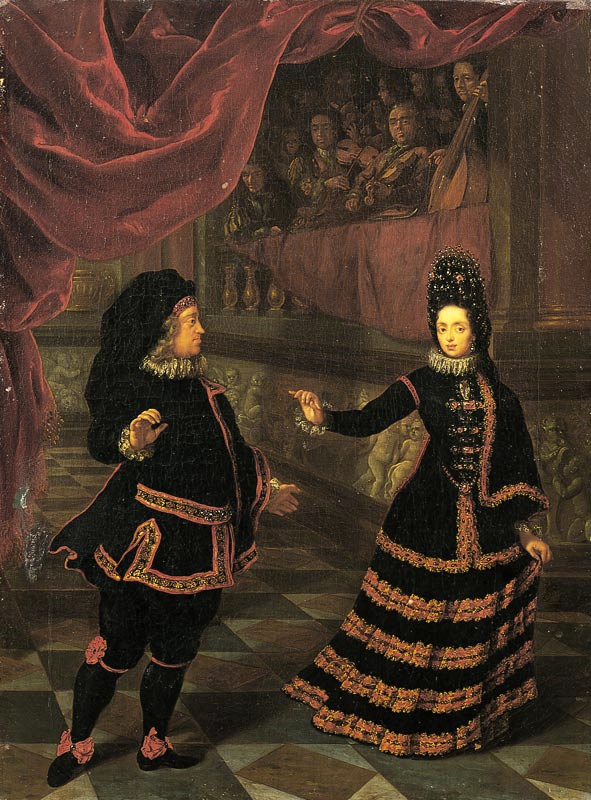
Indigo, combined with logwood which was imported from Central America & the Caribbean from the 1570s dyed fabric a rich, dark black which did not fade or destroy the fabric it was dyed into like earlier black dyes had done  (you can see how the black threads of this jacket, dyed during an English ban on logwood black, are literally being eaten away).  The fashion for the newly effective, and considerable cheaper, though still very expensive, black fabric is reflected in early 17th century fashions (and again at the end of the 17th century, when bans against it in England and other countries were lifted), and in the dress of the Puritans (who would think that the dress of a group who have come to epitomise severity actually dressed based on a fashion for the newest dye?).  Without the addition of indigo, logwood dye faded to orange in a few short weeks, and without logwood, indigo could not dye black.
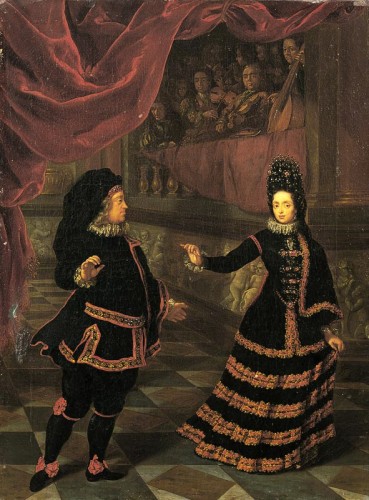
Jan Frans van Douven, Anna Maria Luisa de’ Medici dancing with her husband Johann Wilhelm, Elector Palatine (1695)

Jan Frans van Douven, Anna Maria Luisa de’ Medici dancing with her husband Johann Wilhelm, Elector Palatine (1695)

Most famously, of dye innovations, aniline dyes completely revolutionised the dye industry in the 1860s, ushering in a range of glaring brights, and eventually almost completely replacing natural dyes.
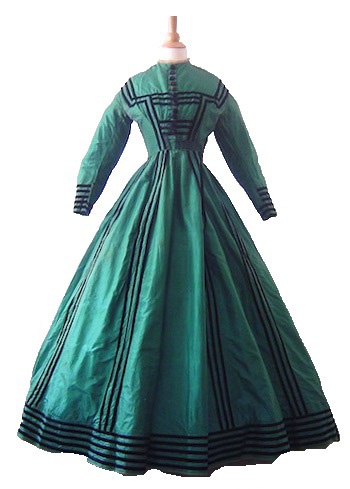
Afternoon Gown with Jacket, aniline green dyed silk, 1860s Antique Textile

Afternoon Gown with Jacket, aniline green dyed silk, 1860s Antique Textile

Not just colour, but an absence of it, (or, technically speaking, a combination of all of it) was also an innovation.  Before the early 1800s bleaching was a time consuming, and rather nasty, process which involved stale urine and fabric spread out over ‘bleaching fields’ and left to sun-whiten for month.  The work of scientists and inventors such as Carl Wilhelm Scheele, Claude Berthollete, and Charles Tennant  led to the development of chlorine and its combination with line, resulting in a ‘bleaching powder’ that bleached fabric white in a matter of hours or days.  All of this made the Neoclassical fashion for white frocks accessible to a wide range of social levels, and made elaborate Victorian patterned fabrics possible.

Anne Isabella Milbanke, later Lady Byron, 1800, by John Hoppner

Anne Isabella Milbanke, later Lady Byron, 1800, by John Hoppner

Bleach is an innovation that still affects fashion today, but other innovations have become less relevant with the change in fashions.  Corsets now sit on the periphery of fashion, but the introduction of front-fastening slot & stud busks in the mid-19th century (there isn’t an exact date, but they were definitely in use by 1850) made it possible for every woman, even a factory worker who lived alone, to lace herself into a corset everyday, and corset-wearing became nearly universal as a result.

Corset with embroidery of oak leaves and wheat sheaves, 1876, Royal Worcester Corset Company, Metropolitan Museum of Art

Corset with embroidery of oak leaves and wheat sheaves, 1876, Royal Worcester Corset Company, Metropolitan Museum of Art

And, as long as inventors were making it possible for every woman to wear a corset, they also made it possible for every woman to really cinch herself in: metal eyelets were invented in the mid-1820s, and made it possible to lace corsets more tightly, as well as speeding up the manufacture of corsets.

The invention of steel corset bones is perhaps more relevant today.  They were originally created to replace more expensive whalebone, but with the over-hunting of whales and subsequent bans on whaling, they have replaced them for reasons of ethics rather than cost.

These are just a few of the innovations that changed fashion that I can think of off the top of my head: I’m sure there are literally thousands more.  Go forth, research, sew, create, and I can’t wait to see what you make, and the information you find to share!

The 1924 Hula Goddess dress

1924 Hula Goddess dress thedreamstress.com

After a bit of modification to my design idea, and some hemming-while-wearing the dress fun, my 1920s green dress is done.

I’d originally planned to make the dress entirely out of the amazing green silk, but it was a little overwhelming en-masse and I ended up breaking it up slightly with a shoulder strap and sash of gilt linen (the same stuff I made my silver stays out of, only gilt gold not silver)

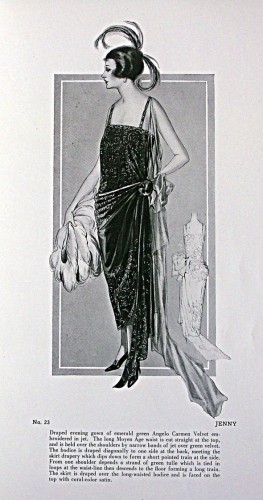
The design was mostly based on a process of basting things and draping until things looked good.  The dress ended up looking like a lot of frocks and sketches from 1923-24: very low waistline, low calf length, asymmetrical draping, low straight-or-asymmetrical neckline.

ca. 1923

ca. 1923

1924 Redfern of London dress

1924 Redfern of London dress

I’m calling it the Hula Goddess dress, because I spent a lot of time dancing around the house in it after my post on hula dancing, and the draping is both very pa’u/sarong/lavalava-y, and rather Grecian.  I feel like it’s exactly the dress that a 1920s Hollywood starlet would have worn to a fancy party in Honolulu.

1923-1924 Hula Goddess dress thedreamstress.com

A rather risque starlet perhaps!  That bare-shoulder is period correct, but is pushing things a bit in terms of propriety!

1923-1924 Hula Goddess dress thedreamstress.com

The Challenge: #21: Green

Fabric:  2m green & ecru silk habotai, .3m gilded linen

Pattern:  My own, mushed together from various vintage patterns and with a bit of drafting (hmmm…this sounds familiar).

Year:  ca. 1924

Notions:  Silk thread, 3 hooks & bars

How historically accurate is it?  Silk habotai isn’t an accurate weave & weight of silk for the 1920s and gilded linen CERTAINLY isn’t period correct, but the basic shape & construction are all period accurate.

Hours to complete:  5.  Love 20s!  So fast even if you do it period!

First worn:  Just for posing, but I’ll be wearing it next weekend for a swing dancing ball – if I can get up the nerve to appear in public in it!  

Total cost:  I paid somewhere between $10 & $20 a metre for the silk 5 years ago.  It was on sale for 50% off, but I can’t remember if it was originally in the $40s or $20s.  The linen was $12 a metre.  Maximum $44, minimum $24.

I had some rather unsure moments about this dress as I made it, but in the end, I love it.  I feel elegant and just sexy enough without veering into tacky territory, and it swishes around me and makes the most delicious scroop sound as I walk.  It would be perfect for hula dancing!