Every once in a while, when I’m hanging out with friends and we do the thing where you get on youtube and show each other cool videos, we end up watching hula videos, and my friends are always amazed, and I realise that while practically everyone has heard of hula, few people actually know what it really looks like. The best representation you get of it outside of Hawaii may be the dancing scenes in Lilo and Stitch, which is kinds weird and sad when you think about it.
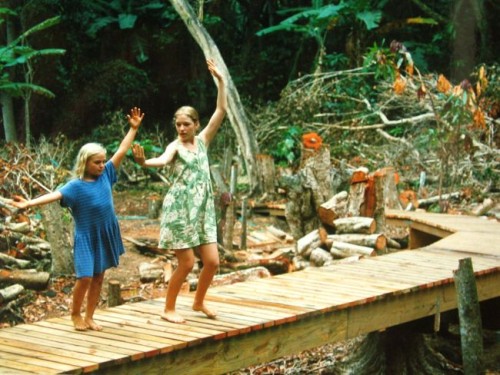
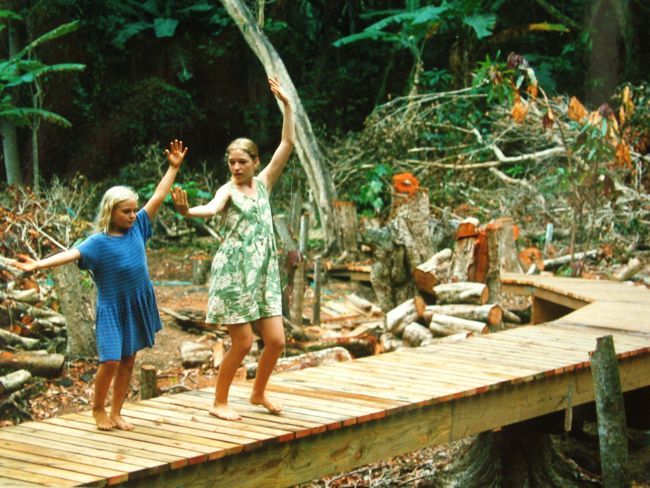
Practicing hula with my sister
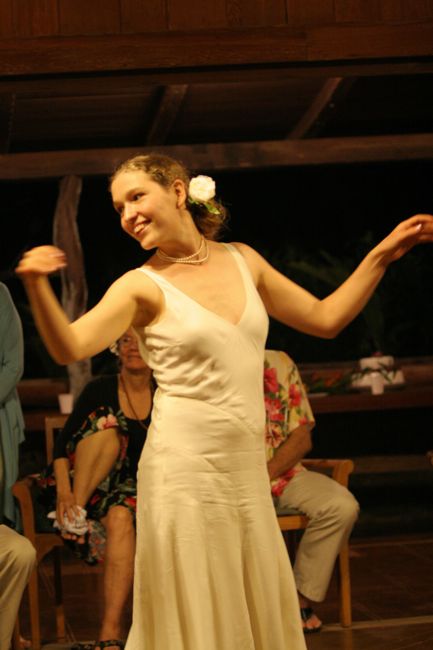
Like Lilo, I was in a hula hÄlau (a hula troop/school) as a child. It’s just what little girls in Hawaii did, like little girls everywhere else take ballet. I was never particularly good, but I enjoyed the grace of it, and the history and story behind each dance. My baby sister was an amazing dancer, but being a haole (white) hula dancer in Hawaii is problematic. As a dark haired Filipina or Japanese girl, you can dance professionally, and be in the best hÄlau (troops), but if you are pale skinned and have white-blond hair, you’ll be tucked in the back row, and you’ll never compete in the biggest hula festival in Hawaii: the Merrie Monarch Festival. Because of this (and simply not being very good) I gave it up as a teenager, and have rarely danced in the last decade. I did a hula for Mr D at our wedding (a Hawaii tradition) and danced for Nana’s 90th birthday, at her request, but mostly I just listen to Hawaiian music and feel homesick.
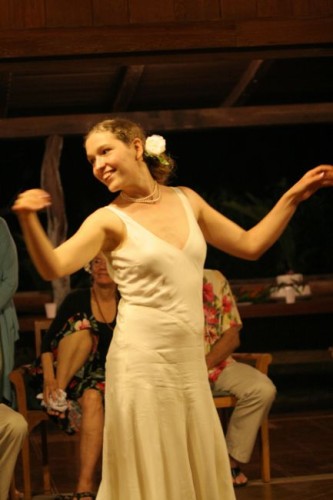
Dancing a hula for Mr D at my wedding
There are actually two main distinct styles of hula: hula kahiko, the ancient hula, based on the pre-contact style of dancing, and hula ‘auana, the modern hula, which incorporates modern instruments, and Western influences.
Hula kahiko is more rhythmic, and is danced in modern interpretations of ancient Hawaiian dress: usually with the dancers in full skirts gathered to the waist with rows and rows of elastic. Hula kahiko are dedicated to a god or goddess, or to a member of the ali’i (royalty). The costumes and flowers worn with the dance are all symbolic. In this example, the colours of the dancers tops and the spots on their pa’u (skirts), as well as the feathers in the ‘uli’uli rattles they dance with, all allude to the peacock, beloved of Princess Ka’i’ulani, who the dance is dedicated to. Their yellow lei are also associated with the tragic princess, and their white petticoats and bloomers reflect the late Victorian dress she would have worn.
Hula ‘Auana are on many themes: they tell the story of a place, or of the writer’s love for a person. There are even hula ‘auana in praise of all the authors favourite foods – or in mocking despair over the difficulties of their weekly exercise class. Hula ‘auana can be soft and slow, or fast and ‘rascally’.
Though it isn’t as common in modern times, men also dance hula, both kahiko and ‘auana. These days, men’s kahiko is slightly more prevalent, perhaps because it is visually more obviously manly, and perhaps (to put it rather crassly) because fit men in loincloths are generally popular 😉