I wish I had a finished garment to show you today – my hoopskirt, or the hinted at 1900s dress, but sewing is not going to plan, and I want to post about at least SOMETHING, and I thought, hey, a real antique textile is as good as anything I make, if not better!
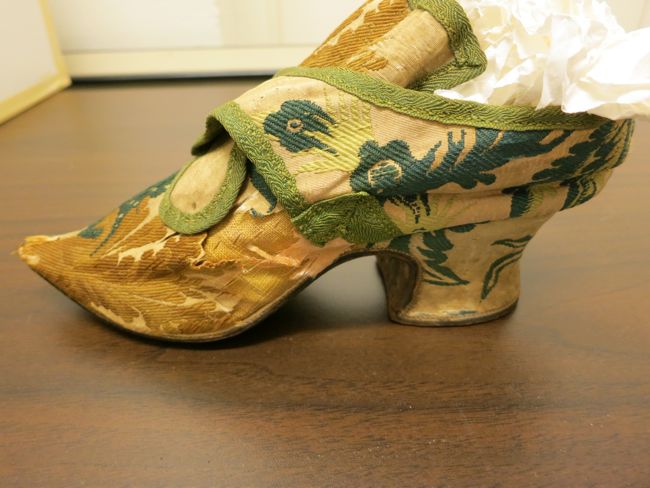
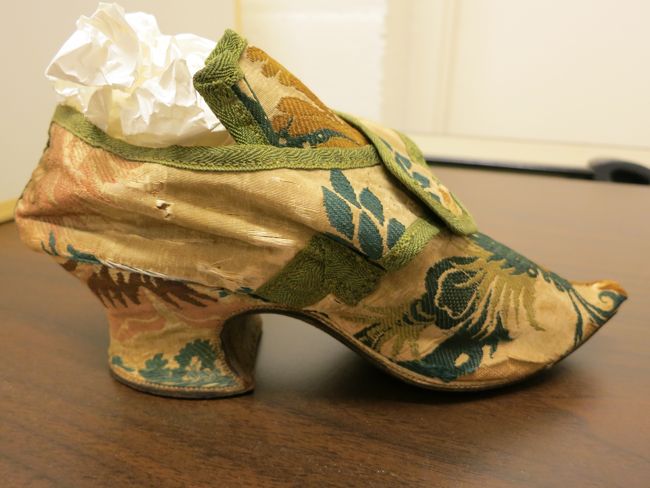
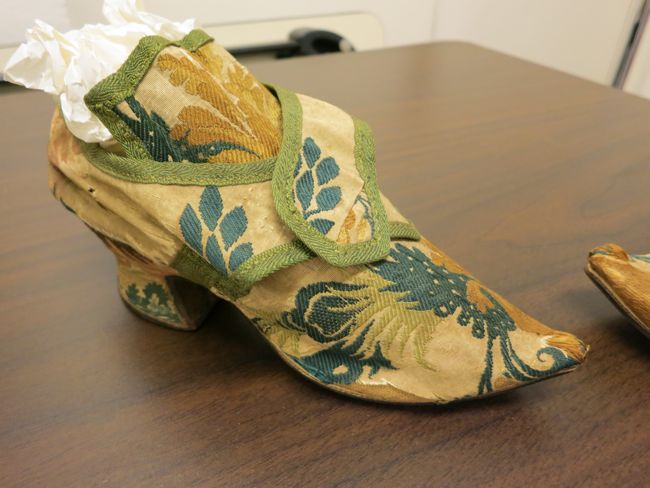
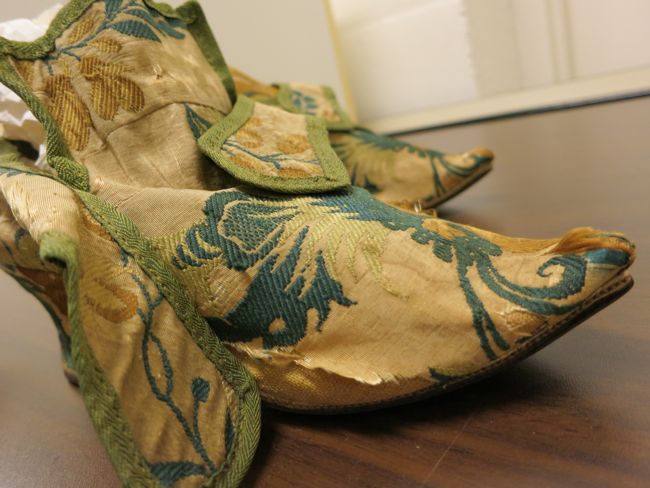
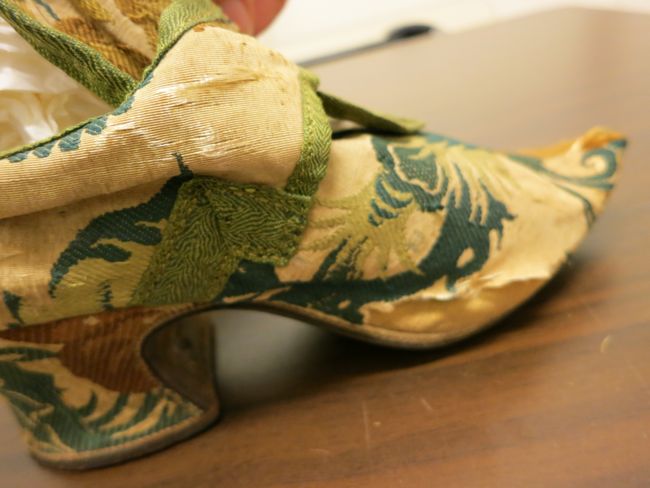
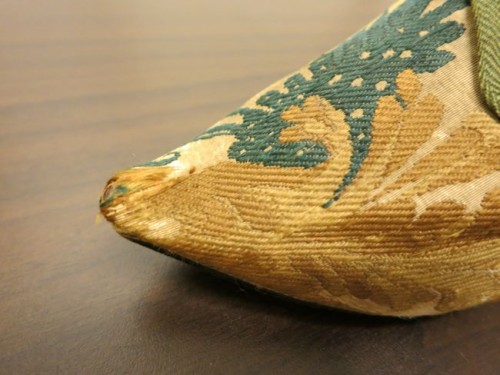
I’ve shown you most of the textiles from the Honolulu Museum of Art, but here is one of the most exciting pieces I looked at: a pair of 18th century shoes in green and gold on ivory brocade:
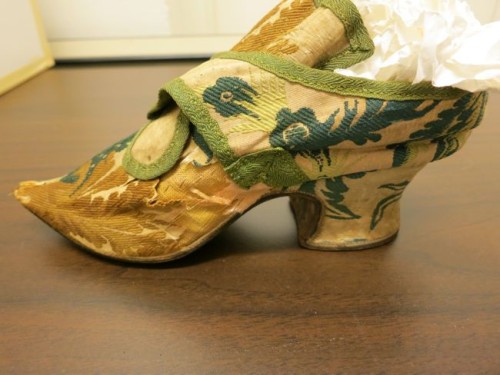
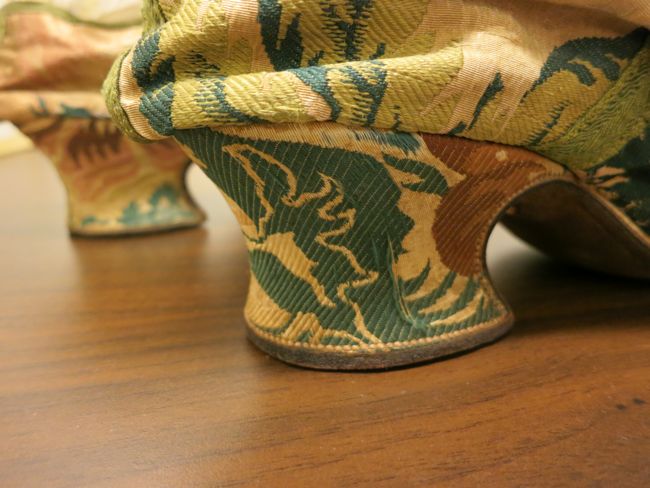
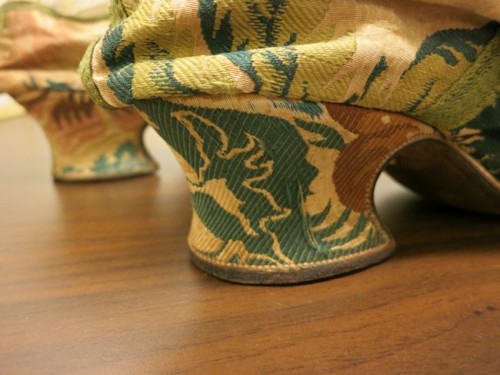
Based on the large scale brocade, which is clearly early 18th century in date, the wider heel shape and slightly tilted toe, the shoes are probably early-mid-18th century.
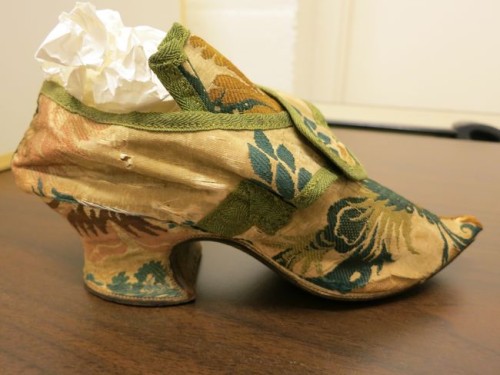
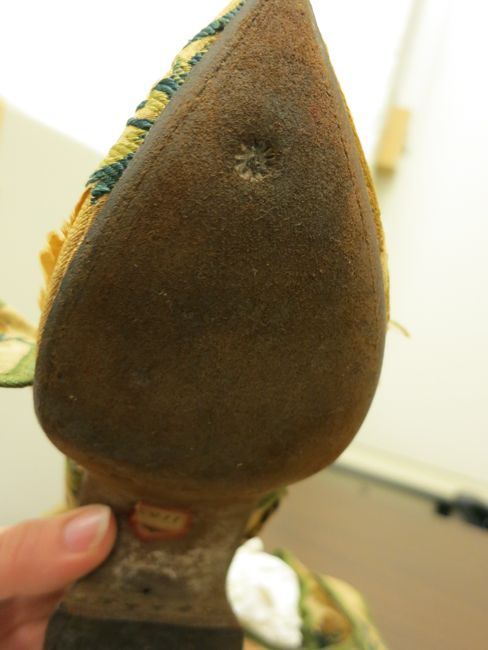
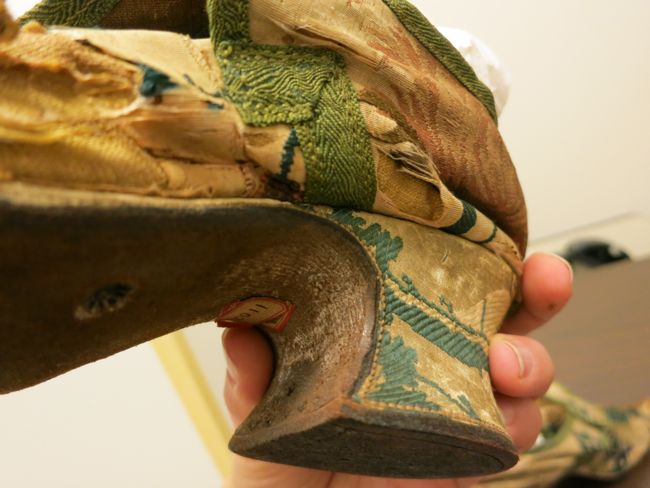
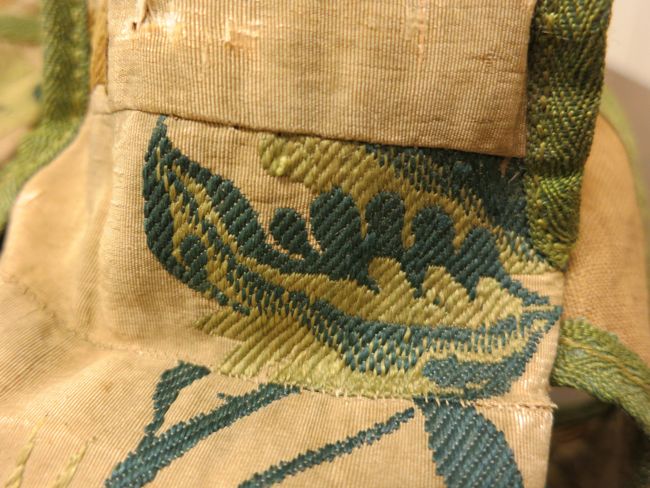
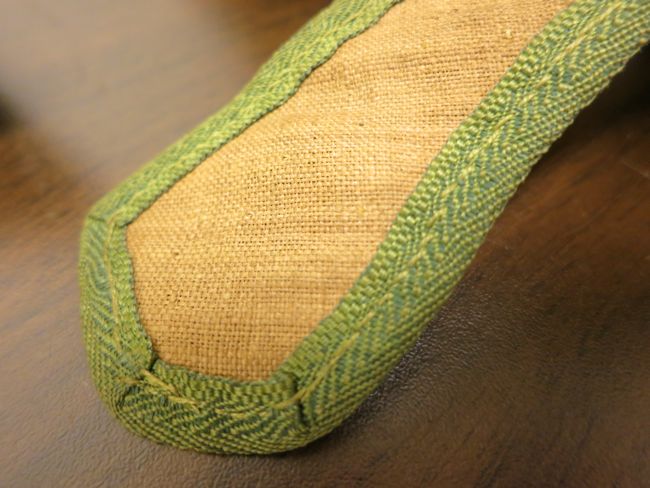
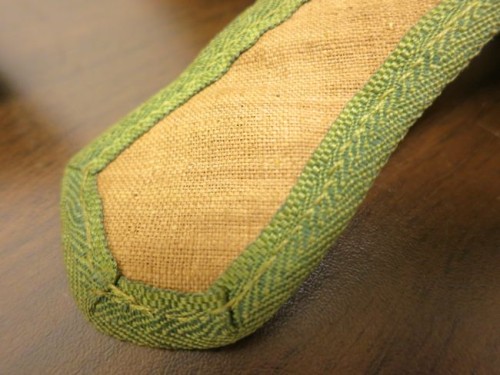
The outer of the shoes are silk brocade, and they are lined in linen. The green binding is herringbone twill, either in cotton or linen. The shoes are (obviously) entirely hand sewn. The heel is wood, covered in more of the brocade, and the sole is rather heavy leather.
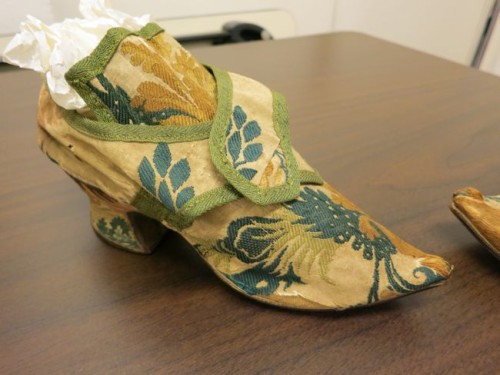
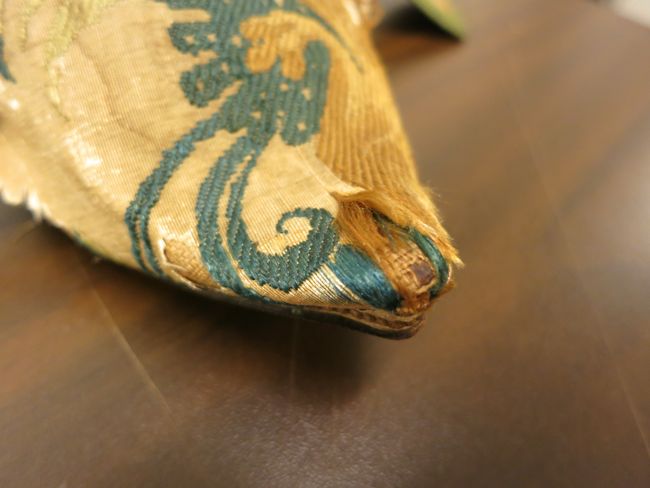
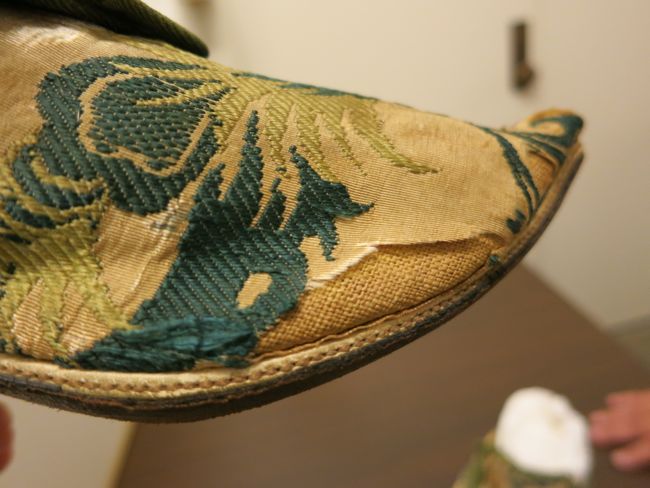
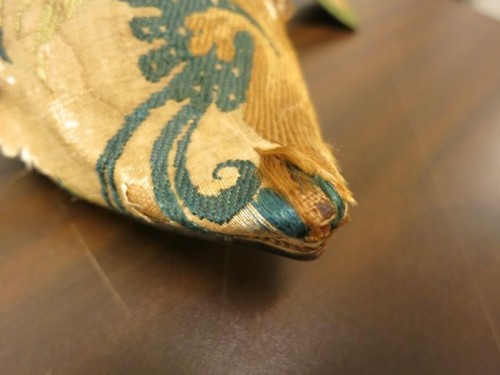
The pointed toe appears to be supported by more leather, carved into the little tilted point.
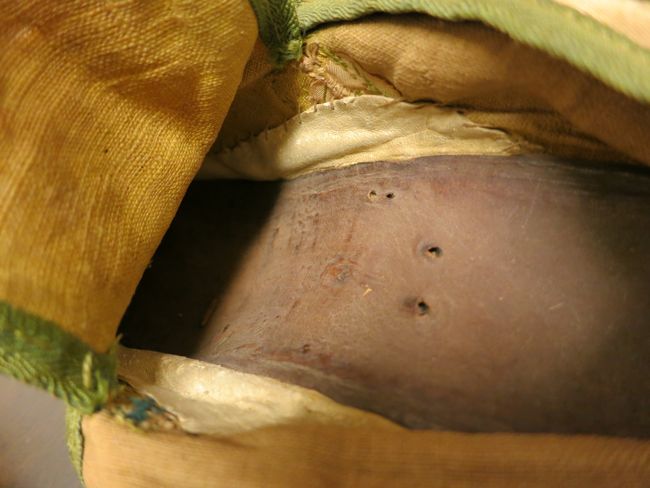
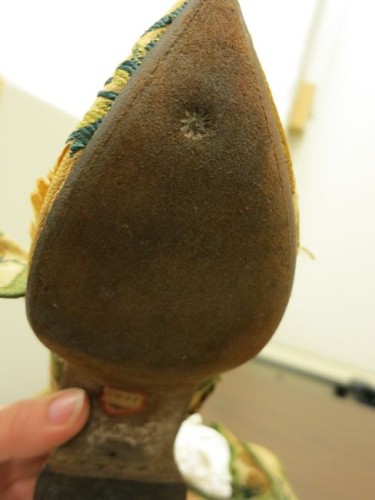
The heavy leather sole has an interesting star shape stamped into it near the toe, and again near the heel. I presume it had something to do with the construction, but couldn’t figure out exactly what. Anyone else seen a similar thing?
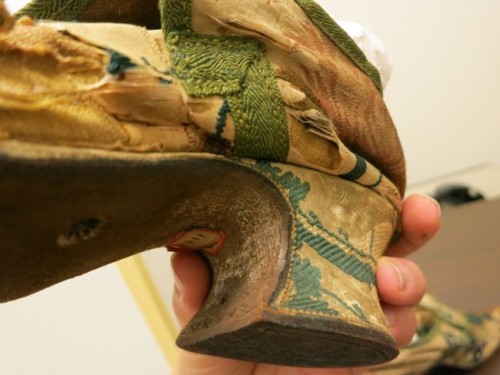
The silk brocade of the shoes is pieced on the tongue, where it will be hidden by the flaps. It may be to save fabric, but I think it is more intentional: to help with the shaping transition from the front of the shoe to the tongue, and possible to ensure a pretty placement of fabric pattern on the tongue, where it would be seen.
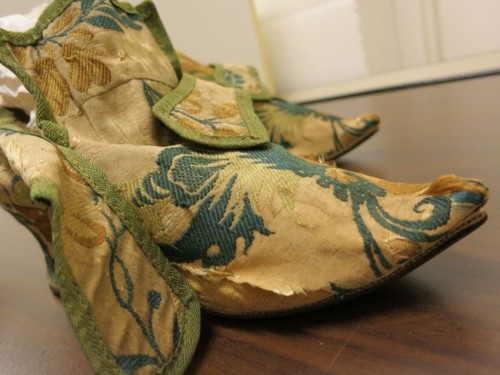
There was other piecing that is clearly to save fabric, or to repair the shoe after a bit of wear, though the lack of in-period wearing makes that seem unlikely.

The interiors have quite a bit of piecing, but it is all essential construction. There is extra white kid leather in the heels, where the shoes will get more wear.
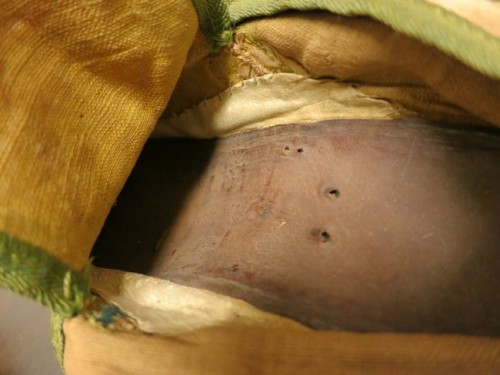
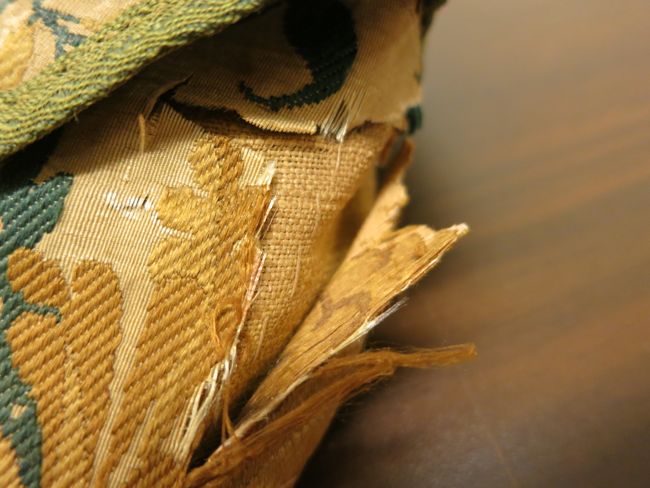
The shoes don’t appear to have had much wear, but they are still in quite aged, fragile condition. The silk brocade is particularly brittle and friable, and has disintegrated entirely in places, which is sad from a condition viewpoint, but extremely helpful from a research viewpoint, because it allows us to see into the construction. It may have been done to save
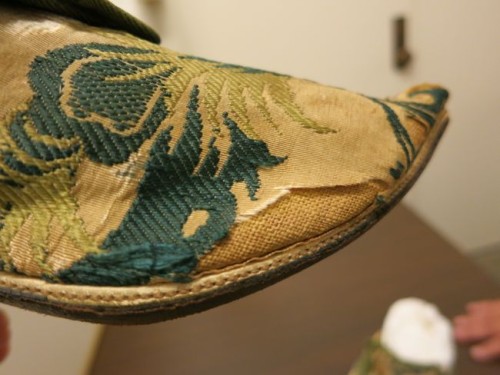
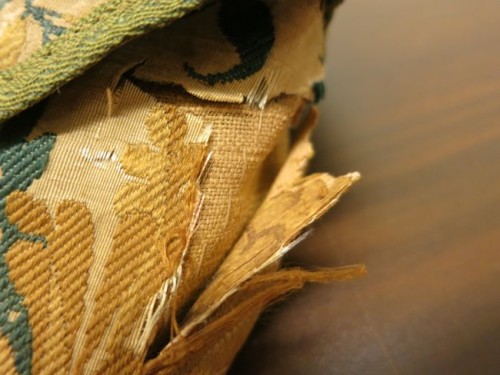
The shoe was so fascinating that I took TONS of photos of all the details, which I hope you will also find interesting. I won’t bore you with a commentary on all the images, but do ask if you have any questions.
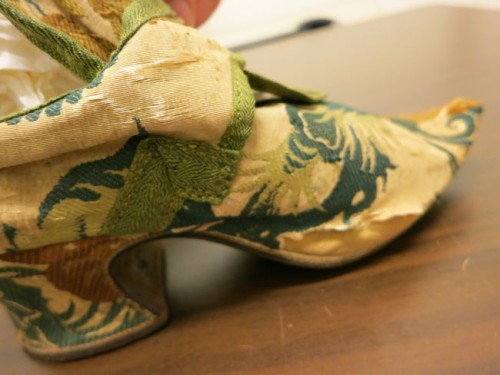
If you want to see more textiles from the HMA, I’ve posted about an early 19th century dress, an amazing embroidered cisele velvet 18th century man’s suit, a late 19th century Turkish tea robe that had been altered for wear by a Western woman, and a teaser-taster of all the textiles.