Theresa asked me to write a post looking back at my Sew Weekly sewing, and Cation Designs did an awesome round-up of her 2012 sewing wins/losses + her goals for 2013. I have smushed the two together, for a look back at what I did best, what I did worst, and where I am going from here.

Top five (non historical) favourites for 2012:
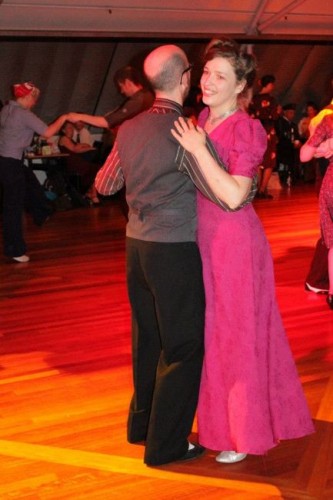
- The Butterick 8044 True Love Story ca. 1940 dress. I haven’t worn it that many times because the weather got too warm, but whenever I do I feel so special, and so gorgeous.
- The All About the Fabric dress. I wore it for Thanksgiving. I wore it for the Full Swing Christmas dance. I wore it for Christmas. I even wore it for Gran’s funeral. I get comments on it whenever I do. It’s different, and pretty, and very comfortable.
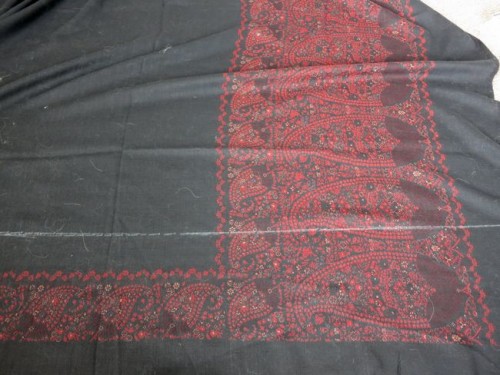
- The Capelet of Yay. I wear that capelet all the time. It’s taken the place of cardigans and scarves in my wardrobe, and is so much more interesting and sumptuous.
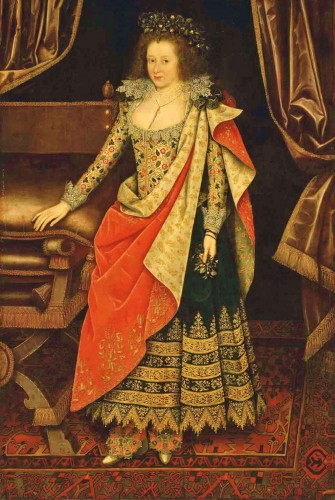
- The Henrietta Maria Meets Marni dress. It’s effortless and elegant. The only thing that keeps me from wearing it all the time is a lack of sashes. I guess I need to make more!
- The Waialua to Wellington tap pants (and really, all my tap pants). Yes, you never see them, but they get worn constantly! Rarely a week goes by when I don’t reach for my tap pants.
Special mention goes to the Aloha Ka Manini blouse (so flattering and comfortable), Gay Red Shirt (indispensable jeans companion), Rodeo & Wrangle & Ramble in Style skirt (makes me happy just to look at i), Penciling it in Skirt (goes with everything) & Nostalgia shorts (we’re having just the summer for them), all of which are getting a lot of wear and just missed the list.
Top five (non-historical) least favourites from 2012:
- The Simplicity 3446 Windy Lindy dress. I know a lot of you liked it, but it just didn’t do it for me. One day I’m going to re-make it and it will be gorgeous, for now it’s just sitting un-loved at the back of my closet.
- The Winter Boyfriend coat. It’s just too big, too fuchsia, and too shapeless. It’s heading for a re-make.
- The Summertime Southerly dress. Just too fussy to wear, and I feel flabby in it. I’m not sure what I’m going to do with it.
- The Vogue 7325 Bosom Friends capelet. Don’t remember that one? Yeah, that’s because I couldn’t even be bothered to blog about it on my own blog. It really just needs a tiny re-working and I’ll love it, but that hasn’t happened yet.
- The Simplicity 1868 Goldilocks and the Three Bugbears blouse. I don’t know why I don’t wear it more. All it needs is a loop on the back neckline, and it looks really cute with my Pencilling it In skirt, but I’ve never worn it.
And a bonus favourite/least favourite:
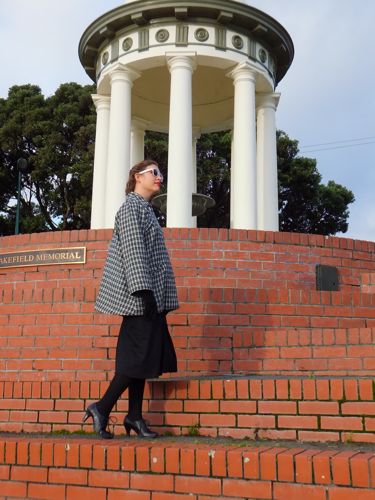
I wore the Advance 4916 Win in Black and White coat constantly throughout winter. It’s going to be a favourite pattern, but…the layout errors I made with that version still bug me, and I hate the acrylic – it started pilling with the first wear. It was always meant to be a wearable muslin/experiment in using acrylic, so with that in mind it’s pretty amazing how successful it has been.
Top five lessons learned:
(some of these were covered last week in my Tips for doing the Historical Sew Fortnightly)
- You can never have too many simple tops (in real life) or chemises (in historical costuming)
- Plan ahead. It’s amazing how much you can get done if you have a plan (and a goal/challenge to meet)
- Just do it. You’ll waste more time worrying about all the ways you could use a fabric than you would making all the items.
- Knits aren’t evil (they can be annoying though).
- No challenge is worth creating a crappy item for and wasting your time and resources just to fulfill the challenge (OK, I knew this already, but it became more obvious as they year progressed).
Five favourite blogs/bloggers from 2012 (in no particular order):
- Cation Designs: Cindy is everything I want my Absolute Beginner sewing students to become – she fell in love with sewing, and has created the most amazing things over the last few years by listening, reading, paying attention, and learning from her mistakes and triumphs. She’s constantly pushing her sewing boundaries, and I think it’s amazing. Her blog is consistently entertaining and makes me feel it’s OK to be a geek.
- Wearing History: I love the super-historical gowns Lauren has created this year, I love the vintage stuff she creates and wears, and I love her occasional more random stuff too.
- Ampersand: Chiara is a dear friend, but even if I didn’t know her, I don’t think I could have helped being brought to tears by her writing. She’s had the hardest year, lived my worst nightmare, and brought pathos and humanity to it. Her story is amazing.
- Isis’ Wardrobe: Wonderful, meticulous mainly 18th century sewing and research, and then in her alternate life she sews and wears ’40s! Love it!
- 3 Hours Past: I am so proud of what Steph has done this year with Cake patterns. What an inspiration!
(confession – this section was the hardest bit to fill. There are a lot of blogs I love, especially historical costuming blogs, and I just couldn’t choose between them, so I tended to pick non-historical blogs just because they were different)
Five thoughts on how I did this year with goals:
- Teaching! Yay! I’ve done a ton of teaching, from classes in Australia to the new Dreamstress School of Vintage Sewing at Made on Marion. It’s been very successful, I’ve had a blast, learned a lot, and my students have too.
- Patterns: I’m still not wear I wanted to be with patterns (I was hoping to launch one by Christmas), but I’m still pleased that I’ve got my underbust corset pattern working so well for teaching. It’s a very uphill climb, but I’ve done well to get to the little ledge I’m on.
- Sewing for me: Thanks to the Sew Weekly, I’ve made a ton of stuff for me this year. I’m tickled pink with most of it, and glad to be wearing more me-made stuff, even if I’ve missed my historical sewing.
- Knits: I’ve avoided knits for the last decade, though I did used to sew knit dance costumes professionally. I don’t wear knits much, so avoiding them was easy, but this year I made myself sew with knits to pick back up all my skills so I can teach classes on sewing knits. It is like riding a bicycle! It all came back (but I also remembered why I stopped – I find sewing knits annoying and tedious).
- Stashbusting: Erm. Well, at least it hasn’t grown. It has even shrunk slight. Just not proportionately to how much I have sewn!
Five sewing goals for 2013:
- To sew more historical garments, and to sew them well, and thoughtfully. This is what the Historical Sew Fortnightly is all about – not every challenge will be a big one, but two weeks is enough for me to tackle a lot of period garments with care and accuracy, and the challenge will give me goals.
- To eradicate my UFO pile, and NOT create any new UFOs. Most of my UFO’s are historical, so I’ll be working through them as part of the HSF (one of the perks of being the organiser is picking challenges that fit your UFO pile!)
- To learn how to make patterns that I can sell commercially. This is a huge one for me because I’m not a natural wizz on computers, and I’d rather be doing things that I find fun and easy (e.g. sewing). But I love the stuff I make, and I’d love to make them available to other people.
- To sew out of my own stash. I own way too much fabric, I don’t need any more fabric, so I’m going to try my darndest to sew only out of what I already own.
- To use more of my patterns. I own hundreds of vintage patterns from my Grandmother and other sources, and I really want to give more of them a try rather than always drafting my own pattern. I’ve held back in the past because I wanted to wait for the perfect fabric, but better to have one out of an imperfect fabric (and I might realise I love it anyway) and then have that experience when the perfect fabric does come along than to not have it at all!
Whew! Wish me luck!