Last week I shared five TV shows that people often assume I will love, but where I really don’t. This week, here are 5 TV shows that I love, some of which may really surprise you (and the rest totally won’t, but there are only 5 TV shows I really wanted to talk about). They are arranged in order of how unexpected my love of them is.
Yes, really. It’s a reality TV show about hunting, and I love it. And it isn’t even in English (well, it slides in and out of English & Te Reo Maori all the time), and Mr D loves it (Mr D hates foreign language films). We sit there every week, tuned to Maori TV, watching people shoot animals and carry carcasses around, and we coo about how sweet it is.
Because it is sweet. It’s not really about the shooting, and it certainly isn’t about being macho and killing things. It’s about local communities, and families, and really down-to-earth, ordinary people who are supplementing their diet with local game. The presenters are very low-key, the people they meet are lovely people you would want to meet and know yourself, and stewardship and caring for the land are major elements of the show.
Also, best of all (and I just found this out), they filmed a few episodes on Moloka’i, hunting with a dear friend of my parents! I found out when he gave Mum some venison and I told him about how I loved to watch a hunting show – and he said “Oh, Hunting Aotearoa, I’ve been on it”. What a small world it is!
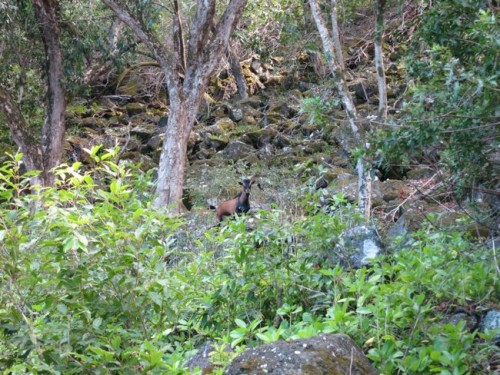
Feral goat on Moloka’i – or why I’m such a fan of hunting
2. King of the Hill
I meet all these people who hate King of the Hill for its animation, or think it is stupid. I can see the first as a valid criticism, but I just can’t agree with the second. A few of the episodes are a bit blunt, some perhaps even dumb, but some of them are so, so brilliant. There is an episode where Hank Hill says something along the lines of “They don’t make statues of people who keep their lawns mowed and pick up their rubbish, but that doesn’t mean we aren’t heros.” And it’s totally true. King of the Hill is a show about small heros – about people who have flaws and foolishnesses, but are ultimately good, and generally come back to being good, even when they are tempted to be briefly bad. Also, the episode where Hank joins a food co-op and owns an organic cow is just fantastic.
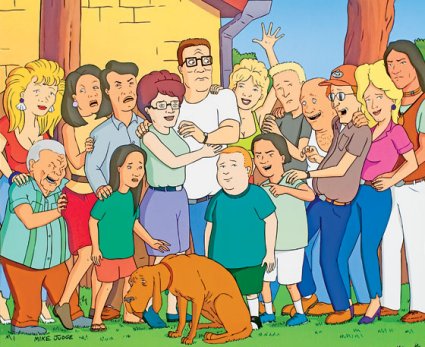
Granted, with all that said, I haven’t watched an episode since the series ended – it was good while it lasted, but I don’t feel the need to see re-runs.
3. My Name is Earl
OK, yes, it’s often crude, and sometimes dumb. It’s also really, really sweet. If being dumb and crude at points is what it takes for a show about being a better person to survive on TV, well, it’s a start.
4. Firefly
Well, no surprise here! Also, so much awesomeness I don’t really need to tell you about it, right?
5. Doctor Who
OK, yeah. This one is also probably surprising no one! But it is my favourite TV show (marginally outstripping Firefly), and for many of the same reasons as the other shows I like: it’s about being a good person, often in the face of terrible odds. I can’t count the number of episodes where the Doctor offers the villains every possible option to do good and find a way out, or the episodes where mercy prevails over violence and evil, or where there is no evil at all – just the struggle within ourselves. Moffat seems to be taking the show in a slightly different direction – I really hope it doesn’t go too far.
Since you may wonder, the lack of historical accuracy in Doctor Who doesn’t bug me at all – it’s fantasy, and they never claim to be accurate. Also, the thought of the British monarchy being werewolves never fails to amuse me.
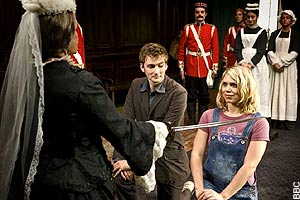
I tried to introduce my parents to the Whoniverse during my visit home, but the library system and the postal service conspired against us, and I couldn’t get any in on time. They’ll just have to wade in without me.
Hmmmm…only two of these shows are still on the air. I guess it’s because I don’t like a lot of TV – so it takes a long time to accumulate a list of 5! If there was a 6th, it would be MASH.
UPDATE:
OK, so it doesn’t pay to write posts at midnight, while travelling and sleep deprived, because I totally forgot about the show that I meant to put as #2, which is Top Gear (the original UK version, never seen the US version).
Yes, it’s a show about cars, hosted mainly by the biggest jerk petrolhead ever. Yeah, my usually car knowledge is limited to “What kind of car is our car? Ummmm…it’s green?” and “What kind of car do I want? The one that looks like a frog!”, but Top Gear can be hilarious. Mr D and I just about died laughing at the episode where they made alternative limousines, and the Big Mac truck episode was pretty good too. Anything that makes Mr D & I scream with laughter is a good thing.
On the bright side, the show I would have bumped off the list to include Top Gear is Firefly, and since some of you are saying you’ve never seen it, anything that encourages you to see it is a good thing!