I ran across this object recently, and was most intrigued:
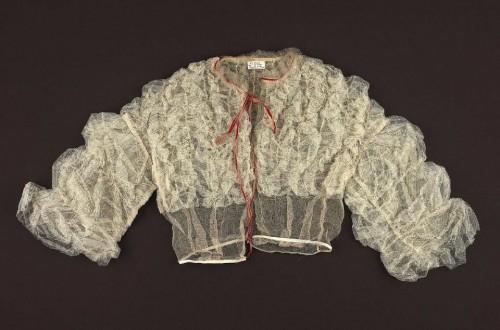
Guimpe, mid 19th century, American, MFAB, 47.1527
The MFA Boston describes it as:
A guimpe of gathered and puffed white net, high round neck, open down front elbow length sleeves, foundation of tarlatan covered with net, white tulle ruching around neck held in place with narrow coral velvet ribbon.
While interesting, this still doesn’t explain what a guimpe is (other than a sort of lacy blouse thing which you obviously had to wear under or over another garment, which you can tell from the photo), or what you do with it.
So I did a little research.
Apparently a guimpe is a short blouse worn under a pinafore/jumper dress, or a fill in for a low-cut dress.
It’s very similar to a chemisette or dickey. It was a word that was particularly common in the mid-late 19th century, and it comes from the Old French word for wimple, which is why the white thing that nuns wear around their necks/heads are also sometimes called guimpes.
Here is a very early gown with a what the fashion notes describe as a fichu-guimpe:
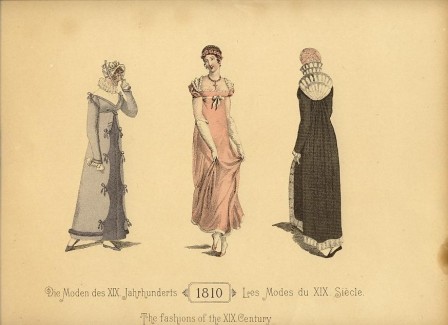
Redingote (on the left) with a fichu-guimpe
The notes say
1810.
1. Redingote en merinos garnie en brandebourgs. Fiche-guimpe. Capote a l’invisible garnie de roses.
2. Robe de tulle rose double de satin rose; garnie de tulle blanc. Coiffure de roses.
3. Redingote de velours a Coqueluchon, garnie de petit gris. Capote en rubans.
Here is what a more dickey-like guimpe looks like:

ca. 1912 Austrian Green Silk Gown with Separate Guimpe from Past Perfect Vintage
There we go. Now I know what a guimpe is. And so do you. Unless you already knew, and it’s just one of those basic words that everyone except me managed to know.