Latest Posts

Rate the Dress: 1820s purple and mauve

I have no idea what the final verdict on La Belle Otero’s risque ensemble was.  I’ve been lying on the beach* instead of blogging, so this post is a pre-written post.

UPDATE: I’ve read the comments, tallied the post, and La Belle Otero scrapes in at above average with a fairly unanimous 6 out of 10.

This week we look at a real dress from a much maligned fashion period.  This 1820s frock features elaborate ruffles and ruching on sheer striped silk organza-like fabric.  According to the Brooklyn Museum and the Metropolitan Museum of Art, it’s a ball gown, though I don’t know about the long sleeves for a ballgown.

In any case, some early American would have worn it to elegant soirees, hoping to look elegant herself.  But did she look elegant?  Or just silly?

Rate the Dress on a scale of 1 to 10


* Well, weeding pineapples and slapping at mosquitos is probably more likely, but the important part is I haven’t been near a computer.
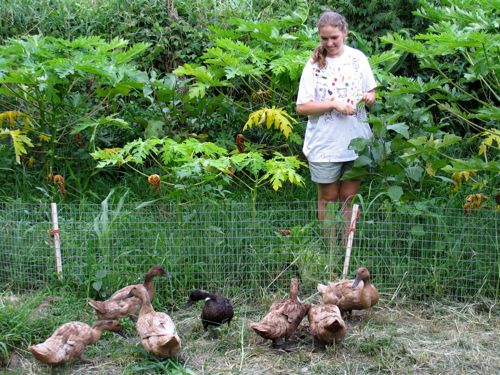
What happens on the farm

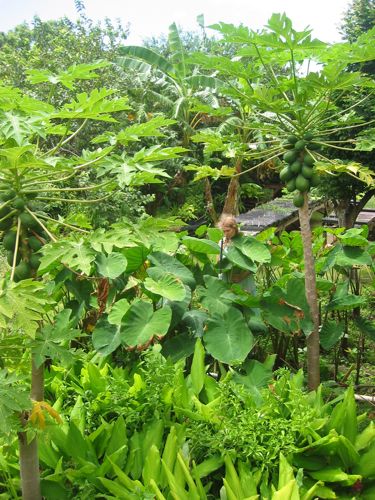
My parents are farmers.  They have a small organic farm in Hawaii, and that is where I am now.

The farm is paradise.  Hot, insect infested, weed filled, dirty, hard-work paradise.

On the farm the ants are the size of cockroaches, and the cockroaches are the size of rats, and the rats are the size of dogs, and the local dogs go feral and take down human sized goats.

On the farm, and in Hawaii in general, things attract dirt like a politician attracts sycophants.  Whites quickly become pale red-yellow.  When you take of your shoes at the end of the day you can see the pattern of the straps, not from your tan line, but from the dust in your pores.  Banana sap dripped on your clothes will never, ever come out.  Iron rich red dirt rubbed into your clothes will never, ever come out.  Papaya sap dripped on your clothes will eat a hole in the fabric.  The air is so moist that paint grows mildew as fast as you can repaint it.  In wet winters clothes hung in closets mold.

But I love it.  At least in small doses.

So for now I enjoy my wild, untamed paradise, and in a few weeks I look forward to returning to civilisation.

Sewing machines I have known: Eleanor

Eleanor was my first sewing machine.  She was a New Home.

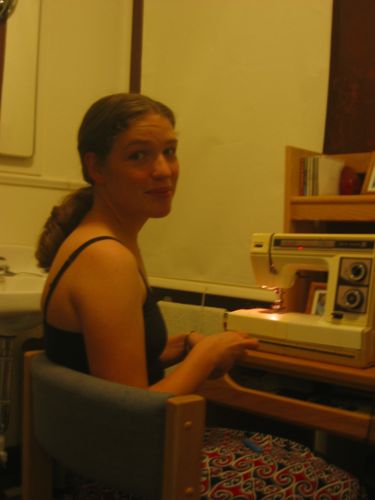
Eleanor and I. I'm pretty sure this is the only time I ever photographed her.

I got her for my 12th birthday (or maybe it was 13th?).  She was already almost as old as me.  But no older.  Which doesn’t make sense, because I can’t find any records of New Home machines manufactured after 1955.  But I seem to remember something about Janome using the New Home name in the US, so perhaps that is it?

Eleanore is named after Eleanor of Acquitaine.  They could both do just about anything, both had long, hard lives, and were both well travelled.

Eleanore the sewing machine lived in Oregon for the first decade or so of her use.

Then she was shipped to Hawaii for me to have, where she lived for another almost 10 years.

Halloween in Hawaii. Goldilocks, my little sister, in a jester costume, and me in a 'colonial' dress, both made on Eleanore.

Then she got mailed to California for me to use during university.

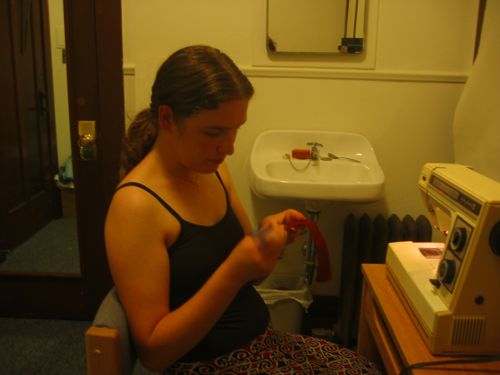
Eleanor in my dorm room, hard at work

Finally, Mr Dreamy to-be packed her in a really, really big suitcase, with lots of fabric, and she travelled to New Zealand to live out the rest of her days.

Unfortunately, the cold, damp Wellington climate, and the 23o volt New Zealand electrical system (the US has 120 volts) didn’t agree with Eleanor.  Her engine burnt out, and she couldn’t be repaired because of the difference in electrical systems.

Eleanor is responsible for dozens of sewing projects.  She made two prom dresses, more than a few halloween and high school theatre costumes, lots of clothes for me and my sisters and mum and even a few shirts for Tim.

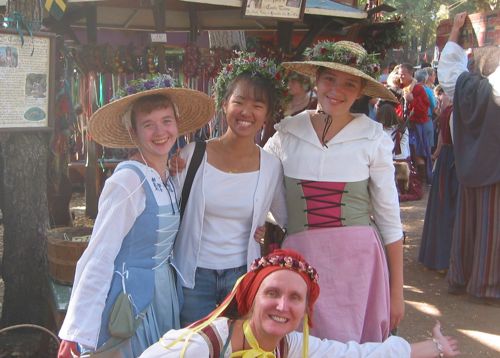
Two dresses that Eleanore helped make. I have no idea who the woman in front is. She just threw herself into the photograph.

She was a good machine.  I hope her parts are helping to keep other machines running

She