Latest Posts

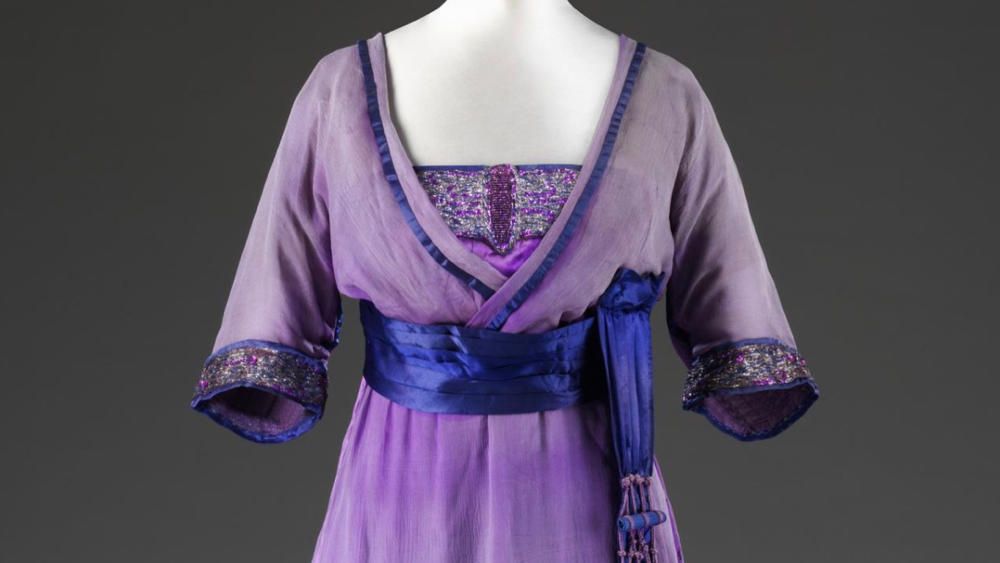
Evening dress, London, 1912, Lucile (1863 - 1935), Silk, embroidered & appliqued metal thread, glass beads, sequins (gelatin?), metal hooks & eyes, silk net,  ©Victoria & Albert Museum T.35-1960

Rate the Dress: Purple personalities

Update: Voting closed

After our discussions about makers & wearers with the last few dresses, I thought it might be interesting to see a dress where we know the wearer, and the designer, as well as a great deal about the actual makers of the dress.

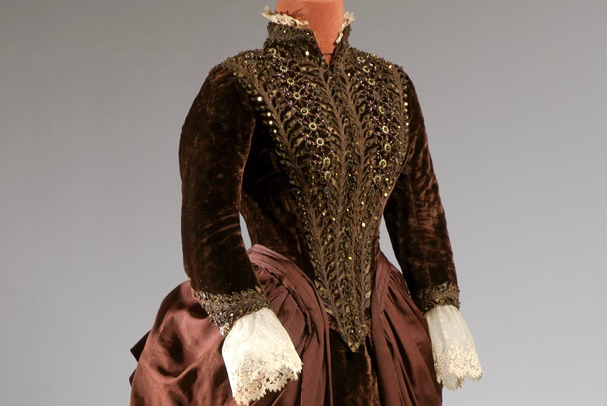
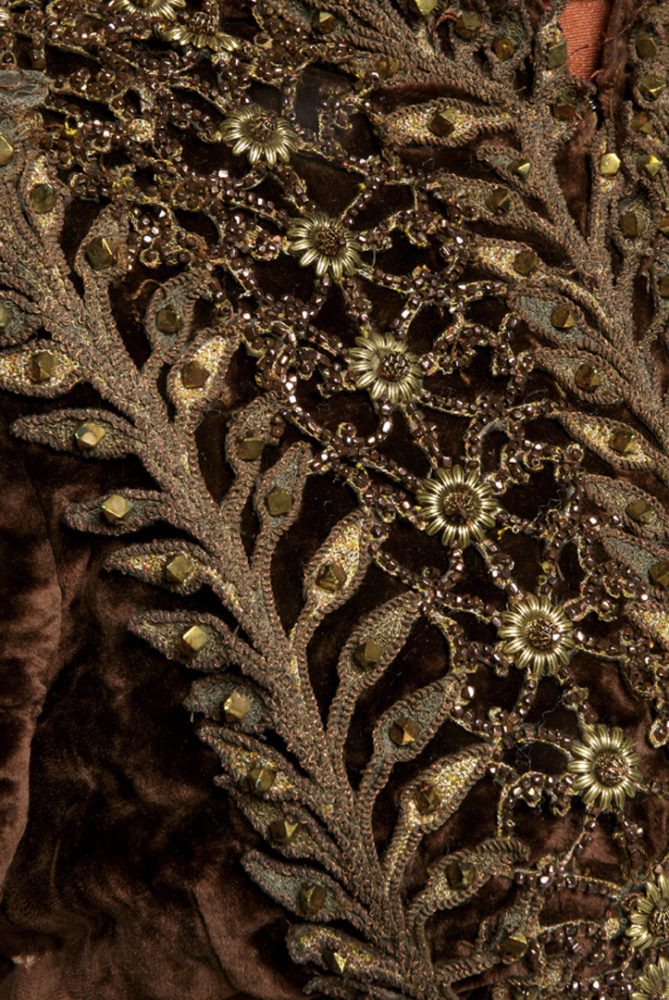
Last Week: an 1880s velvet and satin frock

The brown velvet and satin dress was a smash hit, with a well-deserved round of applause for the maker. It lost a point here and there because of the bustle or the colour (and a couple of points for something that I think was a misunderstanding in construction 🙁 ), but overall you deemed it practically perfect in every way.

The Total: 9.7 out of 10

Fully three-quarters of the ratings for last week’s dress were perfect 10s!

This week: a 1912 evening dress by Lucile

I thought we needed a pop of colour after a few weeks of predominantly dark or white dresses, and this Lucile gown fit the bill perfectly, while also being a great example of a gown where the designer, makers, and wearers are all (more or less) known.
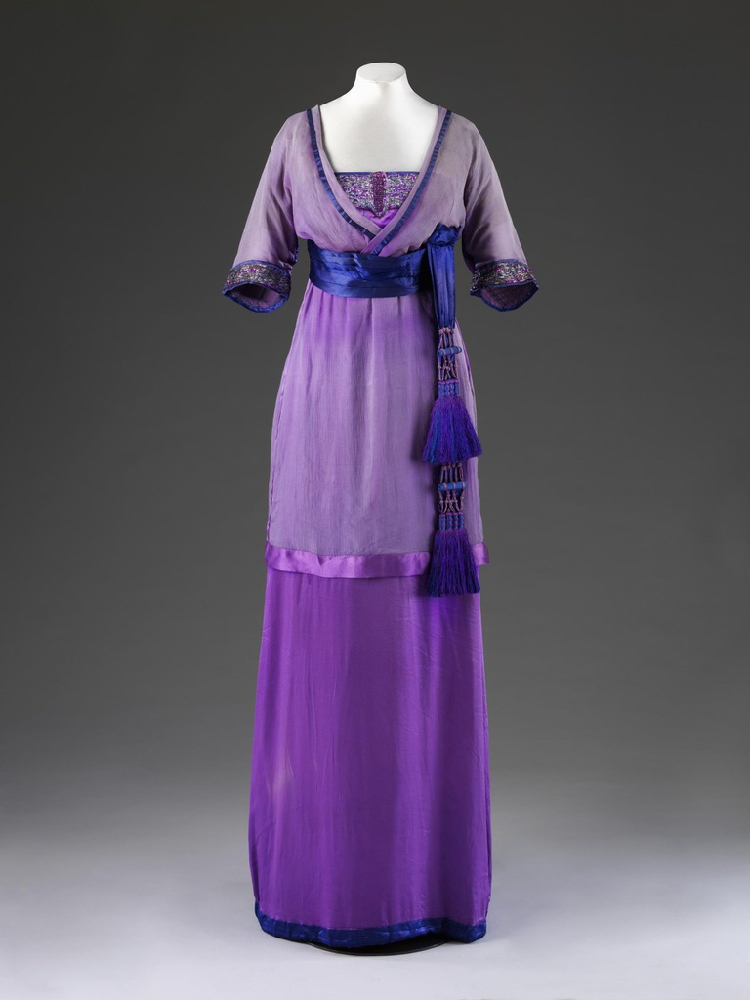
Evening dress, London, 1912, Lucile (1863 - 1935), Silk, embroidered & appliqued metal thread, glass beads, sequins (gelatin?), metal hooks & eyes, silk net,  ©Victoria & Albert Museum T.35-1960
Evening dress, London, 1912, Lucile (1863 – 1935), Silk, embroidered & appliqued metal thread, glass beads, sequins (gelatin?), metal hooks & eyes, silk net,
©Victoria & Albert Museum T.35-1960

This very purple evening dress was designed by Lucile (Lady Duff-Gordon) for socialite Heather Firbank. Firbank was the daughter of a wealthy politician. She was in her early 20s when she commissioned this dress, and like much of her wardrobe it comes in a shade of purple to complement her name.
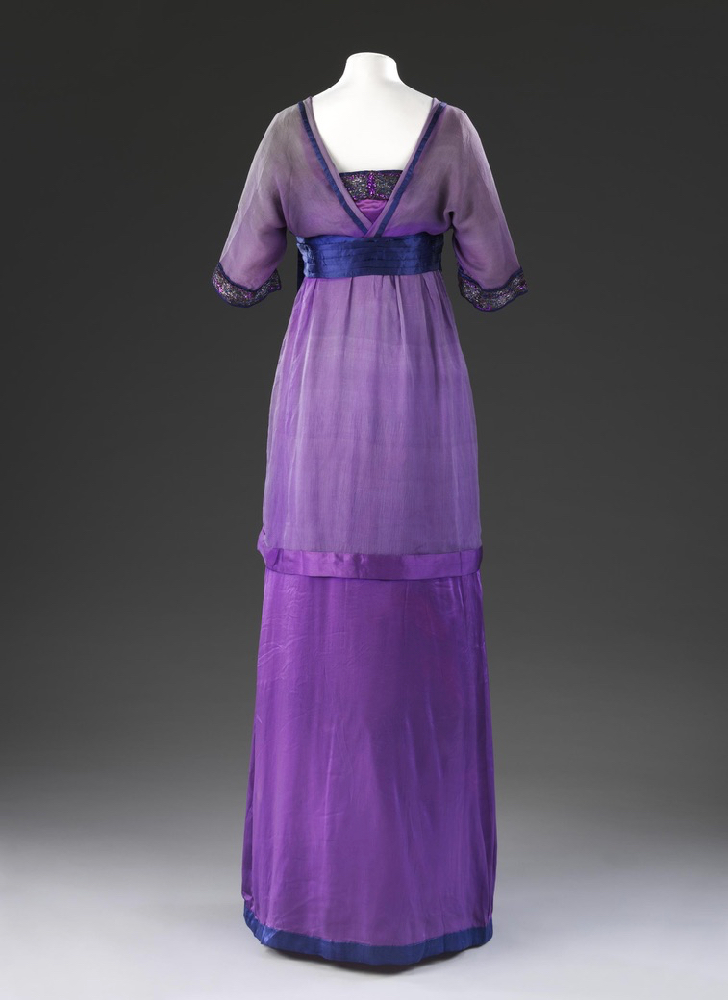
Evening dress, London, 1912, Lucile (1863 - 1935), Silk, embroidered & appliqued metal thread, glass beads, sequins (gelatin?), metal hooks & eyes, silk net,  ©Victoria & Albert Museum T.35-1960
Evening dress, London, 1912, Lucile (1863 – 1935), Silk, embroidered & appliqued metal thread, glass beads, sequins (gelatin?), metal hooks & eyes, silk net,
©Victoria & Albert Museum T.35-1960

Firbank must have been a confident young woman: in addition to her distinct dress sense, she chose never to marry, at a time when that was an extremely unconventional choice for a woman.
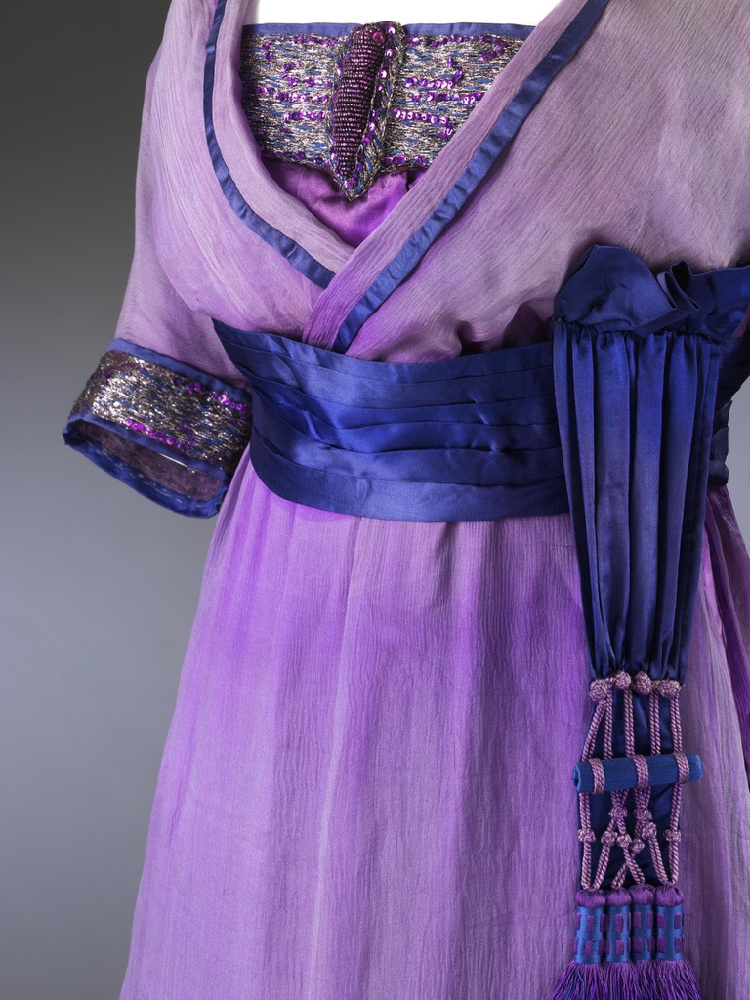
Evening dress, London, 1912, Lucile (1863 - 1935), Silk, embroidered & appliqued metal thread, glass beads, sequins (gelatin?), metal hooks & eyes, silk net,  ©Victoria & Albert Museum T.35-1960
Evening dress, London, 1912, Lucile (1863 – 1935), Silk, embroidered & appliqued metal thread, glass beads, sequins (gelatin?), metal hooks & eyes, silk net
©Victoria & Albert Museum T.35-1960

Firbank commissioned her dress from an equally confident and distinctive woman. Lucile started making dresses when she needed to support herself and her daughter after divorcing her drunken, philandering first husband. Although she wasn’t a self made woman in the true sense (she came from the upper classes and had family support as she started out), she always approached Lucile Inc as a business which was intended to make money, rather than as a hobby.
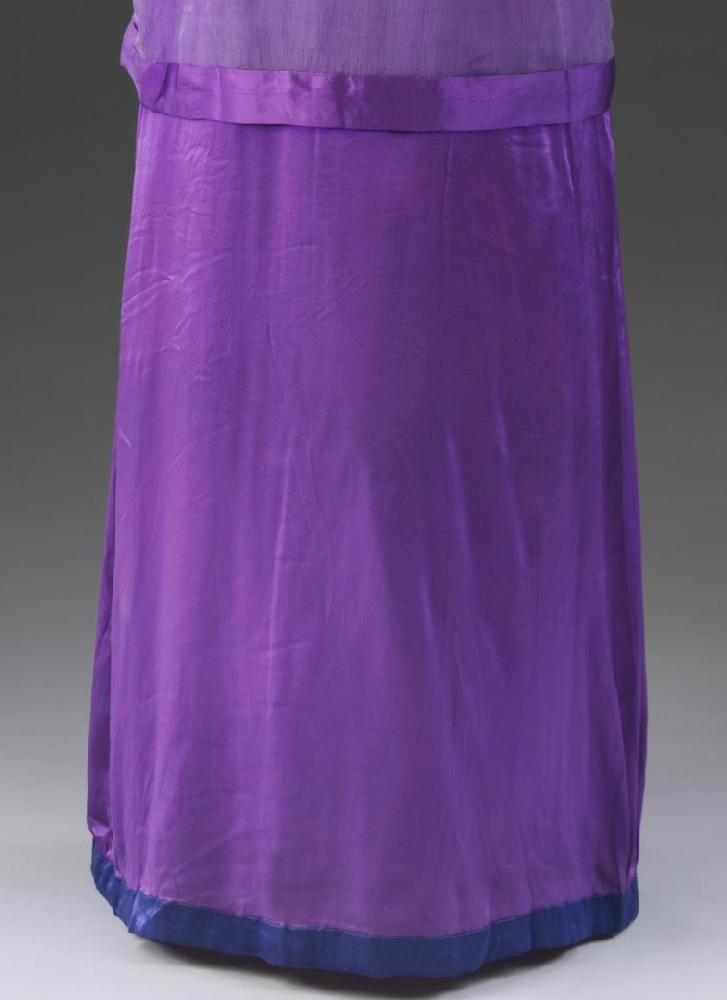
Evening dress, London, 1912, Lucile (1863 - 1935), Silk, embroidered & appliqued metal thread, glass beads, sequins (gelatin?), metal hooks & eyes, silk net,  ©Victoria & Albert Museum T.35-1960
Evening dress, London, 1912, Lucile (1863 – 1935), Silk, embroidered & appliqued metal thread, glass beads, sequins (gelatin?), metal hooks & eyes, silk net
©Victoria & Albert Museum T.35-1960

As part of her businesslike approach to fashion, once Lucile got popular she didn’t design all her frocks: merely signed off on designs by assistants and sketch artists that fit her aesthetic. It’s possible this dress was one of those designs: a creation by an artist, perhaps with input from the client, that was merely looked over by the couturier at the end. Or perhaps it was entirely by Lucile!

Evening dress, London, 1912, Lucile (1863 - 1935), Silk, embroidered & appliqued metal thread, glass beads, sequins (gelatin?), metal hooks & eyes, silk net,  ©Victoria & Albert Museum T.35-1960
Evening dress, London, 1912, Lucile (1863 – 1935), Silk, embroidered & appliqued metal thread, glass beads, sequins (gelatin?), metal hooks & eyes, silk net
©Victoria & Albert Museum T.35-1960

The business and making end of Lucile’s couture house is well documented, so we have a good idea of the craftspeople behind the dresses. For a number of them, particularly the fitters and sketch artists, working for a house like Lucile was a launchpad to their own atelier. Even for the lowest thread sweeper, a position at a couture house was enviable: eminently respectable, well paid by the standards of the time, and one of the few places a woman could build a career.

Evening dress, London, 1912, Lucile (1863 - 1935), Silk, embroidered & appliqued metal thread, glass beads, sequins (gelatin?), metal hooks & eyes, silk net,  ©Victoria & Albert Museum T.35-1960
Evening dress, London, 1912, Lucile (1863 – 1935), Silk, embroidered & appliqued metal thread, glass beads, sequins (gelatin?), metal hooks & eyes, silk net
©Victoria & Albert Museum T.35-1960

Economic and social history aside, what do you think of the aesthetics of this dress?

Rate the Dress on a Scale of 1 to 10

A reminder about rating — feel free to be critical if you don’t like a thing, but make sure that your comments aren’t actually insulting to those who do like a garment.  Phrase criticism as your opinion, rather than a flat fact. Our different tastes are what make Rate the Dress so interesting.  It’s no fun when a comment implies that anyone who doesn’t agree with it, or who would wear a garment, is totally lacking in taste. 

As usual, nothing more complicated than a .5.  I also hugely appreciate it if you only do one rating, and set it on a line at the very end of your comment.

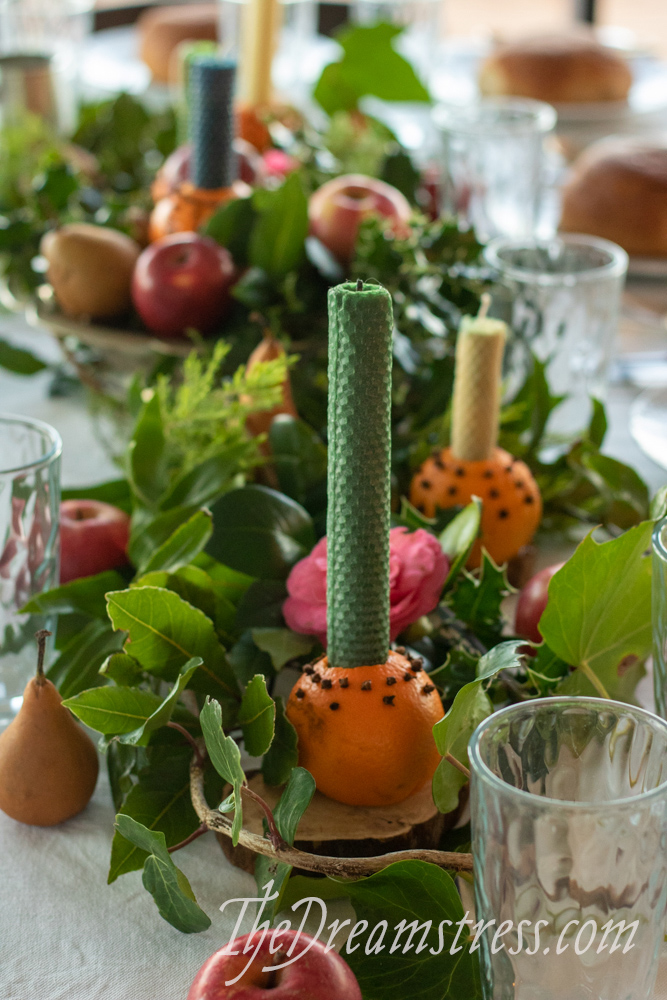
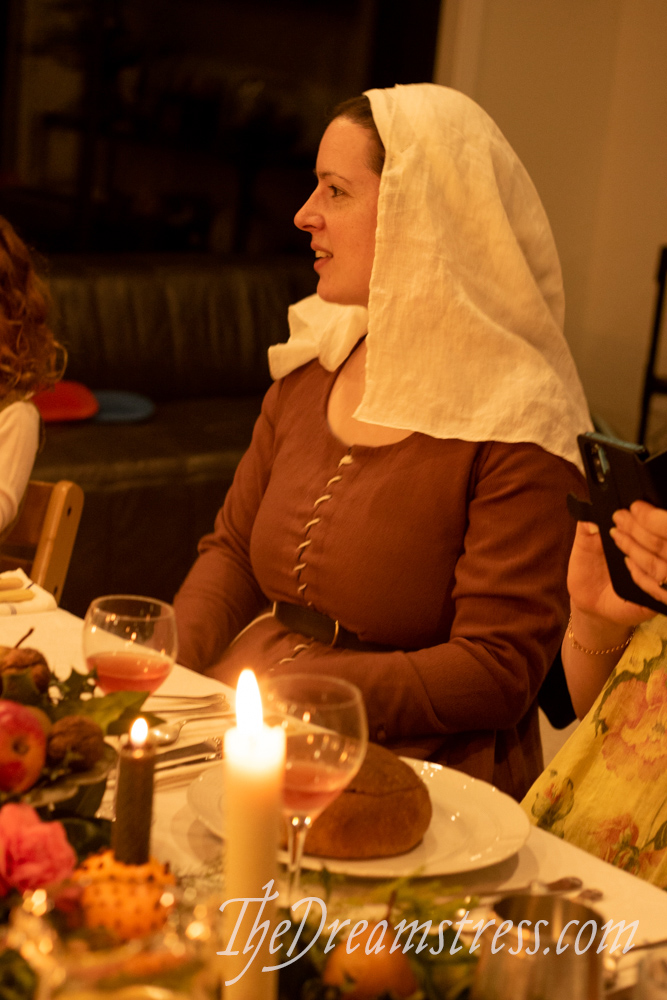
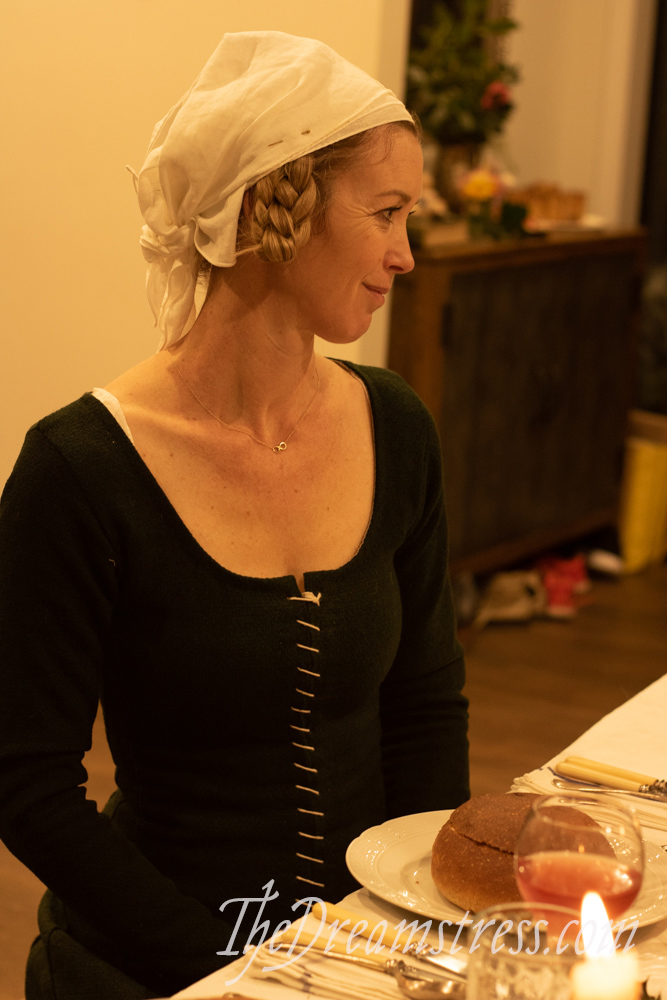
Midwinter Medieval Feast thedreamstress.com

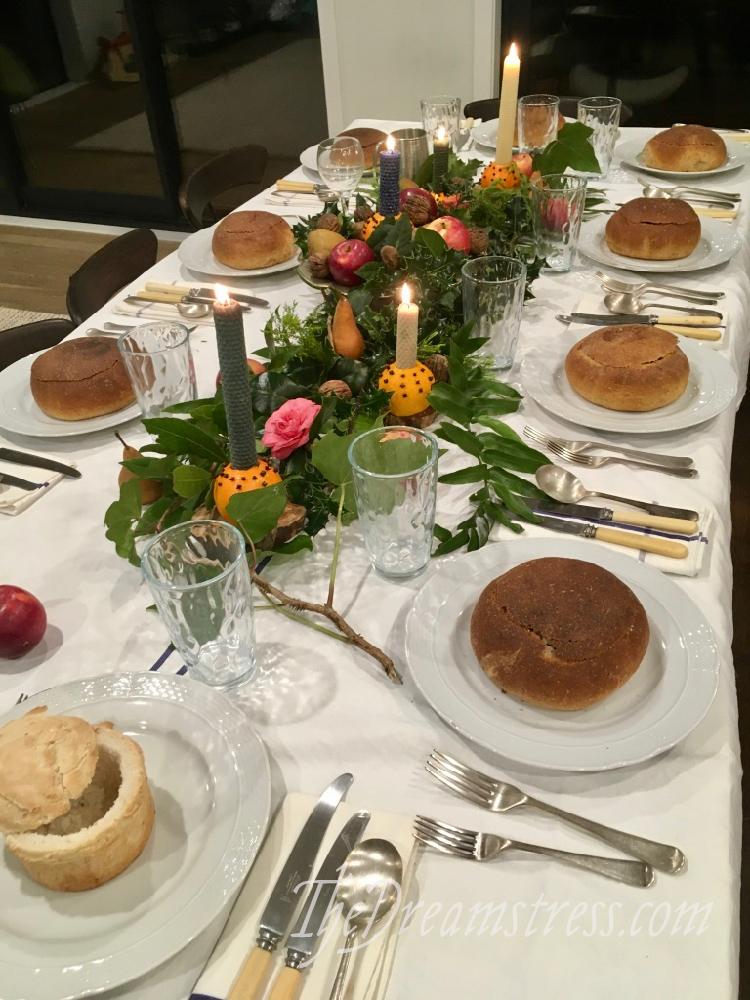
A Midwinter Medieval Dinner

We’re incredibly privileged to have had no community transmission of Covid19 here in New Zealand, so we can safely hold social events.  

While we were in lockdown my friend Priscilla asked if we could have a dinner party at her house to celebrate once it was safe to get together again.

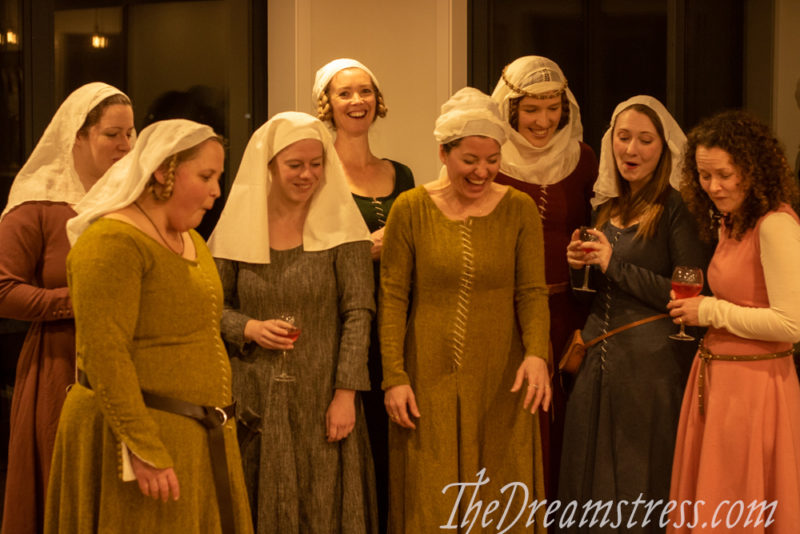
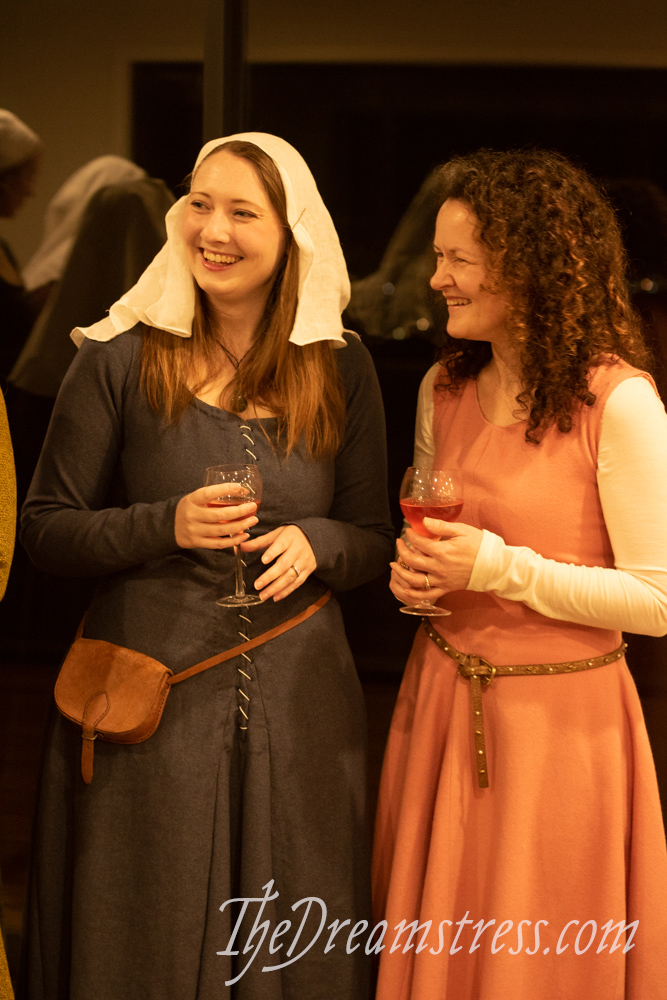
We all have, or have been working on, 14th century dresses, so we chose a midwinter Medieval feast.  

Nina applied her amazing food skills to developing a menu. We all cooked, decorated, and lent a hand.

Thanks to everyone’s work and collaboration, we had the most fabulous evening: complete with an entire haunch of wild venison, a gingerbread castle, sugared apples, and Medieval disco dancing.

Sending out lots of love to the rest of the world, and hopes for a time when we can all gather in safety and joy ❤️  

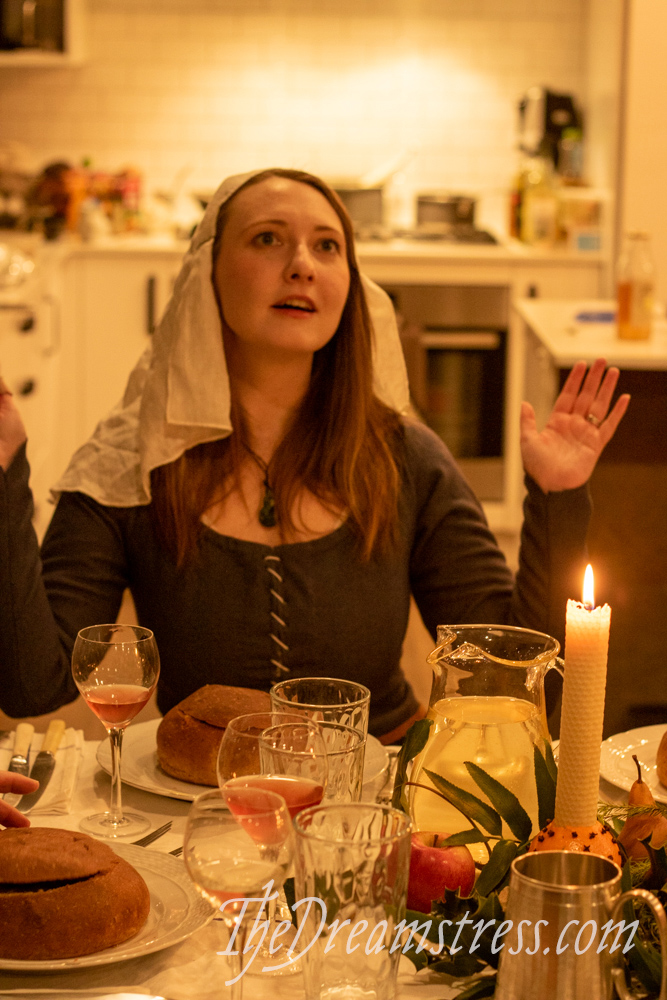
Midwinter Medieval Feast thedreamstress.com

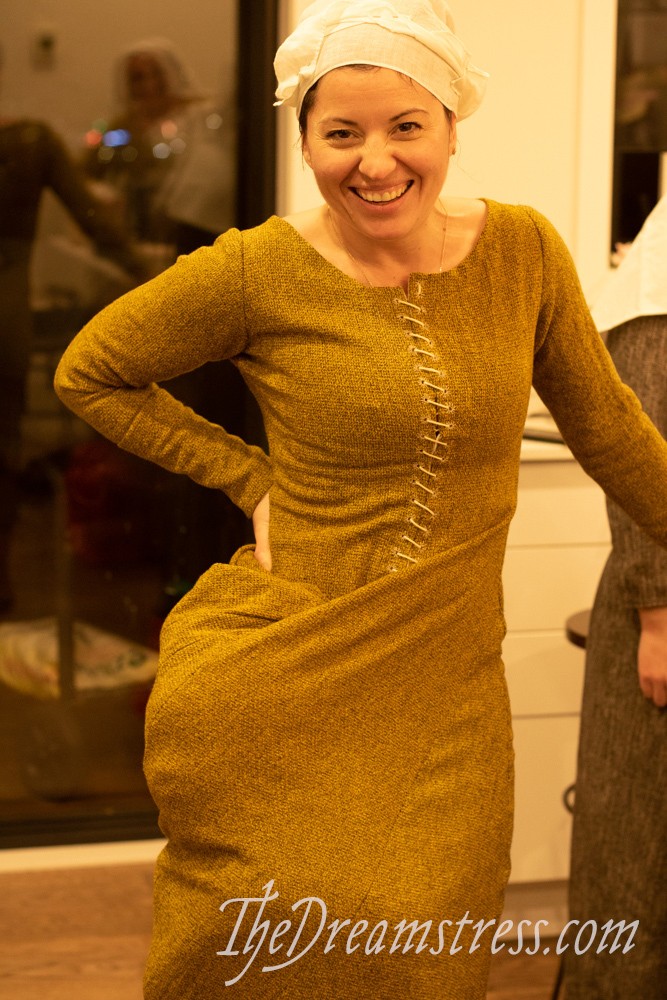
Hmmm
what’s under her dress?

Midwinter Medieval Feast thedreamstress.com

Jenni had the privilege/misfortune of sitting across from me, and having great lighting:

Midwinter Medieval Feast thedreamstress.com

The Menu

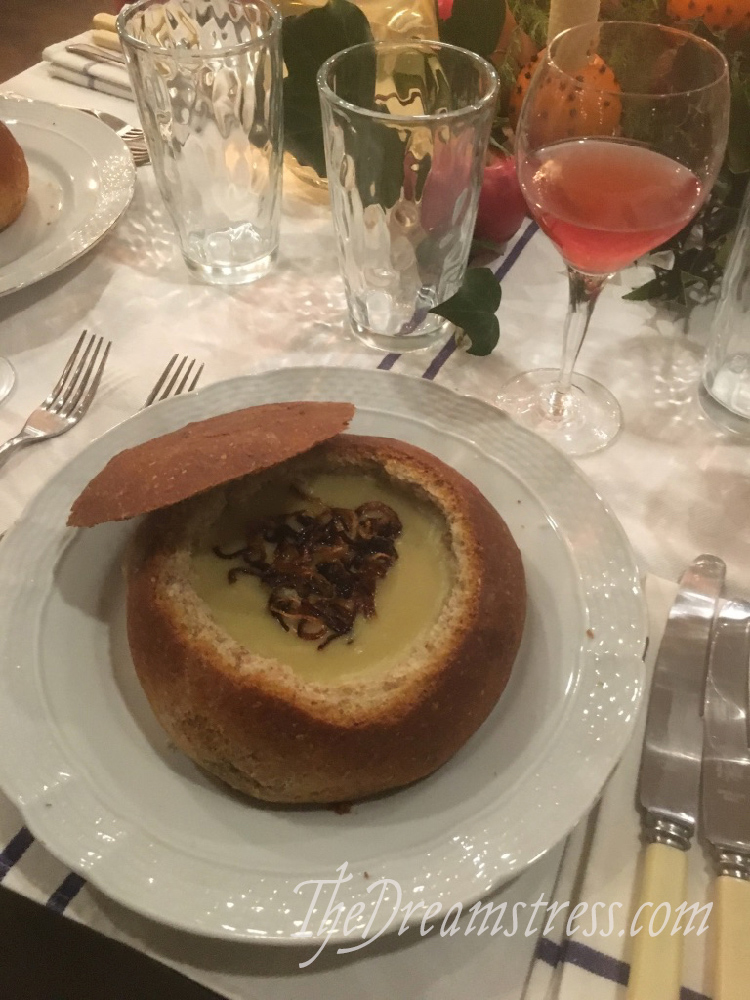
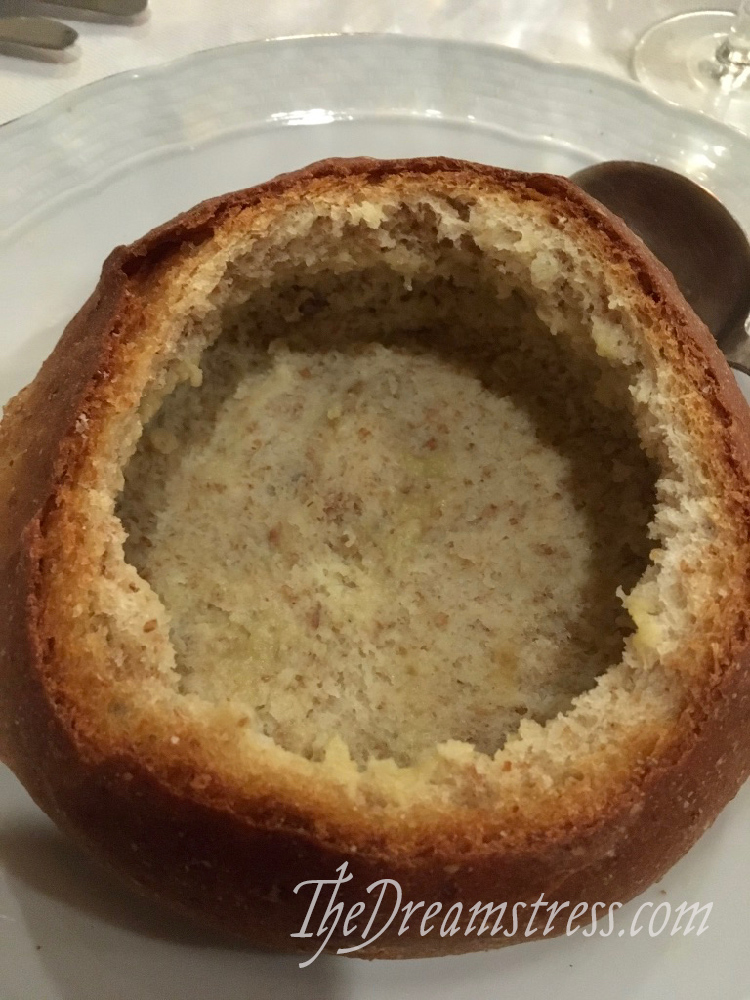
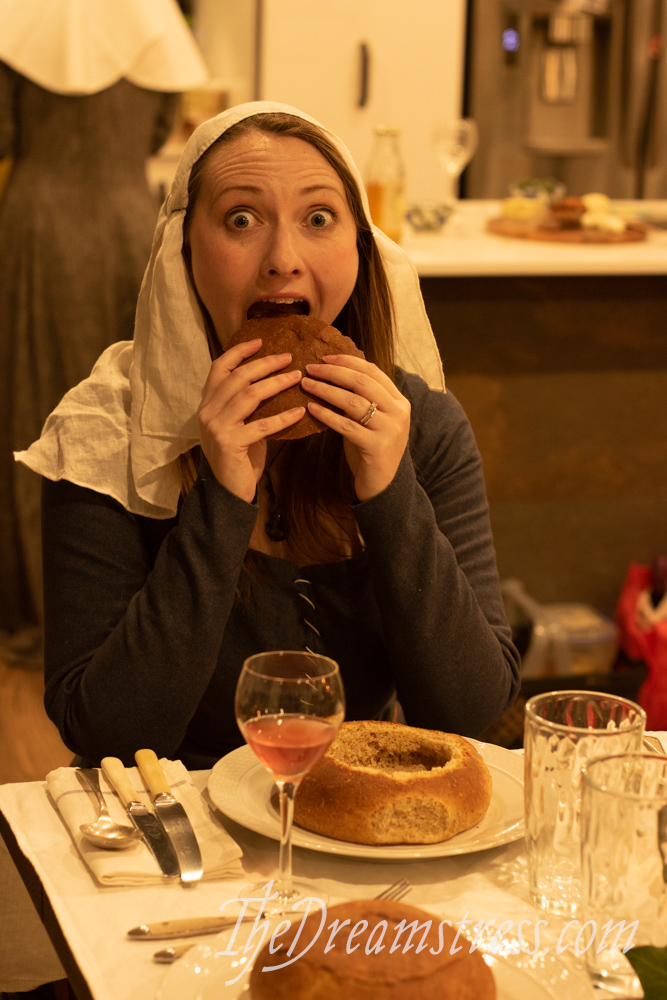
Pear & Parsnip Soup in Bread Trenchers

Midwinter Medieval Feast thedreamstress.com

I made the bread bowls. 5 kilos of dough!

The soup was so good I forgot to take a photo before eating it all, so thanks to Nina for lending me the one above!

Midwinter Medieval Feast thedreamstress.com

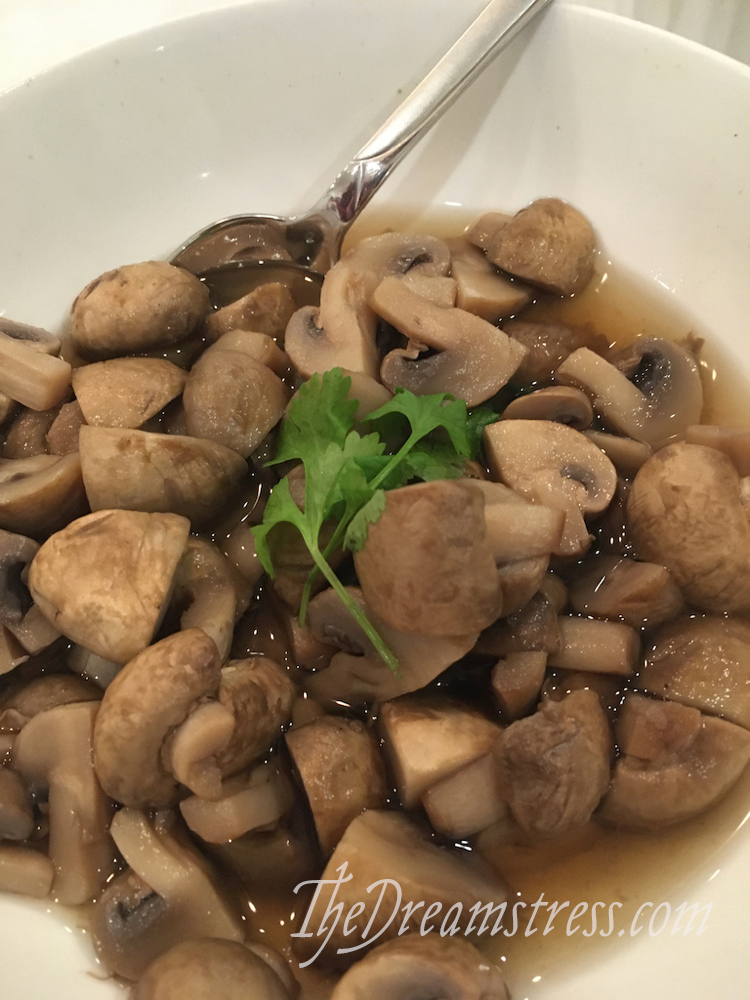
Mushrooms in Broth

Midwinter Medieval Feast thedreamstress.com

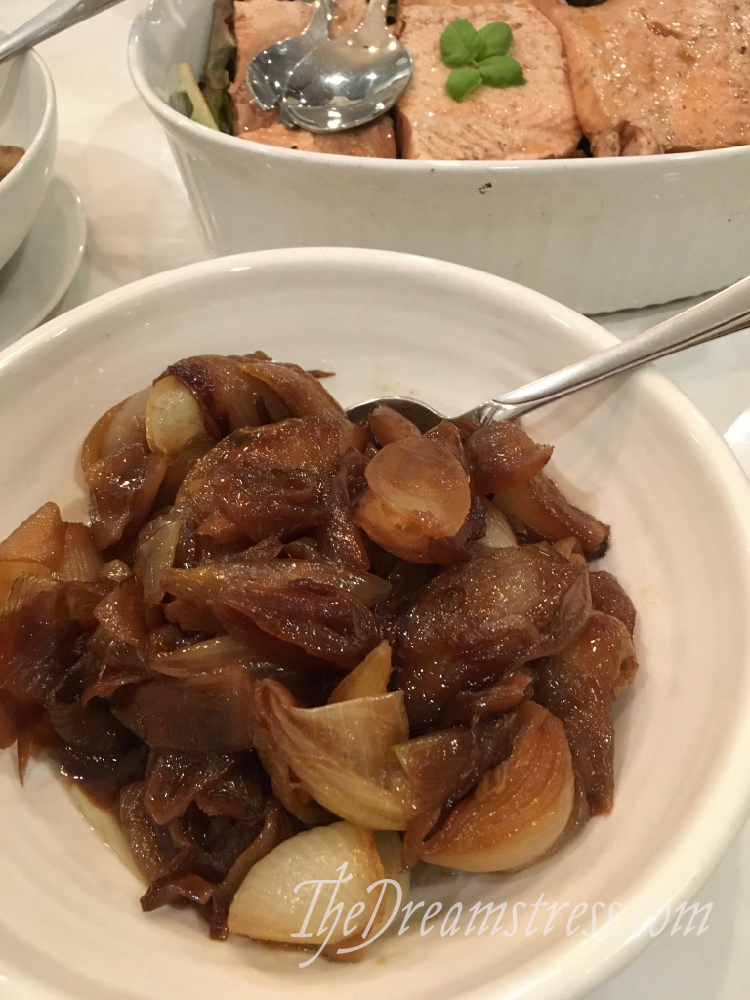
Sweet & Sour Onions

Midwinter Medieval Feast thedreamstress.com

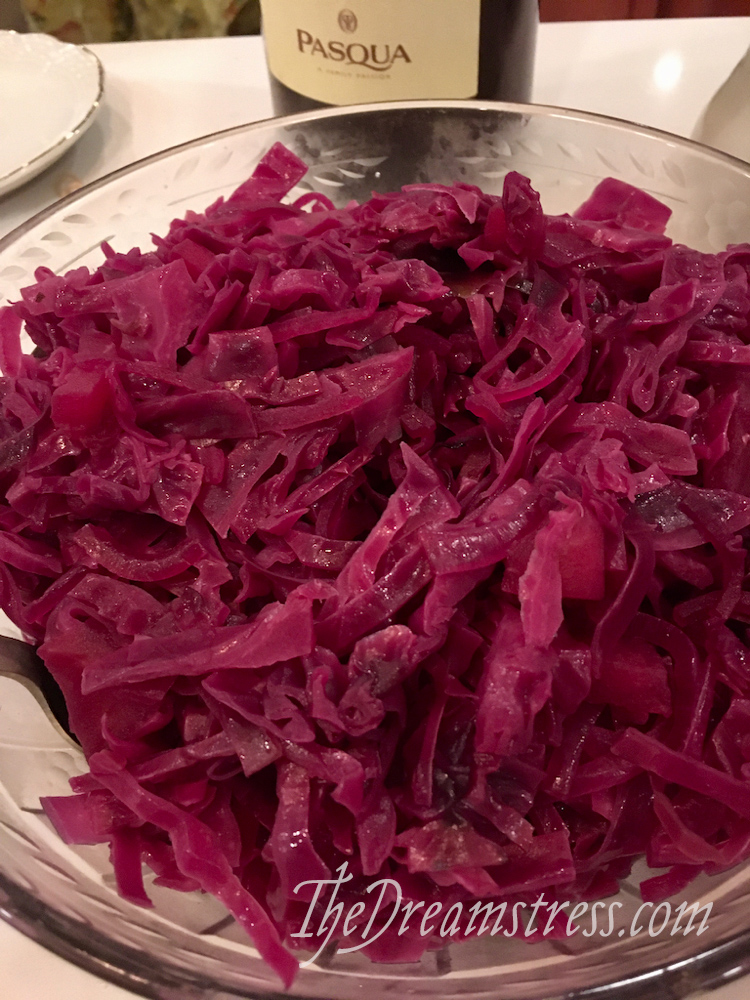
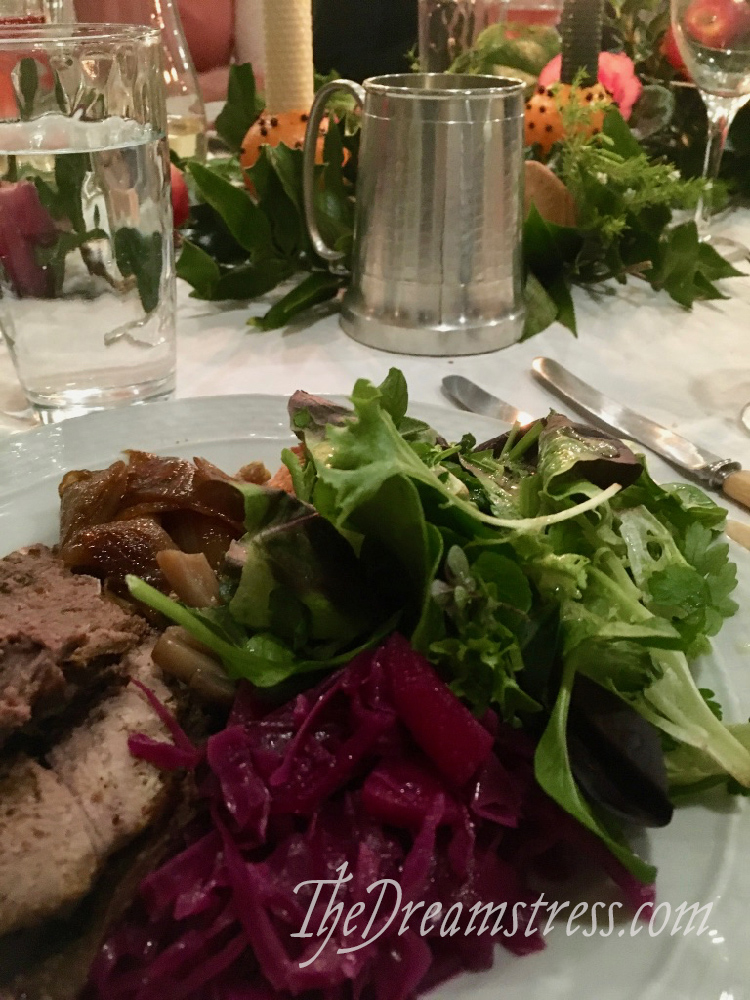
Spiced Cabbage with Apples

Midwinter Medieval Feast thedreamstress.com

This turned out surprisingly delicious considering I volunteered to make it, realised it involved alcohol, crossed my fingers, and subbed out all the alcoholic ingredients!

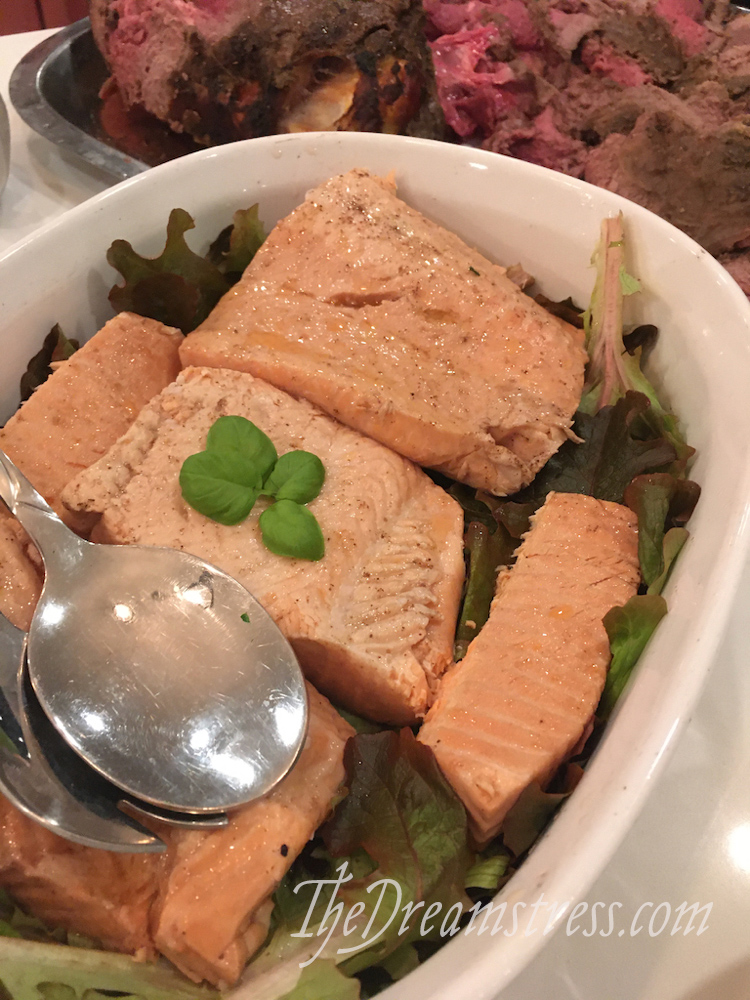
Pickled salmon

Midwinter Medieval Feast thedreamstress.com

Roast Venison

Midwinter Medieval Feast thedreamstress.com

And salat for those of us with peasant tastes…

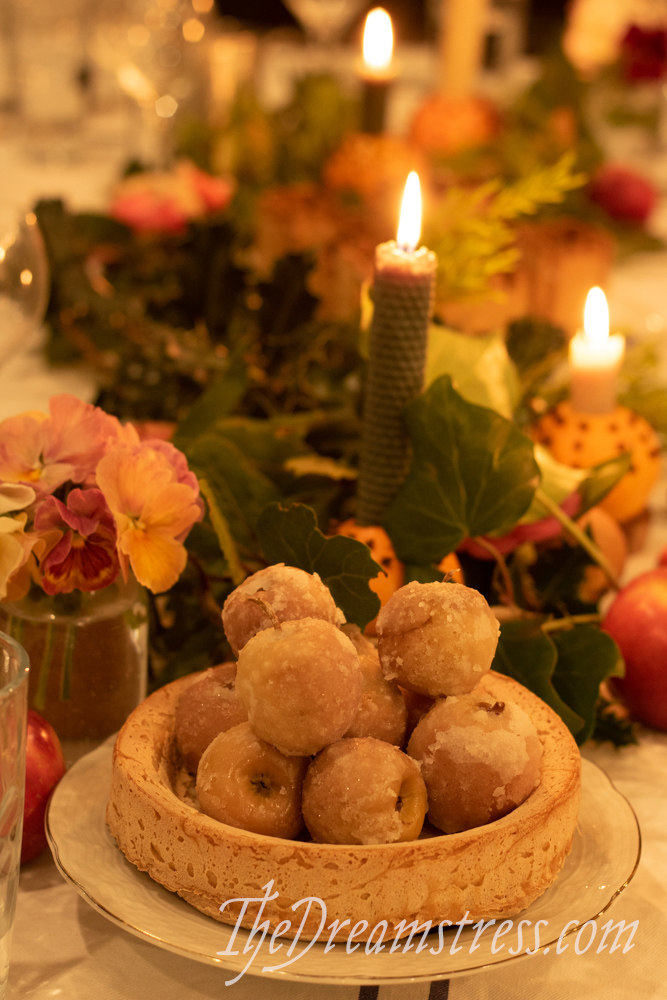
Candied Apples

Midwinter Medieval Feast thedreamstress.com

Marzipan Fancies

Midwinter Medieval Feast thedreamstress.com

Rysshews of Fruit

And the famous…

Gingerbread castle!

Midwinter Medieval Feast thedreamstress.com

Fabulous times!

Midwinter Medieval Feast thedreamstress.com
Carriage dress, 1885 The Agnes Etherington Art Centre at Queen’s University

Rate the Dress: this dress ain’t made for walking

It’s interesting how much certain silhouettes and colour schemes evoke certain associations. Last week’s dress was one a style that always makes me think of Winterhalter paintings, and also the antebellum South. Many of you had the same reaction. The latter association always makes looking at this style of dress fraught: we can’t help but be reminded of the amount of human suffering that supported a lifestyle that allowed such garments.

For me as a fashion historian it’s important to remember that, while it’s not always as obvious, almost all extravagant fashions (including those today) are built on exploitation. Most of the garments I’ve featured in Rate the Dress depended on seamstresses, and the occasional tailor, working long hours for poor or no pay. Behind every couturier who became rich and famous there were an army of ‘little hands’, making at best a decent wage that provided a modest living, but certainly not one that could afford the garments they laboured over.

Rate the Dress is a chance to imagine a dress when worn, but also to acknowledge and honour the people who made these garments, the often unknown artists who we can’t compensate, but whose skill we can admire.

Last Fortnight: 1860s white with blue

It was a childhood dream dress, albeit one with problematic associations. You thought it the perfect frock for the extremely youthful – although Winterhalter’s portraits show women well into their 30s in similar dresses in the 1850s and 60s!

The Total: 8.3 out of 10

Technically the rating should be a bit higher, as many of you knocked of points for the Extremely Enormous Butt Bow as shown on the museum website – which I’m not entirely convinced is original, and this didn’t include any photographs of!

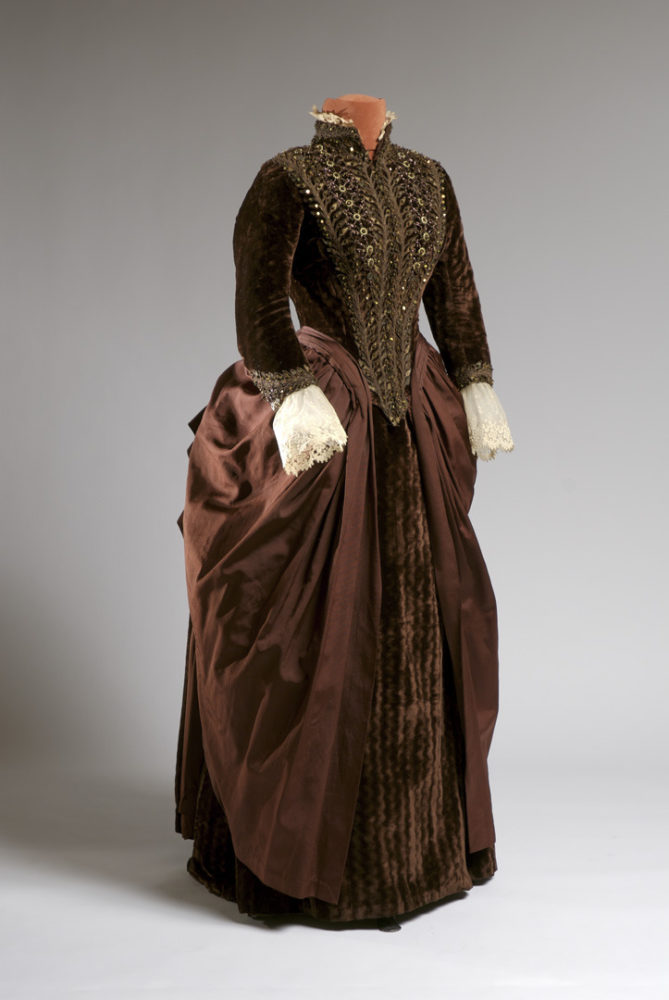
This week: an 1880s velvet and satin frock

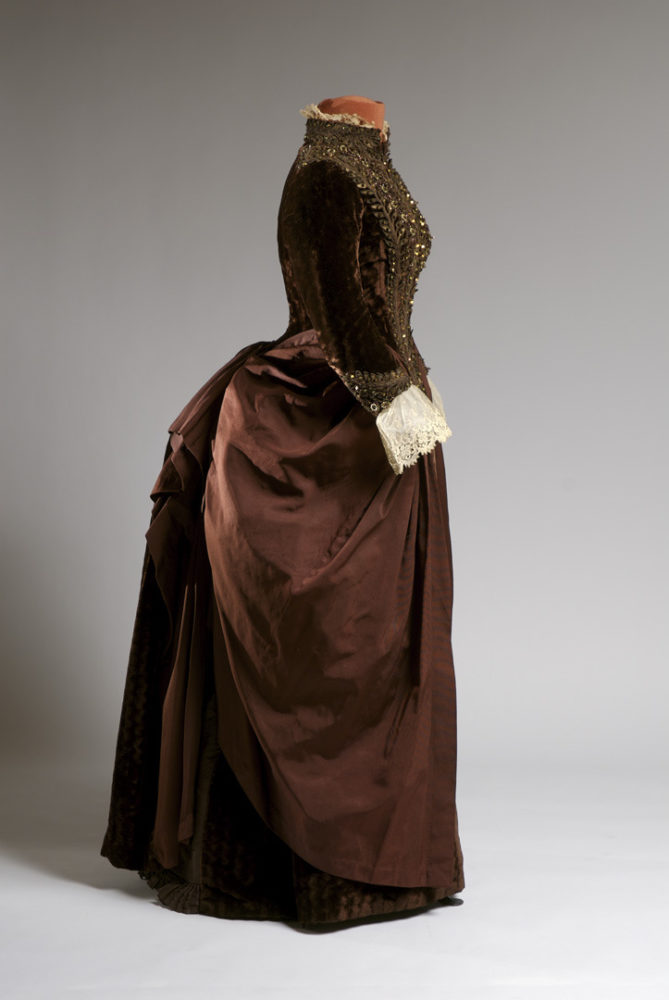
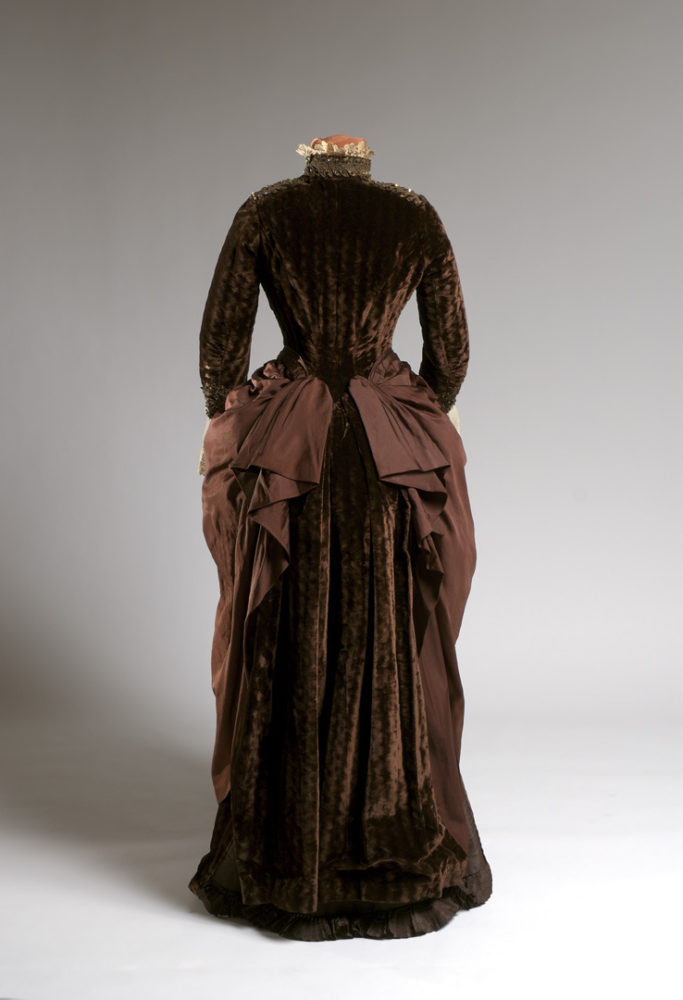
As a balance to last weeks very young, very summery, dress, here’s a rich, dark, winter-y dress that, if not explicitly for an older woman, is much more mature in its cut and colours. It’s also an excellent example of a dress for honouring the maker. While the designers and seamstresses are unknown, and while the overall effect may not be to your taste, it’s hard to refute the skill that went in to the making of the dress. The draping of the overskirt in particular is masterful.

Carriage dress, 1885 The Agnes Etherington Art Centre at Queen’s University
Carriage dress, 1885, The Agnes Etherington Art Centre at Queen’s University

The museum describes this as a ‘carriage dress’, which, in the 1880s, was an elegant dress worn for visiting (they were more commonly known as ‘visiting dresses’) that was too lavish in materials or cut for street wear, and thus was only worn if one was conducting one’s visits in a carriage, instead of walking.

Carriage dress, 1885 The Agnes Etherington Art Centre at Queen’s University

One can certainly imagine a society woman descending from a carriage and proceeding into a reception room in this dress, its overall sense of impracticality declaring her wealth and status. How did her life compare to the women who made her dress, and who dressed her in it?

Carriage dress, 1885 The Agnes Etherington Art Centre at Queen’s University

This dress actually has a rather restrained train for a carriage dress. It’s possible it’s been shortened. There’s certainly nothing restrained about the materials used, from the elaborate metal, bead and braid embellishment on the bodice, to the lush satin of the bustled overskirt, to the velvet main gown.

Carriage dress, 1885 The Agnes Etherington Art Centre at Queen’s University

What do you think?

Rate the Dress on a Scale of 1 to 10

A reminder about rating — feel free to be critical if you don’t like a thing, but make sure that your comments aren’t actually insulting to those who do like a garment.  Phrase criticism as your opinion, rather than a flat fact. Our different tastes are what make Rate the Dress so interesting.  It’s no fun when a comment implies that anyone who doesn’t agree with it, or who would wear a garment, is totally lacking in taste. 

As usual, nothing more complicated than a .5.  I also hugely appreciate it if you only do one rating, and set it on a line at the very end of your comment.