
40 Search Results for: 1916 fortnight

The ideal WWI figure Part IV: staying fashionable and supporting a full bust, 1910s style

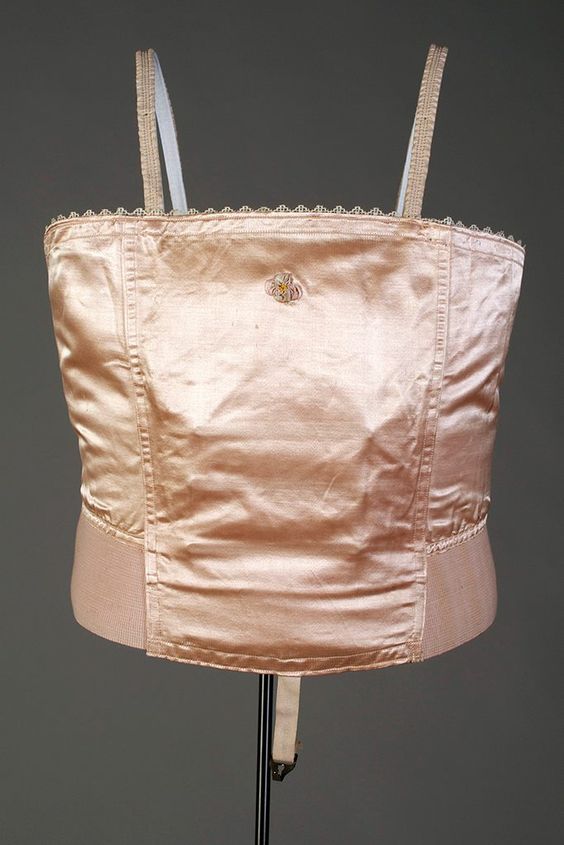
In Part IV of The Ideal WWI Figure, let’s look at how women with full busts achieved support and the fashionable silhouette of the period. Part I: The Ideal WWI Figure: a range of Ideals Part II: Breaking Down the Elements that Made the ‘Ideal’ figure Part III: The Changing Ideal Figure, 1913-1921 One of the most common questions I get asked about the Rilla Corset is how to wear it/what you do for bust support if you are very full busted, as it sits below the bust. To answer that question, let’s go back to the source, and look at period accounts, illustrations, and extant examples of bust supporting garments.  There is no better way to find out how to support your bust then to see how it was actually done in period. As we’ve seen from looking at the figure ideals in the 1910s over the last three posts in the series, the ideal WWI bust, whether small or big, was low and drooping, rather than high and perky, as is the modern …
Winter 1915-16 dress, thedreamstress.com

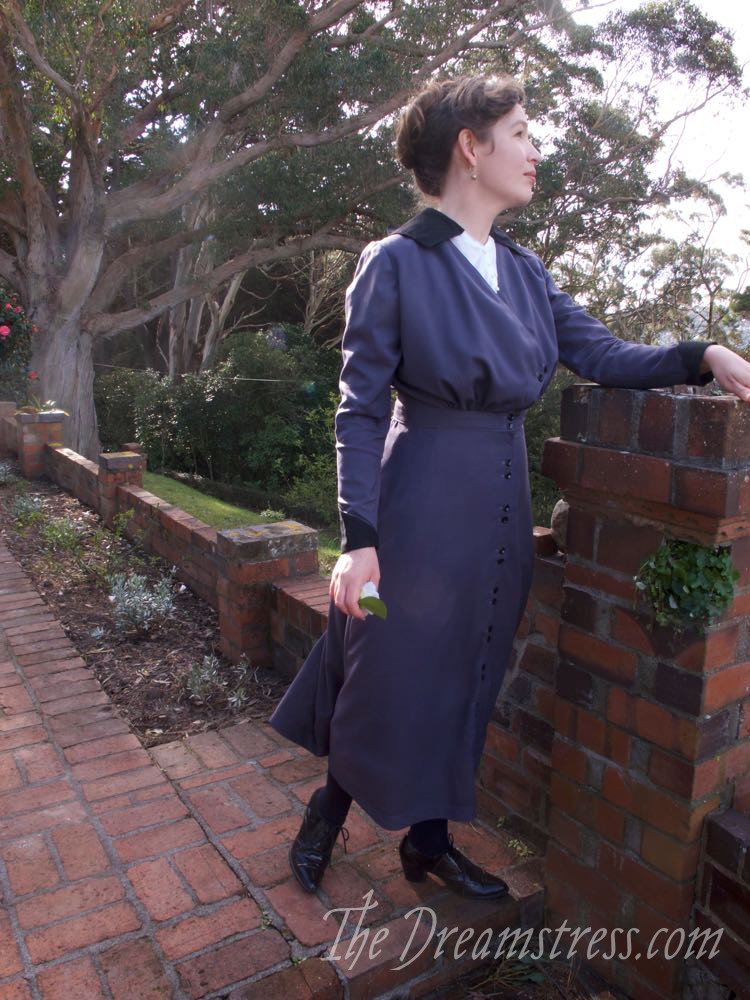
The ‘waiting for bluebells’ winter 1915/16 day dress

I’m extremely excited to be showing you a fully done, properly photographed, newly sewn historical outfit.  It seems so long since that has happened! Too long… This outfit was also a long time coming. It was on my list as a wardrobe hopeful for my Fortnight in 1916 experiment, based on fashion advice articles which extolled the virtues of jumper dresses over skirts and blouses, as a wool jumper frock was more durable, and could be worn for many more days than a cotton blouse without needing washing. I based my own ever-so-practical jumper frock on this page from The Pictoral Review Monthly Fashion Book, Dec 1915:  I loved the double-button detail, and the asymmetrical crossover bodice, both so typical of the mid 1910s.  It just seemed to period-perfect, but also so classic. I also liked the severity, especially with the grey, black & white colour scheme, though the palette on these pages is so limited that it’s not the best indication of what colours the frocks would be made up in.  I’m quite certain …

Meet the Scroop Rilla Corset – the perfect WWI era corset pattern!

Meet the newest Scroop Pattern: the Rilla Corset, a historically accurate World War I era corset pattern that is easy and detailed enough for even the total corset novice to tackle. Buy it here!   The Rilla Corset pattern came out of my search for the perfect WWI corset pattern for my Fortnight in 1916, and the realisation that what I wanted in a corset pattern of the era simply didn’t exist as a commercial pattern. The Rilla Corset is based on an original PD Marvella corset by Belgian corset manufacturer PD Corsets. The Marvella was one of the best-selling corsets worldwide in the second half of the 1910s, making the Rilla corset the most accurate representation of what the average woman wore during the period, and the perfect base for WWI and early 1920s costuming. With extensive instructions, and advice on achieving the correct fit for the era, the Rilla was designed to be an easy make for sewers with some corsetmaking experience, or a good introduction to corsetmaking for the moderately advanced sewer …