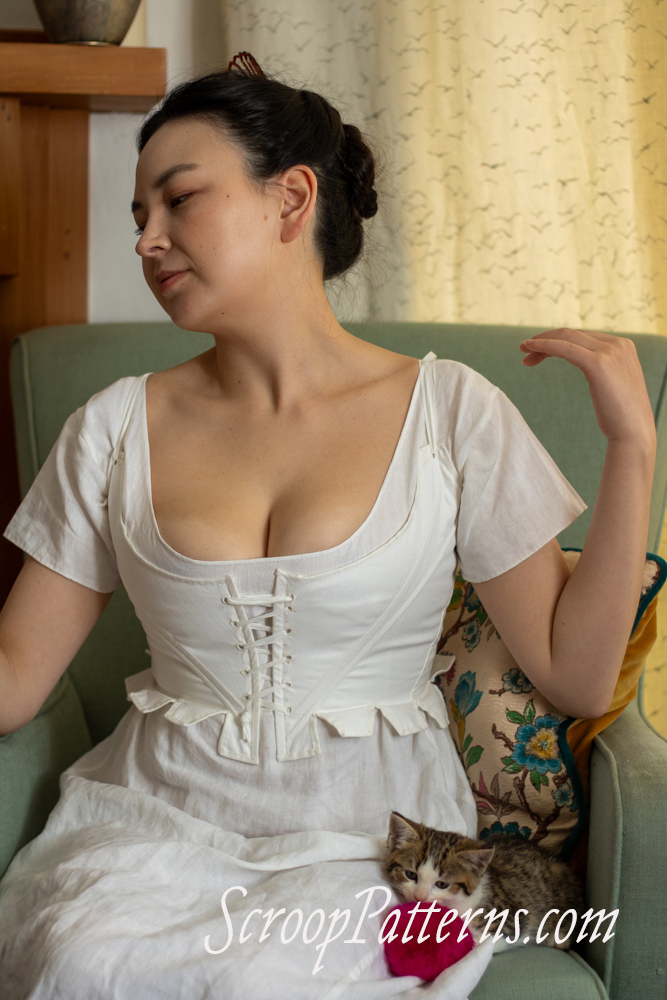
I am so excited to have launched the Minette Stays, and to have so many people already making the pattern!
The Minette Stays are both a response to two of the most requested things when I did the Scroop Pattern Survey a few years ago (#1 front lacing ca. 1800 stays and #2 more beginner/intermediate historical patterns) and a continuation of something I’ve been working on for years. They are the result of hundreds of hours of research into ‘transitional’ support garments: ones that bridged the space between the very structured, boned, triangular silhouette 18th century stays, and the conical, uplifted bust, minimal waist compression stays/corset that dominated from 1810-35.
There are so many fascinating things happening in support garments in the period 1785-1810!
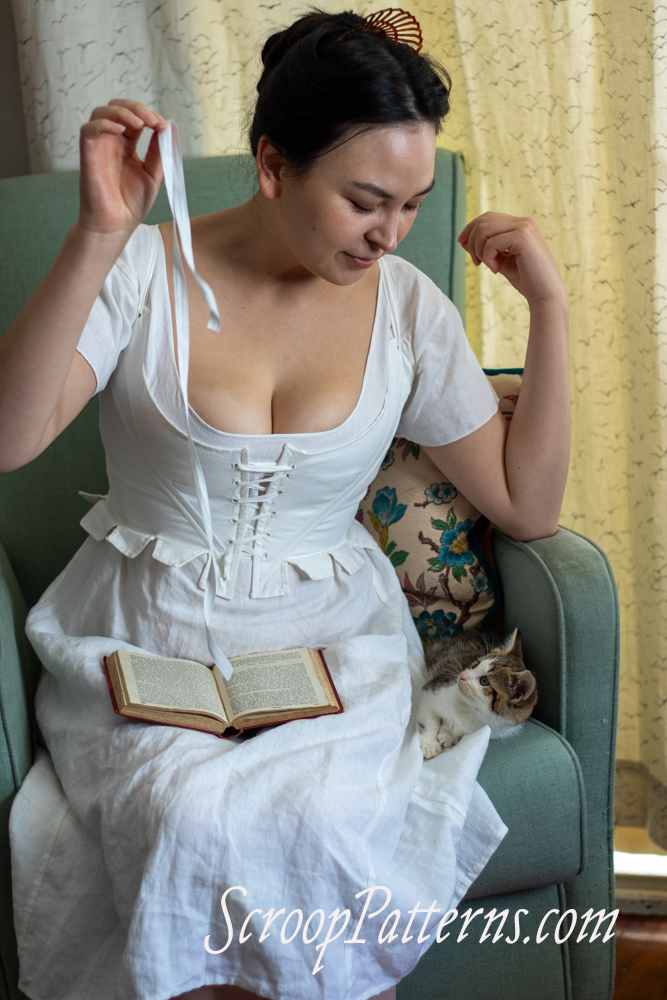
My goal for the Minette pattern had three parts. First, it needed to be historically plausible in pattern cut and construction based on extant examples, images, and writing. Second, making the stays needed to be achievable with readily available modern materials (someday I will make patterns for elasticated spring corsets!). Finally, like all Scroop Patterns, it needed to be able to fit a range of figures well when graded into a full size range.
I assembled a huge folder of research and inspiration pieces, and tested different patterns and styles to see what worked well.
Contemporary Inspiration images:
The primary inspiration images that informed the final pattern were:
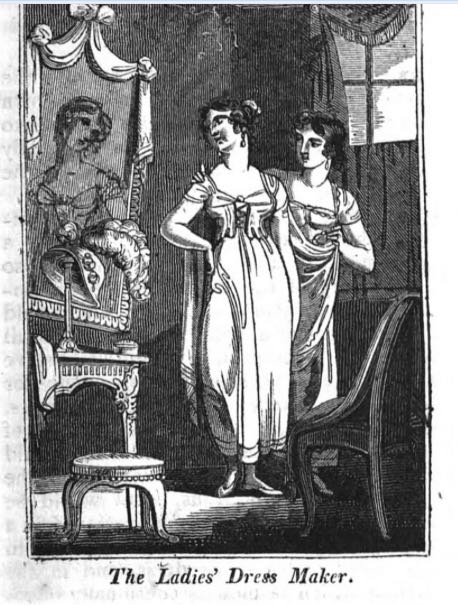
The Book of Trades, Or Library of the Useful Arts, ‘The Ladies Dressmaker’, published by J. Souter, 1811
‘The Dress-Maker’ image from the 1824 reprint of the 1811 Book of English Trades. These could be the Minette Stays! Front lacing, barely hitting the waist, tabs…
While this image is not particularly detailed, its simplicity suggests its meant to represent an immediately recognisable undergarment: what everyone visualised when you said ‘a lady in her stays and shift’.
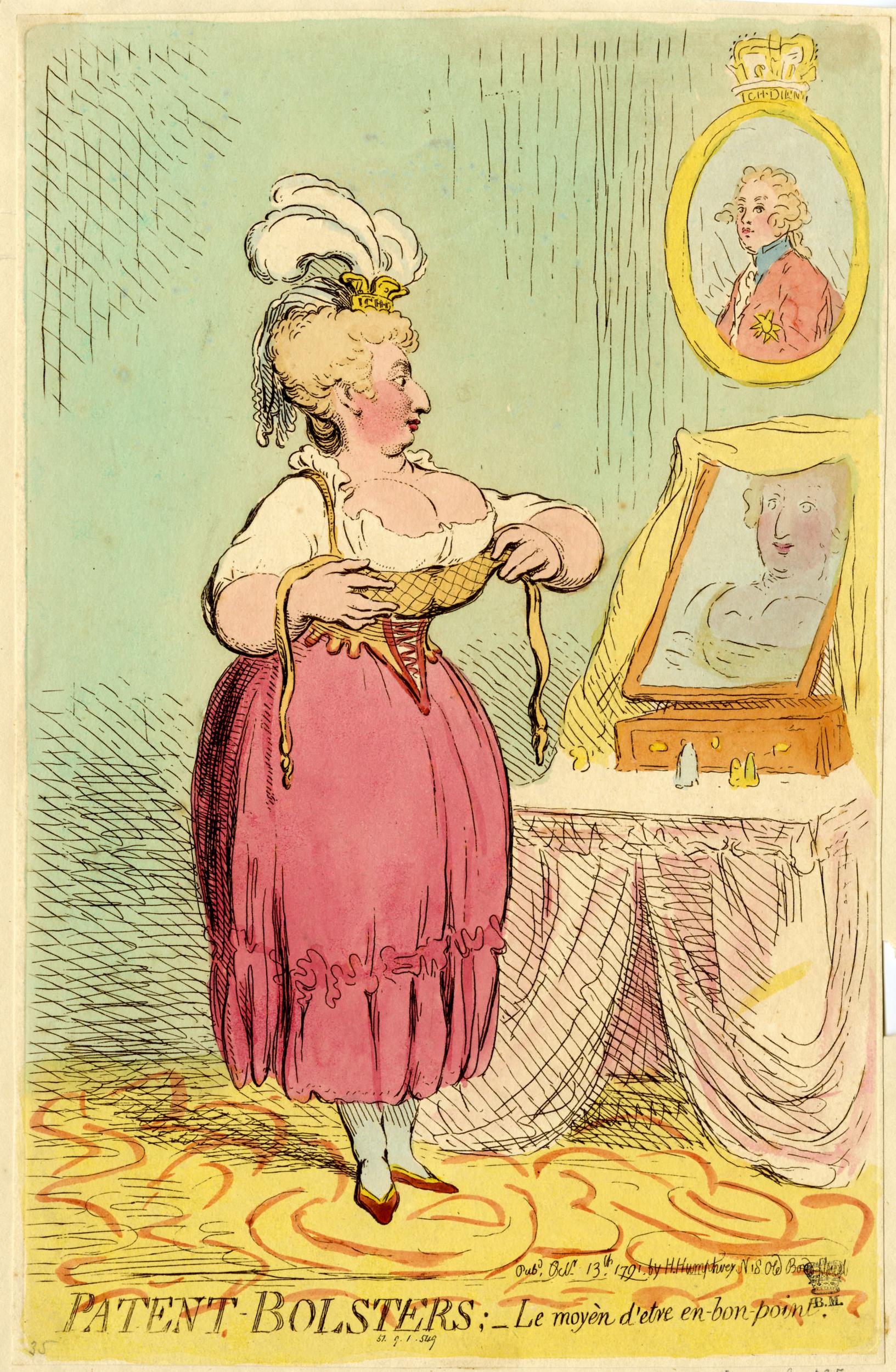
Patent-bolsters;-Le moyen d’etre en-bon-point. Satirical print mocking Mrs Fitzherbert by James Gillray Published by Hannah Humphrey, 1791
This satirical print showing Mrs Fitzherbert adding a bust enhancer to her already well-endowed front shows stays that aren’t quite as similar to the Minette Stays, but do demonstrate the increased presence of front-lacing stays.
Extant Inspiration Garments:
Some eagle eyed costumers immediately identified these stays from the Metropolitan Museum of Art as the primary basis for the Minette pattern shapes:
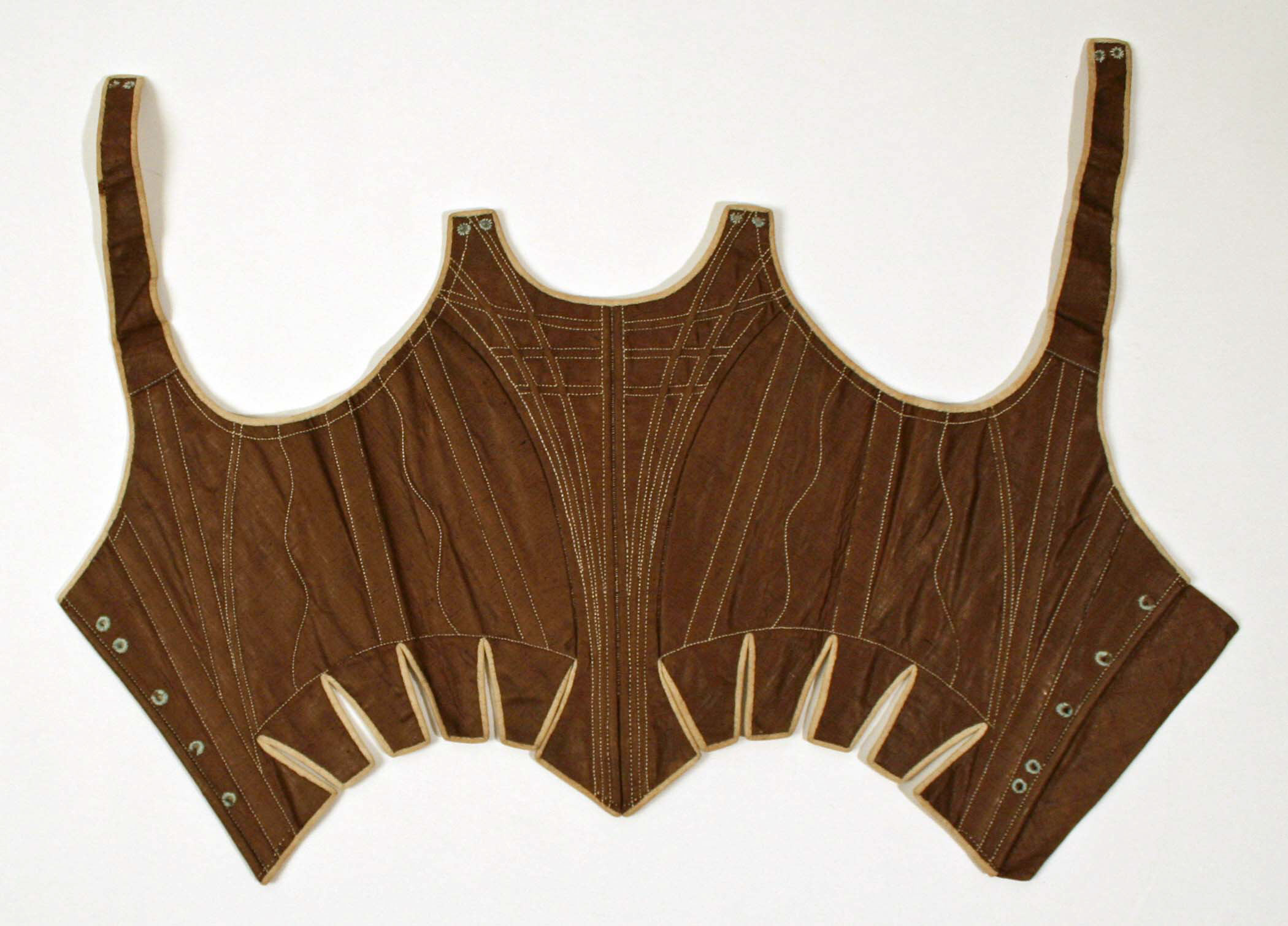
Corset, 1780s–90s, European, cotton, wood, Metropolitan Museum of Art, 1983.242.2
The final Minette pattern has a few changes: no center back seam, slightly different cut around the upper back and upper back armcurve, tape straps instead of solid straps, and a slightly different boning layout (all suggestions based on tester feedback about comfort), but it is a very close match to this pair.
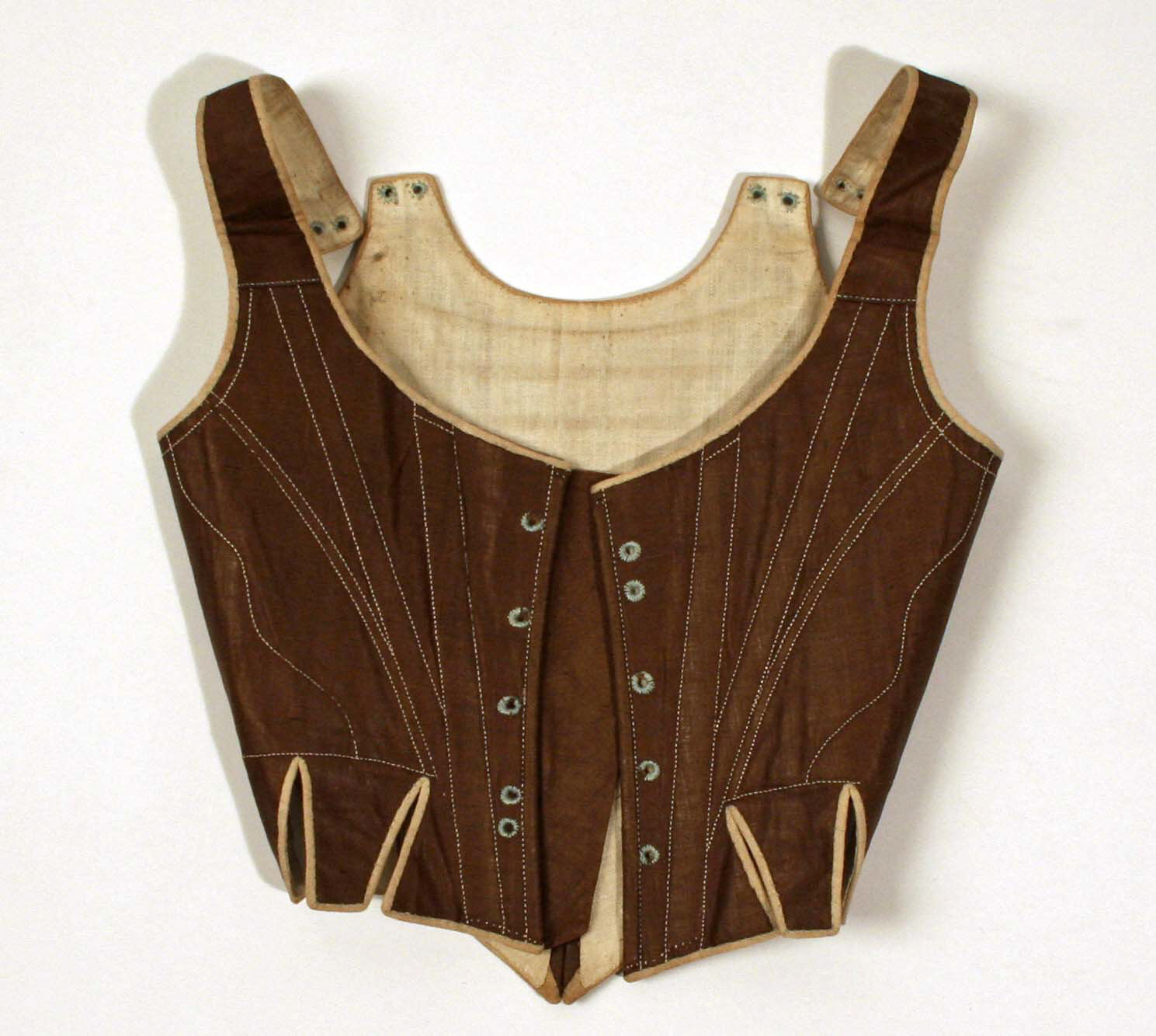
Corset, 1780s–90s, European, cotton, wood, Metropolitan Museum of Art, 1983.242.2
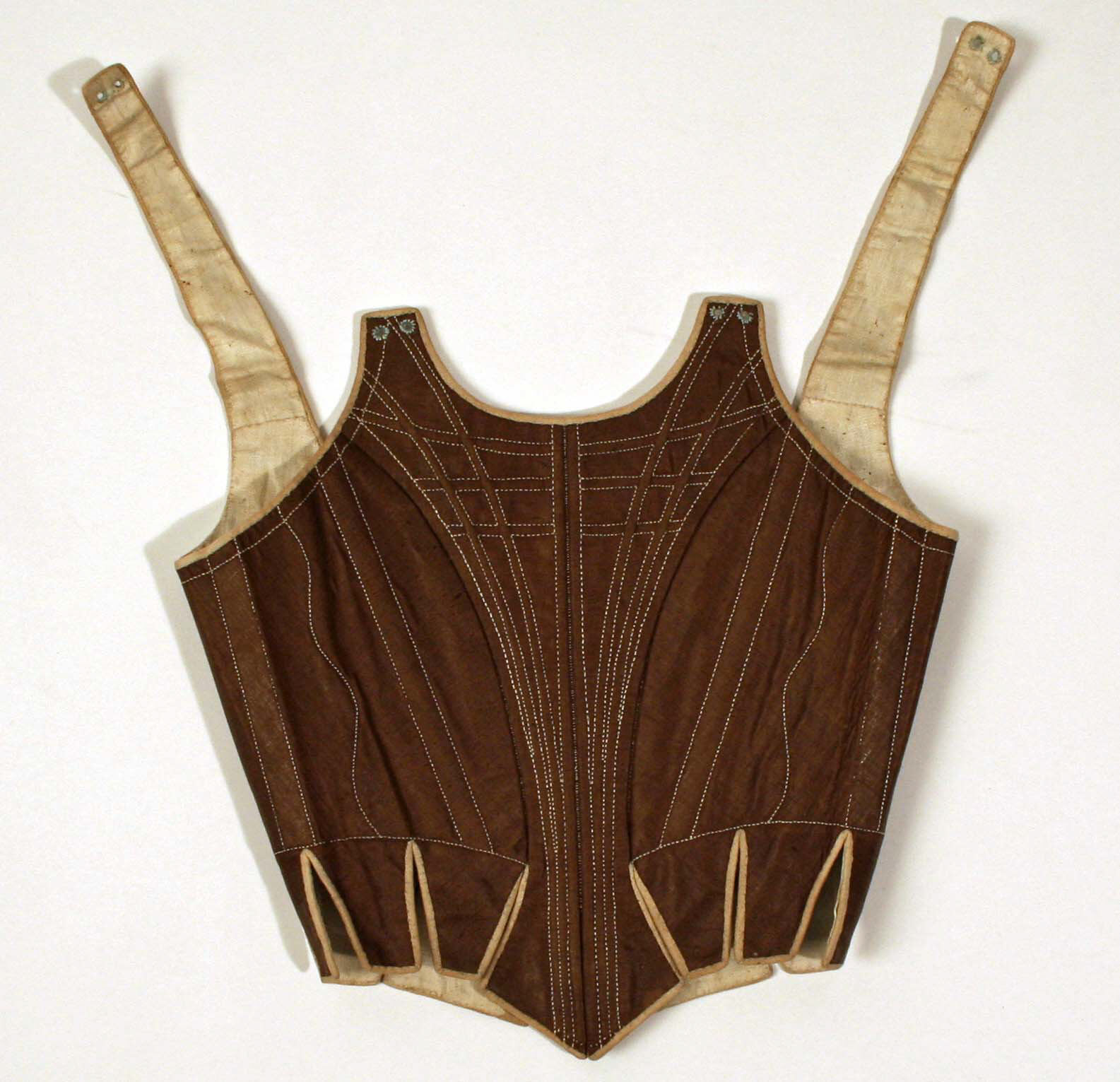
Corset, 1780s–90s, European, cotton, wood, Metropolitan Museum of Art, 1983.242.2
I realised in testing that the Minette could have two view options, one with lots of boning and one without, so I also looked at examples with very little boning.
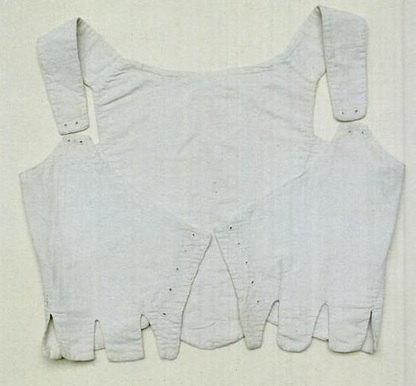
Linen jumps, c. 1790, Hereford Museum
These white linen jumps are featured in Jill Salen’s Corsets: Historical Patterns and Techniques. When scaled up to the same waist measure as the Met example the sewn together jumps are very similar in the shape they create, especially if both garments have the same amount of boning
Salen’s book also includes two other excellent examples of stays/corsets from this period with minimal boning: the 1790s white linen corset (also from the Hereford Museum) and the 1790 pink silk taffeta jumps from the Colchester and Ipswich Museum, UK.
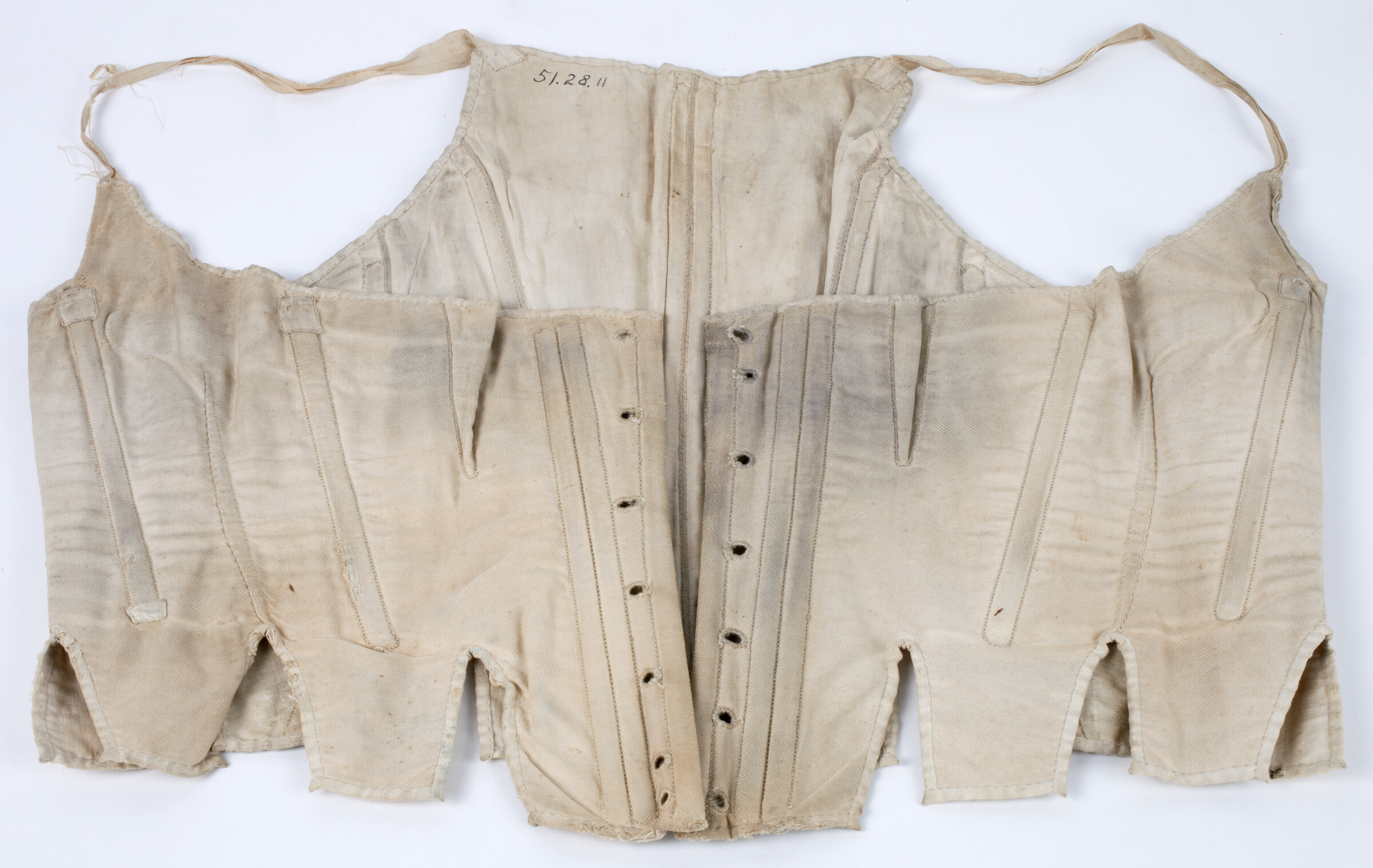
Bodice or stays, circa 1780s, Maryland Center for History and Culture. 10 bones.
I suspect this pair of stays from the Maryland Center for History and Culture is more ca. 1800 than 1780s. Whichever it is, it’s in the timeframe for the Minette Stays, and inspired the tape/ribbon straps (so comfortable!) and some of the binding suggestions.
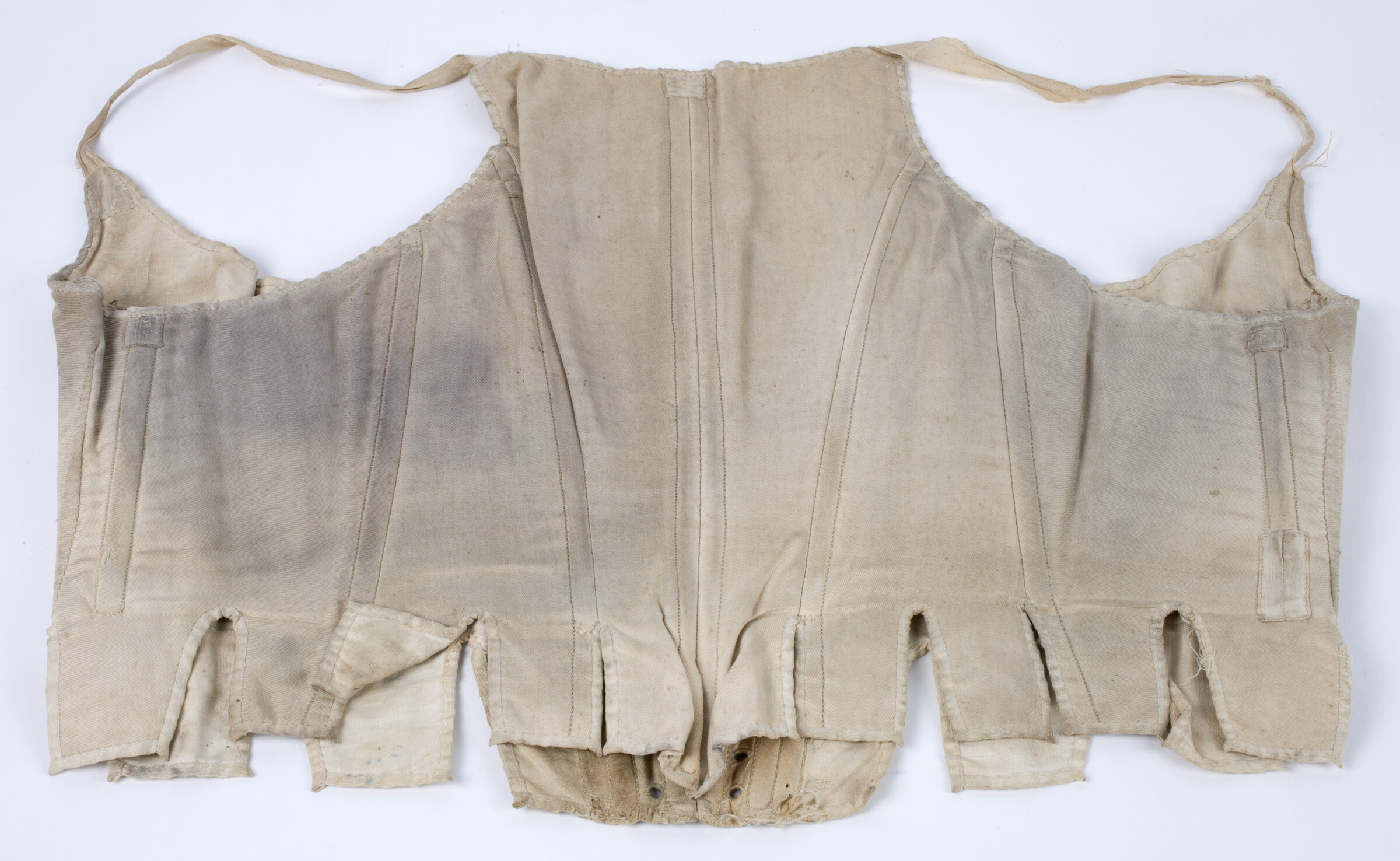
Bodice or stays, circa 1780s, Maryland Center for History and Culture. 10 bones.
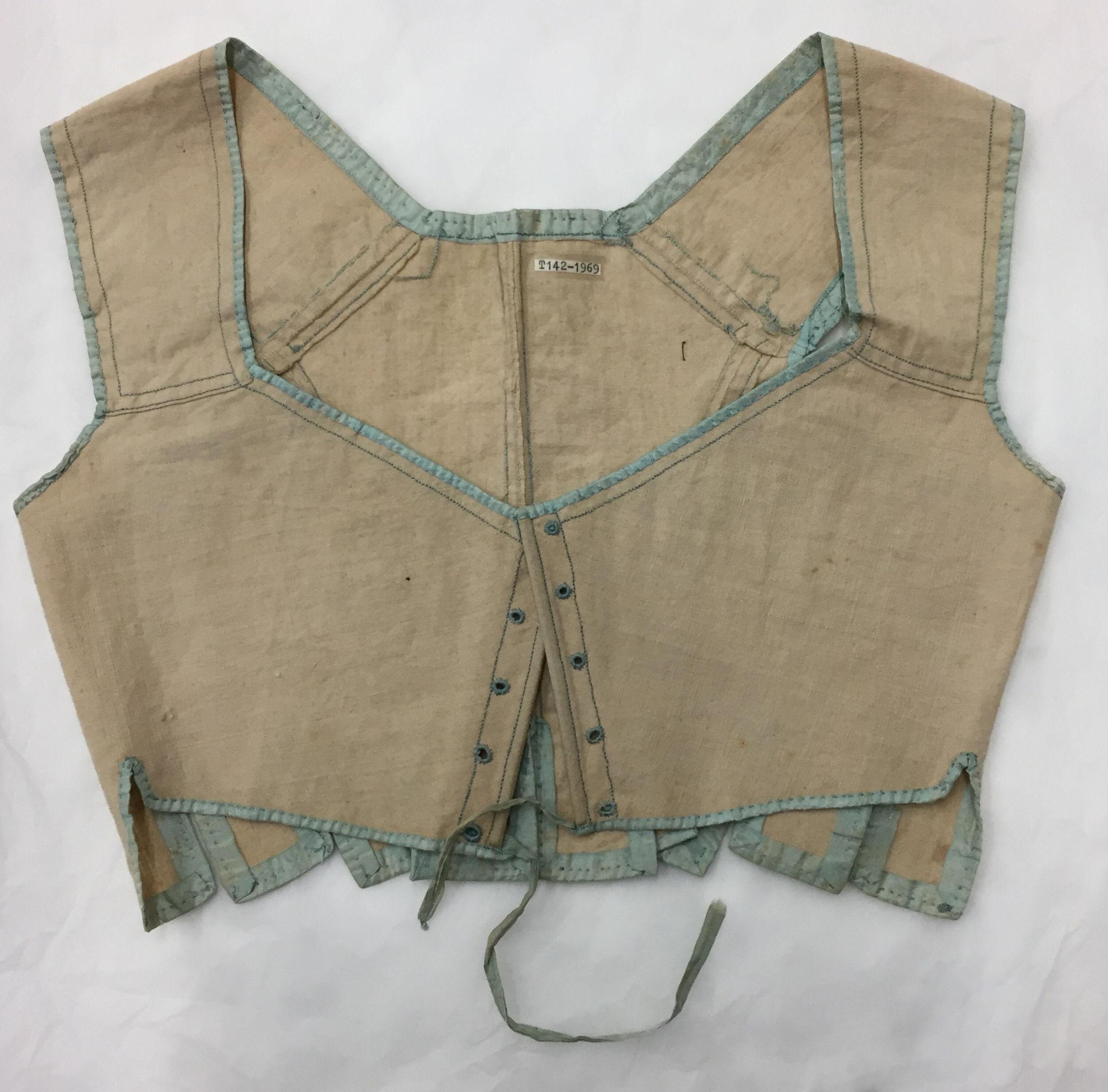
Stays or corset bodice made of linen trimmed with silk ribbon, England, ca. 1800-1815, Victoria and Albert Museum, T.142-1969
This bodice may have been worn as an exterior garment, but the reinforcing topstitching suggests support, and the pattern shapes have a lot in common with the other examples featured here.
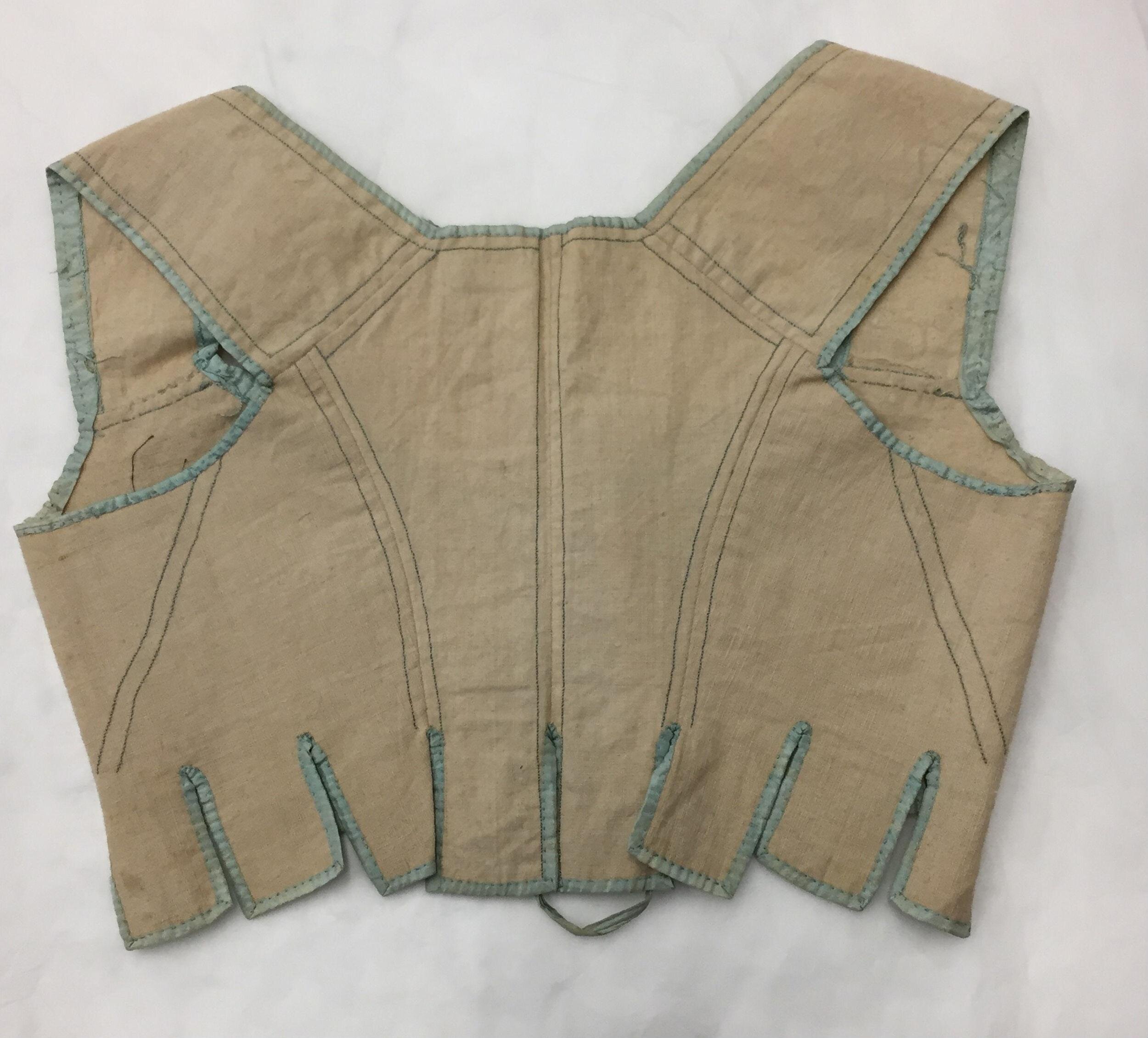
Stays or corset bodice made of linen trimmed with silk ribbon, England, ca. 1800-1815, Victoria and Albert Museum, T.142-1969
I also looked a bunch of other extant stays from this period, which don’t look nearly as much like the final Minette pattern, but which nonetheless helped inform the construction and finished suggested.
Sometimes you just need to look at a lot of items to determine which materials and construction techniques were most common, and which were used most in combination with each other or with specific pattern styles.
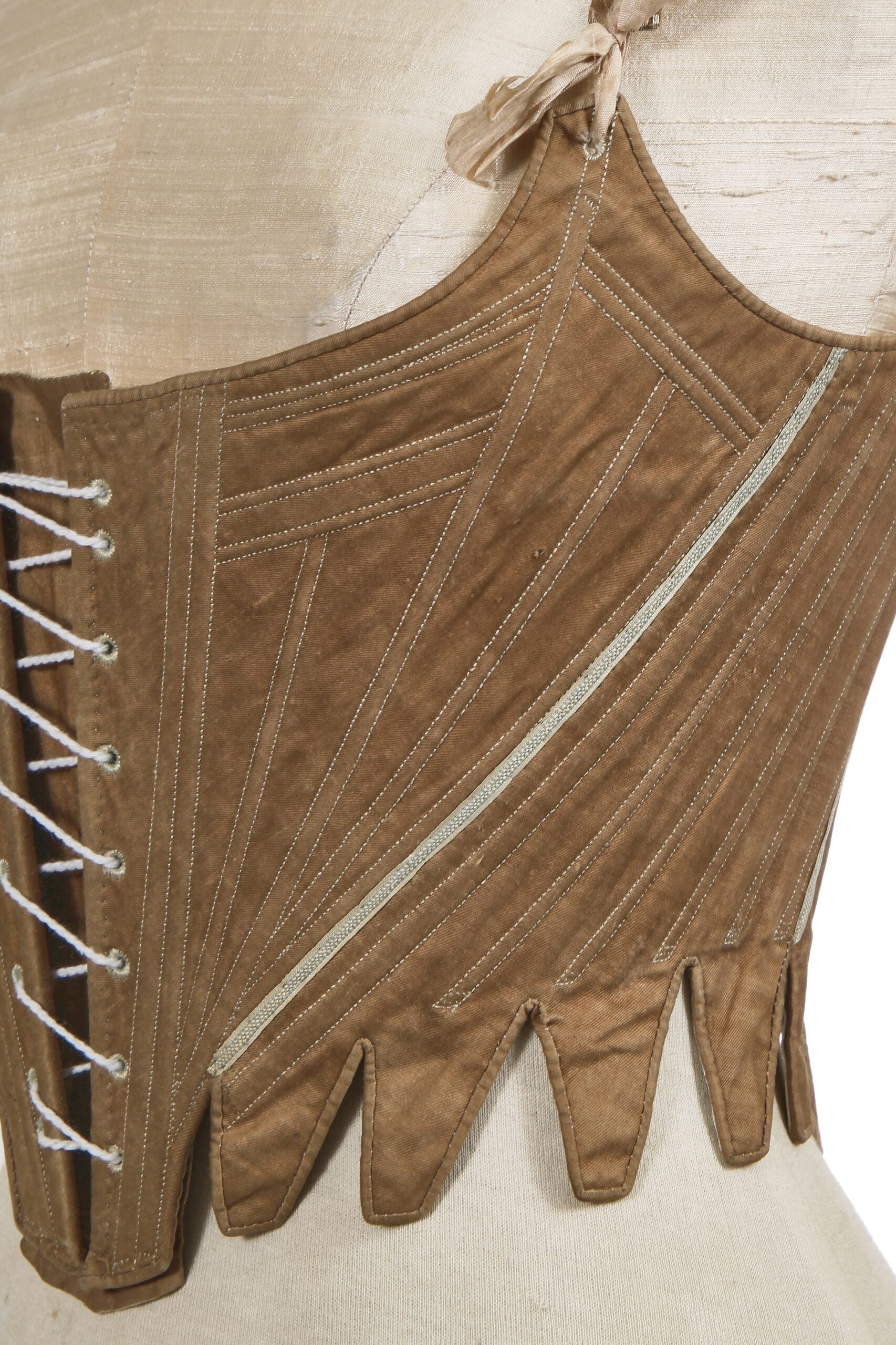
A pair of brown cotton jean stays, circa 1790, sold by Kerry Taylor Auctions in June 2025
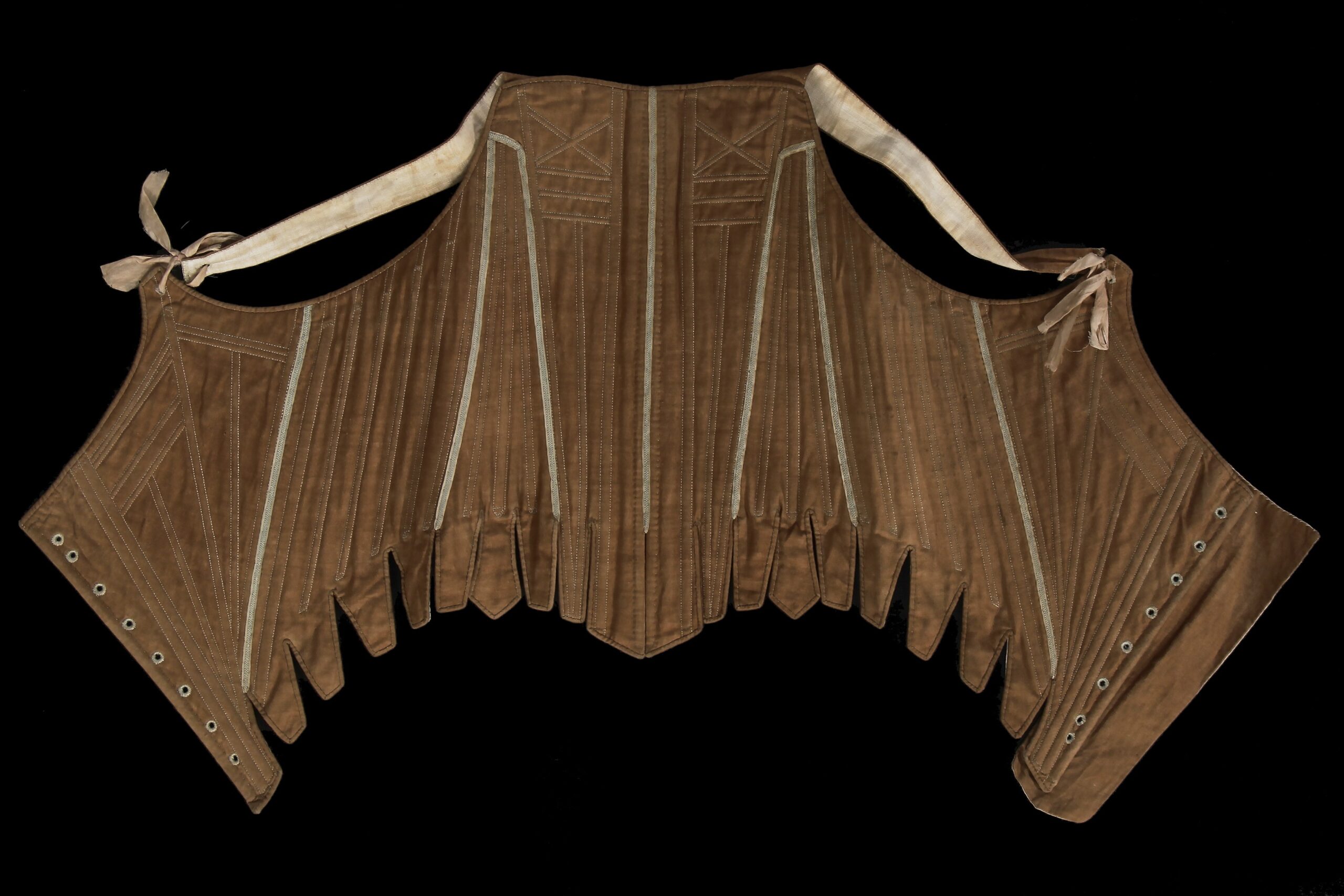
A pair of brown cotton jean stays, circa 1790, sold by Kerry Taylor Auctions in June 2025
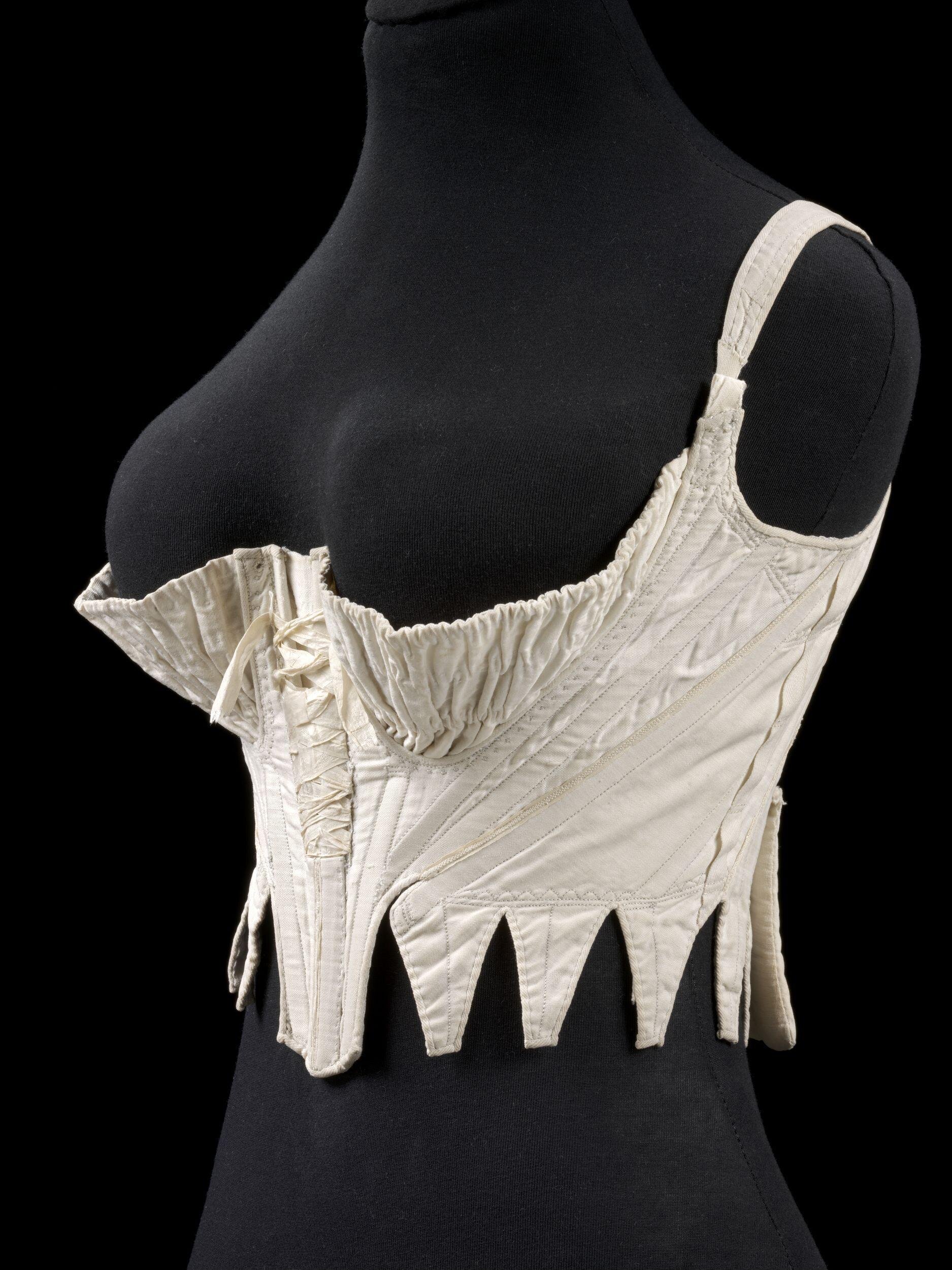
Woman’s stays of cotton, 1795-1800, Britiish; gathered cups, back laced, partially boned T.237-1983 V&A
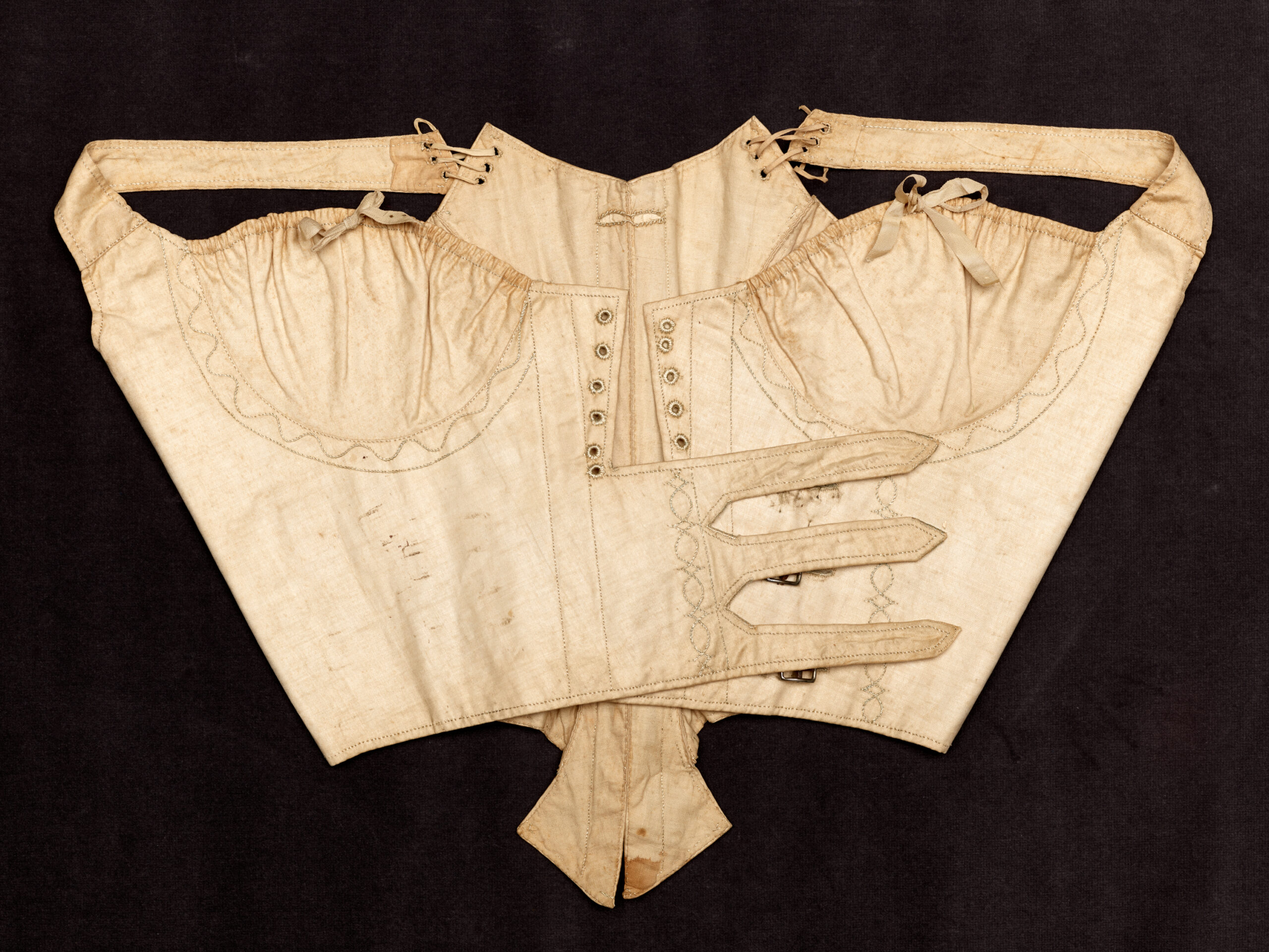
Corset, ca. 1795, Mills Junr. (English, ca. 1804), cotton; silk RISDM, Providence Rhode Island 1987-092
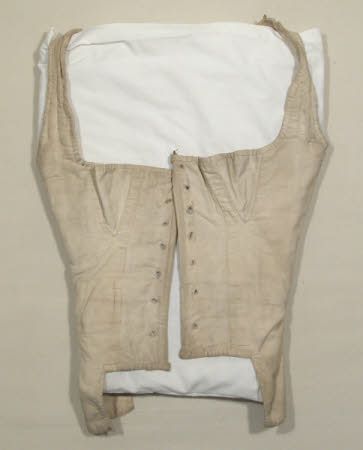
Corset, 1800 – 1825, cream ribbed cotton tabby and lined with cream cotton, Snowshill Wade Costume Collection, Gloucestershire NT 1350127
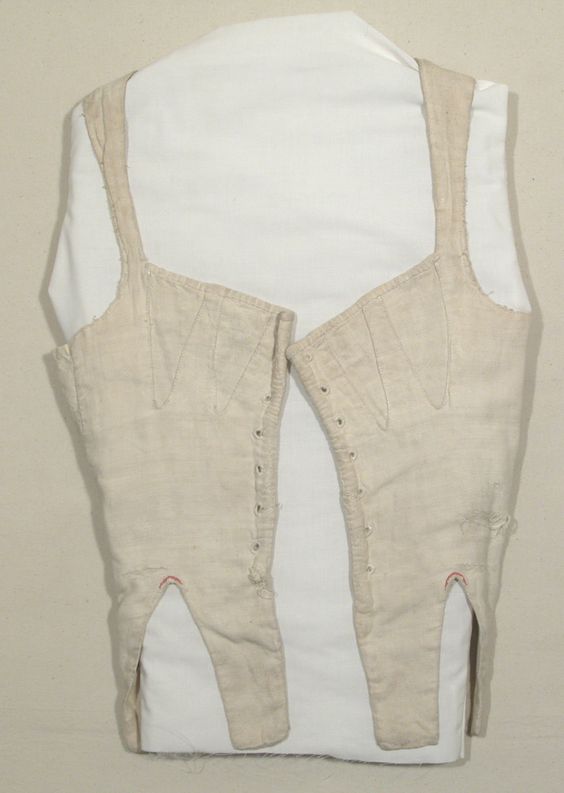
Corset, cotton, self lined. Fastens with 7 pairs of eyelet holes. Snowshill Wade Costume Collection, Gloucestershire, NT 1350125
I also hugely appreciated the fascinating research done by Kleidung um 1800 on various ‘short stays’ of the period. It’s one of the things that really got me interested in this niche, all those years ago!
All the work we do as researchers and costumers just builds on the bricks of amazing work that other researchers and costumers have done before us. Can’t wait to see where all of you take my pattern and research!