Latest Posts

How to turn the Scroop Wonders Unders Singlet Camisole into a V-neck

June is singlet camisole & slip season.

Here in the Southern Hemisphere, I’m wearing a Wonder Unders singlet under my merino tops, or a Wonder Unders slip under a wool dress nearly every day. And if I was in the Northern Hemisphere, I’d be doing the same thing under sheer blouses and frocks.
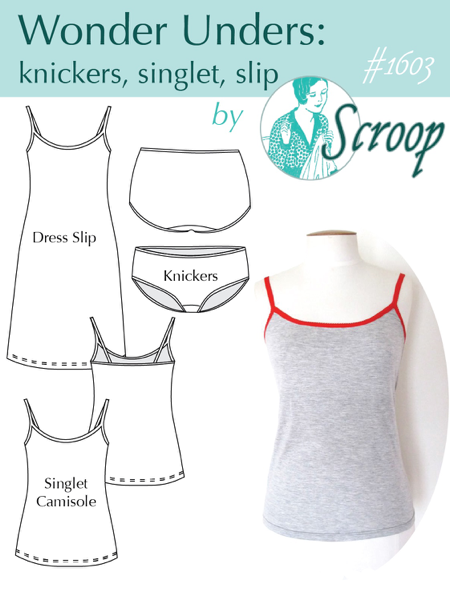
Scroop Wonder Unders scrooppatterns.com

Buy the Scroop Wonder Unders Here

In honour of the season, here is one of my favourite hacks of the Scroop Wonder Unders pattern: turning the singlet camisole or dress slip pattern into a V-neck. It’s super easy, and very helpful when you need one under a V-necked top, and don’t want it to show.
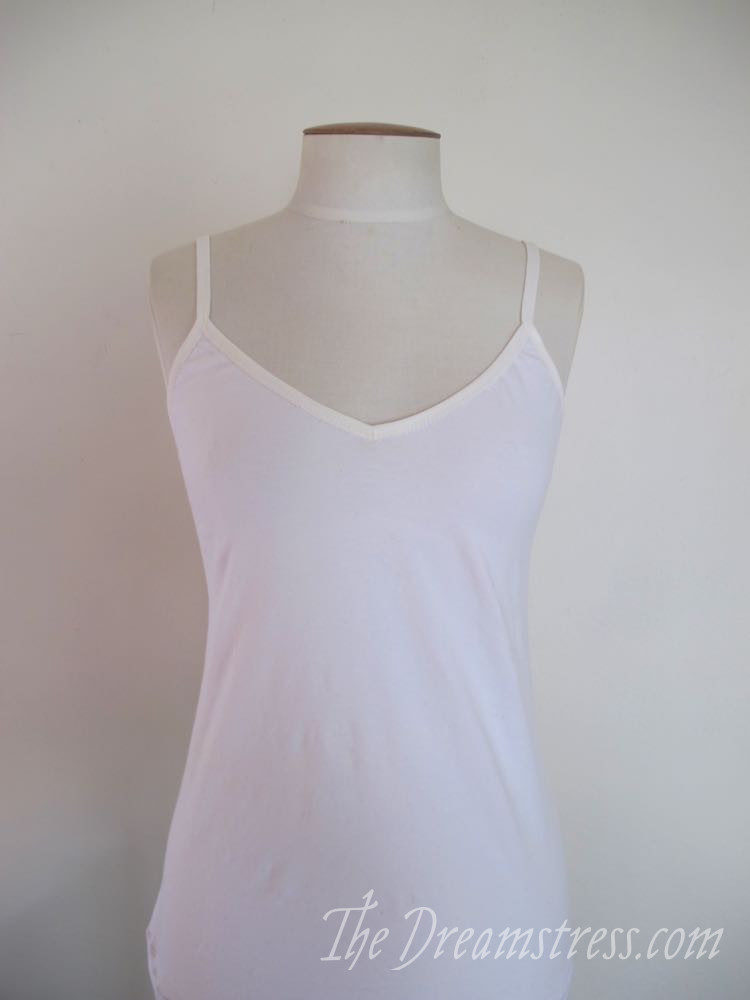
I’ll be demonstrating on a singlet camisole (well, actually, two singlet camisoles – so you’ll see the two different types of elastic), but it’s exactly the same process for the dress slip

You’ll need:

  • A Scroop Wonder Unders singlet camisole or dress slip, completed except for the neck binding & hemming
  • The binding elastic called for in the pattern, + 1 1/2″ / 3cm more length.
  • (And obviously), suitable thread and a ballpoint needle

The Scroop Patterns Wonder Unders with a V-Neck Tutorial

Cutting:

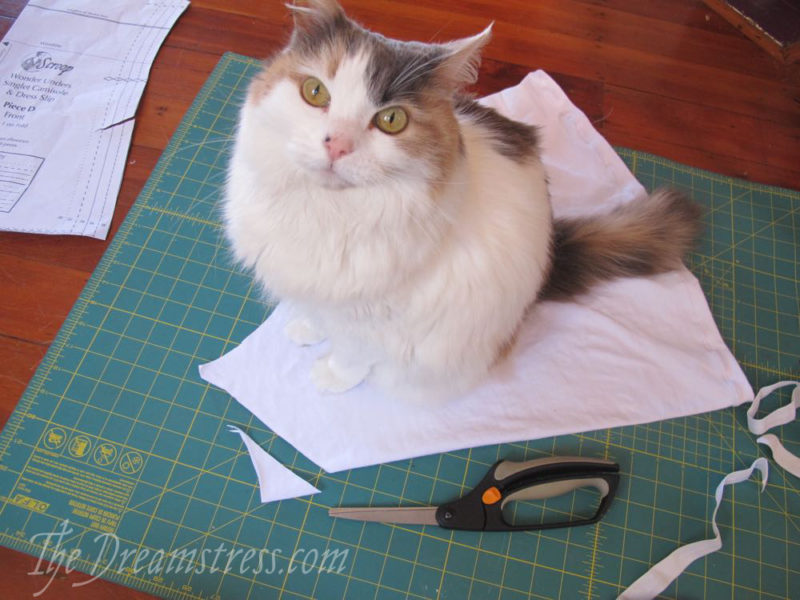
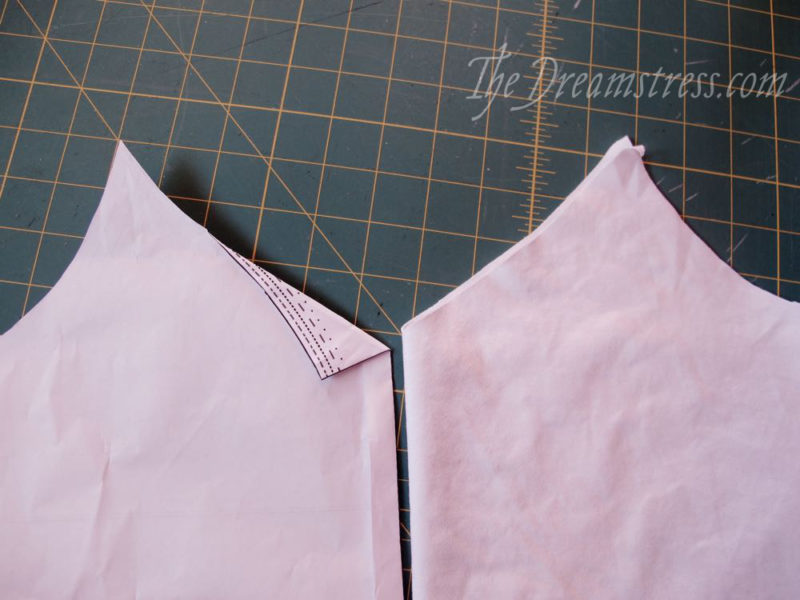
Fold the neckline of the pattern down for form a V – it can be as deep or as shallow as you want.
The Scroop Patterns Wonder Unders with a V-Neck Tutorial

Cut your neckline to match the pattern:
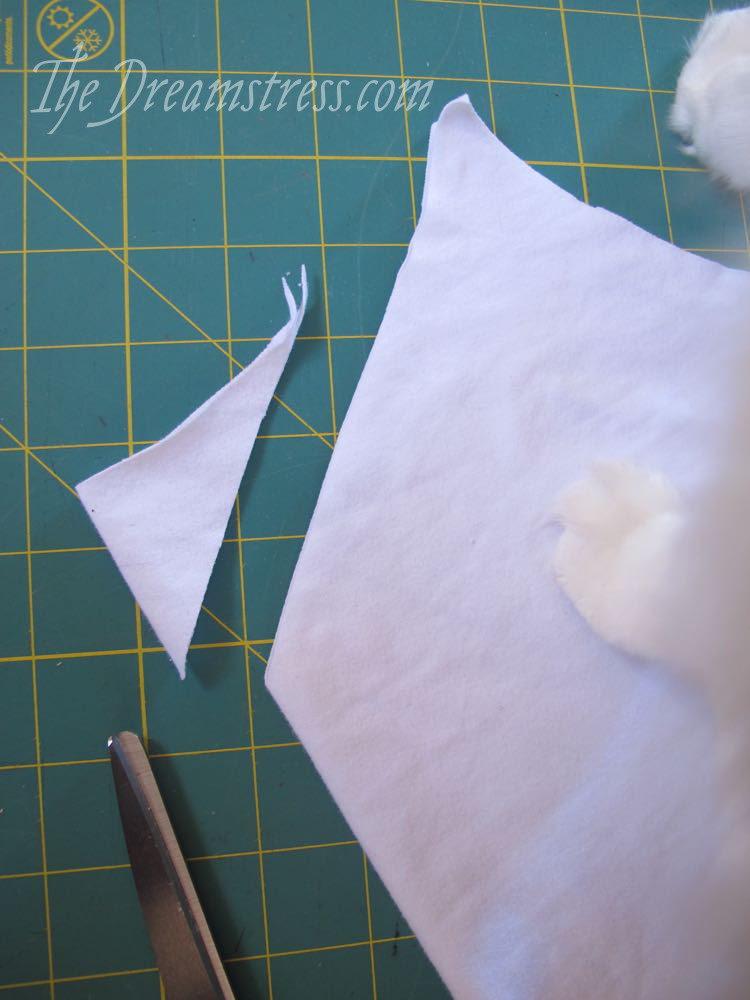
The Scroop Patterns Wonder Unders with a V-Neck Tutorial

(feline assistance optional)

The Scroop Patterns Wonder Unders with a V-Neck Tutorial

Measuring:

Now you need to figure out how much to add to the length of the elastic of the centre front neckline – the V-neck is a little longer than the curved neckline, so it needs a little more length.

To figure it out, measure along the folded edge of the little piece you have cut out.
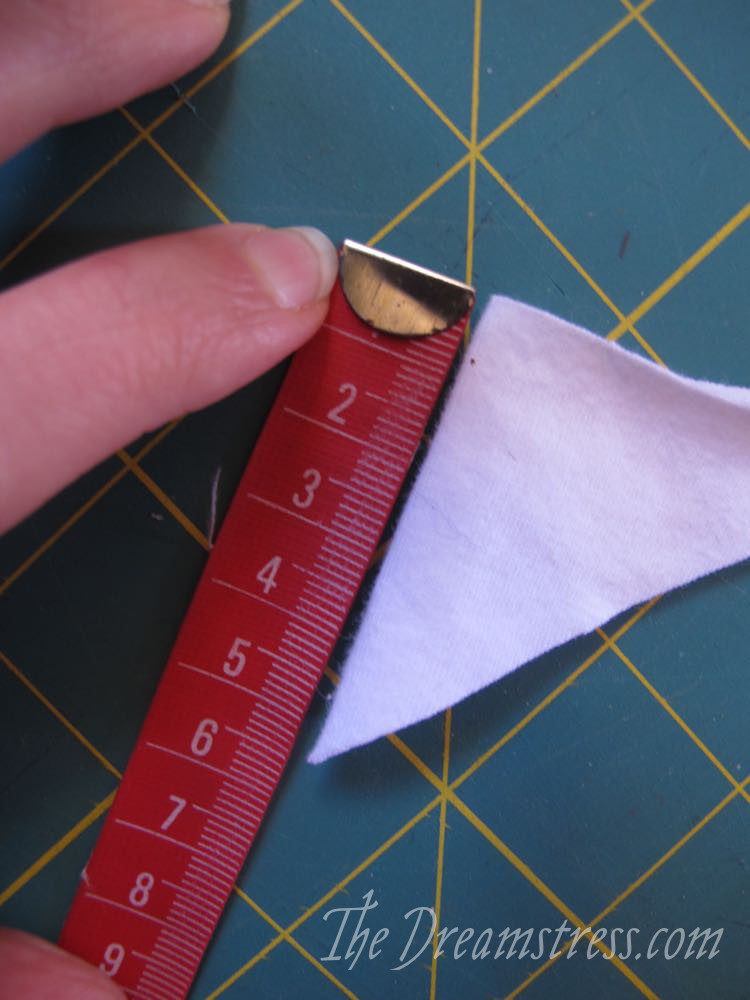
The Scroop Patterns Wonder Unders with a V-Neck Tutorial

Under 2″/5cm?  Add 3/4″/2cm to the length of the centre front neckline elastic piece.

Over 2″/5cm?  Add 1 1/4″ / 3cm to the length of the centre front elastic piece.

Sewing:

Fold the centre front elastic length in half:
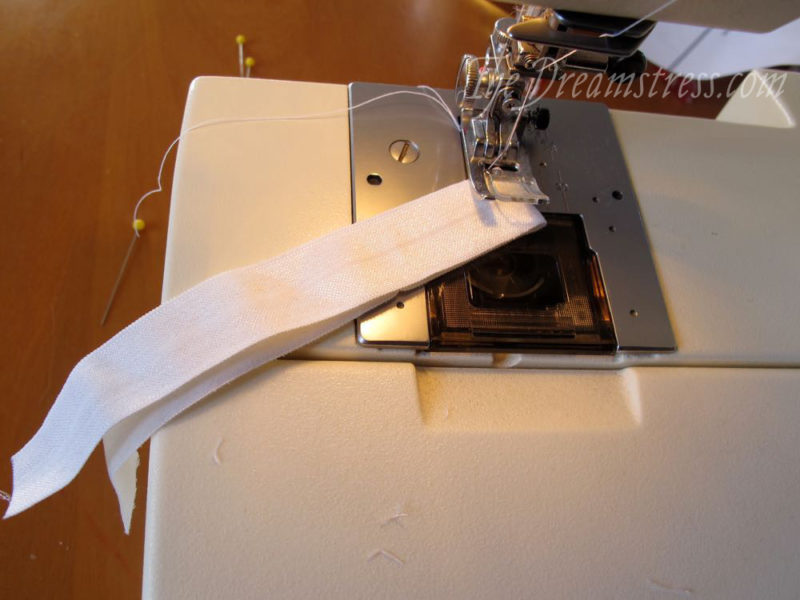
The Scroop Patterns Wonder Unders with a V-Neck Tutorial

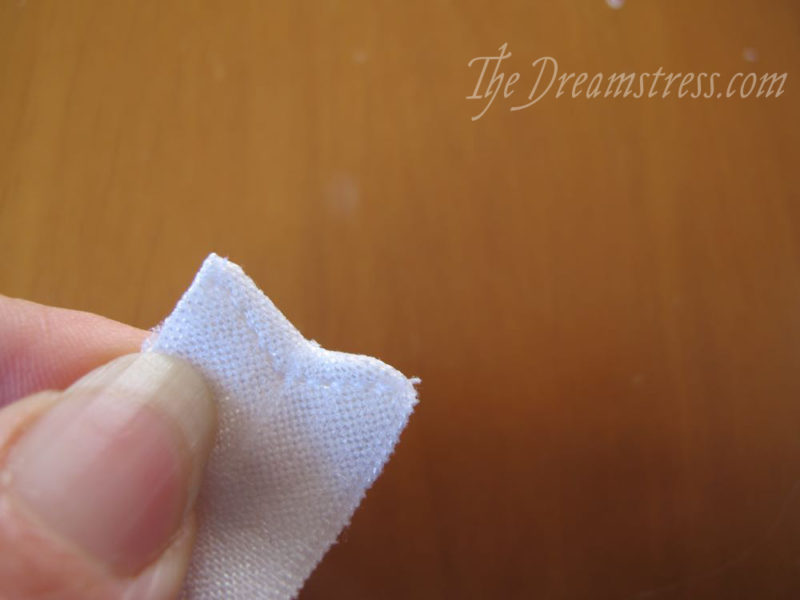
Using a straight stitch, sew a V shape into the folded centre point, with the point of the V extending 1/4″ / 6mm into the elastic, and tapering to nothing at the sides.
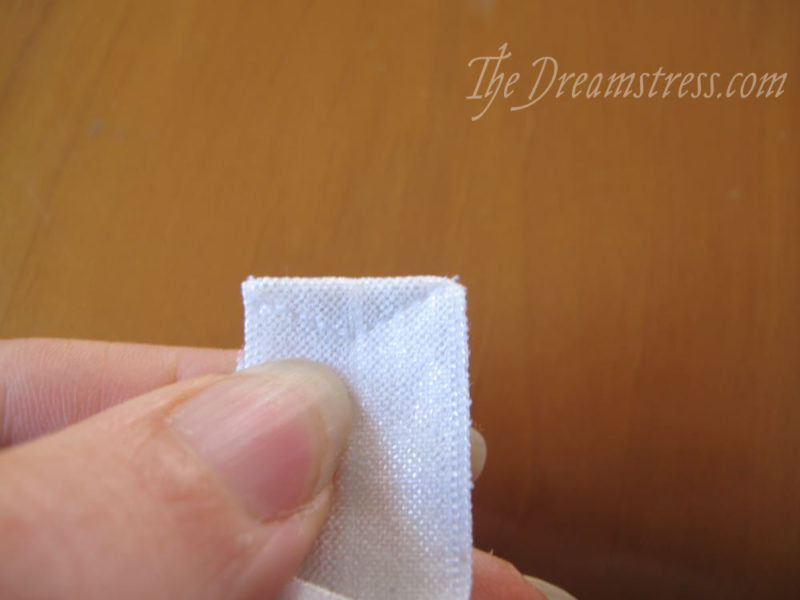
The Scroop Patterns Wonder Unders with a V-Neck Tutorial

Trim the elastic down to 1/8″ / 3mm.

The Scroop Patterns Wonder Unders with a V-Neck Tutorial

Open the elastic out, and finger-press in half.
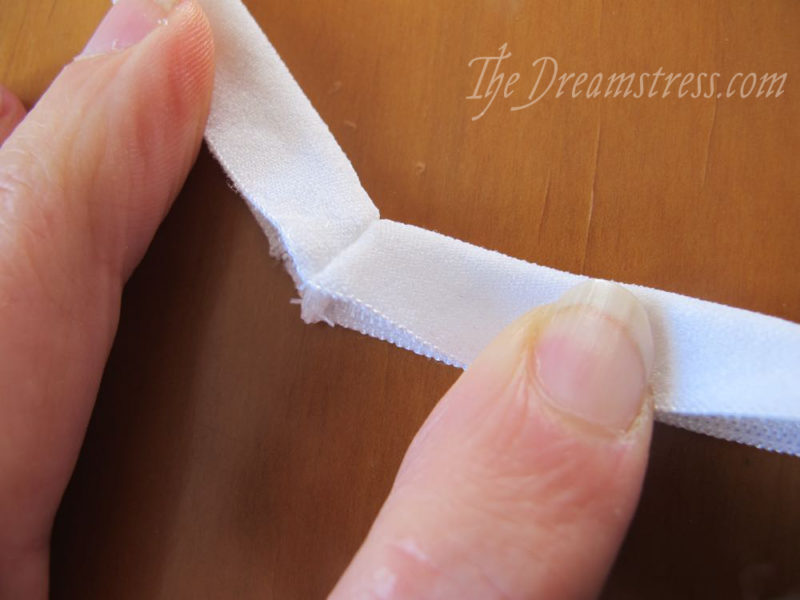
The Scroop Patterns Wonder Unders with a V-Neck Tutorial

Pin or clip to the neckline of the singlet camisole, matching end points, and centre V-neck point:
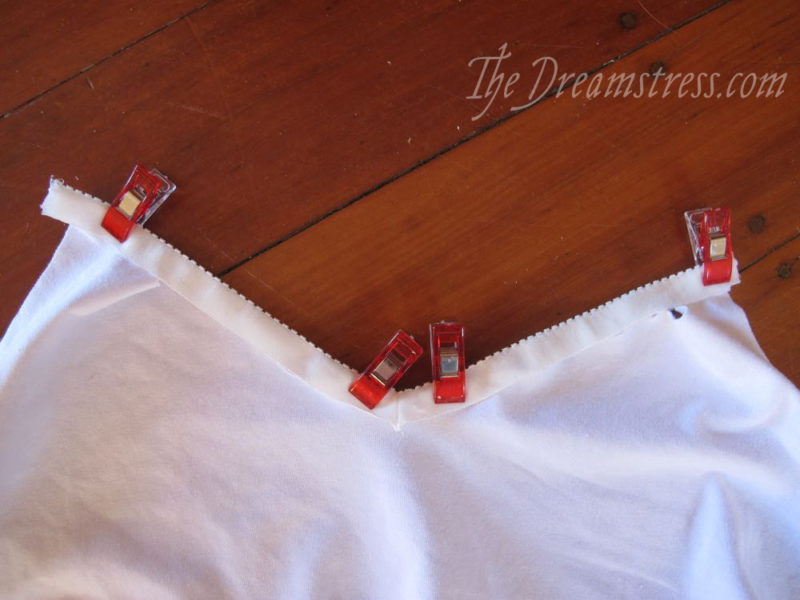
The Scroop Patterns Wonder Unders with a V-Neck Tutorial

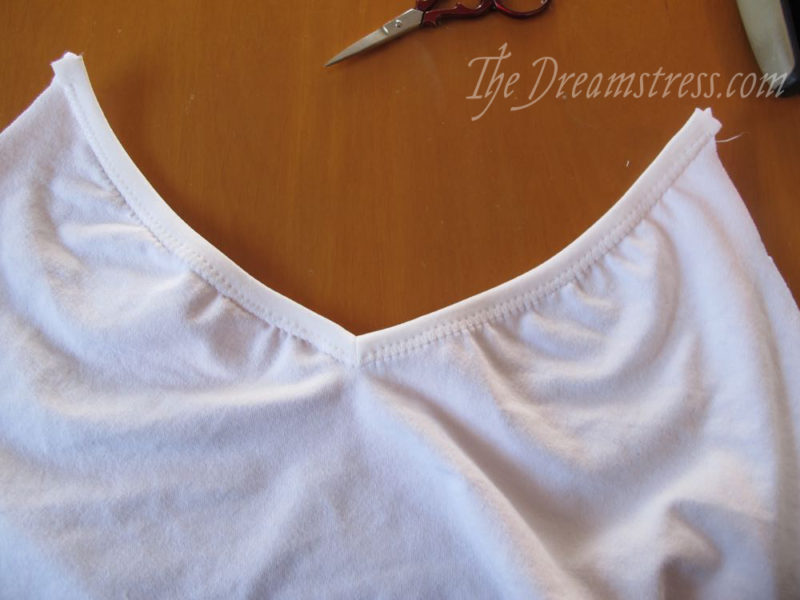
And sew just as you would for a curved neckline, sinking your needle and turning at the V:
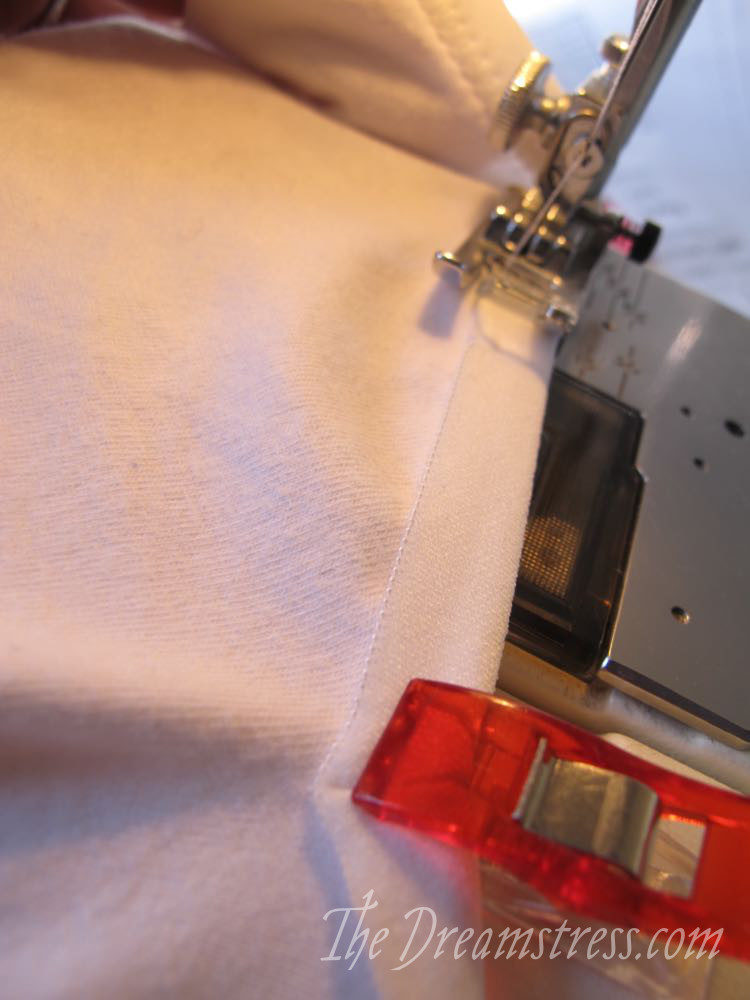
The Scroop Patterns Wonder Unders with a V-Neck Tutorial

And there is your V-neck!

The Scroop Patterns Wonder Unders with a V-Neck Tutorial

Finish the rest of your singlet camisole or dress slip just as directed in the pattern, and you’re done!
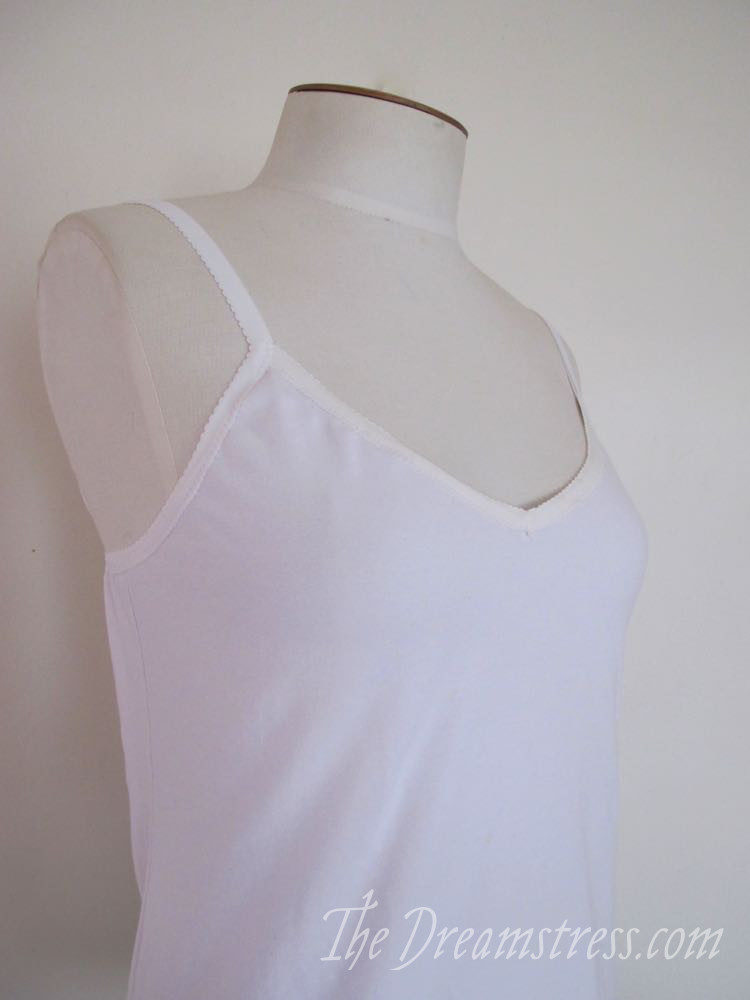
The Scroop Patterns Wonder Unders with a V-Neck Tutorial

Enjoy!

Ball gown, probably American, ca 1860, silk, cotton, Metropolitan Museum of Art, 1983.479.1a—c

Rate the Dress: Pale Blue Paisley

Last week:  a 1770s crewel embroidered Robe a la Française

When this Française first made its debut on the internet it received nothing but rave reviews on every forum.  You’re a tough crowd though.

Some of you gave it top marks for its uniqueness, but quite a few of you were not wowed.  You found it too costume-y, cartoon-y, clumsy, and Christmas-y (kaftan-y was a good thing though!).

The Total: 7.7 out of 10

A polarising pick, with a meh result.  Will this week do better?

This week: a pale blue paisley ca. 1860 ballgown

Last week’s dress featured cypress. Cypress trees are an important symbol in Zoroastrianism, and often feature in the Zoroastrian art. They appear in Indian art after the Zoroastrian exodus to India after the rise of Islam in the Middle East, and are probably one of the motifs that led to the development of the boteh or paisley design. So it’s fitting (at least according to the logic of my brain) that this week’s Rate the Dress should feature paisley.

This ca. 1860 dress is made from a spectacular paisley-themed jacquared-woven brocaded silk.

While the scale, shape, and arrangement of the paisley motifs are typical of the 1850s & 60s, the colour is so unusual in combination with the design that I would have assumed this dress was a film costume, if not for its excellent provenance, and impeccably period details in every other respect.

Most early-mid Victorian paisleys come in a combination of warm hues, with frequent uses of red and orange.  Beyond the archetypical kashmiri shawl, boteh designs were usually seen on informal wrappers for men and women, or, in white-on-white, in undergarments.  There are a few other gowns that feature simple appliqued paisley motifs, but this fabric, with its silvery blues, is almost as unique for its timeperiod as last week’s cypress.

Other than the striking paisley fabric, the ballgown is quite typical of high-end mid century construction.  It features a frothy berthe, delicate sleeves made of puffs of tulle and loops of picot-edged ribbon, and a sharply pointed bodice, finished with a double row of piping.

The photographs that the Metropolitan Museum of Art provides sadly do not include a back view, but they do show the dress in a range of colours.  I think of an array like this of showing the range of true colours a garment can have, depending on the lighting it was seen with.  I certainly have clothes that look very different by day (and even time of day), candlelight, and different artificial lights.

Rate the Dress on a Scale of 1 to 10

A reminder about rating — feel free to be critical if you don’t like a thing, but make sure that your comments aren’t actually insulting to those who do like a garment.  Our different tastes are what make Rate the Dress so interesting. However it’s no fun when a comment implies that anyone who doesn’t agree with it, or who would wear a garment, is totally lacking in taste.

(as usual, nothing more complicated than a .5.  I also hugely appreciate it if you only do one rating, and set it on a line at the very end of your comment, so I can find it!  Thanks in advance!)

Old Government House, Parramatta, Sydney, thedreamstress.com

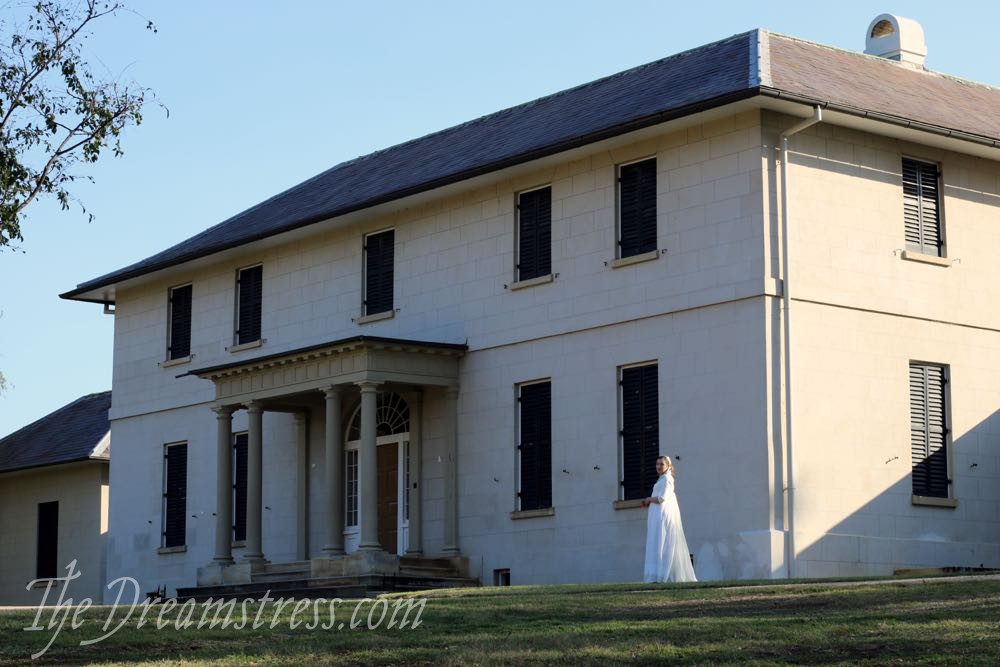
Old Government House, Parramatta, Sydney

I’m in Sydney & the surrounding area for the week, visiting the wonderful Theresa, having a much-needed mini-holiday with Mr D, and, most importantly, speaking in conjunction with the ‘Tales from the East: India & New South Wales‘ exhibition at Old Government House, Parramatta, Sydney.

Old Government House, Parramatta, Sydney, thedreamstress.com

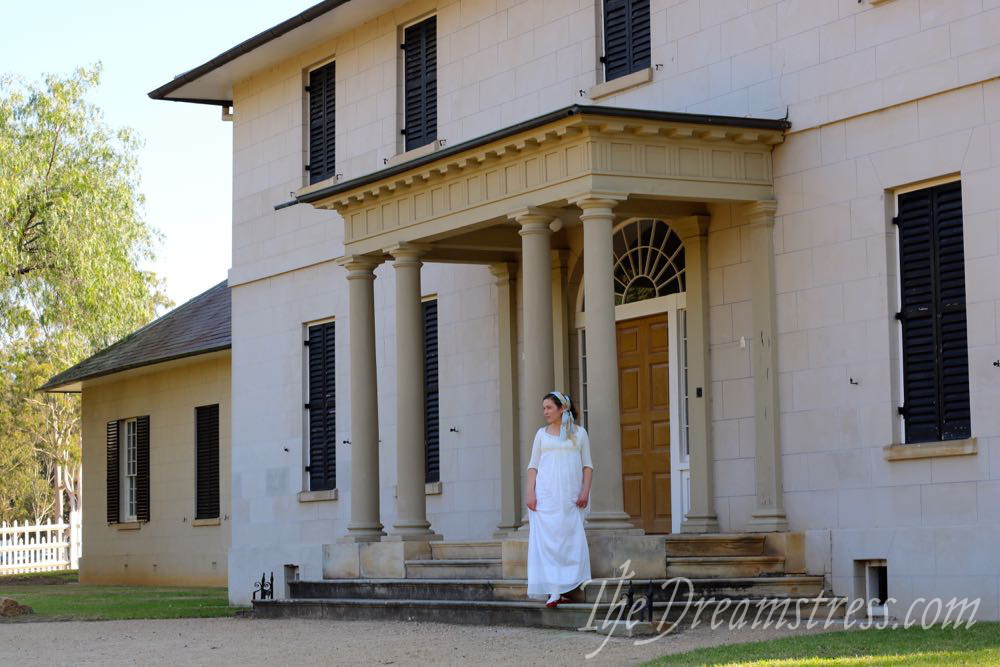
I was incredibly excited about getting the opportunity to visit Old Government House.  It’s the oldest public building in Australia and one of the few authentic examples of Georgian architectures in the Antipodes.  It’s also an extremely important structure from a historical standpoint.  It’s strongly linked to both Australia’s convict and colonial history, and to Governor Lachlan Macquarie.  Macquarie is sometimes called the ‘Father of Australia’.  While his legacy is chequered, he was undeniably central to shaping Sydney & New South Wales general trajectory in its formative years as a colony.

He and his wife Elizabeth were also responsible for expanding Old Government House to its current structure.  The house is furnished as it would have been under their residence, in the style of the 1820s.

Old Government House, Parramatta, Sydney, thedreamstress.com

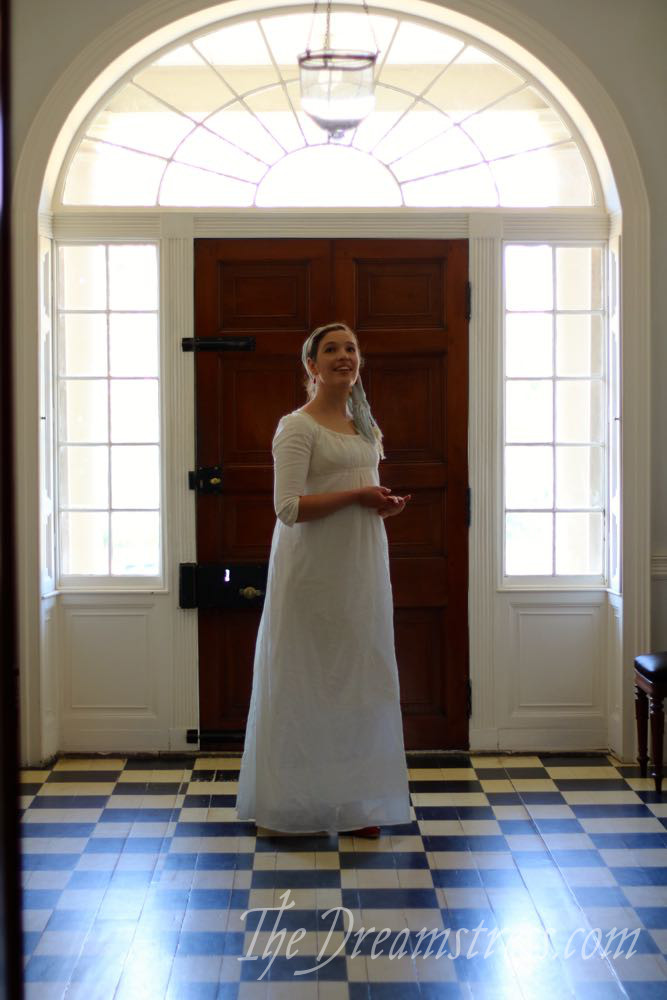
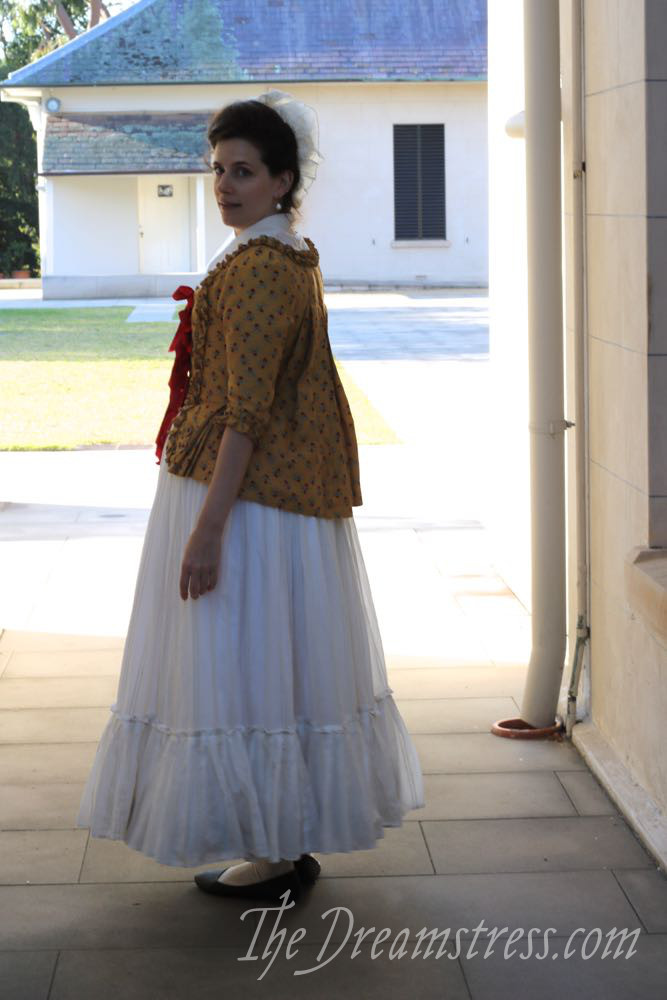
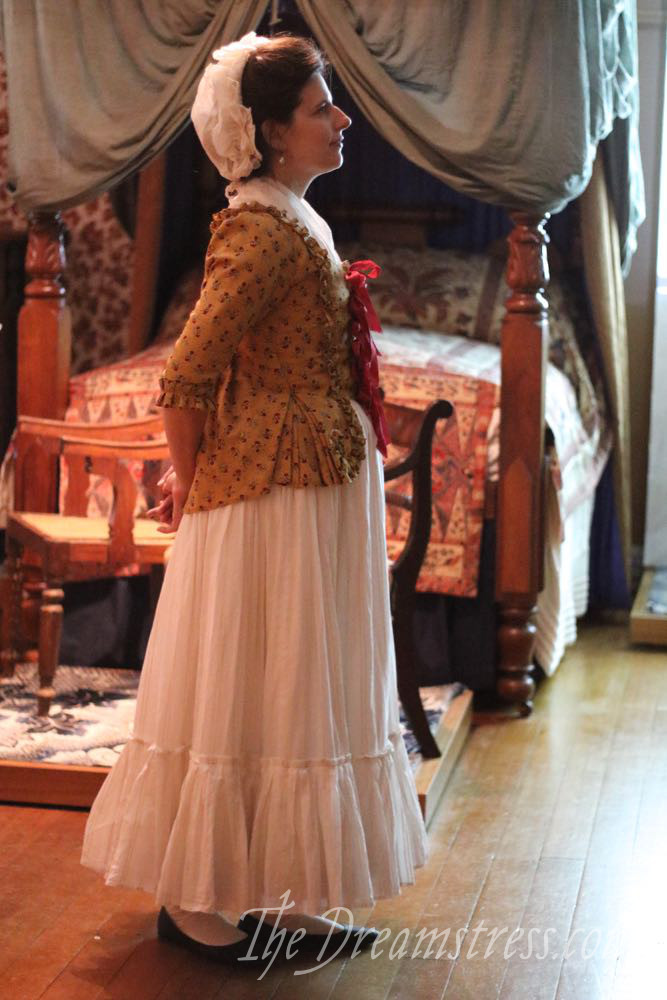
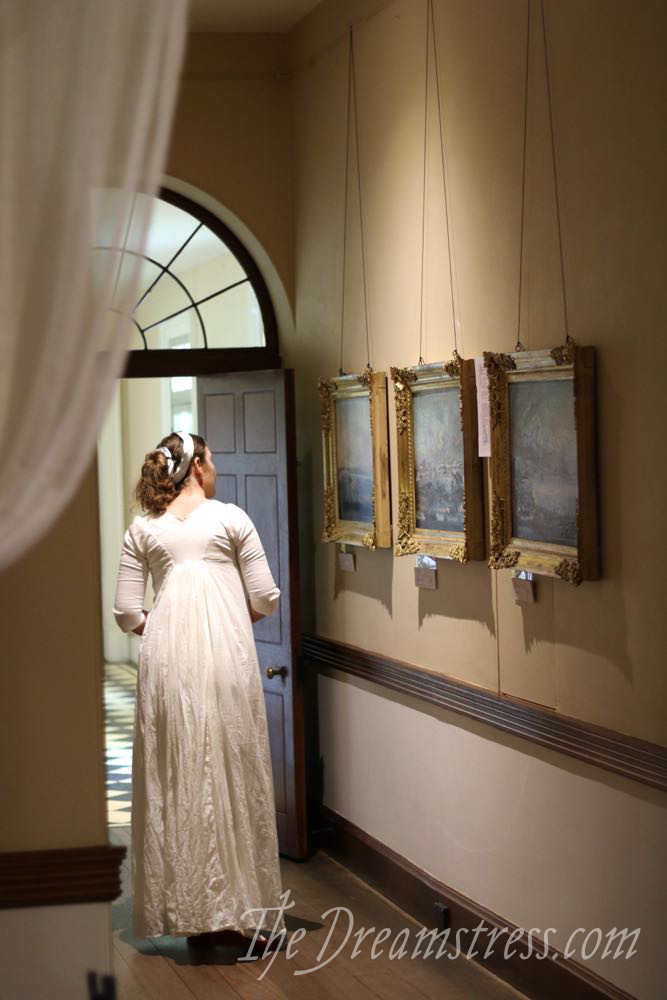
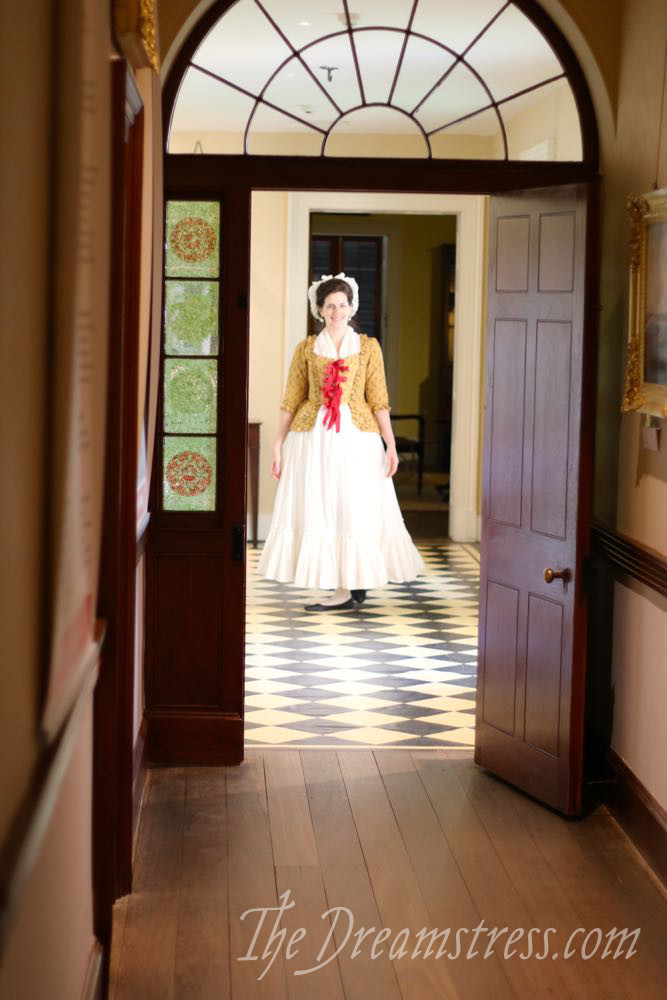
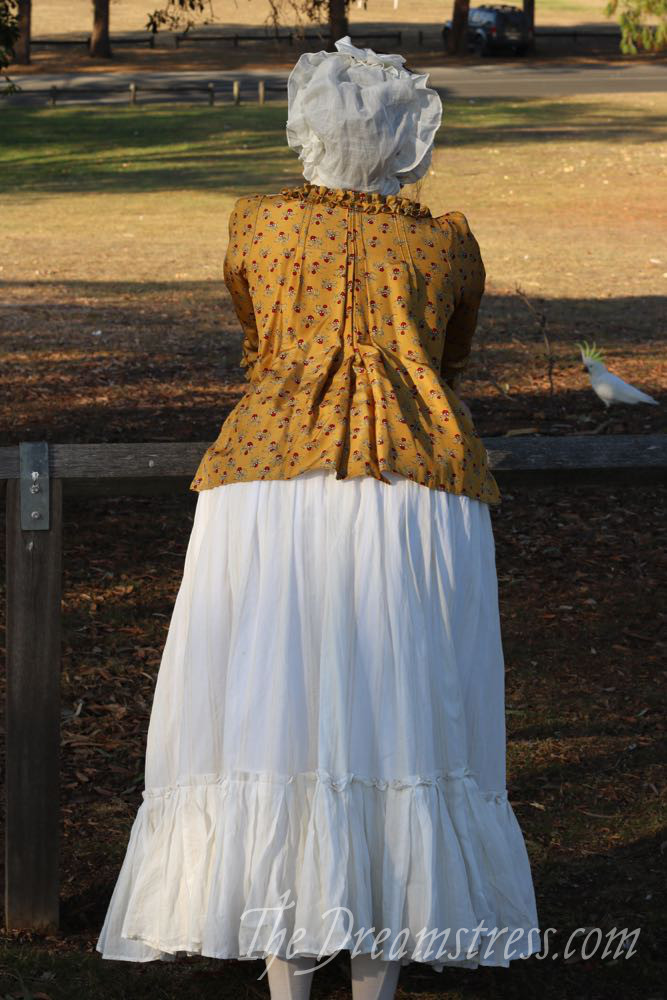
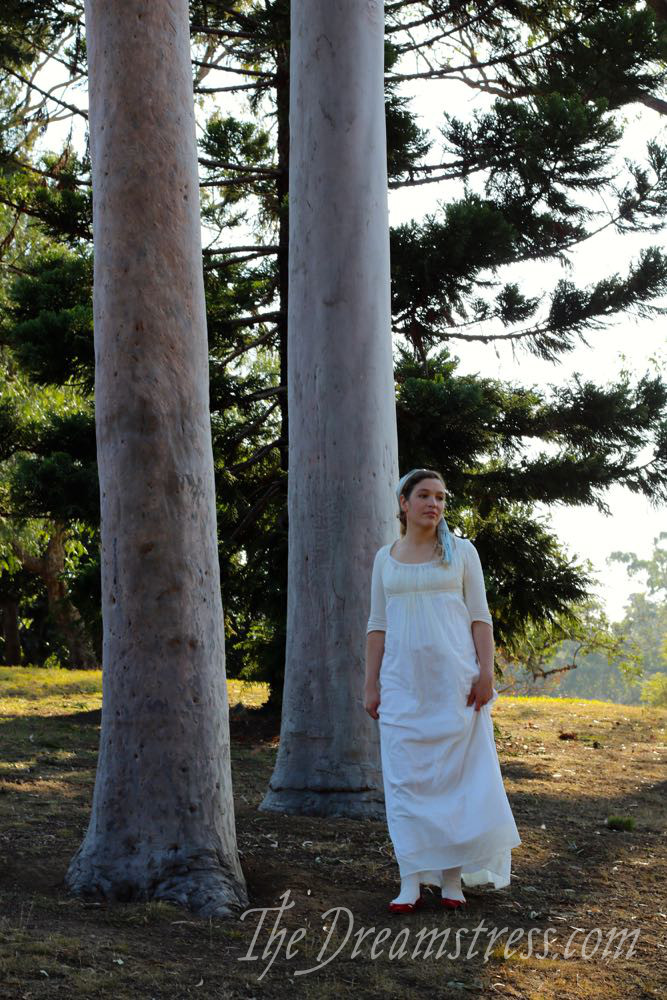
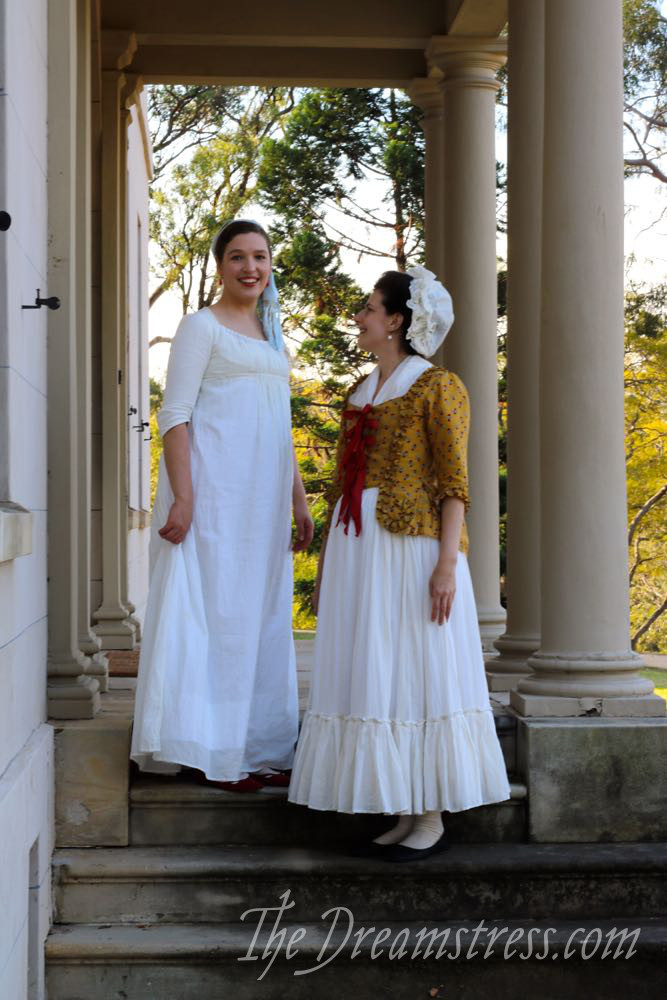
Theresa and I were dressed a bit earlier: she in 1770s, I in ca. 1800.  Even though we were slightly anachronistic, we felt very much at home in the rooms, which tried to bring European grandeur to the far corners of the world.

The attempts at grandeur are, in a way, even better than grandeur itself would be.  Note the black and white floor in the photo two up: wood painted to give the effect of tiles.  It mimics the elegant entries of England as closely as possible, within the constraints of Australia, the available materials, and the available builders (convicts) and architects (probably ex convicts).

Old Government House, Parramatta, Sydney, thedreamstress.com


The museum is both a historic space, and an exhibition venue that focuses on stories relevant to the building’s past.  It’s a difficult balance to achieve: ensuring that the exhibitions keep the house updated, relevant, and perpetually interesting, but don’t detract from the sense of stepping into history that you feel in the best historical buildings. Old Government House does a fantastic job of both.

‘Tales from the East’  was partly inspired by Macquarie’s experiences in India prior to his appointment to Australia.  It also included a general look at ways in which India has influenced and interacted with Australia, and profiles of modern Desi Australians.  It managed to use all these strands of history, and to intertwine them into the layout and general history of the house seamlessly.  Each story support and built on the others.

Old Government House, Parramatta, Sydney, thedreamstress.com

Amazingly, Old Government House also pulls this off with no national funding – a fact I was absolutely gobsmacked to learn.  Not only is it on the State and National Heritage Registers, Old Government House and the surrounding Domain are both on the UNESCO World Heritage List as Australian Convict Sites. It’s scandalous that it is funded by a friends organisation and its own income from events.

Old Government House, Parramatta, Sydney, thedreamstress.com

If you’re in Sydney, I highly recommend a visit.  Parramatta is an quick train ride away from the CBD.  The Domain and Old Government House are an easy walk from the train station.

Old Government House, Parramatta, Sydney, thedreamstress.com

In addition to the house itself, the Domain is just gorgeous.  There are lawns sloping down to the river, and flocks of sulphur crested cockatoos, rainbow lorikeets, and other birds.  I heard rumours of water dragons down by the river, but we didn’t make it that far.

Old Government House, Parramatta, Sydney, thedreamstress.com

There is an excellent restaurant just across the courtyard from OGH, and cute tearooms at the gatehouse that do light meals and high tea.

Old Government House, Parramatta, Sydney, thedreamstress.com

I can’t promise that you’ll have quite as much fun as Theresa and I did frolicking around Old Government House in period attire, but I can promise that you’ll get to see an incredibly important part of Australian history, beautifully presented.

Old Government House, Parramatta, Sydney, thedreamstress.com

(And yes, my dress is new! I made a thing! More about it in another blog post in a few days!).