This week’s Rate the Dress takes us from ballrooms, to bedrooms, with an formal dressing gown that I’ve dithered over showing to you for weeks, because what will you make of what is essentially a really, really, fancy bathrobe?
Last week: a pale blue paisley ca. 1860 ballgown
It was a fairytale ending for the 1860s ballgown, with everyone singing its praises and declaring it must have been made by a fairy godmother, because if there was ever a historically accurate Cinderella ballgown, that was it! (with a few votes for Elsa).
The Total: 9.8 out of 10
Almost perfect! (and really, that’s pretty much as close to perfection as RTD is likely to get).
This week: An 1880s dressing gown
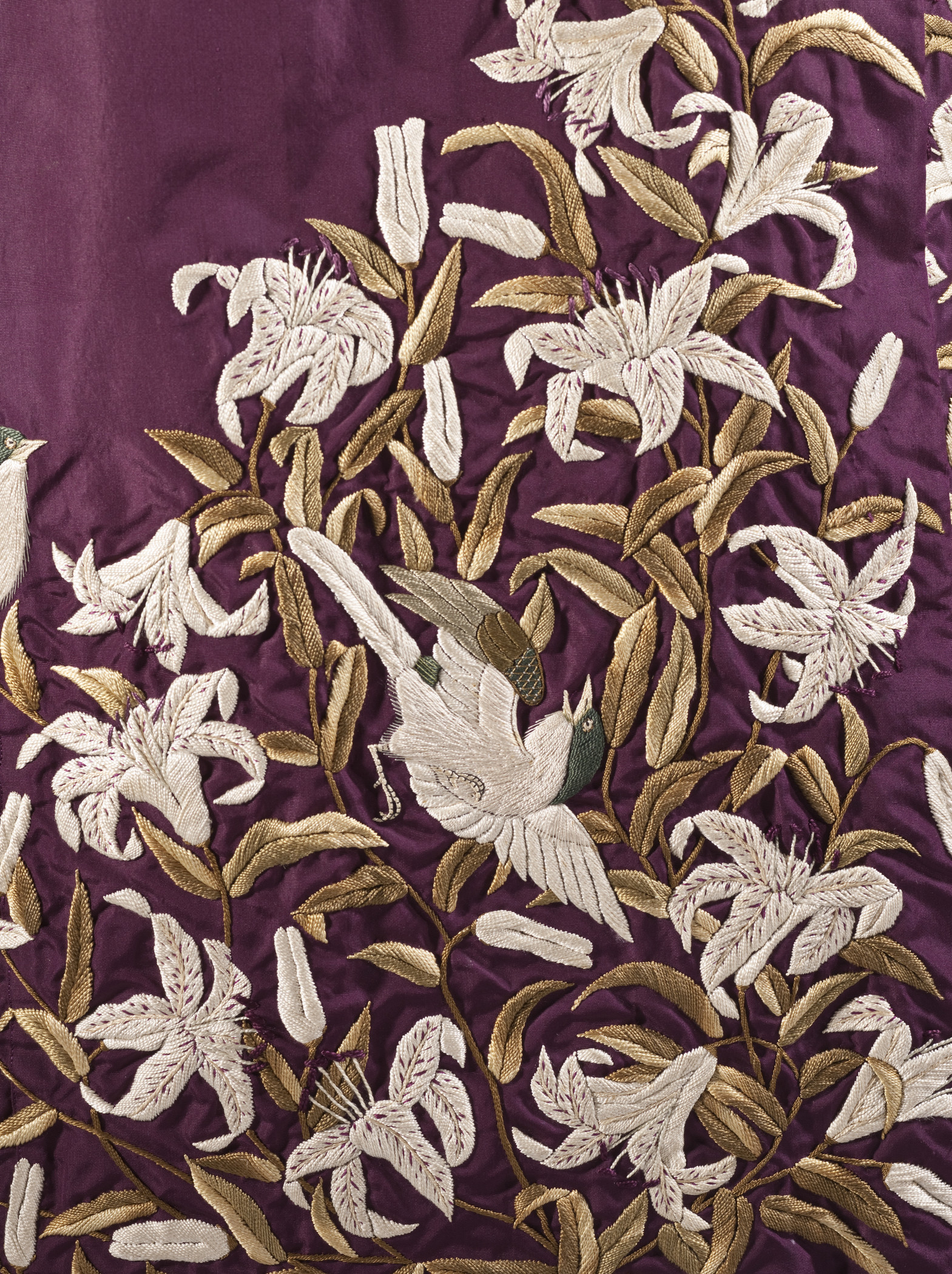
This embroidered dressing gown is a fantastic example of the type of goods that were made in Japan for the Western market.
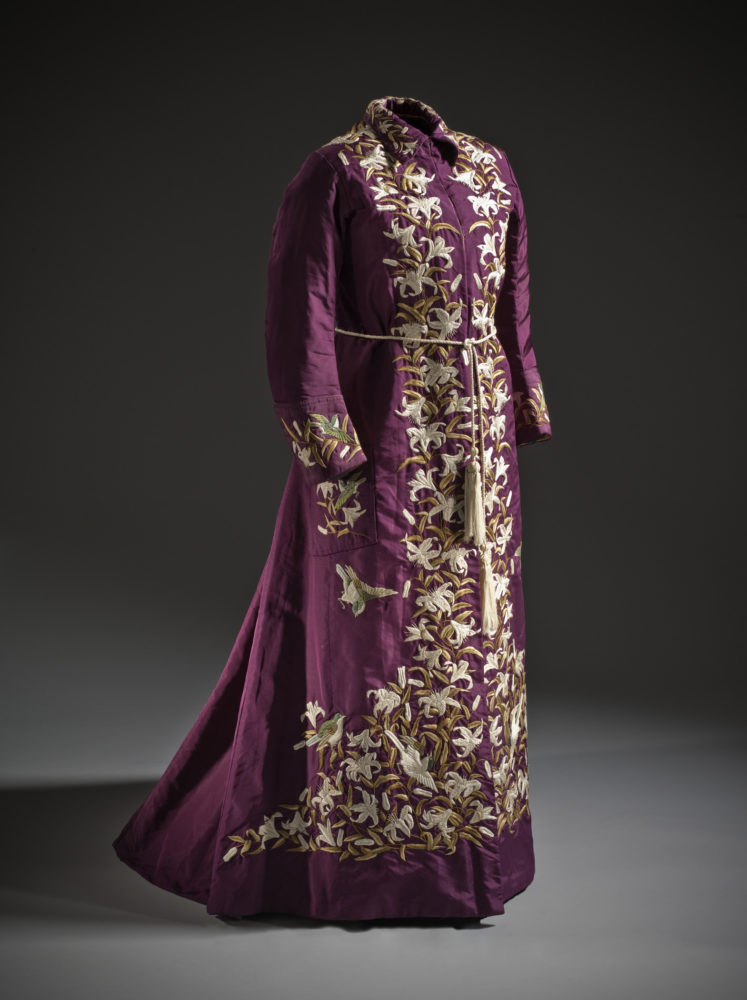
Woman’s Dressing Gown with Belt, Japan, Yokohama, for the Western market, circa 1885, silk plain weave (faille) with silk embroidery; belt: silk braided cord with tassels Belt, LACMA, M.2007.211.784a-b
It features lavish embroidery that combines both a Japanese and Western aesthetic.
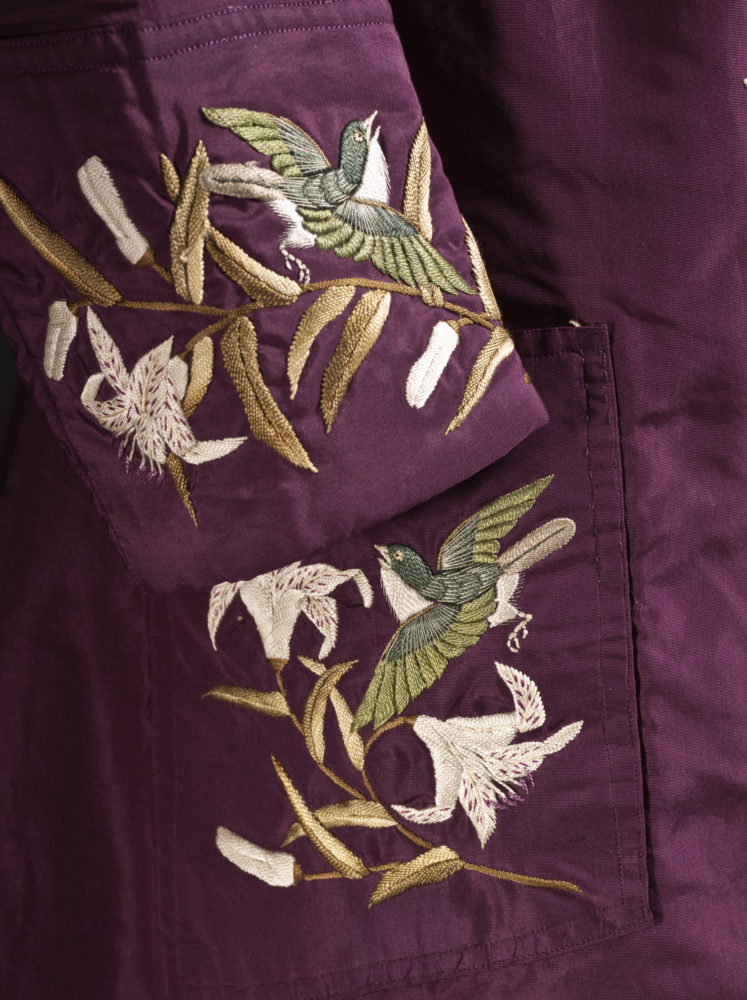
Woman’s Dressing Gown with Belt, Japan, Yokohama, for the Western market, circa 1885, silk plain weave (faille) with silk embroidery; belt: silk braided cord with tassels Belt, LACMA, M.2007.211.784a-b
Although there is a very slight nod to the idea of a kimono, the silhouette and pattern shapes are predominantly Western. The set-in sleeves are just looser versions of those seen in fashionable European dress in the 180s, and the gored back panels add a slightly bustle effect to the dressing gown.
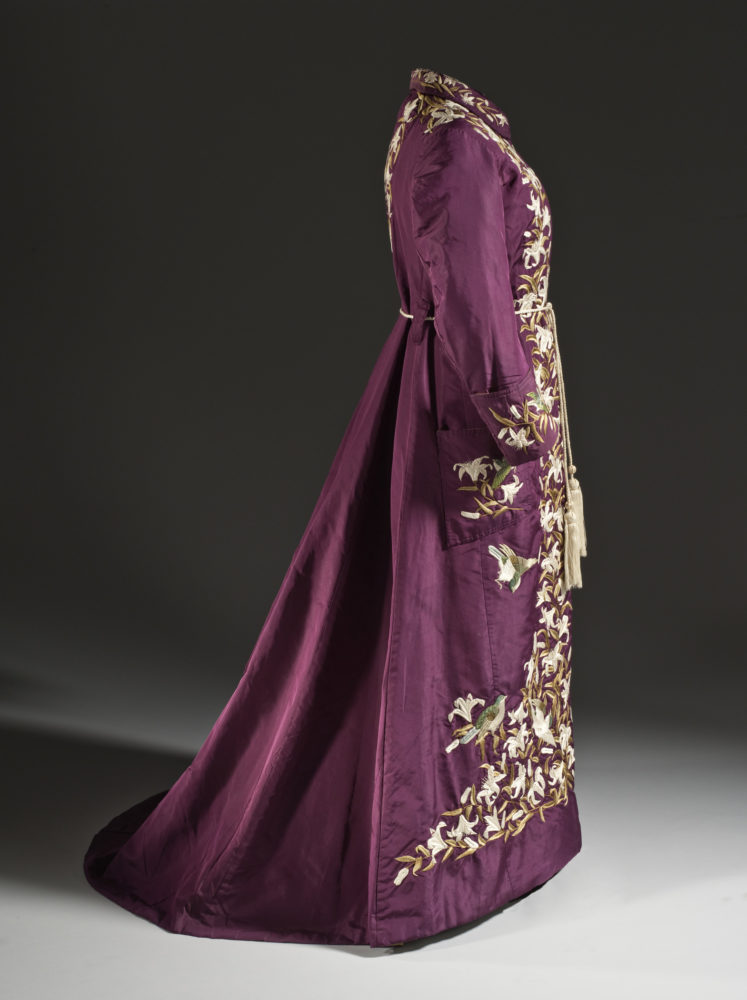
Woman’s Dressing Gown with Belt, Japan, Yokohama, for the Western market, circa 1885, silk plain weave (faille) with silk embroidery; belt: silk braided cord with tassels Belt, LACMA, M.2007.211.784a-b
While an informal, indoor garment, this is most decidedly a dressing gown for showing off. It’s one to wear around a new husband, or to take with you when travelling, to impress the hotel maids, or to maintain your status should your host unexpectedly see you in it.
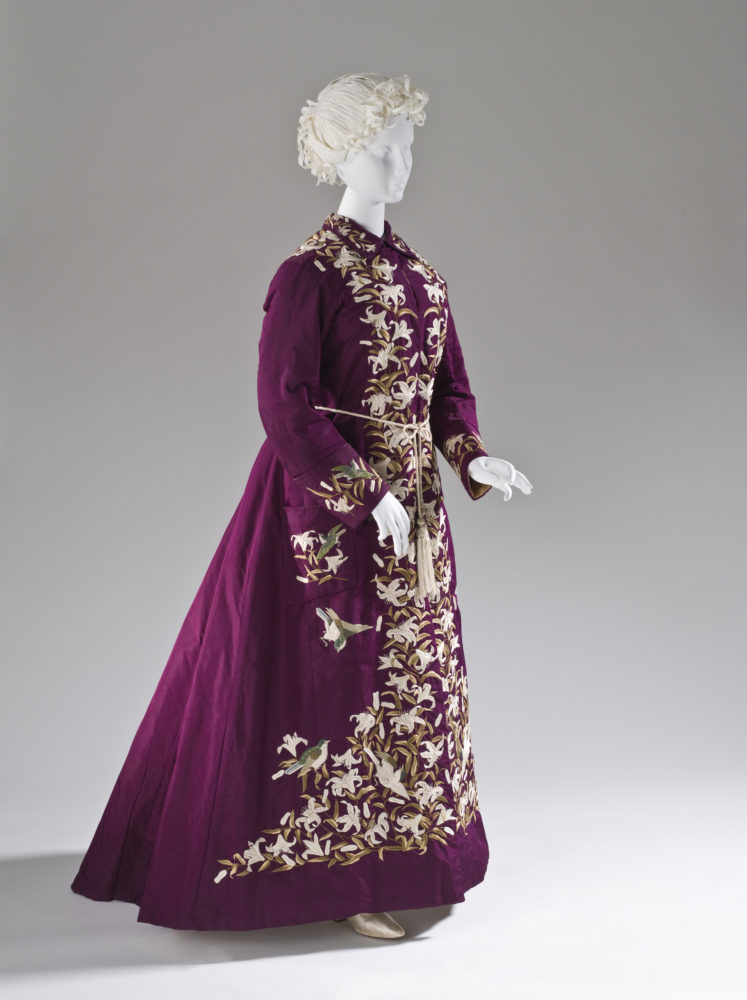
Woman’s Dressing Gown with Belt, Japan, Yokohama, for the Western market, circa 1885, silk plain weave (faille) with silk embroidery; belt: silk braided cord with tassels Belt, LACMA, M.2007.211.784a-b
What do you think? Is this the ultimate in elegantly deluxe dressing gowns, or is the mixing of aesthetics less than satisfactory?
Rate the Dress on a Scale of 1 to 10
A reminder about rating — feel free to be critical if you don’t like a thing, but make sure that your comments aren’t actually insulting to those who do like a garment. Our different tastes are what make Rate the Dress so interesting. However it’s no fun when a comment implies that anyone who doesn’t agree with it, or who would wear a garment, is totally lacking in taste.
(as usual, nothing more complicated than a .5. I also hugely appreciate it if you only do one rating, and set it on a line at the very end of your comment, so I can find it! Thanks in advance!)