Last week’s Rate the dress took us to the 1740s. This week we’re travelling back in time half a century to ca. 1690, AND forward half a century to ca. 1790, and finishing up ca. 1890, all in one dress. Only Worth would try that! But did he succeed?
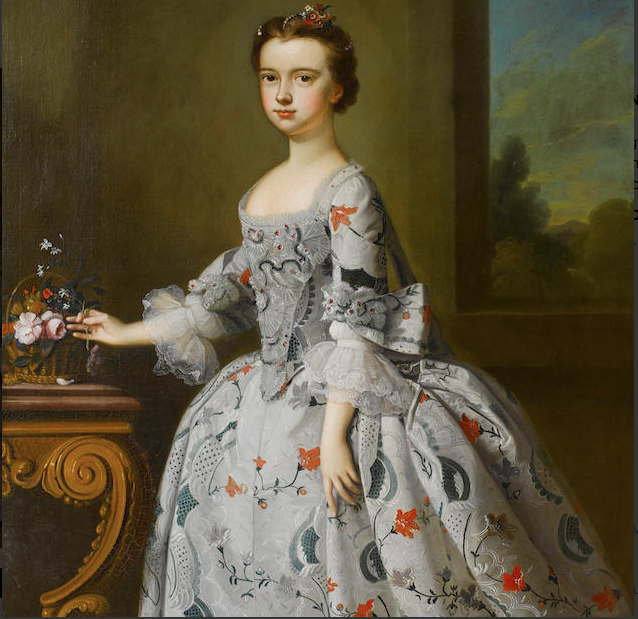
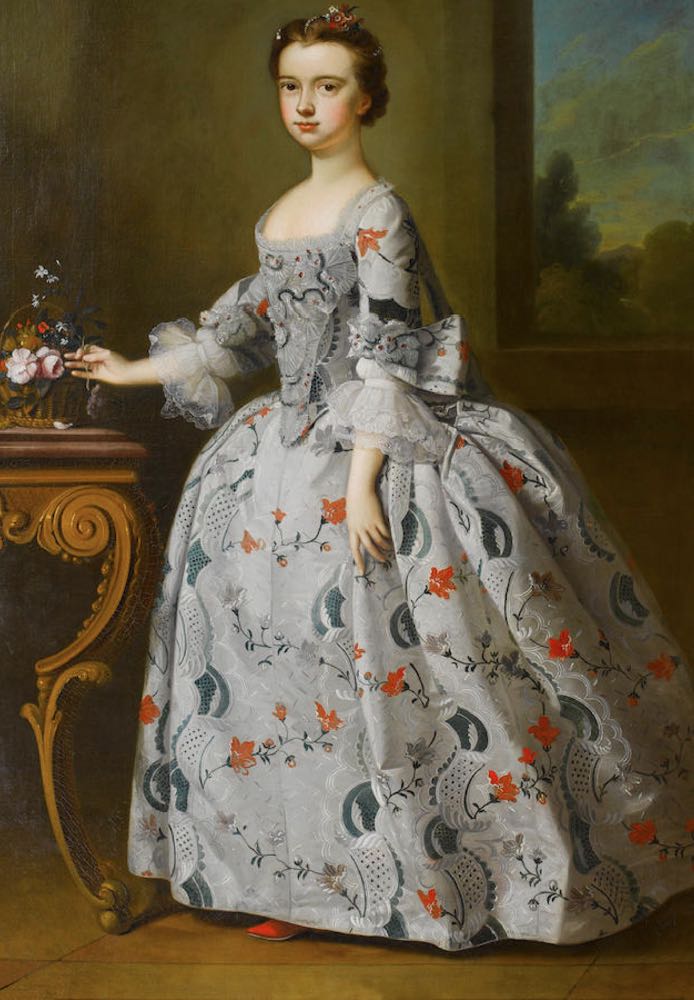
Last week: An unknown young lady of ca. 1740 by Bartholemew Dandridge
I’m always a bit trepidatious when I post a historical child for Rate the Dress because of the children-as-adults issue. Luckily the response to our girl-on-the-cusp-of-adolescence was (almost) unanimously positive. You thought she was perfectly dressed for a young lady in her first almost-grown-up frock, with the ideal balance of frills and boldness.
The Total: 9.3 out of 10
It was the princess dress to appeal to both our inner little-girl and our more critical adult selves!
This week: A House of Worth Reception gown of ca. 1890
This grape purple and pale gold Worth reception gown from ca 1890 is heavy on the historicism. It has a skirt inspired by mantua fashionable in the 1690s, and a bodice that gives a nod to redingotes fashionable in the 1790s.
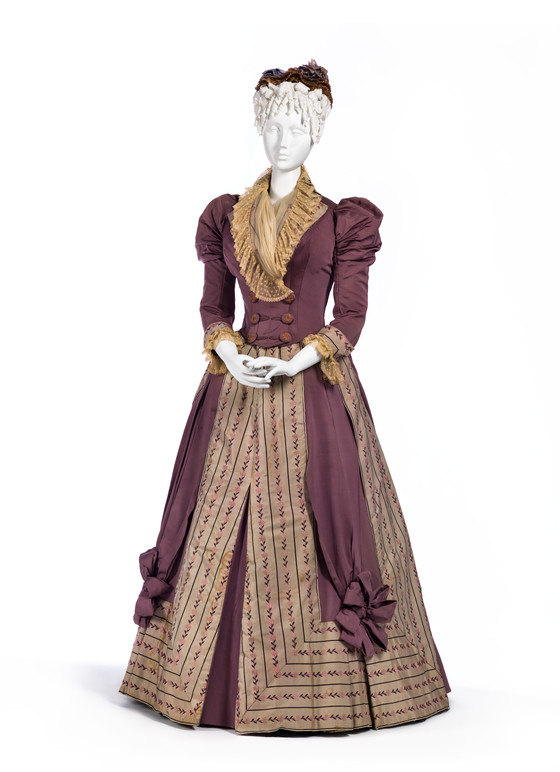
The interesting stripes, which run vertically down the front of the skirt and then turn to run horizontally around the hem are an unusual and distinctive design feature. They aren’t common in many eras, but appear in 1680s & 90s fashion plates:

The House of Worth has added their own twist to the stripe frames, by placing them around elaborate bows which anchor ribbon ‘sashes’ falling from the waist.
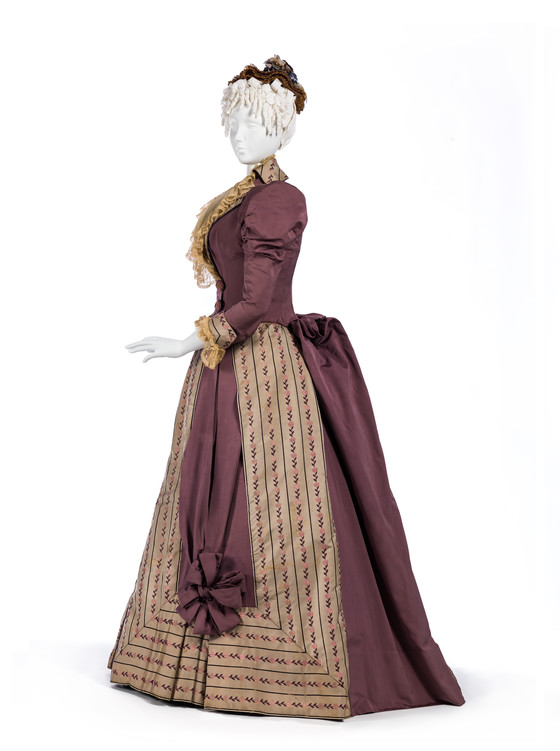
Woman’s Two-Piece Dress, Worth, France, Paris, circa 1890, silk faille & silk twill with silk embroidery, linen lace, and silk plain weave trim, LACMA, 55.19a-b
The dress of the skirt is picked up in a sculptural ‘butterfly’ bustle that evokes the the bustling of late 17th and early 18th century mantua
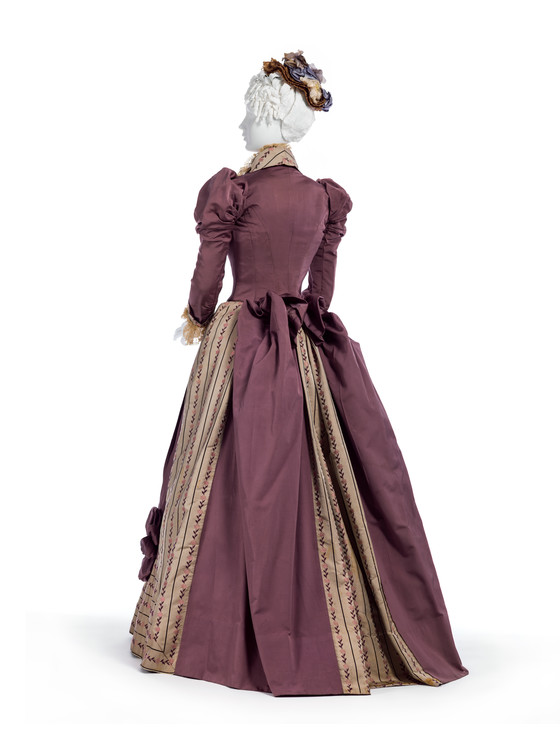
Woman’s Two-Piece Dress, Worth, France, Paris, circa 1890, silk faille & silk twill with silk embroidery, linen lace, and silk plain weave trim, LACMA, 55.19a-b

Recueil des modes de la cour de France, ‘Femme de Qualite en Deshabille d’Este’ Jean LeBlond (France, active circa 1635-1709) France, Paris, 1682 Prints Hand-colored engraving on paper, LACMA M.2002.57.65
While the lower half is all 17th century, the bodice takes its cue from double-breasted Georgian redingotes, with a soft, lacy collar inspired by fichu.
What do you think? Is this tri-cententenial mashup one for the history books? Or is this take on la mode 16-17-1890 demode in any era?
Rate the Dress on a Scale of 1 to 10
A reminder about rating — feel free to be critical if you don’t like a thing, but make sure that your comments aren’t actually insulting to those who do like a garment. Our different tastes are what make Rate the Dress so interesting. However it’s no fun when a comment implies that anyone who doesn’t agree with it, or who would wear a garment, is totally lacking in taste.
(as usual, nothing more complicated than a .5. I also hugely appreciate it if you only do one rating, and set it on a line at the very end of your comment, so I can find it! Thanks in advance!)