Latest Posts

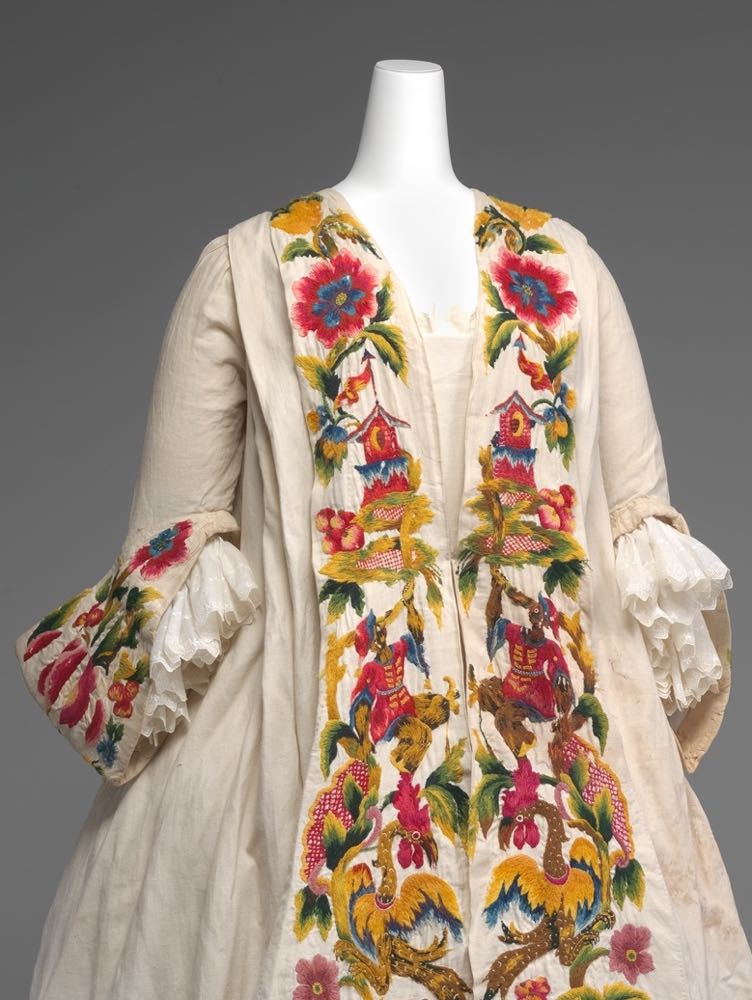
Dress (casaquin and petticoat), 1725—40, Italian, linen with wool embroidery, Metropolitan Museum of Art 1993.17a, b

Rate the Dress: early 18th c linen & wool embroidered casaquin

Welcome to Rate the Dress!  This week we go from chintz to casaquin (and I know that’s kind of comparing apples and asparagus…)

Last week: 1890s theatrical sweetness

Last week we looked at a sweet florals and ruffles 1890s dress which may have been a fashion garment, or a theatre costume.  You almost unanimously liked the fabric.  You were less sure about the rest.  And there was something about the outfit that just wasn’t quite one thing or another – there were SO MANY #.5 ratings!

The Total: 7.9 out of 10.

Better than I expected actually!  I guess the gorgeous fabric did the trick!

This week: 1720s-40s theatrically-embroidered casaquin

This week we turn from an ostensibly normal dress which may actually have been a theatre costume, to an unusual high-fashion outfit with theatrical inspiration.

This early-mid 18th century outfit features a loose jacket (casaquin) and petticoat of ivory linen, both lavishly embellished with polychrome wool embroidery.

The casaquin & petticoat ensemble is an early example of the 18th century obsession with turning lower class garments into fashionable dress (other examples are  bergere and marmotte).

Despite the working class inspiration, relatively humble linen base and wool (rather than the more common, and more obviously luxe, silk) embroidery, this is definitely a high-status garment.  The standard of workmanship is excellent.  The white linen would have taken work to keep clean, and the brilliant embroidery involved expensive dyes.  More obviously, the garment is a walking advertisement of worldliness.
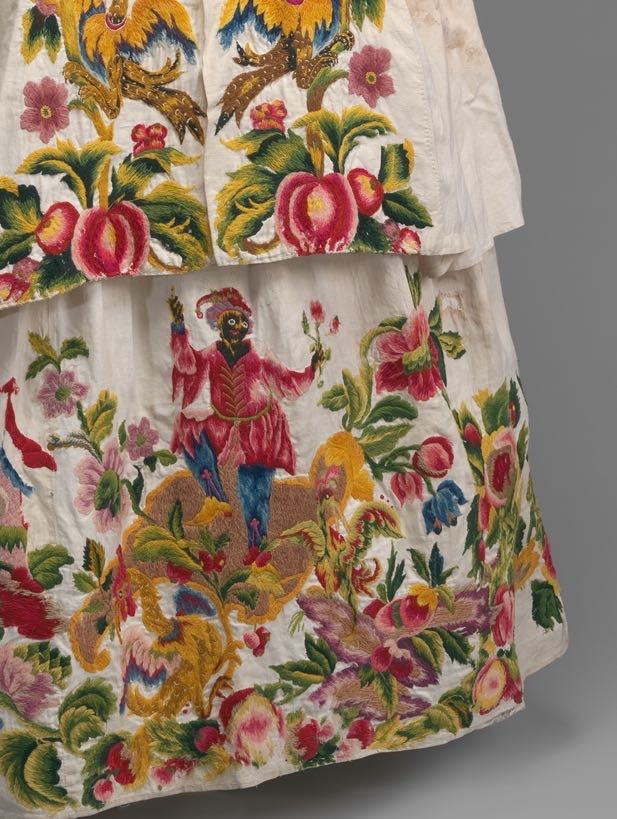
Not only is the embroidery an obvious example of chinoiserie, the dancing jester figures, which represent the Four Continents (the world was simpler in 1725) show the influence of designers such as Jean  Berain who created costumes for royal fetes and theatricals.
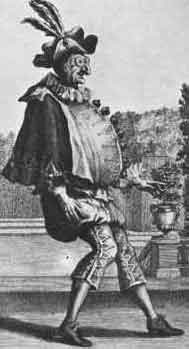
Costume design by Jean Berain for Pulcinella (1703)

"<yoastmark

"<yoastmark

"<yoastmark

"<yoastmark

In one garment the wearer is able to demonstrate their familiarity with exotic design, geography, and the latest artistic trend.  At the same time, they are on the cutting edge of fashion: blending luxury and faux-casual comfort drawn from working attire.
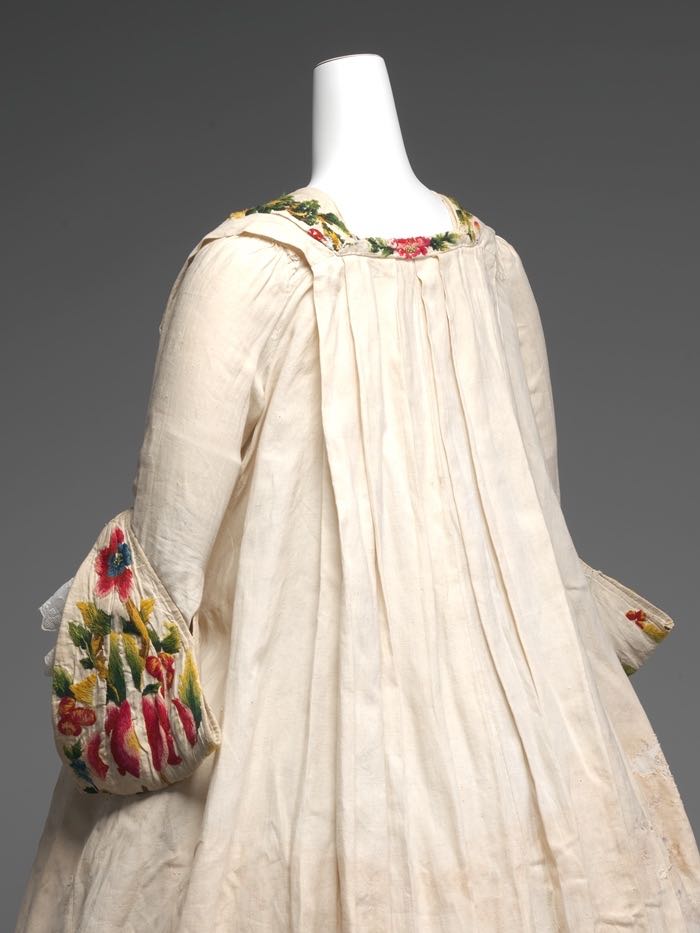
What do you think?  Is it all a little too gauche and hip?  A middle-aged teacher trying to use all the hottest slang?  Or the perfect encapsulation of all that was fashionable and relevant?

Rate the Dress on a Scale of 1 to 10

(as usual, nothing more complicated than a .5.  I also hugely appreciate it if you only do one rating, and set it on a line at the very end of your comment, so I can find it!  Thanks in advance!)
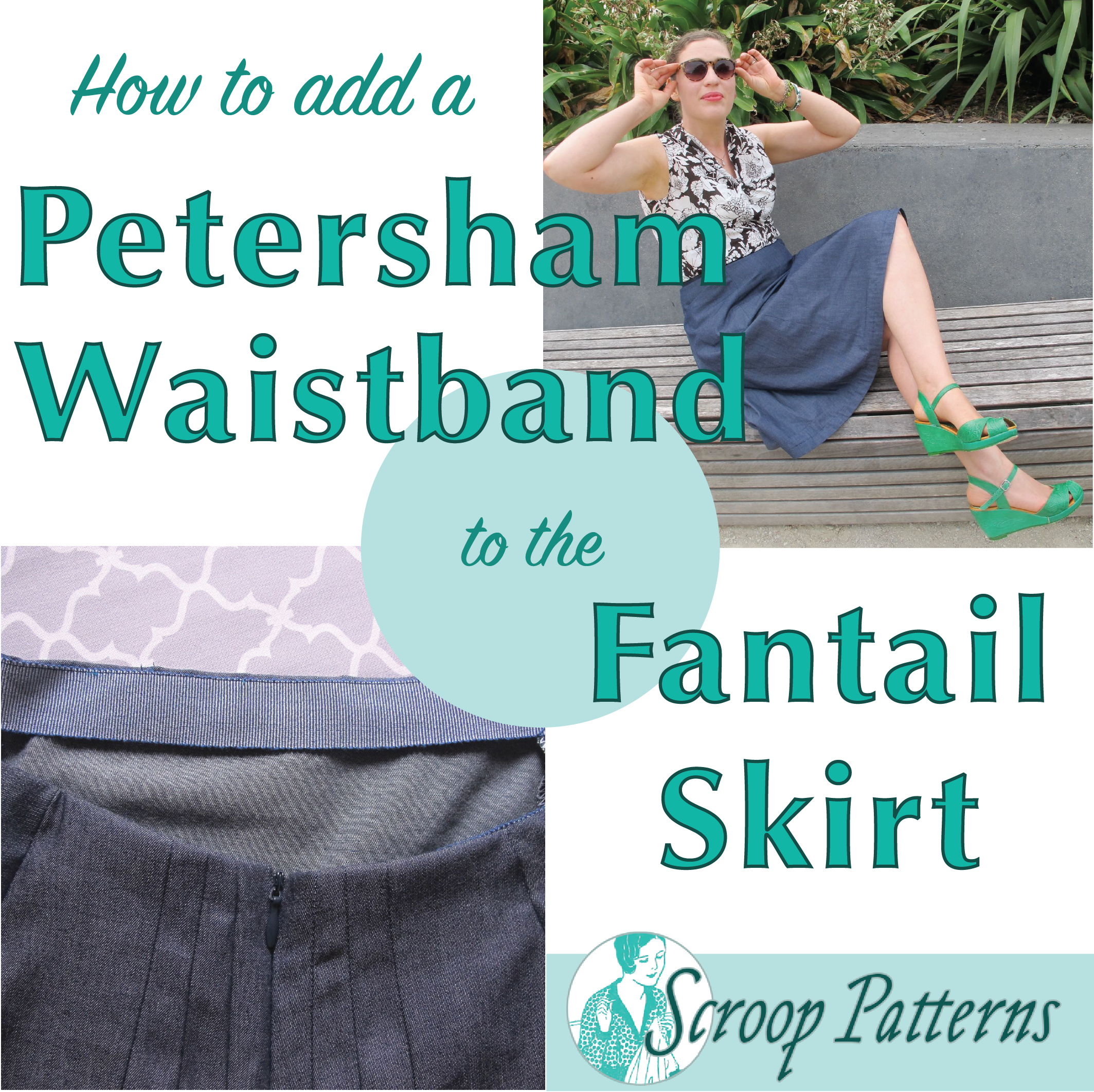
How to add a petersham waistband to the Scroop Fantail Skirt thedreamstress.com

Tutorial: how to add a petersham waistband to the Scroop Fantail Skirt

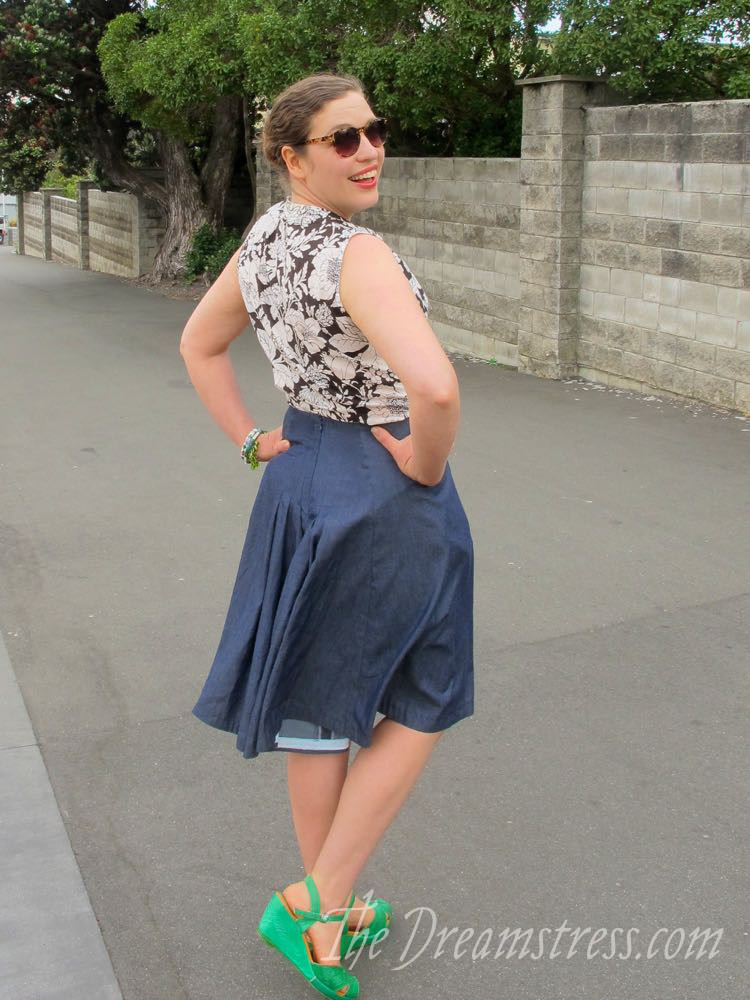
The Fantail Skirt has been an absolute cornerstone of my wardrobe all spring.  It’s so perfect for transitional weather.  I throw on tights and a cardigan when it’s cool, and have been wearing lighter blouses with it as it gets warmer.

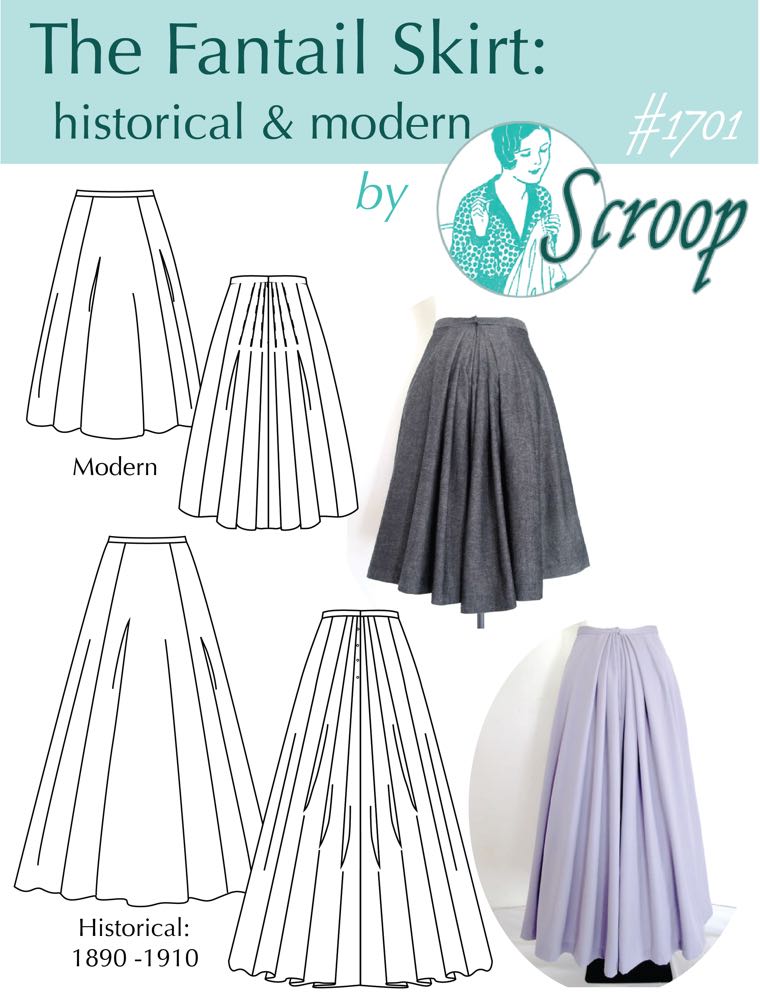
The Scroop Patterns Fantail Skirt, scrooppatterns.com

I don’t always want to wear something with a really fitted waistband, so I’ve been mixing things up with my Fantails by making some with a petersham waistband, instead of the classic band waistband that is included in the pattern.

It just adds a nice twist to the skirt’s look, and what you can wear it with.

How to add a petersham waistband to the Scroop Fantail Skirt thedreamstress.com

Here’s how to add your own!

You can add a petersham waistband to any version of the Modern Fantail, including ones with the added pocket hack.  I’ll be demonstrating this on a version with added pockets.

You can also add a one to a mash-up of the Historical & Modern Fantails in lighter weight fabrics: with the full length of the Historical, and the zip of the Modern, with either style of pleats.

I don’t recommend petersham waistbands for full-length Fantails in heavier fabrics, or Historical Fantails with placket fastenings.

You’ll need:

  • A Scroop Fantail skirt, completed except for the waistband and hemming
  • A length of 1″ / 2.5cm wide petersham the same length as the skirt waistband pattern.

How to add a petersham waistband to the Scroop Fantail Skirt thedreamstress.com

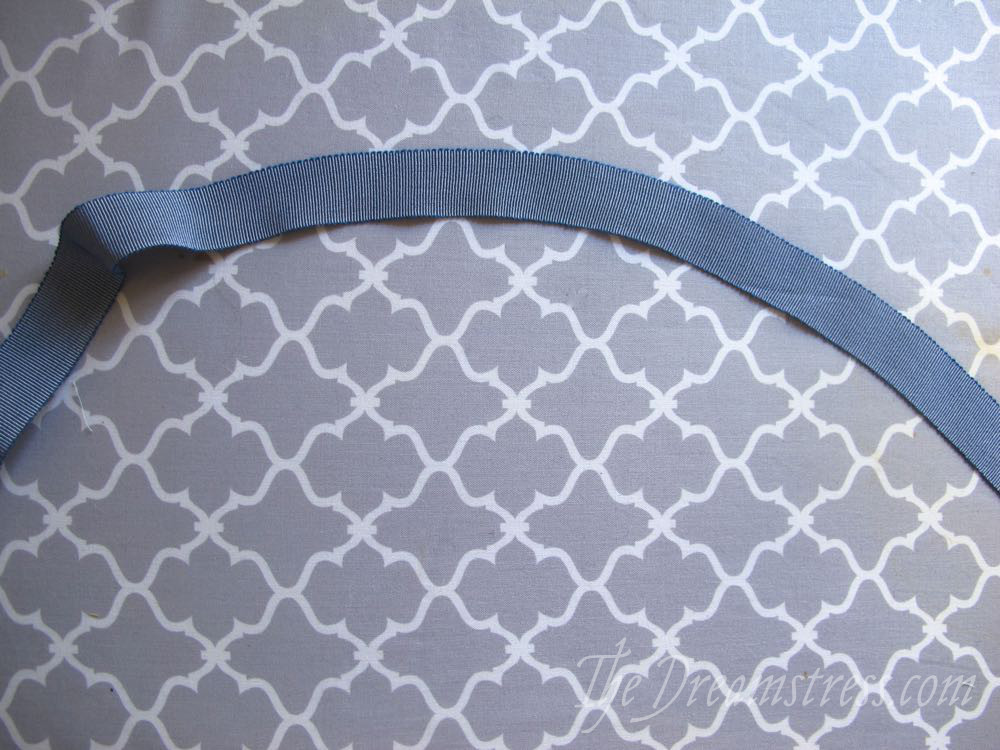
Make sure that you’re working with true petersham, with tiny scalloped edges, NOT grosgrain, which has sealed, straight edges.

See the tiny scallops:

How to add a petersham waistband to the Scroop Fantail Skirt thedreamstress.com

I recommend a viscose/rayon or cotton petersham, rather than a polyester petersham.  A cellulose based fibre with mould better as you work with it, and will continue to shape to your body with wear – making for a more accurate, comfortable fit.

You can add a waist stay before you sew the petersham, but I prefer this style to be a more relaxed fit.

Part 1: Shaping your petersham:

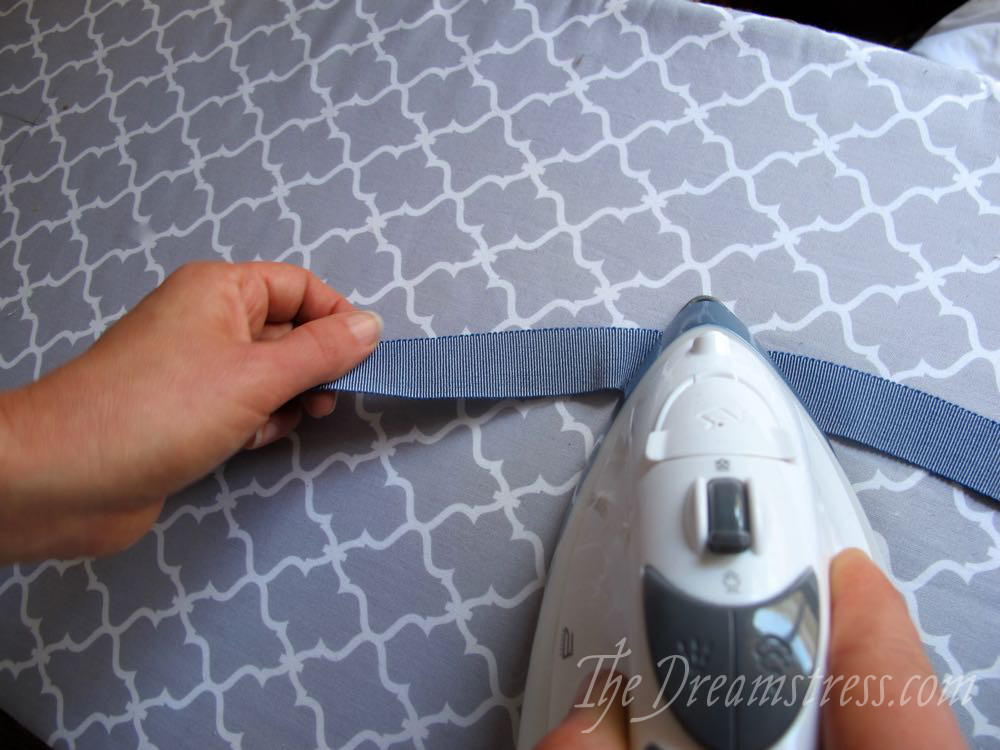
The scalloped edges of petersham allow it to be shaped with heat and steam.

Use an iron set at at the right temperature to match the fibre makeup of your petersham, and lots of steam, to shape your petersham into a curve by pulling it towards you as your press.

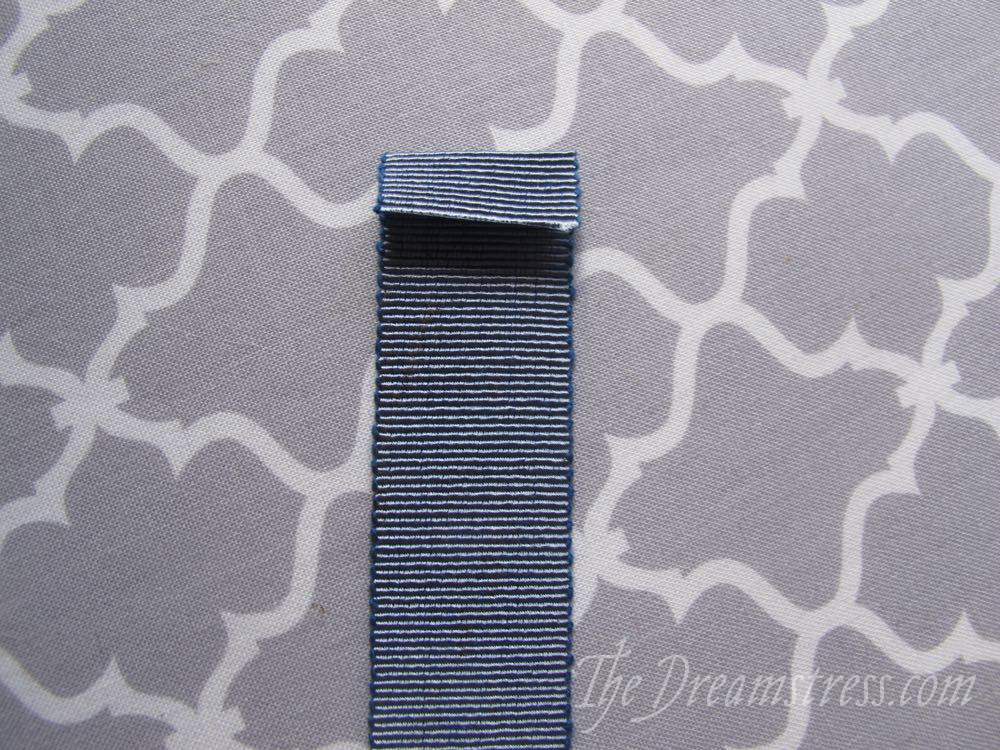
How to add a petersham waistband to the Scroop Fantail Skirt thedreamstress.comYour shaped petersham should look like this:

How to add a petersham waistband to the Scroop Fantail Skirt thedreamstress.com

With the petersham curved like so: ( press down the top end 5/8″ / 1.5cm as shown.

How to add a petersham waistband to the Scroop Fantail Skirt thedreamstress.com

Part 2:  Sewing the petersham waistband:

Sew a line of stay stitching around the top of your skirt, 4/8″ / 1.2cm from the top edge:

How to add a petersham waistband to the Scroop Fantail Skirt thedreamstress.com

Optional: finish the top edge of the skirt as desired.

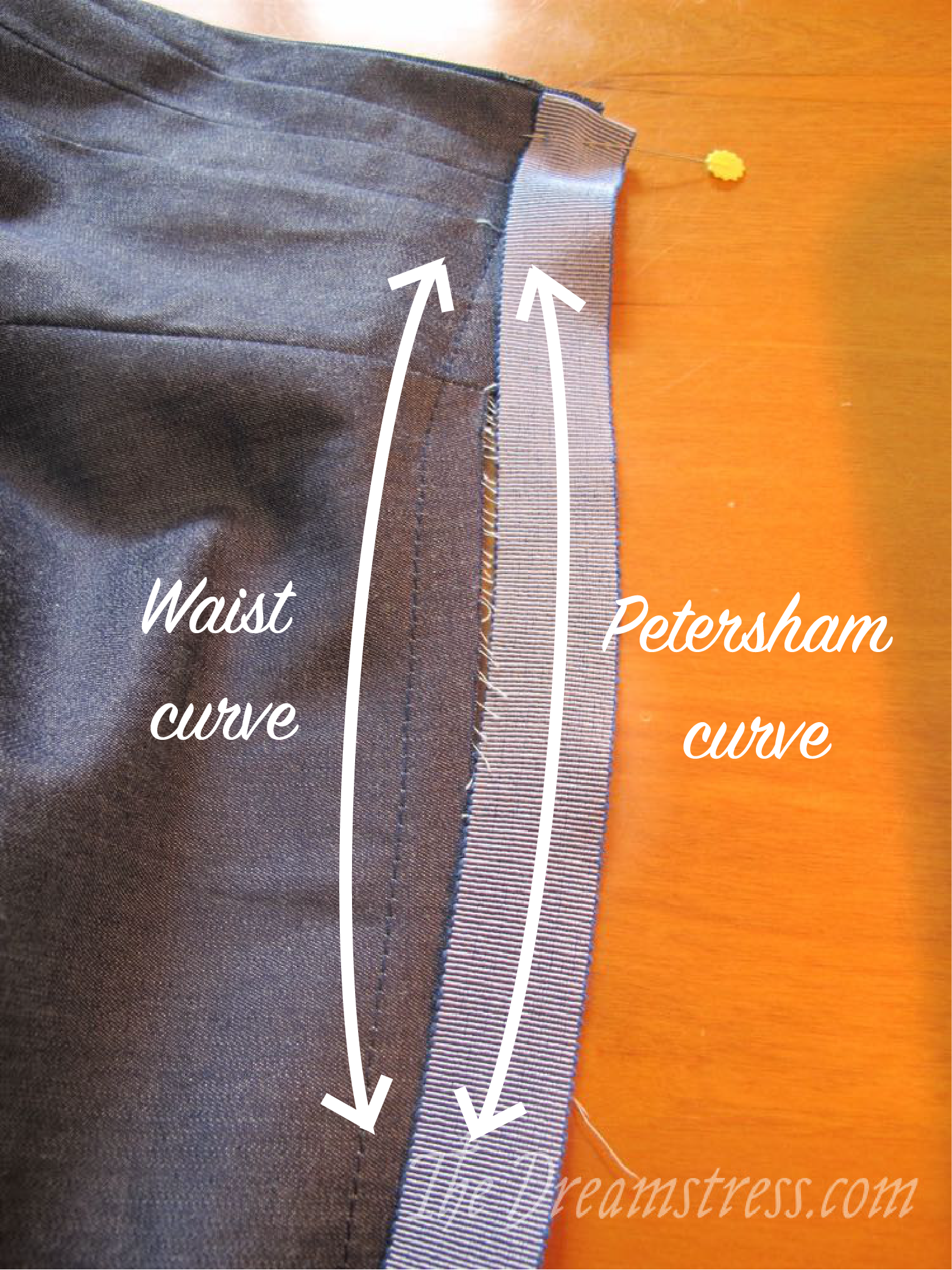
Place the petersham waistband like so:

How to add a petersham waistband to the Scroop Fantail Skirt thedreamstress.com

The edge of the petersham should just cover the staystitching.   The curve of the skirt and the petersham should face each other as shown.

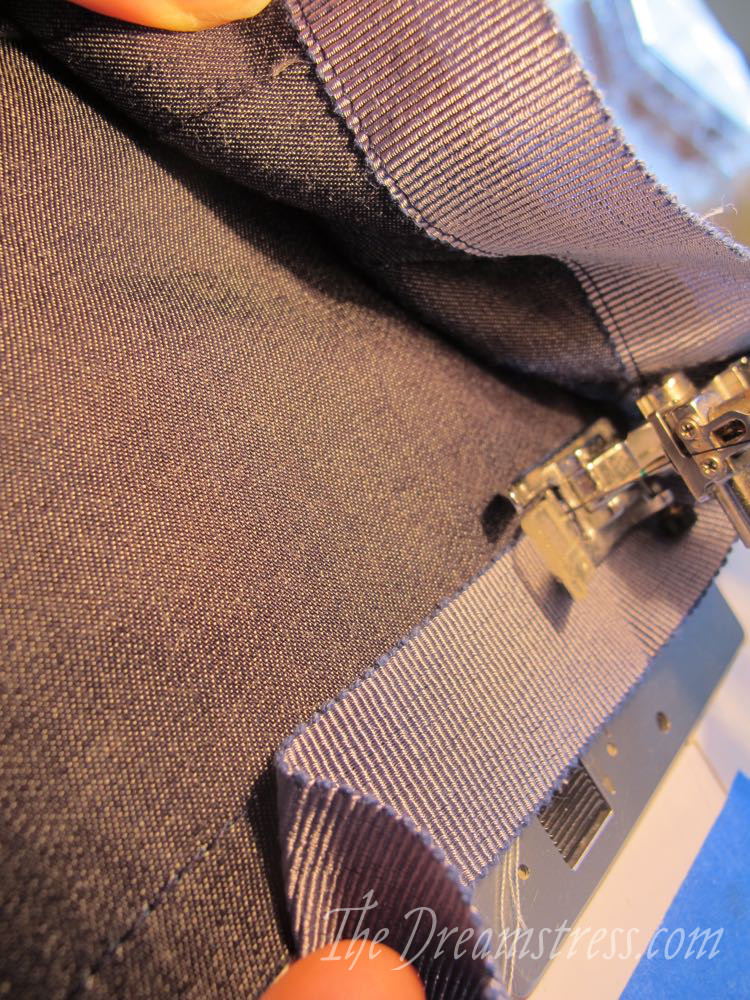
Sew, stitching as close to the edge of the petersham as you can, while still securely catching it.

How to add a petersham waistband to the Scroop Fantail Skirt thedreamstress.com

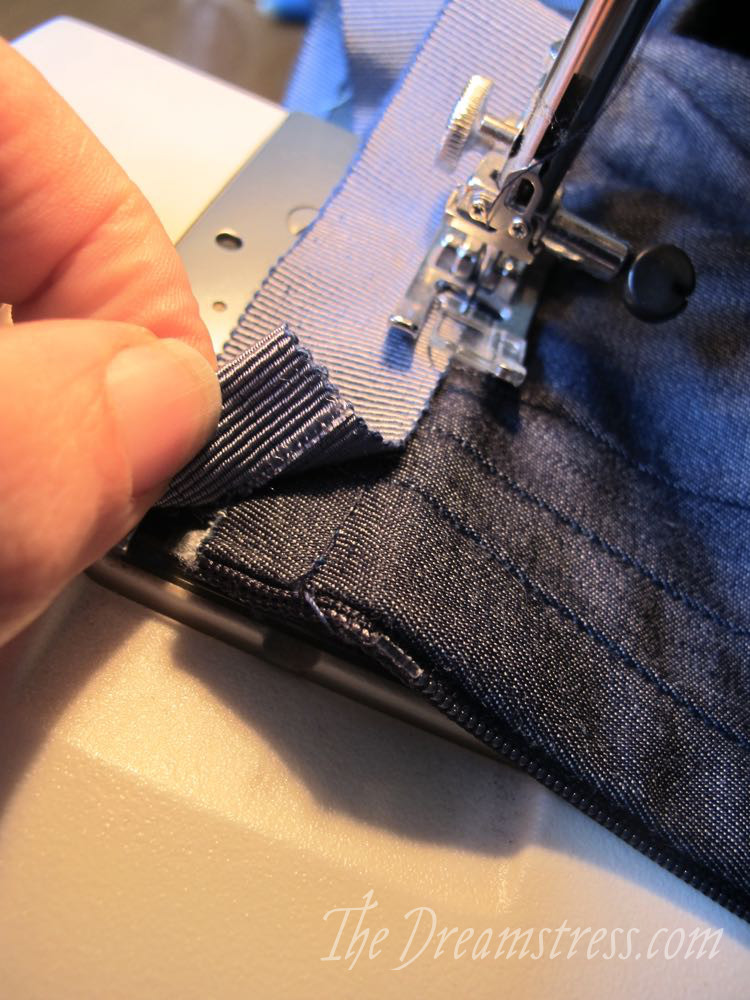
When you reach the end of the skirt, trim your petersham so there is only a 1.5cm overhang. Fold under, and sew down.

How to add a petersham waistband to the Scroop Fantail Skirt thedreamstress.com

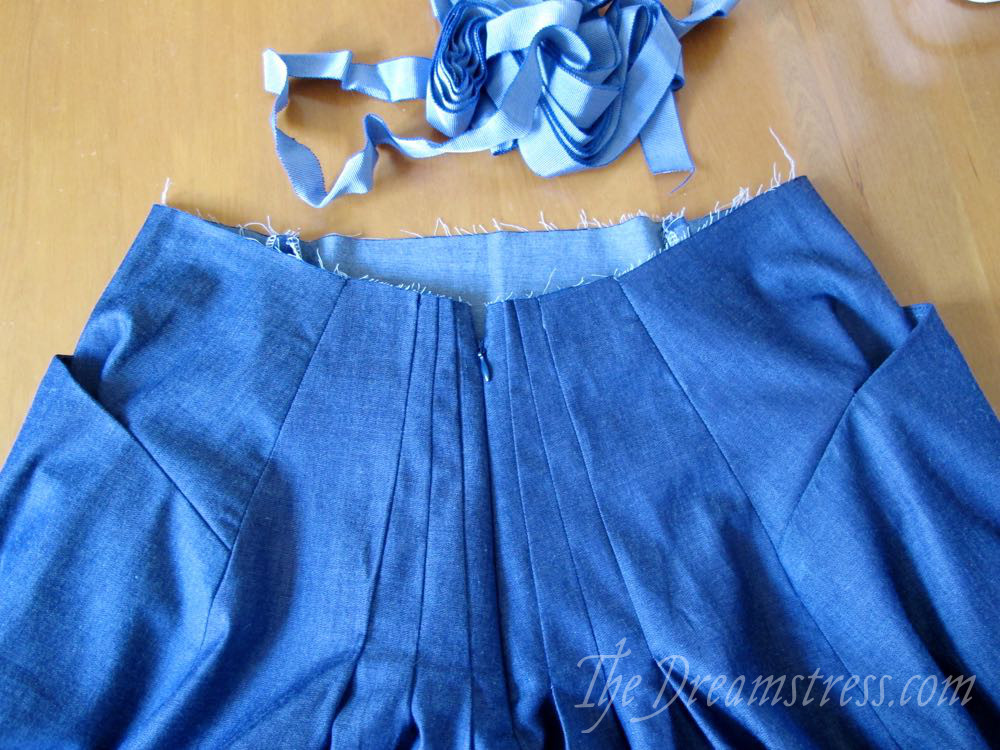
Here is what it should look like at this point:

How to add a petersham waistband to the Scroop Fantail Skirt thedreamstress.com

Part 3:  Pressing & finishing the petersham waistband:

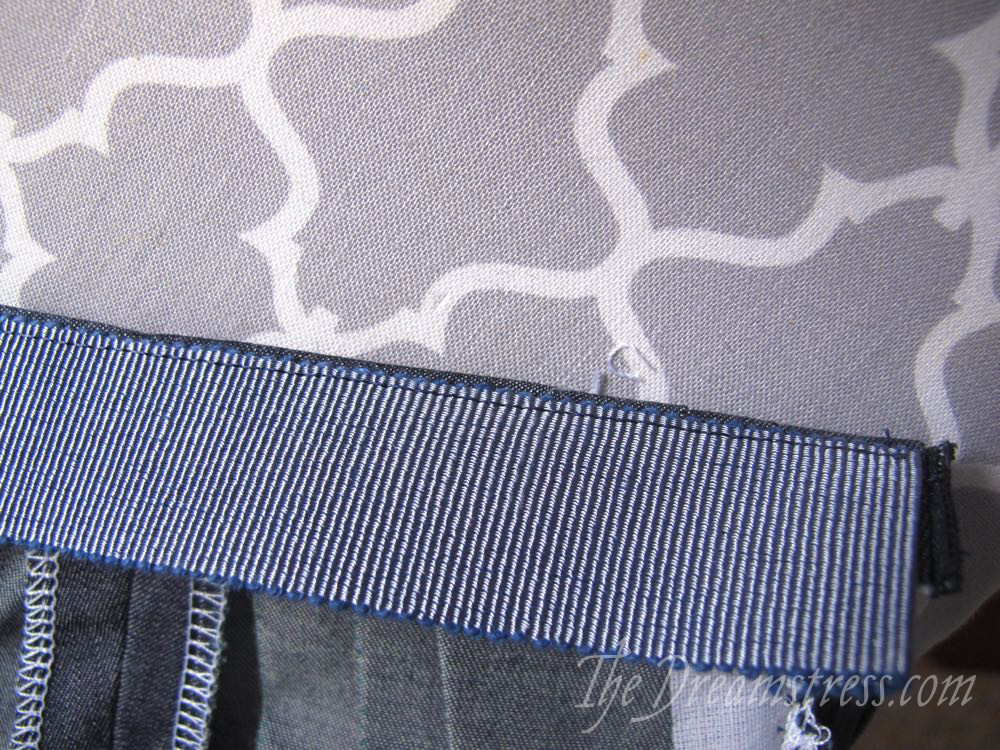
Press under the petersham, pressing so you create a tiny lip of skirt above the top of the petersham:

How to add a petersham waistband to the Scroop Fantail Skirt thedreamstress.com

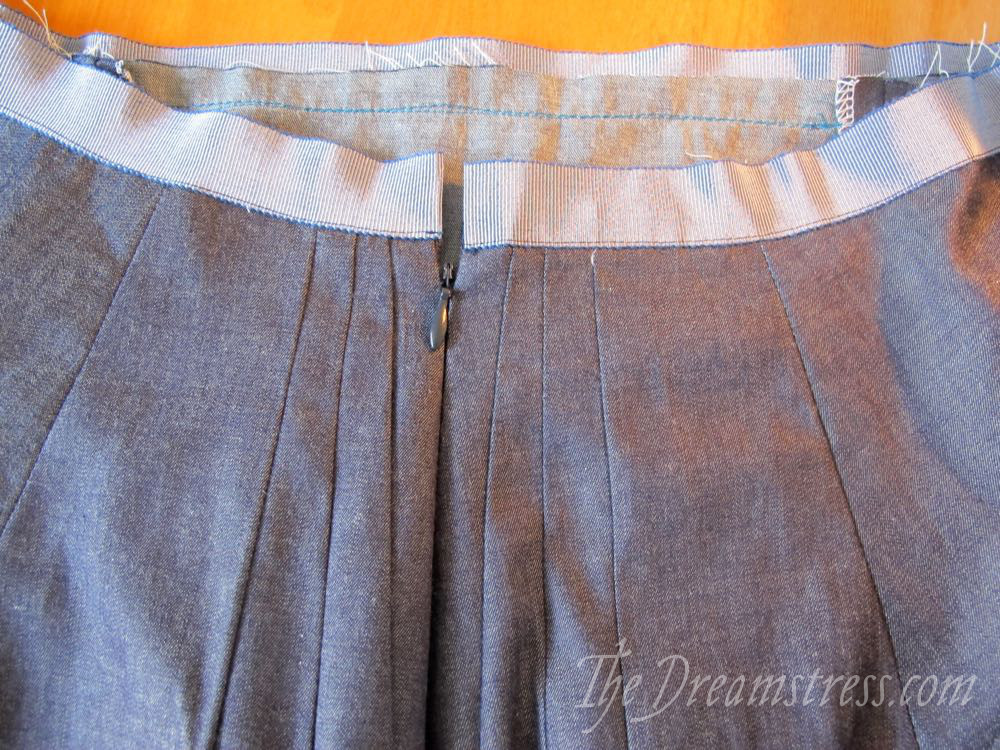
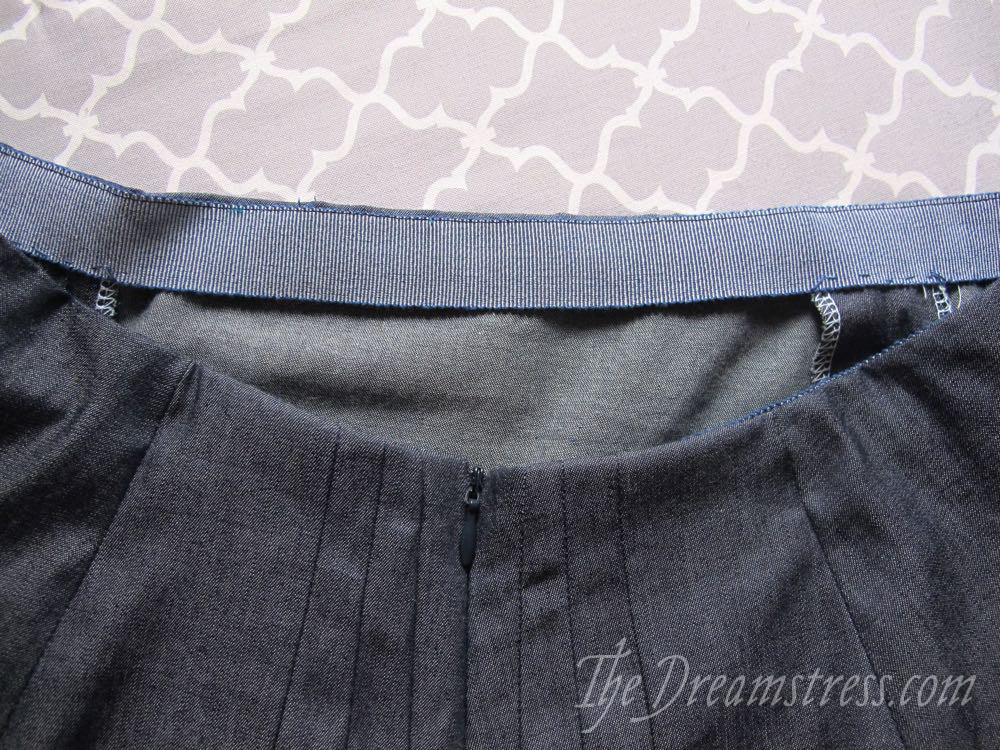
Sew the folded ends of the petersham waistband down to the zip, and hand tack the waistband at each seam allowance:

How to add a petersham waistband to the Scroop Fantail Skirt thedreamstress.com

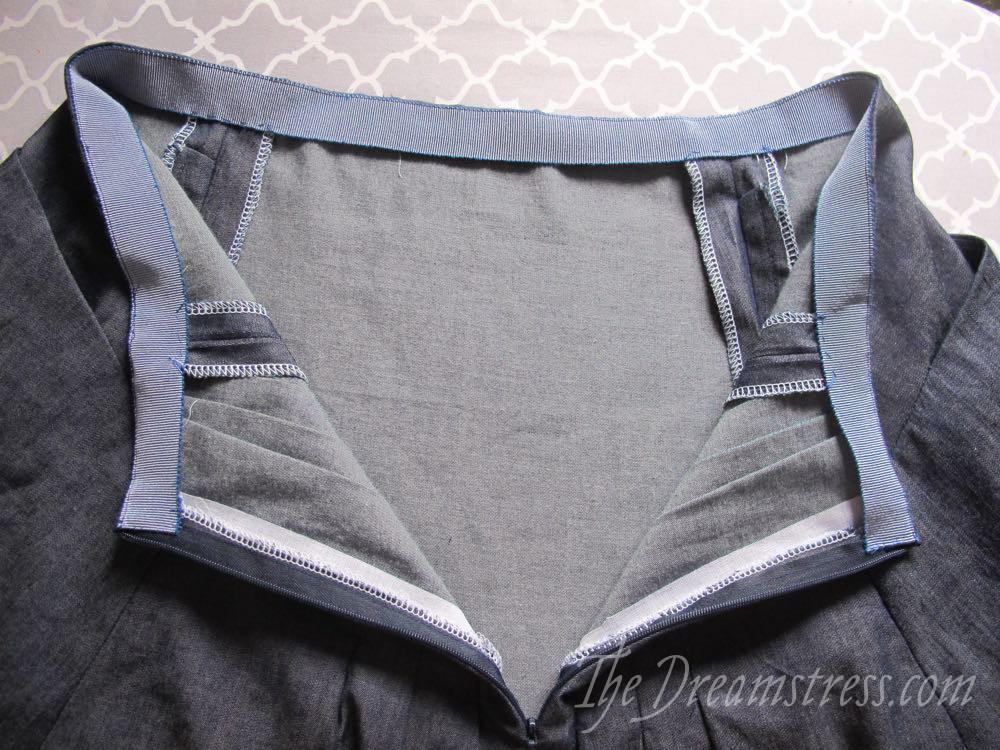
Note that I have stabilised my zip with interfacing, because the extremely lightweight denim is prone to warping.

How to add a petersham waistband to the Scroop Fantail Skirt thedreamstress.com

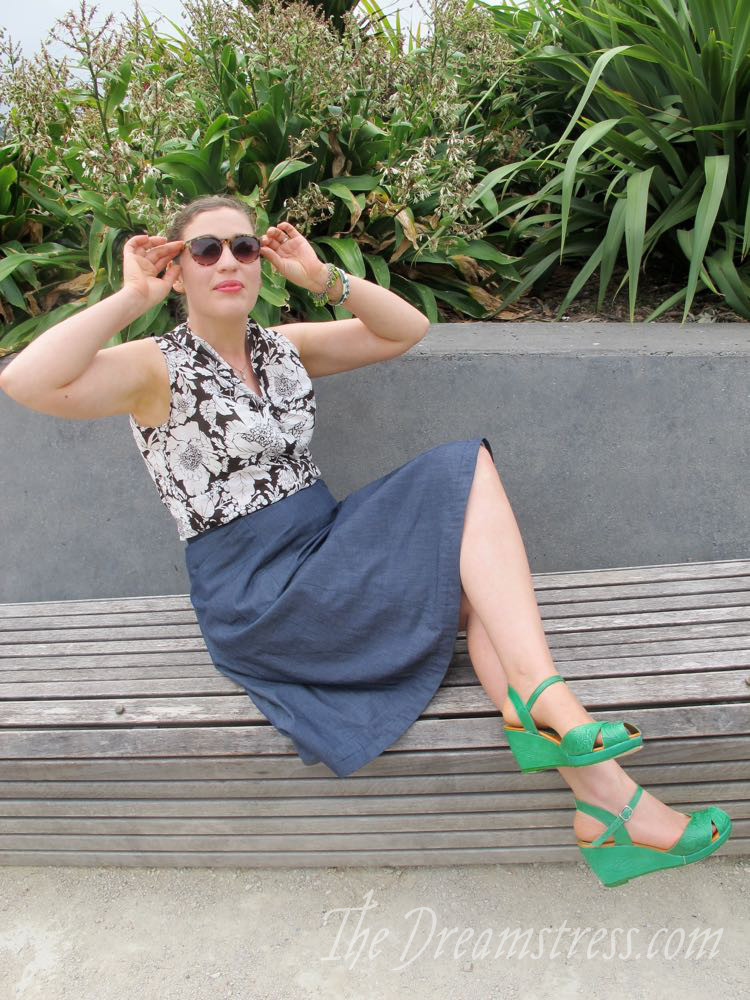
And there is your skirt!

Add your hem and you’re done!

How to add a petersham waistband to the Scroop Fantail Skirt thedreamstress.com

How to add a petersham waistband to the Scroop Fantail Skirt thedreamstress.com

Enjoy!

How to add a petersham waistband to the Scroop Fantail Skirt thedreamstress.com

Queen Charlotte by Zoffany, 1765

Queen Charlotte in detail by Zoffany

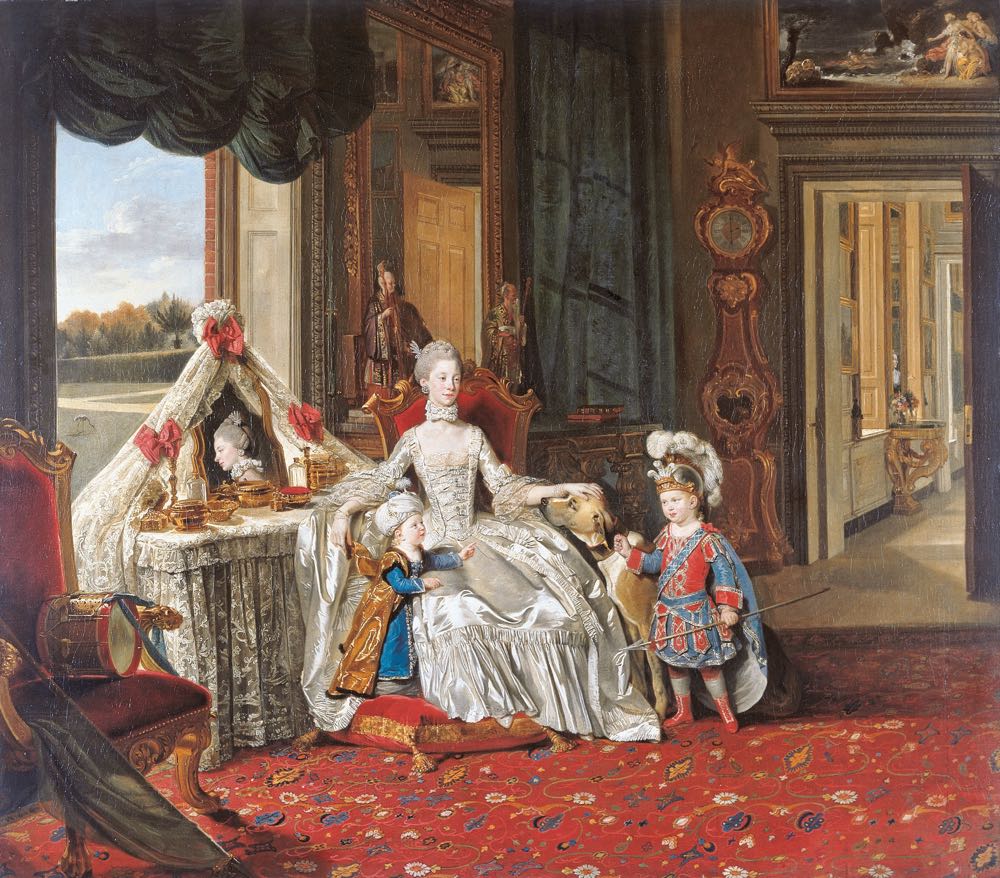
Don’t you love it when you find a large version of a wonderful historical artwork that you’ve only ever seen in very small versions?

Like this fantastic Zoffany portrait of Queen Charlotte of Mecklenburg-Strelitz:

It’s full of the most glorious details.

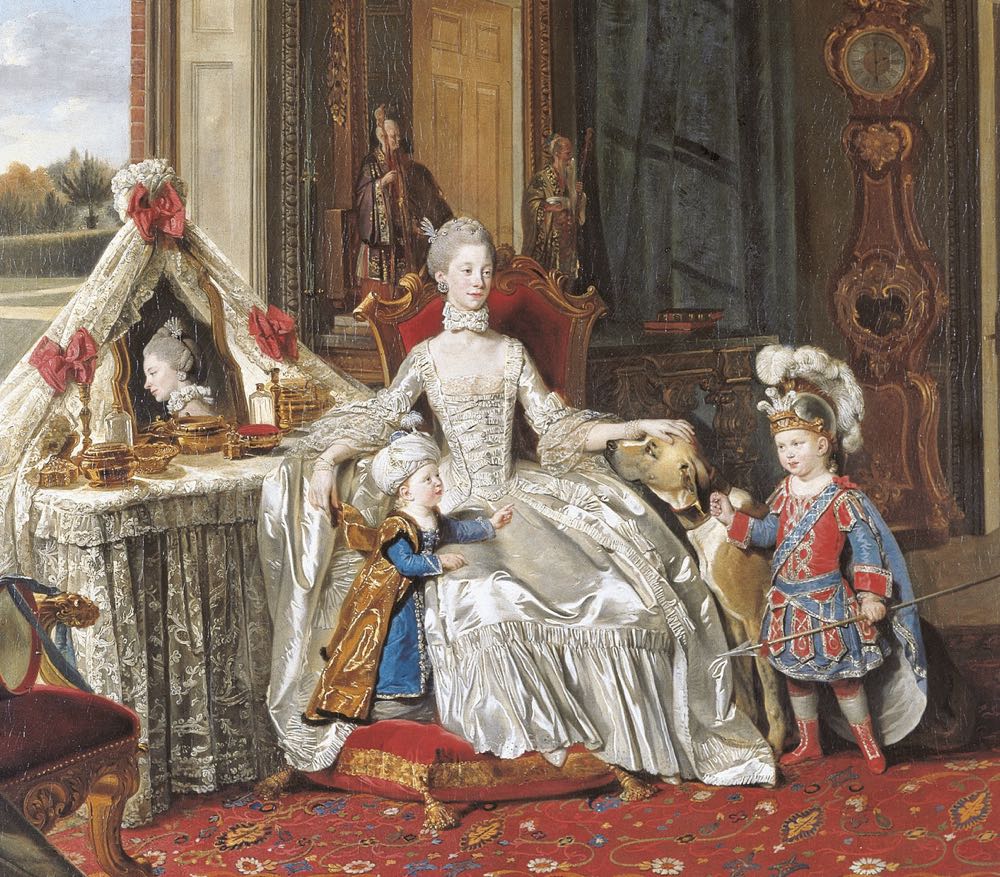
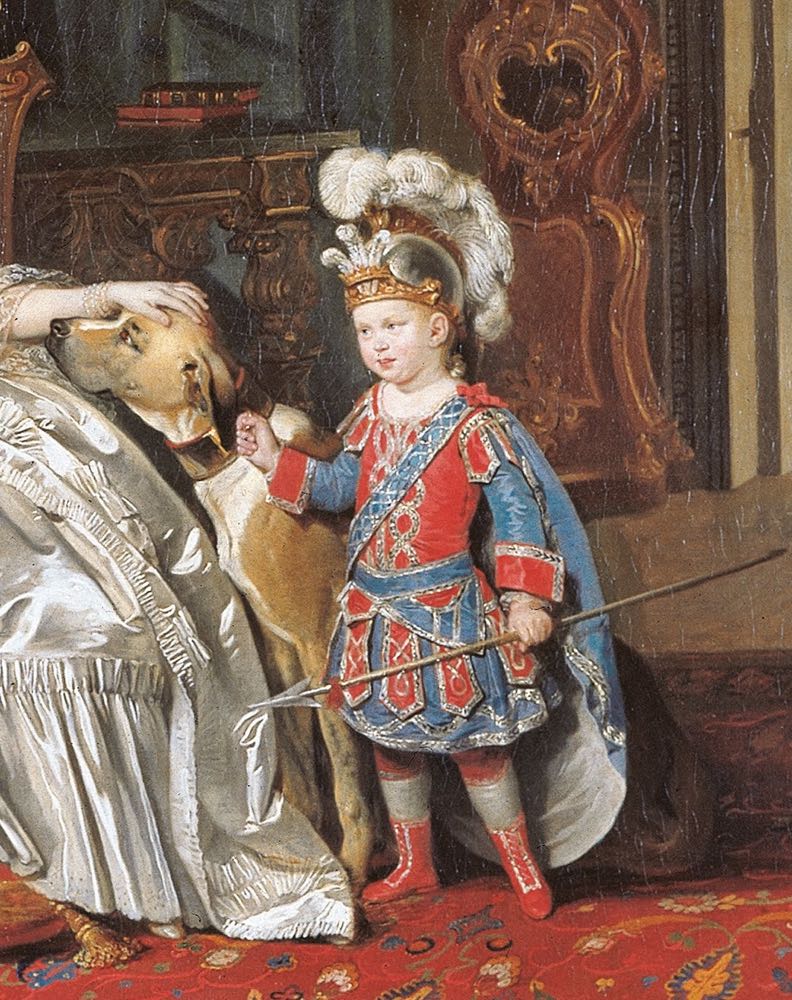
There are her sons, with George IV in Roman inspired armour:

Queen Charlotte by Zoffany, 1765

Queen Charlotte with her Two Eldest Sons, Johan Zoffany, 1765

Prinny looks a wee bit petulant, possibly because the dog clearly loves mummy more than him!   (and honestly, who wouldn’t be jealous over that dog’s look of adoration?  I’m not even a dog person and I want to hug it!)

The whole outfit is fantastic, but oh, his boots!  Aren’t they just the most adorable things ever?

If he isn’t mad about the dog, perhaps Prinny is glaring at his little brother, wishing he were wearing Prince Frederick’s Orientalist attire.  It is rather fabulous isn’t it?  And the turban is doing a cunning job of doubling as a pudding cap – the padded caps worn by small children in the 18th century to keep them from injury when they toppled over.

Queen Charlotte by Zoffany, 1765

Queen Charlotte with her Two Eldest Sons, Johan Zoffany, 1765

It’s not quite as exciting/unusual as royal children’s fancy dress, but the portrait also provides lovely details of Charlotte’s dress: the glimpse of her shoe, the punched hem of her skirt ruffle, the triple layers of lace engageants, and finely roll-pleated trim.

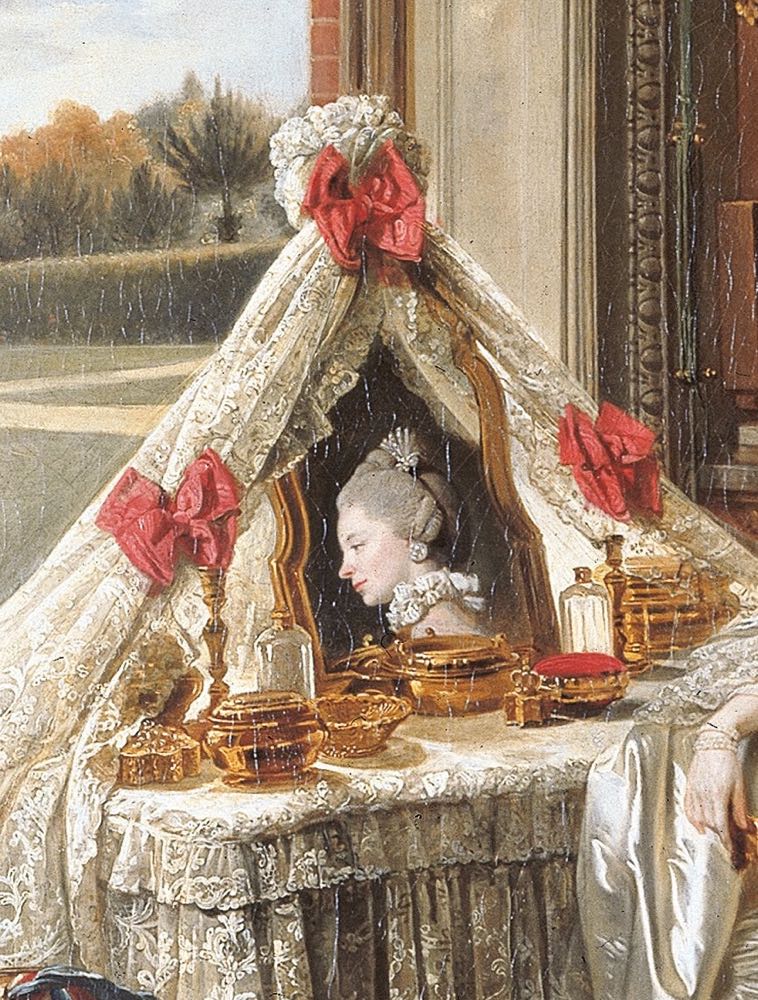
Charlotte is sitting by her dressing table, giving us a wonderful look at a mid-18th century dressing table.  We can see each pot and pouf.  The dressing table is draped in a literal fortune in handmade lace, emphasising Charlotte’s wealth and status.  Even more fabulously, the mirror reflects Charlotte’s profile, giving us a simultaneous front and side view of her hair – and her fantastically over-the-top earrings.

Queen Charlotte by Zoffany, 1765

Queen Charlotte with her Two Eldest Sons, Johan Zoffany, 1765

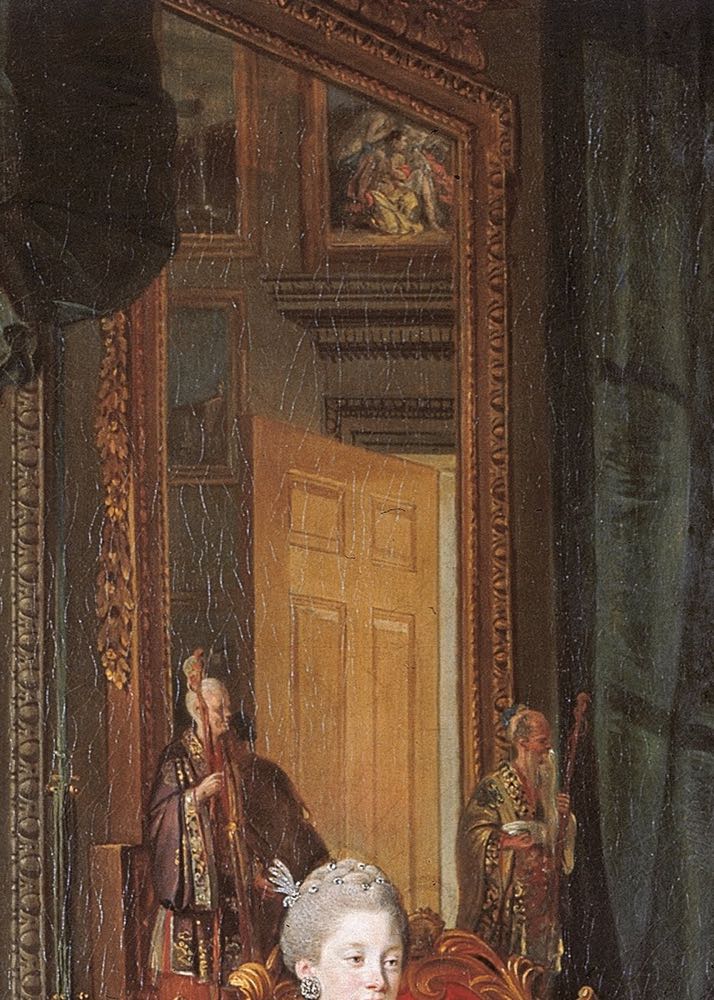
There are more wonderful details hidden in the painting. Glimpses of the other artwork in the room, showing scenes from Greek & Roman mythology.  And two Chinese figures, which frame Charlotte, reinforcing the themes of worldly knowledge and wealth.

Queen Charlotte by Zoffany, 1765

Queen Charlotte with her Two Eldest Sons, Johan Zoffany, 1765 (detail)

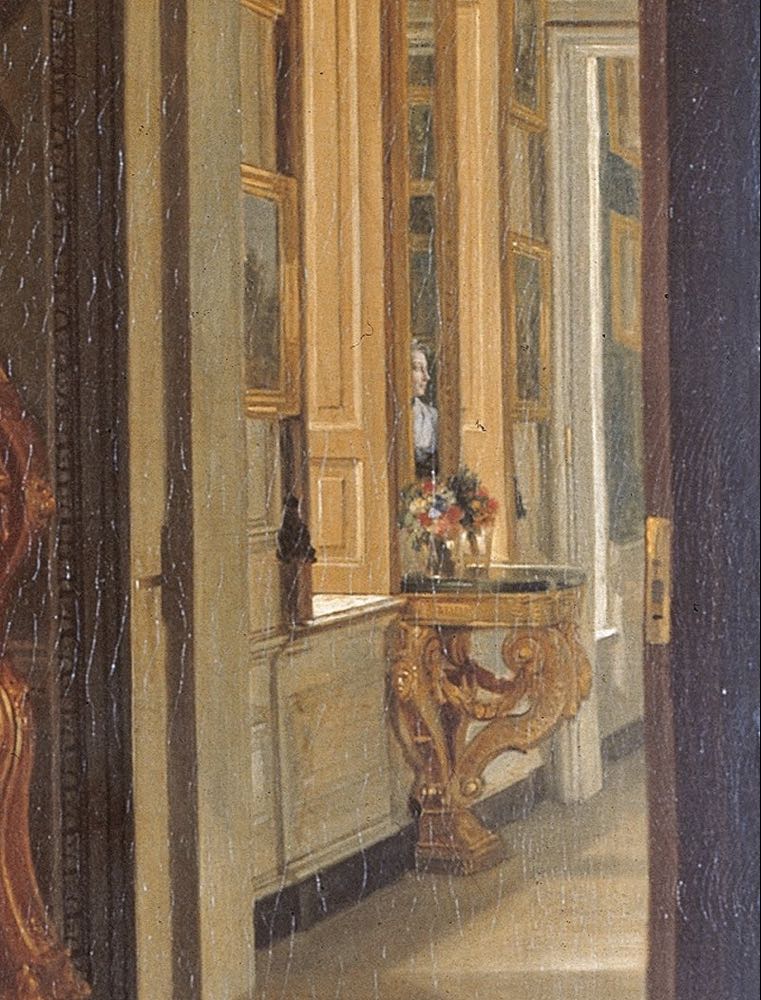
My absolute favourite detail is this one though:

Queen Charlotte by Zoffany, 1765

Queen Charlotte with her Two Eldest Sons, Johan Zoffany, 1765 (detail)

A tiny glimpse of another portrait in the hall off the main room.  I wonder who it is?