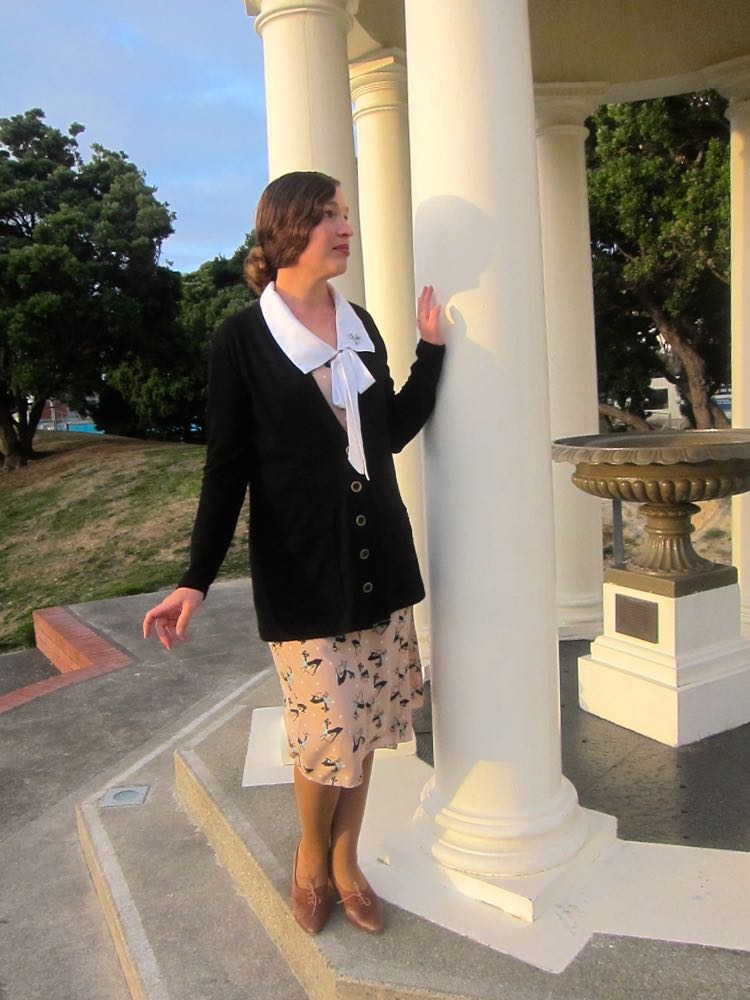
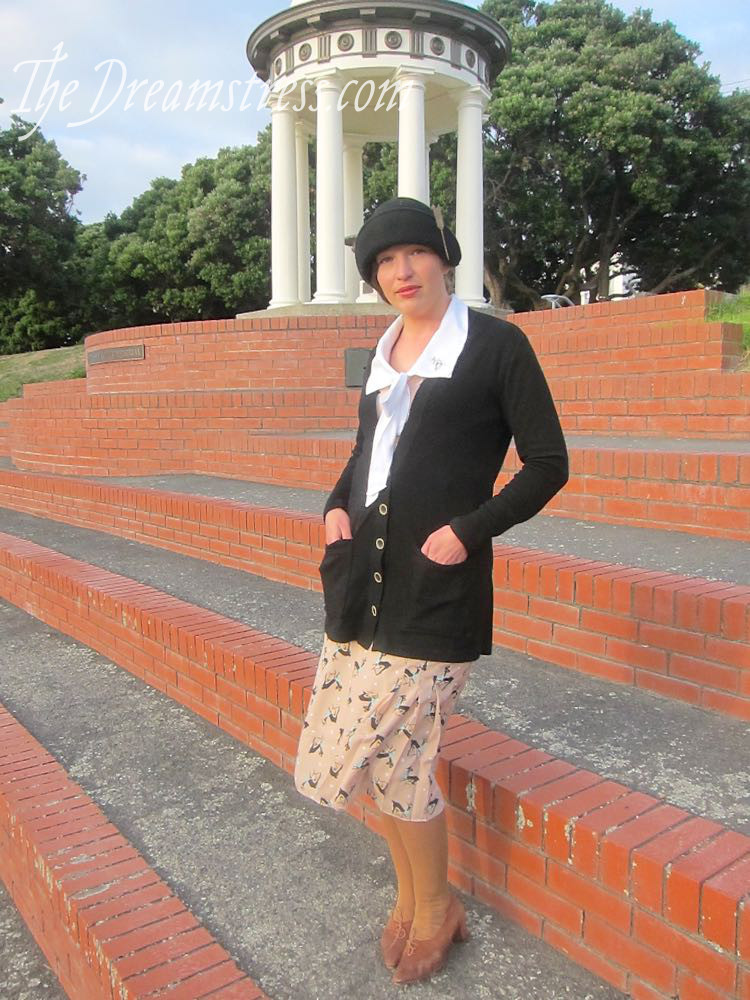
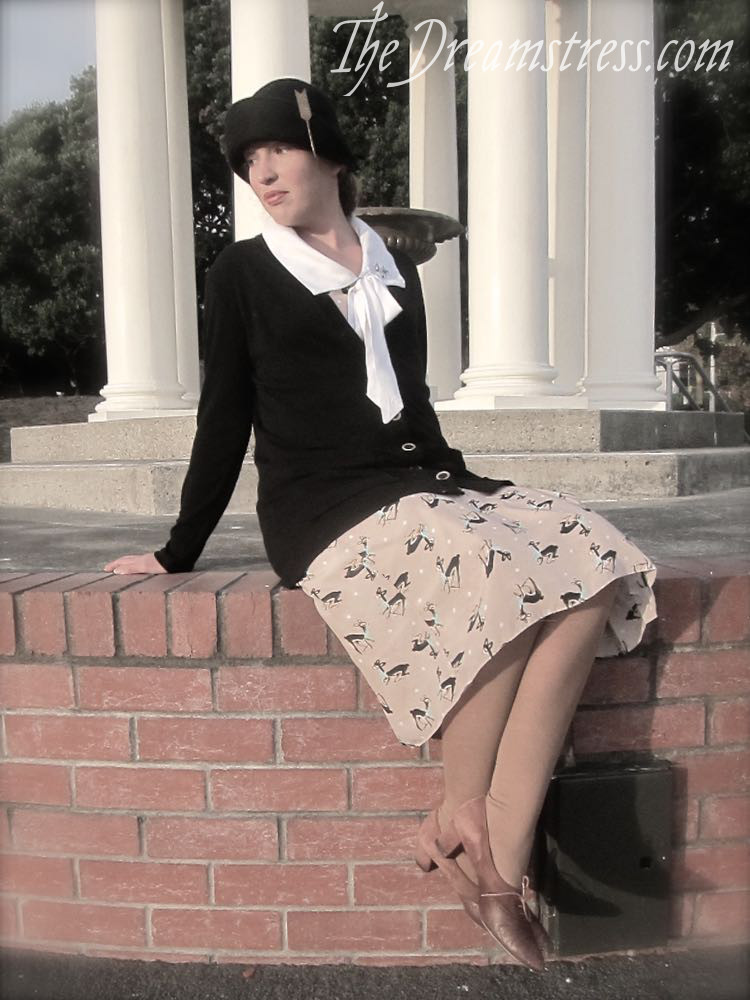
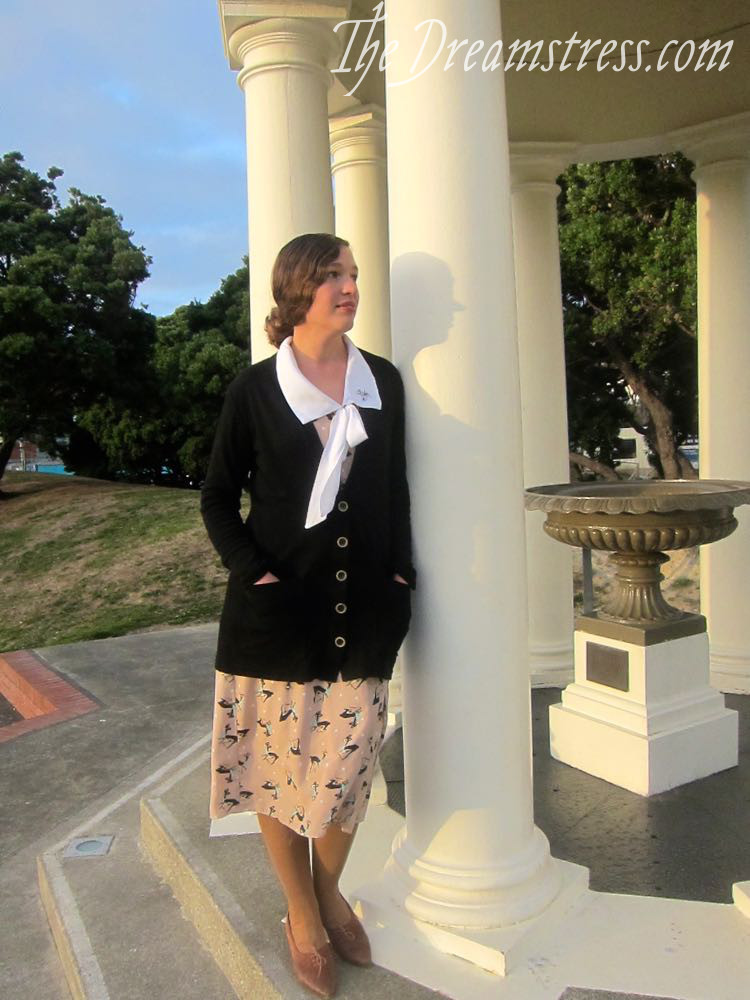
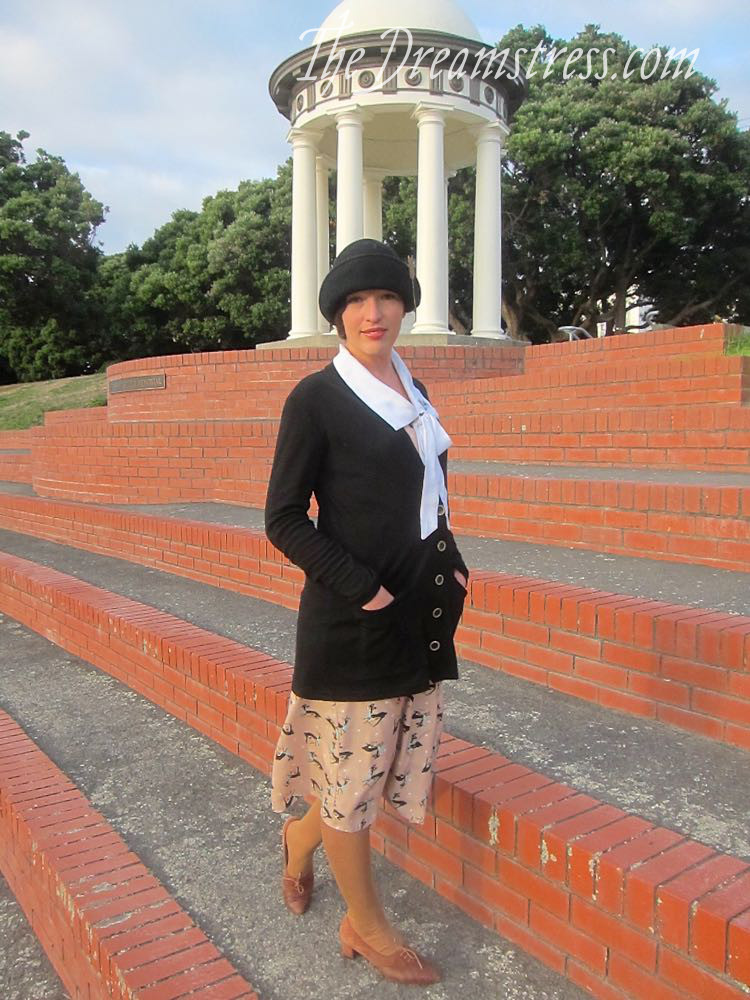
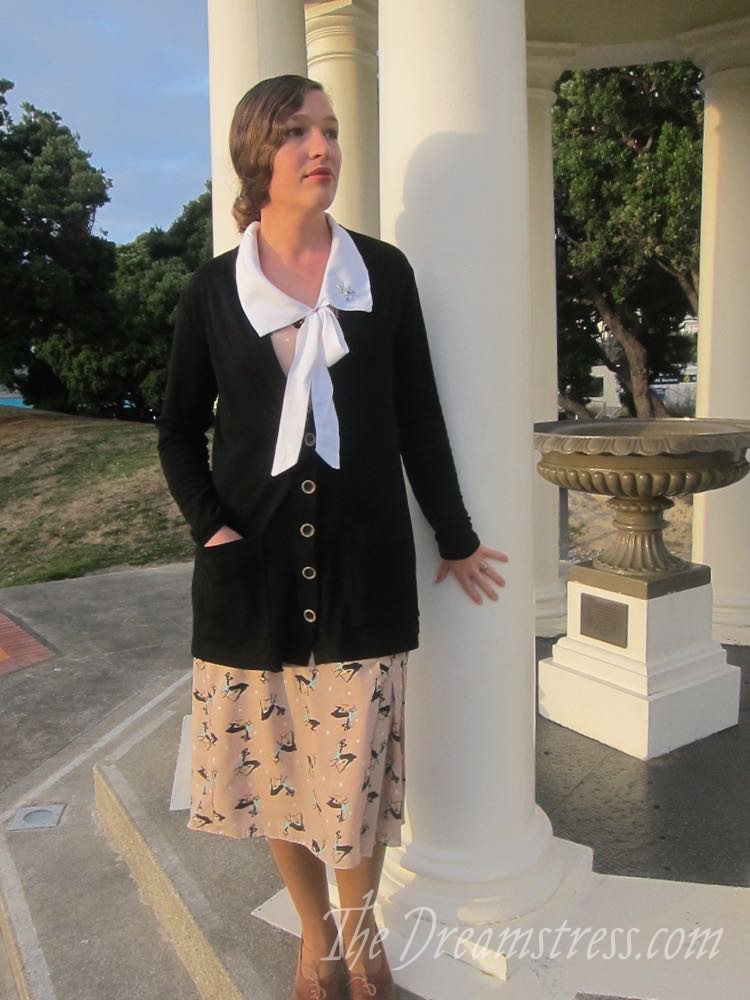
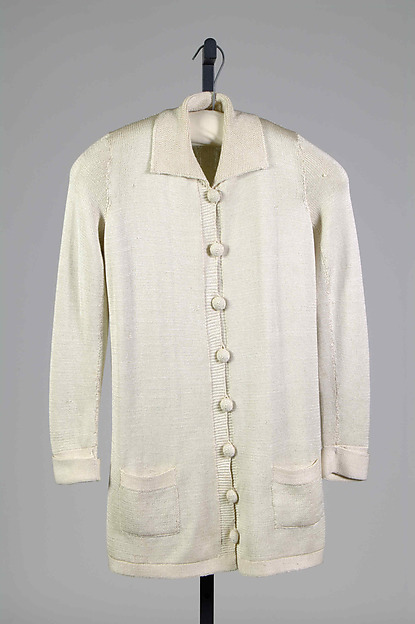
A cardigan is a knitted sweater with a buttoned or zipped front, with a V or round neck, with or without a collar. The cardigan takes its name from the 7th Earl of Cardigan, James Thomas Brudenell (1797-1868) whose unfortunate claim to fame (other than the garment) is that he led the 1854 Charge of the Light Brigade.
The cardigan as we know it today is based on a fur or braid-trimmed waistcoat of knitted worsted wool worn by British Army Officers during the Crimean war (some sources say ‘purported to have been worn by’, or that it was only worn by Cardigan himself)).
Whether or not cardigans were actually based on garments worn during the Crimean war, within a few decades of the war the garment had become decisively linked with it, so much that editorials chiding the government for their neglect of veterans (some things never change…) make black-humour jokes about how “they might, at any rate, be provided with Cardigan Jackets.”
The original ‘cardigan’ was a sleeveless vest or waistcoat, but by 1864 the modern sleeved version had emerged, usually referred to as a ‘cardigan jacket‘ . Cardigan jackets were still specified in 1900, but by the 1910s cardigans vests were less common than the sleeved version, the mid-late 1920s, when knit garments had become firmly established in both men’s and women’s wardrobes, the sleeved version was so ubiquitous that a ‘cardigan’ without sleeves had to be specifically described as such, and was described as ‘new’.
Early cardigans were worn primarily as working class garb, particularly by sailors and in other places where people needed to stay warm while still retaining a full range of movement. Their association with sailors at a time when nautical attire was entering mainstream fashion, may have helped to make them acceptable wear for a wider range of society in the 1870s and 1880s.
While originally a men’s garment, cardigans moved into the sphere of women’s wear during the late 1880s, and were widely sold from the 1890s onwards. Early women’s cardigans followed the shape of women’s fashions, with full sleeves and nipped waists, and look distinctly different from the men’s cardigans of the same era.
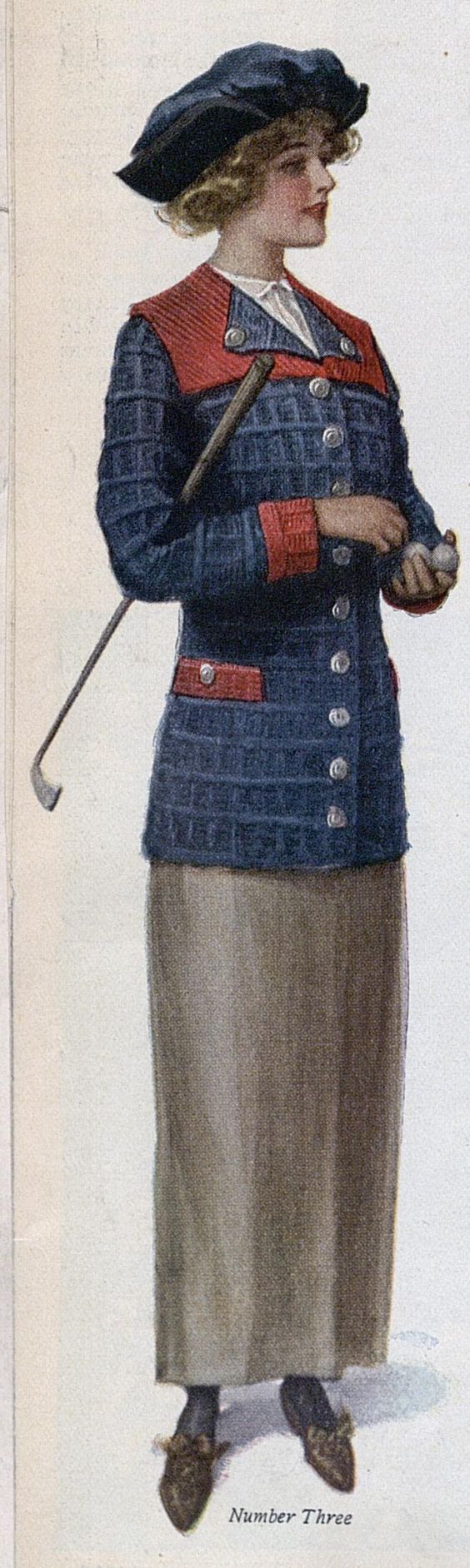
Early cardigans were hand-knitted, and are quite rare, and were worn almost exclusively for bicycling, golf, tennis, and other athletics. As women began to live more active lives, and to participate in more sports, these knit garments were seen in more spheres, and became acceptable wear for a wider variety of wear.
Knitwear as a whole was given a boost in the 1880s when new developments to knitting machines made machine-knitting garments which could fit and cover the torso, rather than just legs, economically viable. These machines were primarily used for knit undergarments (including the precursor to the modern T-shirt) and knit pullovers, such as the sweater (first mentioned in 1882 as a garment for rowing). Hand-knitted garments were still the most common, but machine knits did help to make knits cheaper and more widely available, and eventually, more acceptable for fashionable wear.
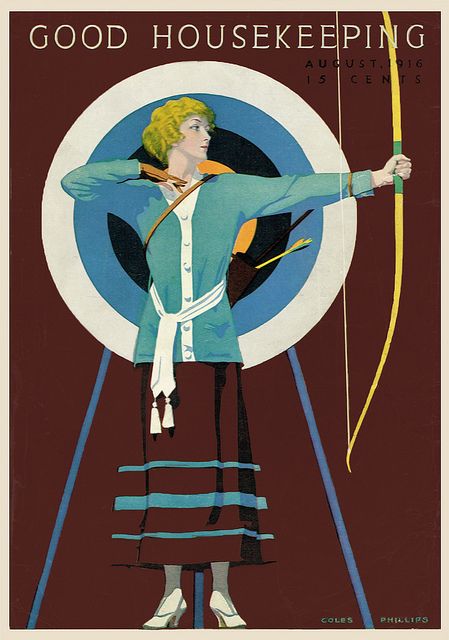
Good Housekeeping cover by Coles Phillips, Aug 1916
As the desire for knit garments grew, both because of the increase in participation in leisure athletics, and because of the increasingly casual and practical nature of peoples wardrobes, the demand for patterns and instructions grew. Knitting patterns and knitting handbooks (such as this 1912 book, and this 1918 book, were common by the 1910s. Department stores also sold machine-knitted garments, including this pastel cardigan by Harrods that features a range of colours and techniques that would have been difficult for a home knitter to achieve.
Chanel is often credited with introducing cardigans, jerseys and other knitwear as fashionable wear, with Fashion recounting that ‘Coco Chanel famously donned a long jersey sweater on the Normandy beach as early as 1913’, but she was merely reproducing what was already a very widespread trend. New Zealand photographs of the 1910s show women in all walks of life, from society hostesses to roller-skating teenagers, sporting jerseys and cardigans from 1910 onwards, both in informal and studio portraits. Their inclusion in studio portraits (including one of upper-class social climber Annie Beauchamp (mother to Katherine Mansfield), ca 1912) is important, because it demonstrates that cardigans and other knitwear had moved from the realm of pure sportswear into acceptable everyday fashions.
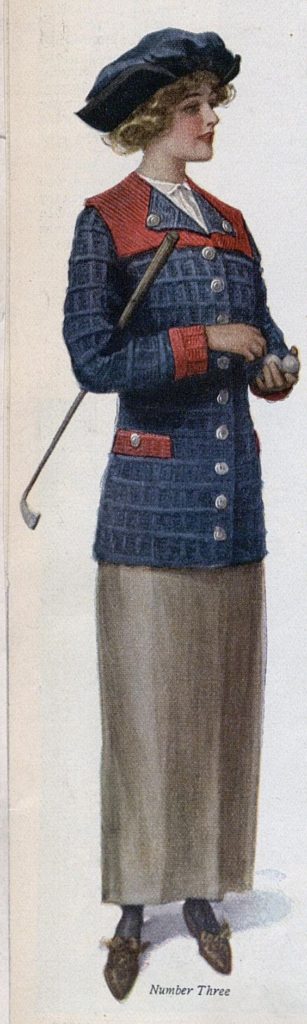
A cardigan for golf, Ladies Home Journal, August, 1912
The cardigan, along with other knitwear, became wardrobe basics in the years following WWI. Some authors, such as Waugh, attribute this to the fact that women became skilled knitters during the war while making socks and other garments for men in the services, and continued to use these skills for their own wardrobe in the years after. Photographic and written evidence suggest that knitwear was already well on the rise in the years before the war, and the war simply made the practicality and ease of knitwear even more popular.
1920s cardigans are strongly linked to the collegiate culture of the 1920s, when the focus on youth, easy living, and a rebellion against
On and off campus, cardigans were essentially ubiquitous for both genders in the 1920s. Almost every woman and man would have owned at least one, and they featured prominently in the showrooms of designers such as Patou and Chanel, where they were often paired with matching sweaters, in the precursor to the twinset, and pleated or knit skirts. Though they were still used as sportswear, they were also acceptable and essential parts of less formal streetwear.
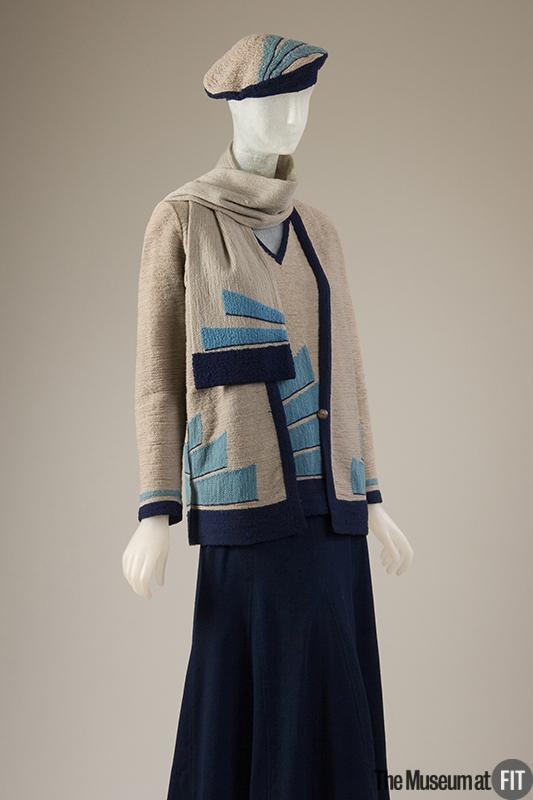
Sportswear ensemble of blue, grey and turquoise wool knit and navy wool crepe, c. 1927, France, Museum at FIT, 2009.15.7
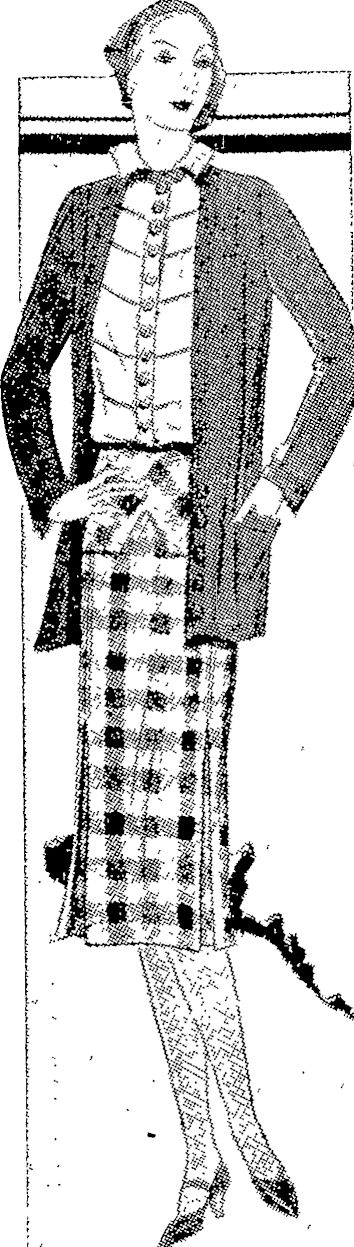
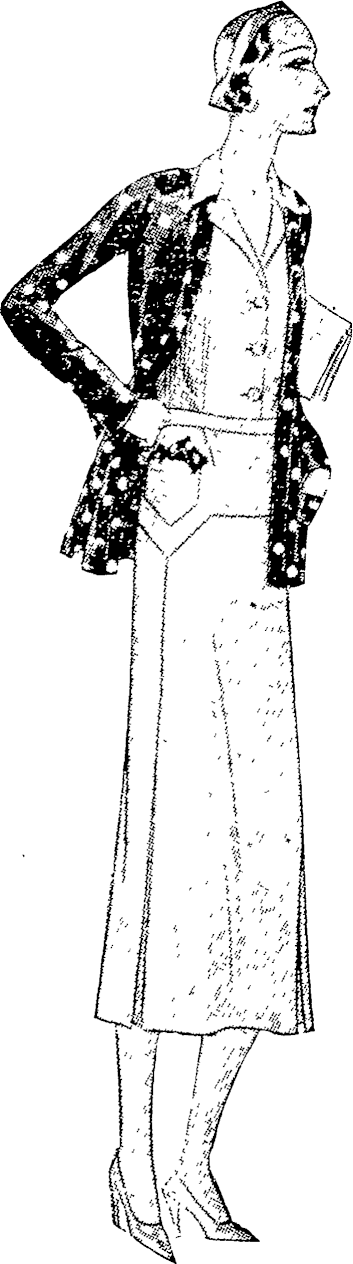
Cardigan looks were so popular in the 1920s that the term came to describe any loose jacket in the style: not just a knit garment. In the late 1920s and early 1930s ‘cardigan’ was also frequently used for loose fabric jackets in the same style as knitted cardigans, like this 1931 example in turquoise and black spotted silk crepe de chine:
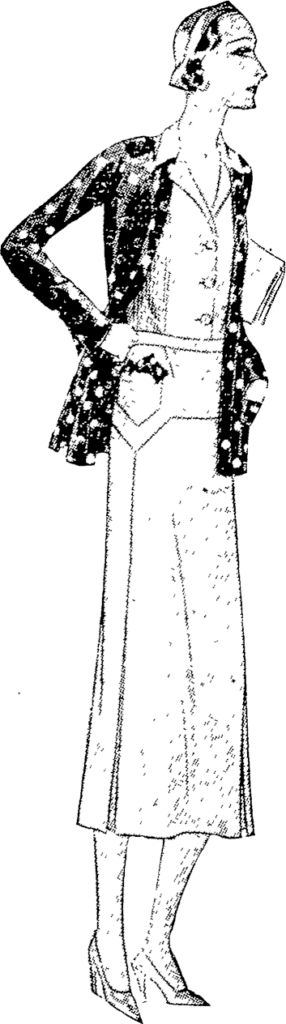
FLORIN DOTS of turquoise on black crepe de chine for the cardigan, and a frock of turquoise Macclesfield silk. Auckland Star, 7 August 1931
Cardigans have remained in fashion in every decade since the 1930s, whether as wartime warmers in the 1940s, snuggly fitted cover-ups for sex-symbols in the 1950s and 60s, or as part of the craft revival of the 1970s.

1970s knitting pattern
Sources:
Bolton, Andrew and Harold Koda, Chanel. New Haven: Yale University Press. 2005
Harris, Laurel, Mary Morris & Joanna Woods (eds.). The Material Mansfield: Traces of a Writers Life. Auckland: Random House New Zealand. 2008.
Hennesy, Katherine (ed) et all. Fashion: The Ultimate Book of Costume and Style. Melbourne: Dorling Kindersley. 2012
McDowell, Colin, The Anatomy of Fashion. London: Phaidon Press Limited. 2013.
O’Hara, Georgina, The Encyclopedia of Fashion: From 1840 to the 1980s. London: Thames and Hudson Ltd. 1986.
Waugh, Norah, The Cut of Women’s Clothes: 1600-1930. London: Faber and Faber Limited. 1968.