It is a pretty well known fact to readers of this blog that I dislike fringe. Dislike may be putting it mildly. I believe the word I usually use is loath.
My dislike of fringe stems primarily from all the terrible, awful, horrible ‘1920s’ ‘flapper’ dresses which owe everything to 2nd-half of the 20th century costume designers, and nothing to period originals. To a lesser extent, I also dislike fringe because of the fringing on some 1860s dresses, where the designers seem to have gone “Woohoo! Fabric is relatively cheap! Fringe is relatively cheap! Dresses are HUGE! Let’s just throw acres of fringe at the hugeness!”
Blech. Ergh.
But, for every rule, there are exceptions. Vionnet’s famous 1938 scalloped fringed frock gets a pass for being fabulous and amazing. Shawl fringe is generally attractive as long as it is sympathetic to the overall design of the shawl. But I’ve never really been tempted to make a garment with fringed trim.
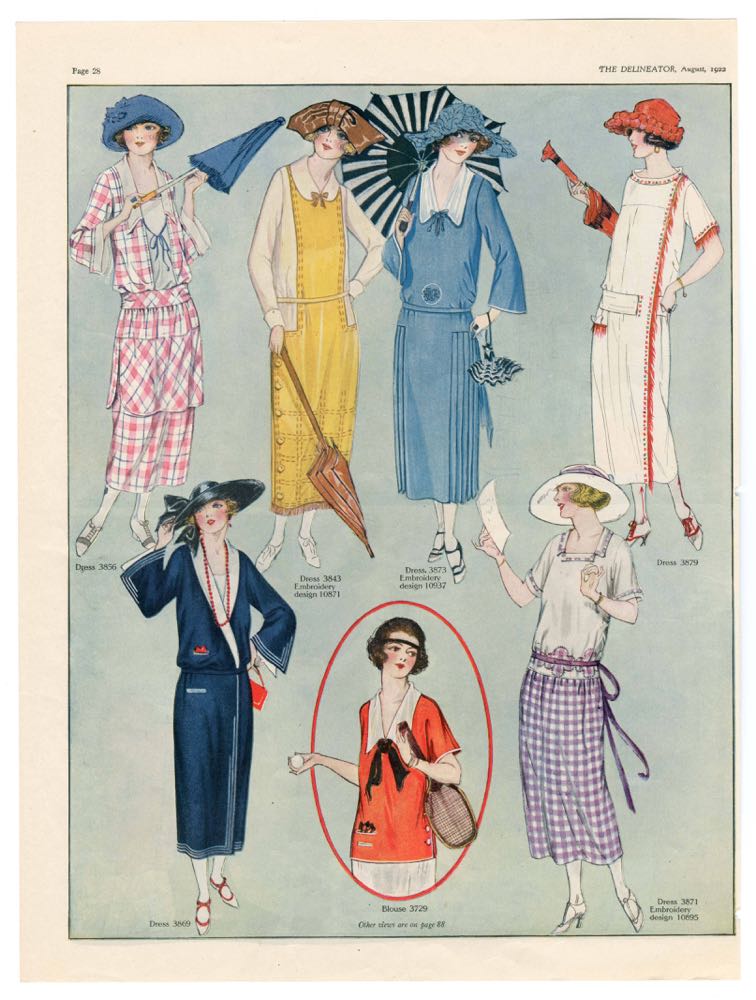
And then, while prepping for the Hamilton Garden’s Katherine Mansfield Garden Party, I came across this fashion plate:
The dress in the upper right! The fringe! The wide collar! The matching shoes and stockings!
Before I noticed the fringed dress, I’d been drooling over the cherry dress in this fashion plate:
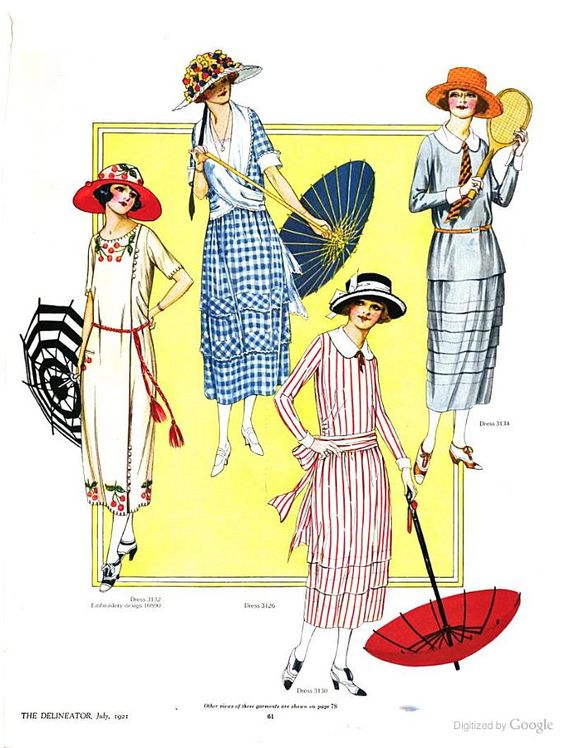
The Delineator, Fashions for July 1921
It’s really interesting to look at the slight but distinct changes in the fashions a year and a month later. The thing I notice most is the change in body shape: in July 1921, all the models shown have distinct hips, and the waistline sits just above them. By August 1922, the body shape is very straight, and the waistline has lowered just a bit, to sit fully on the hips.
The cherry dress is fabulous, but I’d make it with poppies, because all the bad ‘vintage’ inspired stuff with cherries has totally put me off it them, in the same way I’m quite off fringe. I was still a little worried about twee factor, and I knew I didn’t have time to make it before the Garden Party.
But the fringed dress… I might actually like it even MORE than the cherries! And I’d actually have time to make it (or make the main parts, and do the embroidery later) in time for the Garden Party, and it could serve as a try-out for the pattern and ideas and construction.
And I even had the fringe! I’d bought a roll of vintage rayon fringe in a delicious red in a bulk lot of other stuff I wanted, and never got rid of it.
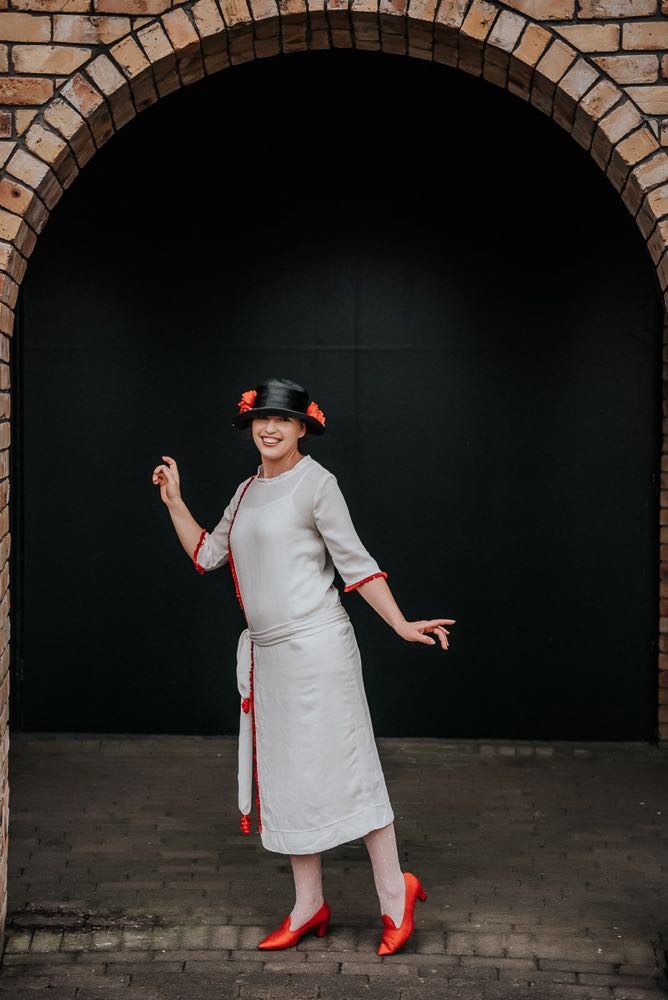
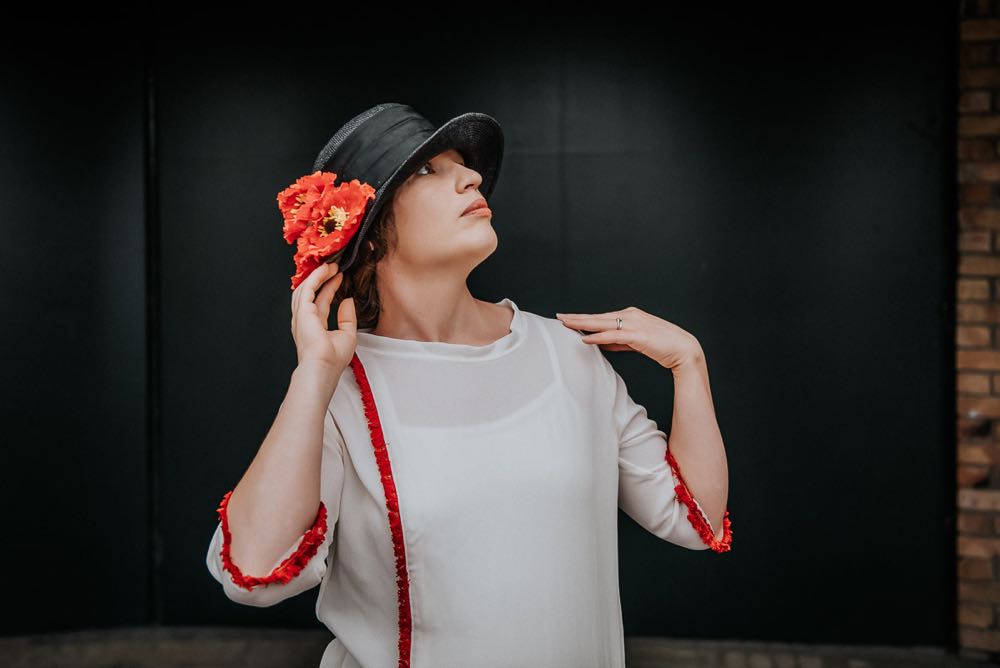
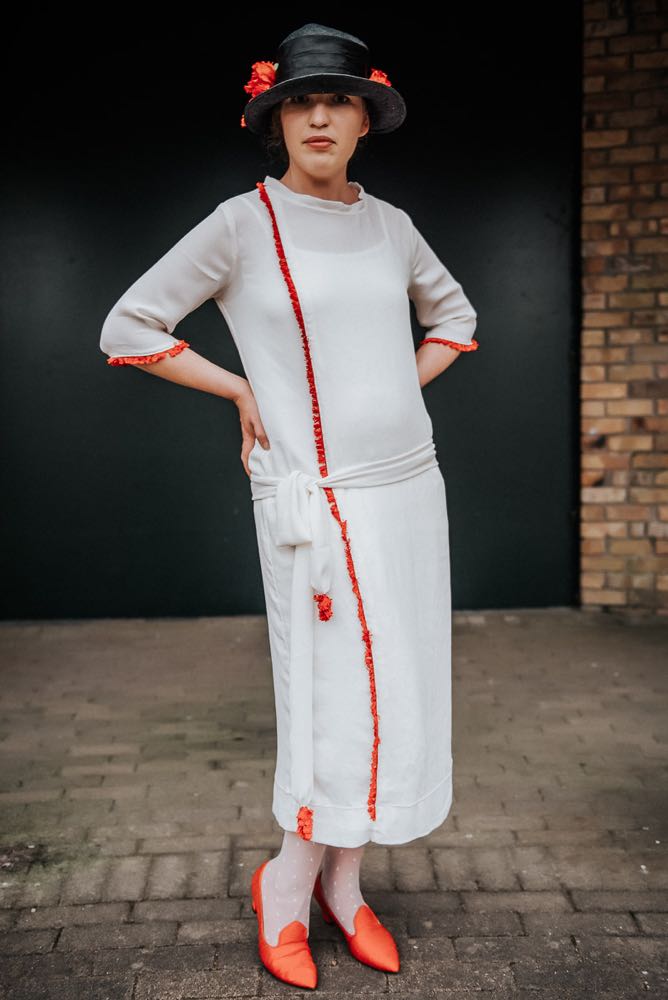
So, that was the idea. And it kind-of worked like that. And the finished dress looks pretty good:
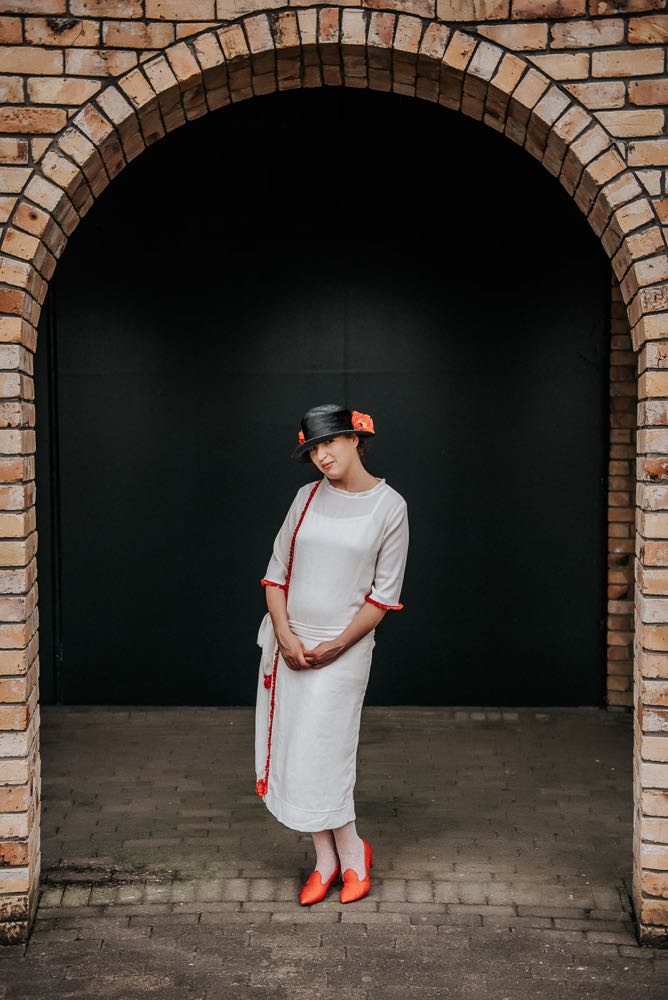
But not everything went to plan, and I’m very glad this was just a trial dress.
My big mistake was having the ‘bright’ idea to make this in a fascinating silk with a mechanised stretch, simply because it is such a fascinating fabric, and I bought it specifically because it reminded me of 1920s & 30s silk & rayon knits.
Picking it this dress happened very, very late at night, which explains a lot. My sleep-deprived brain thought it would make it easy (because, stretch!), and didn’t really process through that it isn’t really an accurate fabric for this type of dress. It turns out it was NOT easy. In fact, it was absolutely awful to work with: dreadfully wibbly and unstable.
So my ‘tra-la-la, I shall just whip this up!’ project took far, far longer than it ought to have, and the dress travelled to Hamilton with me with an unfinished belt and an untrimmed hat.
Luckily, a late-night creative burst produced some rather fun and credible tassels to finish off my belt.
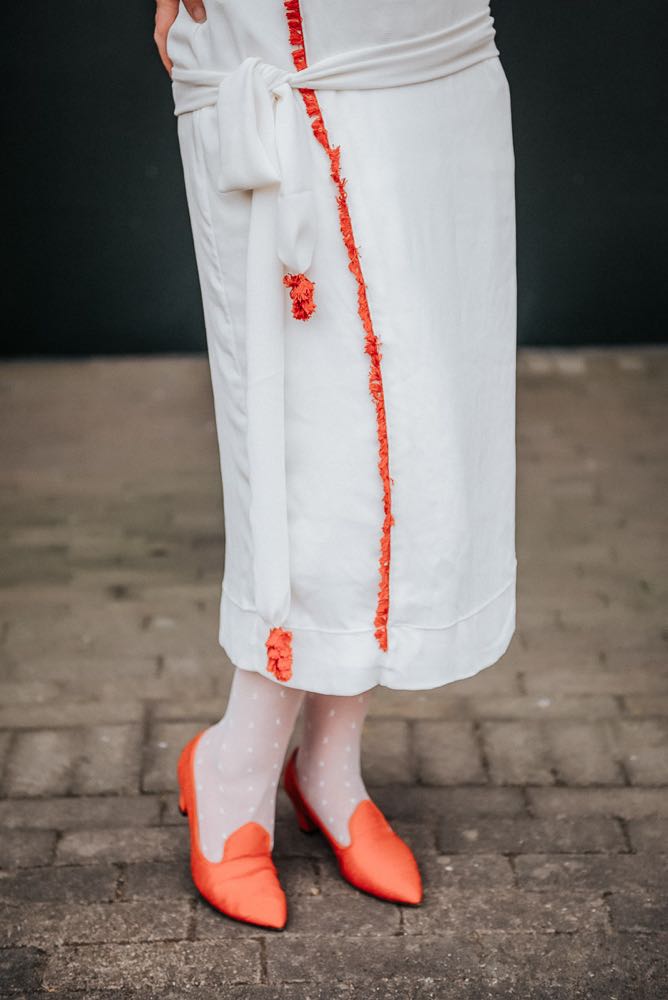
Courtesy of Tony McKay Photography and Glory Days Magazine
And in the same burst, I ripped off the terrible 1980s bow from a hat, pleated round some black satin, and sewed on a bunch of poppies (because 1920s poppies hats….mmmm…)
Courtesy of Tony McKay Photography and Glory Days Magazine
With a pair of ’90s do ’20s red silk shoes that I remembered after the dress was mostly finished, but that happened to perfectly match, I had a credible ensemble.
Courtesy of Tony McKay Photography and Glory Days Magazine
It would be much better made in linen, to give it a bit more structure, and could definitely use better undergarments (especially since my slip kept peeping when I raised my arms, so I actually got a friend to hack off a few inches of it partway through the day). And I managed to get the fringe on the wrong side of the dress.
But, even so, I quite like it! I’ve not changed my mind on fringe as a whole, but just this once, I’m a fan! Someday there will be a 2.0 version of this dress.
Courtesy of Tony McKay Photography and Glory Days Magazine