Latest Posts

The Goddess of Small Happinesses Frock

I have a small mountain of finished projects to photograph and blog about, which is a good thing, of course, but still slightly daunting!  Still, every mountain starts with foothills, so, one photoshoot and blog post at a time, I will make it to the top.

Today I’m aiming for Mt Olympus with a chiton-y, goddess-y frock.
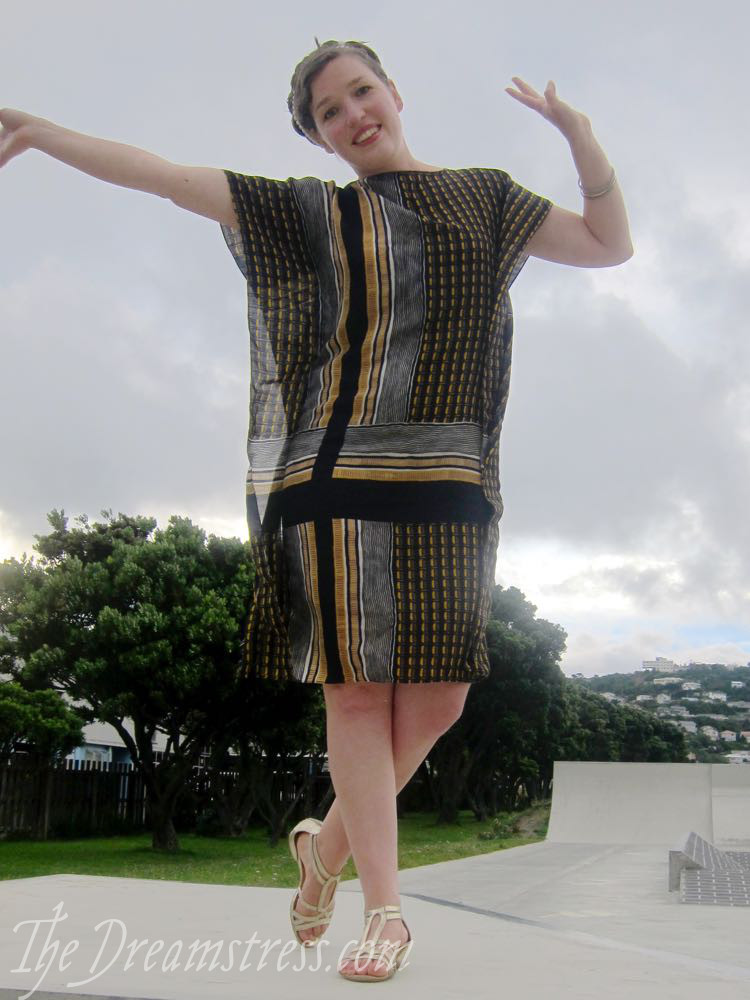
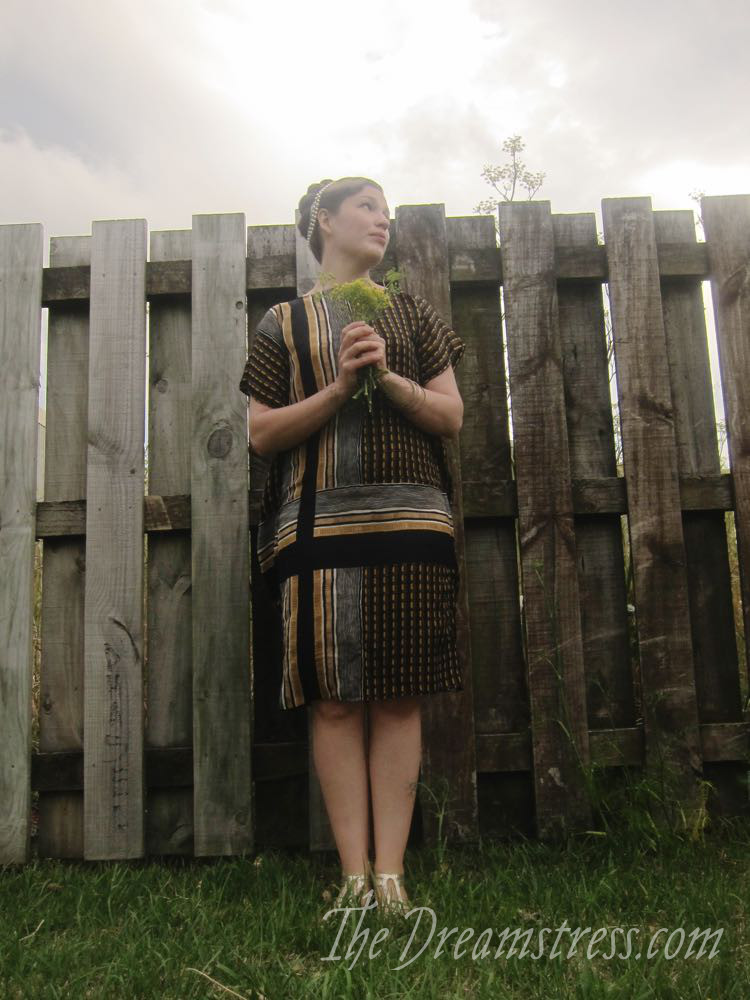
The Goddess of Small Happinesses frock thedreamstress.com2

I made this simple frock all the way back in November.  I  keep coming back to  the 1920 Vionnet Chiton dress  in my sewing, and finding more ways to play with the basic  concept.  It’s such a clever dress idea, and it really works.
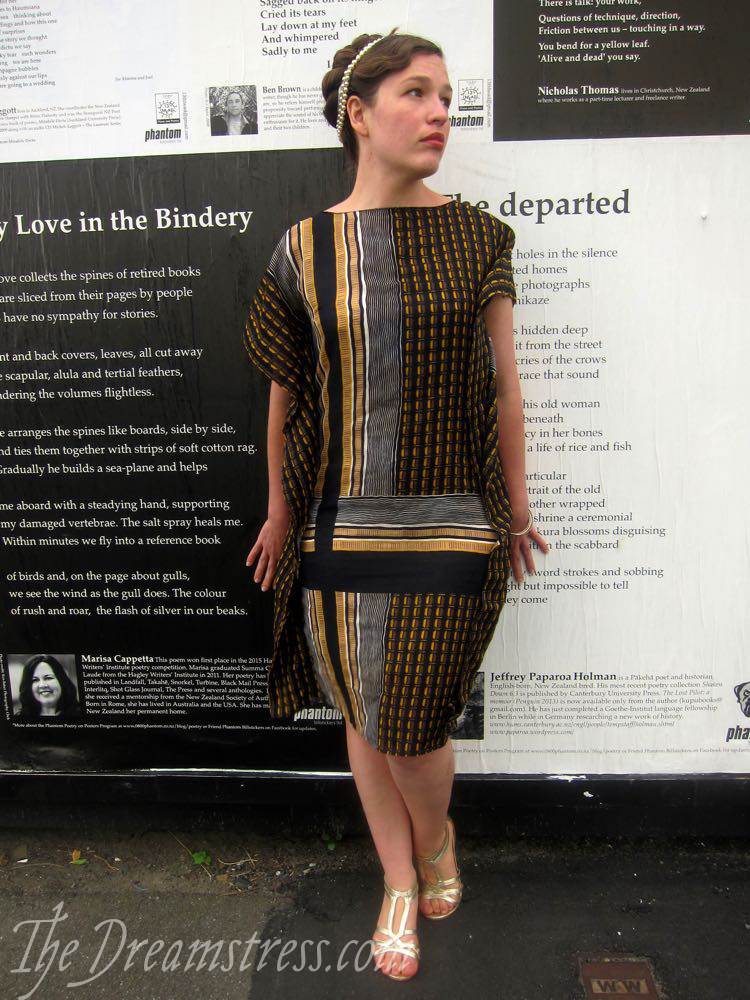
The Goddess of Small Happinesses frock thedreamstress.com

This dress is a great example of how incredibly, and unexpectedly, flattering a dress made from a simple rectangle of fabric can be, especially with some helpful pattern placement.
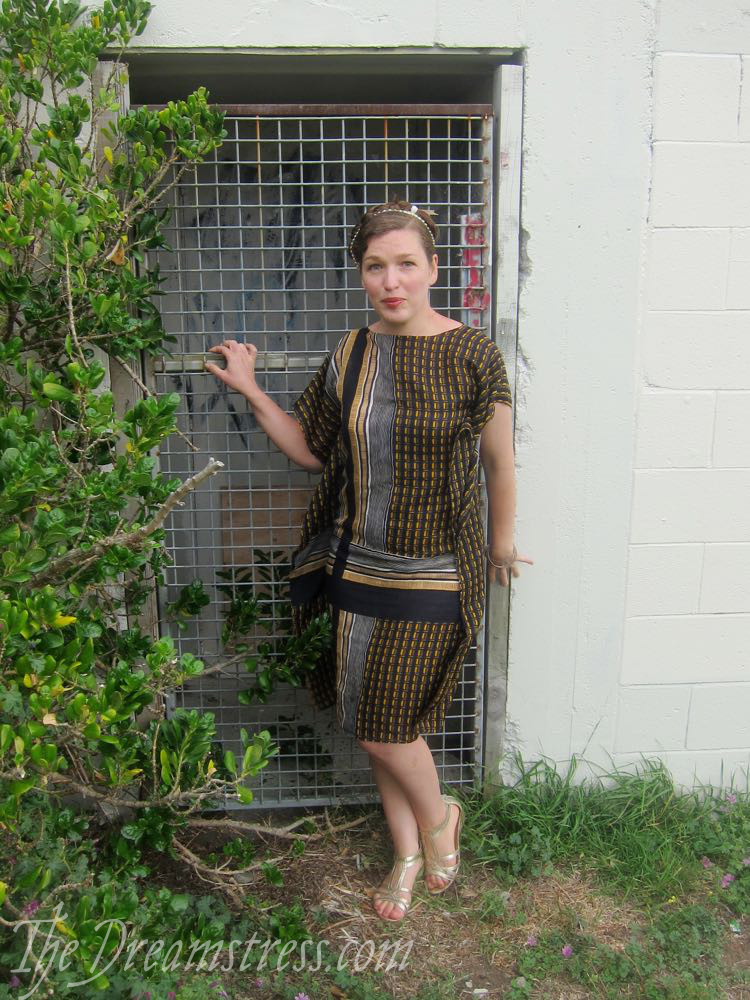
The Goddess of Small Happinesses frock thedreamstress.com

It’s doing all the right things for me: emphasising the curves of bust and hip, creating the illusion of a really small waist, lengthening, and hiding a bit of tummy squidge.  I’m currently battling the squidge, which has slowly been creeping in for the last few years, so looking this good is definitely a happiness (judging by friend’s reactions, it’s pretty impressive in person too, though Mr D asked, rather suspiciously, “What culture was that inspired by?” the first time I wore it, which is his way of saying “I think you look weird”.  He got given the “please reformulate your opinions on my dress” look.  And he has.  Smart man.).
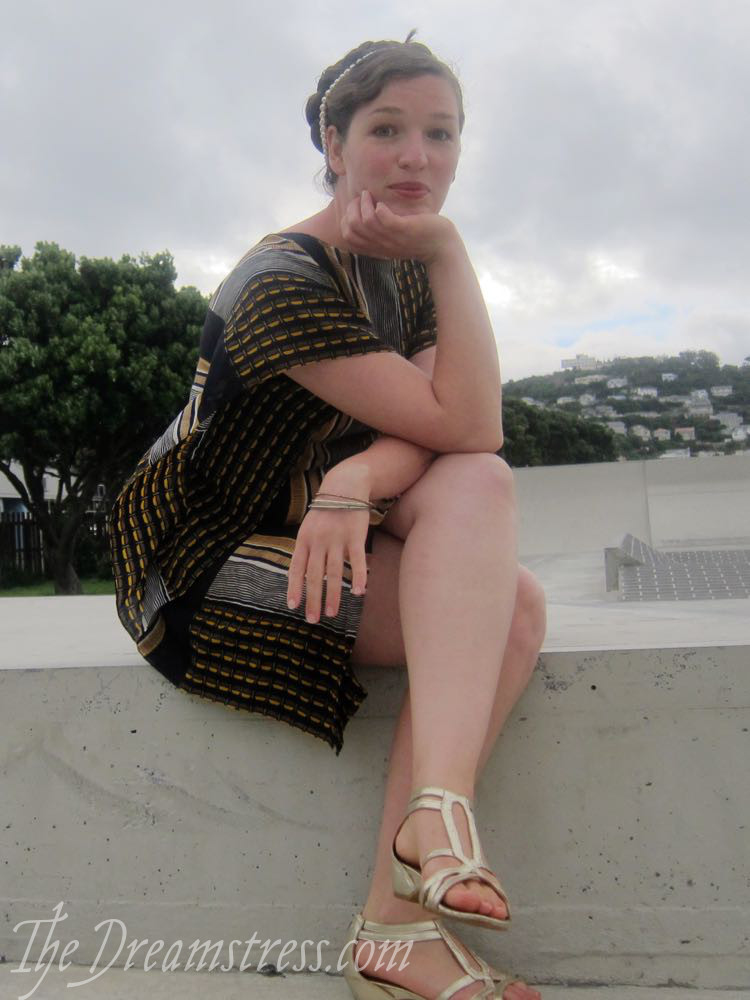
The Goddess of Small Happinesses frock thedreamstress.com

My only tiny quibble with the flattery factor of the dress is the length.  I wish it was just  three inches longer, so it  covered my knees.  But it couldn’t be, because there wasn’t any fabric, because the fabric is also a happiness.

The fabric is a very lightweight wool twill.  It showed up at The Fabric Store last winter, and I saw it and loved it, but it was very expensive, and I wasn’t sure the colours were good on me, and couldn’t think what I would make with it.  Then a student brought some into class, and I love it even more.  Then I had an inspiration of what to make with it (this), and rushed off to TFS to buy some…and it had all sold!

Oh, wailey wailey!

Then my student, who’d heard that I hadn’t managed to buy any, brought her fabric  back to class and offered to trade it for a class fee, as she’d decided that while she loved the fabric, she’d never make anything with it.

Oh, happiness!
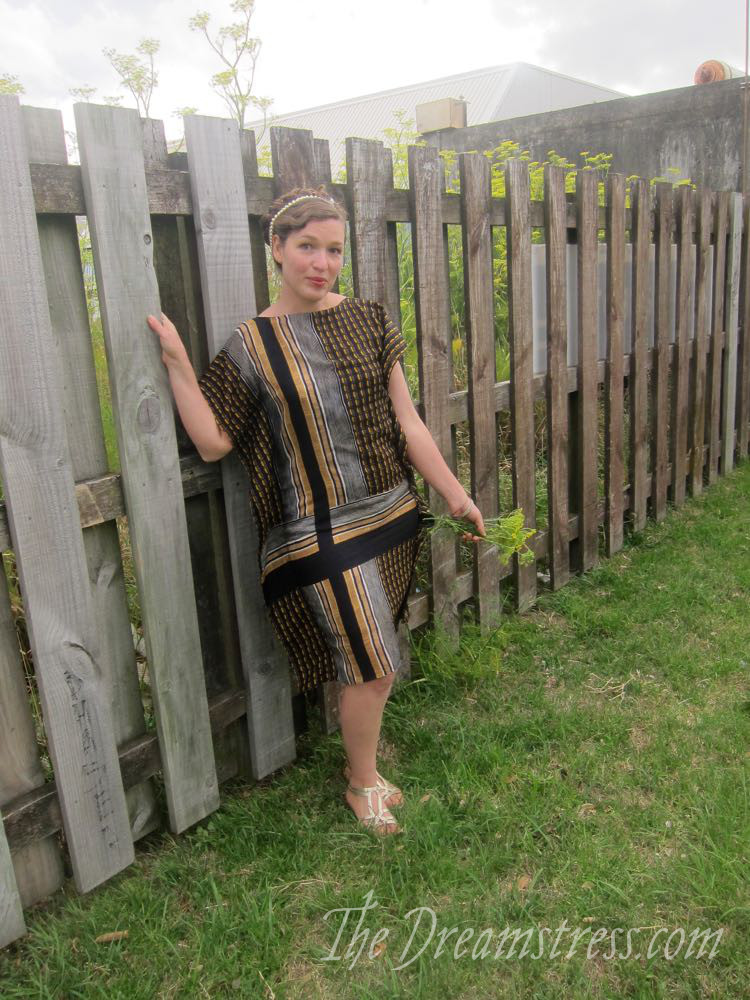
The Goddess of Small Happinesses frock thedreamstress.com

As I didn’t get to choose the length to buy, and only got what my student had, I used the full length of the fabric in making the dress.  Providentially (that’s another happiness!) it was possible to make both the horizontal and vertical  stripes  fall right where I wanted them: right down one bust and leg, and across my low hip.  On the back of the dress the horizontal band runs across my upper back, so if I wore the dress backwards it would be on my high bust.
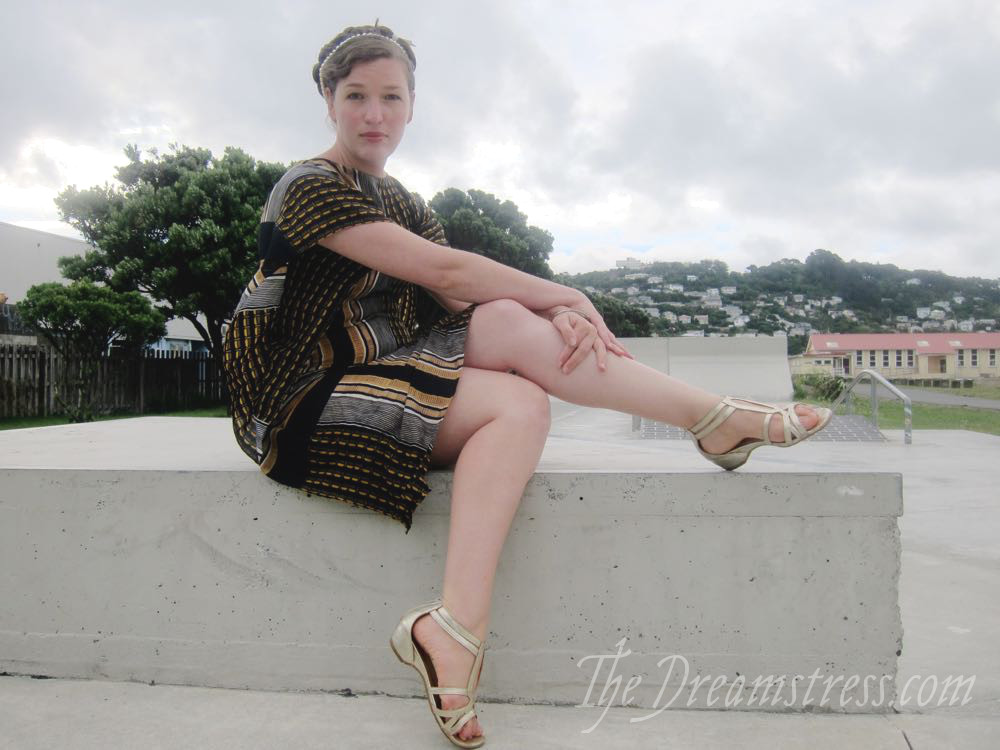
The Goddess of Small Happinesses frock thedreamstress.com

There was a long length of extra width, which I turned into a scarf: perfect for wearing with a 1920s wool crepe dress and long cardigan on an autumn day.  Using every bit of fabric in a project is definitely a happiness!

So is a successful photoshoot.  Late this  evening, after we’d both been working like mad all day, Mr D announced that he needed to go to the hardware store to pick up a bunch of DIY stuff before it closed.  Would I come along and advise on the right sort of nails and sandpaper etc. to get?  Mumble, mumble grumble.  OK, I’d come, but only if he’d do a photoshoot after.  A favour for a favour.  Fair enough.  So I rushed to get dressed and do my hair.

The hardware store is really near one of my favourite beaches, definite photoshoot material, but on the way to the store I noticed a cool wall cover with billstickers with poetry all over them.  So we stopped there for photos.  And then wandered into a tiny skate-park nearby, and found some cool fences and and a bit of wall, and ended up with a very successful set of images.  And even Mr D admitted he’d had fun!
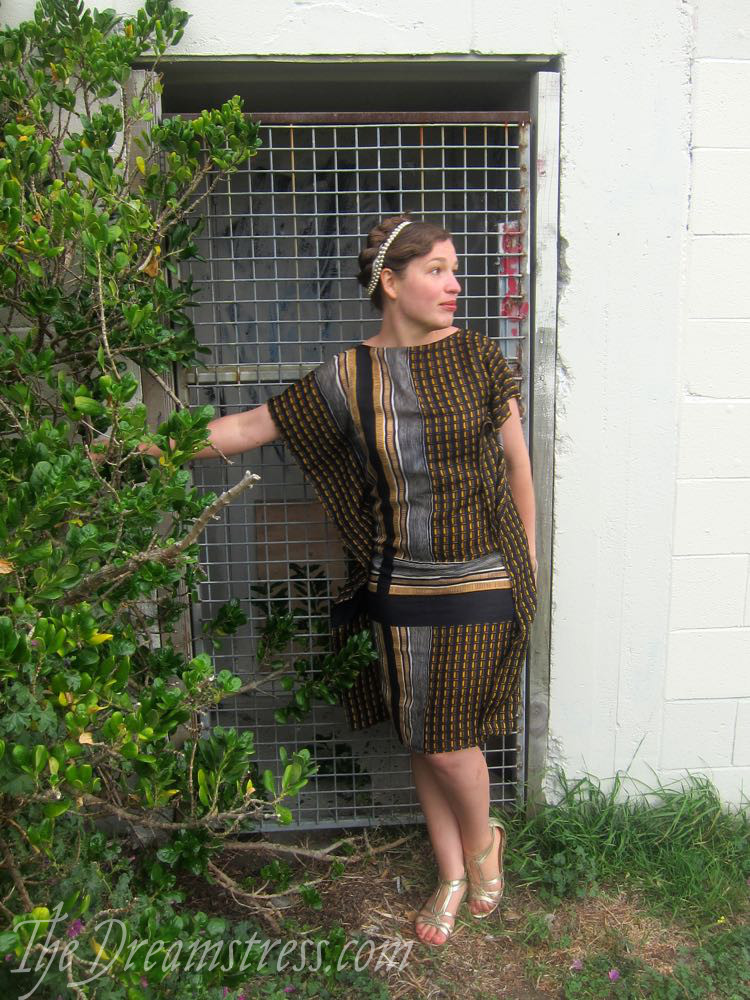
The Goddess of Small Happinesses frock thedreamstress.com

And for the final small happiness, because I like a good bit of serendipity;  I’d originally intended to name the frock after the ancient Greek goddess of happiness: Eutychia.  But Eutychia really is a dreadful name.  It was only after I’d named the dress and written most of the post that I remembered that the Roman equivalent of Eutychia is (of course) Felicitas.  And if Felicitas is the goddess of happiness, than a small happiness must be…Felicity!
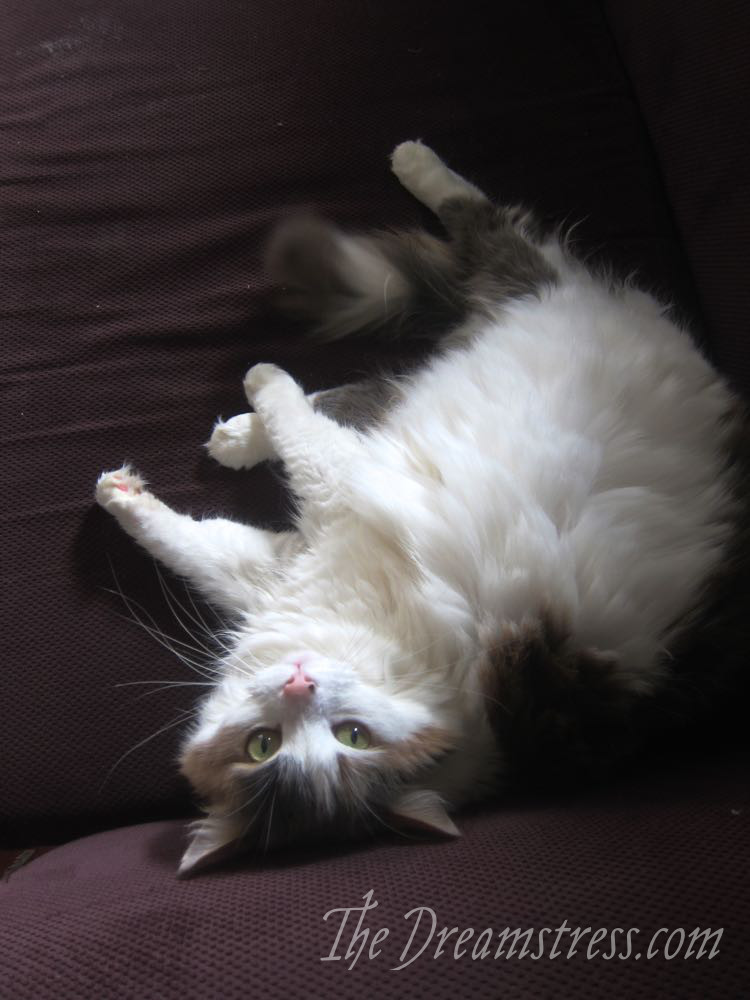
Felicity the cat thedreamstress.com

Oh, happiness!

The Goddess of Small Happinesses frock thedreamstress.com

Friday Review: Regency Women’s Dress: Techniques & Patterns, 1800-1830, by Cassidy Percoco

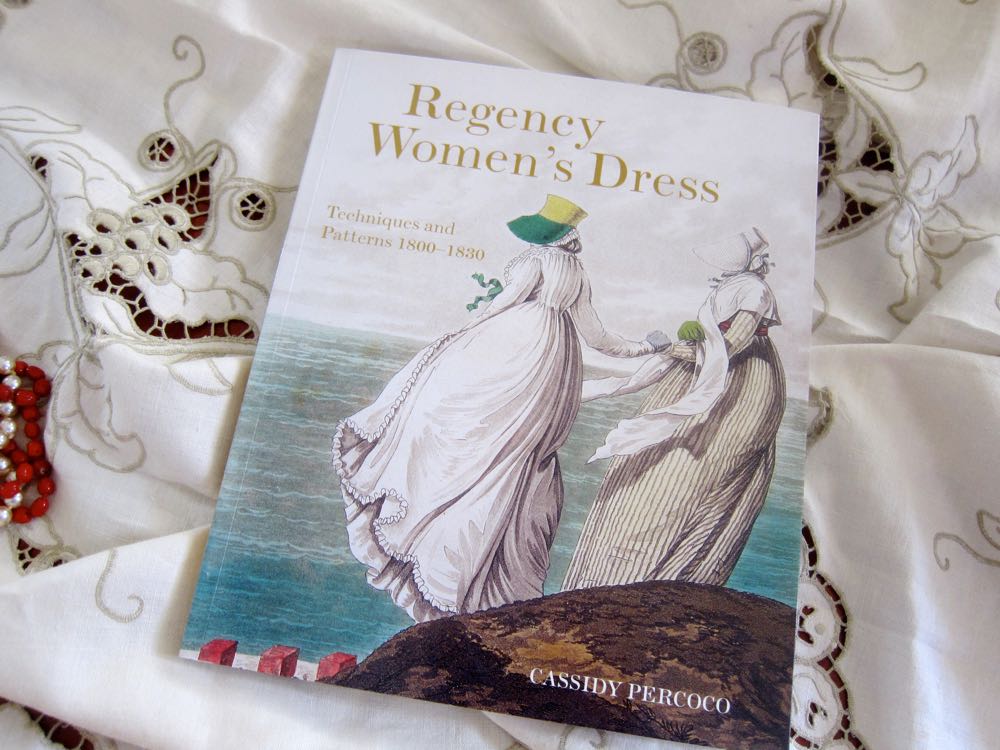
Last September I noticed that a new book on Regency fashion was due to come out at the start of October: Cassidy Percoco’s Regency Women’s Dress: Techniques & Patterns.

Regency Women's Dress

Exciting!

I’ve long thought that one of the things the historical costuming world is really lacking is a comprehensive book on Regency fashions.  I’ve also felt that my personal historical wardrobe is sadly  lacking in some good Regency pieces.  Percoco’s  book just might  be the perfect answer to both  needs!

So I added the book to my wish-list, and made a mental note to check it out once it became available in New Zealand, or browsable online (the overflowing state of my bookshelves combined with the high cost of buying books in NZ, or getting them shipped here, means I have to be really committed to a book before I can allocate it shelf space).  And then the publisher wrote and asked if I would review the book for its Southern Hemisphere release.  Yes please!

As it happened, that meant I got the book three days before Christmas, which is a terrible time to review books, because it’s too late for people to buy it as a present, and no-one is reading blogs anyway.

But the holiday’s are past, people are reading and ready to shop again, and I have had time to thoroughly peruse the book.  So, ladies and gentlemen, a review.

The Good:

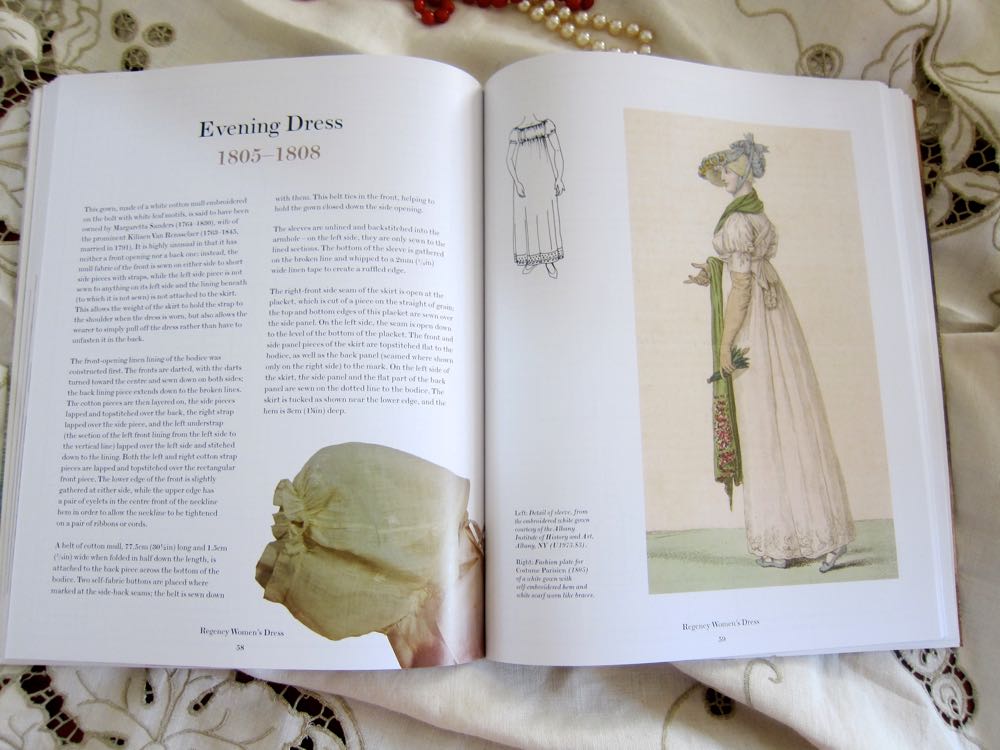
The book includes descriptions, sketches, detail images, and patterns for 26 garments representing women’s dress items from 1800 to 1827.

The garments are well chosen to represent the type of garments that a general re-enactor of the period would want, rather than focusing on more ‘interesting’ but less universally useful unusual garments, as Salen’s Corsets did.  The patterns represent everything from chemises, two styles of stays, to dress for a variety of occasions from informal to formal.

Regency Women's Dress Techniques & Patterns - a review thedreamstress.com

Each pattern comes with a overview  of the garment, the type of event it would be appropriate for, provenance information when known, and the a general  description of the construction details, giving a fairly extensive background into how to make and were to wear the garment.

The book begins with an excellent overview of fashions in the period 1790-1830, covering the different types of dress, changes in styles from year to year, and the basic stylistic differences between French, English & American fashions.  I would disagree with Percoco’s concluding statement that “The fashions at the beginning of the nineteenth century signalled an enormous break with the dress that came before them, which had been almost unchanged in fundaments for the entire previous century.” as I can see a clear transition (rather than break) in styles from the 1770s into the 1800s, no more or less enormous or fundamental than the changes in styles from the 1710s to the 1740s.  This aside, the overall description of Regency fashion is one of the most comprehensive I have read, and is quite impressive in both depth and breadth for its three-page length.

The ‘this could be good or bad, depending on your perspective’:

All of the garments in the book are drawn from collections of smaller museums in New York state.  This makes the book an excellent resource for US re-enactors wanting to recreate the types of clothes worn by women in the East Coast of the US in this period, but slightly less useful for those outside the States wanting to replicate the fashionable dress of England or continental Europe.

The Bad:

Unfortunately there are a few definite drawbacks to the book.

First, there are no photographs of the complete garments for each pattern, just small detail images of a the fabric or a  construction  feature.  This may have been  done for reasons of space, as an aesthetic choice, for cost (perhaps the museums were asking very high fee licenses for full-garment images? ), or because too many of the garments were in too weak a state to be mounted for full display.  There are sketches of the full garment that accompany each pattern, but they are quite simplistic, and show only one angle of the garment, leaving the reader to attempt to visualise the back or front based on the pattern pieces.  The book would have benefited immeasurably from either full photographs, or very detailed technical drawings of the garments and some of the more intricate construction features, a la Janet Arnold or Norah Waugh.

Each garment does come with a period fashion plate to illustrate the style, but not all of the fashion plates are exact, or even close, approximations, of the garment depicted.

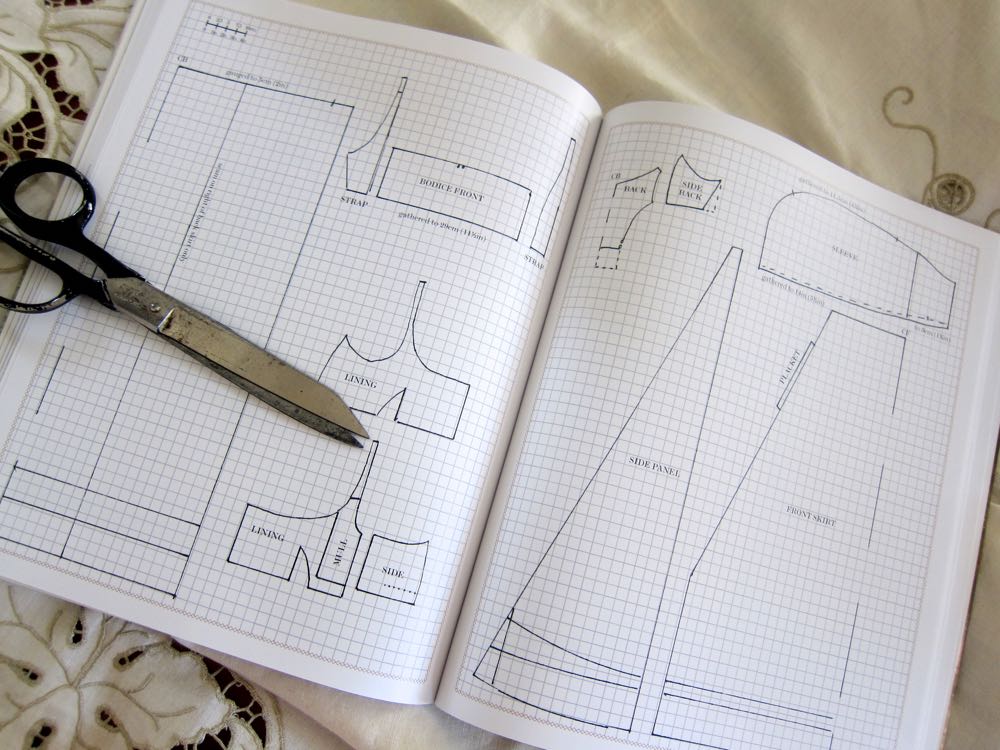
The patterns themselves are fairly simple hand-drawn patterns, and, while excellent for giving overall shape, would have benefited from a few more details in regards to  decoration and trim.

Regency Women's Dress Techniques & Patterns - a review thedreamstress.com

The editing of the book is slightly rough in a few places, with the occasional confusing grammatical construction, and at least two typos, one of which is a fashion plate dated to c. 1903 rather than c. 1803.  Rather unfortunate.

I would have liked to have seen a glossary or a bit more description of the fabrics used in each garment, to assist in reproducing.  Most garment’s fabrics are mentioned, but it is never made clear that, for example, the silk crepe used in a Regency evening gown would be quite unlike the silk crepe one could buy today.

Finally, I felt the book was lacking slightly in the ‘techniques’ mentioned in the title.  While the construction descriptions with each dress are nice, it might have been a better book with one less pattern, and a four-page description of basic construction techniques and stitches for one garment.

The Verdict:

The book is an excellent addition to the bookshelves of the dedicated multi-period costumers, or the specifically  Regency re-enactors.  The range of patterns given and the very helpful overview will be of great assistance in dating and recreating a whole range of looks and garments.  Percocco certainly knows her period, and gives some very interesting insights into regional and dating differences that I have not encountered elsewhere.

If you aren’t that dedicated, or have limited space or budget, I’d probably recommend  investing in Janet Arnold’s Patterns of Fashion I, Nancy Bradfield’s Costume in Detail, or Norah Waugh’s The Cut of Women’s Clothes 1600-1930  first.  Percoco’s book does have the distinct advantage of including patterns for almost every garment you might wish to wear, but the lack of detailed patterns, sketches, or full-garment images does limit its importance and helpfulness.

Come join me for a Garden Party Salon

It’s mid-January, and once again I am madly sewing 1920s fashions…but not for Art Deco Weekend.  This time I have something even more novel and exciting – I’m a featured speaker at the Glory Days Salon at the Hamilton Gardens’ Mansfield Garden Party.

The Mansfield Garden Party (Sunday 7 Feb, 10-5) celebrates New Zealand’s most famous author (and one of my personal favourites) and one of her most famous works: The Garden Party (if you haven’t read it, do, it’s wonderful).

If you are in Hamilton or driving distance (come down from Auckland for the day!) do come along to the Salon (book tickets through the Glory Day’s link above).

I’ll be talking about garden party fashions in the first two decades of the 20th century, from the dresses Mansfield wore to garden parties in Wellington in 1907, like the one she wrote about in her story, and garden party styles in the early ’20s, when she wrote her story.  And, of course, there will be models!

Come and learn, admire, and be admired!  And bring a picnic!

Fashions for May 1918