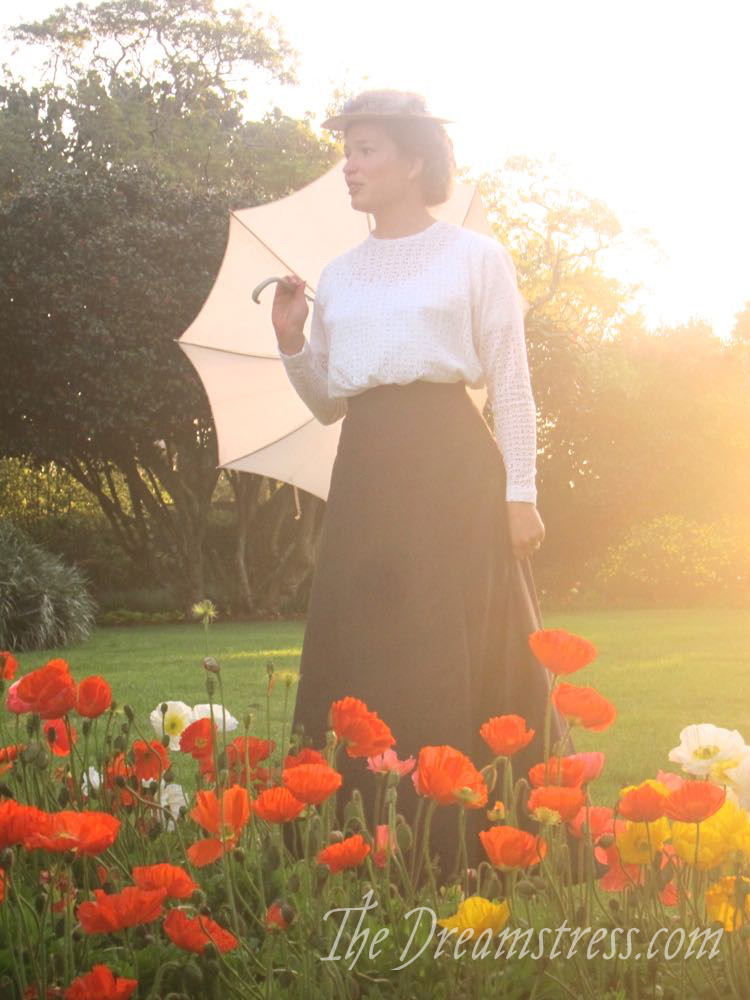
Exoticism and romance is a funny thing isn’t it? It’s so dependent on place and perspective. Hawaii, is, for many people, the very definition of an exotic, romantic destination, and everything from and about Hawaii is coloured in that rosy glow.
Growing up in Hawaii, and growing up on Bond, Boston, Burnett, Lewis, and Wynne Jones, and later Stevenson & Austen (and even later, Rowling), England and Scotland were my idea of exotic, romantic locations (sorry Ireland & Wales, somehow you got shafted in the romance stakes when it came to my childhood literature). Mackintoshes and golashes sounded thrilling, and Guy Fawkes was fascinating. I wanted to do all the weird British things I read about, and all the weirdly British things that my family did anyway (tea, baked puddings, but sadly, not Christmas Crackers, which my mother had as a child, but which we could never figure out how to import into Hawaii (they won’t ship them because of the firecracker component)) were that much better.
Perspective is everything though. I met some lovely older ladies of Scottish origin (but who had clearly spent a good portion of their lives in NZ) a few months ago, and when they found out I was from Hawaii they said “Oh, how exciting! How exotic and romantic!”.
I laughed, and said that when I was young, Scotland was the epitome of romance for me.
They took my use of ‘romance’ quite literally, and one said, quite decidedly “Oh no! Scotland is the least romantic place on earth!”
The other chimed in with “No Scotsman was ever romantic!”
Her friend concurred “True, I dated far too many of them, and not one was….oh…wait…there was Tom, he could be a bit of a gentleman…oh no, he was English.”
“See! No Scotsman was ever romantic!”
(hah! I knew Cross Stitch was a lie!)
No Scotsman may have ever been romantic, and modern English TV a harsh disillusionment (nothing could be less romantic and exotic than Coronation St!), but there are still bits of the British Isles that cause that old thrill (as Anne would say).
One of these is English wool. New Zealand may make technically better wool, but there is just something just so evocative about a length of good English wool. Proper Harris tweed is a wonderful thing, but my sense of romance isn’t as strong as my senses of smell and touch, and so a bit of soft fulled woollen fabric that doesn’t come with scratch factor and a whiff of urine is always going to make my heard beat just that much more.
Last Christmas the wonderful Lynne gave me a particularly lovely, pet-able length of English wool:
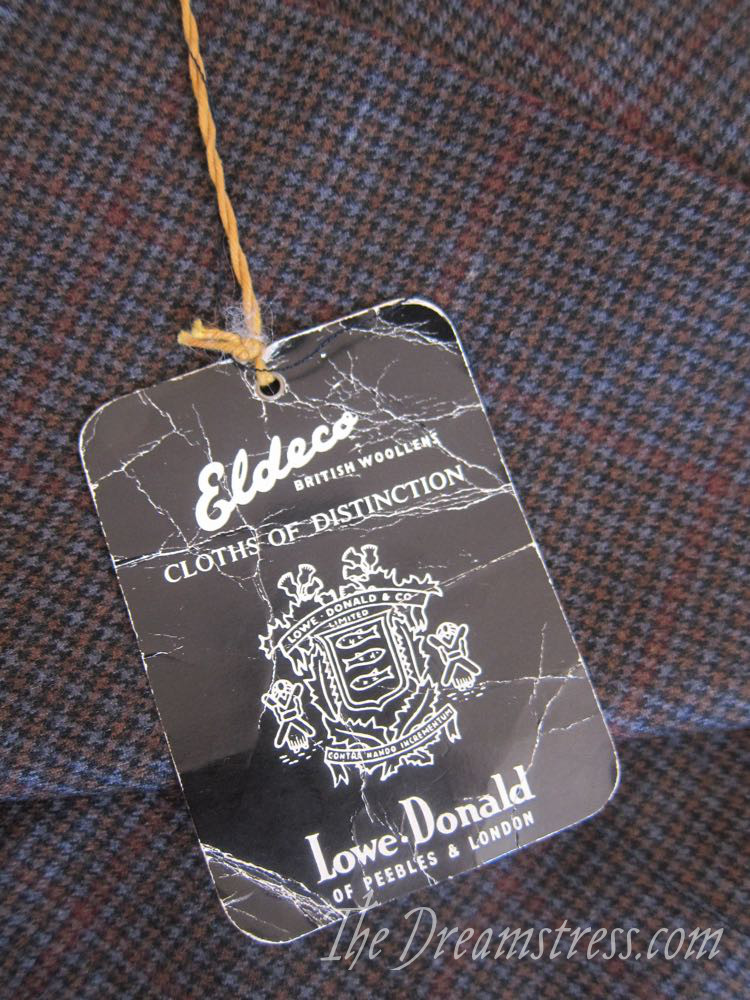
It immediately spoke to me of long walks on the moors, springtime strolls through the bluebell woods, secret gardens, yew hedges and, while not exactly English, Golden Picnics. So naturally it had to be an Anne skirt!
There was almost three meters: enough, if I was clever, for a 1900s skirt and a 1930s skirt.
I cut the 1900s skirt first, and sadly, due to pattern matching (even on such a subtle check, I couldn’t resist), it took a little more than I expected, so I think I won’t manage a ’30s skirt. Maybe a matching 1900s bolero jacket, if I’m very clever.
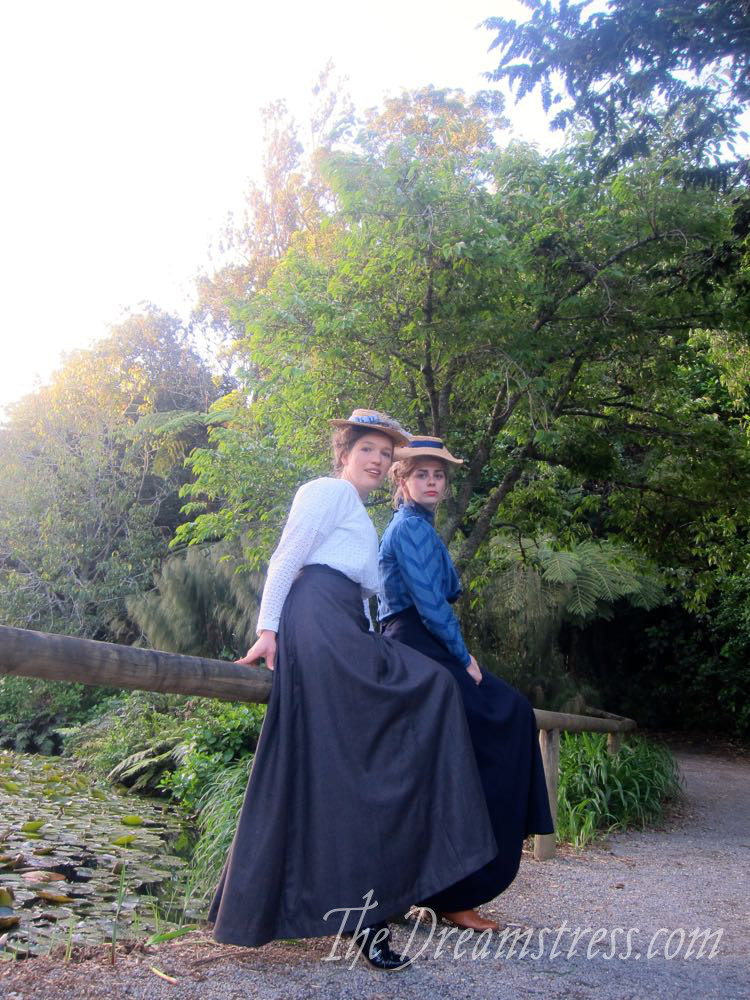
The end result is rather nice though. A trifle long for a walking skirt (I just can’t resist giving my skirts the longest hem possible), but perfect for the principal of Sunnyside High School.
It’s a simple 5 gore skirt, with fan pleating at the back, giving it a nice end-of-the-1890s A-line silhouette, transitioning to the more serpentine Edwardian silhouette.
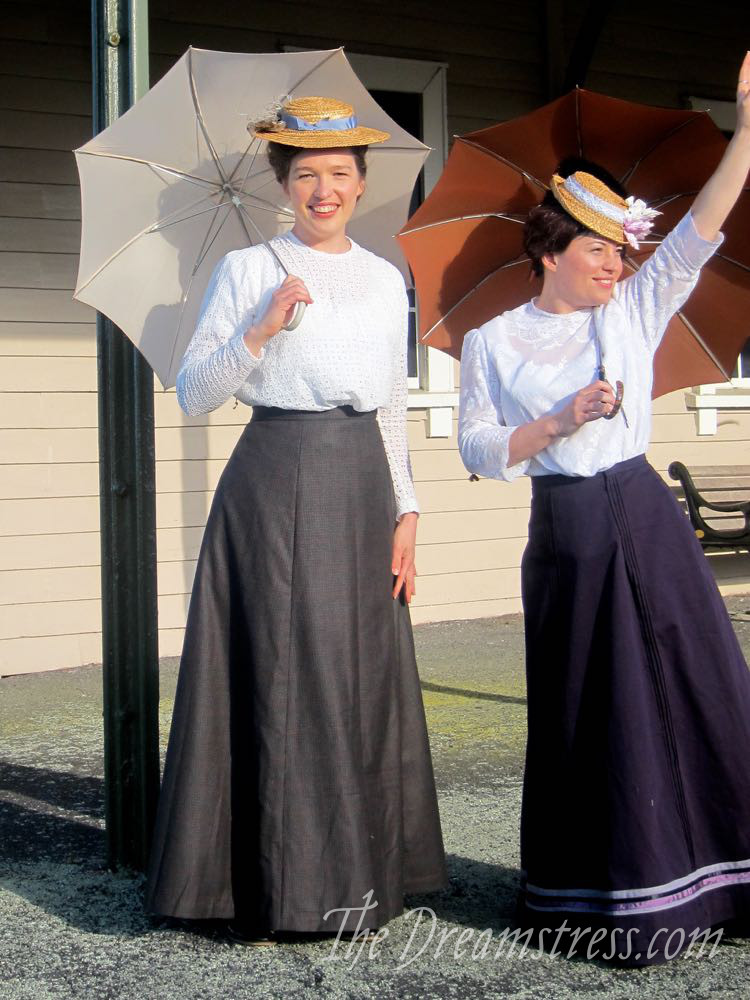
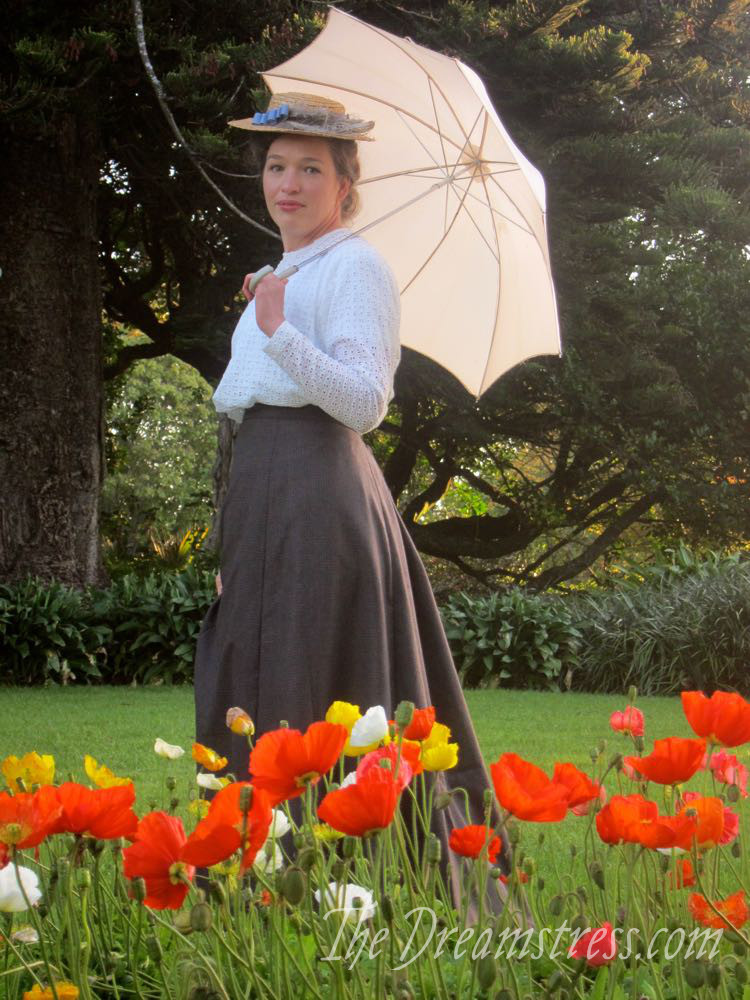
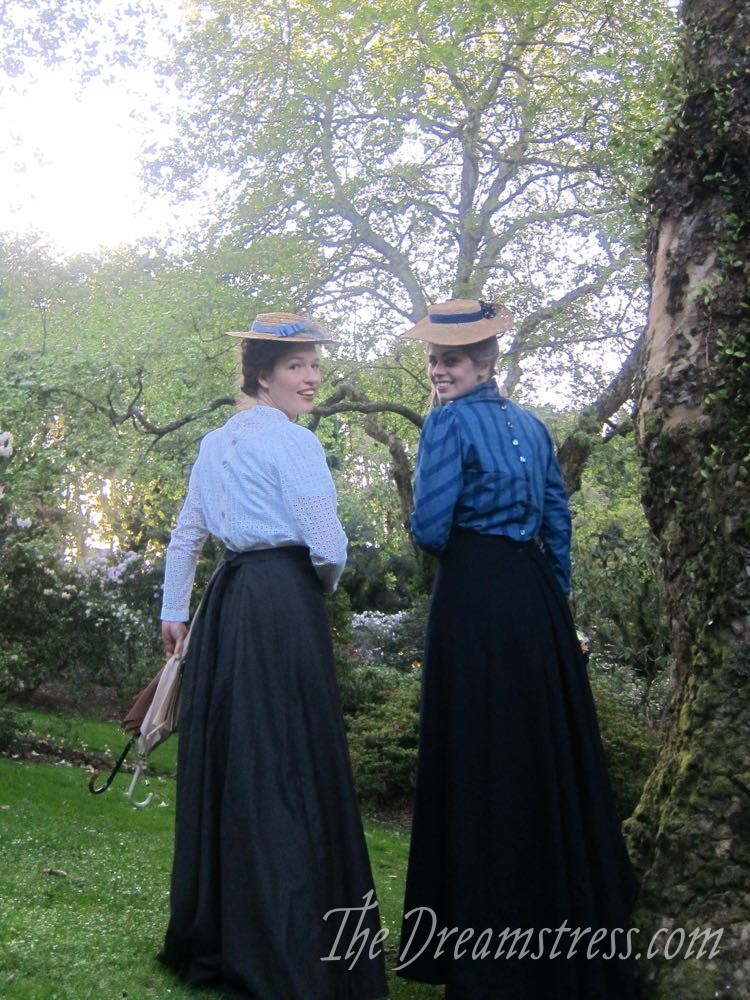

The wool is delicious isn’t it? The way it looks grey in some lights, and brown in others, and the way it falls, and the slight sheen. It’s completely un-pressed in these photos because we were staying in a cabin with no electricity, and it had spent two days shoved in a trunk, but that seems very appropriate for the period!
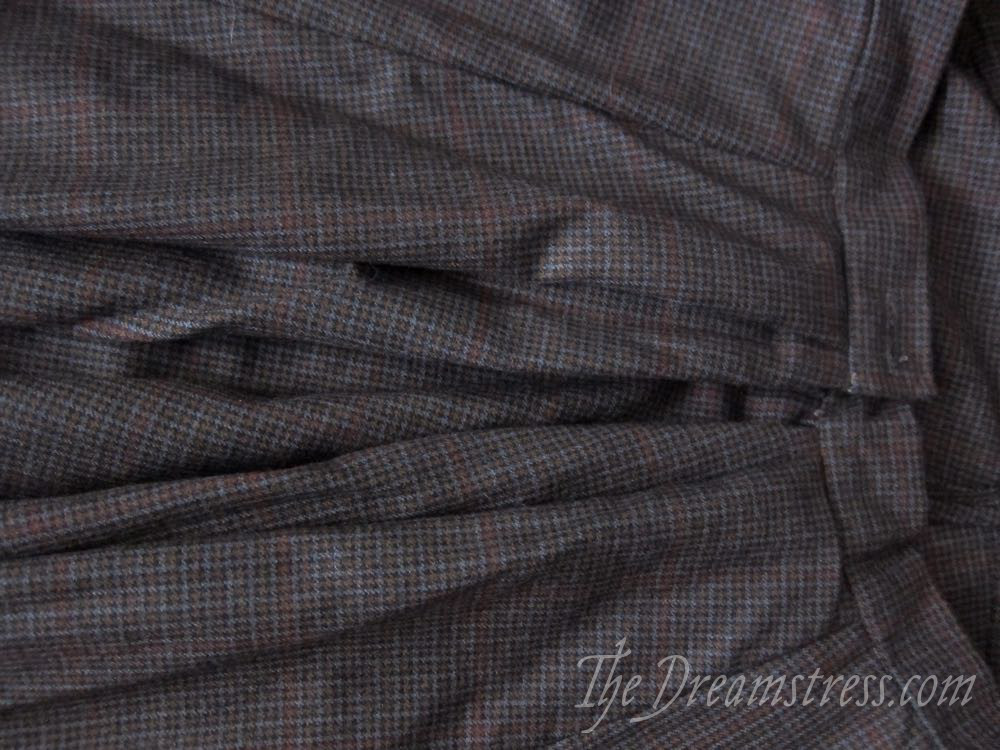
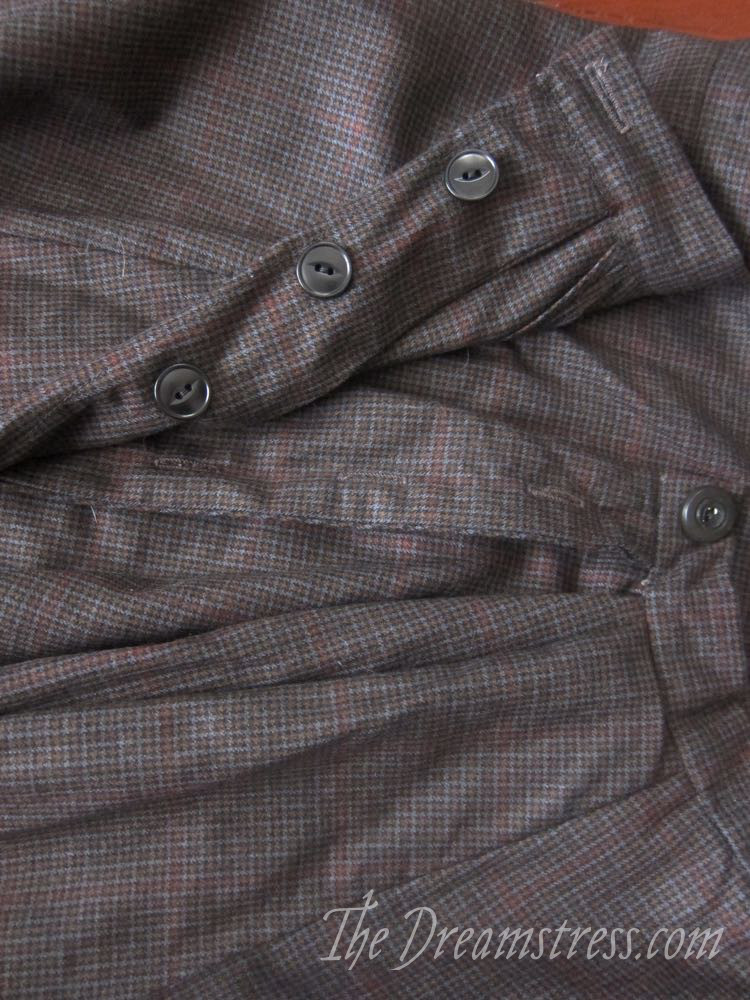
This post is dreadfully late, but I did actually start this in September, and finished it in early-ish October, so the garment was for Colour Challenge Brown
The Challenge: #9: Brown
Fabric: 2 1/2 metres of English wool
Pattern: None, but based on period 5-gore skirt patterns
Year: ca. 1900
Notions: cotton thread, buttons
How historically accurate is it?: Pretty close to 100%. The materials used, fabric, and construction are all very close to period originals.
Hours to complete: 5
First worn: Sun 25th October, for an Anne of Green Gables inspired photoshoot in New Plymouth’s Pukekura Park
Total cost: Under $5 (thanks to Lynne’s generous gift!)