This is a the tale of a serendipitous sewing secret…
When we’d decided on an ‘Anne of Green Gables’ theme for our Pukekura Park dress ups and photoshoot, I knew costuming ‘Priscilla’ was going to be a bit tricky. She’s petite, and I’m tall, and most of my outfits are made to fit me.
I was super busy the whole week before the our trip, but figured I had plenty of white voile, and could make a simple white voile Wearing History Edwardian blouse in an evening.
And then, late Thursday, I popped into an op-shop while waiting on a print job, and got lucky: I found an amazing lace tablecloth that I thought would be perfect for a blouse. It had flowers, and scallops, and greek key meanders, and was simply marvellous. However it was stained, and they wanted $3 which I thought was pricey for a small, stained, tablecloth, and it was a cash-only op-shop, and I had only $3 in cash, and they had a couple of sewing patterns I also wanted…
But I sucked it up, passed on the patterns, and bought it and hoped…
I took it home and threw it in a Napi-San bath to soak overnight. In the morning, I washed it, and draped it on the drying rack over the dehumidifier, because the weather was foul and we don’t have a dryer.
And then I ran around the house like a mad thing packing everything else three girls need to dress up in 1900s garb, and everything I would need for a three day weekend, and making dinner, and re-shaping hats, and trying to do a bit of tidying.
Every once in a while I peered at the tablecloth and and rotated it to maximise drying.
Finally, around 4, it was dry, so I spread it out on a piece of very white fabric, and found that while the spots had faded, there were still quite a few visible stains. So I carefully marked them with pins, and rearranged and fiddled with the pattern pieces until I found a layout that was not only mark free, but awesome.
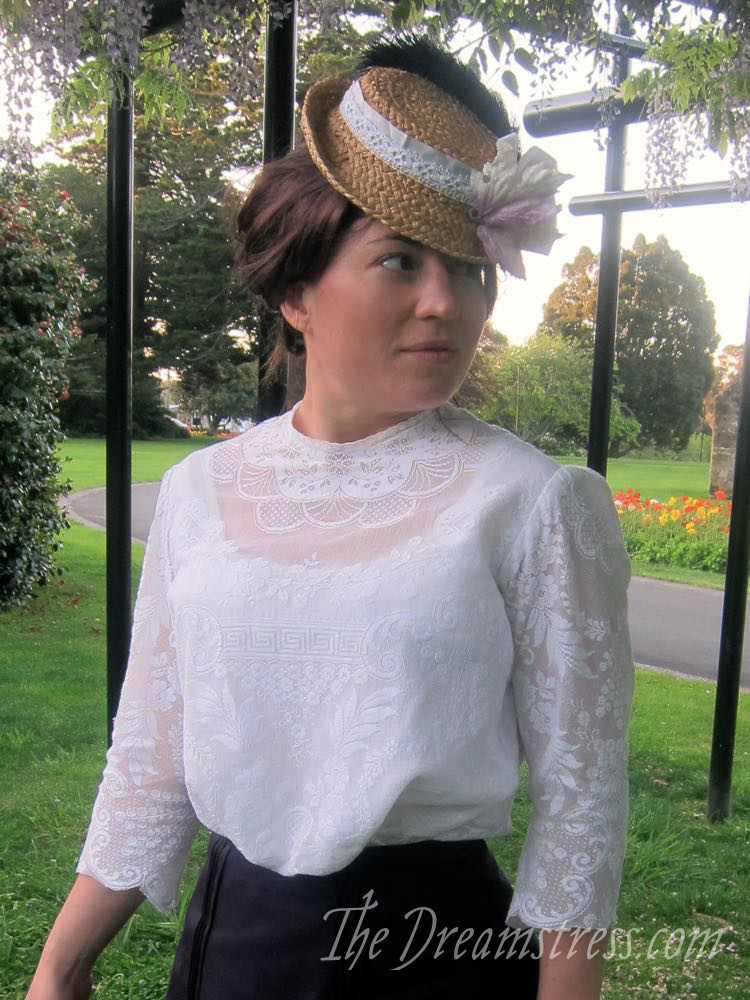
Seriously, how impressive is that?
Then I cut the lining, finished the lining interiors, and flat lined the whole thing, just in time for ‘Stella’ to show up for a pre-road trip sleepover. Together we assembled the blouse, set in the sleeves, finished the neckline, hemmed everything, picked buttons, and worked buttonholes on it. We also shortened Priscilla’s skirt, assembled three hats, hemmed my skirt, and worked buttonholes in my skirt.
And then we collapsed into bed!
The day of the photoshoot we made Priscilla sew on the buttons (while I sewed buttons on my skirt and Stella and I trimmed hats) – so she also contributed to it.
There is even a cute, serendipitous story about the buttons. We picked 10 small white plastic buttons from my stash for the blouse – they were small, unobtrusive, and uninspiring, but the best I found in a quick rummage in my button box. I almost forgot them in packing, and Stella said “Don’t worry, we’d find some in an op shop on the way up” and I said “There is NO way we’d find enough buttons in the right size just by chance”
Yep. You guessed it. I found a whole bag of buttons for $2, with multiple choices of vintage shell buttons that fit perfectly!
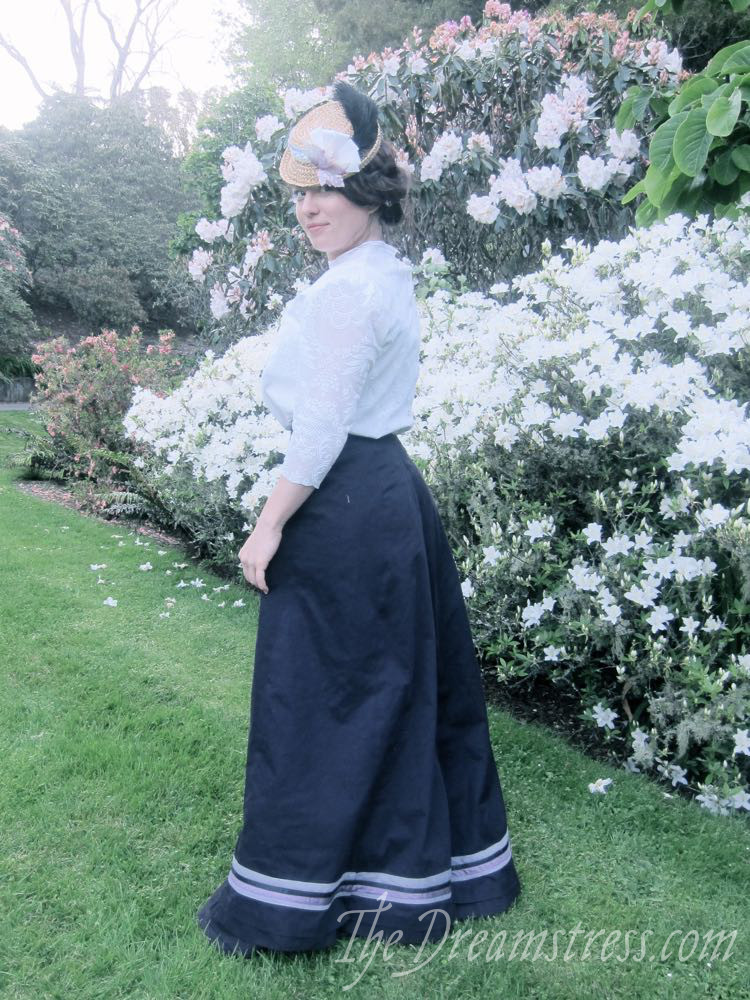
Very serendipitous all round!
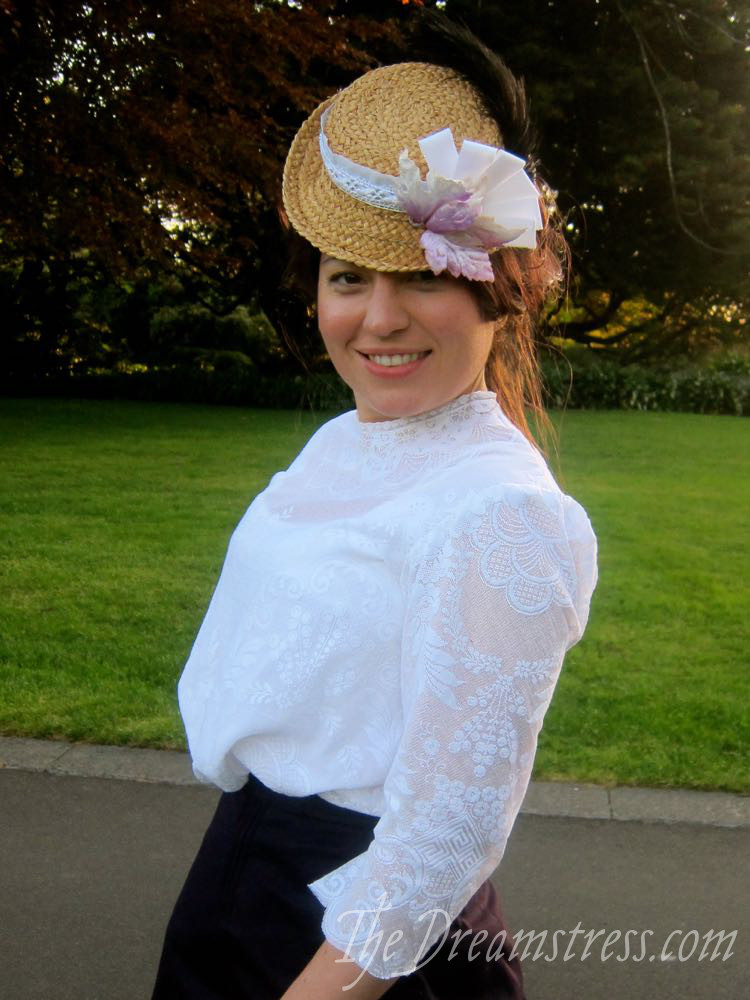
Also, the shirt fit Priscilla perfectly (I completely just guessed, and graded between sizes all over the pattern).
And she’s madly in love with it, as is Stella, who desperately wants me to sell it to her (and she hasn’t even tried it on!). Stella’s out of luck, but I am keeping my eye out for another tablecloth for her.
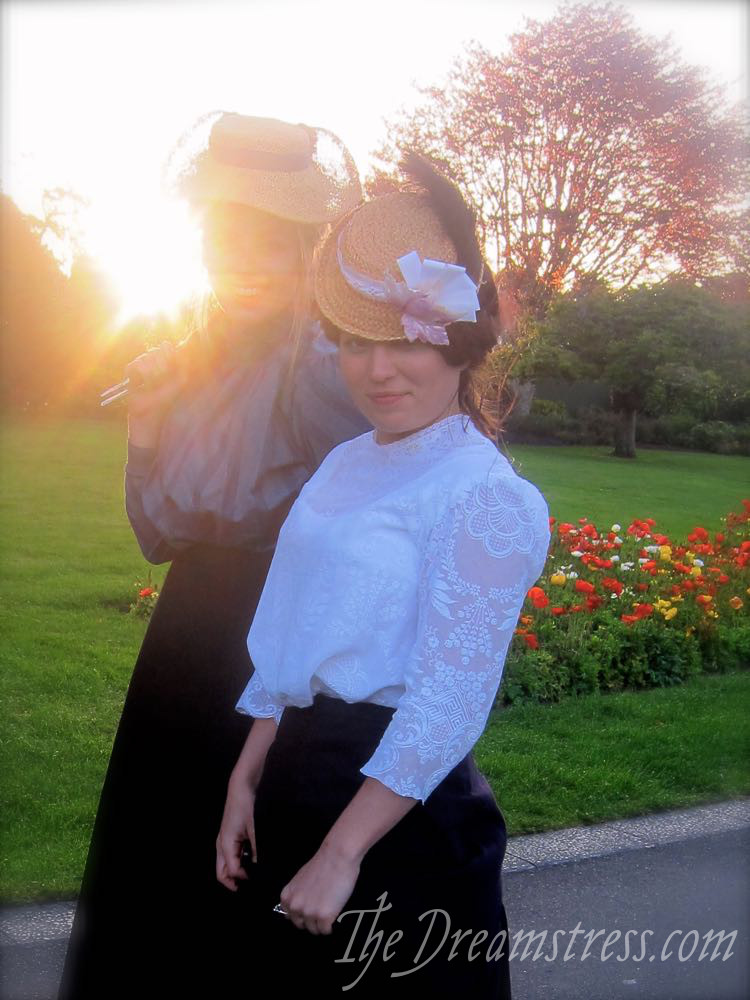
The blouse is a combination of the Wearing History Edwardian blouse, and the Wearing History Edwardian corset cover – I shortened the blouse at the drawstring line, and used the peplum from the corset cover below that, for more controlled front gathers, and less bulk under the skirt. I also modified the sleeve shape to best take advantage of the fabric’s motifs.
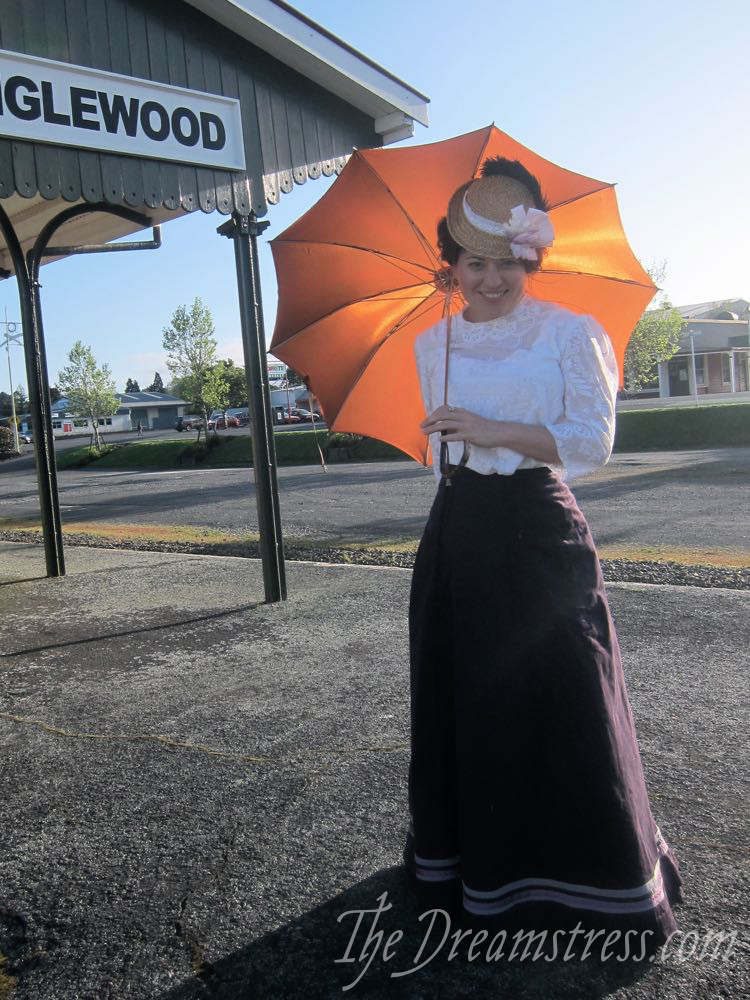
She’s wearing the blouse with a skirt that the marvelous Lynne made for Lady Bracknell in the production of the Importance of Being Ernest that was also responsible for the wonderful 1900s Greek Key Dress. We had to shorten the skirt a good 5″ for Miss Priscilla, but she looked fabulous in it, and it can easily be let out again.

The Challenge: Sewing Secrets
What’s the Secret?: The blouse is made from a vintage lace tablecloth.
Fabric: A vintage cotton lace tablecloth ($3), cotton voile lining ($2)
Pattern: Wearing History’s Edwardian Blouse pattern, modified for an earlier pigeon breast look, with modified sleeves
Year: ca. 1905
Notions: vintage shell buttons (50 cents), bias binding (50 cents)
How historically accurate is it?: The pattern and construction are perfectly accurate, the motifs and overall look of the lace are reasonable, but of course using a tablecloth isn’t
Hours to complete: 6 man hours
First worn: Sun 25th October, for an Anne of Green Gables inspired photoshoot in New Plymouth’s Pukekura Park
Total cost: $6