Latest Posts

A blouse for Marilla of Anne of Green Gables

Here is a bit of a confession about the Historical Sew Fortnightly ‘Silver Screen’ challenge: film & TV costumes  don’t do a lot for me.  Or, more accurately, they don’t do a lot compared to extant garments.  There are SO many original pieces that make my heart go pitter patter, but when I watch period dramas  it’s very rare for me to love something and want to recreate it.  Sometimes a film makes me love a period, and then I go looking for original pieces in that period, but there are only a few costumes I really want to recreate, and even then I suspect I’d tweak.  I’m a tweaker!

Luckily tweaking is practically  mandatory for the Silver Screen challenge, because we’re supposed to historically accuratise the costume we choose.  And also luckily there is an onscreen costume that has always fascinated me, that I had fabric for (or close enough), and that fit perfectly into my sewing schedule.

My screen choice comes from everyone’s favourite non-BBC period miniseries: the 1980s Anne of Green Gables.

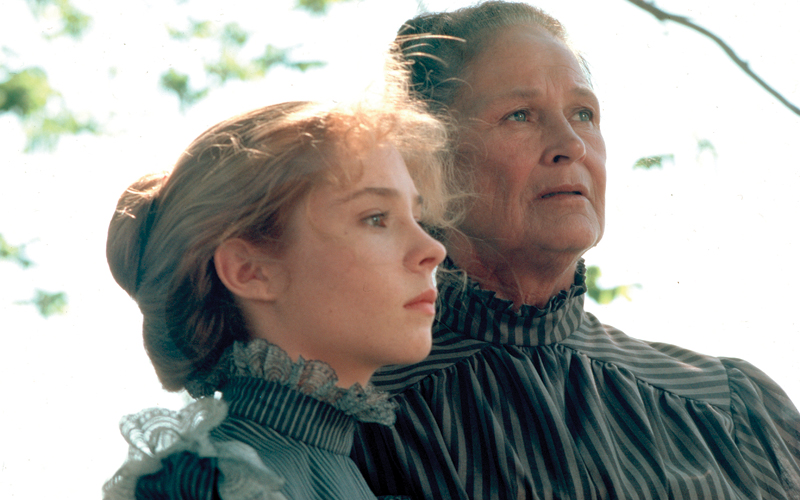
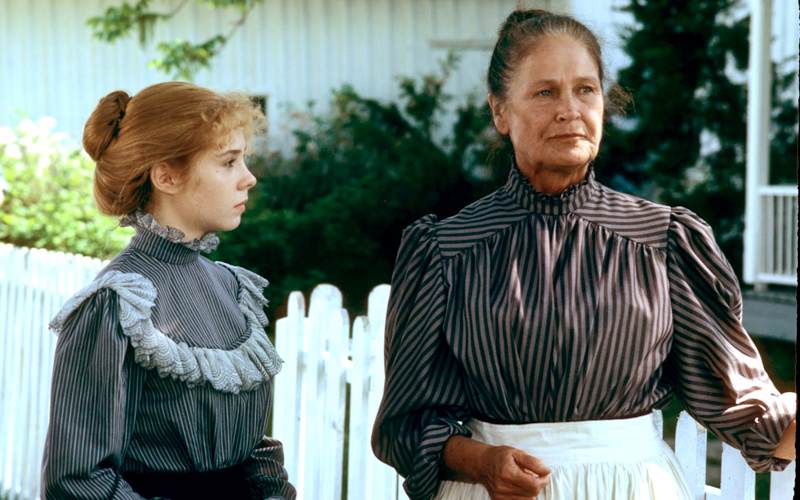
Nope.  Not an Anne dress.  I’ve always been fascinated by this blouse that Marilla wears:
Anne of Green Gables - Marilla's Blouse

Check out the stripe placement on the sleeves:
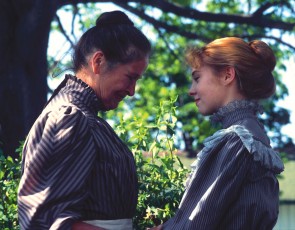
Anne of Green Gables - Marilla's Blouse

Nice!

It’s not exactly in-character for Marilla, because that bias placement uses every bit as much fabric as the puffed sleeves that she refuses to give Anne because they are so wasteful, but it’s very effective onscreen.

Marilla wears at least two versions of the blouse.  A pale grey and white one when Anne first arrives:
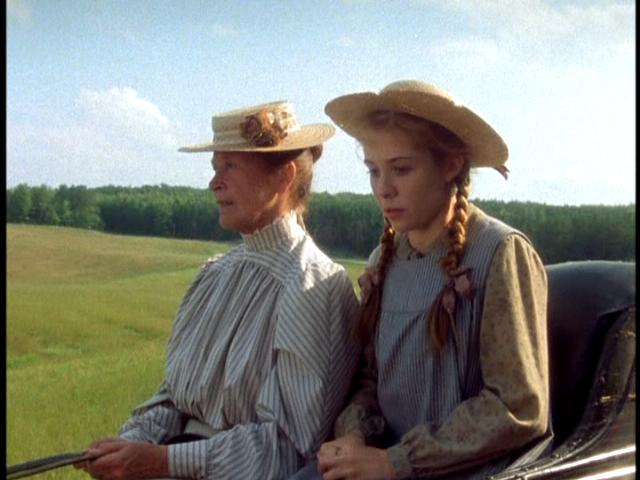
Anne of Green Gables - Marilla's Blouse

And a lilac and purple one that shows up in a number of scenes, both as a ‘best’ shirt under a suit, and for everyday wear:
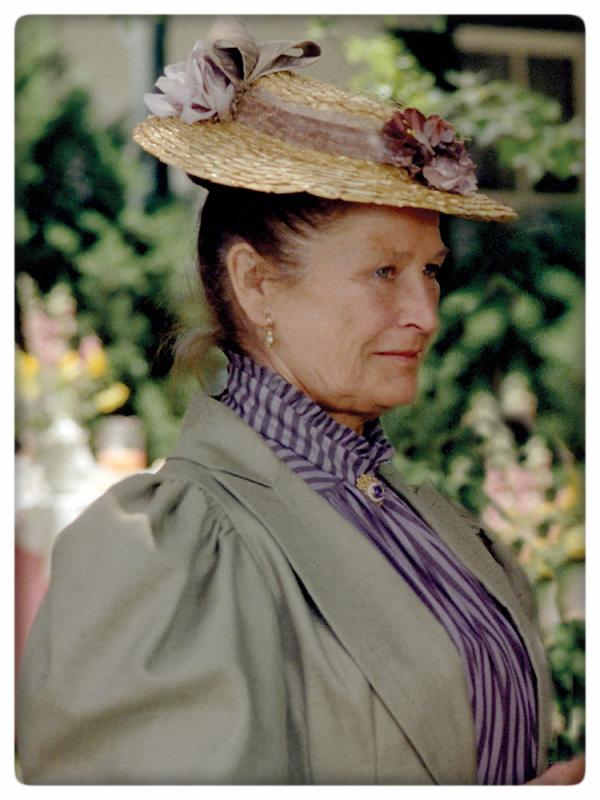
Anne of Green Gables - Marilla's Blouse

Anne of Green Gables - Marilla's Blouse

Anne of Green Gables - Marilla's Blouse

I think the blouse is just fabulous, and there are certainly plenty of examples of turn-of-the-century blouses in striped fabrics (as in this photograph with a friend of the Mansfield/Beauchamp family), though they tend to be more formal shirts, rather than gathered blouses.  I’ve even seen the chevron sleeve placement, but only on formal garments in silk, so it’s more of a ‘historically possible’ in a cotton shirt, than a documented feature.

I used Wearing History’s Edwardian blouse pattern as the basis for my blouse, hacking it to add a yoke, and more fullness.
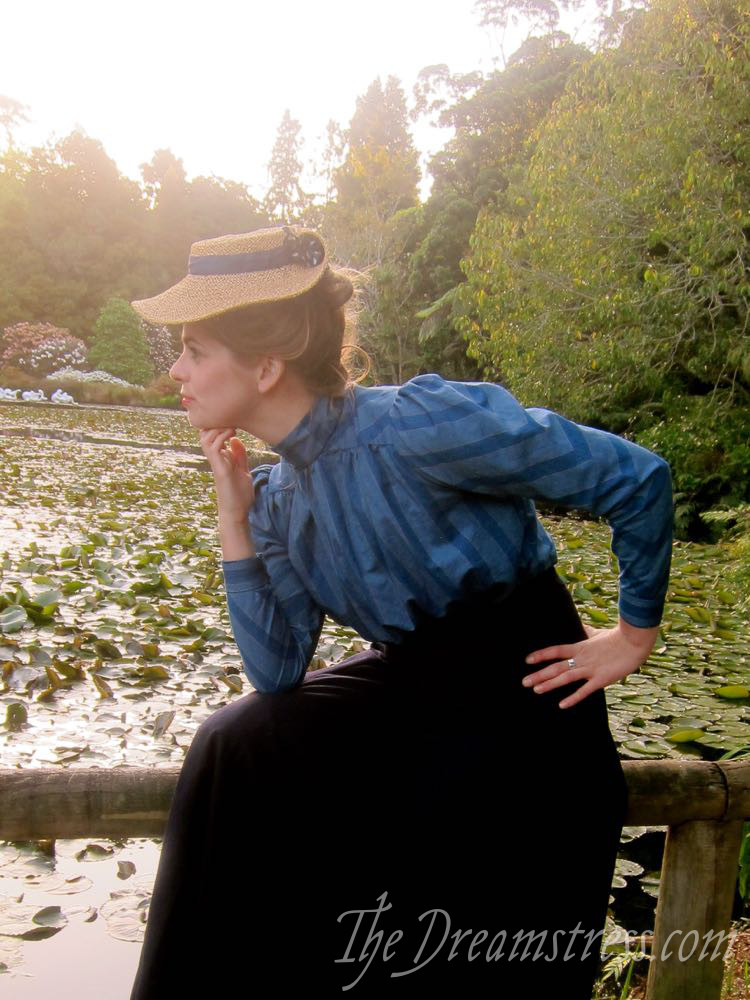
An Anne of Green Gables inspired Marilla Blouse thedreamstress.com

And I am pretty darn pleased with the end result!

An Anne of Green Gables inspired Marilla Blouse thedreamstress.com

I didn’t have an even stripe, and I couldn’t find a suitable fabric with a similar one, so I went for a wide and narrow stripe in blue and grey (and, to be perfectly honest, I think it’s even better than the original!).

An Anne of Green Gables inspired Marilla Blouse thedreamstress.com

To control the extra fullness, and to avoid bulk at the waist, I used the peplum piece from Wearing History’s Camisole pattern, cut the blouse short, and gathered it to it.  Now my front gathers will always sit exactly as I want them  to, with no extra bulk.  This is a documented period technique, and has instantly become my favourite hack of the Edwardian blouse pattern.
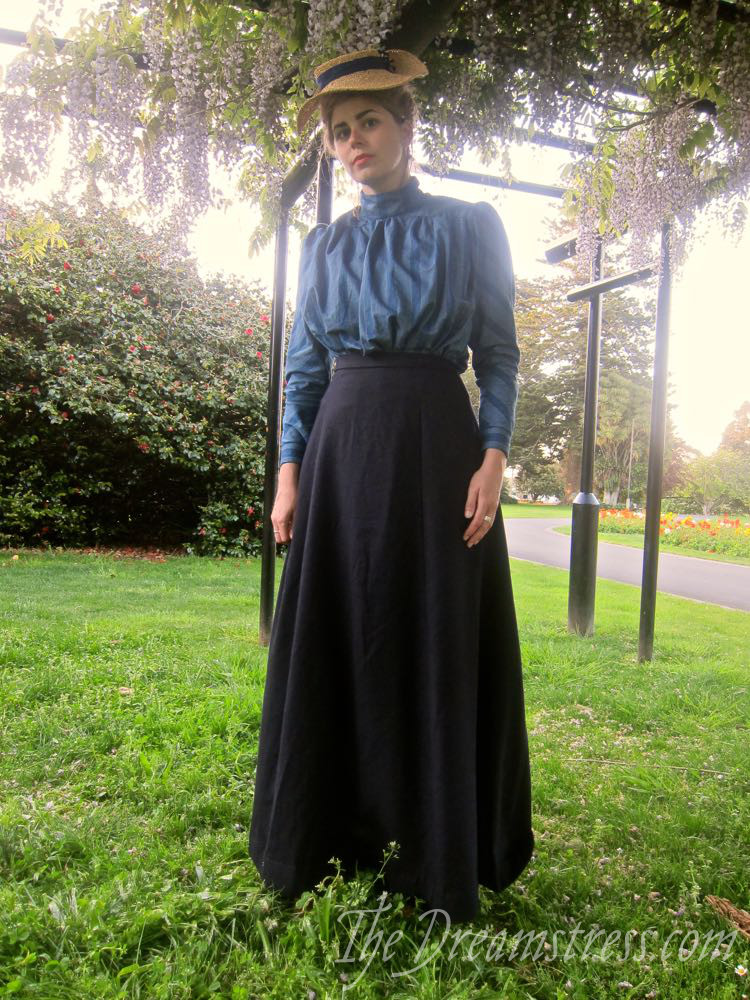
An Anne of Green Gables inspired Marilla Blouse thedreamstress.com

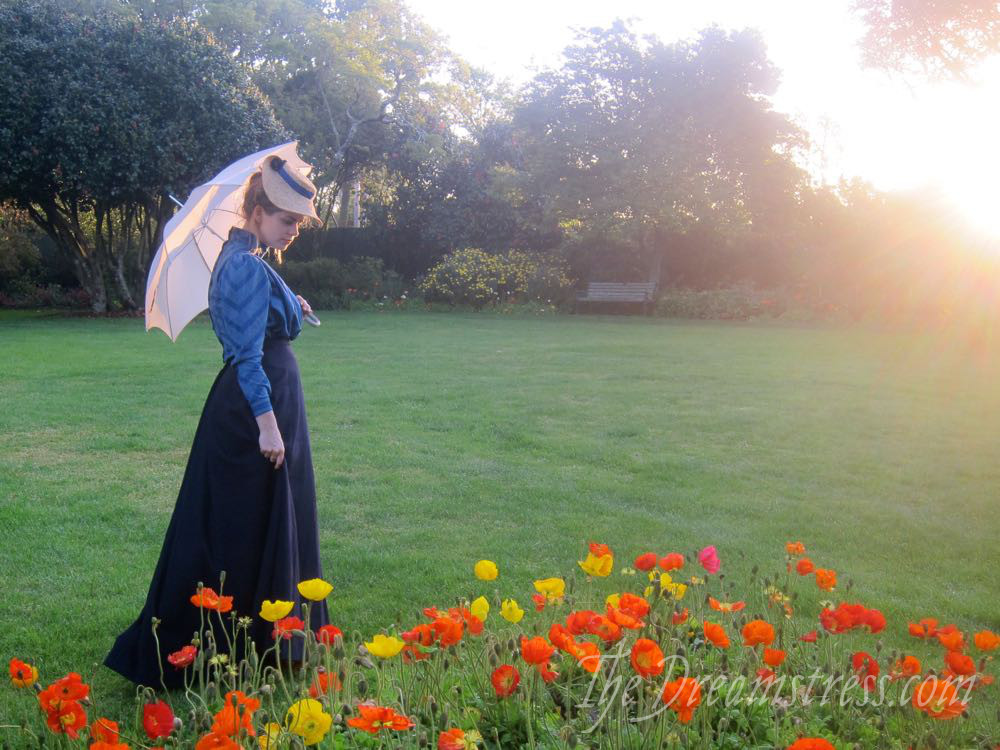
The blouse has already featured in two photoshoots: on ‘Alice’ the maid at the Katherine Mansfield House Museum, and is modelled here by my friend Stella in Pukekura Park, New Plymouth.  We know from Mansfield’s stories that Alice liked a bit of flair to her clothes, so she would have appreciated the sleeves on this.  And Stella may be quite a bit younger and more fashionable than Marilla, but the Anne books mention borrowing patterns from neighbors  (as poor Anne found out out to her dismay when she was sent through the ‘Haunted Woods’ to borrow one), so even the younger members of Avonlea may have worn blouses made from Marilla’s blouse. (I know!  I’m skipping between the miniseries and two different literary worlds with abandon!)
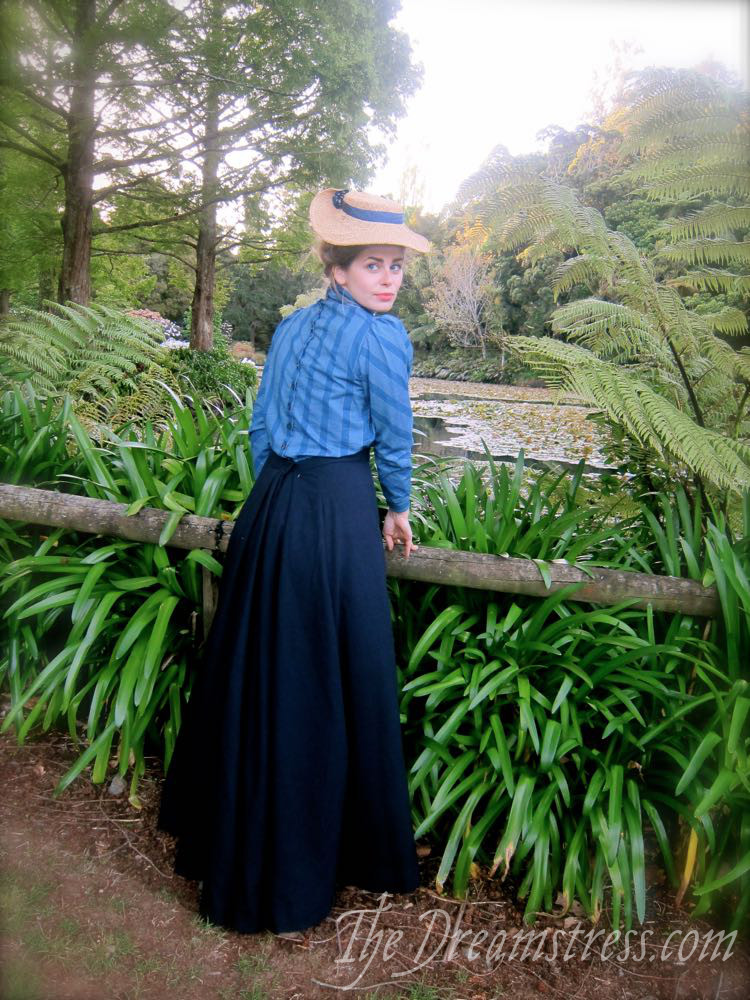
An Anne of Green Gables inspired Marilla Blouse thedreamstress.com

The shirt looks fabulous  on both my models, which I am so pleased about, because there was a good chance that this could end up being frumpy.
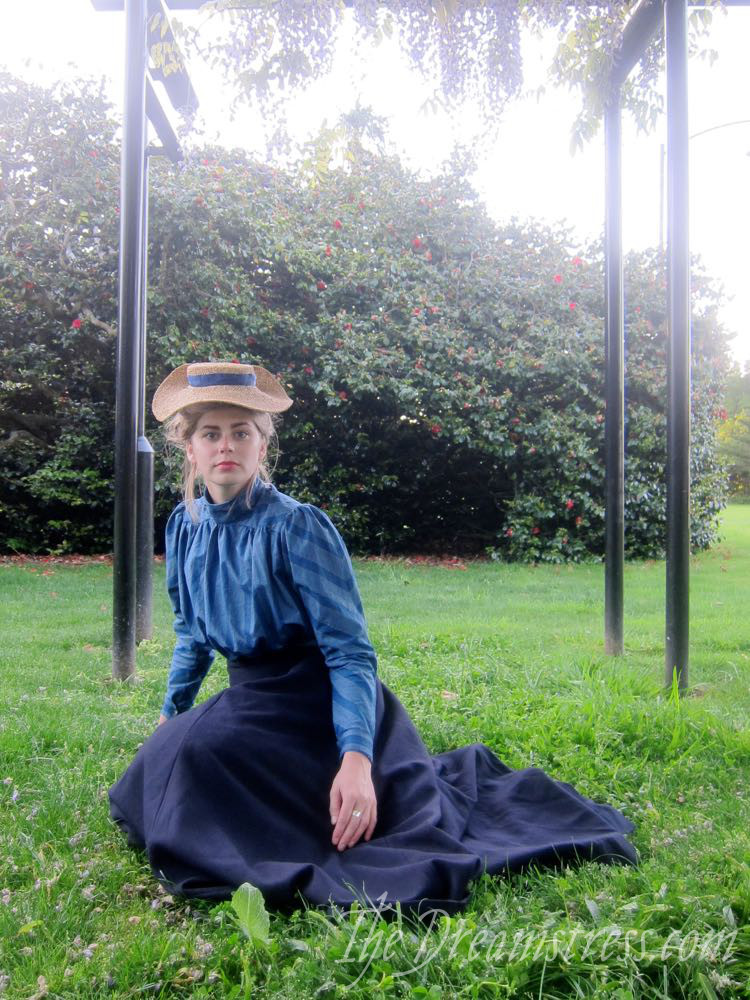
Sun 18th October, for a photoshoot at the Katherine Mansfield Birthplace

The Challenge:  Silver Screen

The Onscreen Inspiration:  Marilla’s Blouse from 1985’s Anne of Green Gables.

Fabric:  2m  Striped cotton shirting ($4 from Fabric-a-Brac)

Pattern:  Wearing History’s Edwardian Blouse pattern, modified  to add a yoke, and a peplum waist.

Year:  ca. 1900

Notions:  buttons (50 cents), thread  (50 cents)

How historically accurate is it?:  The pattern and construction are  quite accurate, I’ve yet to find a documented example of the chevron sleeves on this type of blouse.

Hours to complete:  5

First worn:  Sun 18th October, for a photoshoot at the Katherine Mansfield Birthplace, and then again Sun 25th October, for an Anne of Green Gables inspired photoshoot in New Plymouth’s Pukekura Park

Total cost:  $6

Sun 18th October, for a photoshoot at the Katherine Mansfield Birthplace

A lucky sixpence hussif (and what are hussuf or housewives)

What is a hussif thedreamstress.com

Last week I stopped by one of my favourite op-shops between errands, and had a rummage in their $3 fill-a-bag fabric bin.  I didn’t find any fabric, but I did find something even better.

This:

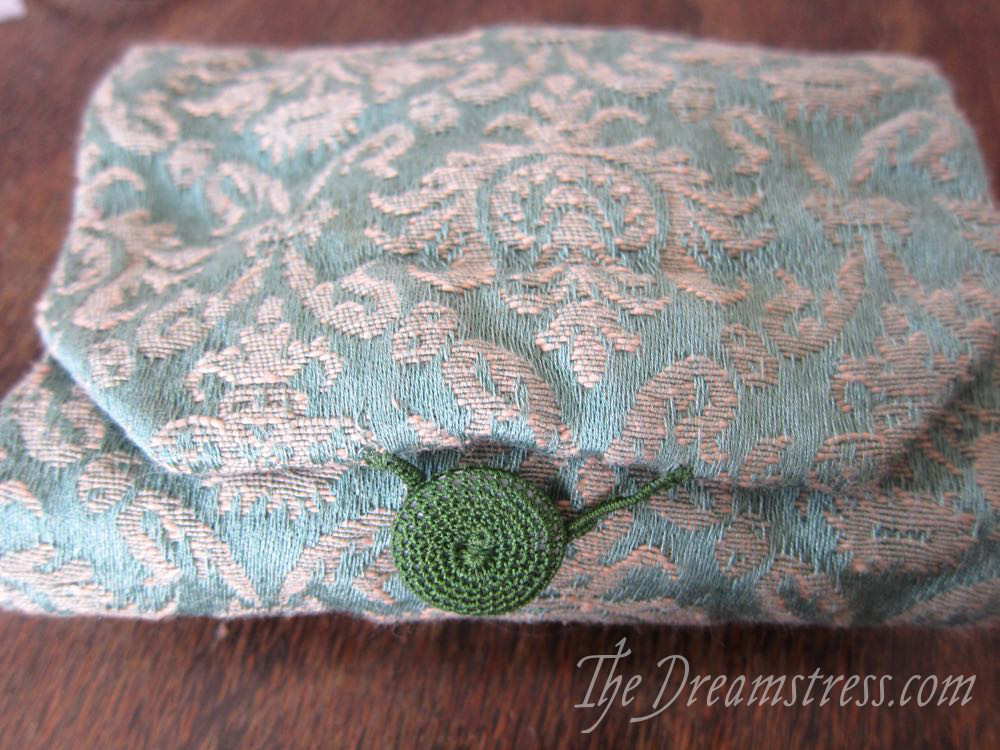
A vintage housewife thedreamstress.com

This is a hussif, hussuf, hussy, huswif, hussive or housewife (so, basically any way you can spell a contraction of housewife).

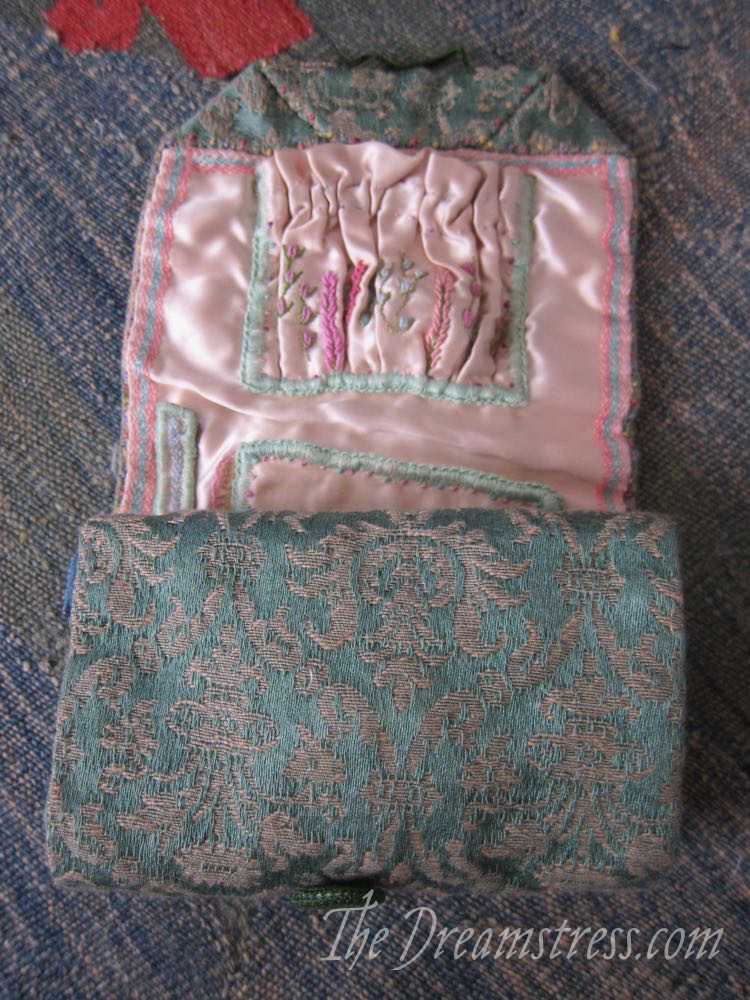
A hussuf is a  fabric case for carrying all your sewing implements.  The most common form is a long rectangle of padded fabric that rolls up into a small packet, so that you can easily take all your sewing bits with you everywhere.

A vintage hussuf thedreamstress.com1

A 1910s dictionary describes it as:

Husszf, that is, house-wife; a roll of flannel with a pin-cushion attached, used for the purpose of holding pins, needles, and thread

The term housewife (and its derivatives) for a sewing kit dates back to the mid-18th century.

The many variants  of housewife are theorised to have originated in the regional dialect of Lancashire:  during the 18th and 19th century the port of Lancaster was one of the busiest in England (heavily involved in the slave trade, among other things).  Sailors had to do their own mending, and had to be able to easily carry all their own goods, so housewifes were perfect for their lifestyle.  Many sailors came from Lancashire, and other sailors picked up the local term for the kits from them, or when they visited the port.

While women certainly carried and used them, housewifes are most associated with sailors and  soldiers.  We know that soldiers on both sides of the conflict brought their own kits in the American Civil War.  An 1855 investigation into  the poor performance of the  British army in  the Crimean war pointed out that the Russian soldiers all carried hussifs, and that if the English army had done the same, English soldiers would not have been  in rags at Sevastapol.  In  WWI and WWII  they were popular items for women’s sewing groups to make to include in care packages.  Patriotic councils provided guidelines for the appropriate housewife to best fit the soldiers.  According to one newspaper report, almost 50,000 kits were made and/or filled by ‘hussif groups’ between 1940 and 1944.

While military and naval housewives were probably quite functional, there were also prettier housewives for less strenuous use.    The pages who attended on Prinny were supplied in 1789 with a “striped silk Housewife filled with coloured silks, thread, needles & thimbles” presumably so they could assist if the Prince had any  urgent wardrobe malfunctions.  Over a century later, and slightly less factually, Barrie’s Wendy has a housewife which she produces  to sew Peter Pan’s shadow to his foot.  Most were probably homemade, but they could also be purchased commercially.

Housewives were common throughout the mid 18th and 19th centuries, and into the first half of the 20th.  They were standard issue for British soldiers until after WWII (that 1855 report must have had some effect), and there are at least a few stories of soldiers carrying them in the Vietnam War.  Along with the military  using them in their original sense, as transportable sewing kits, many modern sewist still make their own housewives.

I’m not sure how old my kit is: the  outer fabrics and satin are no older than the  1940s, but it’s in very good condition and doesn’t appear to have had much use.  Unless it was made with entirely vintage materials, right down to the cardstock of the scissor holder, it’s not a modern piece.

A vintage housewife thedreamstress.com

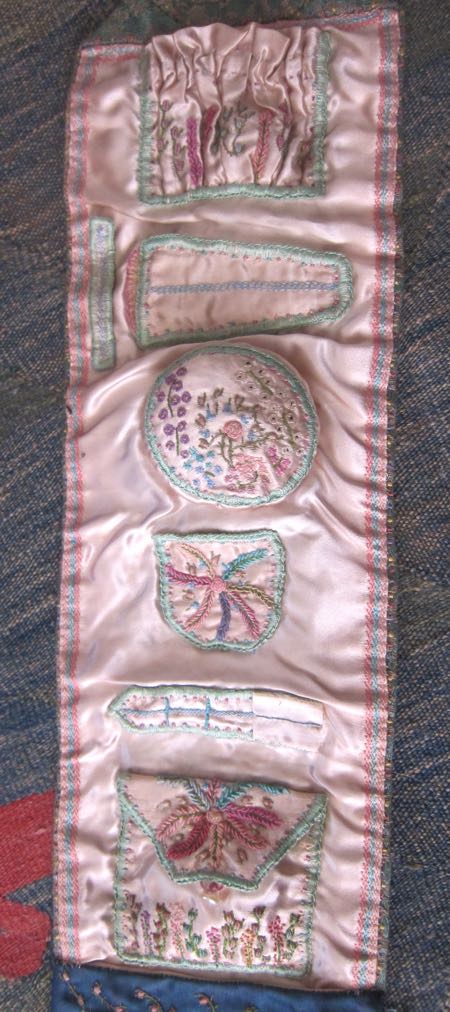
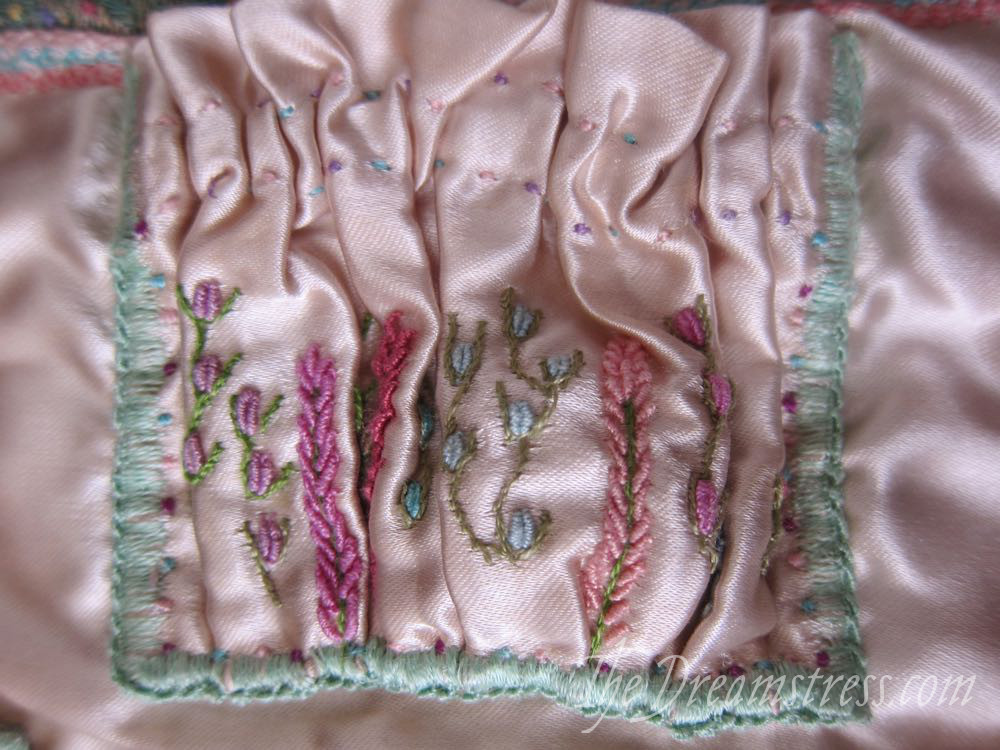
It’s got a cunning gathered pocket:

A vintage housewife thedreamstress.com

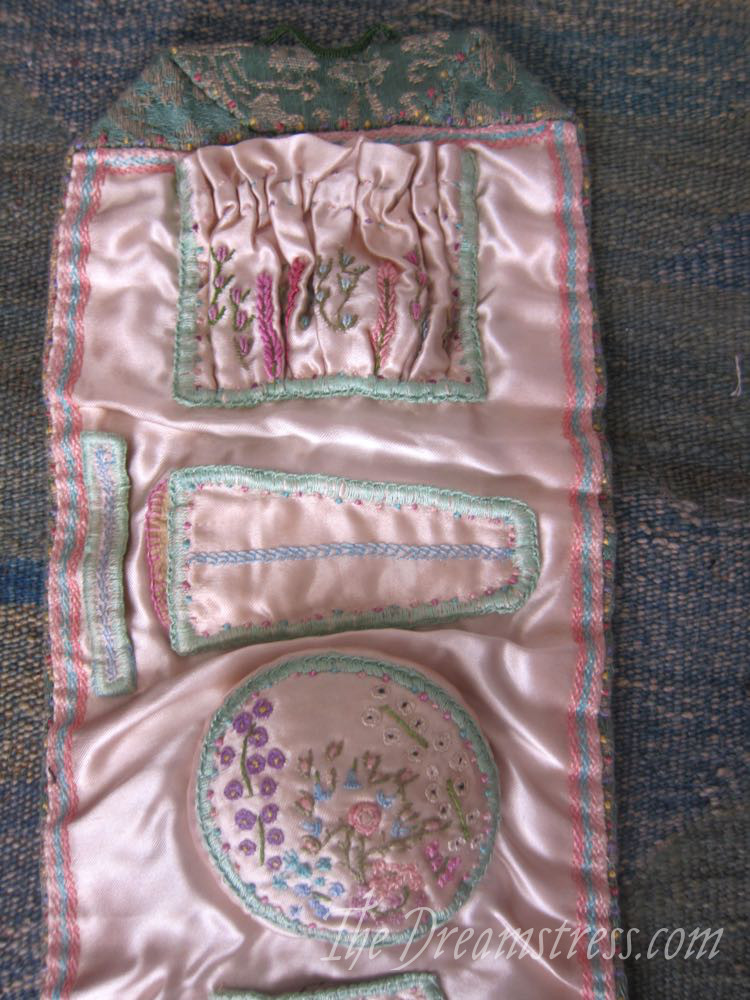
And a perfectly fitted holder for a pair of scissors:

A vintage housewife thedreamstress.com

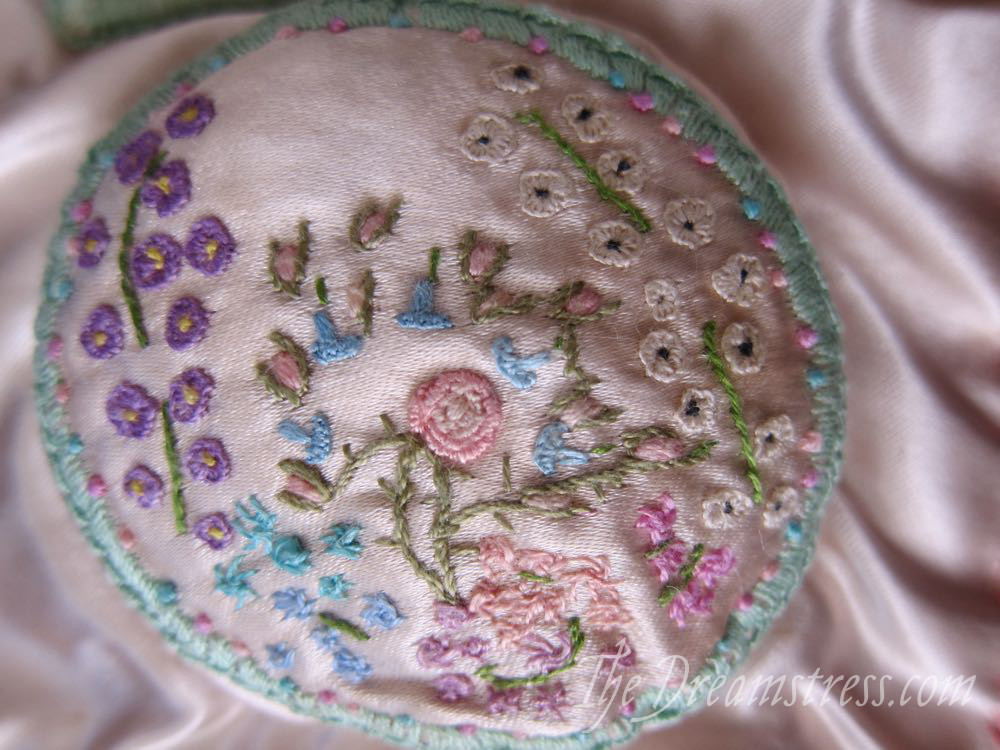
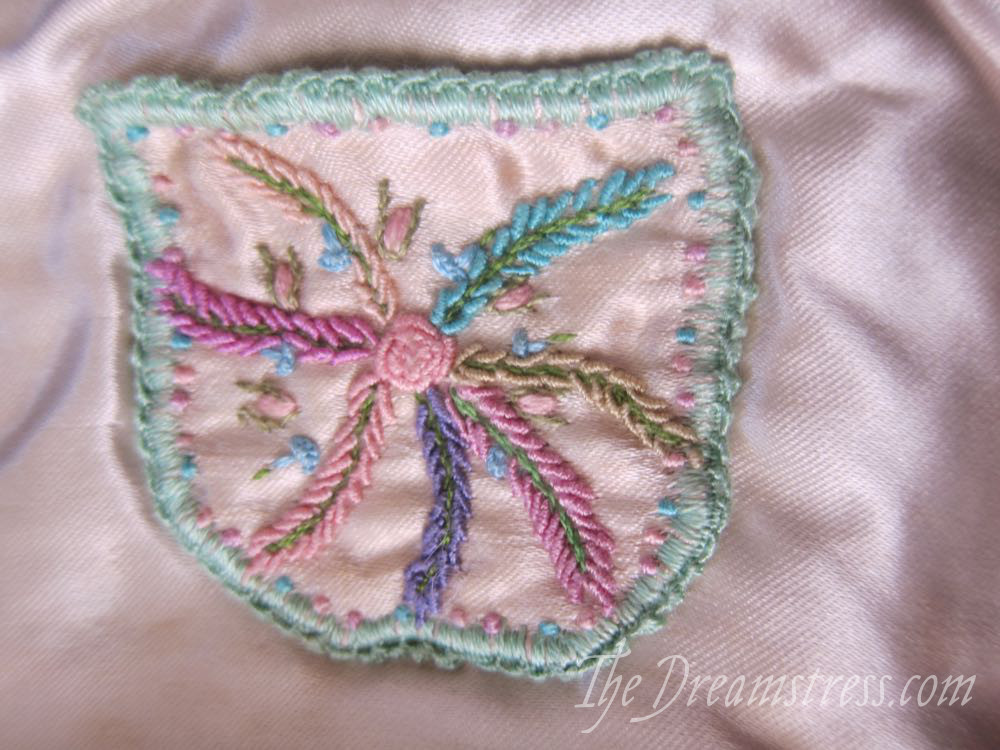
And a beautifully embroidered pincushion:A vintage housewife thedreamstress.com

And a wee little pocket, possibly for a thimble:

A vintage housewife thedreamstress.com

And  what I suspect is a bodkin holder:

A vintage housewife thedreamstress.com

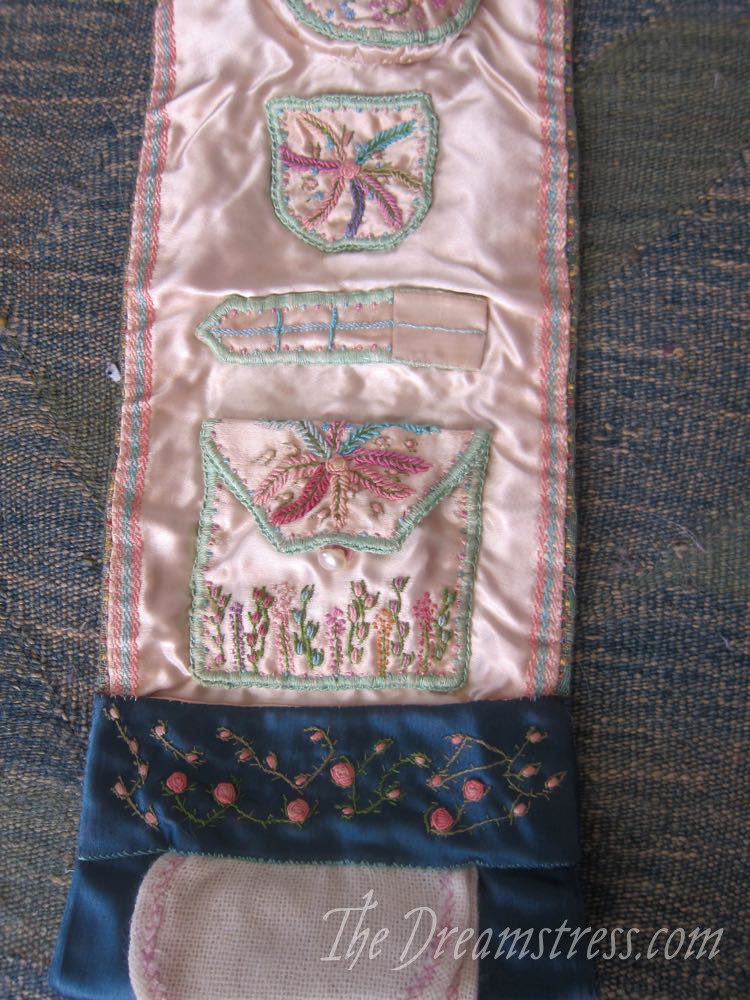
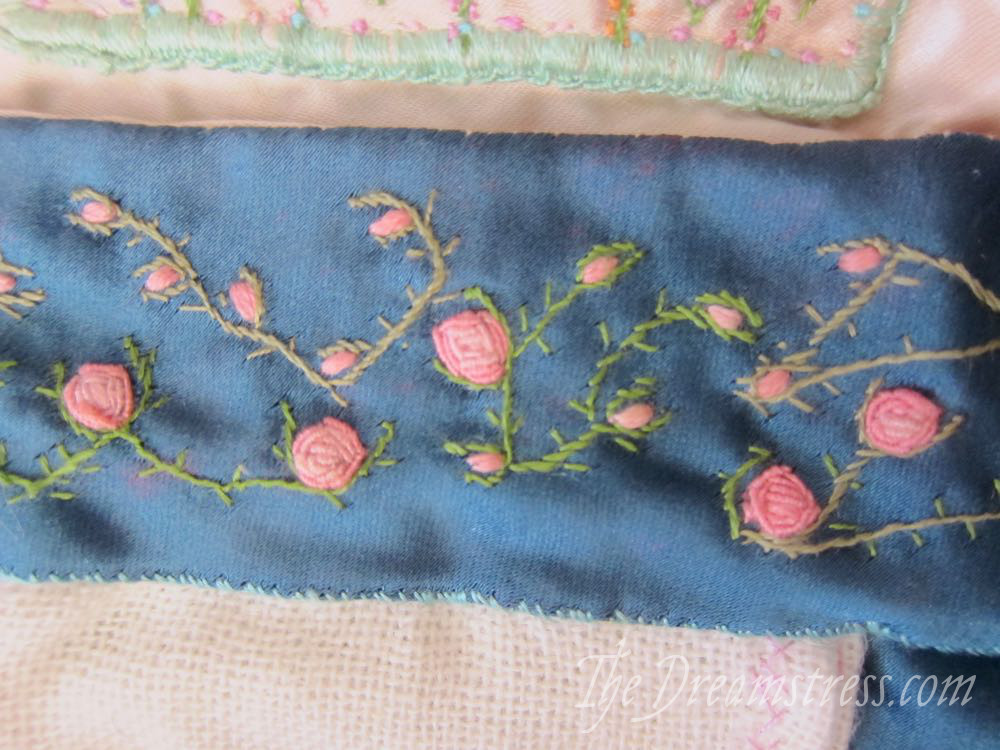
Plus a buttoned pocket, and a bit of fabric for holding threaded needles, all covered with beautifully enthusiastic, if not necessarily particularly skilful, embroidery.

A vintage housewife thedreamstress.com

It also had three delicious secrets.

I bought the housewife just because I thought it was too wonderful to pass on, but when I got it home, I realised there were lumps in two of the pockets.

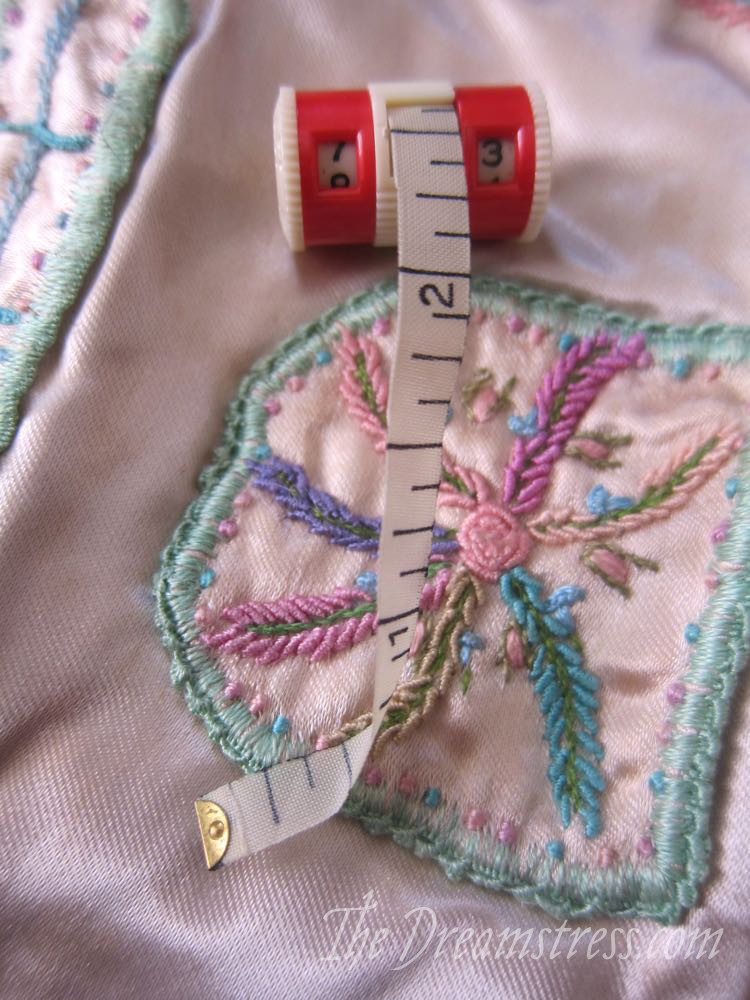
The first lump revealed itself to be a teeny-tiny cunning measuring tape.  I’ve never seen one like it.  You twist the sides to scroll the tape in and out, and can twist the numbers on either side (presumably to record the measurement while you work with it, so you don’t forget?)

A vintage housewife thedreamstress.com

The measuring tape is Made in England, and in inches.

The other secret is even better, and I missed it at first, and only noticed it when I was checking all the pockets to photograph them.

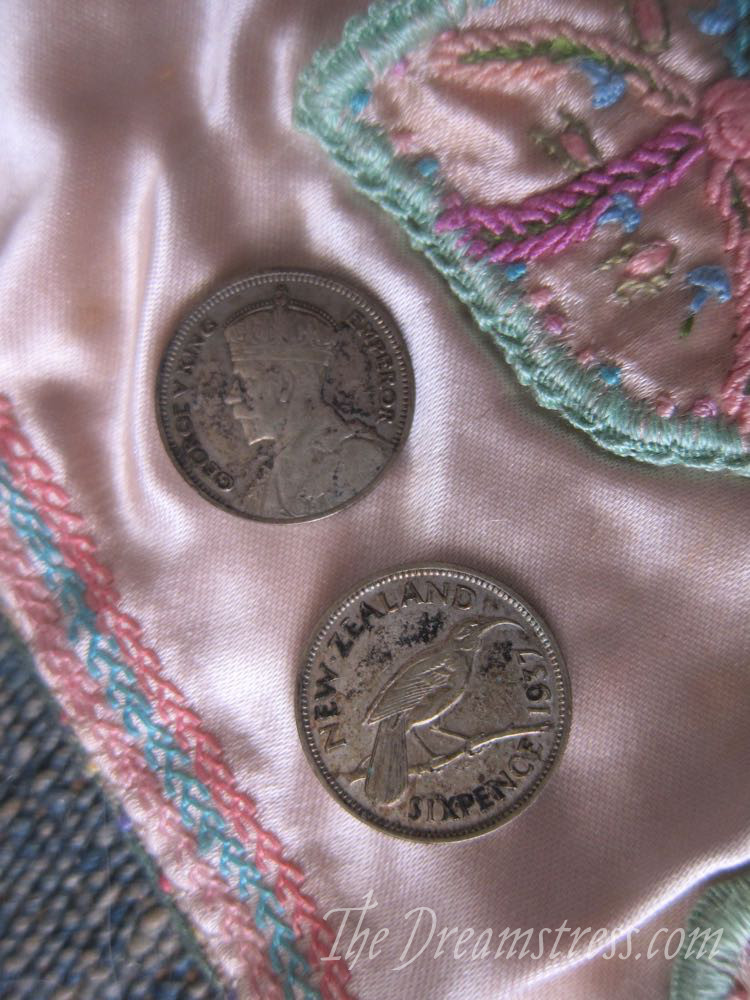
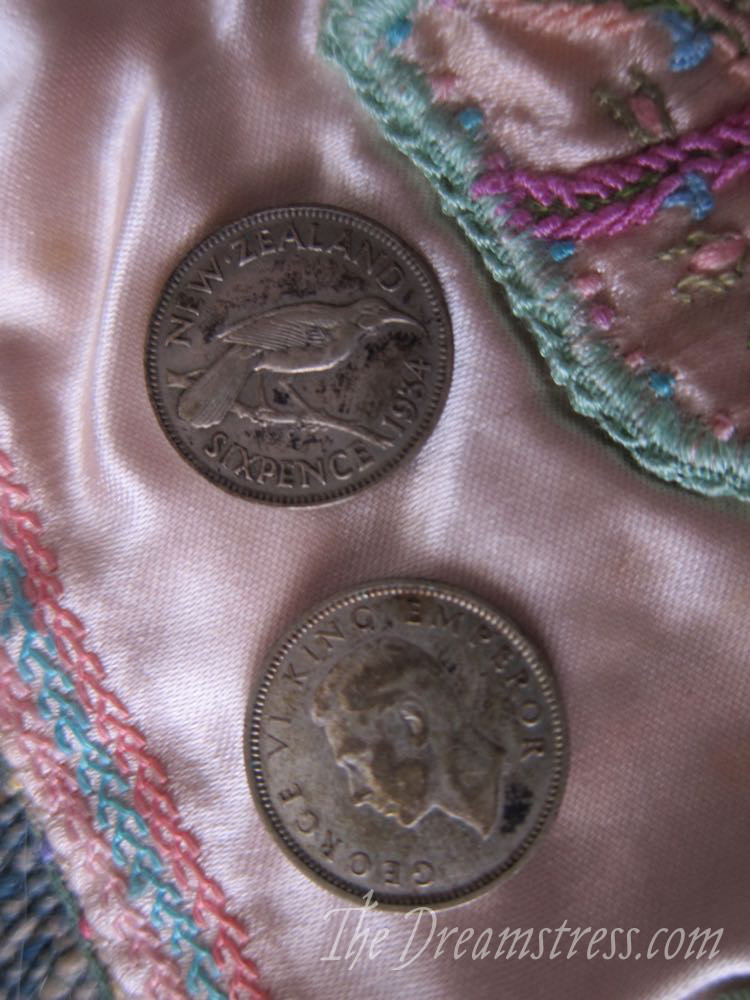
The buttoned pocket had a flat lump of paper in it, which I initially thought was just scrap.  But I unfolded it, and it revealed two NZ sixpences:

A vintage housewife thedreamstress.com

One from 1934, and one from 1937:

A vintage housewife thedreamstress.com

What a find!  I’d love to know the story behind it!

Rate the Dress: Tassels, pleats, and pockets on an 1870s bustle

Last week I showed you an 18th century menswear ensemble, just making the transition from Rococo peacock to Regency Beau.  Reactions to the ensemble were quite mixed: you  though the colours were the perfect balance of interest/hated them and thought them boring, adored the mix of pattern coordinating without matching/thought it clashed terrible, loved the slightly wacky hat and big buttons for the pop they gave the outfit/found the hat and buttons utterly awful and cartoonish.  Still, most of you really liked it (I think it’s just SO MUCH BETTER than most modern menswear (though we’re getting better) that it’s hard not to at least like it somewhat, so it came in at 7.8 out of 10.

This week we’re going from slightly wacky menswear, to slightly wacky womenswear – with a little menswear inspiration.

This mid-1870s bustle dress  has a hint of militaria and menswear tailoring in the bodice,  combined with the 1870s bustle silhouette at the height of excess trimmings.  The dress features not only a fascinating bit of centre back trim, elaborate jacket pleats, heavily fringed layers of skirt, an asymmetrical bustle, three-dimensional turn-back pleating at the hem, but also the height of ridiculous/whimsical 1870s skirt ornamentation: a parasol pocket.  For those moments when it’s so much handier to tuck your parasol into a pocket than carry it, of course.

Sadly the MFA does not provide an image of the front of the dress, so you’ll have to rate it based on what you can see from the back.  Do you find it  charmingly whimsical, or laughably ridiculous?

Rate the Dress on a Scale of 1 to 10