Latest Posts

Rate the Dress: A man in stripes, spots, lattice & lace

Last week I showed you a Gilbert Adrian dress with a simple silhouette and a muted photographic print of bread and milk.  Alas, quite a few of you found the colours, silhouette, and  print a total dud, dragging the rating down to a disappointing 6.5 out of 10.

I think the dress lost a lot in the translation of time: for us, photographic fabric prints are common, and thus uninteresting, an the use of mundane images on fabric has been done multiple times.  In 1951 photographic printing on fabric was groundbreaking, and pop art was still half a decade away.  While novelty print fabrics featuring food and kitchen tools were very popular, Adrian’s use of an everyday scene in muted colours turns both the novelty trope and the classical tradition of still-lifes on its head.  (Obviously I thought the dress was incredibly clever, subtle and bold, both less and more in exactly the right ways.  On a tall, slightly curvy woman with Hepburn-esque colouring and attitude?  Oh my!  It  would make every other woman at the afternoon soiree in Hollywood look  cliched,  common, and completely un-memorable  in their hyper-pretty, hyper-feminine, skin baring, colourful floral, lace and polka dot frocks.)

This week, let’s  go back in history 150 years, and look at some menswear:
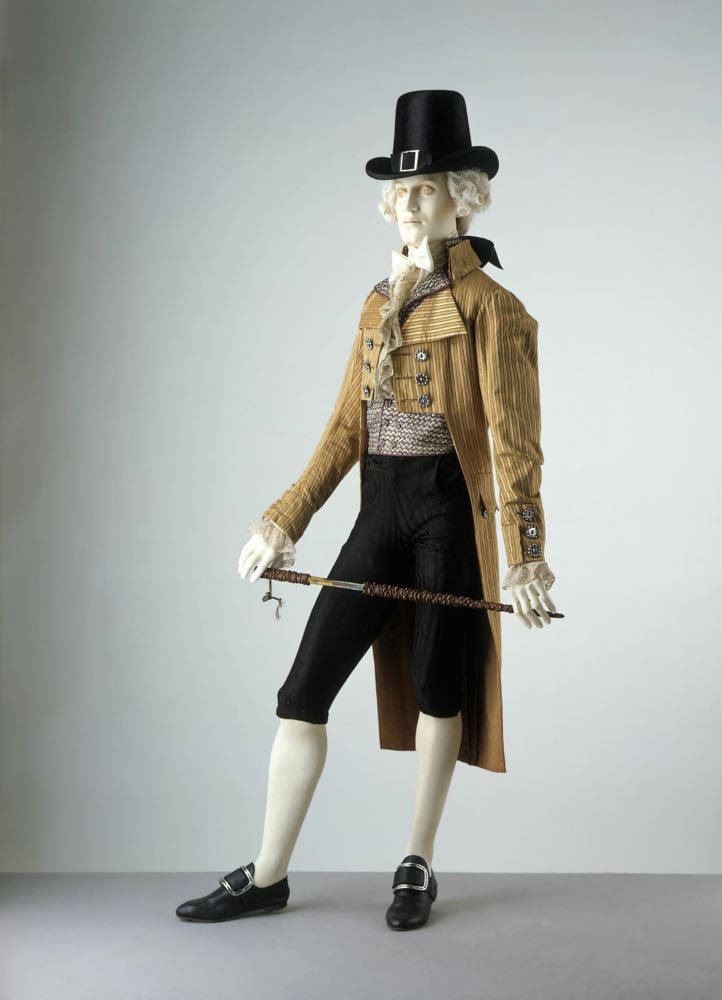
This outfit from the last years of the 18th century shows the transition between the  elaborate, detailed outfits of the 18th century gentleman, and the more severe, restrained styles of the early 19th century.
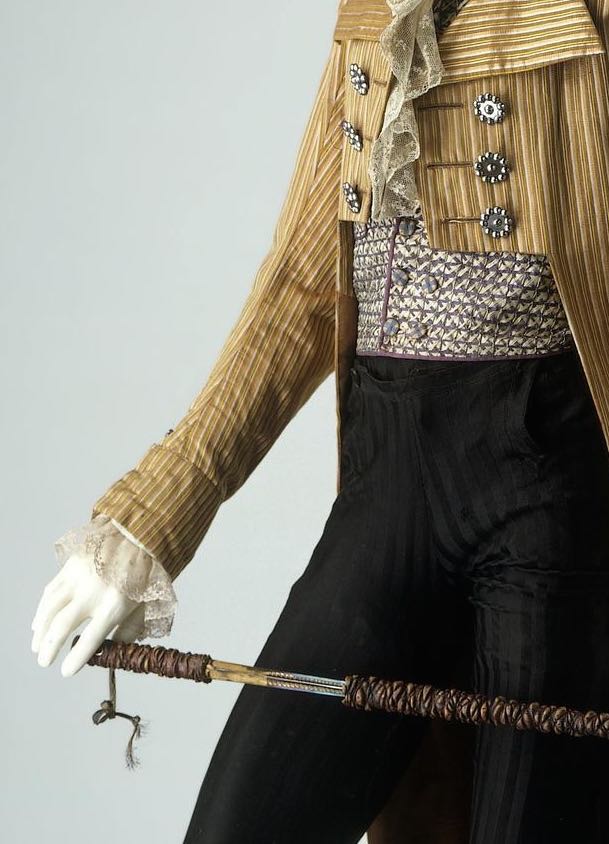
The colours and patterns used in this outfit are definitely more toned down than they would have been a couple of decades earlier, but while florals (or animal prints) have given way to stripes, and cerise to mustard and mauve, there overall look is still layers of detail and combinations of shades.  From the satin striped breeches, to the gold, mustard and peach  jacket, with shiny, spotted buttons, to the waistcoat, patterned with a lattice of interlocking ribbon, to the lace peeking out from the cuffs and spilling down the waistcoat, and even to the swordstick, with tromp l’oeil branch effect, the whole outfit is about combining texture and pattern.
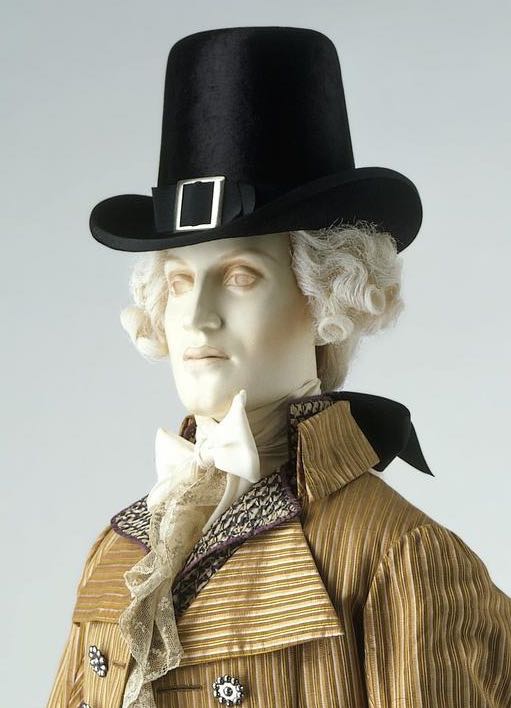
What do you think?  Do the multiple textures and tones add up to sartorial splendour?

Rate the Dress on a Scale of 1 to 10

* I  was only able to find the link to the waistcoat in this ensemble on the V&A website, so if you know the link to the other pieces, please let me know!
Afternoon tea & dress ups – of course!

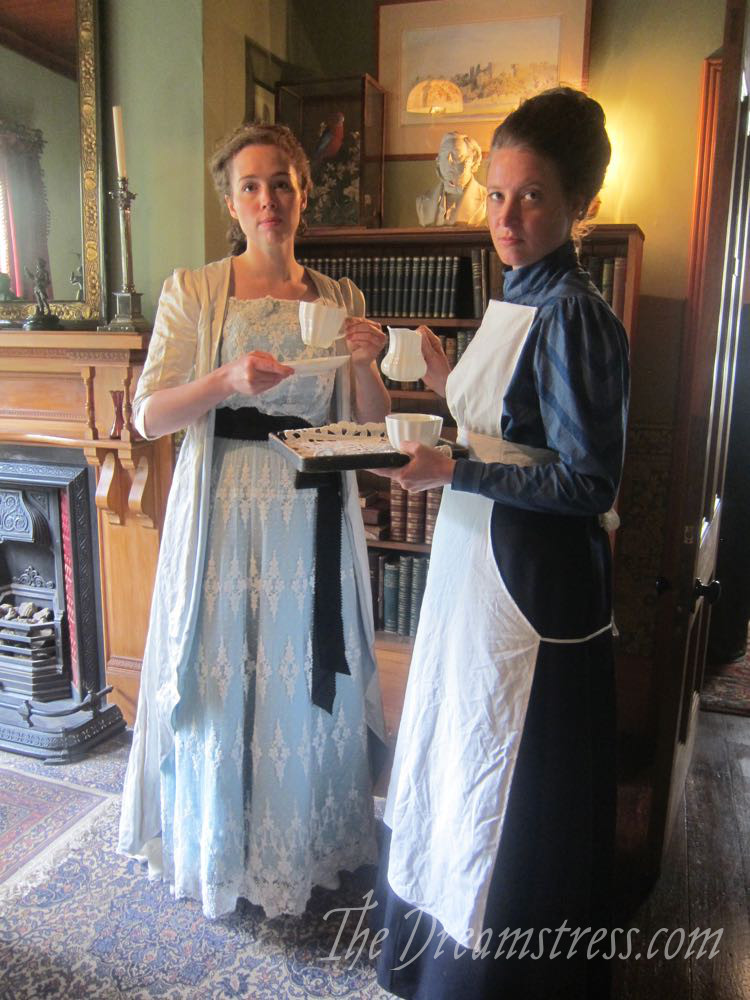
I have been such a busy little bee social butterfly lately*!  In addition to the photoshoot at the Katherine Mansfield Museum, I had a dress up high tea with friends

Afternoon tea & dress ups thedreamstress.com

The dress up theme was supposed to be tea gowns, but I realised too late that my tea gown needed to be all ready for the photoshoot, so I wore the Watteau in Paradise dress and pretended it was  tea gown.  It was a good choice, because it meant the wonderful  Sadie who gave it to me finally got to see me in it.

Afternoon tea & Afternoon tea & dress ups thedreamstress.com ups thedreamstress.com03

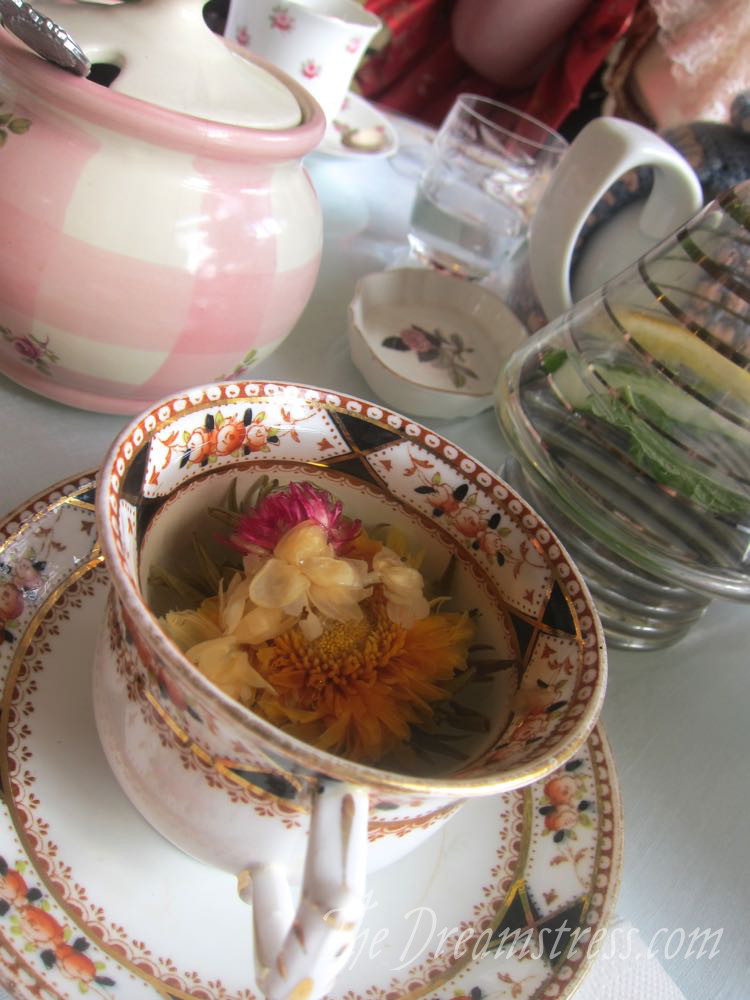
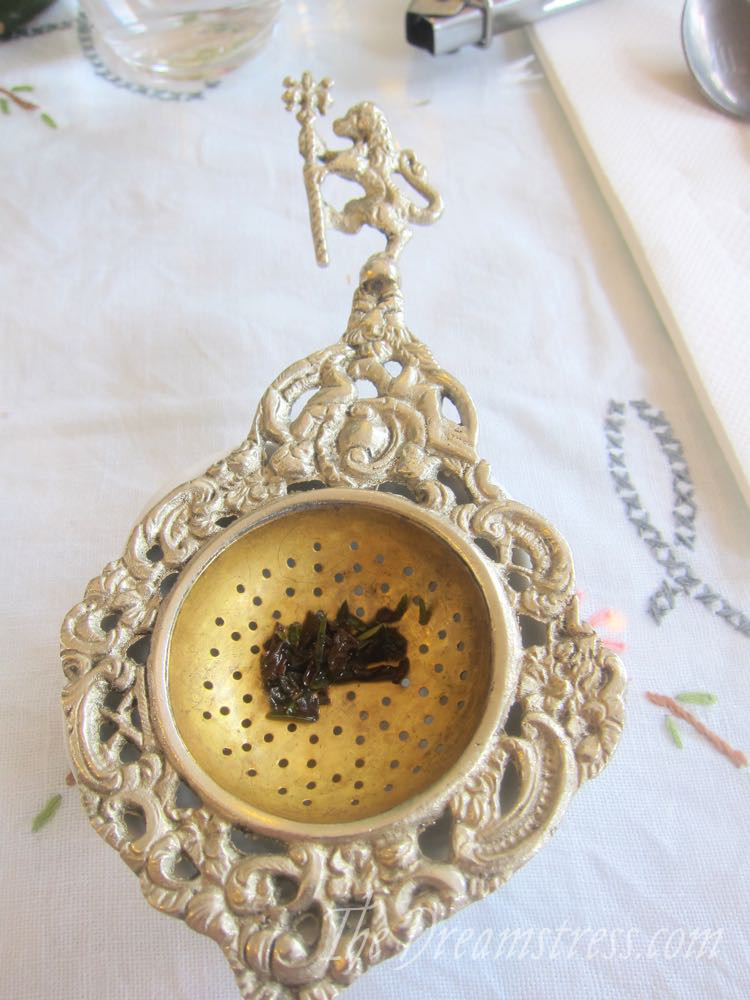
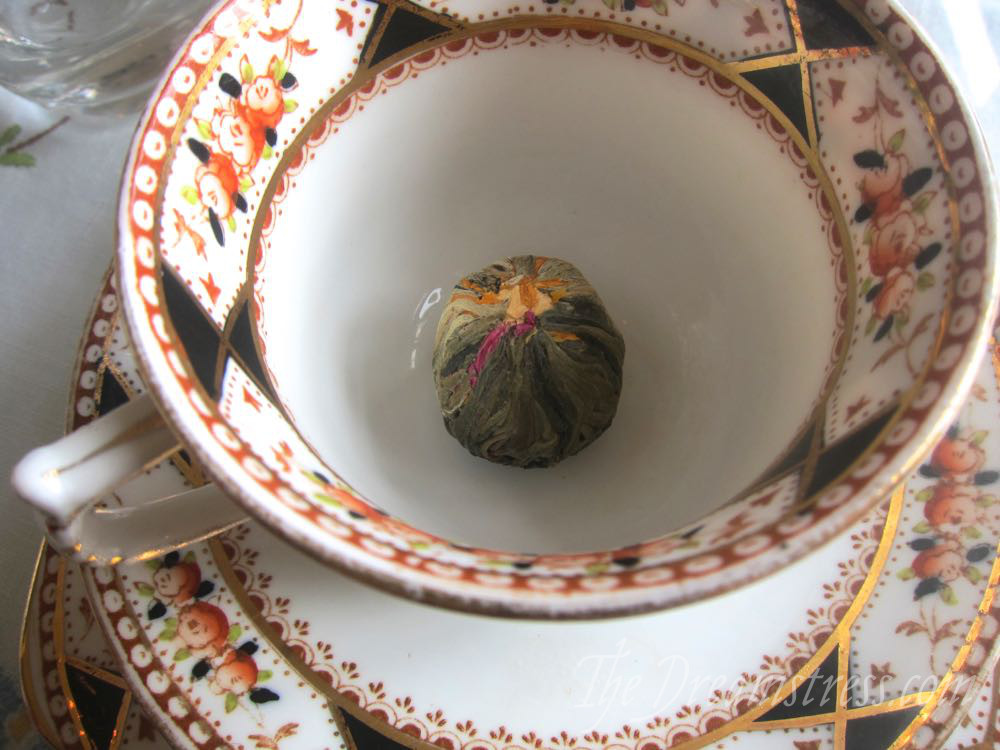
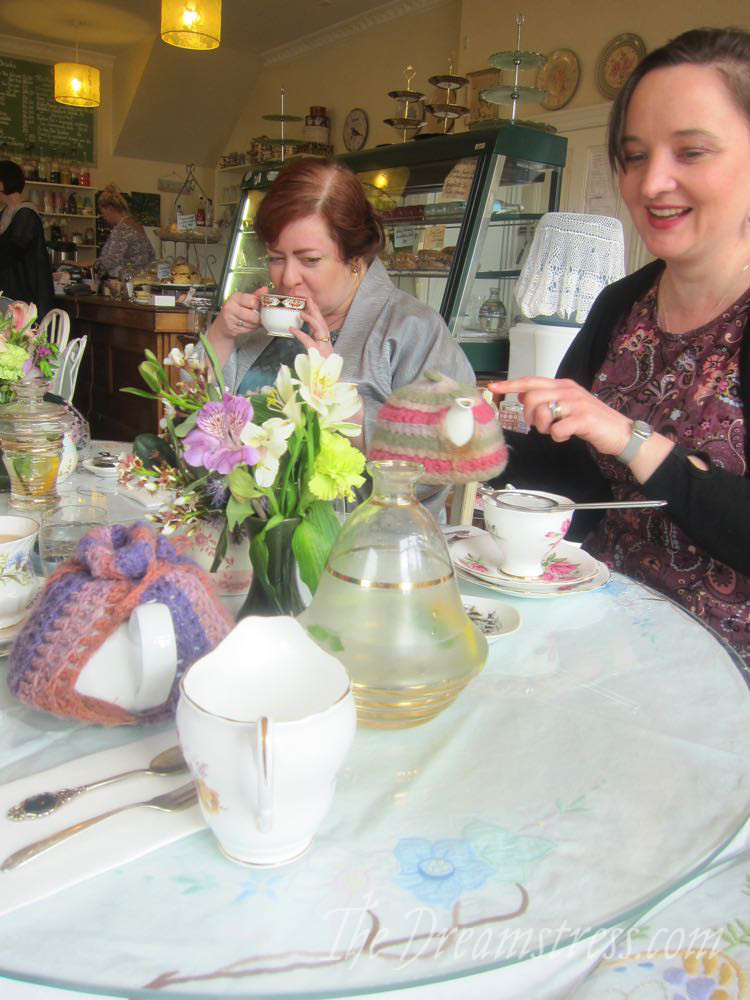
There is something so lovely about sitting down to the ritual of afternoon tea: trying to pick the tea trio that best coordinates with your outfit and mood, choosing your beverage (I went with blooming tea), and then working your way through all the delicacies on the tea tray.

Afternoon tea & dress ups thedreamstress.com

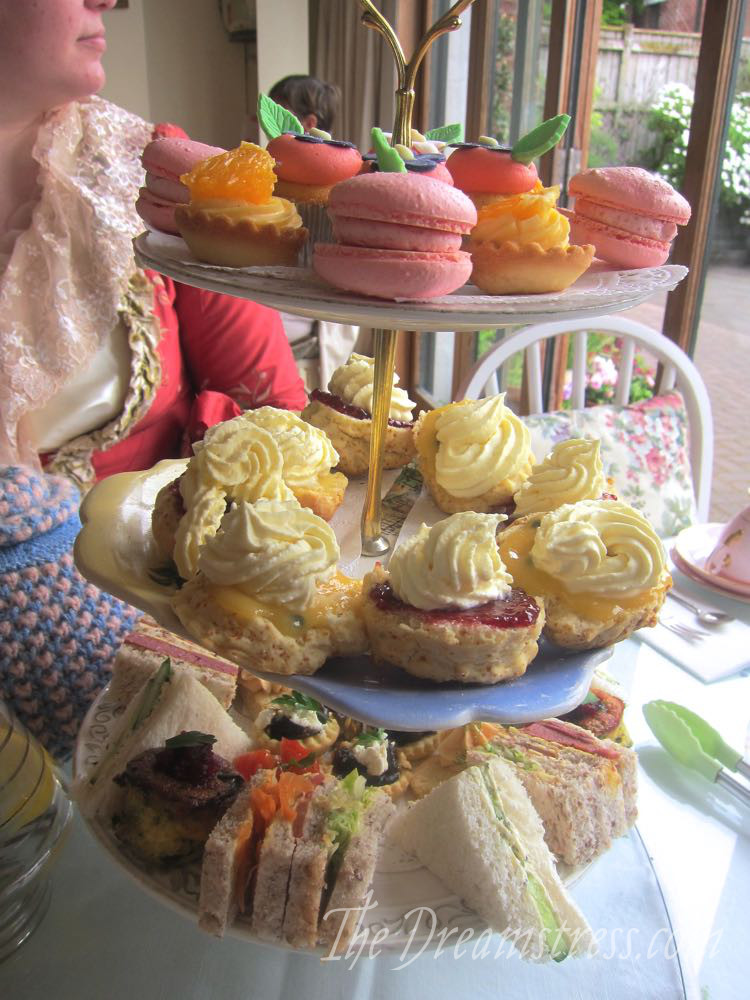
There were finger sandwiches, savoury tarts, tiny little quiches, scones with passionflower and raspberry jam, darling little cupcakes, custard tarts, and macarons: heaven!

Afternoon tea & dress ups thedreamstress.com

We were celebrating all sorts of things: birthdays and awards and PHd’s – and mostly the chance to get together.  And making sure that le Comtesse finally had a proper Kiwi afternoon tea: her first in 7 years in NZ!

Afternoon tea & dress ups thedreamstress.com

In addition to enjoying the food, there was lots of outfit admiring:

Afternoon tea & dress ups thedreamstress.com

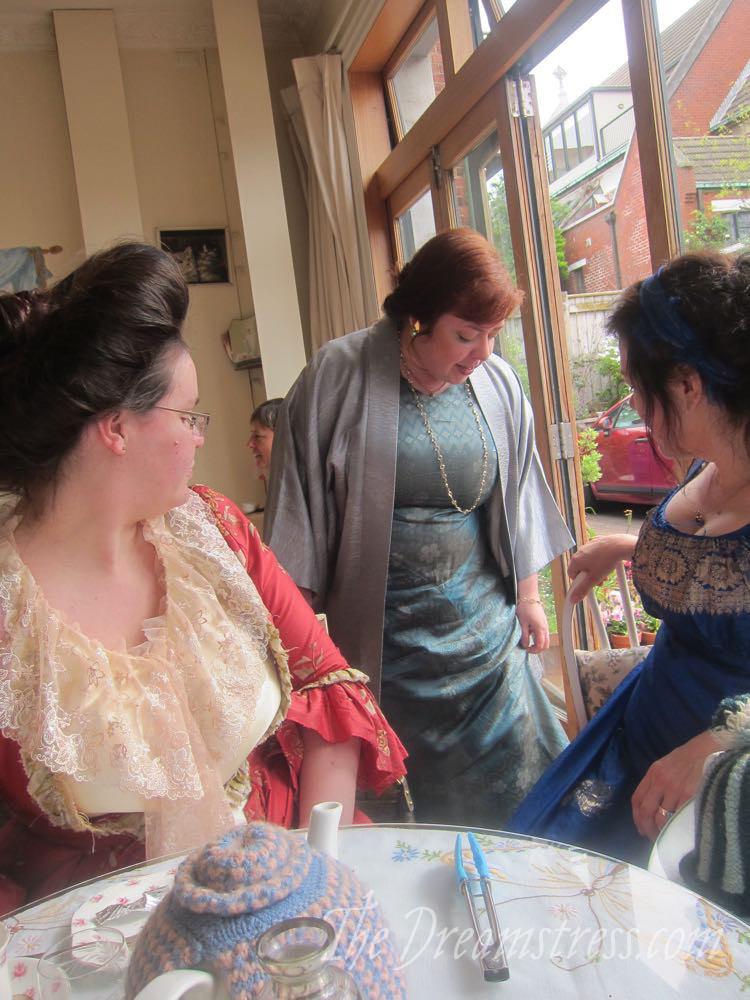
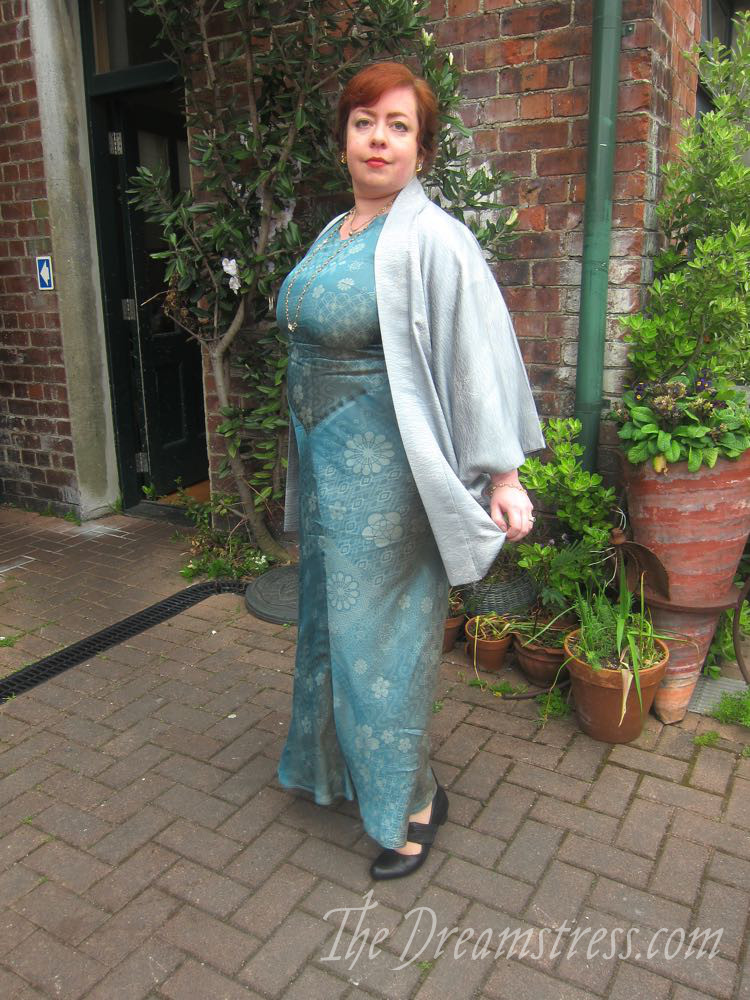
Sadie went with a 1920s inspired look, with a dress by NZ designer DNA, and a vintage kimono jacket:

Afternoon tea & dress ups thedreamstress.com

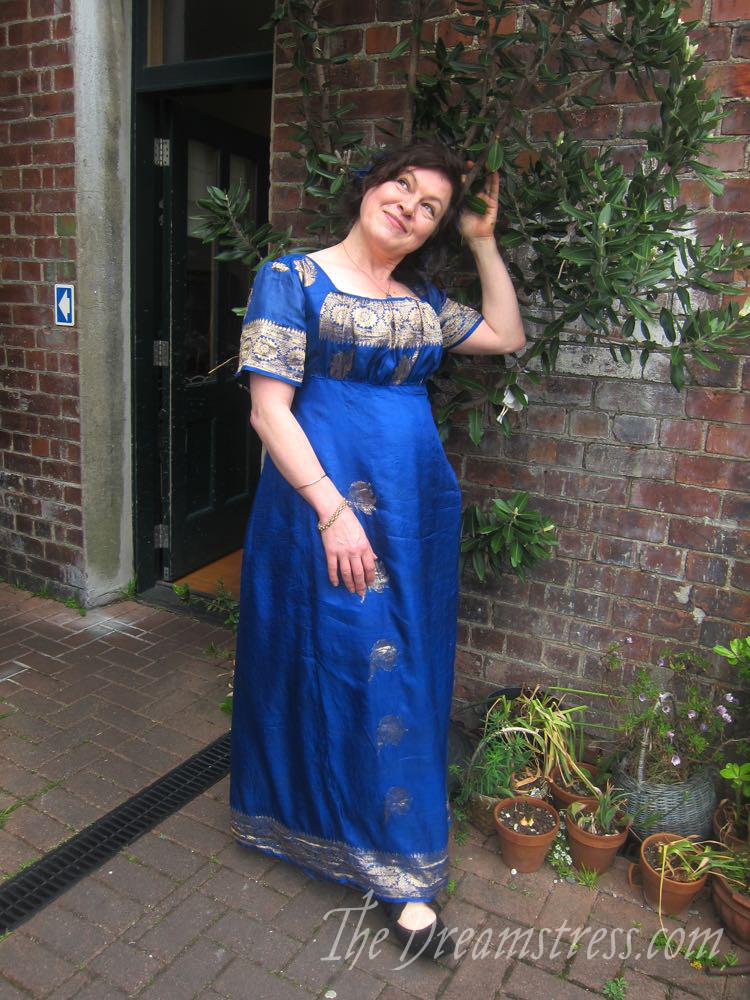
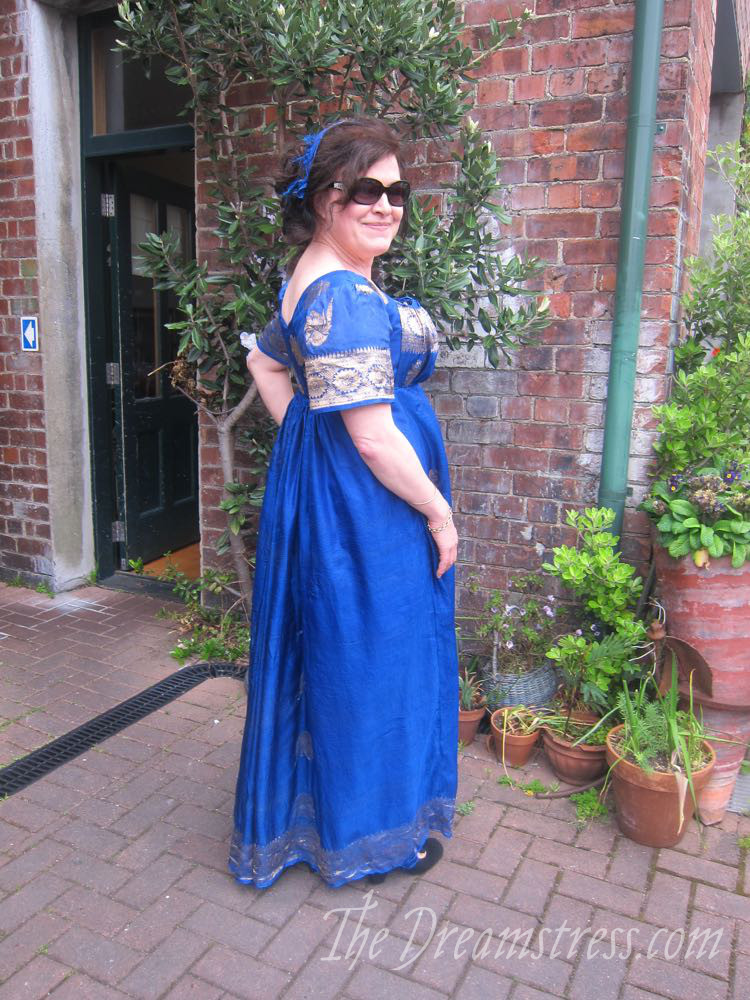
We talked Madame O into wearing her blue sari Regency dress again (she wore it to the Bastille day masquerade ball), and I’m so glad, because I love it!

Afternoon tea & dress ups thedreamstress.com

Afternoon tea & dress ups thedreamstress.com

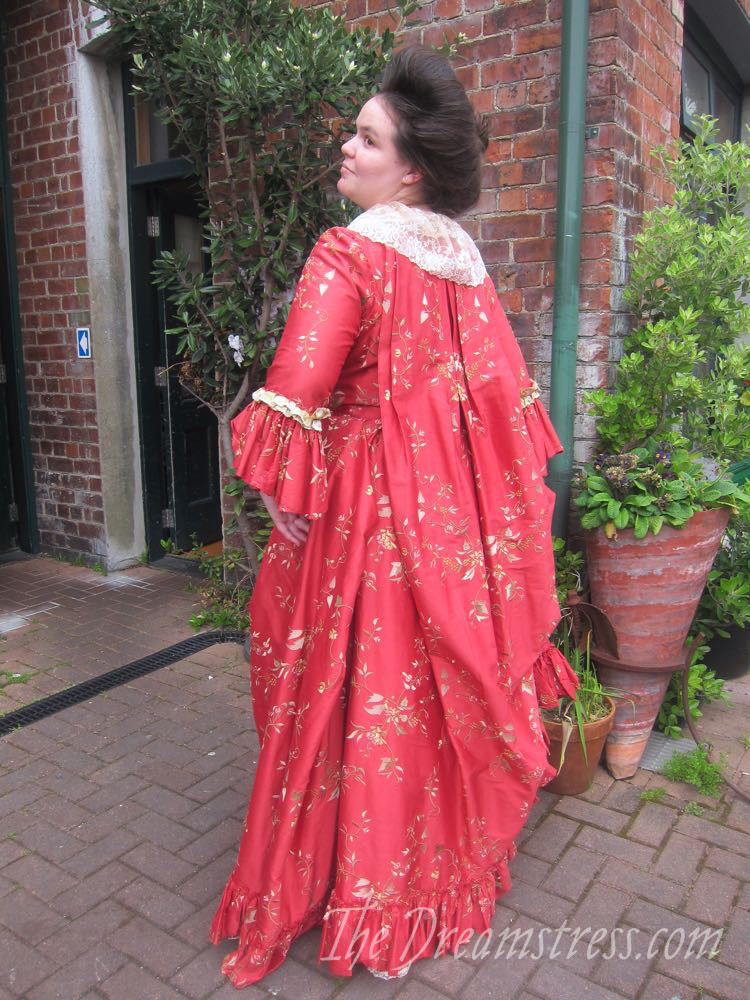
And le Comptesse got very clever and combined a robe a la francaise with a 1900s front and petticoat, playing with the idea of historicism in tea gowns.  Considering all the re-makes of 18th c fashions that appeared in the 19th c, it’s quite plausible that a real 18th c robe a la francaise was re-made as a tea gown at some point.

Afternoon tea & dress ups thedreamstress.com

Afternoon tea & dress ups thedreamstress.com

Sadly, we failed to get a photo of all of us together, which is a real shame because we coordinated so perfectly: red, yellow, blue and green!  Alas…

Still, such a lovely afternoon, and such an important thing to make time for.

* Somewhere there is a very confused insect with a stinger and pretty wings trying to figure out what happened…

A 1900s inspired apron for Katherine Mansfield’s ‘Alice’

Some of you asked about the apron that I made for the Katherine Mansfield photoshoot, so I thought I’d share a little construction info, and some photos.

1900s Apron - A photoshoot at the Katherine Mansfield Birthplace Museum thedreamstress.com

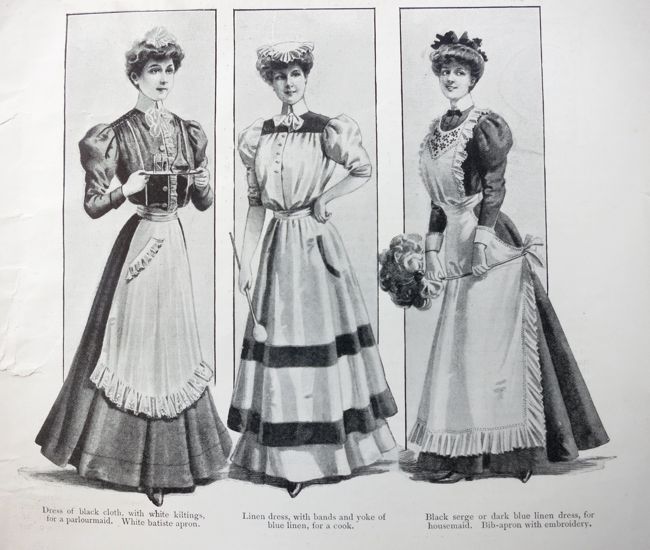
My main inspiration was this apron (the one on the right) from the Girls Own Paper:

Girl's Own Paper, 1906, thedreamstress.com

The low tying apron, either with a waist tie, or on its own as the only tie, was a particular vogue seen from 1900-1910.  It kept the focus on the back-emphasis of the S-curve, even in a practical garment, and kept the slightly narrower flat-fronted aprons fashionable at the time (again, to highlight  the S-curve) well wrapped around the skirts, so they stayed protected even without a large volume of fabric.

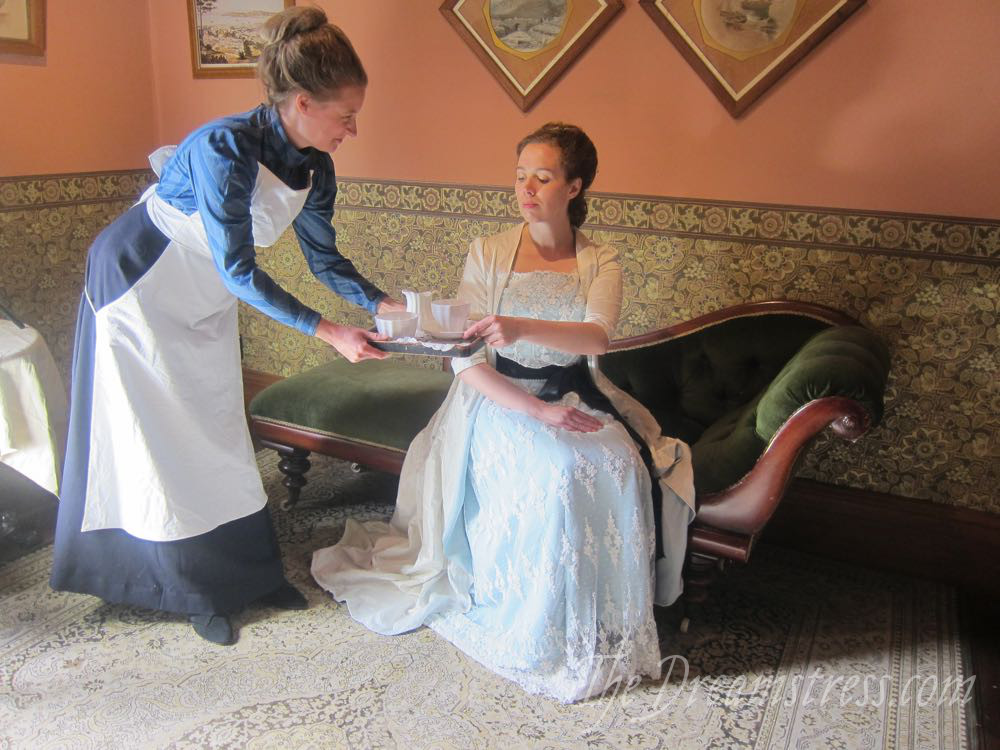
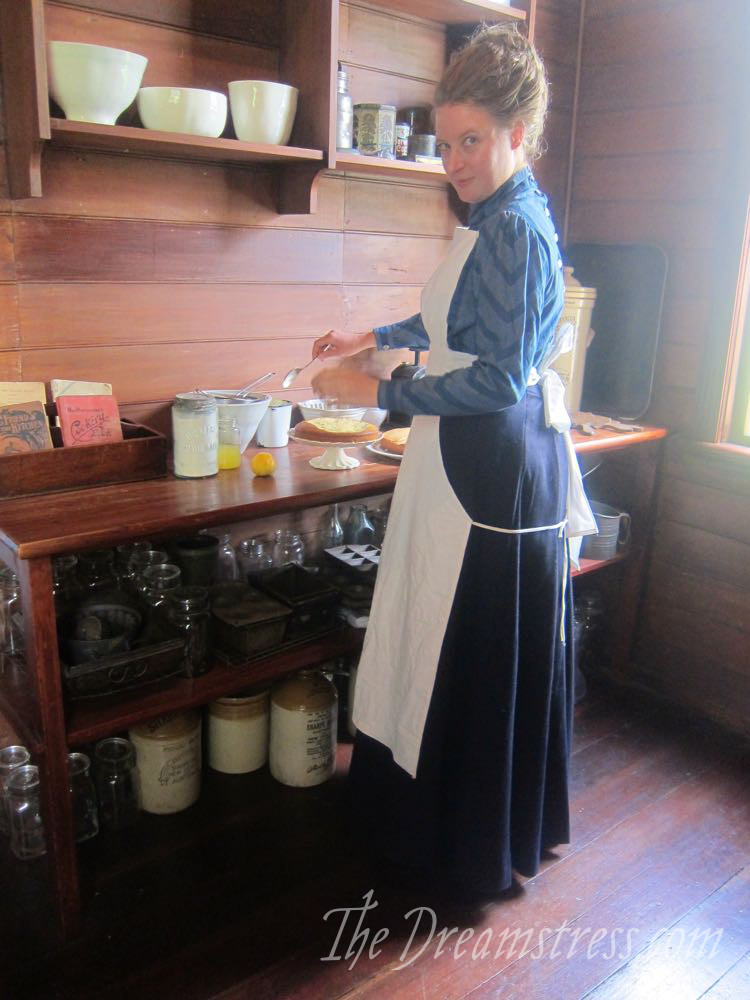
Beka (the model) is playing Alice, the maid in the Beauchamp (Mansfield) household.  Alice did cooking, and household chores, so her apron would need to be quite practical – not quite the frilly convection of the fashion plate.  However, there is a fantastic scene in By the Bay describing Alice’s  (rather outre) outfit, and I get the feeling Alice might have liked a fashionable twist to her apron – hence the very trendy (sorry, I couldn’t think of a better word) double tied apron, rather than a more old-fashioned full-skirted apron.

Apron at the Katherine Mansfield Birthplace Museum thedreamstress.com6

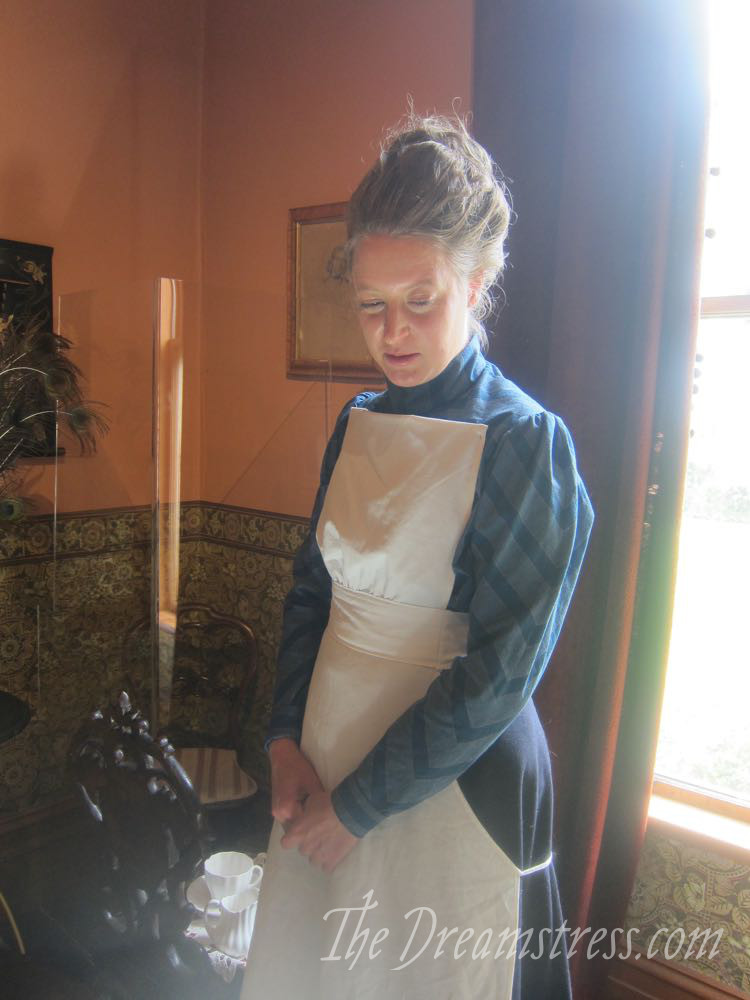
I originally designed and made the apron with a round neck and straps, as shown in the fashion plate, but at the last minute decided that it hid too much of the blouse and didn’t work aesthetically, so I hacked off the top, hemmed it, and turned it into a pinner apron (sometimes called a breton bib).

1900s Apron - A photoshoot at the Katherine Mansfield Birthplace Museum thedreamstress.com

I’m pleased with the finished result, and it is accurate: there is a memento mori photograph of Mansfield’s grandmother (who lived with them) in a pinned apron, bending over Mansfield’s deceased baby sister.

1900s Apron - A photoshoot at the Katherine Mansfield Birthplace Museum thedreamstress.com

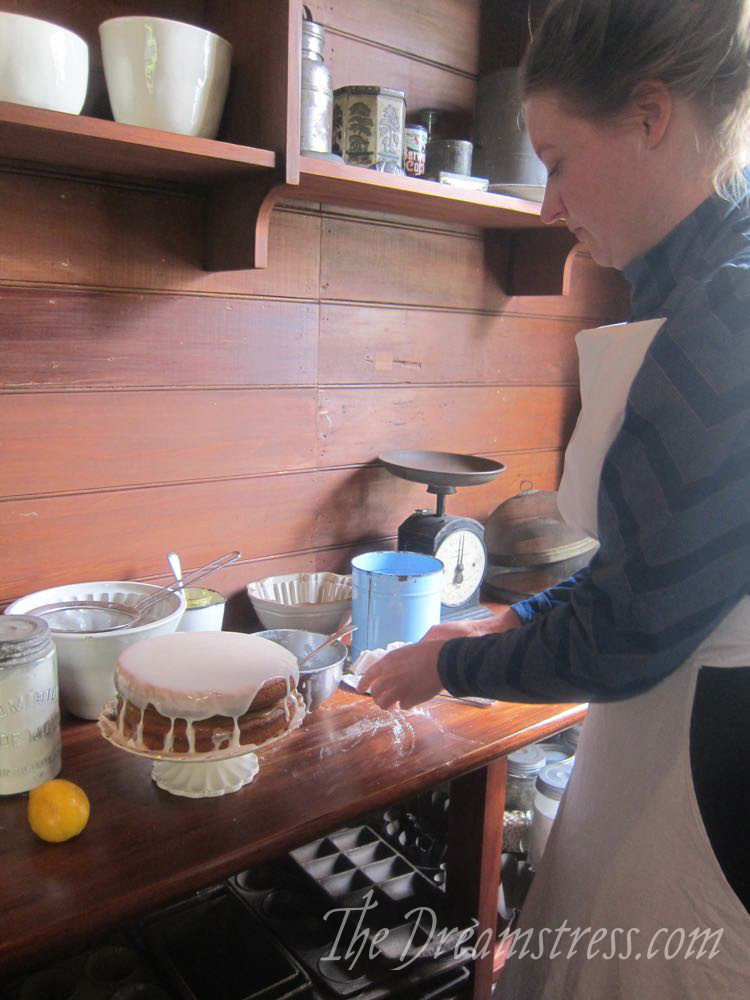
And yes, Beka as Alice got to do actual work in the apron!  I made a 1,2,3,4 Cake (the recipe dates to at least 1851) and Beka filled it with lemon curd, made a lemon glaze icing, and frosted it.

1900s Apron - A photoshoot at the Katherine Mansfield Birthplace Museum thedreamstress.com

And at the end of the day, we had our own little Garden party and ate it.  And it was delicious…