Latest Posts

Taking tea with the Wellington Sewing Bloggers

The afternoon tea* craze is well established in Wellington, with at least one dedicated afternoon tea shop, and various restaurants doing their own afternoon teas.  And a new afternoon tea shop has just opened in Kilbirnie (a suburb/village on the eastern side of Wellington, near Weta Workshops), and I’ve been meaning to try it.

You know who else likes afternoon  tea?  The Wellington Sewing Bloggers.

We also like fabric shopping, and meeting non-Wellington Sewing Bloggers.

So when Penny from Dresses and Me (OK, only kind-of a sewing blogger, but close enough!) let us know she was coming to Wellington, of course we had to meet her, and take her fabric shopping, and to afternoon  tea.  And of course I suggested the new tea place so we could try it out.**

But first, to work up an appetite, we went fabric shopping:

Taking tea with the WSB thedreamstress.com6

(many thanks to Silly Billy Sewing for all the photos in this post that include me)

I completely blew my fabric budget at The Fabric Warehouse, buying silk-merino blend jersey (I’m actually wearing a shirt made out if it*** in the photo above† which I’ll be telling you about soon (the shirt, not the photo††)) to make tops and cardigans and wrap dresses and modern-medieval frocks and more tops and cardigans and  out of††, and a heavy merino-lycra jersey, to make leggings out of.  So I had to restrain myself at The Fabric Store and not buy anything, which is quite hard when they have beautiful wool plaids on sale!

So it was quite good that we were running late and I had to hop in the car and head out to Kilbirnie before I could be overcome by fabric temptation.

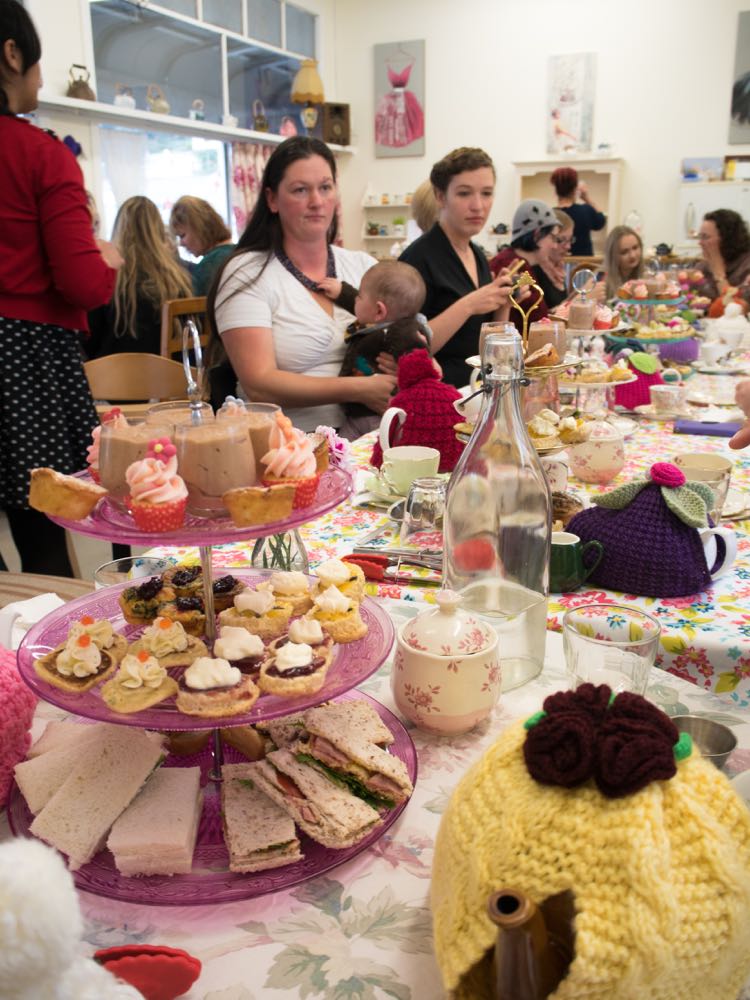
Having withstood fabric temptation, it was quite good to succumb to tea temptation‡ at The Little Teapot, where tea‡‡ is served in individual teapots with adorable hand-knitted tea cozies.

Taking tea with the WSB thedreamstress.com2

When everyone else arrived we admired the temptation they had succumbed to:
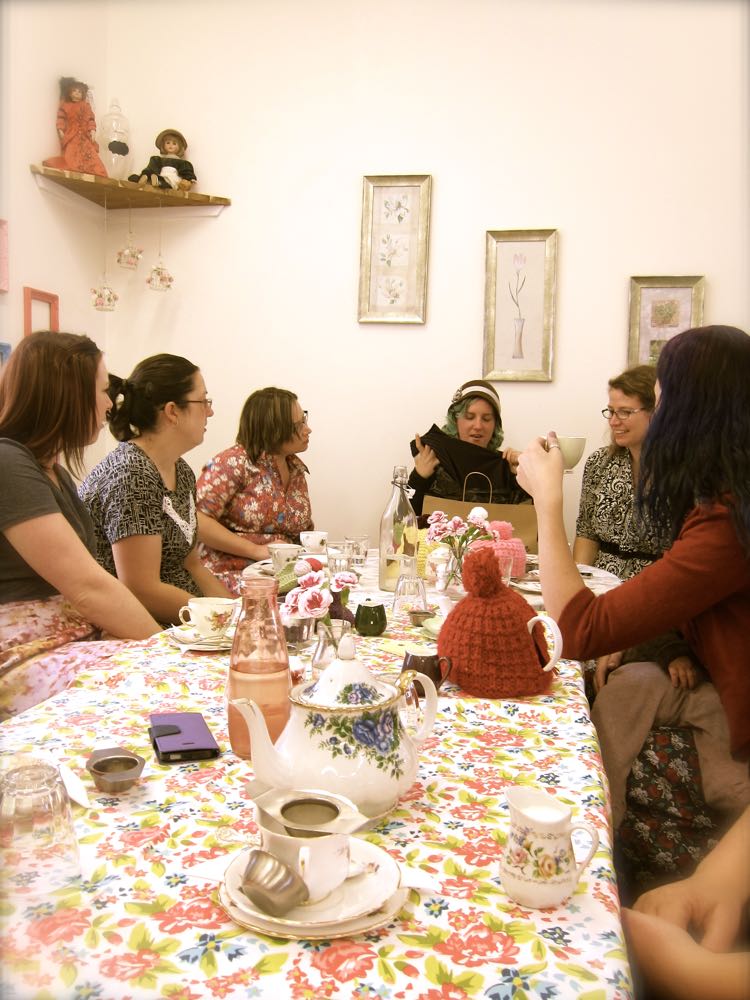
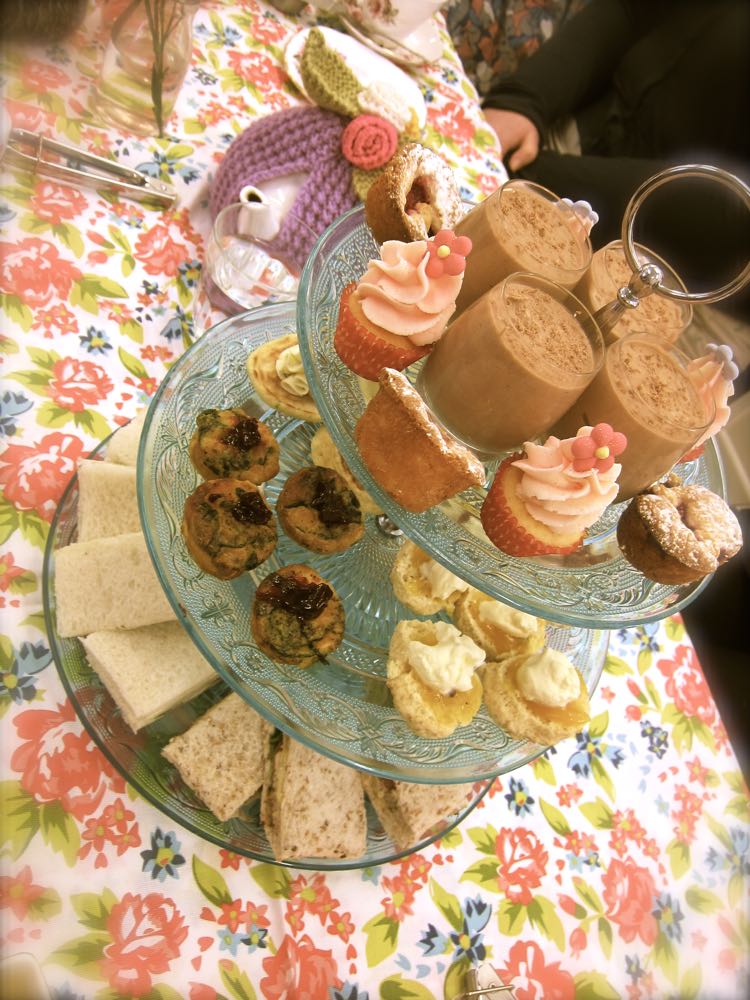
Taking tea with the WSB thedreamstress.com3And then we admired the trays of delicious goodies that arrived, stacked with sandwiches and tarts and chocolate mousse.‡‡‡
OLYMPUS DIGITAL CAMERA

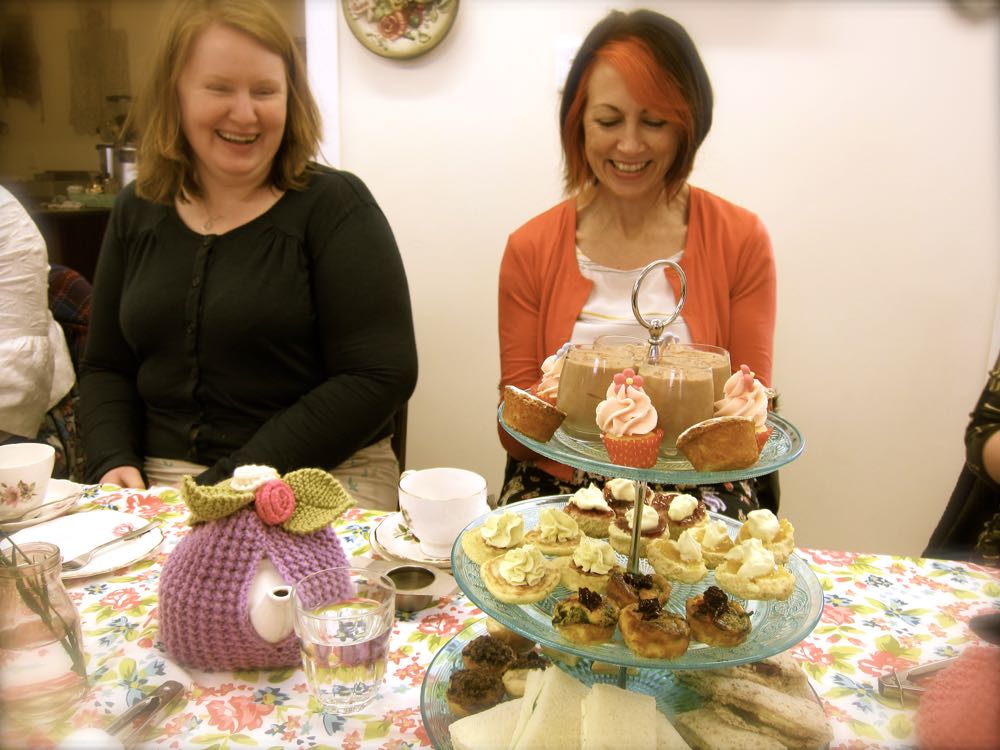
As often happens, even in groups where I’ve never met anyone before, all the vegetarians ended up sitting in one area, as our pheromones bring us together.+
Taking tea with the WSB thedreamstress.com5

So those of us not indulging in the flesh of dead things++ got to admire our cream cheese and cucumber sandwiches without being disturbed by roast beef.
Taking tea with the WSB thedreamstress.com6

And then we got to devour them+++, because that’s the whole point!

Taking tea with the WSB thedreamstress.com2

And then I took photos of Sewist Stitch’s Belcarra (the 0Degrees twin to my Sunshine dress), and other bloggers documented their own recent makes, and a wonderful time was had by all.

* As in the kind with little sandwiches and crumpets, not to be mistaken for high tea, which is supper.  Even if lots of people call the kind with crumpets  high tea.

** Also because it’s out of the CBD, which makes parking only a gazillion times easier.ˆ

ˆ Only, as it turns out, traffic from the CBD to Kilbirnie is such a nightmare that one might as well have attempted to find a park in town for the time it takes to get between them.

***  Indicating that I am either  way  more of a sewing wizard than anyone has ever given me credit for, or I’d already bought some of it and decided I needed more!

†  Despite the fact that silk merino jersey is extremely exciting, I’m not actually THAT excited about it.  I just tend to overreact when a camera gets aimed in my direction 😉

†† Though technically speaking, since there is a footnote about the shirt, I have already told you more about it, just not as much more as I will be.

†††Probably not quite that many things, but I live in hope that the fabric will never run out!

‡ Where I realised that having left before the people who had succumbed to fabric buying temptation, and thus were still getting fabric cut and being caught in traffic, meant I got to be naughty and rearranged the teacup trios so that I had my favourite.ˆ

ˆ Oh come on, there is no way you wouldn’t haven’t wanted to do that!

‡‡  I went for an English breakfast variant.

‡‡‡  Sadly, no crumpetsˆ

ˆMinor existential crisis.  If there are no crumpets, is it still afternoon tea?

+ I can’t decided if saying something about pheromones or something about being psychically attracted is less dumb and creepy.

++ Ahem.

+++ I am happy to report that they were quite devour-able.  Definitely the best sandwichesˆ I’ve had at afternoon  tea.

ˆBecause  if one doesn’t have crumpets, at least one must have sandwiches.
Rate the Dress: mid-1870s puffs and ruffles

Last week I showed you a red velvet and gold lace and peacock feathers dress, ca 1900.  Ca 1900, red velvet, gold lace, and peacock feather embroidery are all generally considered to be good things when it comes to Rate the Dress, so, not surprisingly, many of you approved of the dress, even if it did come with a side order of wonky bow, awkward bust embellishment, embroidery wrinkles, potential itch factor, and overly puffy sleeves.  In fact, despite all these things, the power of red and gold propelled the dress to an 8 out of 10.

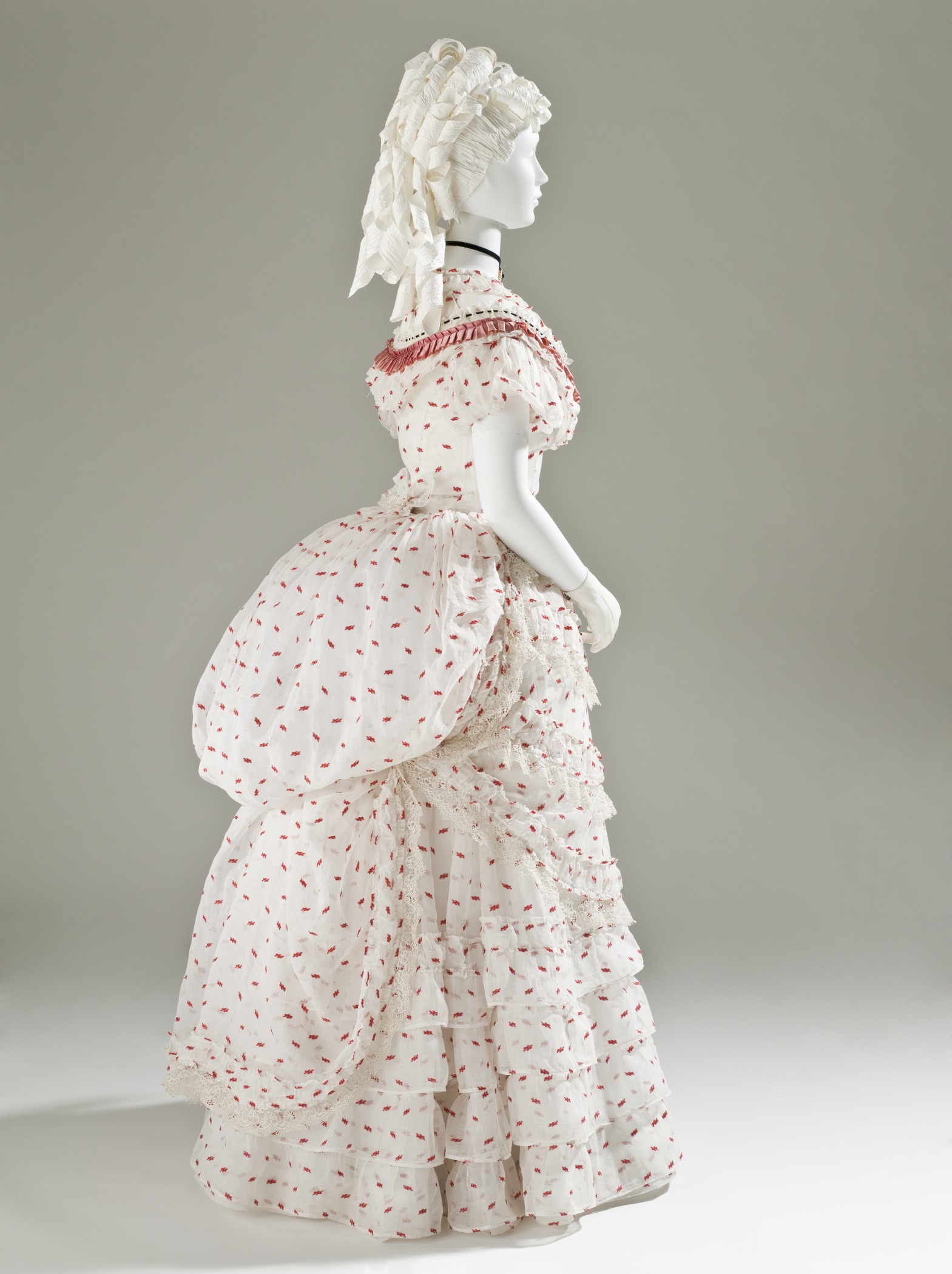
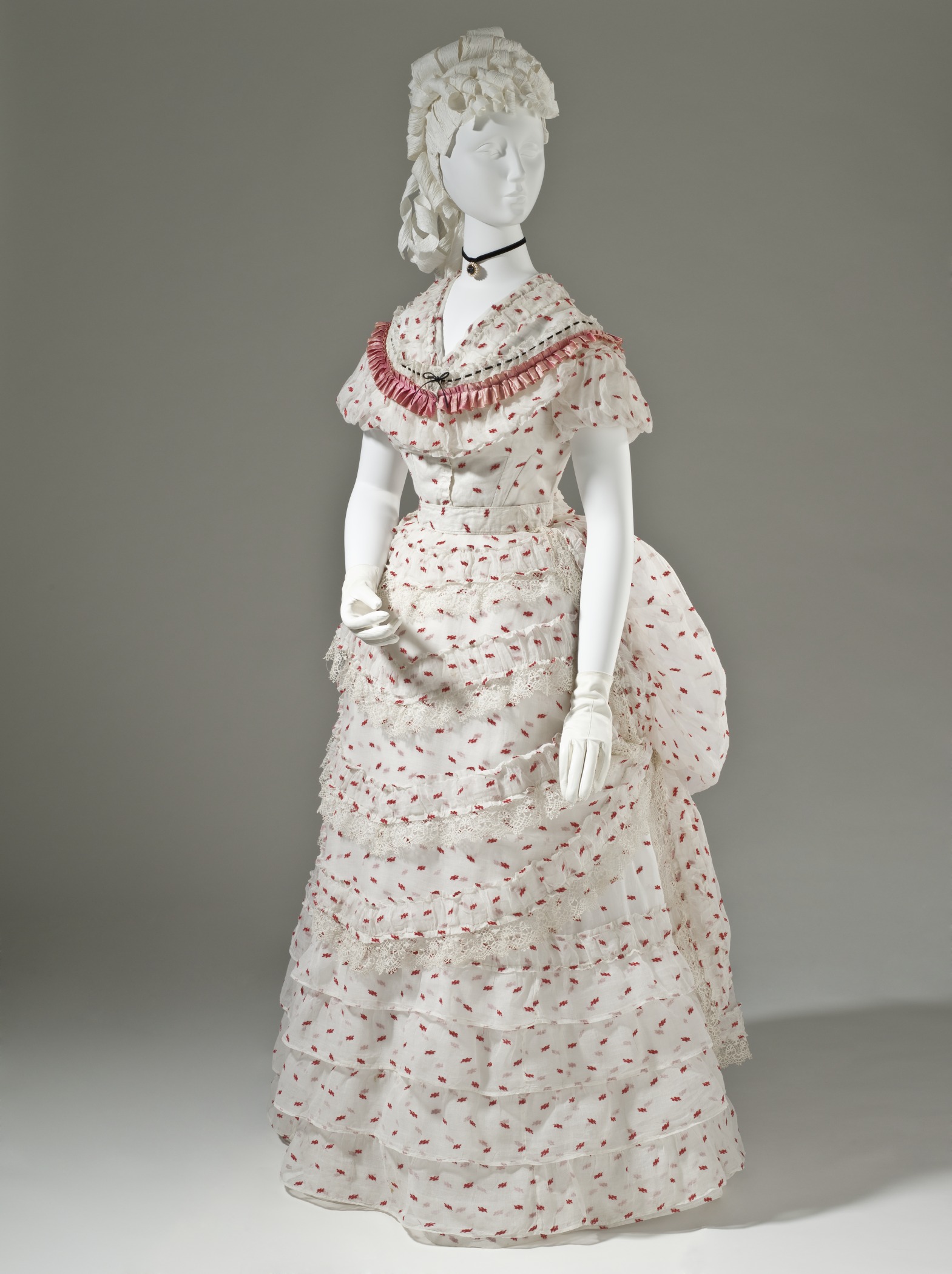
The Los Angeles County Museum of Art calls this summery bustled evening dress a ‘Polonaise’ gown, reflecting the 1870s interest in the 18th century, and the revival of 18th century dress terms.

The name may be 18th century inspired, and there may be the barest nod at the idea of a Georgian fichu in the guimpe/dickey which gives the dress the option of moving between different types of evening events, but the overall look is classic 1870s.

There are the tiers of ruffles, both on the underskirt, and mirroring the curve of the apron overskirt, and trimming the ‘polonaised’ bustle back.  The same themes are repeated on the bodice, with puffed sleeves, flat ruffling on the higher guimpe, which made the dress less formal and more modest, for dinner events, and a row of contrast satin pleating and ruffles  framing  the lower neckline, for balls and more formal events.

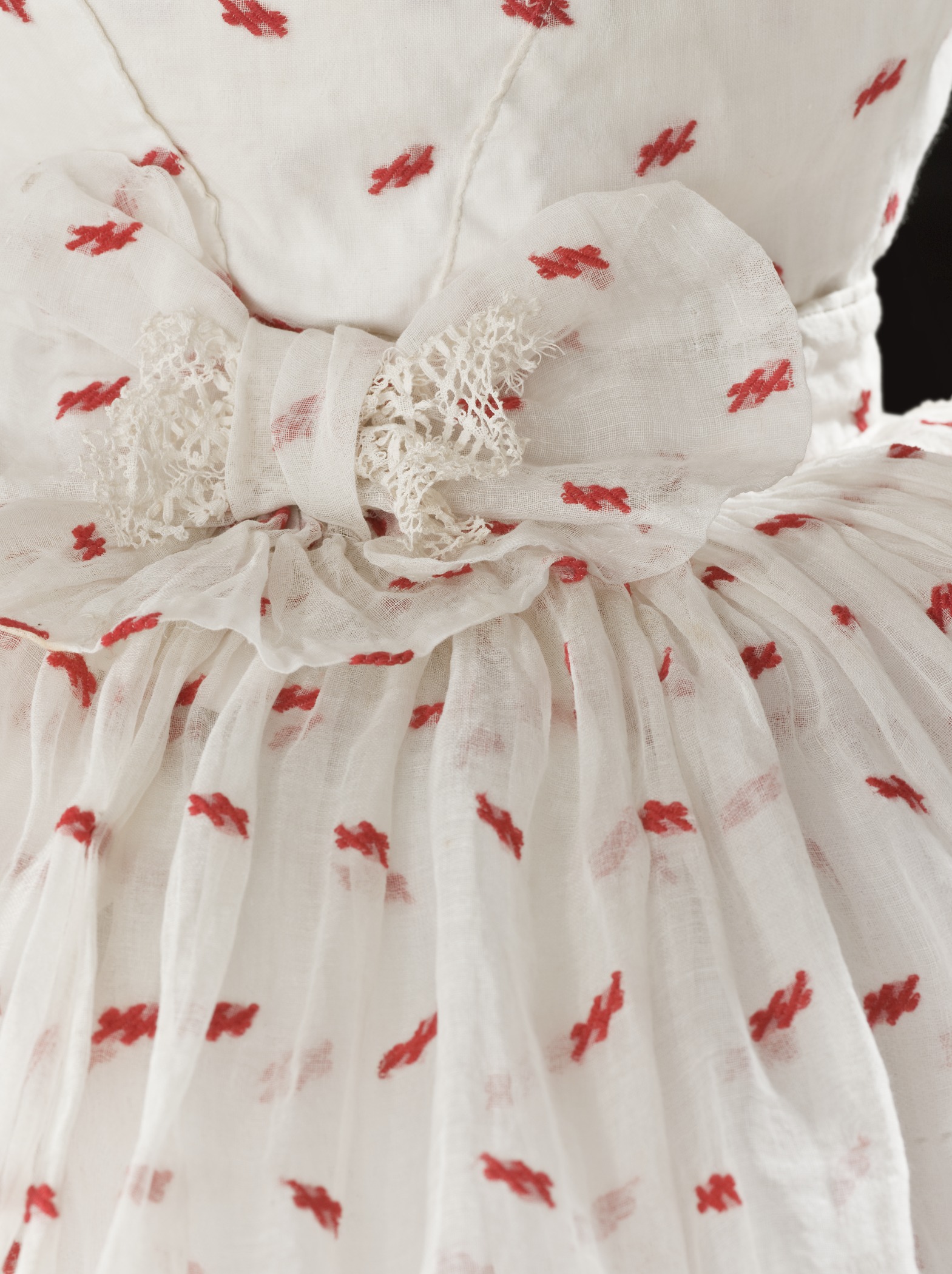
The detailing and embellishment on 1870s and 1880s gowns came make them appear quite stiff and contrived, but this summer evening dress is made of light, airy cotton, with wool brocaded patterning.

Woman's Polonaise Dress, England, circa 1875, Cotton plain weave with wool of discontinuous supplemental weft, silk satin ribbon, and machine lace, LACMA, M.2007.211.777a-f

Does the lightweight fabric balance the heavy embellishment?  Is the dress a success?

Rate the Dress on a Scale of 1 to 10

Review: The Wearing History 1910’s Elsie blouse

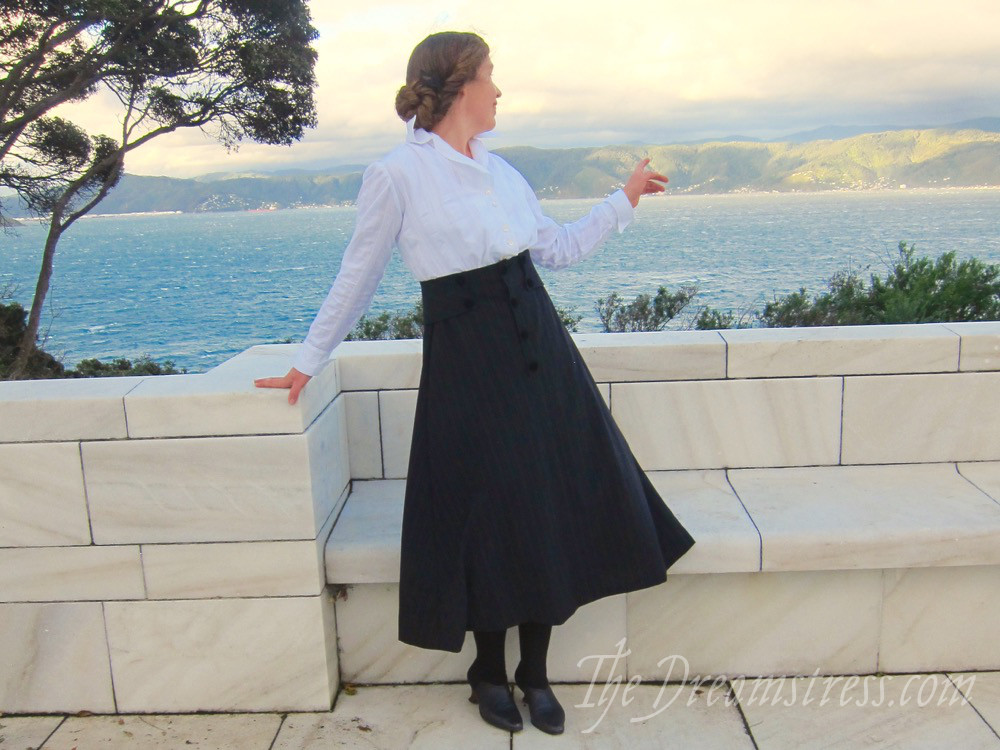
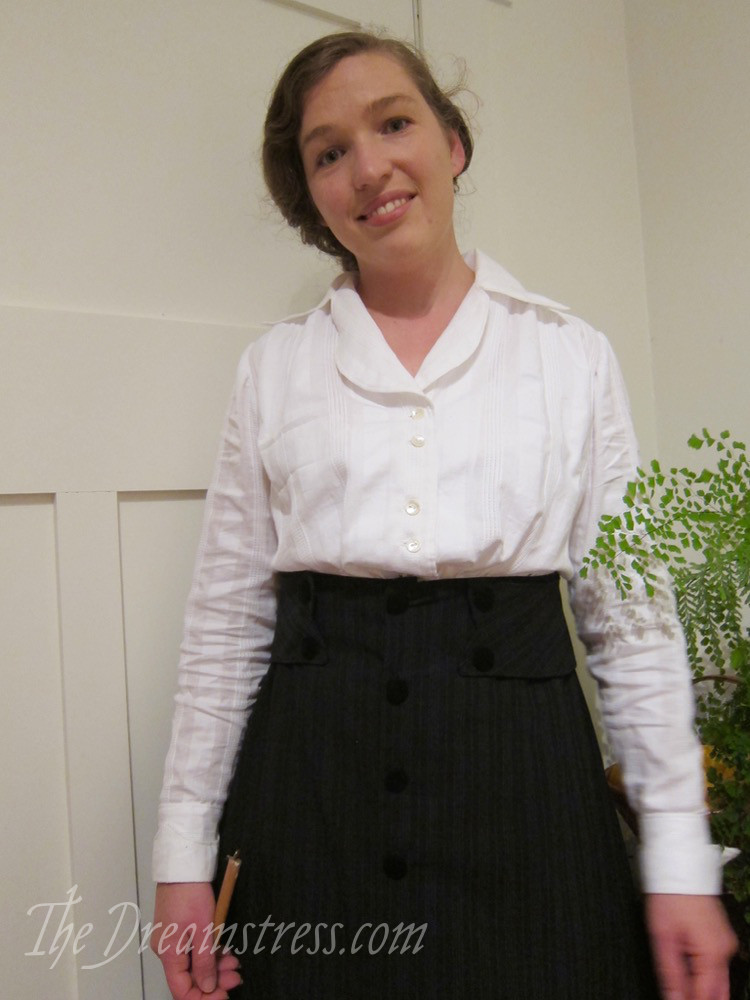
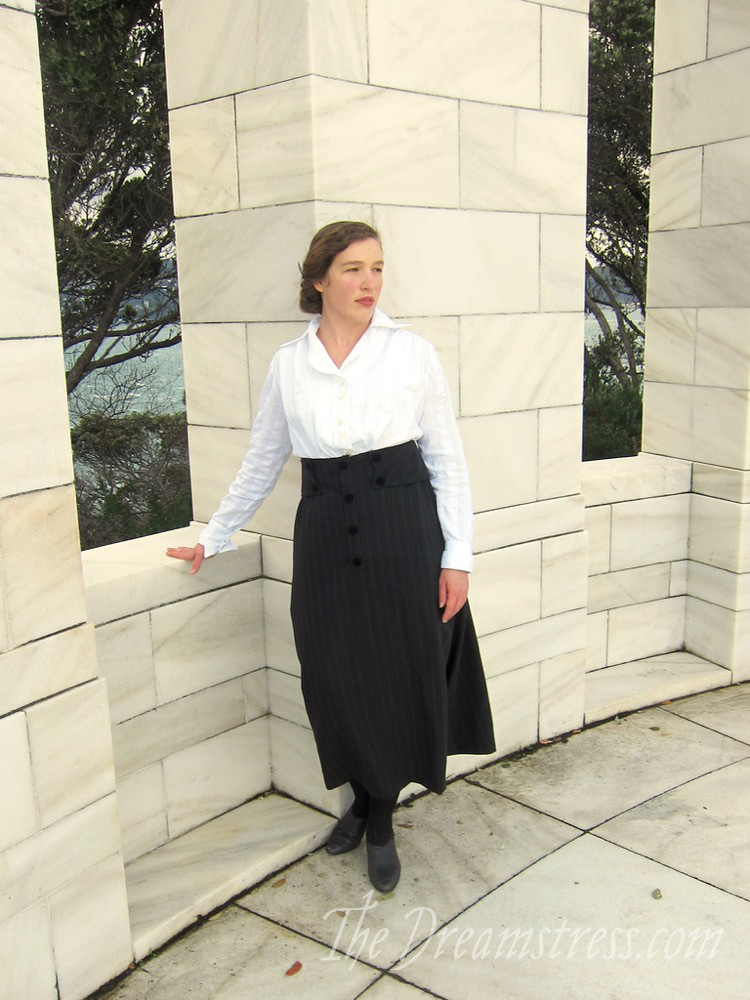
I’ve shown quite a few photos of my version of the  Wearing History 1910s Elsie blouse  in my discussion of Anzac Day in NZ, and talked about wearing it to do housework, but I thought you might appreciate a little bit of a review, and some sewing construction information – i.e. normal sewing blogger stuff.

Wearing History's 1916 Elsie blouse thedreamstress.com - 1

The Pattern:

Like all the Wearing History patterns I’ve worked with, taping the pattern together is quite easy, and everything matches and goes together nicely.

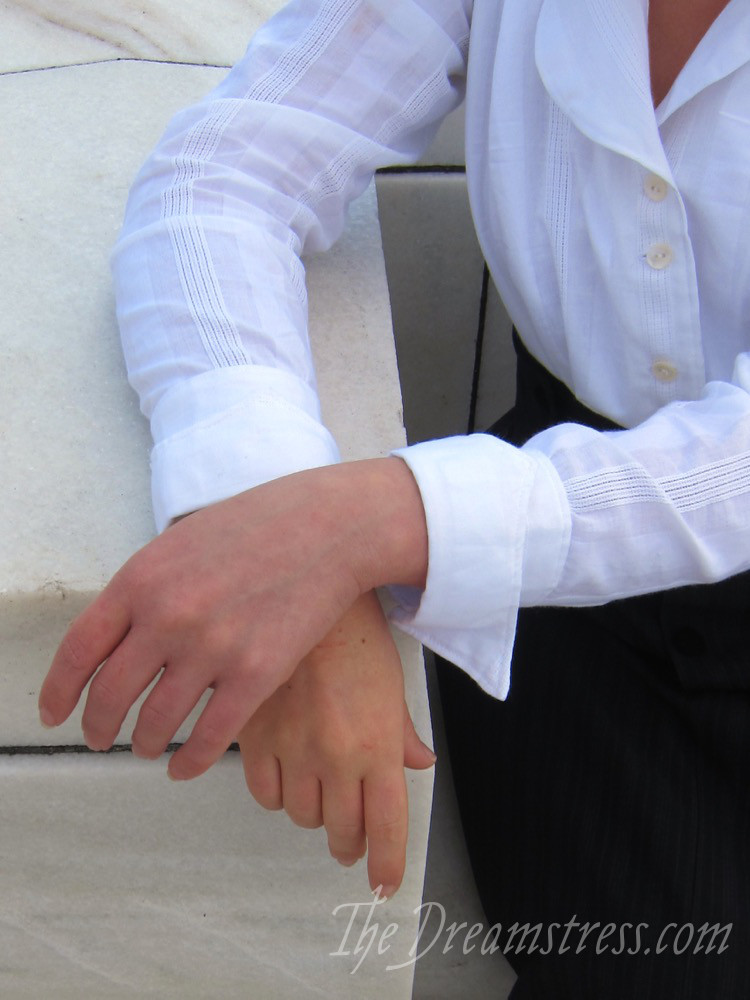
This is a reproduction of a period pattern, and (as stated when you buy the pattern), instructions are minimal (they are the very brief instructions given with the original 1910s patterns, with a ‘translation’ into modern sewing terminology), so it’s up to you to know how to sew a blouse together, either using modern blouse techniques, or period ones, if you want it to be more historically accurate.

If you need help with blouse instructions, combining the instructions for the  Wearing History Smooth Sailing blouse pattern  and the Wearing History Edwardian blouse should cover everything you need to know to make the blouse.

The pattern does have very big (3/4″) seam allowances at the side seams, which is a common feature on 1930s and earlier sewing patterns, to make fitting and adjustments easier.  However, few extent garments that I have looked at have such large seam allowances, so now that  I’ve figured out the fit I’ll cut all future versions with 1/2″ seam allowances from the start, to save on fabric and fiddling.

There are LOTS of notches along the sleeve heads, which helps with matching, but is also a fascinating look at the way standard markings in sewing patterns developed and changed.

Wearing History's 1916 skirt thedreamstress.com - 4Sewing

All the pattern pieces and notches also matched perfectly as I sewed.

Basically I:

-Gathered the front shoulder seams.  Sewed front to back at shoulders with flat-felled seams.  Worked the sleeve vents.  Sewed ease stitching along the sleeve cap, set the sleeves, and sewed the side and sleeve seams in one go.  I checked the fit, and cut down these seams to 1/2″, and flat felled them.  Then I sewed on a waist casing  for a drawstring (rather than the waistband given in the pattern, as I want the fit  to be adjustable).  Then I constructed and attached the cuffs, and collar and front facing.  Then I hemmed, and finally, I did the buttonholes and buttons.

Doing housework in 1910s clothes thedreamstress.com - 3Sizing

I cut exactly the size recommended for the pattern, and the fit is spot-on.

Wearing History's 1916 Elsie blouse thedreamstress.com - 2Alterations (and problems)

The pattern has a very wide center front overlap.  You can see it in the Wearing History pattern sample blouse.  While it is original to the blouse pattern, it doesn’t seem to have been a necessary feature of 1910s blouses based on photographs.  And I don’t particularly care for it.  So I shortened each side of the front by 5/8″, to reduce the front overlap.

This, combined with the fact that I 1) have a really slim neck, set really far forward on my shoulders (so collars never fit me right), 2) got excited and over-engineered the collar with silk organza interfacing, and 3) was in a rush to finish the blouse (and kind of over sewing for the week), means that the collar fit is rubbish.  It just sits really poorly, and is never symmetrical.  I’m going to have to work on it a lot more on my next version.

Wearing History's 1916 skirt thedreamstress.com - 1

The Verdict

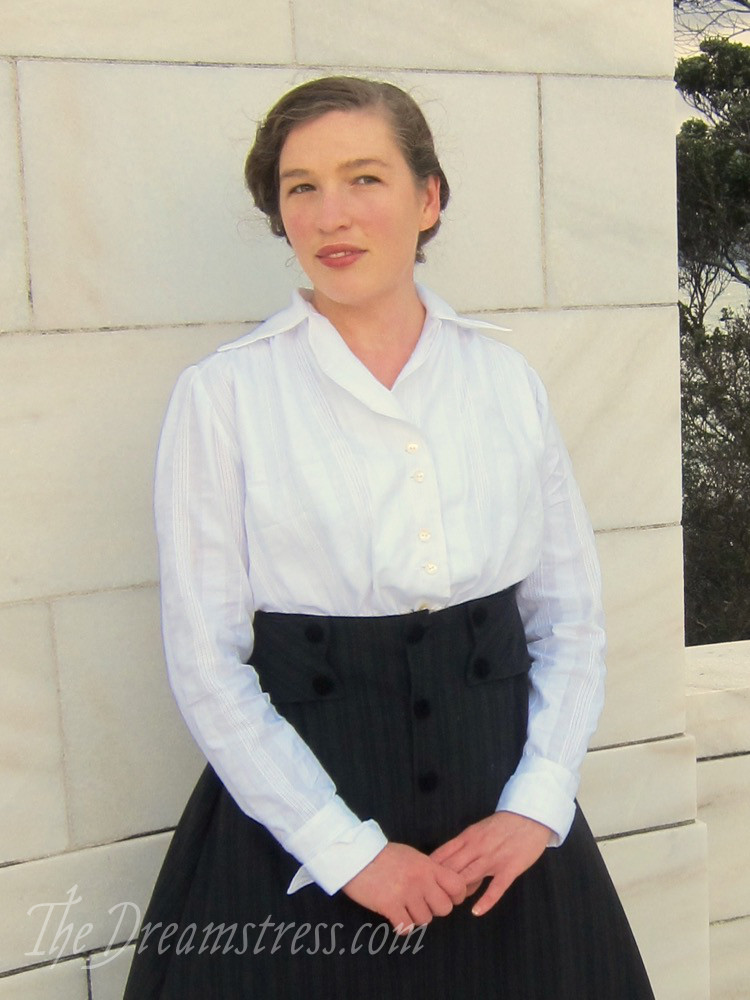
Despite my problems with the collar, I DO really like the finished blouse.  It generally does fit  really well, and the collar problem isn’t particularly noticeable when worn (and is my fault, not the pattern’s).

The pattern goes together easily, the fit is good, and the overall effect is perfect for 1910s daywear.  It’s a classic style, but there are enough clever details (the pointed cuffs and paired buttons (though you do have to figure out the button spacing for yourself) in particular) to make it a bit interesting and special.

Wearing History's 1916 Elsie blouse thedreamstress.com - 3

Once I get the collar issues sorted, I should be able to sew these up in under 2 hours.   I can definitely see myself  making a lot more of these!

Wearing History's 1916 skirt thedreamstress.com - 2