Latest Posts

The Historical Sew-Fortnightly Challenge #23: Modern History

We’re almost there!

The second-to-last Historical Sew Fortnightly challenge of the year, due 15 December, is an easy, fun one, and I hope that everyone participates, even if they have missed a few challenges across the rest of the year!

The theme is Modern History: make something historical that is wearable in a modern context.

I love this theme because it’s so practical and useful!  And it’s also something I’m particularly good at.  Since my life doesn’t provide as many opportunities as I would like for wearing over-the-top historical pieces, I have to find a way to fit period into my everyday wardrobe.

Here are some of the historical things I’ve made that I actually do wear as real clothes:

I’ve worn my 18th century ‘brown’ linen shift as a summer dress, with a belt and sandals,  and no one has commented on it, or noticed that it is entirely hand-sewn!

Late 18th century 'brown' linen shift

I’ve also worn my 14th century nettle shift as ‘normal’ clothes:

14th century nettle shift thedreamstress.com

And I’ve only worn  it that way once, by my 1780s pet-en-l’aire actually makes a spectacular jacket over jeans or (as I did it) a pencil skirt.
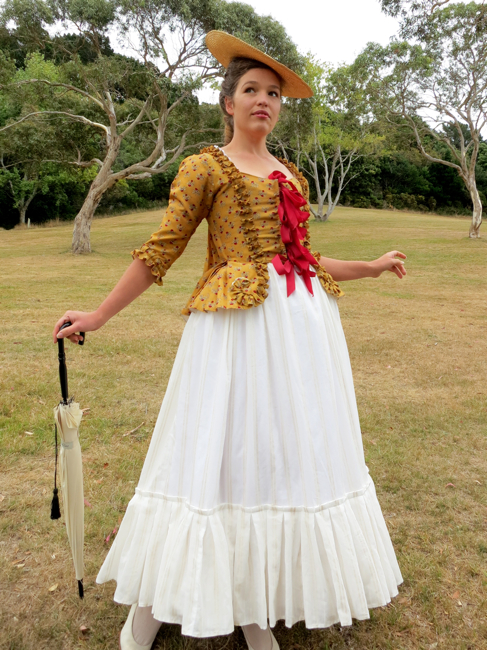
1780s pet-en-l'aire and pleated petticoat

Accessories are a great way to use historical items in a modern wardrobe.  I particularly like my muffs  with an ordinary winter coat, but there are also bags, and hats, and shoes, and gloves, and shawls…
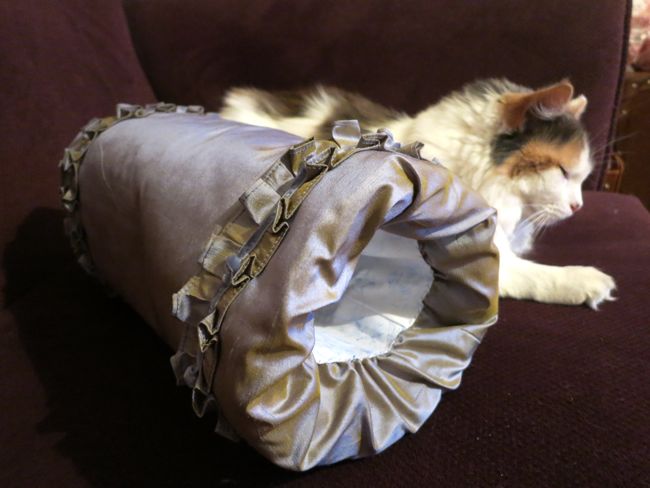
Late 18th century inspired muff thedreamstress.com

I’m not usually  the biggest fan of this look, but wearing corsets as bodices for evening wear is a classic way to add a fabulous historical twist to modern looks.  Perhaps I should try it with my 1890s ‘midnight in the garden’ corset turned inside out!
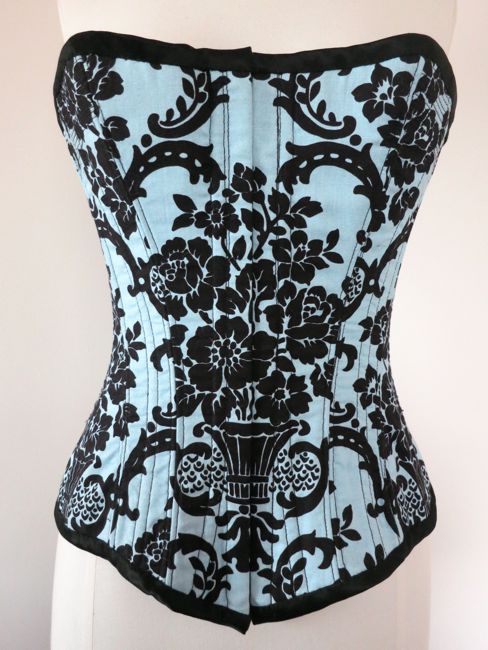
1890s 'Midnight in the Garden' corset thedreamstress.com

My 1910s paisley skirt & plaid blouse have actually been worn as ‘normal’ clothes far more than they have as historical items.  I get asked where I got the skirt, or the pattern for it, every time I wear it!
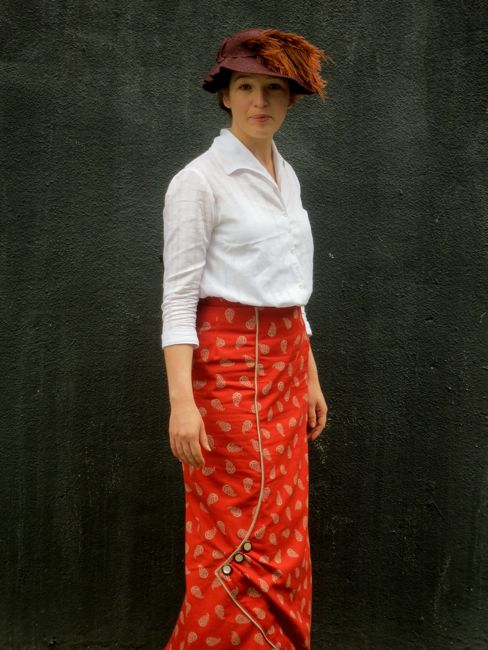
The 1913 paisley skirt thedreamstress.com
And, of course, the easiest way to incorporate period pieces into modern wear is to go for ’20s-’40s fashions.  In fact, it’s so easy I’d almost feel I was cheating doing it, because so much of my wardrobe is based on pieces from those decades!  I probably still will though, because I love them so much and I’ve got so many ’30s looks I want to make up for this summer!

Last summer I did 1929 Bambi:
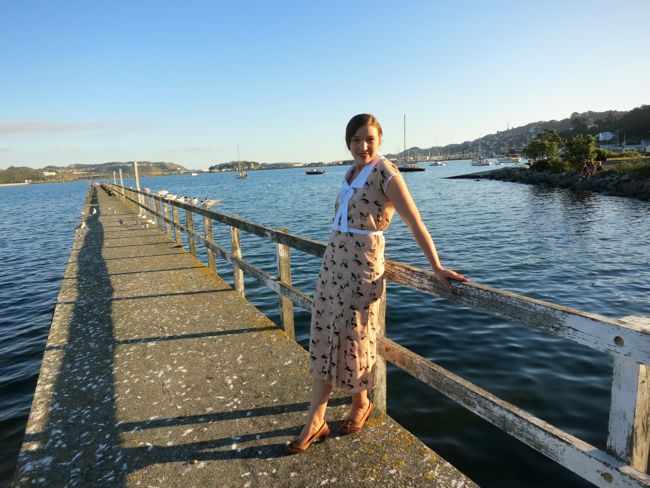
1929 'Bambi and Bows' dress

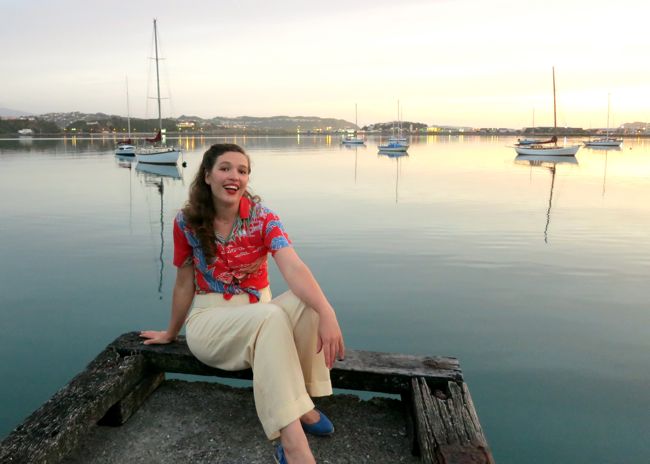
1940’s trousers:

1930s/40s 'Smooth Sailing' trousers thedreamstress.com

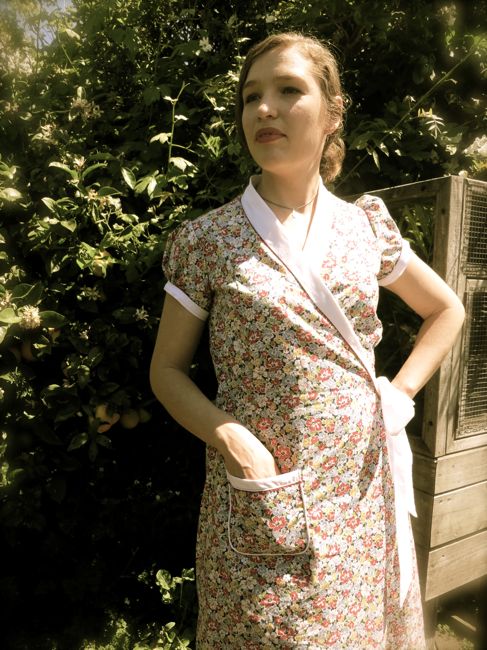
1930s housewife:

1930s inspired 'Hooverette' wrap dress thedreamstress.com

And the unexpectedly fabulous 1930s button dress:
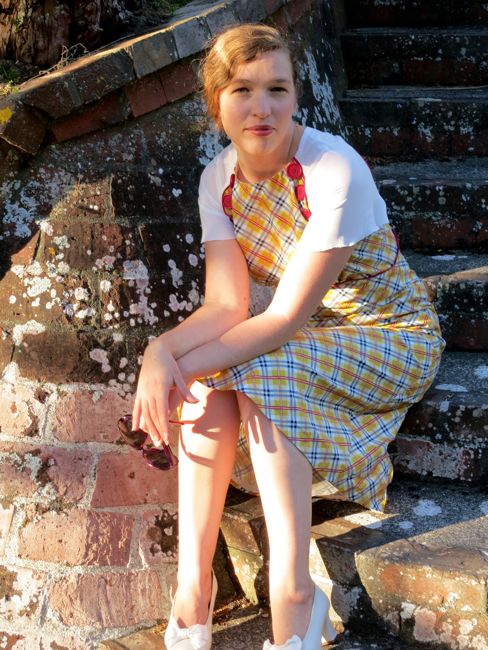
1930s Bad Plaid dress thedreamstress.com

All of which were worn constantly through the warm season!

Plus late ’20s  style cloches, which are the perfect sunhats in Wellington, as they shade the eyes but still STAY ON!
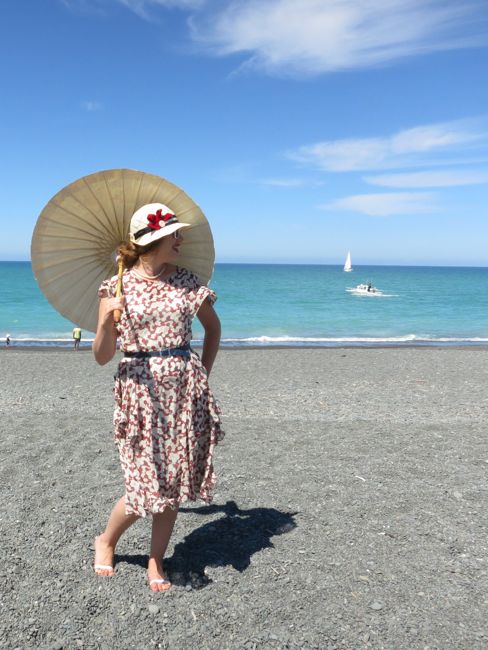
Little bit of red dress & cloche


And, of course, the Vionnet chiton dress, in whatever version I make it!
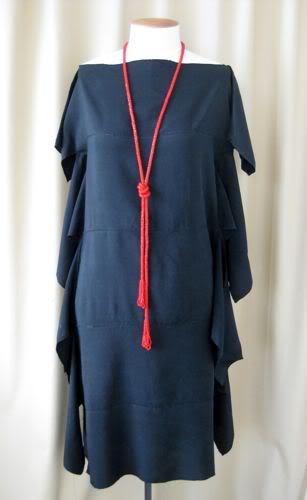
My version of Vionnet's 'Chiton' dress

My version of Vionnet’s ‘Chiton’ dress
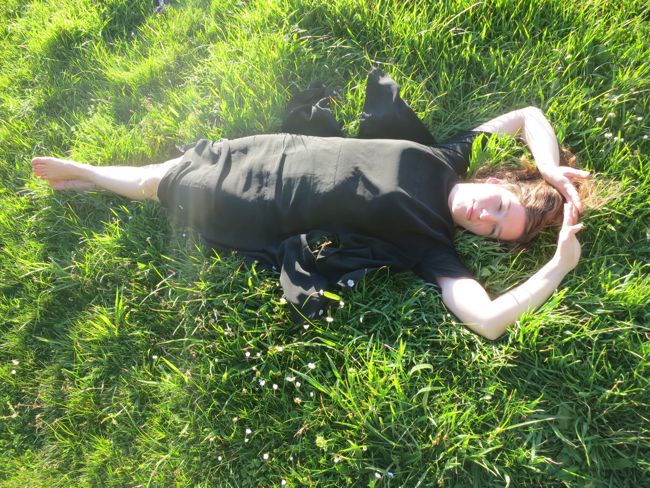


A dress for Mansfield's 'When I was a bird' thedreamstress.com

That’s how I make historical work for me in a modern way.  Can’t wait to see how you do it!

A Time-Travelling Ballerina

When I was a child I was given Tom Tierney’s ‘Ballet Stars of the Romantic Era‘ paper doll book.  Though I enjoyed the occasional girls ballet book, I wasn’t ballet obsessed.  This was mostly because ballet was simply such an abstract concept for me – in Hawaii little girls learn hula, not ballet.  I read about ballet, but the scenes they were described were as remote and exotic as Heidi’s Alps.

Although I couldn’t grasp the idea of a modern person being a ballerina, I loved the paper dolls.    The beautiful costumes (of course) and the stories of the ballerina’s lives (affairs with mad kings and all) appealed to me.

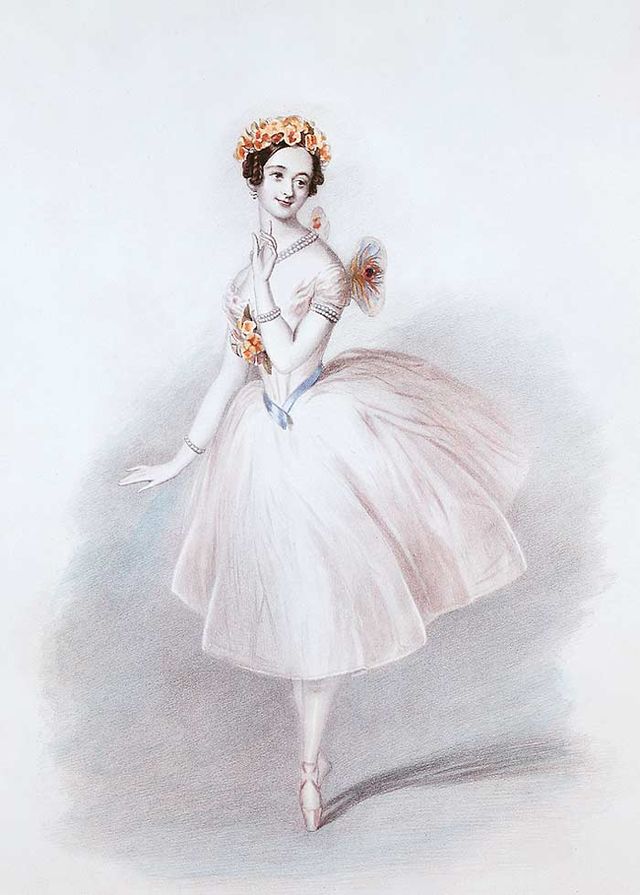
Marie Taglioni as Flora in Didelot's Zephire et Flore. London, 1831, Lithograph by Chalon and Lane.  Victoria and Albert Museum, Sergeyev Collection

Marie Taglioni as Flora in Didelot’s Zephire et Flore. London, 1831, Lithograph by Chalon and Lane. Victoria and Albert Museum, Sergeyev Collection

Later on, when I finally saw  ballets at the San Francisco Ballet and the Royal New Zealand Ballet, I was hugely disappointed by the costumes.  They were beautiful and striking, but in my mind I’d always imagined the soft, floating swish of romantic-era skirts of silk tulle.  The stiff nylon platters of the modern ballerina just didn’t live up to my expectations.  If I was going to design a ballet outfit, it would look like something Taglioni, Grisi, or Essler would wear.

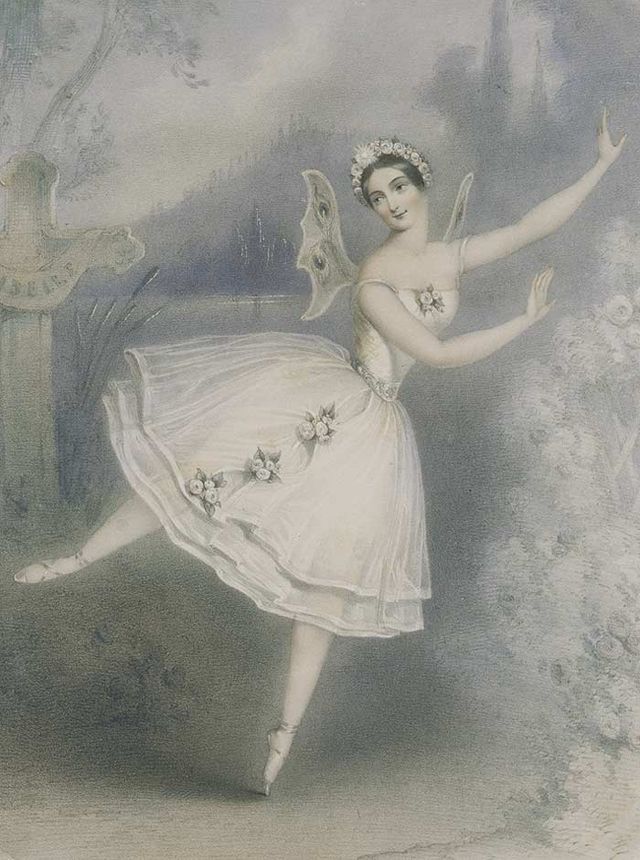
Carlotta Grisi in the tite role of Adam's Giselle, Paris, 1841, lithograph by an unknown artist

Carlotta Grisi in the tite role of Adam’s Giselle, Paris, 1841, lithograph by an unknown artist

Somewhere in a scrapbook I have a picture of Selma Blair in  the dress she wore to the 2003 Met Costume Gala.  She said of the dress something to the effect that she never got to be a ballerina as a little girl, so the dress was her ballerina moment.

For some reason that quote has always stuck with me (although I’d forgotten all the details of the dress except that it was vaguely ballerina-y), and I’ve thought, ‘yes, every girl should have a ballerina moment’.

The closest I’ve ever come to a ballerina moment was the outfit I wore to the Fairies & Dinosaurs party, but it wasn’t quite the vision I had.

This year I’m becoming aware, as the wrinkles don’t quite go away and I get too many grey hairs to honestly claim that they are all sports, that  my time to have a ballerina moment is going to run out.  I should do it now!

This year I have the perfect excuse – the Windy Lindy ball theme is ‘Enchantment Under the Sea’ (a la Back to the Future), and a Romantic era ballet costume is close enough to a ’50s prom  dress, right?

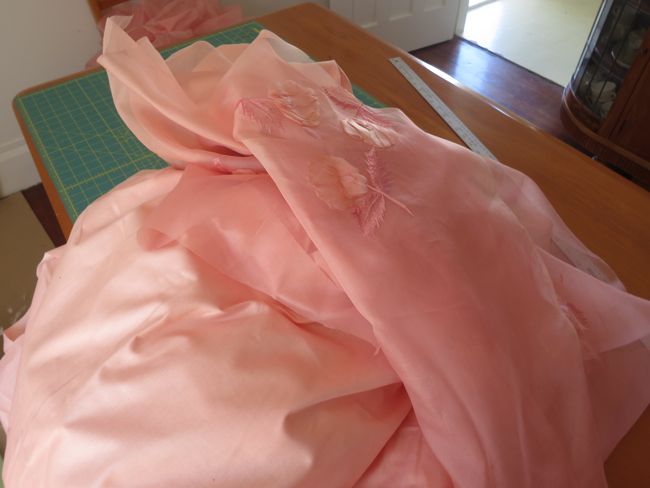
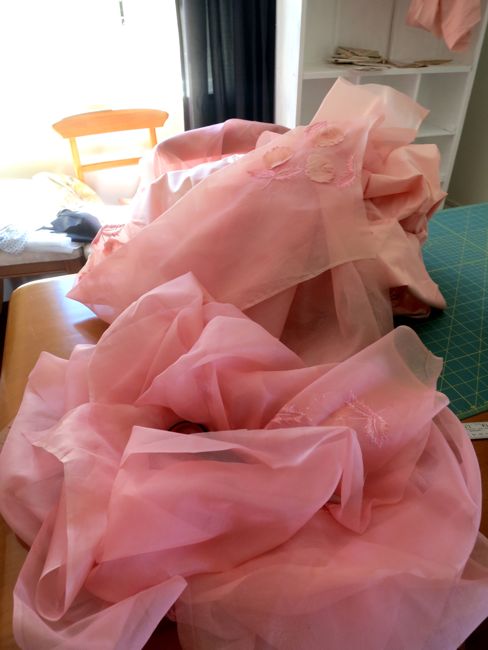
I also have the perfect fabric: 5 yards of vintage silk organza in pink with three-dimensional organza ribbon roses that my Grandmother brought back from a trip to Japan in the late ’50s.

A romantic-era ballerina meets 1950s dress thedreamstress.com

The clock is definitely ticking on me in that much pink organza too!

So, inspiration for a romantic-era ballerina, meeting 1950s full-skirted romanticism:

Marie Taglioni dancing the title role in La Sylphide, 1832

Marie Taglioni dancing the title role in La Sylphide, 1832

I love the simple fitted bodices, pointed waists, and the soft, swooshing fullness of the skirts.

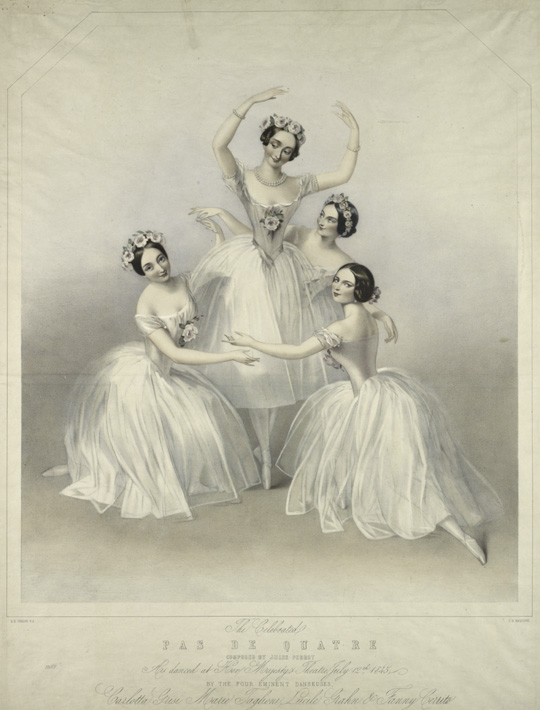
Lucile Grahn, Carlotta Grisi, and Fanny Cerrito surround Marie Taglioni in Jules Perrot's Pas de Quatre, Lithograph by T. H. Maguire from a drawing by A. E. Chalon, London, 1845

Lucile Grahn, Carlotta Grisi, and Fanny Cerrito surround Marie Taglioni in Jules Perrot’s Pas de Quatre, Lithograph by T. H. Maguire from a drawing by A. E. Chalon, London, 1845

I went looking for 50’s dress with the same elements, and assembled a pinterest inspiration board.

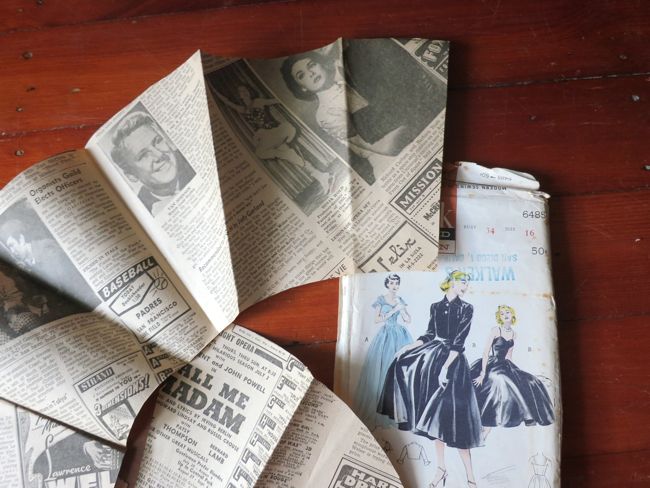
Then I went browsing in my pattern stash, and unearthed my Grandmother’s copy of Butterick 6485 from the early 1950s.

It’s got a fitted bodice, pointed waist, a full circle skirt with gathers (circles for that extra swish, and to maximise my fabric) and is perfect!

Butterick for a ballerina dress thedreamstress.com

When I opened it up, I discovered that my Grandmother had definitely made it, and even created two new pieces to add a peplum.

For a moment I was back with her, mixing and matching pattern pieces and drafting  new ones to create the ideal gown.

As I looked at the longer view, and the peplum pieces, I suddenly realised that not only did I know what her gown would have looked like, I own it!

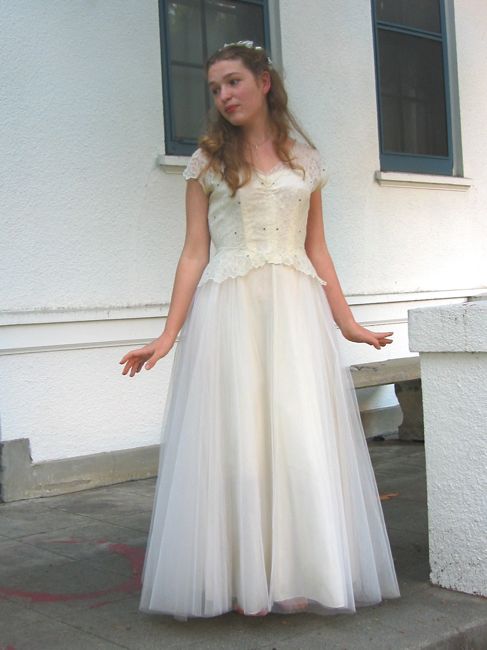
This is me, aged 20, in one of the three items  of my grandmother’s finished sewing that I own:

My grandmother's altered version of Butterick 6485 thedreamstress.com

It’s the pattern, with some alterations!

Oh, happiness!

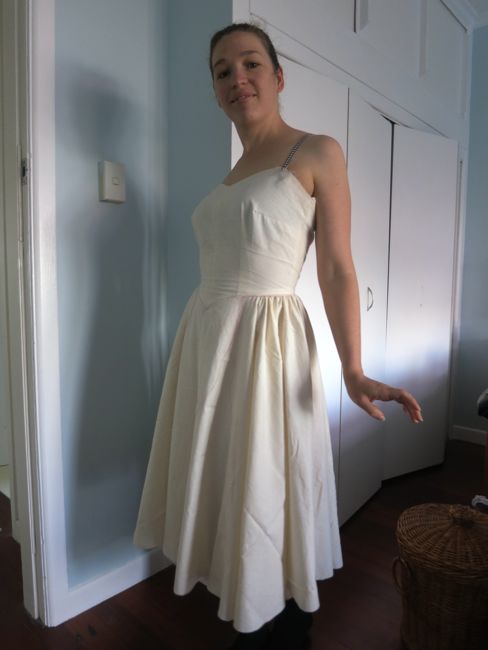
And, as further proof that the dress was meant to be, my toile fit perfectly straight off the pattern!  (or, at least it does with the correct bra under it).

Butterick 6485 for a ballerina dress thedreamstress.com

Now, to be brave and cut into that organza…

A romantic-era ballerina meets 1950s dress thedreamstress.com

The Un-Trappable Fiss

There is a meme going around the internet giving instruction on  ‘how to trap a cat‘.

Basically you create a circle on the floor, cat is attracted to the circle, cat sits in circle, you have trapped a cat.  Hurrah!

Apparently they like the feeling of borders.

Obviously I had to try this on Felicity.

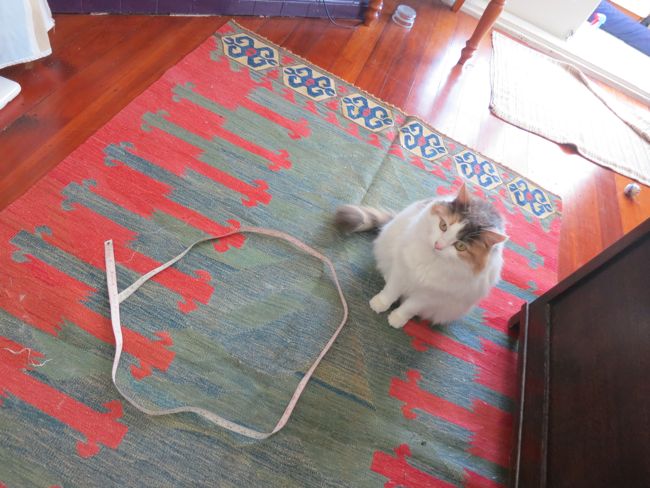
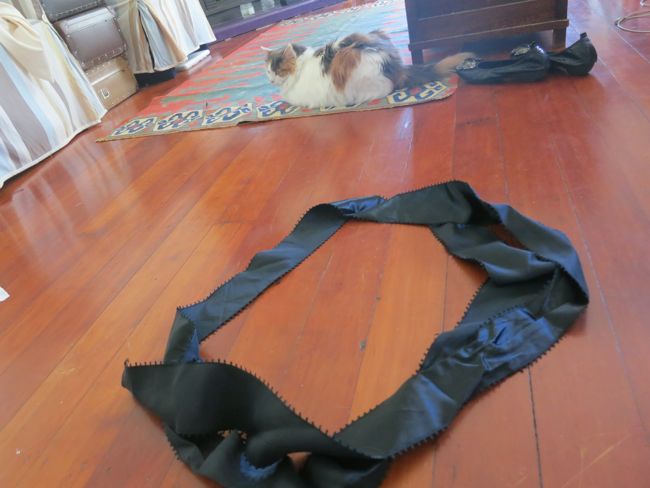
So I laid out a measuring tape in a rough circle near Felcity.

Felicity the cat thedreamstress.comYeah? And?

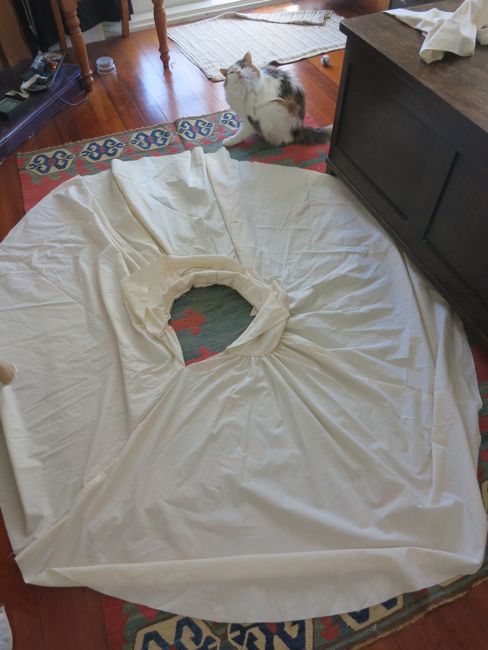
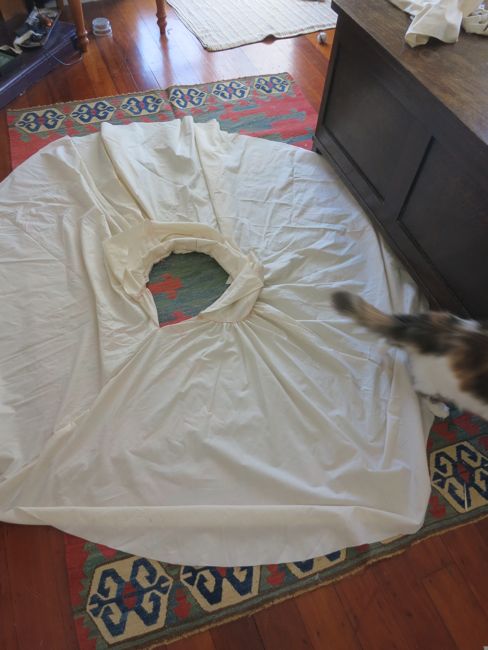
Hmmm…maybe I need a fabric circle?  Fabric is basically irresistible to her.  And look, it’s even a circle within a circle!

Felicity the cat thedreamstress.comMeh.  

Felicity the cat thedreamstress.comNice try

Maybe if I do one on the floor, instead of the rug?

Felicity the cat thedreamstress.comYeah, nah.  

Oooookay….ummmmm…maybe outside?  She loves hanging out on the lawn.  I can make a perfect one out of hose:

Felicity the cat thedreamstress.com  Not so much...

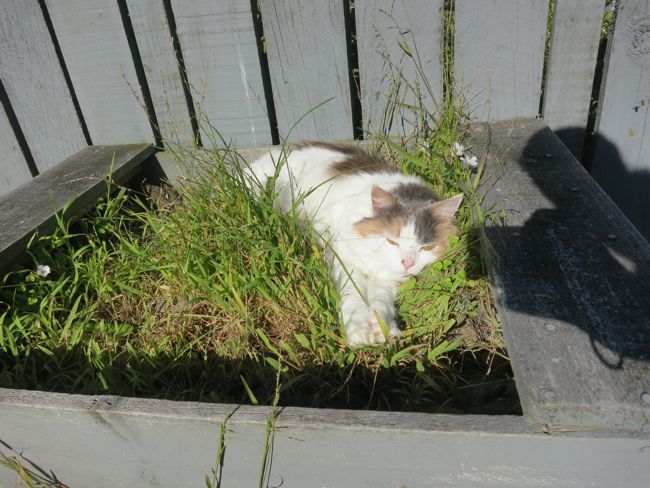
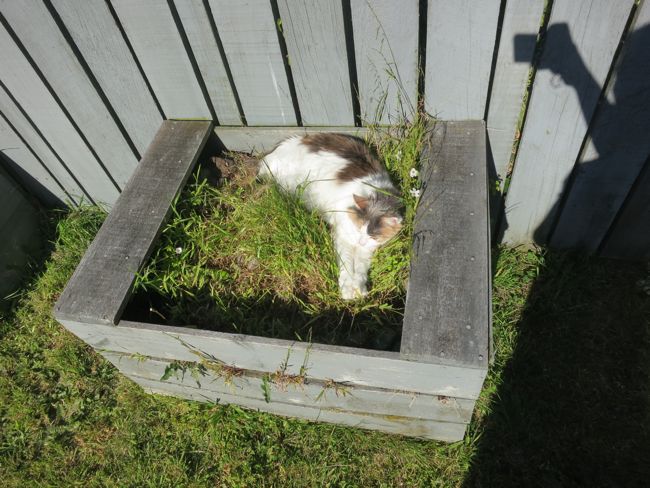
And then, after leaving tempting circles all over the place for her all day, with nil success, I went outside and found her relaxing luxuriantly  amongst the weeds in the square planter box, which she has never shown any interest whatsoever in before.

Felicity the cat thedreamstress.com
Now she’s just messing with me…

Felicity the cat thedreamstress.com