Latest Posts

The HSF ’14: Favourites for Challenges 1-4

Hurrah, hurrah!  We’re well started on the HSF 2014!  Four challenges in, and Challenge Five almost due (only I’m going to be late, sigh).

Once again I want to highlight some of the things that really inspired me with each challenge, and that  I thought best represent the spirit of the Historical Sew Fortnightly; the quest to explore history, raise our skill levels and standard, stretch ourselves (or sometimes just get something done, rather than just procrastinating);  and  the spirit of the individual challenge.

Choosing is even harder this year: there are so many gorgeous creations, so many different time periods, so many levels of experience, so much prettiness and inspiration!  For every challenge I’ve tried to showcase a range of historical periods, ways of approaching a challenge, and levels of experience.  Inevitably, there were exquisite and amazing things that I simple couldn’t showcase, so do have a browse of the links through the challenge pages on my blog, and the HSF facebook albums.

Challenge #1 —  Make Do & Mend  (and  the facebook album  for the challenge)  

  1. Gouvernante Astrid’s 18th century coat – a beautiful job of re-making an old garment into something that is more historically accurate, and more attractive all round.
  2. A Modern Needle Through Time’s 1860s hat  — We simply can’t get leghorn straw hats today, so she ‘made do’ with a modern craft hat, and it is beautiful!
  3. Allison’s mid-19th century cross-stitch bedroom slippers  — So amazing and darling and prettily made – but too small the first time they were made, so her mend has made them perfect!

Challenge #2 —  Innovation  (and  the facebook album) Of all the challenges we’ve ever had in the HSF, this has been my favourite.  It was so fantastic that I’ve already showcased some of the most inspirational projects, but here are three more.    

  1. Diários Anacronicôs’ 1790s chemise a la reine  — a lovely version of what was, indeed, one of the most controversial garments in Western fashion, a perfect demonstration that innovations often bring controversy.  The blog is in Portuguese, but there is a very useful translate button on the left.
  2. Knotrune’s 1838 knee cap  — Published knitting patterns have been a hugely influential innovation, and I’m just tickled by the idea of a knee cap, and love that something so old can still be so useful for exactly the same purpose: warming and supporting a knee, and acting as a modern knee brace.
  3. Miranda’s 1540s farthingale  — A beautifully made garment, an excellent description of how the farthingale was an innovation, and it sparked a fascinating discussion about farthingales and clothes and our perception of history, so of course I’m madly in love with the whole thing!

Challenge #3 — Pink  (and  the facebook album)  aaaahhhh!  The whole album is so pretty!  They are all so pretty!

  1. Miss Nelly’s pink ca. 1785 round gown  — It’s the very epitome of pink, beautifully made and every so chic paired with black.  Delicious!
  2. Wearing History’s 1920’s combinations — Dainty, and delicate, and feminine, without needing to be frilly, these are pink heaven for me!  And they look as if they had come straight out of a fancy department store box direct from 1921.  Divine!  
  3. Wylde Hill’s mid 16th century doublet  — I know that some of the challenges are particularly challenging for some people, because the theme isn’t to their usual taste or wardrobe.  But I think it’s good to stretch ourselves in lots of different ways, so I’m particularly pleased with WH’s pink and black reversible doublet, because she rose to the challenge despite disliking pink and made a fabulous item that suits her historical wardrobe (and bonus, found that she might like some pink after all!).

Challenge #4 —  Under it All  (and  the facebook album)

  1. Isabel Northwode’s 1720s-30s undergarments — few of us are going to have the time or resources to make such detailed and accurate hand-sewn undergarments for one single challenge, but oh, the temptation when I see these!  They are exquisite!  And (as always) detailed construction information on her livejournal: such a boon t0 other costumers!
  2. Antonia’s 1620s chemise — One of my favourite periods (and sadly overlooked) and this chemise is just lovely (and, of course, one can never have too many chemises!).  I also like that it is part of a bigger ensemble.
  3. Kelly’s embroidered 18th century garters — Proof that even the simplest things can be works of the most exquisite beauty, and completely make an outfit, with extra care and though (and let’s face it, some mad talent!)  Check out the details on these!

And, since I don’t have illustrations of the items, here is a tiny preview of some work on my bodice:
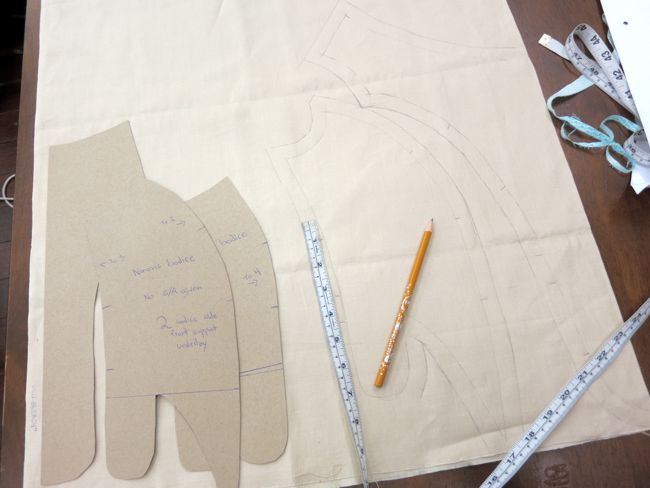
Mariana Victoria Bodice thedreamstress.com


Support your local craft and fabric stores!

Wellington is a very crafty city: for it’s population, it’s full of craft and fabric stores.  There are booming craft markets every weekend, and incredibly popular Fabric-A-Brac sales a couple of times a year.

And yet, for all the apparent crafty fabulosity, the Wellington craft scene is rather precariously positioned.  Four wonderful fabric stores have closed (or are on the brink of closing) shop in the last quarter.  We’ve lost Arthur Toyes and the Asia Gallery, and Sherazad Silks and Piece by Piece are both in the last weeks of their closing down sales.

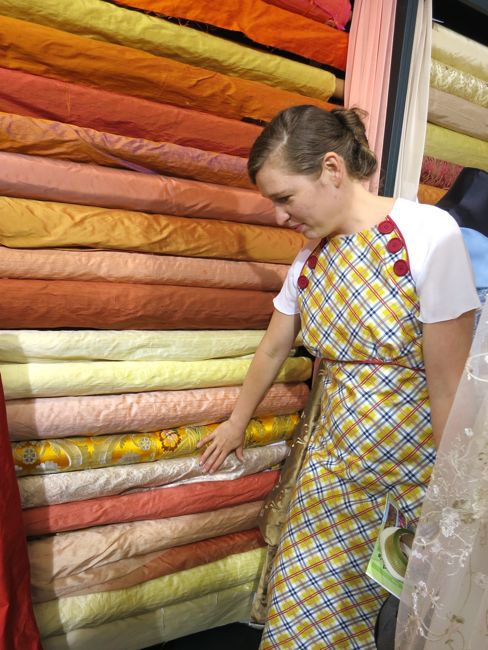
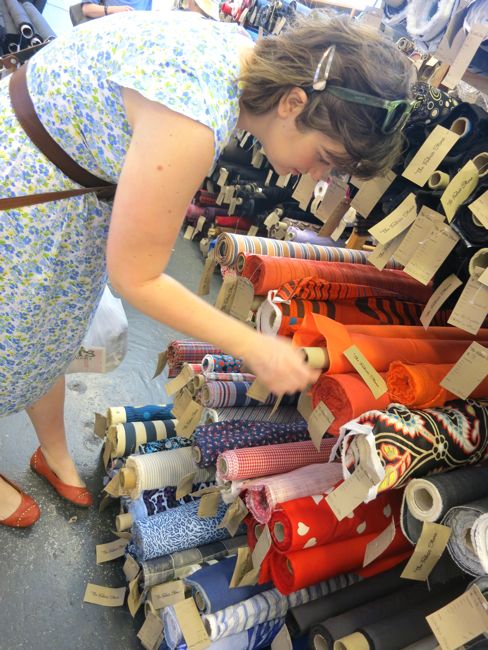
The Great Wellington Craft CrawlBeautiful fabrics at Piece by Piece

With Piece by Piece gone there are no craft stores in Karori.  The loss of Arthur Toyes and Sheherezad leaves Made on Marion Lambton Quay as the only craft store in the CBD, with a few on the outskirts in the Cuba Precinct and down Thorndon Quay and Old Hutt Road.  And Asia Gallery was pretty much the only vintage fabric seller in town, so they leave a big hole.

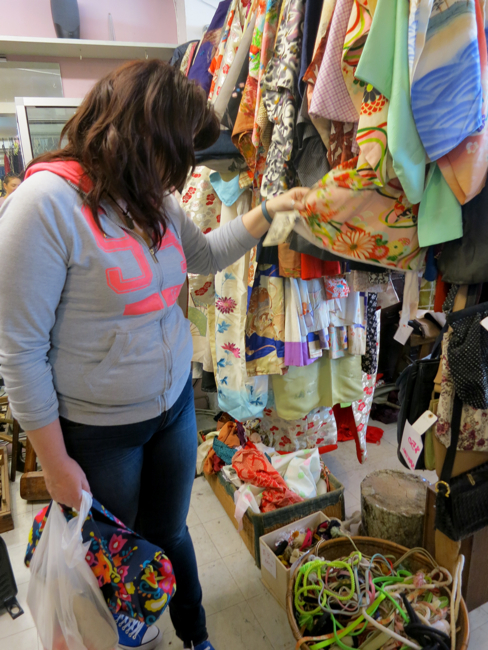
The Great Wellington Craft CrawlGorgeous kimono at the Asia Gallery

I’m in fabric and craft stores a lot, and I buy a lot and chat to the owners, and the story is the same with most craft and fabric stores in town: they are feeling the pinch.  Sales are down, and times are tight.

The economy is in Wellington is depressed, and that’s part of the problem, but the big culprit is the internet.  More and more people are buying their craft supplies off the internet for cheaper prices and a bigger selection.

Now, I love the internet: it is, after all, my platform.  But as a replacement for local craft and fabric stores?  Nope.  Most suppliers are pretty big and impersonal.  Many of them don’t give you any instructions and guidance on how to use your product.  Many, many online fabric stores don’t know much at all about fabrics (like the time I ordered an ottoman and received a ribbed knit and when I complained they said “Look, it has a rib, so it’s an ottoman”).  You can’t feel things online, you can’t trial them online.  You can’t pet the silks and squeeze the wool and snip the scissors and check the weight of the crochet hooks in your hands.  And all of those things are so important when you make things.

Wellington Craft Crawl thedreamstress.comPetting the silks at Sherazad

Beyond these things, local suppliers provide a community.

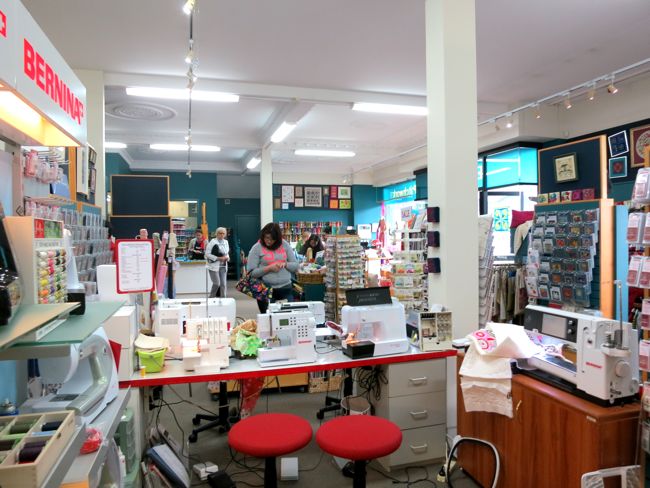
Popping in to any craft and fabric store in Wellington on any given day I can expect to see a sewing friend, a fellow teacher, a former student.  Stopping by  The Fabric Warehouse  the staff greet me by name, happily show me whatever I’m after on that day, and give me short lengths of silk they got sent as samples.  At  Made on Marion  I see people sitting on the couches having tea and a chat, while whoever is at the counter is explaining how to use dyes, or showing off the new embroidery colours, or offering to order in a special product.  Over at  Knit World  there are ladies in the comfy chairs, knitting away.  In  Wellington Sewing Services  someone is trying out every single sewing machine, and the staff asks about my latest event, and tell me about textile exhibitions I might be interested in.

It’s the same in every craft store in Wellington: I support them, and treat them like friends and teachers, and they support my crafty endeavors, and treat me like a friend and a valued customer.

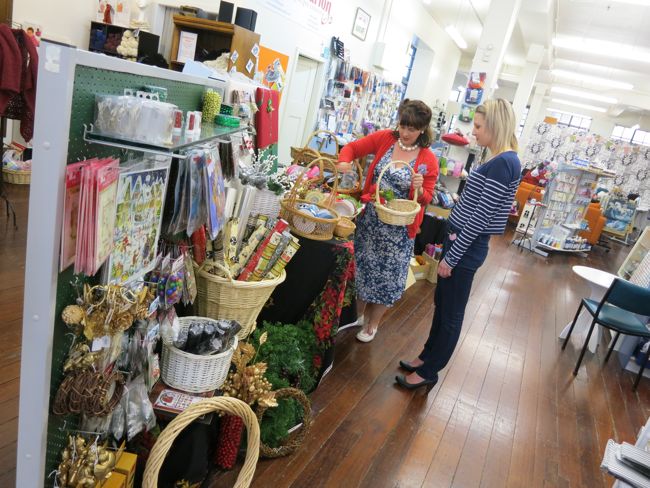
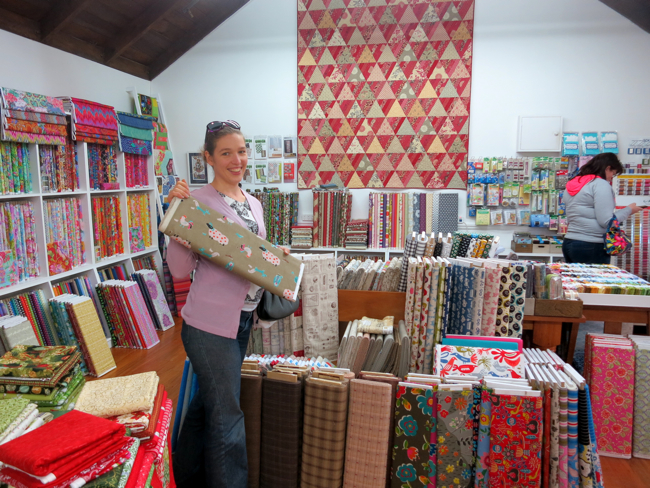
Wellington Craft Crawl thedreamstress.comSewing supplies at Nancys

Even with the internet, people are still using local craft stores.  But they aren’t supporting them.  How?  I’ve seen women in quilting fabric shops, comparing prints and colours, and feeling fabric, and then heard them comment as they left, purchaseless “I can get them online so much cheaper, but I just needed to see and feel them in person before I bought.”  I’ve heard of people going into craft and sewing machine shops, asking how they use a particular product or piece of equipment they had, and then mentioning that they bought theirs over the internet, but weren’t given any instructions.

Ladies (and the occasional gentleman) please don’t expect your local sewing and craft stores to supply the deficiencies of the internet without supporting them!

And please, please, please do support your local stores.  Sure, you may often pay a bit more, but you get so much more!  Build a relationship with your local fabric store and they will show you new pieces they have in that are in your style.  Most local shops will throw in an extra 20cm or so with each cut of fabric.  Online suppliers cut exact amounts.  Local stores have local experts who can tell you how to use each product, so not only do you get the product, you get knowledge and support.  When you actually consider what you receive, shopping locally becomes much more cost effective.

Personal assistance at Made on MarionPersonal assistance at Made on Marion

I hear terrible sad stories from sewing friends online, of communities where there are no fabric stores for two hours drive, or where the only place to get any sewing notions is Walmart (or is it KMart?).  And I look at the fantastic craft world I have locally, and I feel so bad for places without that, and I think how awful it would be if Wellington were to loose any more stores, how terrible it would be if we only had the internet.  If that happens, we’ll have only ourselves to blame.

So if you are here in Wellington, or somewhere else with a local craft scene, get out there and support your local stores.  Get to know the owners (if you don’t already).  See what they have in stock (you might be surprised about how much is on offer.  Find out what they have to teach and share (a lot!).  Make an effort to keep them in your community!

Wellington Craft Crawl thedreamstress.comThe amazing selection at The Fabric Store

Rate the Dress: Maria Fyodorovna in blue

Once again I’m being bad and haven’t tallied up the ratings from last week (sorry, my life is eating me alive).  I’ll try to be good and get them up today though!

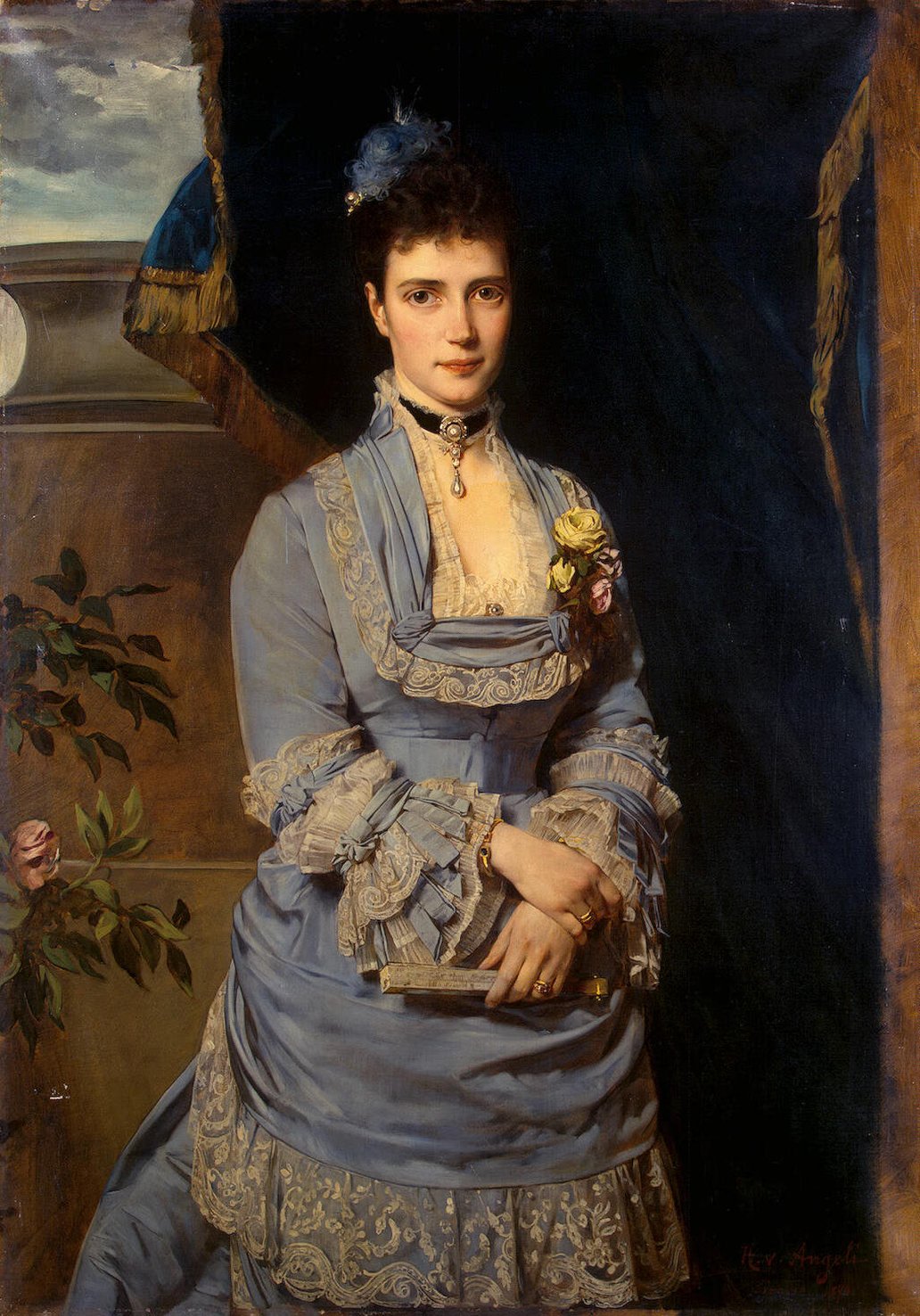
This week I present to you Maria Feodorovna, aka Dagmar of Denmark, sister of the famously beautiful Queen Alexandra of England, and mother of the last Tsar of Russia, in something extremely feminine and lacy and ruffly and corsage-y.  We were talking about New Zealand designer Trelise Cooper (well known for her frills and furbelows) in my class this evening, so I guess I had such embellishments on my mind (though if this were a Trelise dress it would be made of three different patterned fabrics in pink and orange and teal blue all at once)

Portrait of Grand Duchess Maria Feodorovna (1847-1928) by Heinrich von Angeli (1840-1925), circa 1874, Collection of the Hermitage

Portrait of Grand Duchess Maria Feodorovna (1847-1928) by Heinrich von Angeli (1840-1925), circa 1874, Collection of the Hermitage

What do you think of Dagmar in her version of 1870s regal grandeur?  I’m sure her lace would have cost a fortune, and I’m also sure it’s the reason the painting is reminding me of a toned-down Maria Christina.  In fact, with only her very fashionable velvet and pearl chocker, four small rings, a hint of sparkle in her hair, a bracelet peeping from beneath the lace and a tiny brooch on display, Maria F is practically a picture of royal austerity, 1870s style.  I once made fun of her for her obsession with pearls, but she also knew how to dress down and be quite relaxed and adorably approachable.

What do you think?  Does the restrained colour and lack of jewellery balance the frilly frock?  Has Dagmar balanced dressing up and dressing down with this particular ensemble? Does it manage to project both royal glamour and soft femininity, or is it simply too fussy, accomplishing neither?

Rate the Dress on a Scale of 1 to 10