
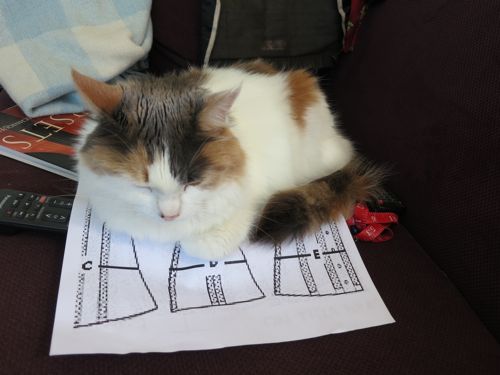
I much prefer this spot, where I have a book, two remote controls, a measuring tape, a pair of scissors, and your pattern to sleep on.
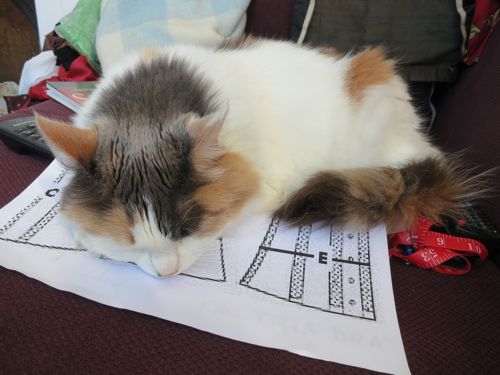
I’m a cat, remember?
I much prefer this spot, where I have a book, two remote controls, a measuring tape, a pair of scissors, and your pattern to sleep on.
I’m a cat, remember?
Last week Elizabeth Hawes’ striped 1930s ‘Alimony’ dress elicited VERY strong reactions from almost all of you. Most of you loved it (and when I say loved, I mean LOVED – I don’t think I’ve ever posted a dress that’s received as many hits and forwards and new commenters), and a few of you really, really hated it (no, 0 is not an acceptable rating. It’s a scale of 1 to 10!). I was a bit surprised by some of the comments, particularly about the colour, and wondered if some of you have really really strange colour calibrations on your computer screens! The massive outpouring of love and the few strong reactions of loathing balanced out at 8.2 out of 10.
I (in case you haven’t guessed), LOVE the dress. It’s what my 1930s alter ego wore to the gay gypsy bar mitzvah for the disabled in 1938 Berlin.
This week I leave the obvious visual intellectualism of stripes behind for a visual intellectualism that is both far more subtle in its visible clues (at least to the modern eye), and far more obvious in its message, once you figure it out.
Here is Madame Bergeret in the ultimate rococo conceit – a robe de cour styled as a pastoralist shepherdess fantasy, with full sleeves that nod to a shepherdesses exposed chemise sleeves, a pale blue ribbon that foreshadows later 18th century zone fronts, a lacy neck frill, multi-strand pearl portrait bracelet, and, to complete the luxurious milkmaid look, a bergere (literally ‘shepherdess’) hat. The hat may just be a fashionable accessory to underscore the elegant pastoral look, but it may also be a witty play on Marguerite Bergeret’s name, adding a little intellectual embellishment to the visual elaborations of the painting (more on this on Thursday).
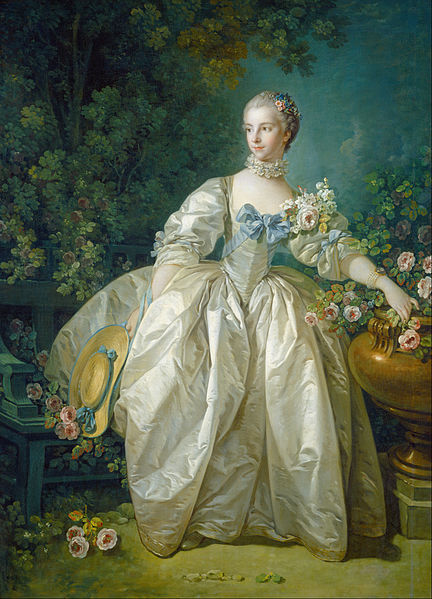
Madame Bergeret, c.1766, François Boucher, Collection of the National Gallery of Art
The whole painting is the epitome of mid-18th century rococo portraiture; indulgent and escapist. Do you like Madame Bergeret’s outfit, or is it a little too precious and fantatical? Does it say “I have taste and a sense of humour, and the money and status to indulge both”, or does it say “I have so much money and status I can afford a completely useless luxury gown that pretends to be a working woman’s outfit”?
Rate the Dress on a Scale of 1 to 10
I’ve been having trouble announcing the HSF challenges in a logical way, and keeping up with inspiration posts for the upcoming challenges. Solutions? Do them together as one announcement post at the 8 challenges ahead mark! Here then is the HSF Challenge #13: Lace and Lacings, due 1 July 2013 (NZ time).
Lacing is one of the simplest and oldest forms of fastening a garment, eminently practical, and occasionally decorative.
Lace has been one of the most valuable and desirable textiles for centuries, legislated, coveted, at times worth more than its weight in gold, passed down from one garment to the next over centuries. Elaborate and delicate it is eminently decorative, and rarely practical.
Celebrate the practicality of lacing, and the decorative frivolity of lace, with a garment that laces or has lace trim, or both.
Here are some ideas to get you inspired:
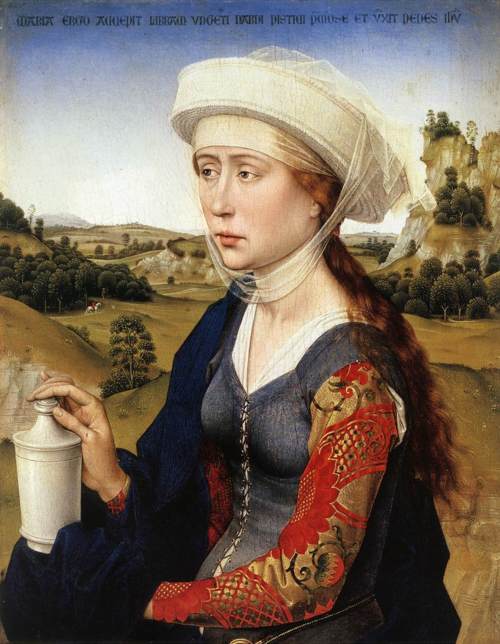
Mary Magdalene from the Braque Family Triptych (right panel), ca. 1450, by Rogier van der Weyden (early Flemish, 1399:1400-1464)
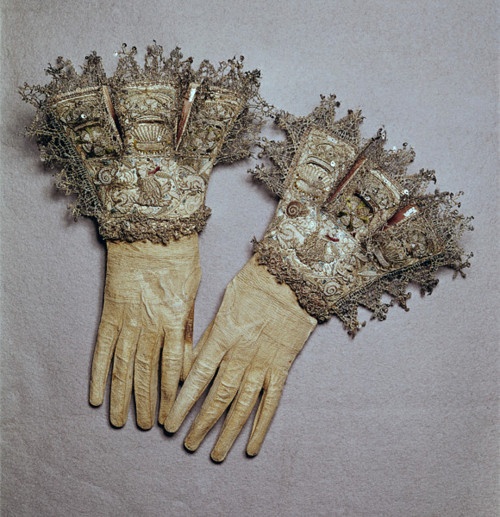
Silver embroidered and lace trimmed gloves, English, circa 1600

Unknown lady, 1620, by Nathaniel Bacon (English painter, 1585—1627)
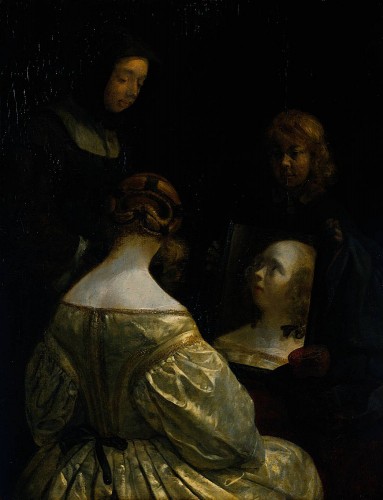
Gerard Terboch, Woman at a Mirror, 1650

Lady Tyrell (1738) – Jean-Étienne Liotard
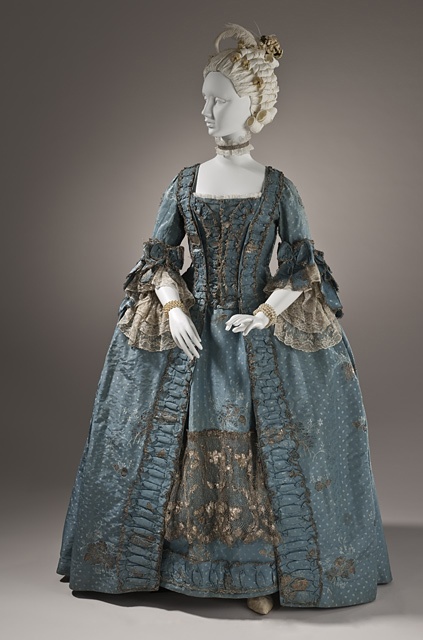
Robe a la Francaise, 1765, England, LACMA
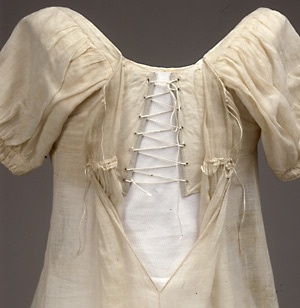
Gown (detail of interior fastening), Denmark, 1817, Tidens Tøj
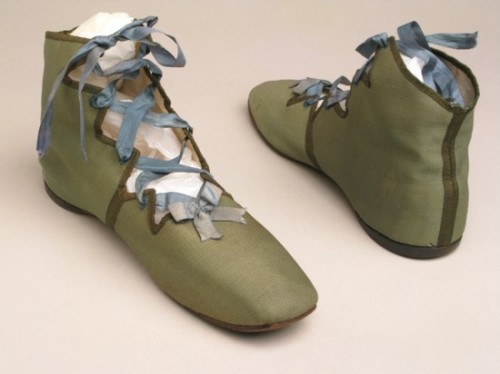
Boots, Ascott & Parnham Europe, United Kingdom, England, Nottingham, 1820. Manchester Art Gallery
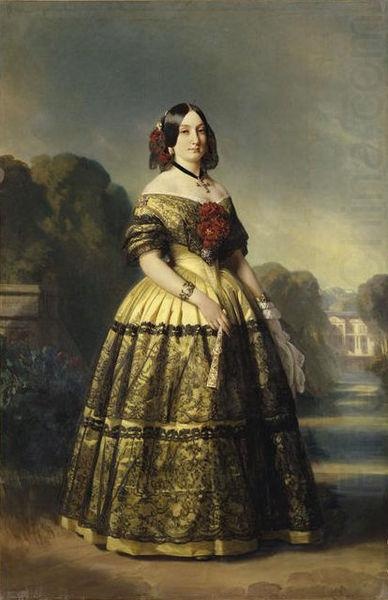
Maria Luisa von Spanien, 1847, Franz Xaver Winterhalter
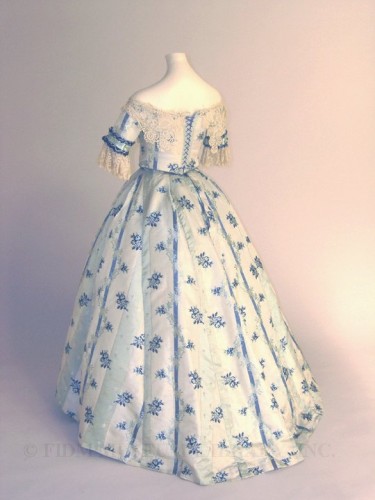
Dress with day and evening bodices, 1853-54. FIDM Museum
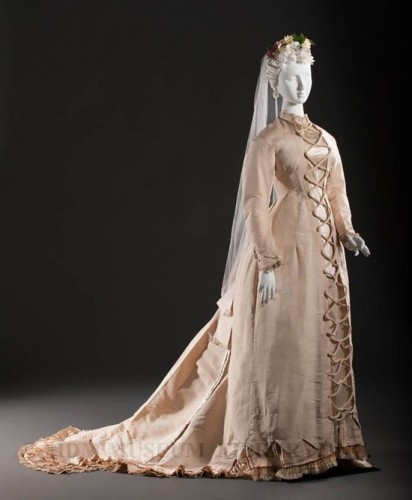
Wedding Gown c. 1878, FIDM Museum
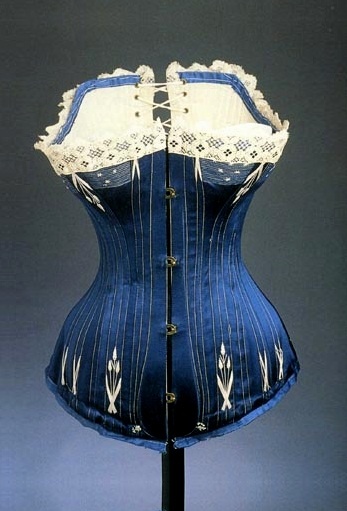
Corset in blue silk, circa 1890

Black and ivory point d’esprit lace summer dinner gown, circa 1902, Raudnitz & Co, Huet & Cheruit Frs, 21 Place Vendome, Paris’, Kerry Taylor Auctions
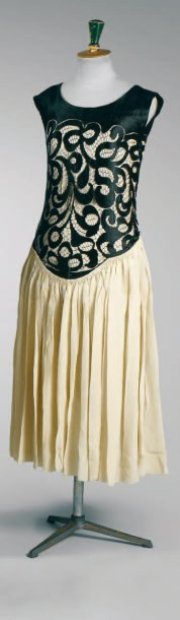
Dress with lace inspired bodice, Paul Poiret, circa 1920, Beaussant Lefevre