‘Tis done! Fully and completely!

Finally, after over a year, the pet-en-l’aire is fully sewn, fully embellished, the correct front ribbons sourced and custom dyed, and the insides finished to perfection (really, they are almost as pretty as the outsides). Whew!
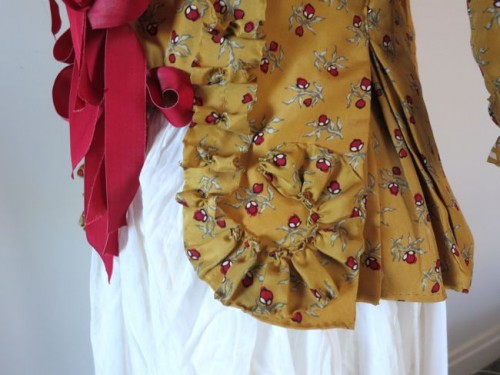
I tried a number of options for the sleeve ruffles, and finally settled on a pattern that, while not historically documented, I felt was best in keeping with the overall aesthetic of the pet-en-l’aire.

I found white silk cuffs too distracting, and engageates clashed horribly, and defeated the idea of fashion moving towards a more casual and informal aesthetic. I did like the idea of a slight bit of volume at the edge of the sleeves, and so my pleating pattern released below the sleeve end, to balance the fullness of the side pleats and back of the pet-en-l’aire.
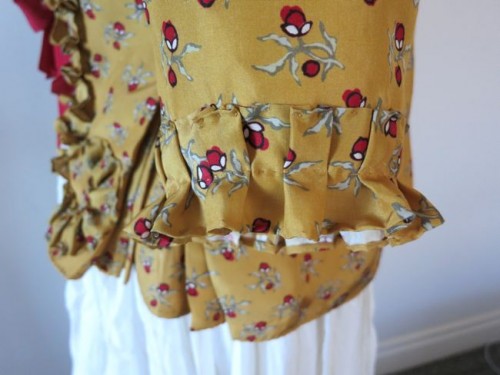
Alas, I couldn’t find a historical example to back this pleating pattern up, but every step of this garment has had to be a balance between historical examples and modern fabrics.
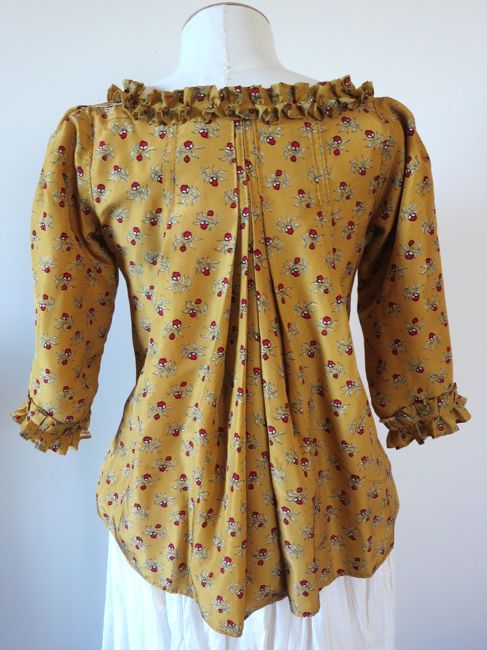
It’s been a lot of work, and a lot of pin-pricks and worn fingers, but in the end, I think it was worth it. I love the garment, and think it is spectacular. I hope you agree!
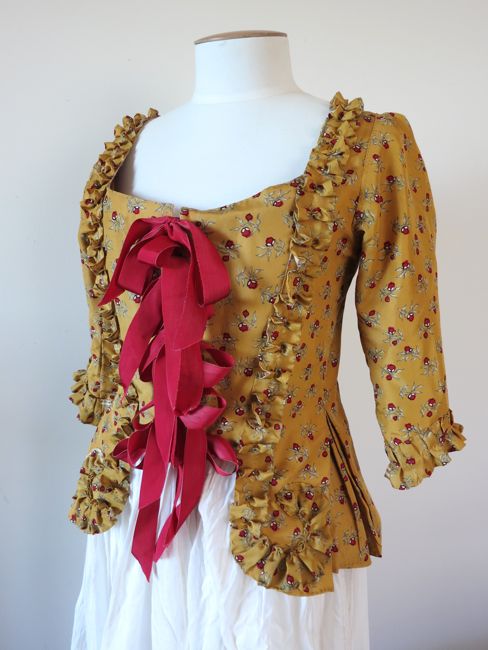
I’m planning to do a photoshoot with it very soon, so you’ll get to see it in its full, accessorized, glory, on me (finally!).
The Challenge: #4 Embellish
Fabric: 3.3m x 37cm wide block printed obi silk, linen and cotton linings
Pattern: My own, with reference to Arnold’s Patterns of Fashion and other sources
Year: 1780s
Notions: 4m rayon ribbon, custom dyed, plastic boning, lacing tape
How historically accurate is it? Maybe 75%. The pattern, construction, colour aesthetic, and sewing are all accurate, but the print of the fabric would have been on cotton, not silk (silk would have been hand-painted), and the trim patterns, while historically inspired, are not backed up by period examples. The trim is also fully hemmed, rather than just being cut or cut and turned once.
Hours to complete: 12 on the trim alone. 12m of hand sewn rolled handkerchief hem, all pleated up, and sewn down by hand takes a long time!
First worn: The un-trimmed pet has been worn three times, but I’ve yet to wear it trimmed.
Total cost: $25 for the obi, + $5 for the ribbon, + $5 for the dye, +2 for lining = NZ$37.