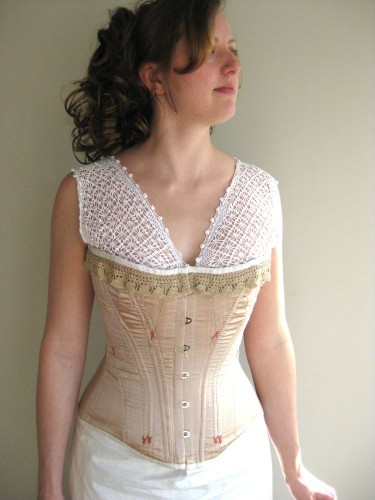
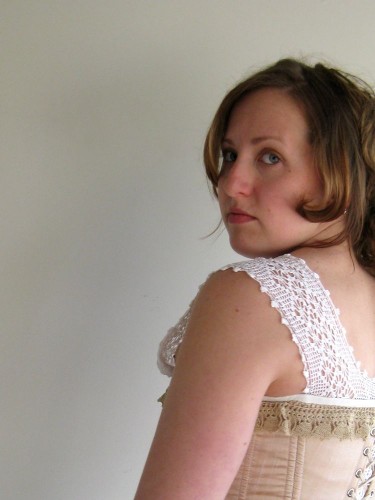
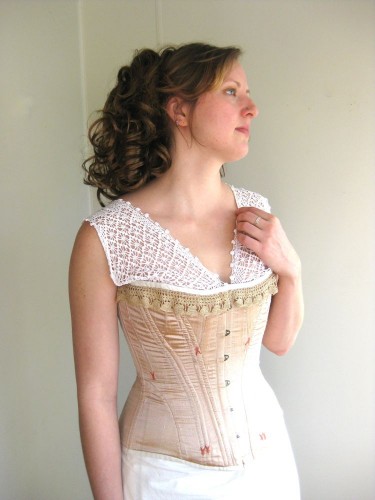
My Dr Sketchy talk is themed around how artists were inspired by undergarments. I’m starting with the 18th century and rococo undergarments.
Of course, 18th century undergarments aren’t technically undergarments, since chemises, stays and petticoats could all be worn as outerwear!
So the artworks that I am being inspired by to stage my tableaux for the talk includes both intimate boudoir scenes with real underwear and genre scenes with romanticised peasant women in stays and petticoats.
First intimate boudoir scenes, as epitomised by Boucher’s La Toilette:
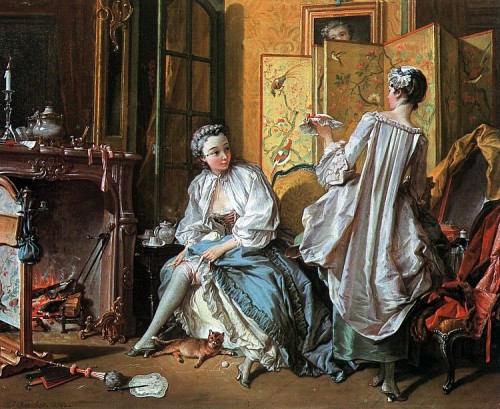
Francoise Boucher, La Toilete, 1742
Ooh! Stockings! And frilly petticoats! And bed jackets, and maybe a hint of stays. And sexy slippers!
On a much naughtier note, we have Pater’s “Mme. de Bouvillon Tempts Fate by Asking Ragotin to Search for a Flea” (which has got to be the best name for a painting ever, and must be a reference to something)
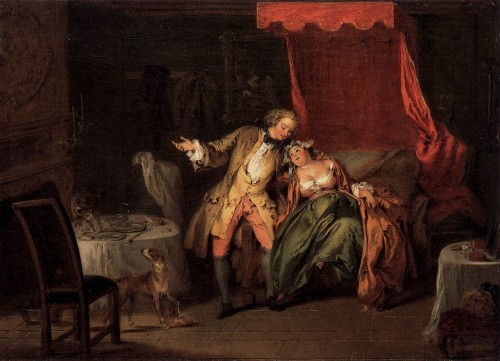
Jean-Baptiste Pater, Mme. de Bouvillon Tempts Fate by Asking Ragotin to Search for a Flea
Mme. de Bouvillon appears to have opened her robe to reveal her jumps, which are barely containing her bounty. Oh dear!
The genre scenes are a little sweeter and less saucy:

François Boucher,Young Country Girl Dancing, Art Gallery of Ontario
Boucher’s dancing peasant girl is improbably pretty, clean, and prettily dressed. I love how her petticoat shows beneath her skirt, and all the bows on her stays.
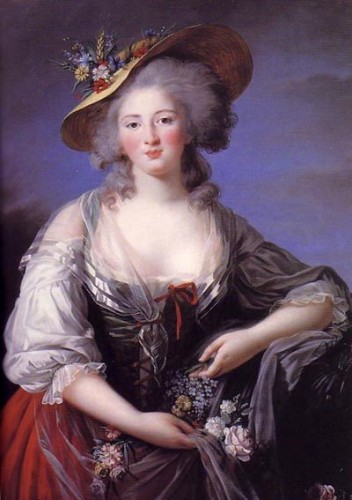
Elisabeth Vigee Le Brun (attributed), Peasant Girl
Vigee Le Brun’s peasant girl is even more romanticised than Bouchers. I love her front lacing stays and the off the shoulder chemise. Besides, the red petticoat is so lovely and vivid.
Watteau also painted dancing peasants in stay bodices:
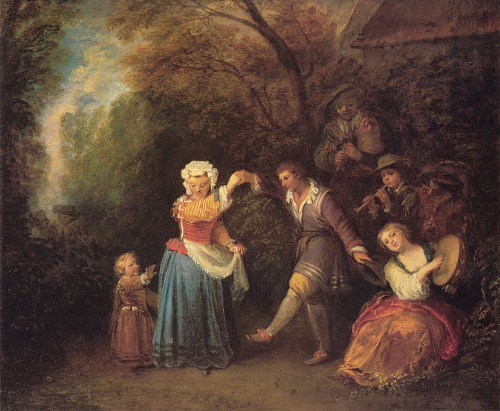
Antoine Watteau, La Danse Champetre
The one in the red stays appears to have attached sleeves, and once again she has the all important apron.
Even Fragonard, the master of elegantly overdressed women, painted a mother in very unstructured stays:
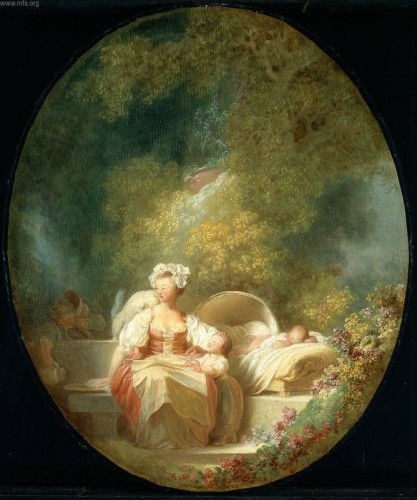
Fragonard, The Good Mother