Latest Posts

Put a crown on it

When I got married I wasn’t at all interested in tiaras.  Mostly this is because most of the ones available at the time looked too much like pageant tiaras.  I’m not really a pageant girl.

Now, if I’d been able wear a good replica of one of these historic tiaras, I would have been all over the idea!

This one may be my favourite.  Oooh!  It’s so sweet and delicate and floral!
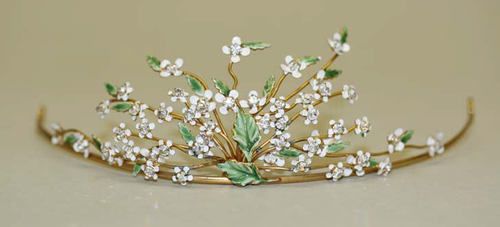
Tiara, 1910-29, Met

And we all know my weakness for laurel leaves, so of course I love this one.  It’s just so simple.

Tiara, laurel wreath, 19th c. MFA Boston

This one may be even better.  It has laurel leaves, neoclassical influence, and a cameo.  I’m in love!

Tiara wreath, 1815, V&A

The cameo is a little manly though.  I’d prefer a more feminine picture, like this one.  In addition to the pretty image, I love the turquoise and pearls, and the slight asymmetry of the central motif.  Plus that wirework is so delicate!
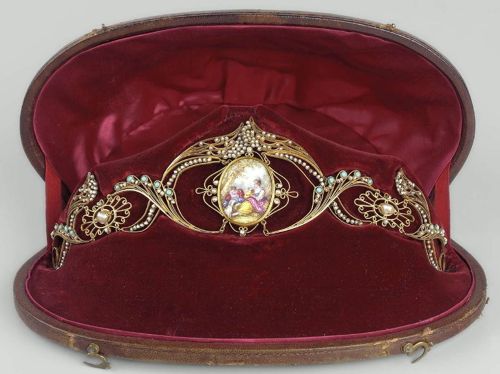
Tiara, pearls, date unknown, MFA

The silver filigree work on this one is just gorgeous, and of course, many of the Scandanavian countries still have a strong tradition of brides wearing this type of tiara.

Tiara, Norwegian, J. Tostrup, 1872, Met

For something really different, what about this fabulous coral tiara?  Wouldn’t it be amazing at a beach wedding?  Coral was really popular in the 19th century, and symbolised good luck and health.  Of course, global coral stocks aren’t so healthy these days, so the only ethical way to wear coral would be to wear a vintage piece like this.
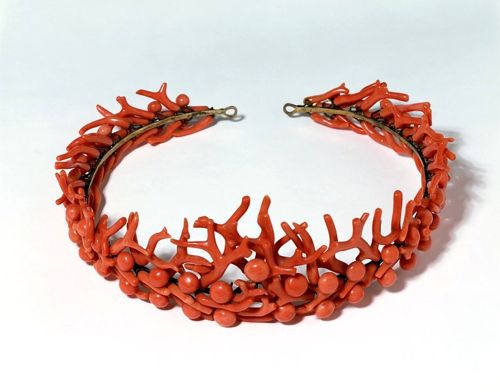
Tiara, Phillips Brothers, 1860-70, V&A

Another common 19th century tiara material that is really unusual these days is black jet or black cast glass.  I can’t say it is my thing, but I would love to see a replica of one of these on a modern bride.  If you couldn’t afford jet, cast glass (also called ‘Vauxhall glass’, after the famous pleasure gardens) was a cheaper alternative to jet.
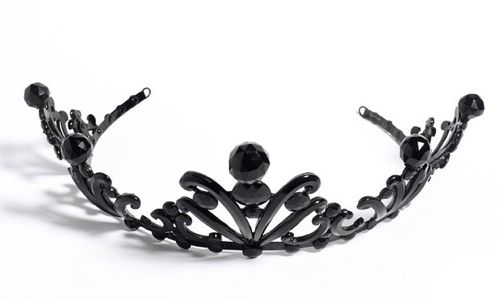
Tiara of cast glass, Bohemia, 1880-90, V&A

For another ‘cheaper’ tiara, what about this cast gold and  chrysoprase glory?  If for no other reason I’d love it because it had chrysoprase.
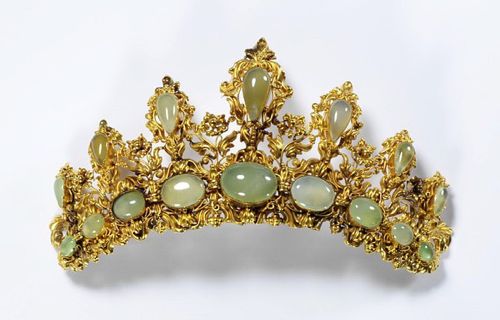
Tiara, England, 1830, cast gold & chrysophrase, V&A

Of course, cast gold is still gold, so for an actually cheaper alternative, the Victorian’s used a lot of cut steel.  Very pretty, very sparkly, but not that expensive.

Tiara, cut steel, ca. 1900, MFA

And for the cheapest tiara of all, this mid-20th century theatre tiara puts the biggest smile on my face.  It’s so adorable and witty and fun!  I can just imagine a sort of Alice in Wonderland wedding with the bride in this.
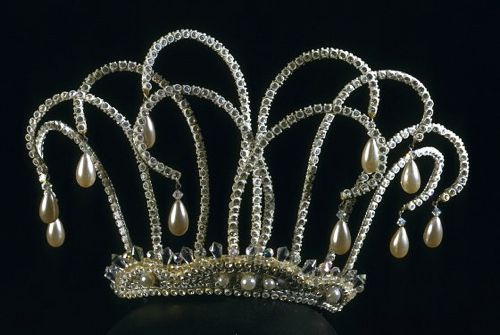
Tiara of diamantes & false pearls, Hugh Skillen (Costumier), 20th c

If cheap really isn’t your thing, how about a truly sumptuous diamond tiara?

Floral tiara of diamonds, 1835, V&A
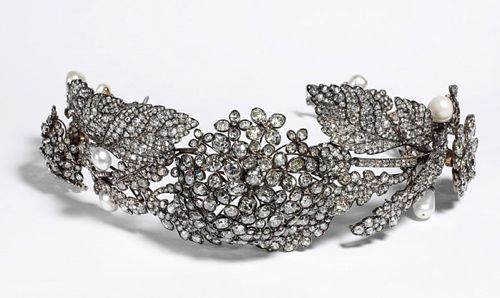
Queen Anne's lace diamond and pearl tiara, 1850, V&A

*Swoon* I think I might have to rethink my attitude towards diamonds!  I’d wear either of these in a heartbeat!  Heck, if I had one of these, I’d wear it EVERY day!

Floral diamond tiaras have a strong link to weddings too.  Queen Victoria’s bridesmaids all wore diamond wreaths in the shape of wheat ears.  I don’t think any of us can afford to deck out our bridesmaids in diamond wreaths these days though!
A wedding story

When it came to a wedding, I was pretty easygoing about a lot of things, but there was one thing that I really, really,  really wanted.

Dancing.

And not that ‘have a DJ who puts on some random popular music and the really brave people bop along to it looking kinda lame’ dancing either.  The last time I went to a wedding in Hawaii with that kind of dancing the DJ played that Shaggy song about the spare key and the girl next door, and I wasn’t going to have that!

Nope, I wanted proper, elegant, dancing.  But it had to be something that everyone could do, which meant contradancing, with a caller.

There isn’t actually anyone who does contradancing in my neck of the woods in Hawaii, so my dad and I ordered in instruction tapes, learned how to call, taught a bunch of friends how to contradance, videotaped ourselves calling, and gave the tapes and elaborate instructions to a very brave musician who was willing to try calling.  And sorted an entire playlist.

With that problem sorted, the only other major obstacle was the dance floor itself.

The reception was held at a beautiful old 1920s lodge in the mountains, which did have a lovely flat tile floor – not ideal for dancing, but passable.  The floor was usually covered by a huge sisal rug, with a solid wooden table sitting on it, but they said we could move the table and take the rug up for the day.

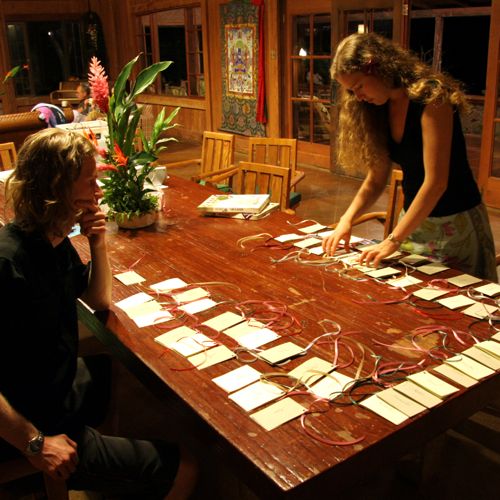
Mr D-to-be and I do last minute place setting on the big table the night before

Easy peasy, right?

So the morning of the wedding, we hauled the table out to the patio to hold the pre dinner pupus (nibbles), and rolled up the rug.

And found that the rug hadn’t been moved in years, and had adhered itself to the floor, leaving a rough, disgusting layer of disintegrated rubber matting firmly affixed to the floor.

So I got a bucket of soapy water, a good scrub-brush, and a mop.  And the morning of my wedding I got down on my hands and knees and scrubbed the heck out of that floor.

Mr Dreamy’s aunt came in while I was scrubbing and was horrified.   Apparently floor scrubbing was not an appropriately bridal activity.

I didn’t mind though.  I don’t mind scrubbing floors on ordinary days, and I felt that our wedding day should just be the best possibly version of an ordinary day.

I started out the wedding day wearing an apron, so clearly I wasn't worried about work!

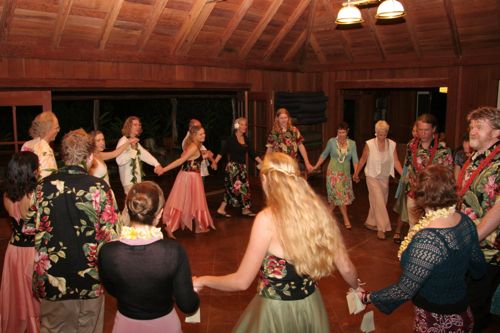
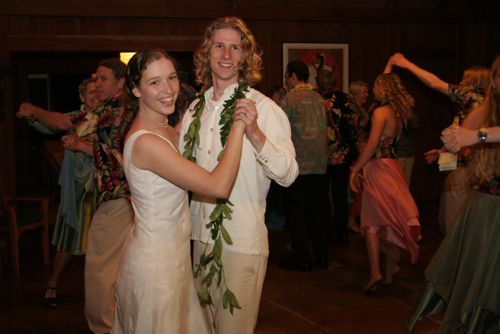
It was worth it too.  The dancing was awesome.

The only regret I have is that none of the dozen people taking pictures of everything that happened that day thought that my scrubbing the floor was a worthwhile thing to take photos of!

Look at that beautiful, clean, shiny floor!

Circle left!

Elegant dancing

Something blue

Some fabulous blue wedding dresses and accessories

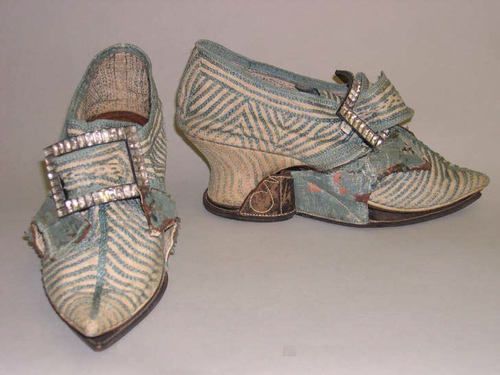
Blue & white shoes (shown with blue chopines), 1740s, Met

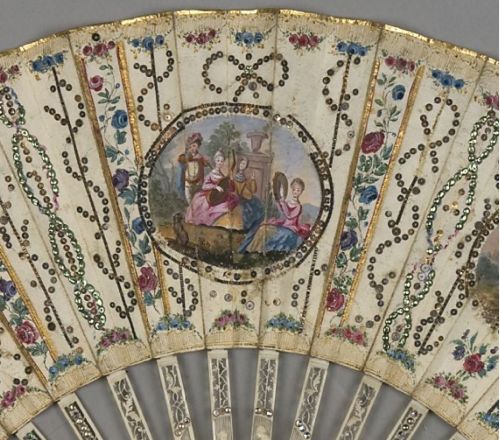
Fan 1770-1790, Powerhouse

Wedding dress, 1857, Bowes Museum

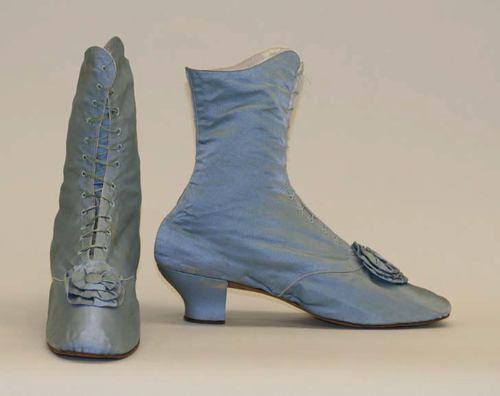
Blue boots, 1870s, Met

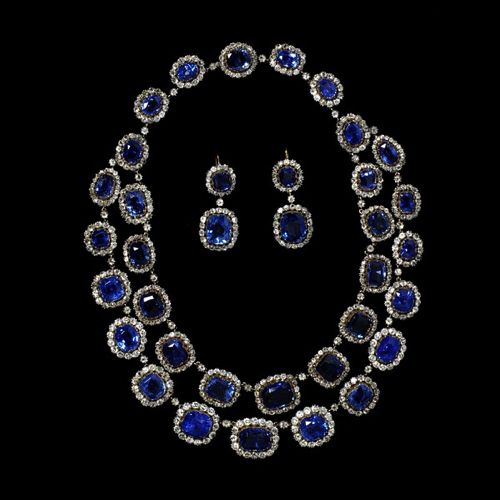
Necklace and earings, 1850, London, V&A

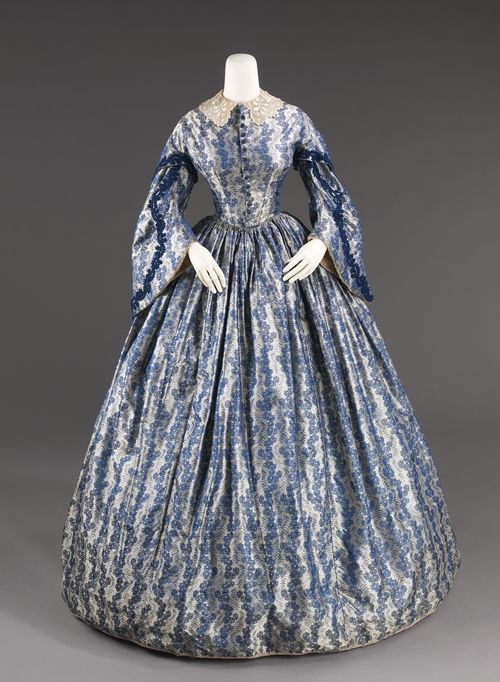
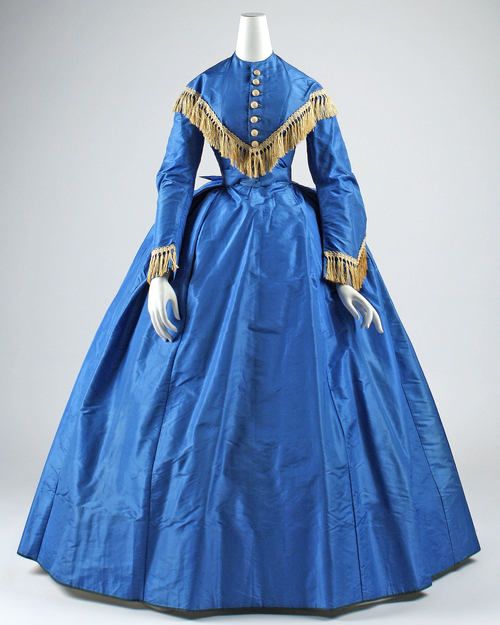
Wedding dress, 1860, Metropolitan Museum of Art

Slippers, 1835-40, Metropolitan Museum of Art

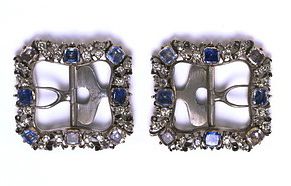
Shoe buckles, 1750, V&A

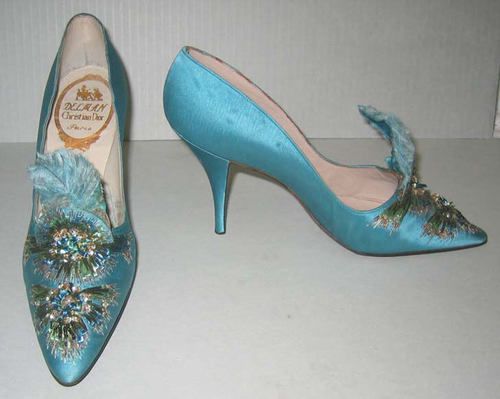
Blue shoes, 1957, Christian Dior, Met

Wedding dress, 1868, Met

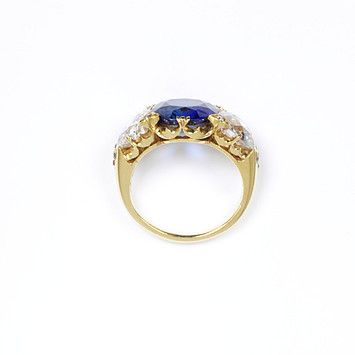
Sapphire ring, 1850, V&A

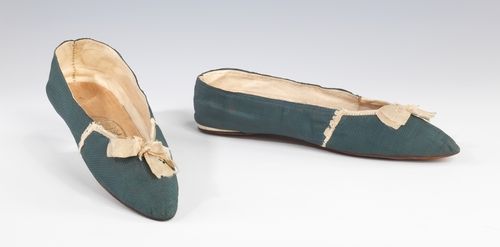
Blue slippers, 1815-20, Vandervell, Met

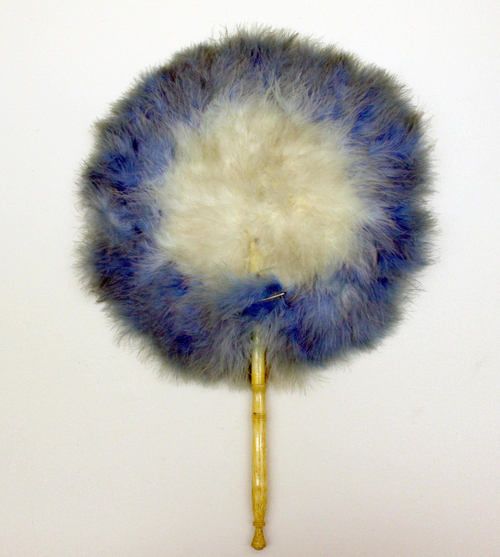
Blue feather fan, 1850s, Met

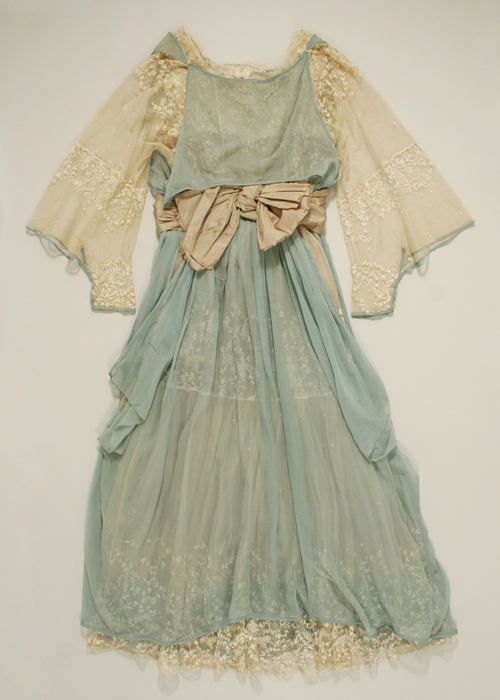
Wedding dress, Bonwit Teller, 1916, Met

Blue shoes, Hellstern and Sons, 1921, Metropolitan Museum of Art

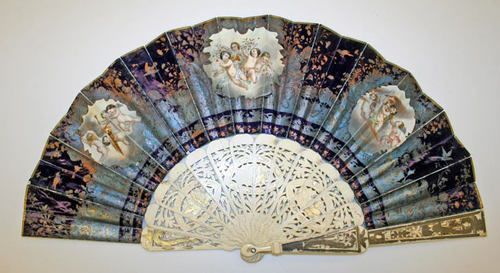
Fan, late 19th, Met

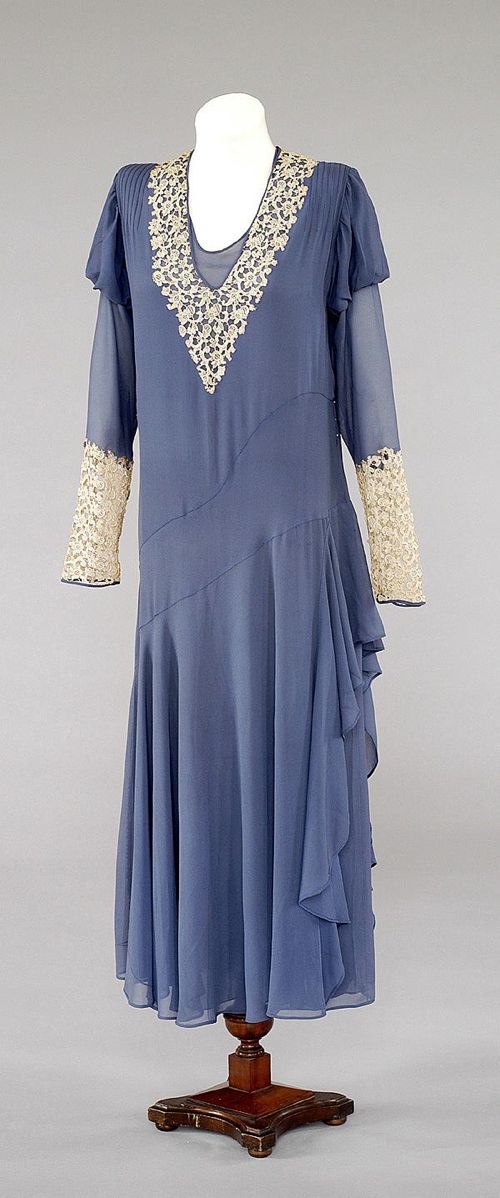
Wedding dress, Bowes Museum, 1932

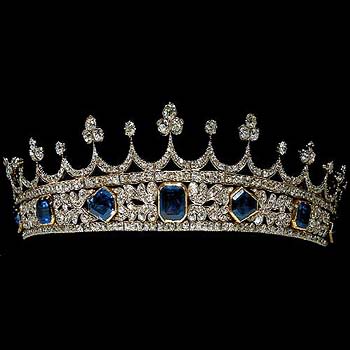
Queen Victoria's wedding tiara

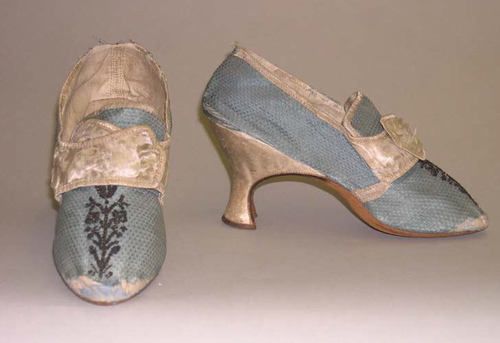
Blue shoes, ca 1776, Metropolitan Museum of Art

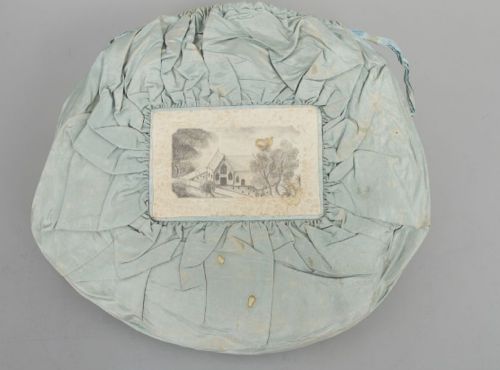
Drawstring wedding purse, 1833, Agnes Thompson, Powerhouse