Latest Posts

Madame Ornata’s sapphire blue 1930’s dress – the bodice

I’ve  skipped ahead a bit with Madame Ornata’s 1930s dress, showing you the finished (well, mostly) product before all the construction shots, so it’s time for a re-cap.

To make the slippery silk charmeuse easier to work with, and to help the bodice hang better (and hide any lumps and bumps), we flat lined the bodice pieces in an adorable cotton print from Madame O’s stash.

The cut-out and flat lined bodice pieces, waiting to be assembled

Madame O and I worked on the dress together – one person pinning and ironing while the other person sewed.  It was a very fun and efficient way to sew.

Me on Bernini, Madame O's machine

The skirt is topstitched to the bodice, but we tried to hide the stitching everywhere else on the dress, so there was a lot of very, very careful, slow stitching.
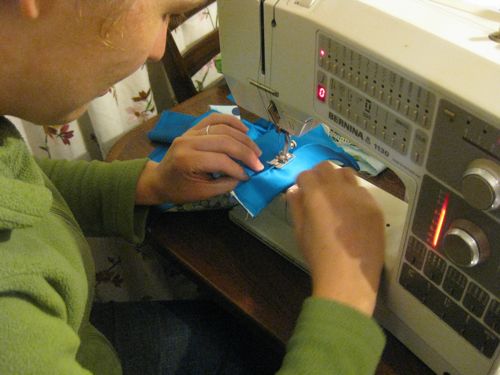
Carefully 'stitching in the ditch'.

For the most part, I was the sewer, and Madame O was the ironer and pinner, and (most importantly), fetcher of cups of tea.
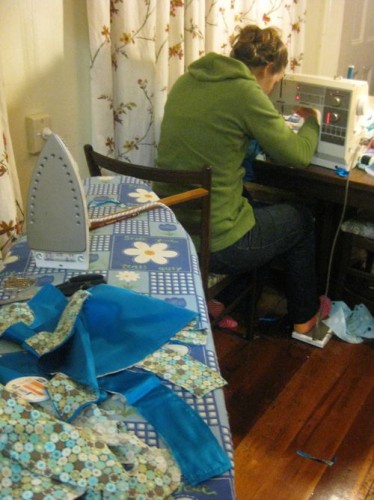
Irons, straight-edges and sewing machines - all that you need for sewing!

The bodice back, interior view
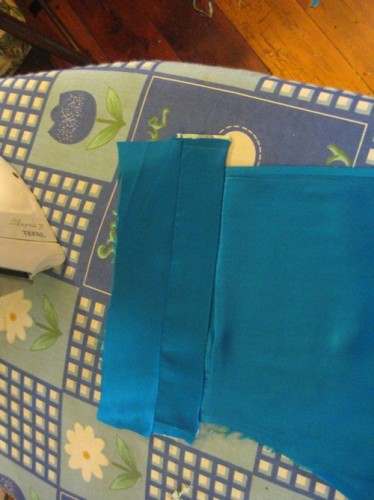
And the exterior view

The bodice front, mostly assembled

I love the details of the V in front
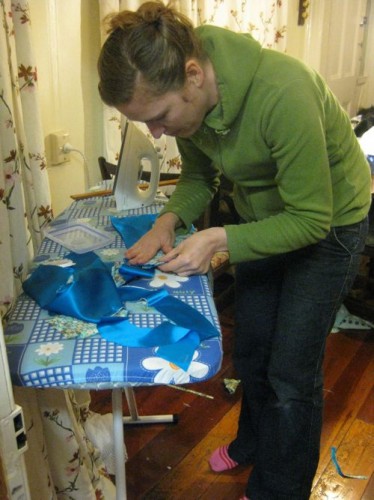
Some final assembly and pinning (and don't you love my socks?)
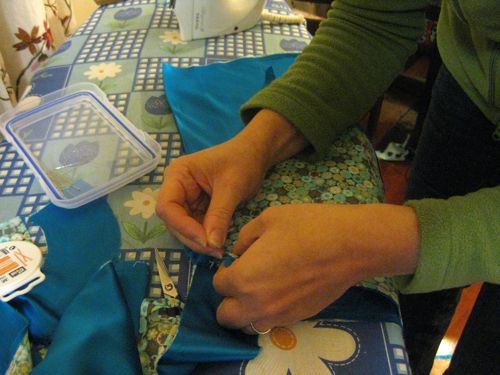
Careful pin placement = perfect seams
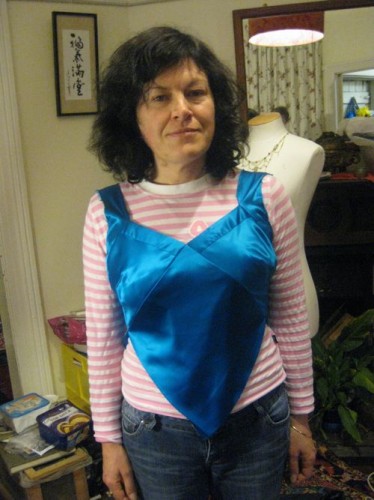
A final fitting - over a shirt for warmth!

With everything assembled, we did a final fitting.  I ended up having to take in the sides of the bust a tiny bit to make it lie perfectly.
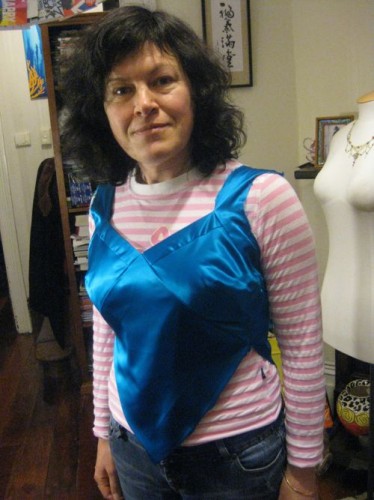
That tiny bulge at the side needs to go.

With the bodice all fitted, I carefully pinned it to the skirt, so that the bodice could be basted, and then topstitched to the skirt.

Beautiful!
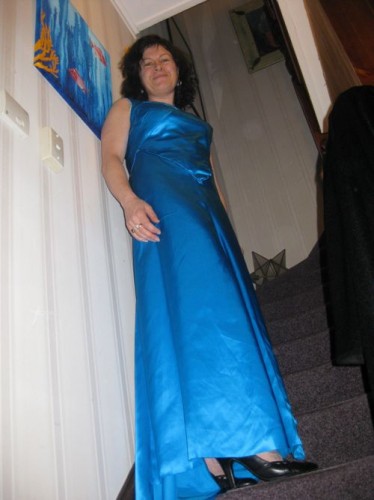
You can already see the gorgeous silhouette of the dress

Madame Ornata described this as a dress made up of a bunch of random pieces that made no sense at all until you put them all together.  It is true that with some patterns you can see the shape of the garment right away, but with this one, there wasn’t anything until there was everything.
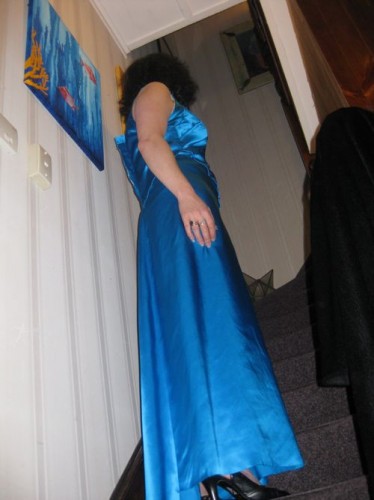
The side view, with the back selvedges pinned together.
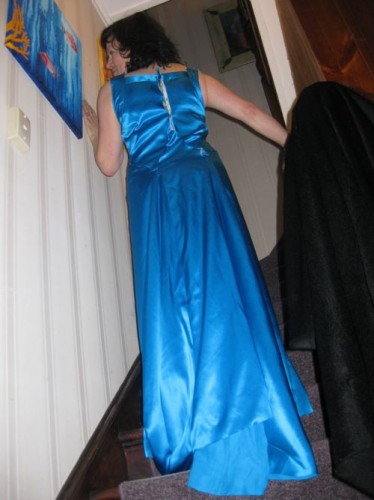
The back view. I love the '30s detail of the double train.
Windy Lindy: What we wore

I’m sure that you are all wondering what I eventually decided on as my Windy Lindy dress.

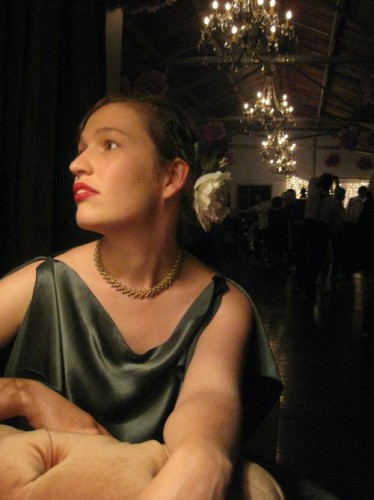
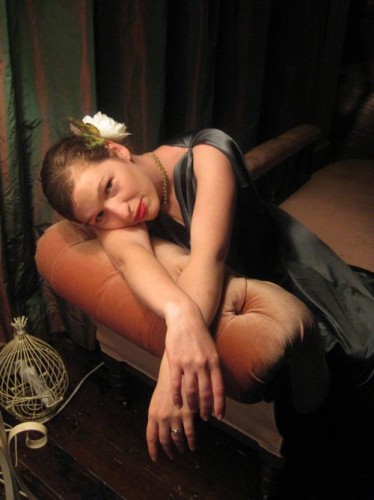
Well, as per popular demand, I wore the green dress.

OK, in all honesty, I didn’t feel like wearing the serious undergarments that the white and black dress require, and I didn’t find the red dress until a few hours before the dance.

You have excellent taste though, dear readers, as I did feel that I looked rather fetching.

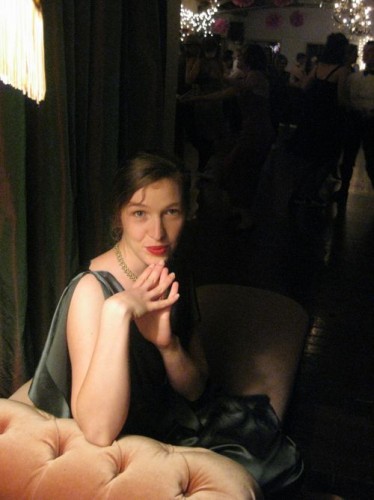
I paired the dress with a gold necklace, a silk peony rose and a butterfly in my hair, and gold dancing slippers.

Taking a break from the dancing

I got a lot of compliments on the neckline of the dress. It's very simple and flattering.

The gold necklace, and chandeliers and dancers in the background.

You can just see the butterfly above the peony rose in this shot.

The Dreamstress sweet...

...And saucy!

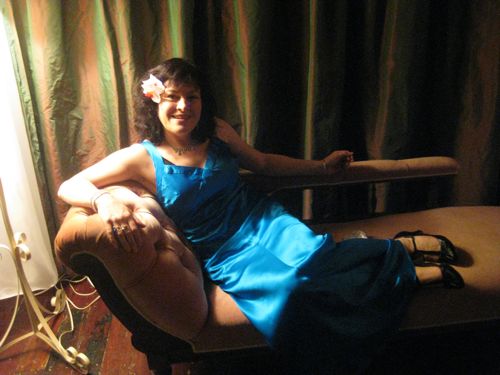
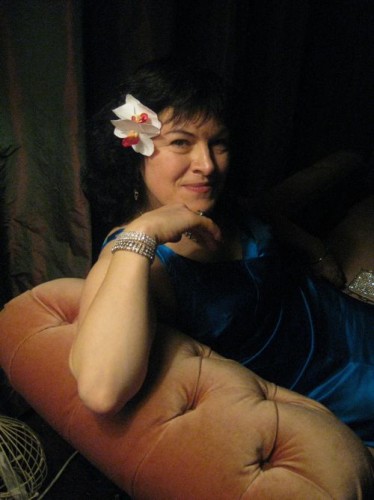
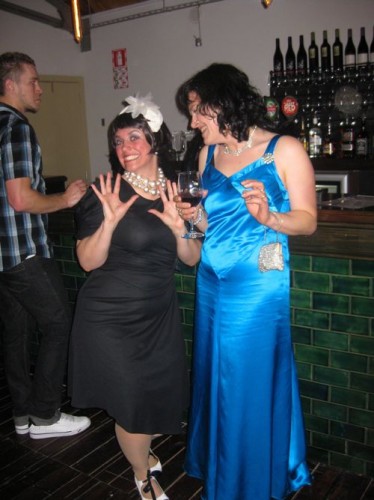
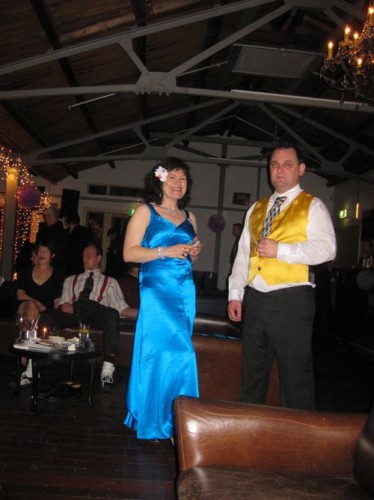
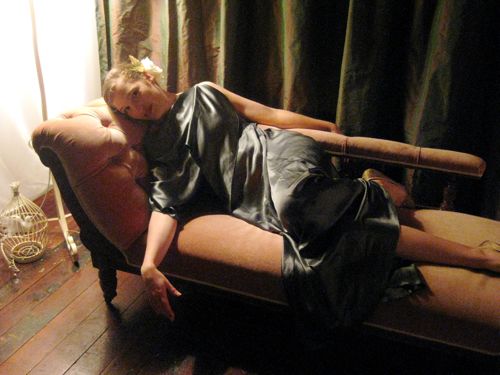
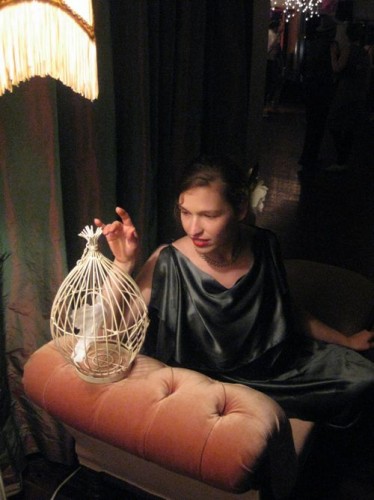
Madame Ornata looked rather fetching too.  We didn’t quite finish her dress (we had to sew her into it as the back fastenings weren’t done), but I do believe she was the belle of the ball.  She just looked so perfectly period, and the sapphire silk was so striking – you could spot it anywhere in the room.

Chaise lounges are such perfect props.

Chaise lounges are such perfect props.

I'm so proud of this image. It looks like it was taken in a photography studio!

Don't you love the orchids in her hair, and the bracelets? She was sparkly diamantes all over.

Va va voom!

With the ever-adorable Miss La Belle

Doesn't she look just like a 1930s movie star? She has the perfect '30s figure!

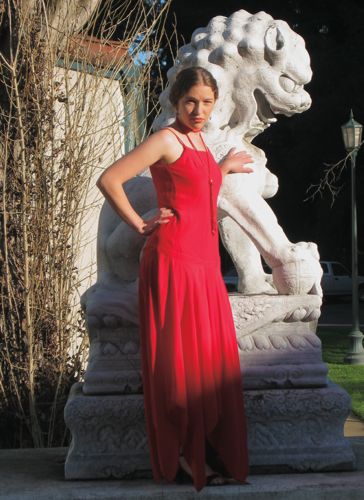
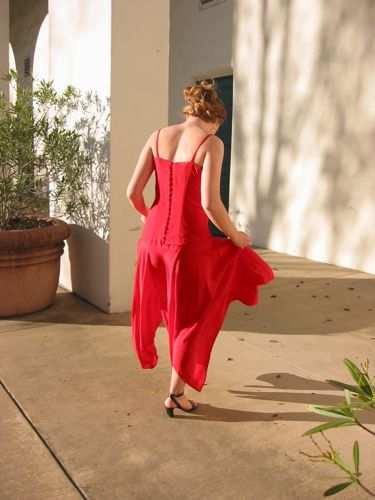
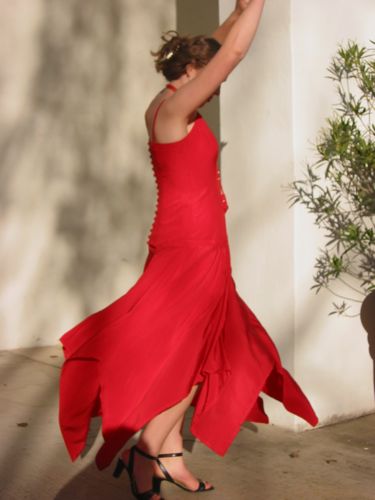
Finished project: 1920’s inspired ‘Tango’ dress

I made this dress as a project in university.

The brief was to make a basic fitting toile, and then to draft a garment pattern from that.

This was not the dress to flat pattern draft.  It would have been much, much easier to drape it on a dressform.

But it still turned out pretty well.  We call it the ‘dress that fits anyone’, because it does.  And looks good on them to.

I based the design on a image of Edna St Vincent Millay.  The patterning isn’t at all accurate for a 1920s dress (princess seams!), but the effect is still charming.

The fabric is silk crepe.  There was quite a story with the fabric – I looked and looked, but all the reds I could find had an orange tinge.

So I spent my entire fabric budget on some muted jade green silk charmeuse because it was soooo beautiful.

And then realised that this was the wrong dress for muted jade green silk charmeuse.  And whinged about it for days.

So my dear, sweet friends pooled their money and bought me red crepe as a birthday present (and to stop me from whinging), and it was perfect.

The dress buttons up the back with innumerable little tiny fabric covered buttons.

I got so tired of covering those buttons I swore I would never make fabric covered buttons again.

Yeah, my very next project involved fabric covered buttons.

For the record, I’m pretty sure I got an A on the project.