When I was young visitors to my parent’s farm would rave about it. They would show up at the front door exclaiming “It’s paradise!” “A tropical wonderland” “I’ve never seen anything so beautiful in my life!”.
I thought they were mad.
I’m older and wiser now.
I no longer compare the wildness of true Hawaii to the manicured estates that we are presented as ideals in the media. I appreciate the honesty of the farm, a working piece of land that made a living for my parents, and don’t need to tidy away all the tools and compost heaps that make it what it is.
The farm is set up a valley. You turn off the main road which winds round the coast, and head mauka (mountain side) up a narrow, rough dirt road. In a small car the centre median scrapes the bottom, rocks and fairy grass meeting metal.
On one side of the road the steep valley wall, an inhospitable mass of sharp shoulder-high grass, thorny trees, and rocks rises. On the other, the land drops away to the valley bottom, lush with java plum trees and tropical foliage. Little homesteads, some abandoned, some maintained, appear at intervals along the road as you head upvalley. The trees bend over the road, and vines form a canopy, dangling lilikoi (yellow passionfruit) and flowers amongst the greenery.
You pull out into a precarious parking space, carved into the side of the hill, or perched out over the drop into the valley, when you reach the farm. You aren’t there yet though: everything for the farm must be carried a quarter mile through the woods to the house.

Mango lilikoi vines and flowers
The path heads off from the dirt road near the parking spaces, dropping down a few metres to the valley floor. You pass through arches of coconut palms, and arbors of lilikoi and mango lilikoi (Jamacan honeysuckle), and past a little cottage perched on the banks of one of the two streams that irrigate the valley. A simple wooden bridge, built by my parents, and just wide enough for walking, spans the stream.
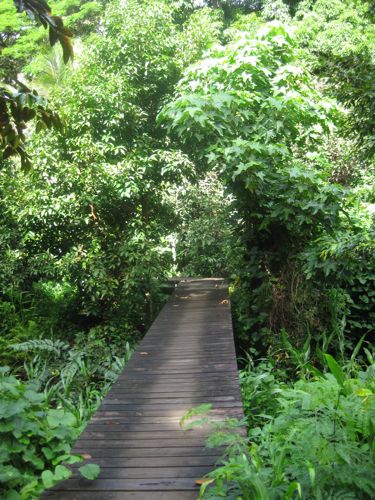
The first bridge

Fruit trees frame the view of the first bridge
The far side of the bridge is sheltered by an orchard of tropical fruit; ohia ‘ai (mountain apples), rambutan, canastel (eggfruit), lichee, banana, papaya, inga, cacao and various citrus.
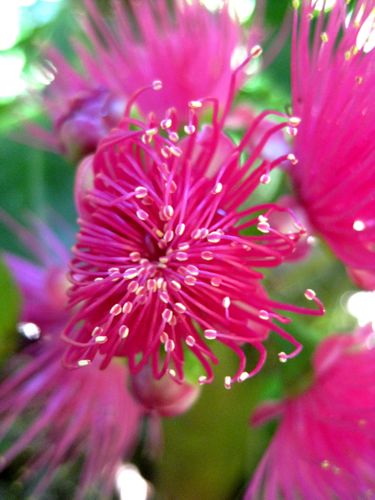
Ohia ‘ai (mountain apple) flowers
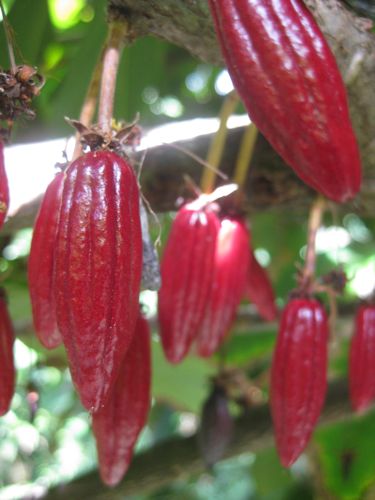
Small cacao pods ripen on the tree

Lemon flowers, very sweet
My parents carved this orchard out of wild forests of invasive java plum, cutting and clearing the trees, piling the logs into cairns of wood which eventually rotted to form mulch for the young fruit trees.
They still call the orchard ‘the Meadow’, remembering the time when the fruit trees were young, and the bridge gave a view over a spreading clearing of meadow grass and flowers, with only the occasional tree.

Pineapples grow in sunny patches among the trees in the Meadow

Cuban red bananas grow at the edge of the Meadow

Ohia ‘ai fruit hanging over the stream
The trail wends through the Meadow/orchard, and then enters more forest, mainly java plum and wild mango.

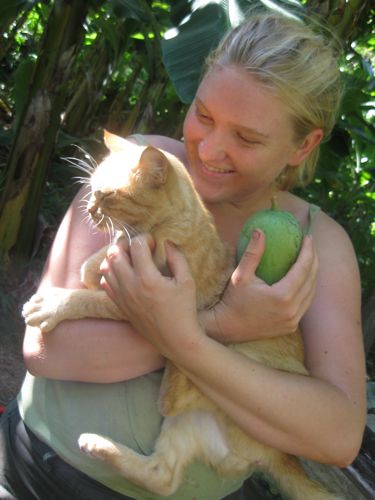
With goldilocks at the edge of the Meadow
The orchard was magnificent, lush with fruit, native trees and introduced tropicals growing next to each other, a riot of different leaves and colours. The forest is breathtaking. It appears untouched and original, the trees old and gnarled, bamboo grass and ferns growing in the spaces between them.

In the forest
It’s an illusion. The forest trees are all invasive foreign species that shelter only introduced birds and suck the water out of the soil. Even knowing this as I do I am overcome by the sheer beauty of the place. The air is fragrant with the scent of java plum, a light lemon fragrance, and the spicy perfume of lawae ferns.

From the woods to the meadow
The breeze that sweeps down the valley comes to meet you, rustling through the trees and cooling the air. It caresses your face and carries away the outside world as you walk down the trail. I cup my hands walking down the path, catching the breeze in the palms and feeling it tickle through my fingers.

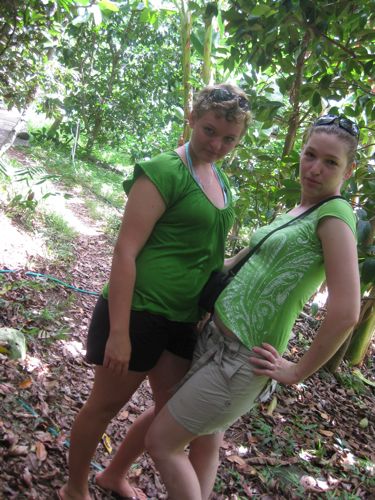
My sisters in the woods at the 2nd stream
Wind in your face, lifting your hair, you cross another tiny stream, just a trickle in these hot summer months. The woods around the stream are dotted with tropical flowers: blue ginger and red heliconia, parakeet flowers in pink and orange. Bromeliads spill out of holes in trees.
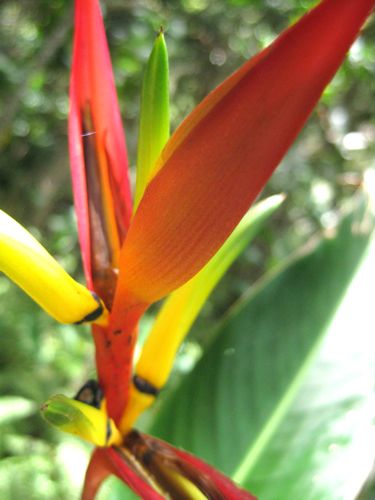
Parakeet flowers
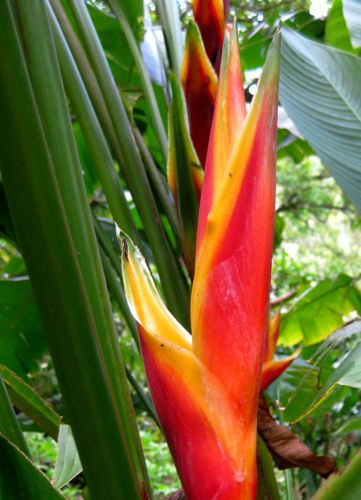
Tropical flowers in the woods
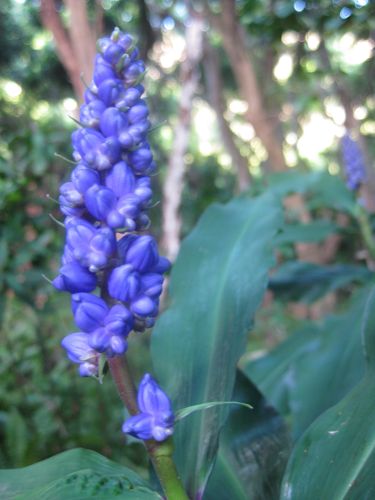
Blue ginger glows against the greens and browns of the forest
The path leads through the flowers, all planted by my sisters and I when we were younger, and up a tiny rise to where a third and final bridge arches up, crossing the last stream before the house and the farm proper.
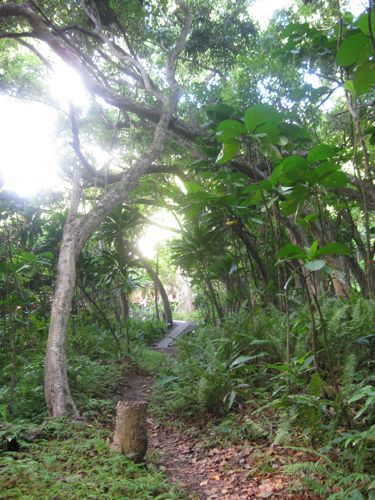
The third bridge and the sun shining in the home clearing
On the other side is home, and all around you is paradise.
* I wrote this post in Hawaii, sitting in a little office looking out over the third bridge. The internet is too slow to upload images, so I’ll add them as soon as I return to New Zealand.