Earlier this week I posted about Princess Alice, later Princess Andrew of Greece and Denmark.

H.R.H. Princess Andrew of Greece, nee Princess Alice of Battenberg Philip Alexius de László, 1907, private collection of Prince Phillip
If you haven’t gone to rate Alice’s dress, please do so now! (or at least after reading this post).
Whether or not you agree with Alice’s fashion taste, it’s hard not to be amazed and impressed by her life.
Alice, the great-granddaughter of Queen Victoria and the mother of Prince Phillip, was born 25 Feb 1885.
Early in her childhood it became apparent that Alice wasn’t learning to speak, and her grandmother finally realised that Alice was deaf.
This didn’t stop the determined princess from learning to speak and lip read in English, German, French, and later, after she fell in love with Prince Andrew of Greece, Greek

Princess Alice of Battenberg shortly after her marriage to Prince Andrew of Greece
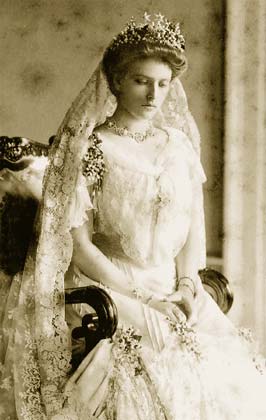
Princess Alice of Battenberg in her wedding dress
In 1903, Princess Alice married Prince Andrew, and devoted the rest of her life to charity work. Really. And not just your usual ‘pretty princess visits cutest children in hospital ward charity’. Serious charity.
During the Balkan Wars, Alice worked as a nurse, earning international commendation.
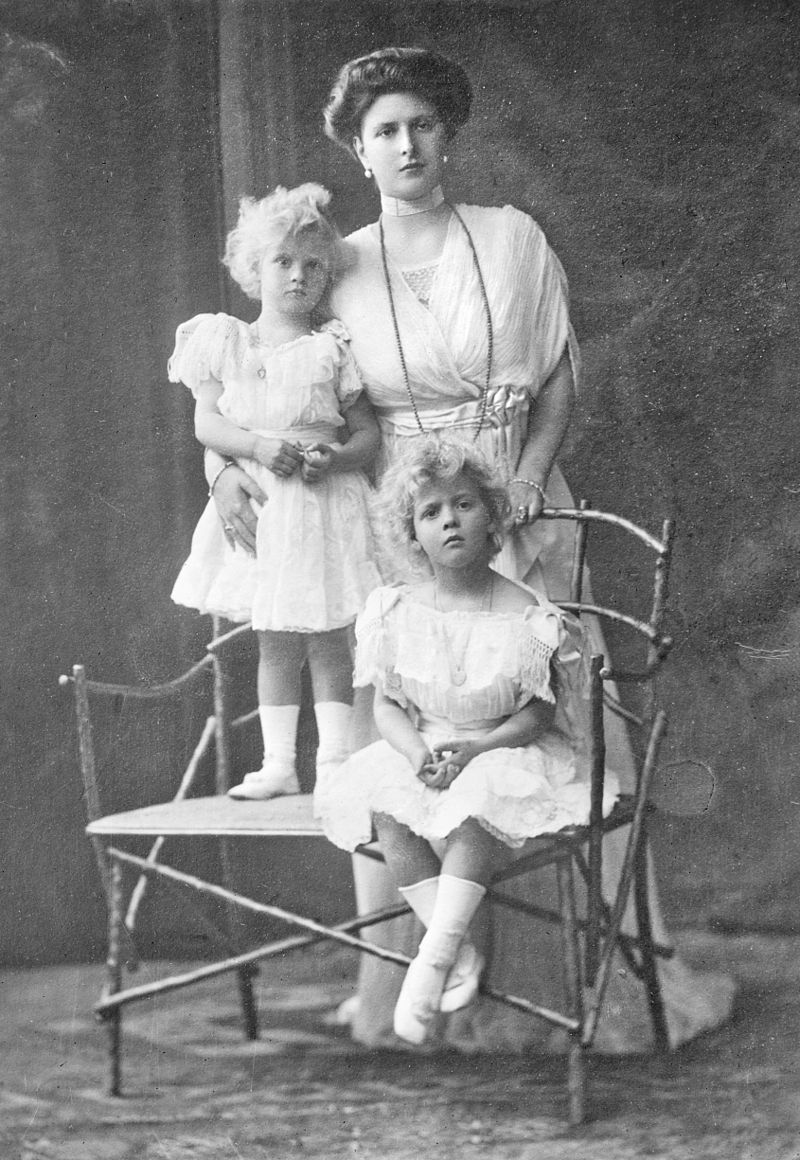
Alice with her first two children, Margarita and Theodora, c. 1910
Following the wars, Greece went through years of instability, and so did Alice. She suffered a serious nervous breakdown in 1930 and was diagnosed with schizophrenia and confined to a sanatorium.
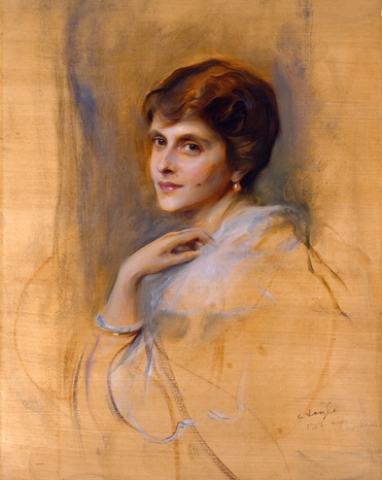
Princess Andrew of Greece and Denmark by Philip de László, 1922.
Private collection of Prince Philip, Duke of Edinburgh.
An untroubled Alice is a sketch by Lazlo
It wasn’t until 1938 that Alice returned to Greece, where she also returned to charity work, and took up the business of being seriously awesome.
During WWII she organised soup kitchens, smuggled medical supplies in Greece (personally), organised a nursing circuit, and set up homes for orphaned and stray children.
She had children fighting on both sides of the war, and the Germans who occupied Greece assumed she was on their side because her son-in-law was a high-ranking SS officer. However, Alice made her position clear when a German officer asked if he could do anything to help her.
Her answer? “Yes, take your troops out of my country.”
On top of all her charity work, Alice managed to save a Jewish family who asked her for refugee, successfully concealing them from the occupiers and keeping them from adding to the toll of some 58,000 Greek Jews who perished in Nazi concentration camps.
By the end of the war, Alice had no more food to distribute to soup kitchens, as she was living on scraps of bread herself.
The minute she gained more supplies, she was back helping those in need, even going out to give food to children and policemen during battles. Her friends tried to stop her, and insisted she might be hit by a stray bullet, to which she responded “they tell me that you don’t hear the shot that kills you and in any case I am deaf. So, why worry about that.”
After WWII, Alice became very religious, and attempted to start a religious order. This didn’t pan out (as her mother said “What can you say of a nun who smokes and plays canasta?”), but Alice still wore what was basically a nun’s habit to Elizabeth II’s coronation (OK, so even really awesome women can be major headaches as mother in laws).

Princess Alice of Battenberg leads her family out of Westminster Cathedral after Elizabeth’s coronation.
At her wish, she was buried with her aunt Grand Duchess Elizabeth Feyodorovna, at the Convent of Saint Mary Magdalene in Gethsemane on the Mount of Olives in Jerusalem.
When she first made her burial request known, her daughter complained that it would be too far away for them to visit, to which she responded “Nonsense, there’s a perfectly good bus service!”
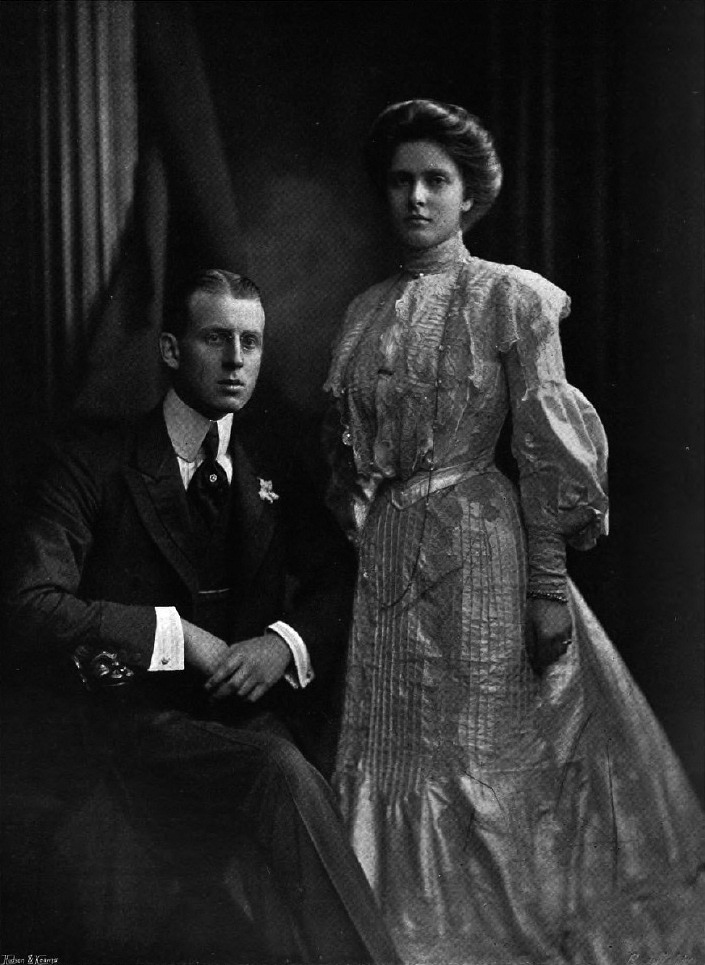
Andrew of Greece and Alice of Battenberg, around the time of their marriage