
Getting back to pink in the 18th century, we did 1700-1709 from palest pink to darkest, then 1710-1719 (aka, all the Barbie pinks, and I’m extremely disappointed only one person commented on my shrimp joke).
So, here’s to the 1720s!
I got a little overwhelmed trying to organise everything from light to bright and then from bright to light, so this post is just all pink, higgledy piggledy (which is exactly the right phrase to use for a post about pinks)
1720s Pinks
Vivid salmon pinks show up in these three paintings and a length of dress fabric, showing the same shade across four countries.
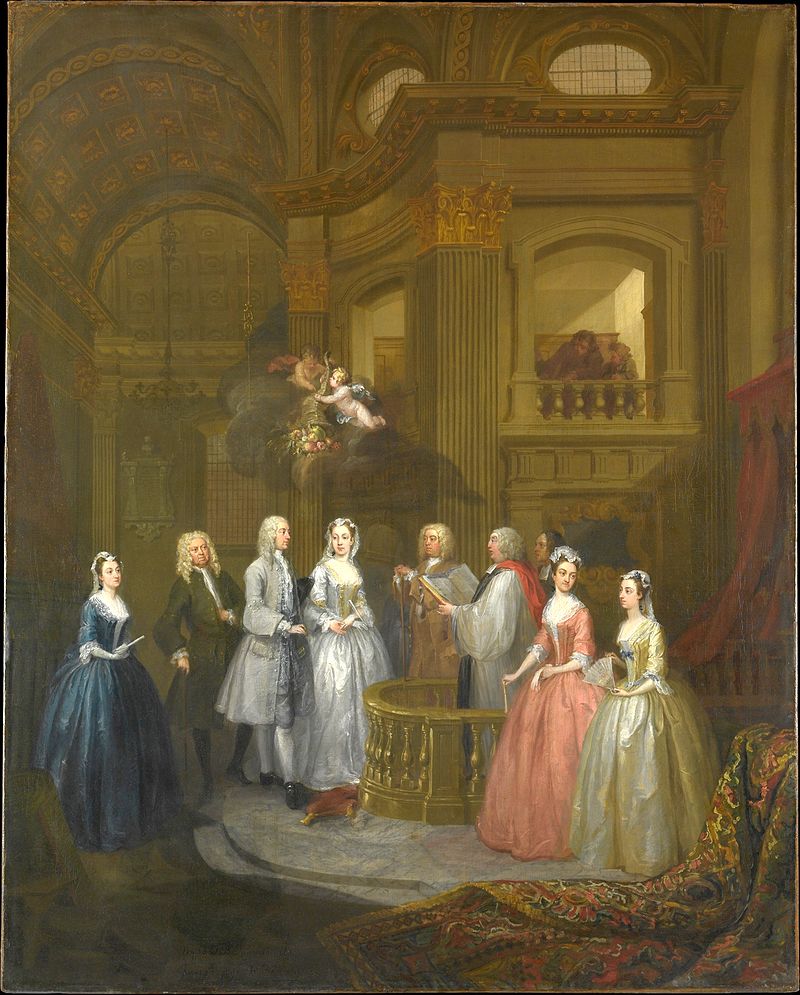
The Wedding of Stephen Beckingham and Mary Cox, William Hogarth, 1729, Metropolitan Museum of Art
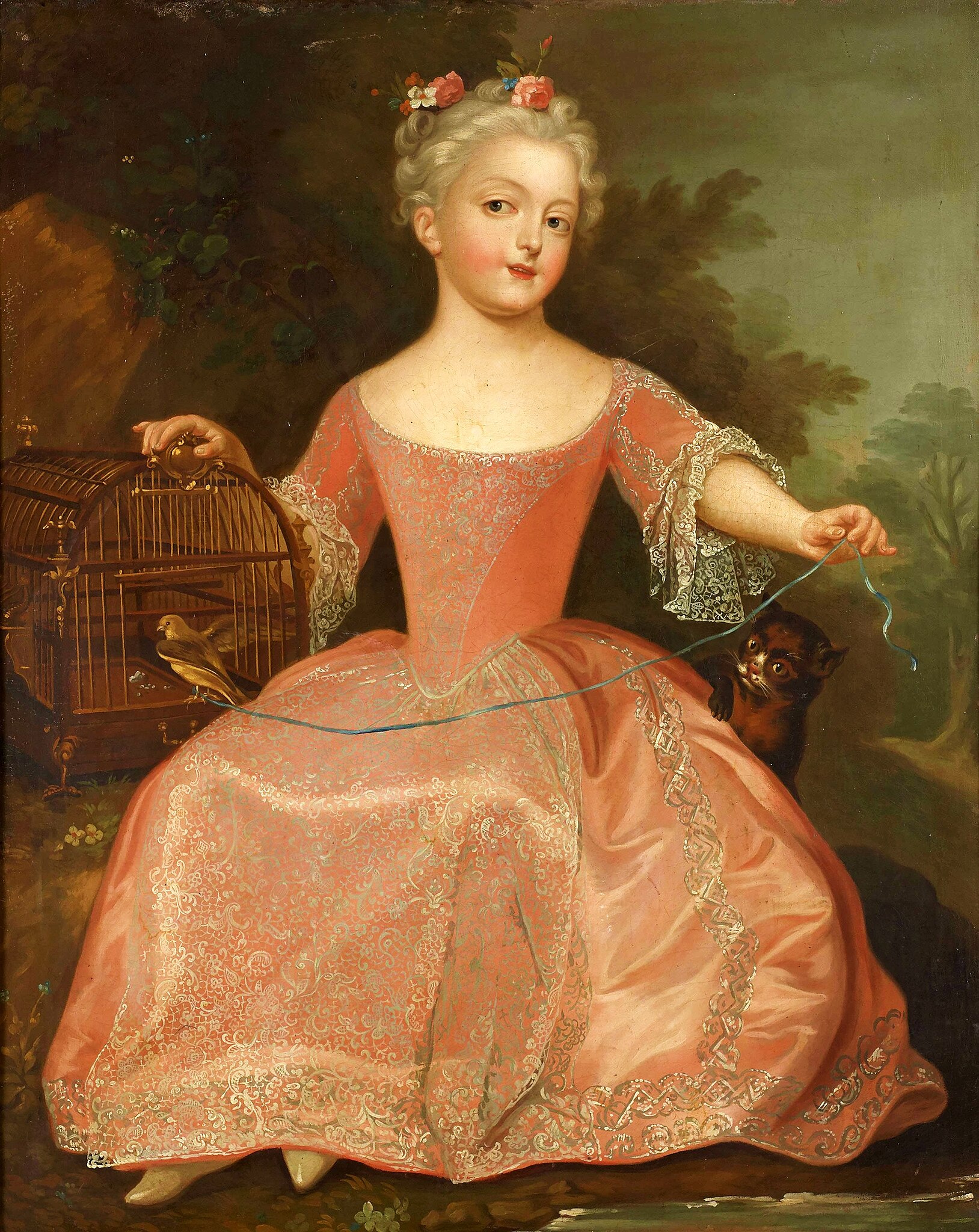
Louise Marie Madeleine de Fontaine (Madame Dupin) 1706-1799, 1715 (possibly Mariana Victoria of Spain, born 1718, which would make this ca 1725)
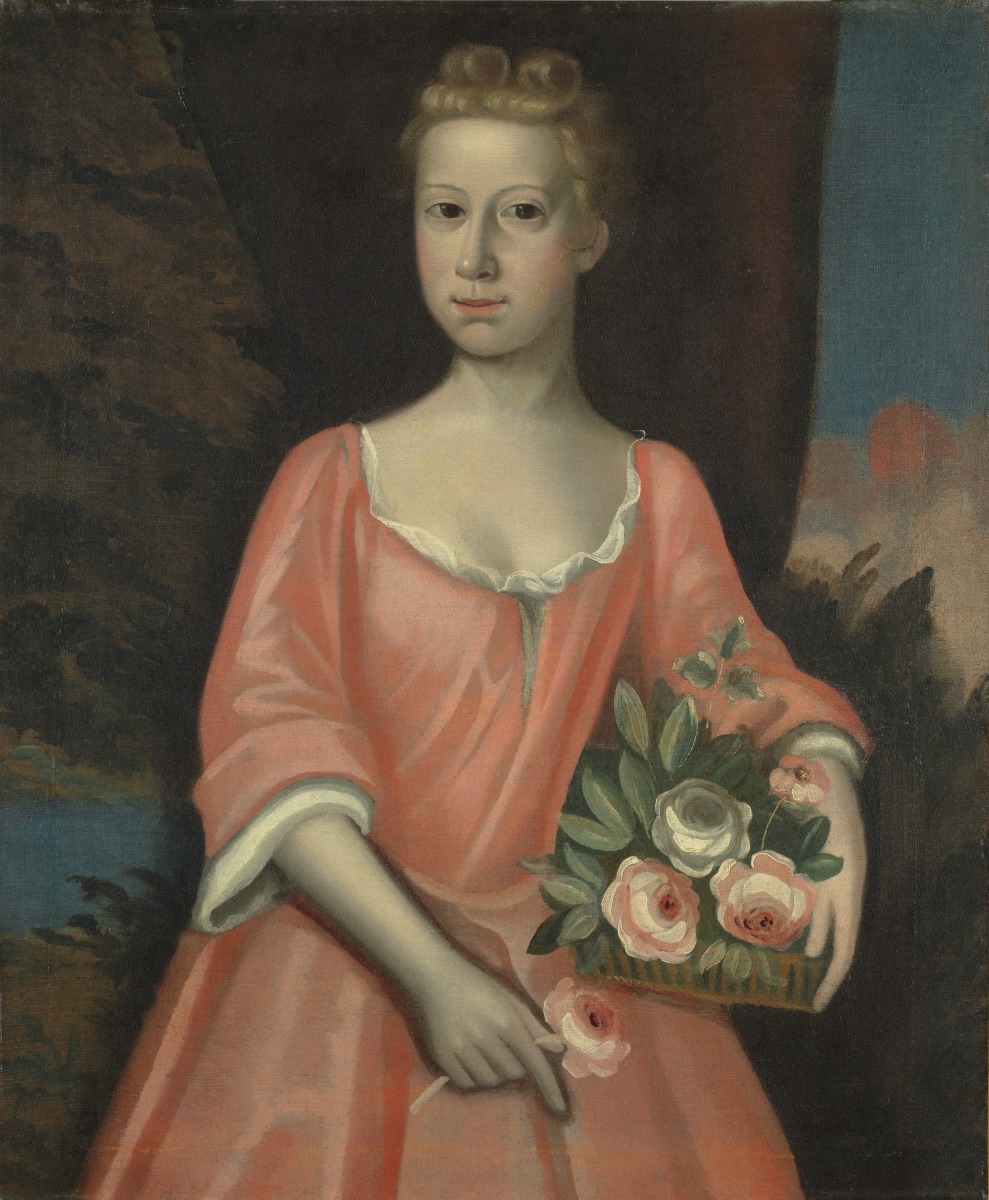
Mary Jaquelin; ca. 1722-23, Attributed to Nehemiah Partridge, American, 1683 – 1730
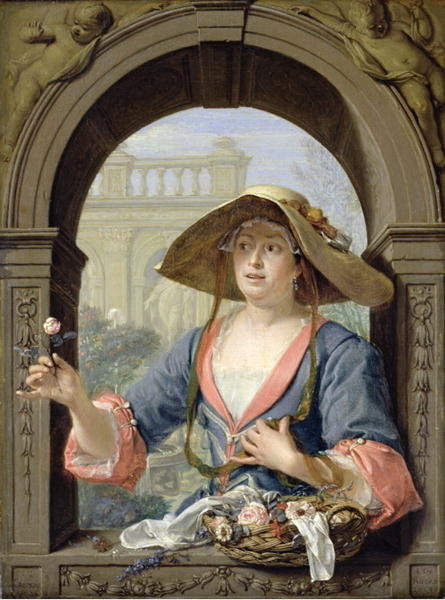
Jacques Ignatius de Roore – Portrait of M.C. Cremers, the Mistress of the Artist, 1727
Touches of that bright salmon appear in this gorgeously patterned petticoat.

Petticoat worn by Lydia Hutchinson (American, 1717 to about 1745) American, English textile, Spitalfields 1720-1730, MFA Boston, 41.722a
And in the embroidery on this lace mantle, and the embroidery and binding of the pocket that follows:
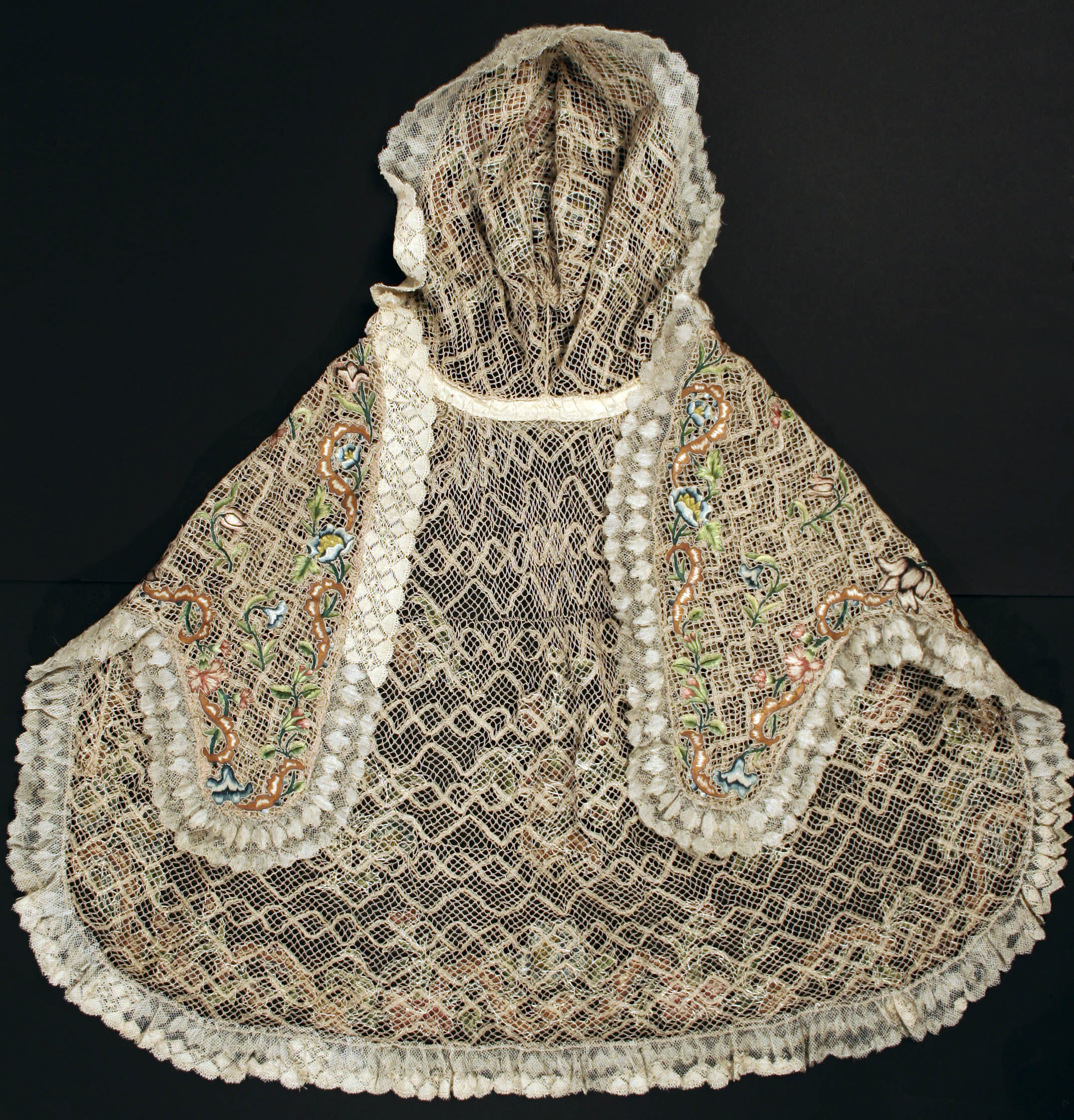
Capuchin, 1725-50, Embroidery on lace, Metropolitan Museum of Art, CI68.68.8_F

Pocket 1720-1740, linen, front of ribbed weave, backed w plain linen, back of coarse linen; wool embroidery, bound with pink woollen braid, MFA Boston 1951_107_2
A slightly softer shade is seen on Frances, Lady Byron, Henrietta Howard, and a pair of very fashionable velvet shoes:
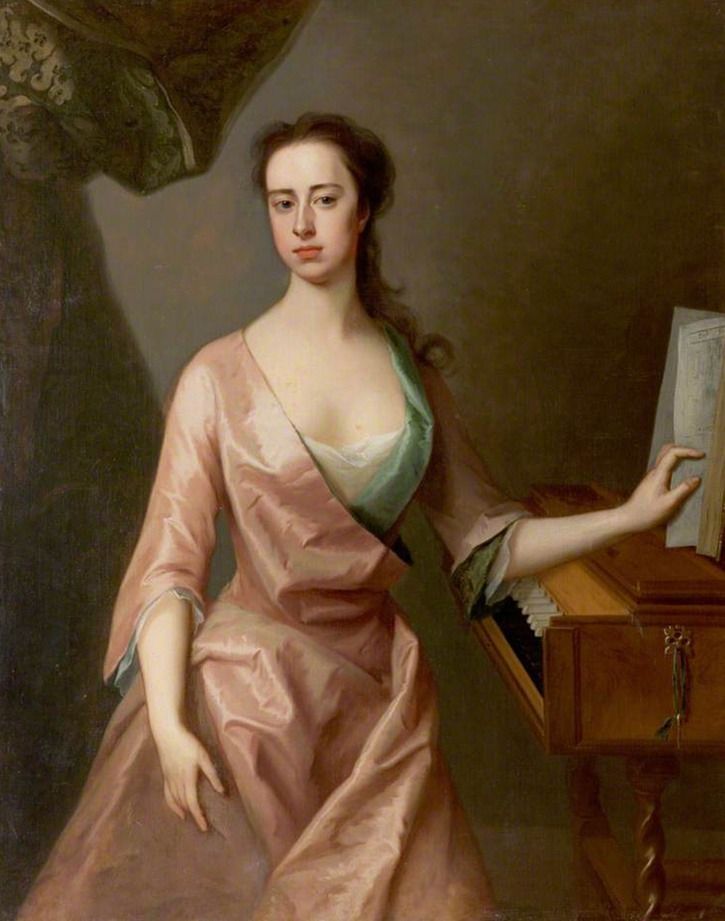
Frances, Lady Byron (d.1757), Third Wife of the 4th Lord Byron by Michael Dahl, ca. 1720
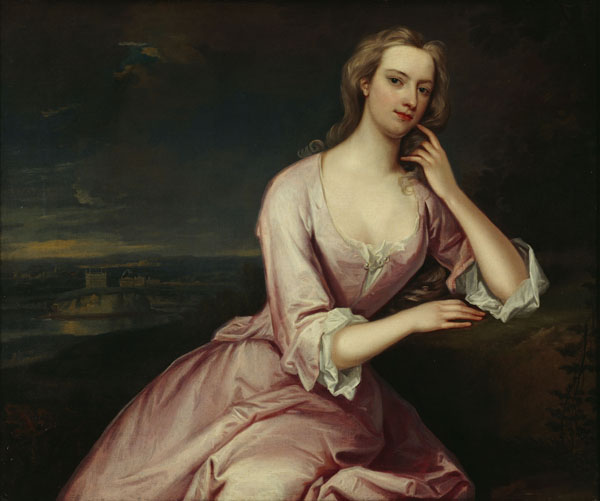
Charles Jervas (1675-1739), Portrait of Henrietta Howard (1688−1767), ca 1724
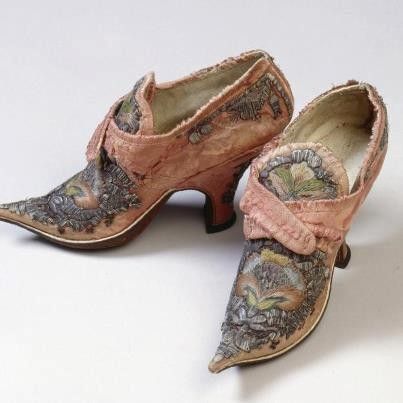
Embroidered pink velvet shoes, 1720s
Veering further towards orange, we have this wonderful velvet example of a wrapped gown Equally delicious and covetable is this marvellous metallic and silk stomacher
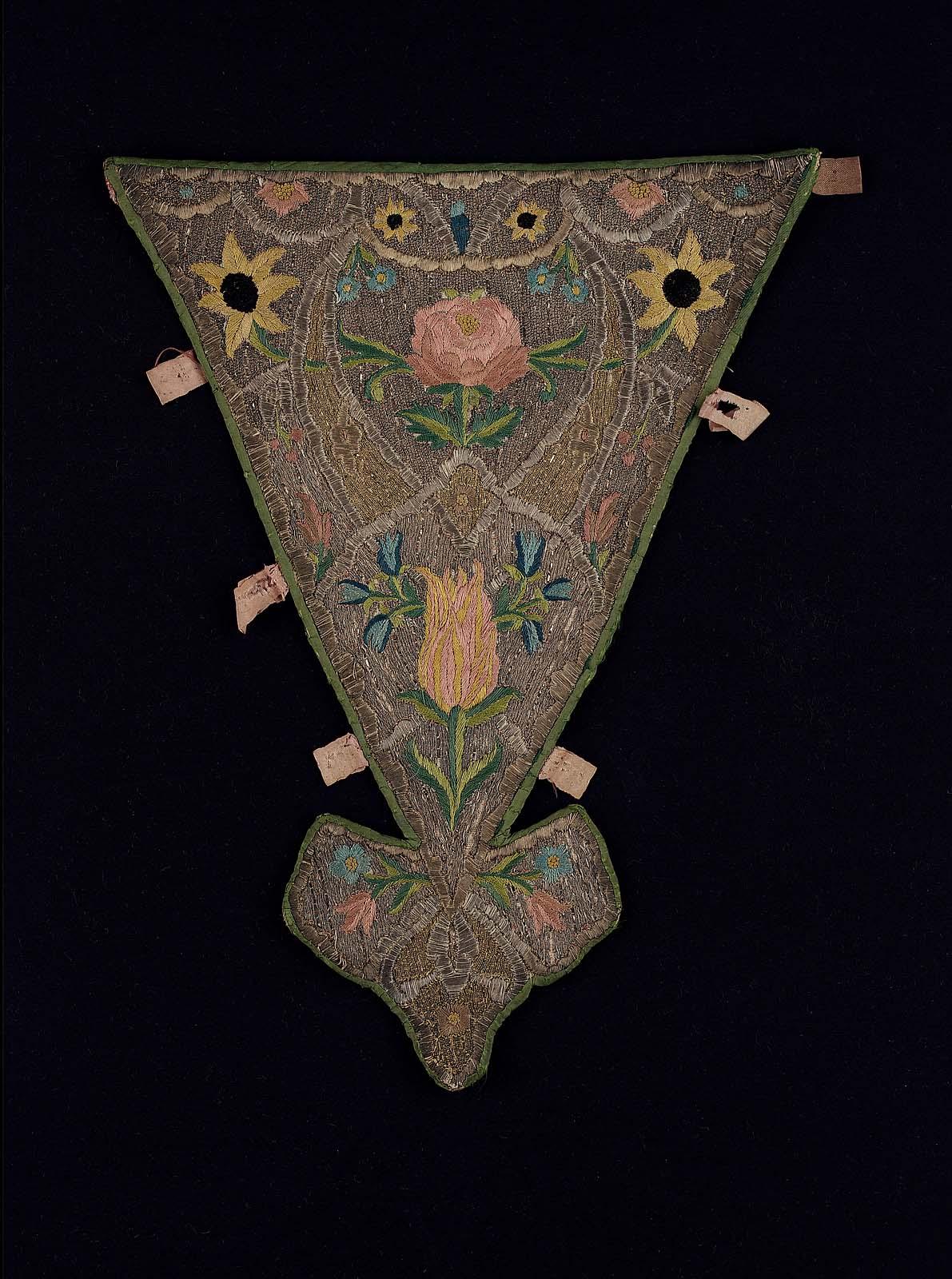
Stomacher, 1700–20, MFA Boston, 43.1909
Veering further towards orange, we have this wonderful velvet example of a wrapped gown:

Portrait of a Woman, Henri Millot, 1729
To go with it, a beautiful embroidered stomacher in orange-pink. My favourite part is the elements that look like spiderwebs.

Stomacher, ca. 1720, British, silk, Metropolitan Museum of Art, 1975.206.1
Here’s an equally charming and delightful orange-pink trimmed apron. I do love the early 18th century aprons with pocket slits and little tiny bodices.

Apron (France), 18th century (CH 18612935) Silk
For some pinks on men, here’s the Ottoman ambassador to France looking dashing in pale pink:
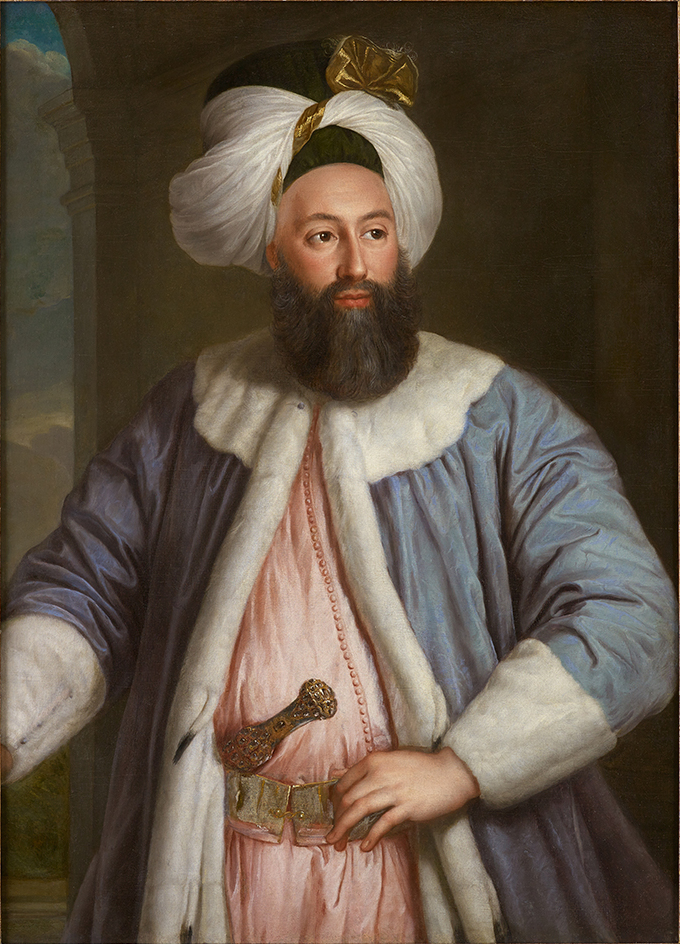
Pierre Gobert (1662–1744, Portrait of Yirmisekiz Mehmed Çelebi, commissioned by the Bâtiments du Roi. 1724
And a glorious waistcoat that’s anything but pale!
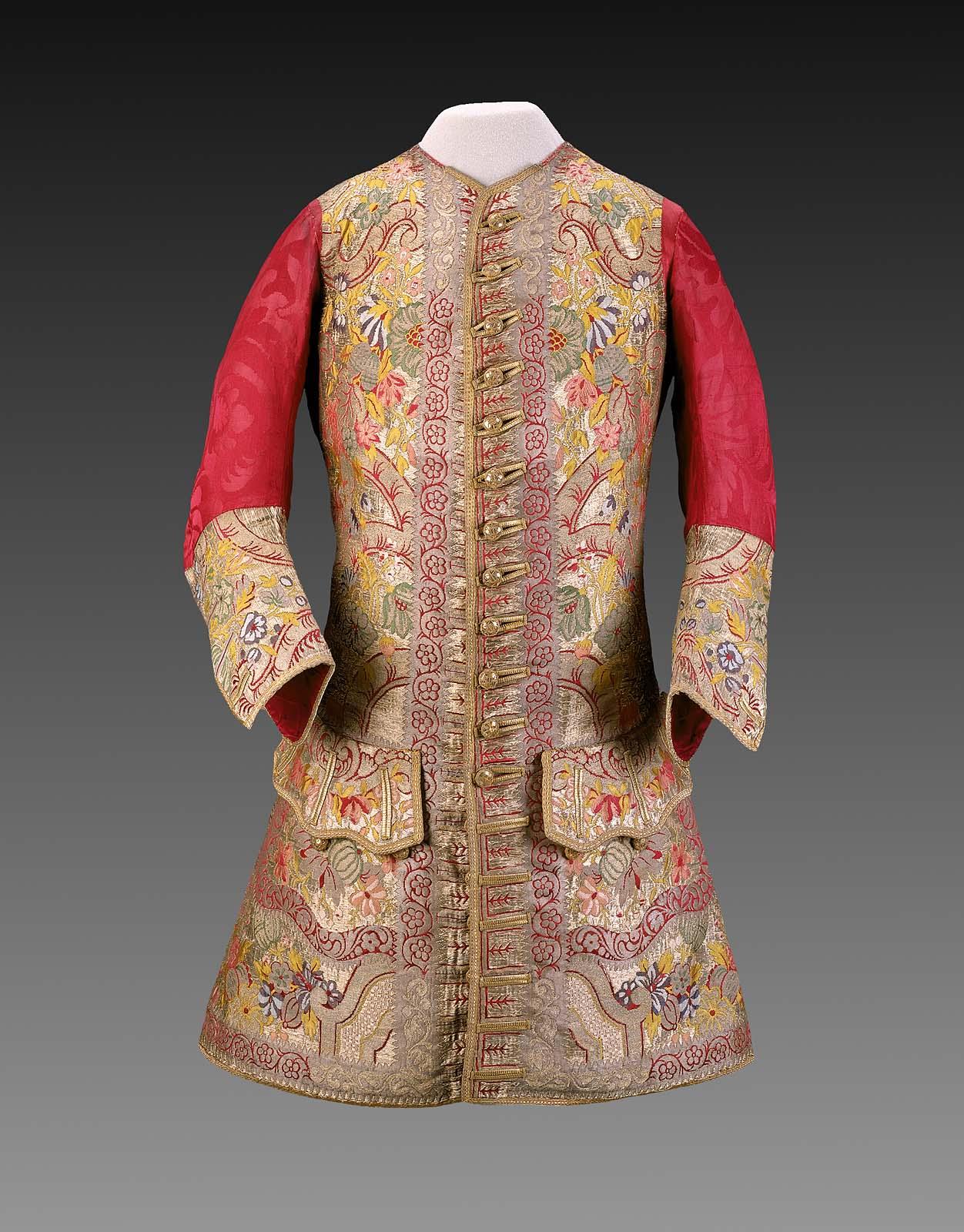
Man’s sleeved waistcoat, American (English fabric) 1720s, Silk damask, brocaded with silk and metallic yarns,, MFA Boston 41.887
The soft pink of the ambassador’s outfit shows up on these stays:
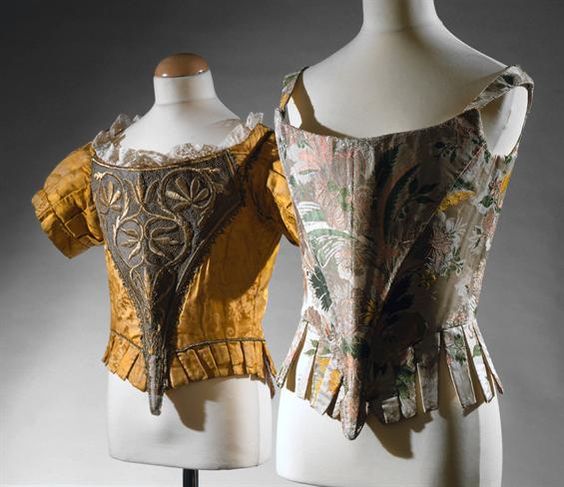
Women’s sleeveless bodice of brocaded silk circa 1720. Museu Nacional do Traje. Accession Number- 29684 TC Inventory # 4192
And Thomas Gibson sporting a waistcoat every bit as amazing as the one above.

Thomas Gibson, Antonio Niccolini (1701-1769), 1725
From bold men, to bold women. Here’s a gloriously vivid pink:
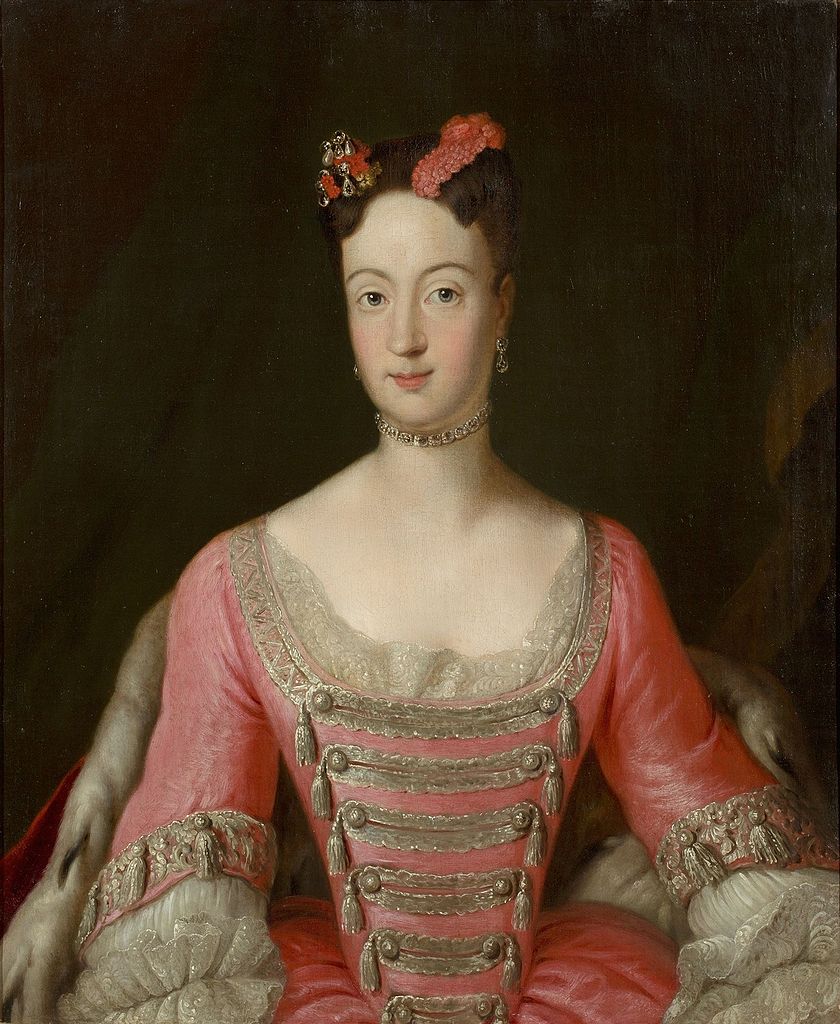
Antoine Pesne Portrait of Wilhelmine of Prussia, Margravine of Brandenburg-Bayreuth (1709-1758), 1725
And another:

Gibson, Thomas; Henrietta Hobart (c.1688-1743), the Honourable Mrs Howard, Later Countess of Suffolk; c 1720, National Trust, Blickling Hall
The tape on Mrs Howard’s bodice reminds me of this pocketbook:

Purse, American, Linen embroidered in Wool, 1725–40, Metropolitan Museum of Art
And if you see it as a little more orange, here is this carnation pink quilted petticoat…

Part of quilted petticoat, French 18th century, Quilted silk with stuffed work and silk backing, cotton batting, and wool tape, MFA Boston, 42.512
And this stunning robe volante, possibly the most famous pink garment of the 1720s:
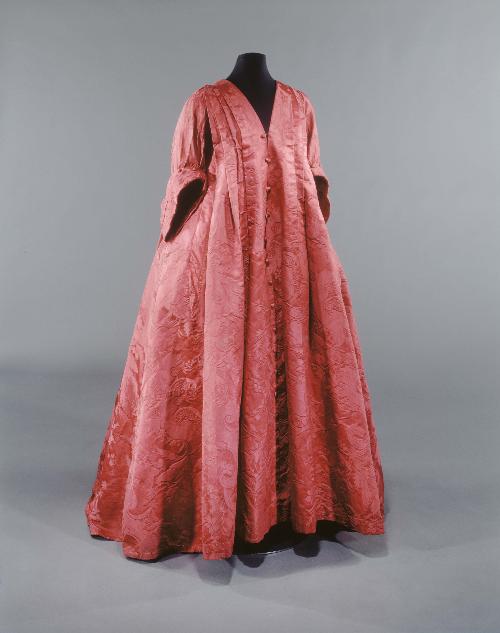
Robe Volante 1720-30, Musee Galliera
Let’s take a little pivot to purple-y pinks, although this portrait also shows a vivid salmon example, along with the older woman in pink verging on purple:

Kneller, Godfrey, 1646-1723; The Harvey Family, Tate
The same fashionable tint appears on this pretty pandora doll:

Doll, silk dress, 1961.250, Manchester Art Gallery
Here’s another example of that lilac pink:
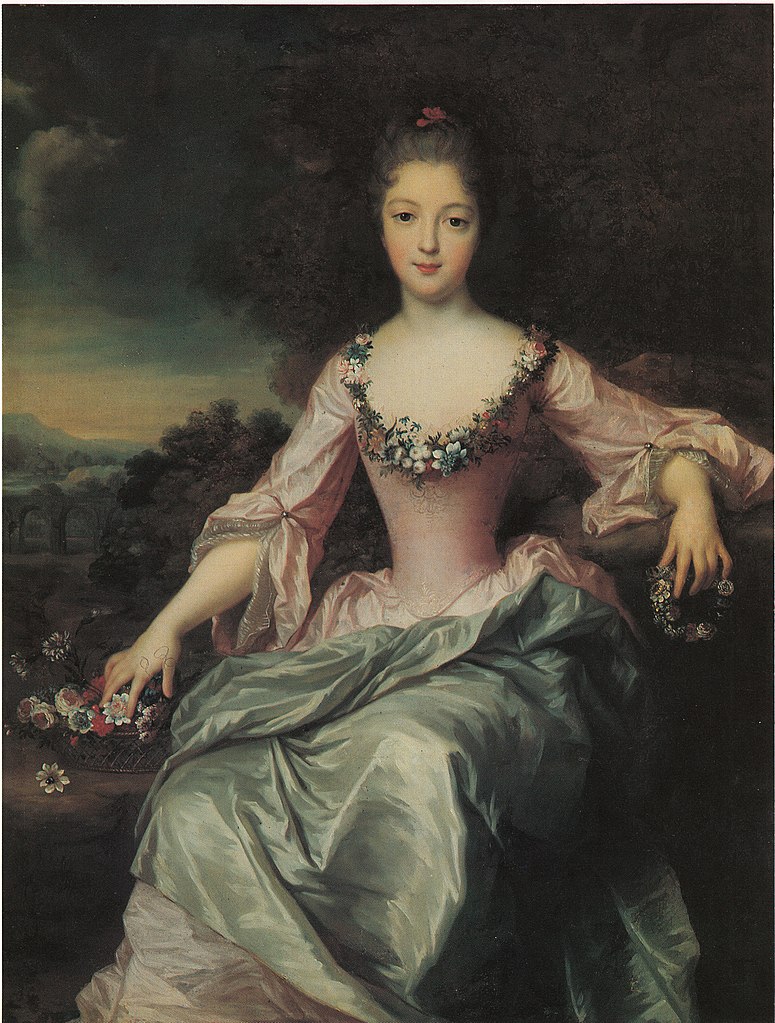
Gustaf Lundberg (1695–1786), After Jean-Baptiste Santerre (1651–1717), Portrait of Marie Anne de Bourbon, 1720
Clementina’s rather fanciful gown features a hint of that lilac pink:

Portrait of Clementina Sobiesky (1702-1735), Museo del Prado
This noblewoman sports a lilac pink gown, a carmine pink robe, and a dazzling array of matching pink jewels:
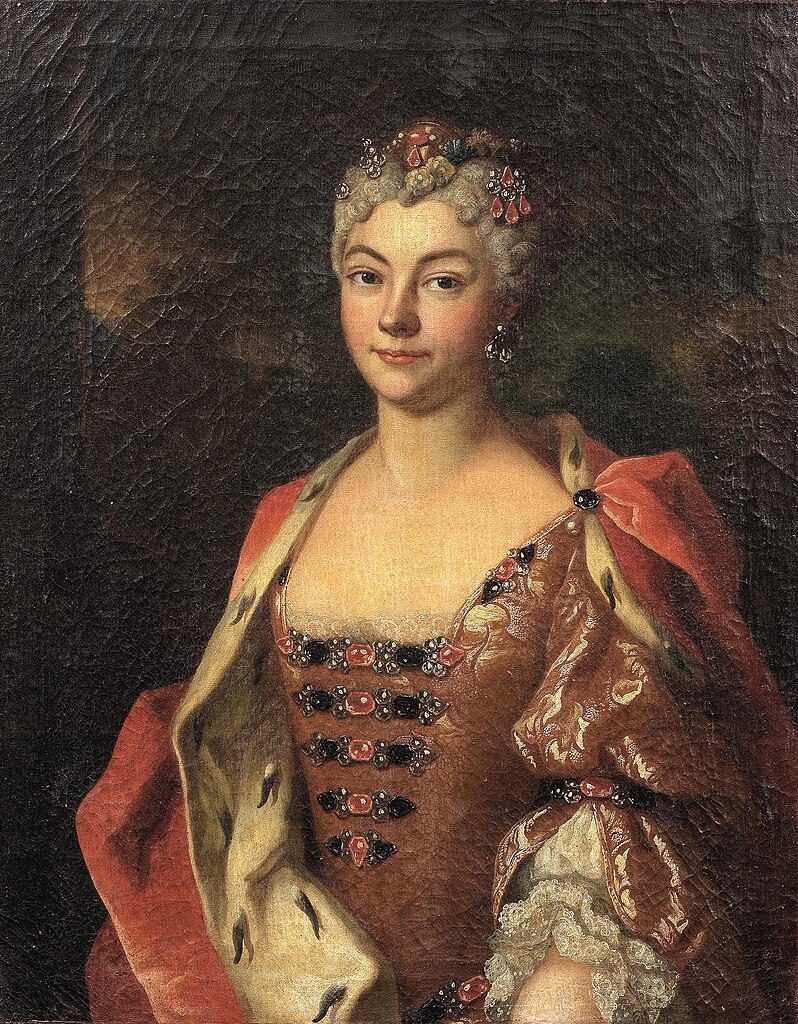
Henri Millot – Portrait of a noblewoman in a pink dress and an ermine-trimmed robe, ca. 1725
Softer pinks are seen in this sweet floral on the Infanta, and in the ribbons in her hair.
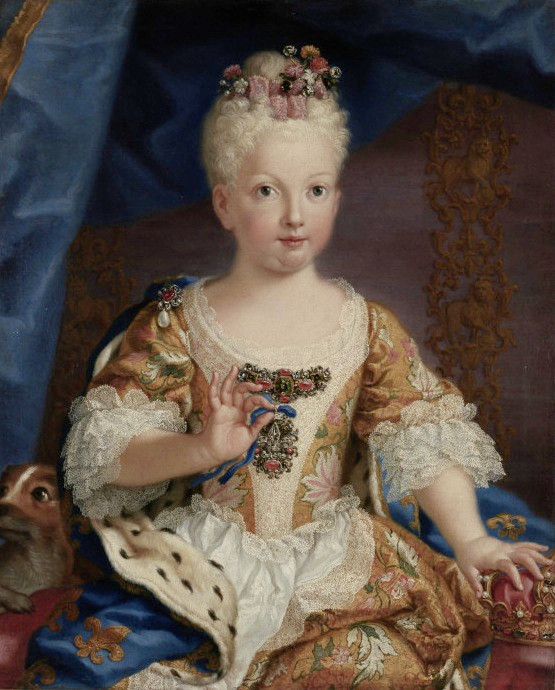
Portrait of the Infanta Maria Ana Victoria de Borbón, 1723, Walters Art Museum
Similarly coloured and shaped flowers appear on this mantua:

Mantua, ca. 1720; Snowshill Wade Collection, UKNT 1348701
And here’s another pretty little princess in a pretty soft pink frock:

Portrait of Mariana Victoria of Spain (1718-1781), fiancée of Louis XV of France, 1710s or 20s
I wasn’t quite sure where to fit them in, so here are three sweet early 18th century aprons with various shades of pink, the last with particularly fetching pocket slit decoration:
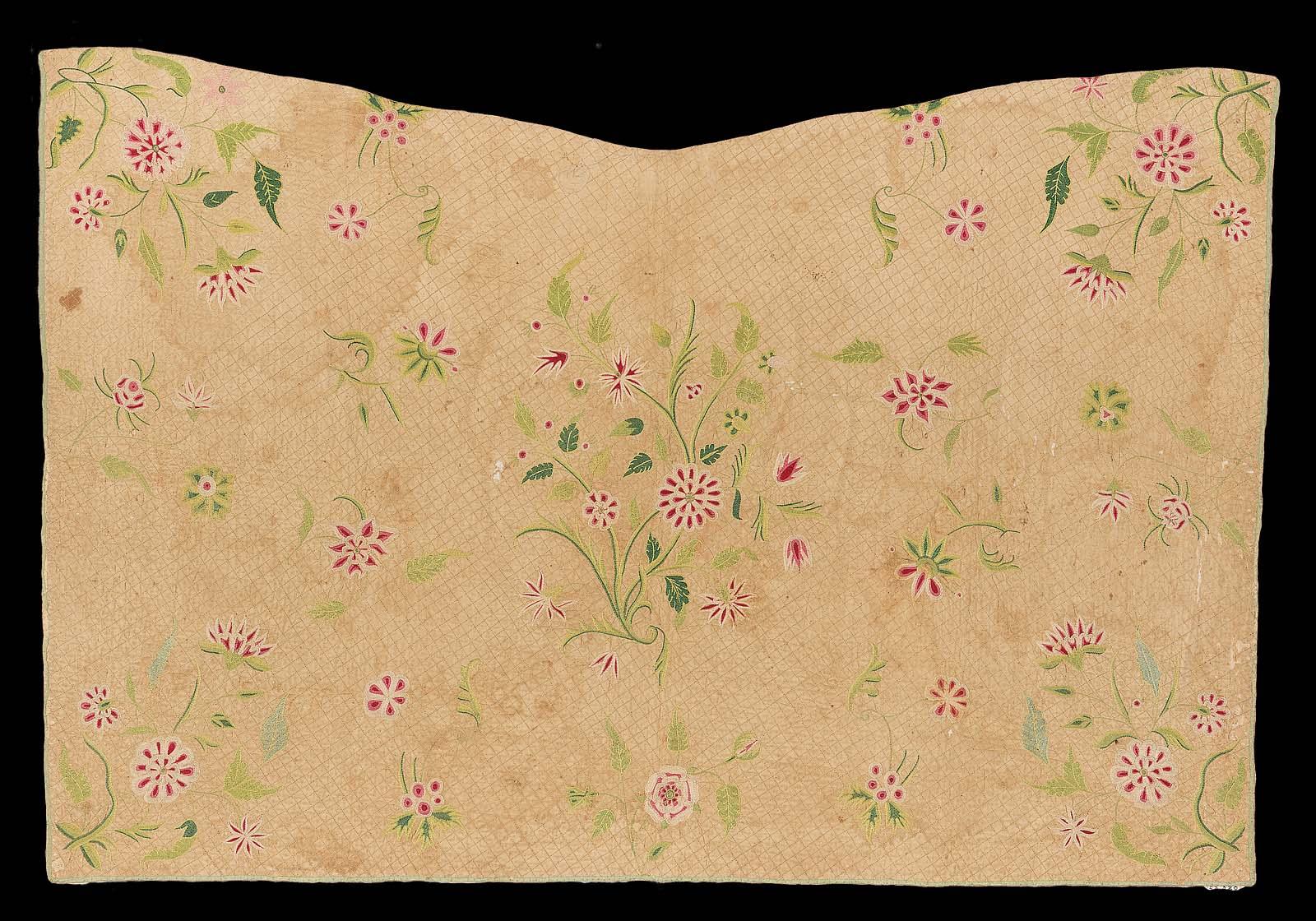
Quilted and embroidered apron English Early 18th century, Linen tabby quilted with silk chain stitch embroidery and silk tape binding MFA Boston, 53.520

Apron, English early 18th century, Silk with silk and metal thread embroidery MFA Boston, 34.214
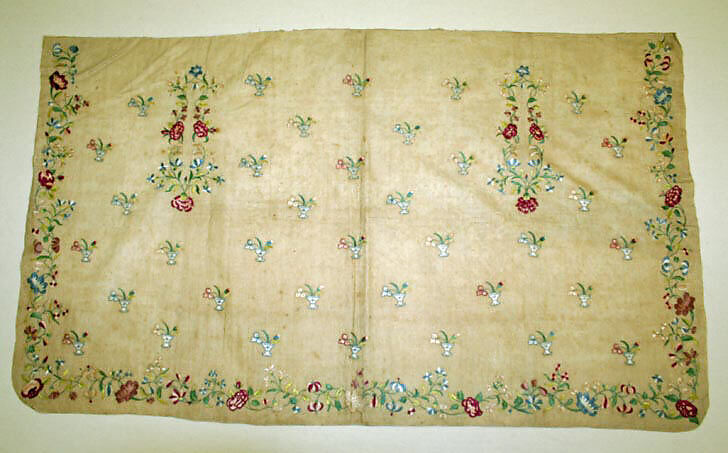
Apron, first quarter 18th century, British, silk, linen, Metropolitan Museum of Art, 36.128.1
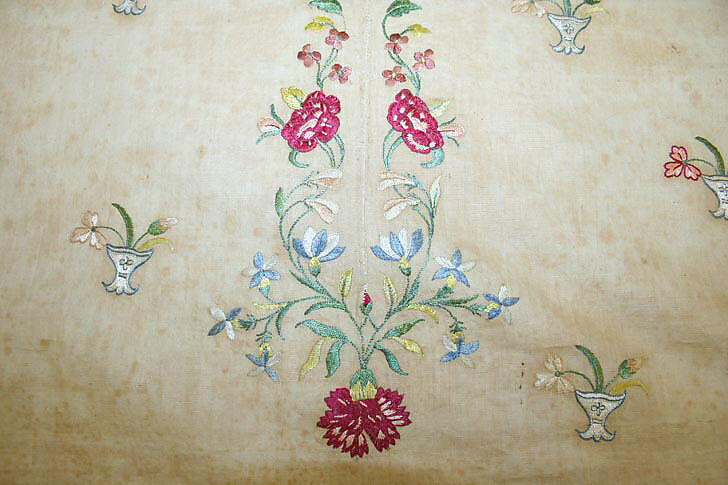
Apron, first quarter 18th century, British, silk, linen, Metropolitan Museum of Art, 36.128.1
Let’s finish off with a bang with this casaquin and petticoat features every shade shown above, and then some!
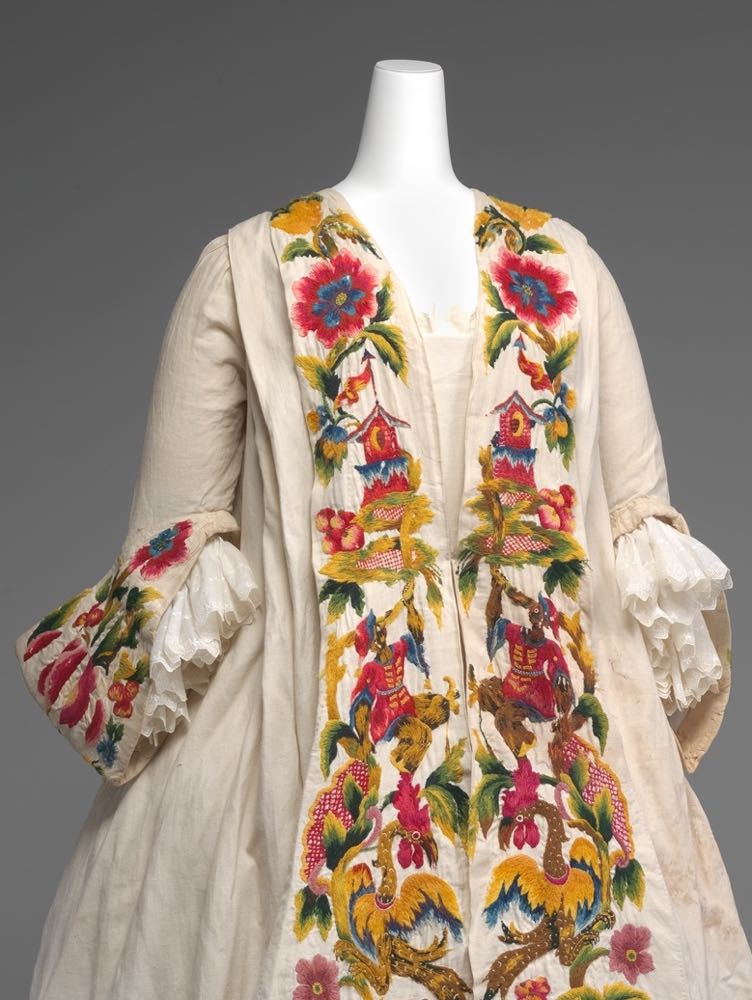
Dress (casaquin and petticoat), 1725—40, Italian, linen with wool embroidery, Metropolitan Museum of Art 1993.17a, b
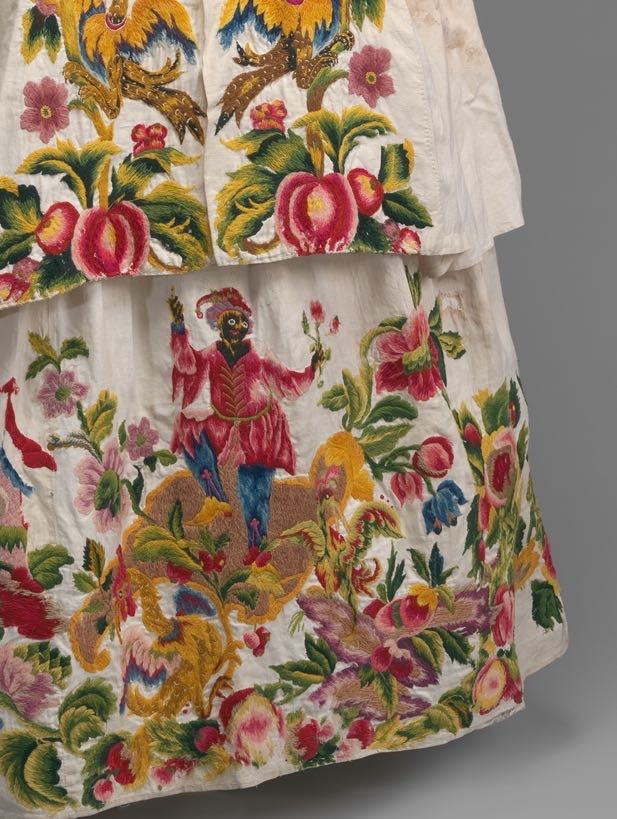
Dress, 1725—40, Italian, linen with wool embroidery, Metropolitan Museum of Art 1993.17a, b
That final casaquin is divine!!!!!
I love all the pinkness. What were they using as fabric dyes during this time to get these pinks?
I think they were primarily using carmine (out of Mexico) and madder (grown in Europe) for the pinks, with different mordants and over-dyes to achieve different shades.
The amount of stunning embroidery is just mind blowing! The Casaquin must have taken so much time to embellish.
Such a beautiful collection of pinks, although the eyes of Mary Jaqueline will haunt me in my nightmares.
I really love this series <3 Thank you for putting it together!
I think my favourite thing about this series is that it is, at the same time, a bit of an overview of fashion styles of the respective decades!