Latest Posts

Toi Whakaari New Zealand Drama School Costuming

#mytoistory Toi Whakaari the New Zealand Drama School

I’m delighted to (somewhat belatedly) announce that at the start of May I accepted the position of Senior Tutor, Costume Construction at Toi Whakaari: New Zealand Drama School.

Toi Whakaari is New Zealand’s oldest and largest performing arts school, and offers the only tertiary course focused on costume construction for stage and screen in New Zealand.  The two-year Diploma course covers everything from dyeing and corsetmaking to leatherwork and worbla.  It’s very small, with a maximum intake of only 8 students each year, and very competitive.


Teaching at Toi is the perfect job for me: it gives me the opportunity to teach both academic and hands-on craft skills, and to expand my own learning, both through historical research and technical experimentation.  I’m incredibly privileged to be able to contribute to the next generation of costumers, and to learn from all my immensely talented colleagues.

Teaching at Toi is also almost literally a dream come true.  When I first moved to New Zealand almost 13 years ago I looked at the career options in Wellington, and saw the course at Toi Whakaari and though “teaching there would be the dream job”.  I ended up using the art history and museum work parts of my degree and experience, and going into museums instead, but Toi Whakaari stayed on my radar.

I went to the Costume Showcase (the graduating costuming students theatrical presentation of their major works) most years.  And then, after my Fortnight in 1916, Kaarin Slevin, the Head of Costume, asked me to present on it at the school.  This led to contract work teaching costume history.  I loved my time at the school so much that when the previous Senior Tutor left to become head of the Royal NZ Ballet workroom I applied for her position – and now I’m part of the school.

It’s fantastic to be part of an organisation that combines creativity with rigour, and where, on any given day, you see students practicing Shakespeare in the corridors, making a shared salad for lunch in the plaza (by holding a clean tarp below a walkway and pouring the vegetables and dressing down on to it, and then tossing it, as you do), hand-sewing while reading in the library, or improvising costumes out of pieces scrounged from the lost and found bin.  Toi Whakaari shares its building (Te Whaea) with the New Zealand School of Dance, so you can also watch the ballet and contemporary dancers practicing.

Toi Whakaari is particularly amazing and unique because the school’s processes are based around Tikanga Māori (the Māori way of doing things), rather than ones founded in a European tradition.  Coming from an academic and professional background that has usually been rigidly hierarchical and heavily focused on Western ideas of success and accomplishment, being somewhere that provides space for the entire organisation to speak and listen to each other, that allows for a multitude of ways to learn, and succeed, and that works for success built on collaboration and support, rather than competition, is a revelation.

On a lighter note, Toi Whakaari is also fabulous because Te Whaea’s bilingual pun game is on point (you could almost say it was on whaea…(hint: ‘wh’ is usually pronounced like an F in te reo Māori).  The school’s advertising slogan is #mytoistory (toi means art in Te Reo Maori, whakaari is to perform).  The New Zealand School of Dance runs a programme called TÅ« Move (tÅ«: stand up).  While sometimes (jokingly) used by the students, describing the male half of the student body as Toi Bois is not, however, officially endorsed.

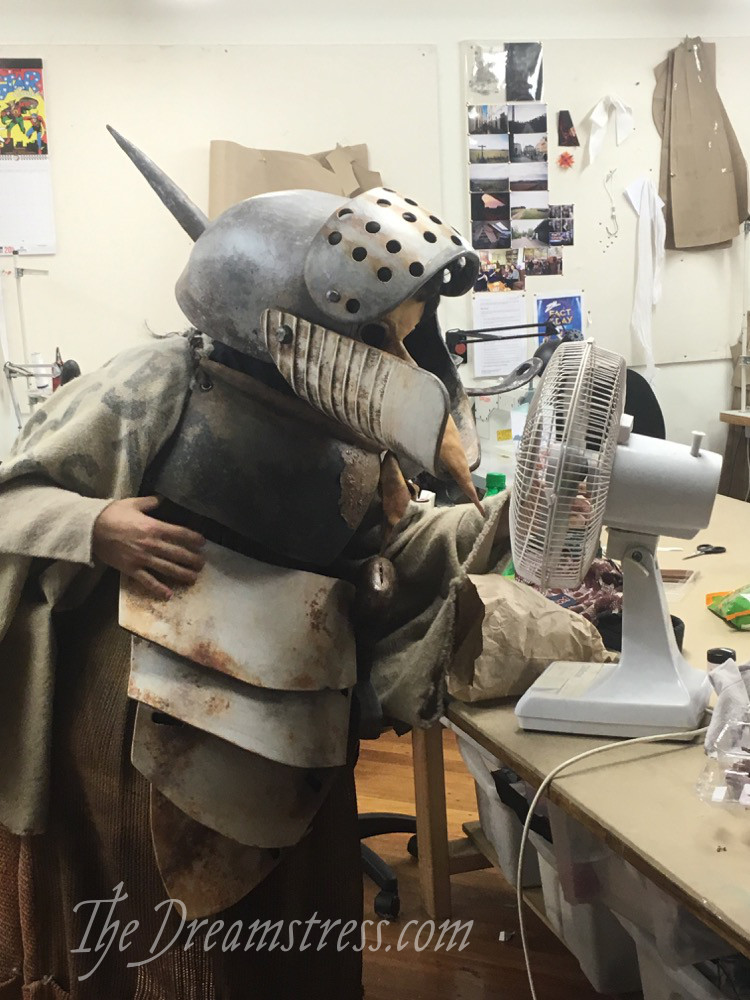
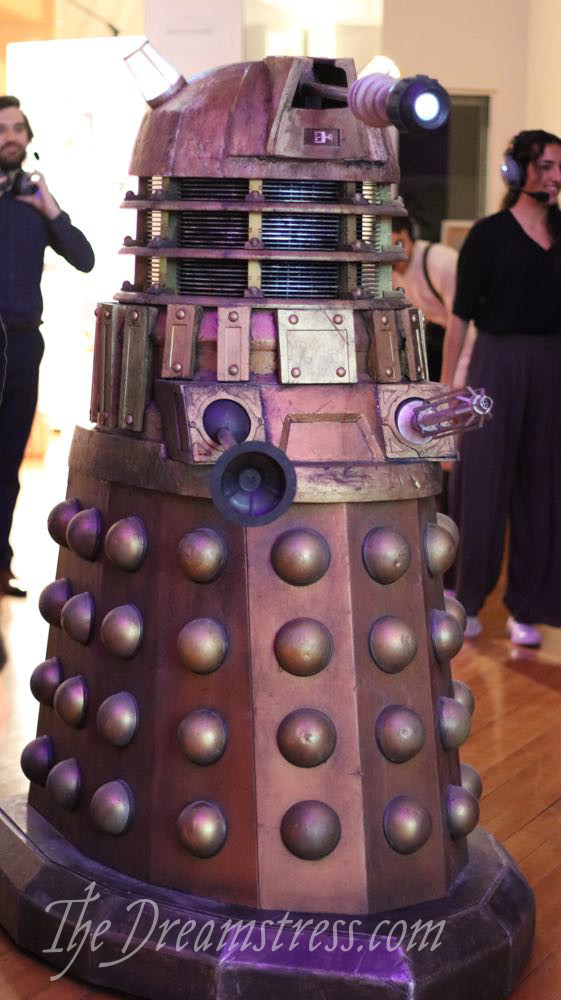
A final reason why Toi Whakaari is the best: it’s the kind of school where the Set & Props course makes a full-sized, moveable, operational Dalek.  Yussssss….
Toi Whakaari New Zealand Drama School Costuming Obviously I’m very excited about working for Toi Whakaari, and think its a fantastic school, and would be delighted to talk to anyone who was interested, or to direct you on to the right person if Props or Design or Acting is more your thing.

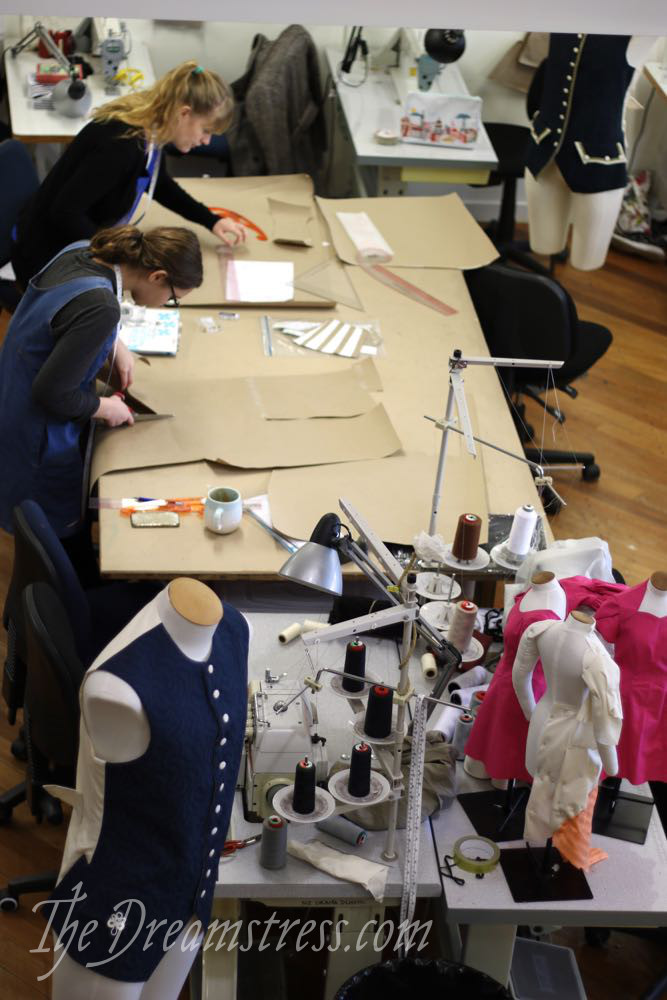
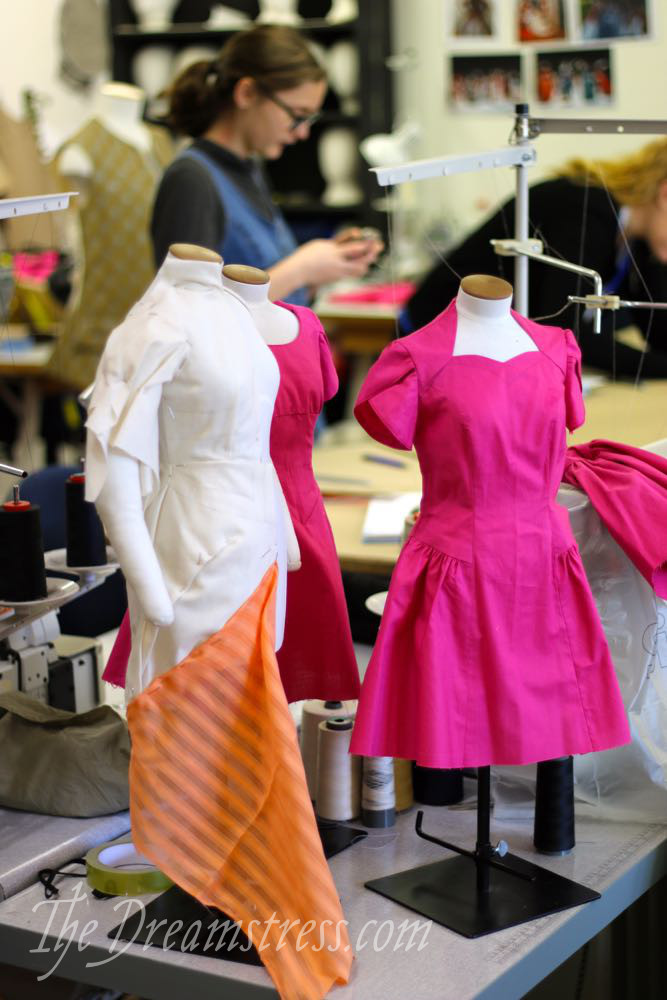
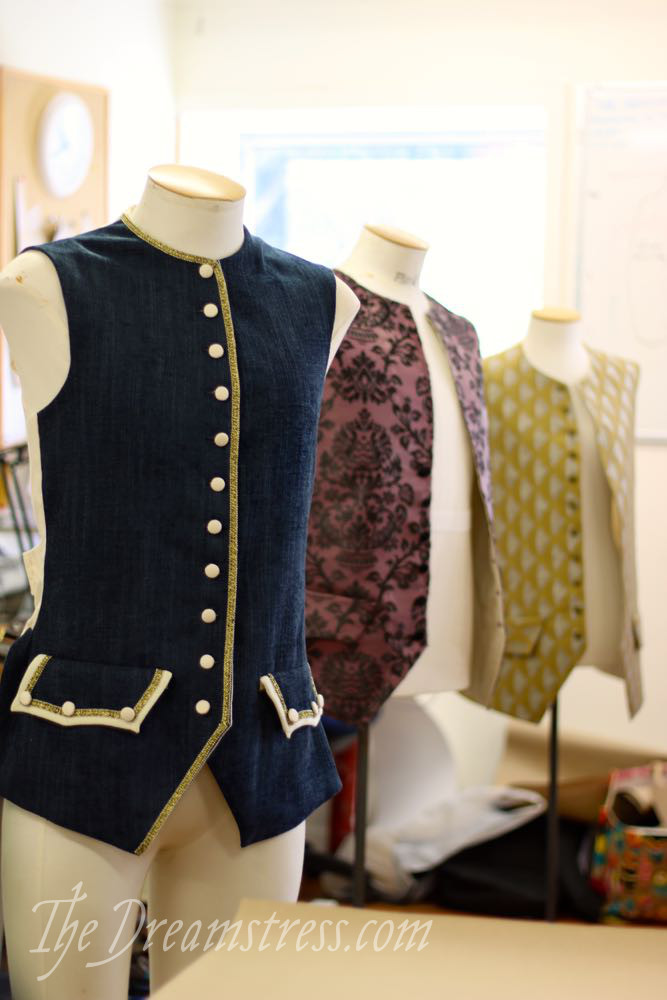
Here are a few photos of the workroom and student work:
Toi Whakaari New Zealand Drama School Costuming

The bright pink half-scale dresses were the students trials for their patternmaking course.  I designed the dresses, and taught patternmaking, and they turned my designs into reality!
Toi Whakaari New Zealand Drama School Costuming

Toi Whakaari New Zealand Drama School Costuming

Toi Whakaari New Zealand Drama School Costuming

Toi Whakaari New Zealand Drama School Costuming

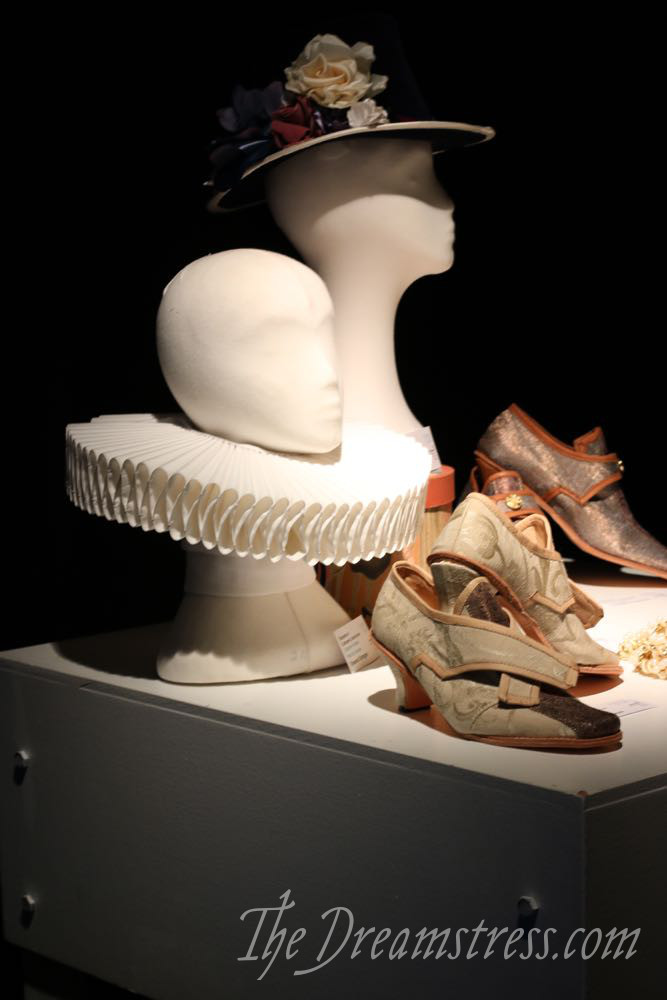
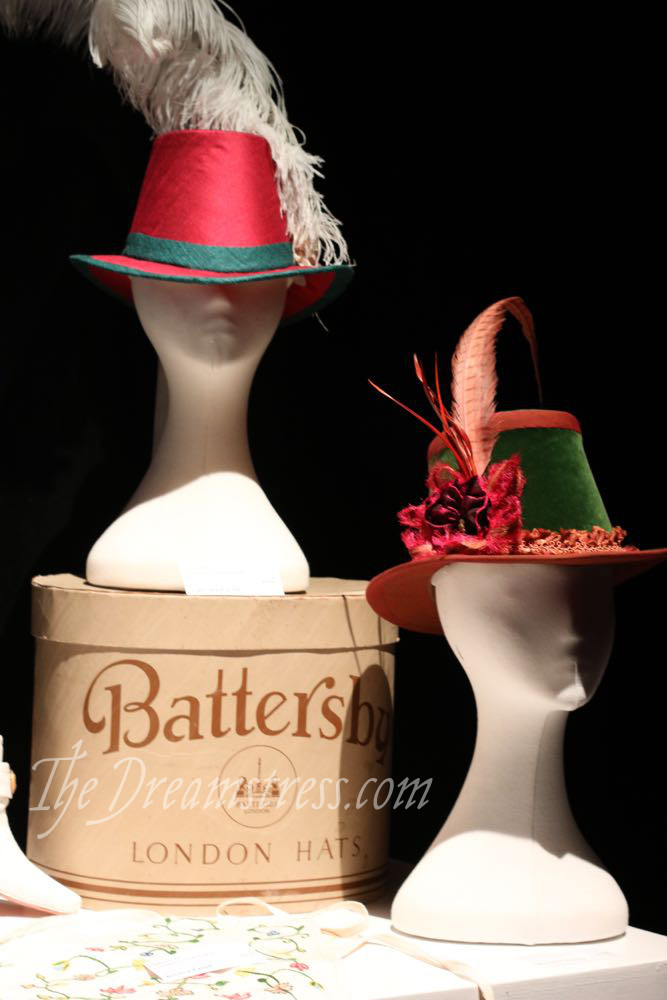
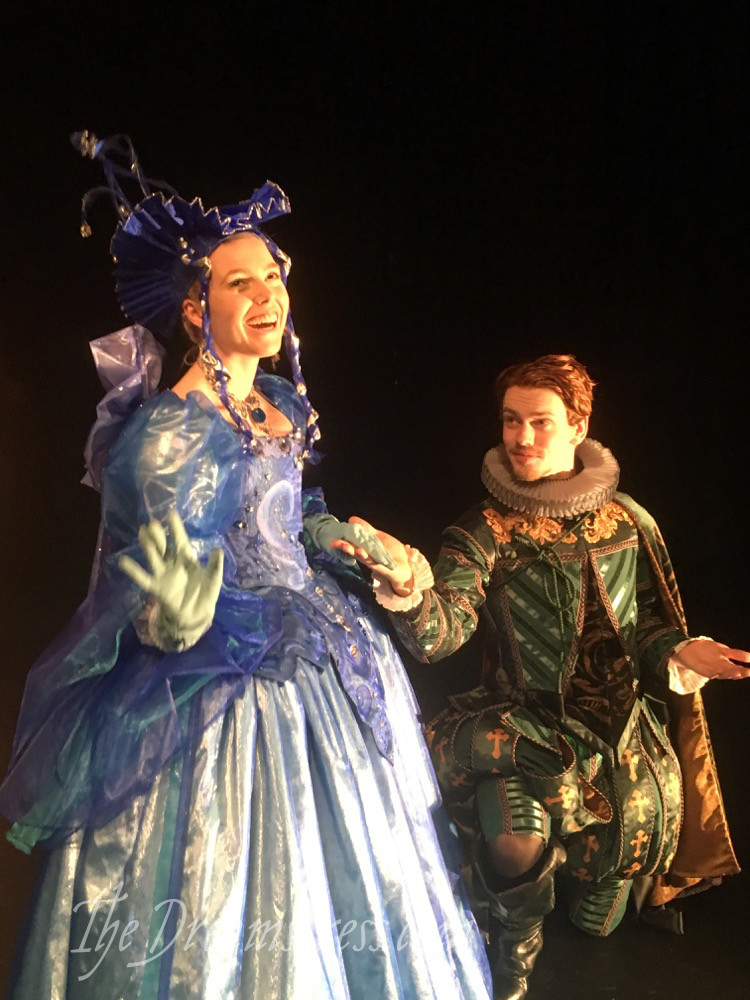
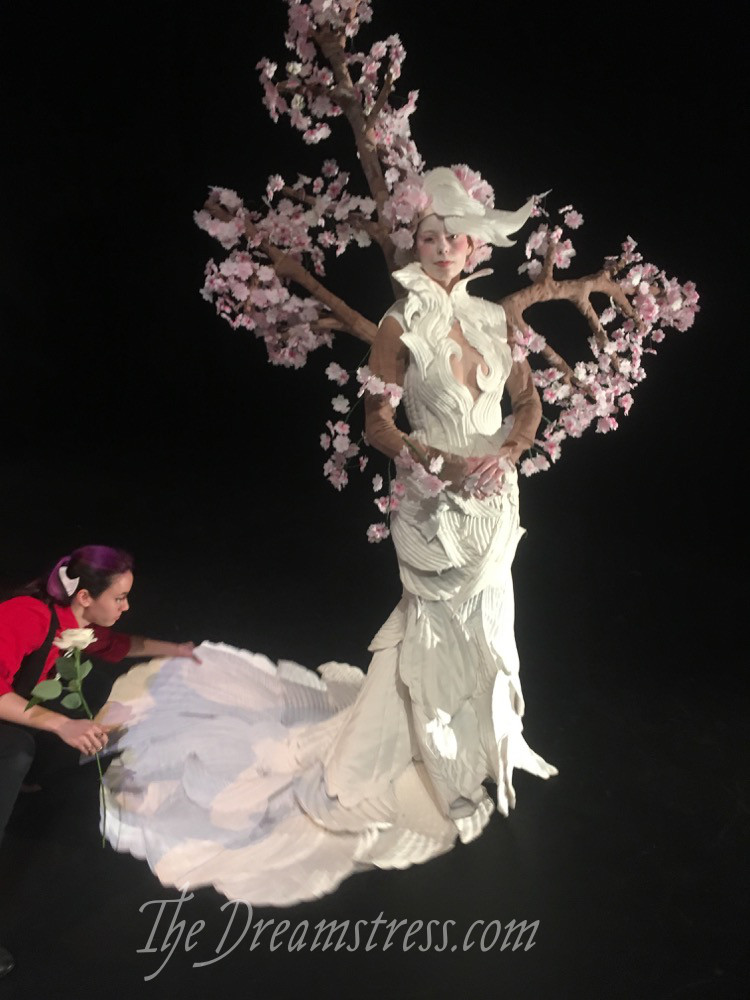
And some behind the scene images from Costume Showcase 2018:
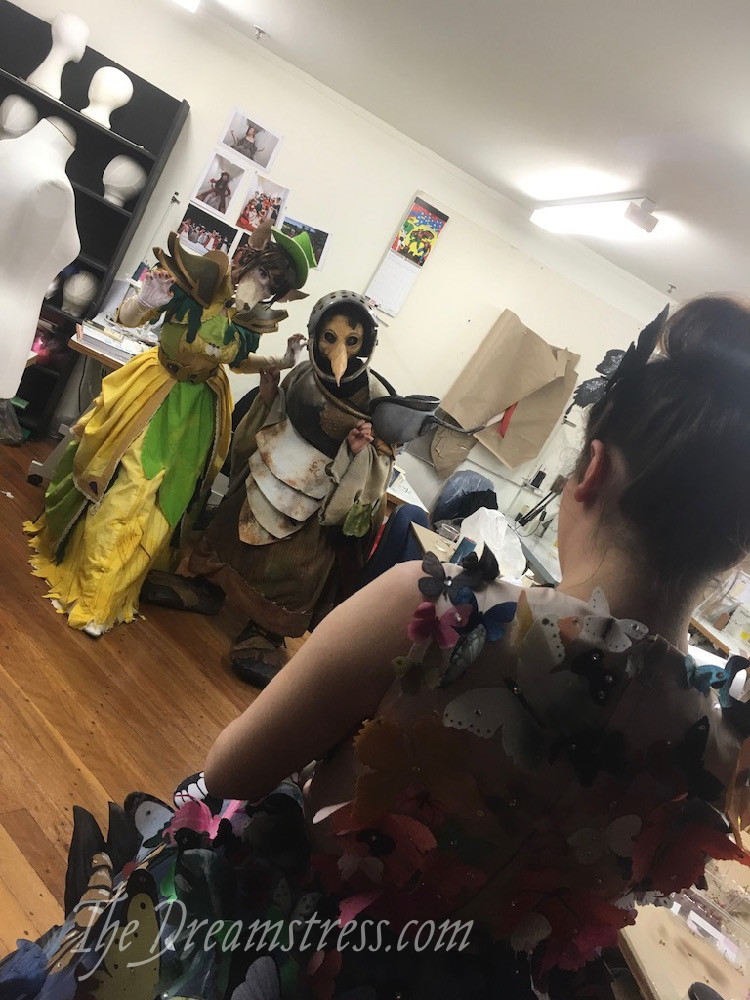
Toi Whakaari Costume Showcase 2018, thedreamstress.com

Toi Whakaari Costume Showcase 2018, thedreamstress.com

Toi Whakaari Costume Showcase 2018, thedreamstress.com

Toi Whakaari Costume Showcase 2018, thedreamstress.com

Toi Whakaari Costume Showcase 2018, thedreamstress.com

Joining Toi does explain why my blogging and Scroop patternmaking have been a bit sparse since May: I’ve been focused on learning the ropes and class planning.  Stepping in to a whole years worth of new classes is quite a bit of work.

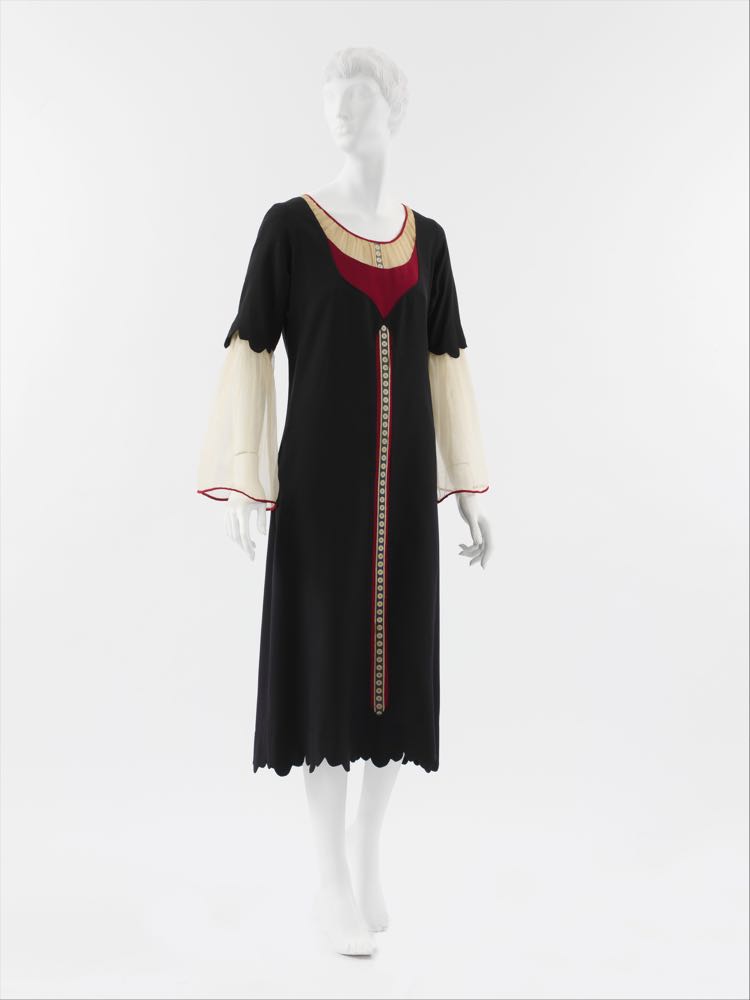
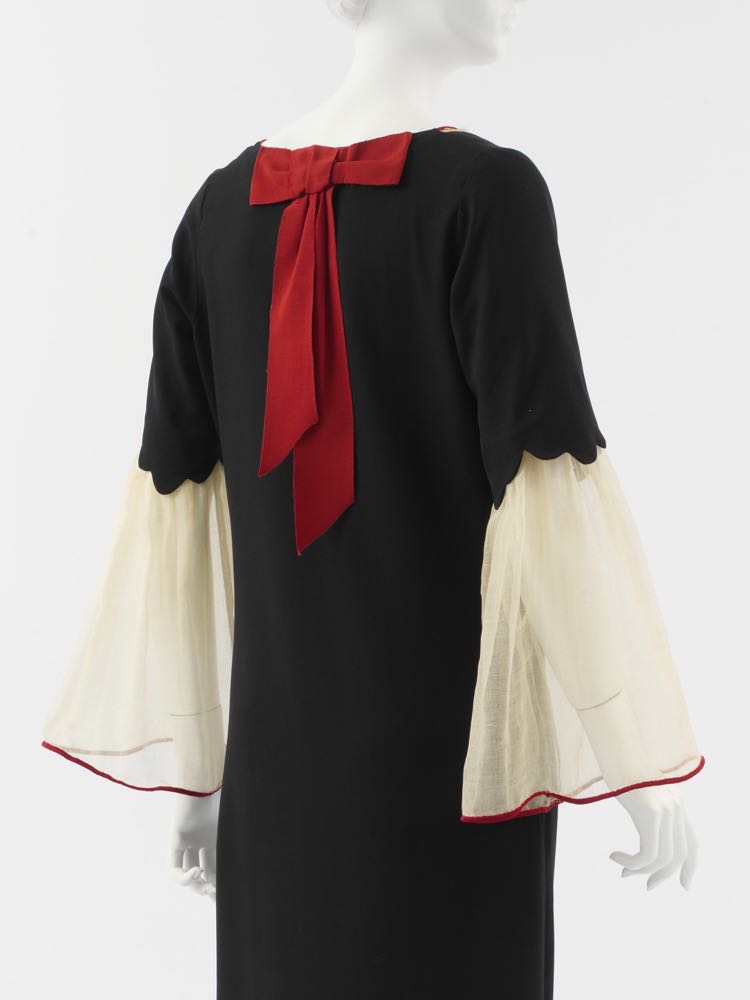
Dress Paul Poiret (French, Paris 1879—1944 Paris) Date- 1925, wool, silk, Metropolitan Museum of Art, C.I.50.117

Rate the Dress: Poiret pretends to use buttons

Last week:  a brown & blue bustle-era dress

So last week’s dress got a bit of attention and comments for something I hadn’t noticed or anticipated.  I think I’ve looked at so many 1880s dresses with centre front gathers, swags, and ruching that I hadn’t realised that at times, as with the blue & brown dress, it could be a bit…anatomical…

But not everyone saw that unfortunate potential: lots of you actually saw a crisply tailored dress in a playful take on two elegantly subdued colours.

And then some of you thought it was just boring

The Total: 7.8 out of 10

Not bad, not great.

This week:

This week’s pick is a 1920s frock by Poiret, which balances the new move towards streamlined and simple with his trademark eye for details and sense of humour and whimsy.

The silhouette is a simple mid-1920s sheath, but it is enlivened with elaborately scalloped hems and upper sleeves:

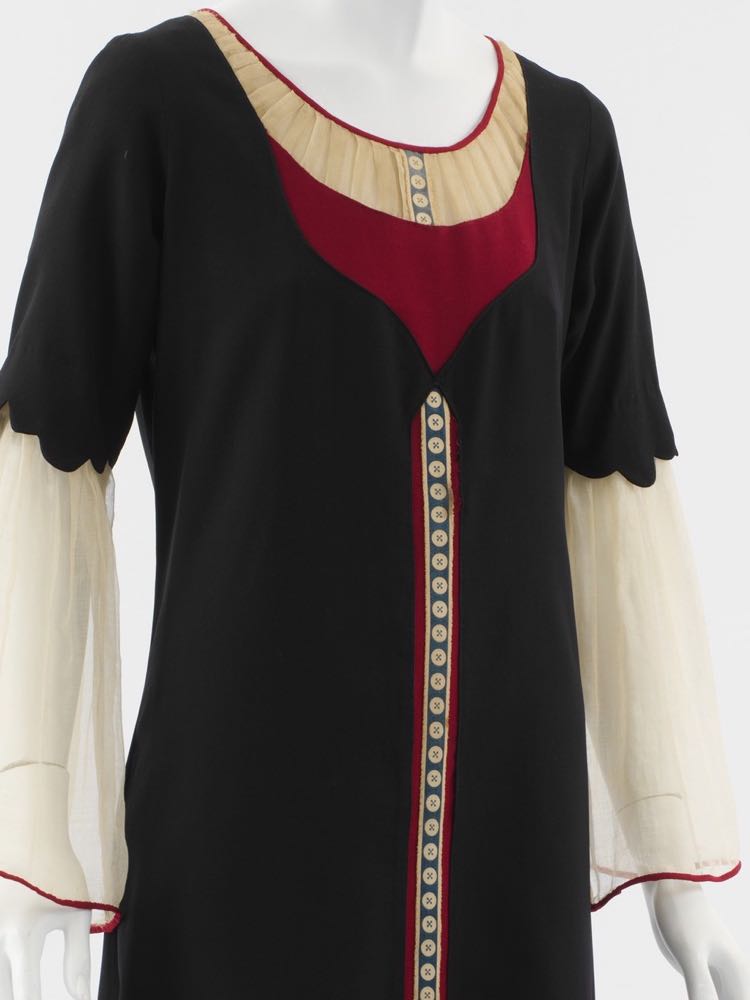
The heavier black of the dress is lightened with frothy lower sleeves and a matching faux chemise neckline:

A perky red bow enlivens the back neck:

And the whole dress has a trompe l’oeil layered effect, with a ribbon printed to look like buttons winding in and out of the layers, teasing at the idea of an entry point, and confusing the eye as to which layer sits above which other.

What do you think?  Has Poiret successfully blended sophistication and humour?

Rate the Dress on a Scale of 1 to 10

A reminder about rating — feel free to be critical if you don’t like a thing, but make sure that your comments aren’t actually insulting to those who do like a garment.  Our different tastes are what make Rate the Dress so interesting.  It’s no fun when a comment implies that anyone who doesn’t agree with it, or who would wear a garment, is totally lacking in taste.

(as usual, nothing more complicated than a .5.  I also hugely appreciate it if you only do one rating, and set it on a line at the very end of your comment, so I can find it!  Thanks in advance!)

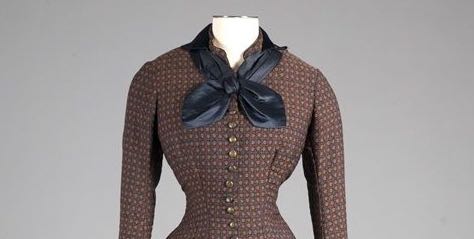
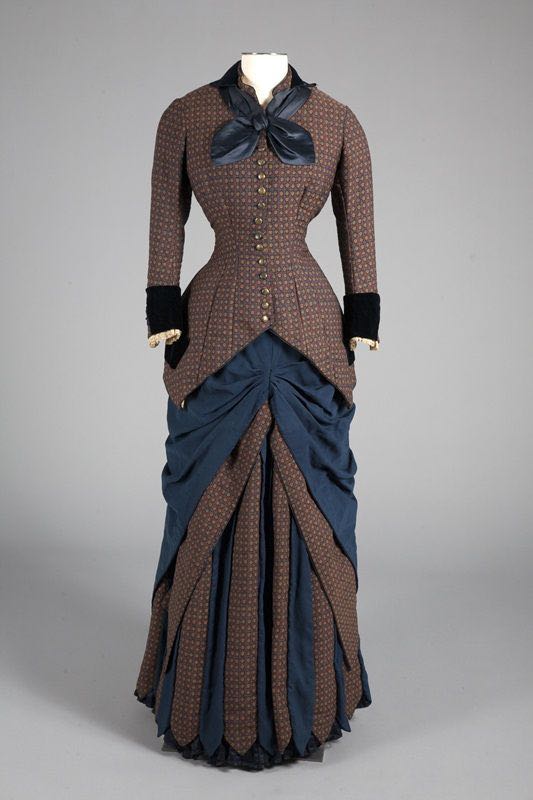
Day Dress, Augustine Martin, Wool, Silk, Metal, ca 1880, France, Drexel Museum

Rate the Dress: Blue & Brown Bustle Era

It’s always so interesting to see why people do or don’t like a dress: because it appeals to them intellectually, or on a purely aesthetic level.  Because it would look good on you, or wouldn’t.  Because you can imagine it on you, or because you can imagine it on exactly the right person who is very different to you.  Because you like the era, or don’t.  Because it reminds you of a dress you owned and loved, or something you got made to wear, and hate.

So many reasons…

Last week:  a 1910s dress in peach pink and cinnamon silk

Last week’s dress rating was really one that lived and died on people’s associations.  It got some really high scores, and some really, really low scores.  And a lot of middling scores, which rather perfectly match the final total of…

The Total: 7.3 out of 10

And the score droops and deflates like the limp drapes of the dress itself…

This week: a brown & blue bustle-era dress

I have a fascination with historical dresses made from two very distinct fabrics.  In some eras they don’t exist at all, in others they are more common.  Few examples of any era are as clearly and crisply defined as this particolour ca 1880 dress, which combines brown and blue across the skirt.

Day Dress, Augustine Martin, Wool, Silk, Metal, ca 1880, France, Drexel Museum

(I’ve called it bustle era, but without a side view it could be more natural form, without much obvious back definition).

What do you think?  Is this dress going to be an alliteration dream: a brown and blue bustle era beauty?  Or is bizarre a more appropriate B?

Rate the Dress on a Scale of 1 to 10

A reminder about rating — feel free to be critical if you don’t like a thing, but make sure that your comments aren’t actually insulting to those who do like a garment.  Our different tastes are what make Rate the Dress so interesting.  It’s no fun when a comment implies that anyone who doesn’t agree with it, or who would wear a garment, is totally lacking in taste.

(as usual, nothing more complicated than a .5.  I also hugely appreciate it if you only do one rating, and set it on a line at the very end of your comment, so I can find it!  Thanks in advance!)

Update:

I’ve finally found time to tally the score for the late Regency evening dress with pomegranates and oak.  You can find the rating on the blue francaise post.