Latest Posts

Frou Frou Francaise Sleeve thedreamstress.com

The Frou Frou Francaise: Sleeves & Sleeve Ruffles (& Felicity)

Some construction details on my Frou Frou Francaise sleeves and sleeve ruffles, for those who are interested.  And some photos of Felicity, for those who are interested 😉

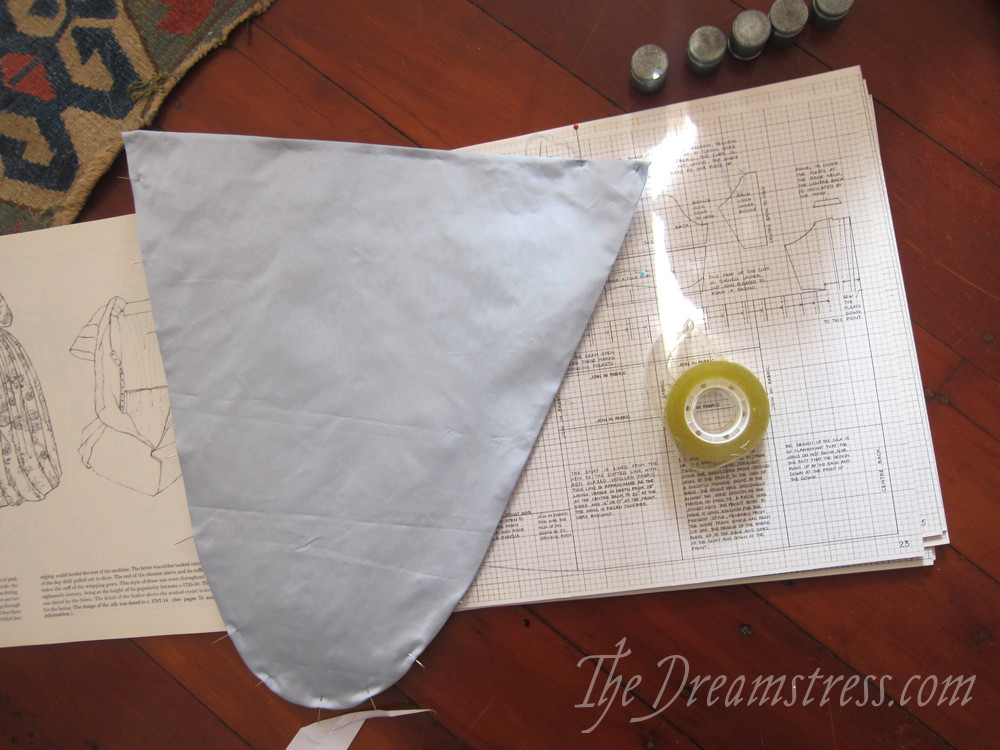
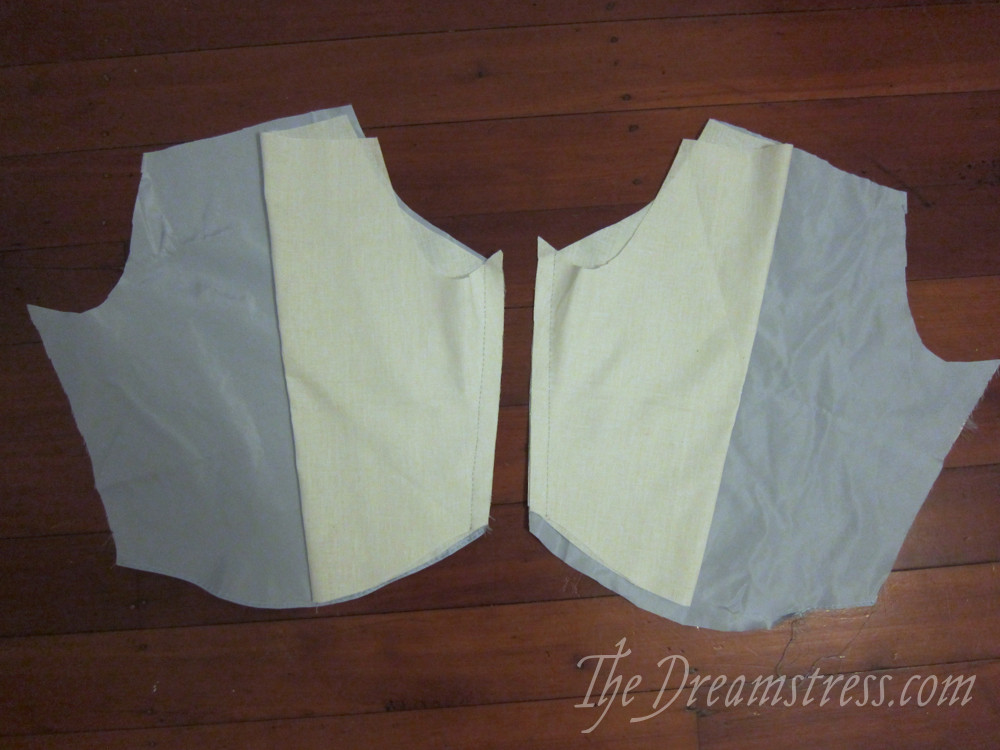
I based my sleeve pattern on the from Janet Arnold’s Patterns of Fashion
Frou Frou Francaise Sleeve thedreamstress.com


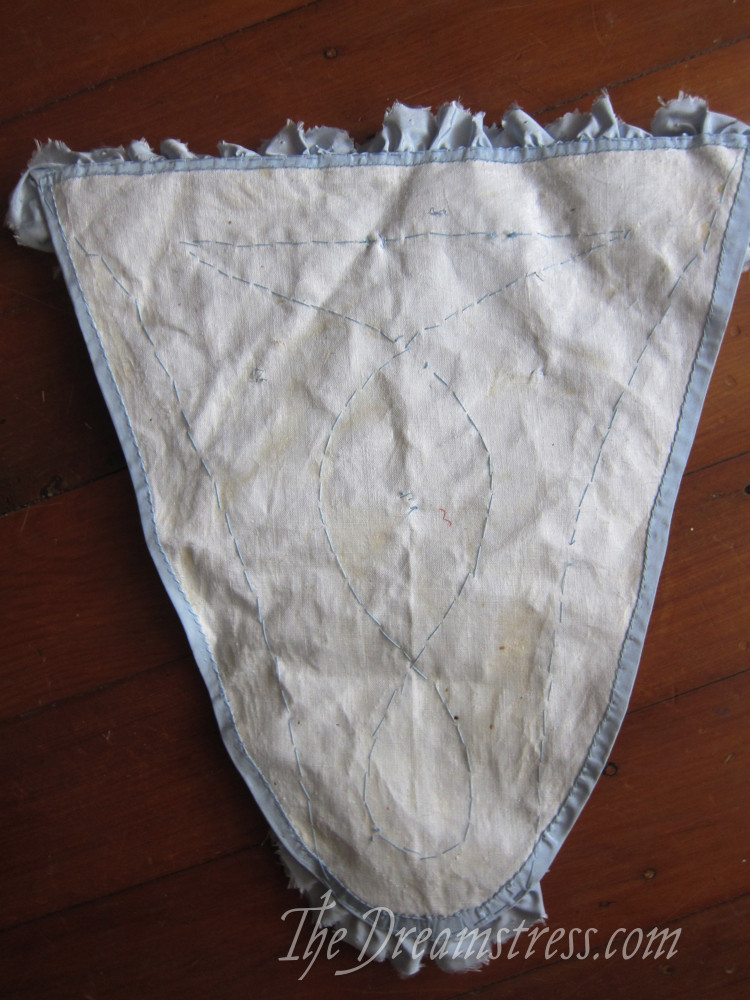
The construction is a basic sew-three-layers-together-and-then-use-the-outer-fabric-to-hide-all-the-seam-allowances construction.  I don’t know if there is a less-wordy 18th c name for it!
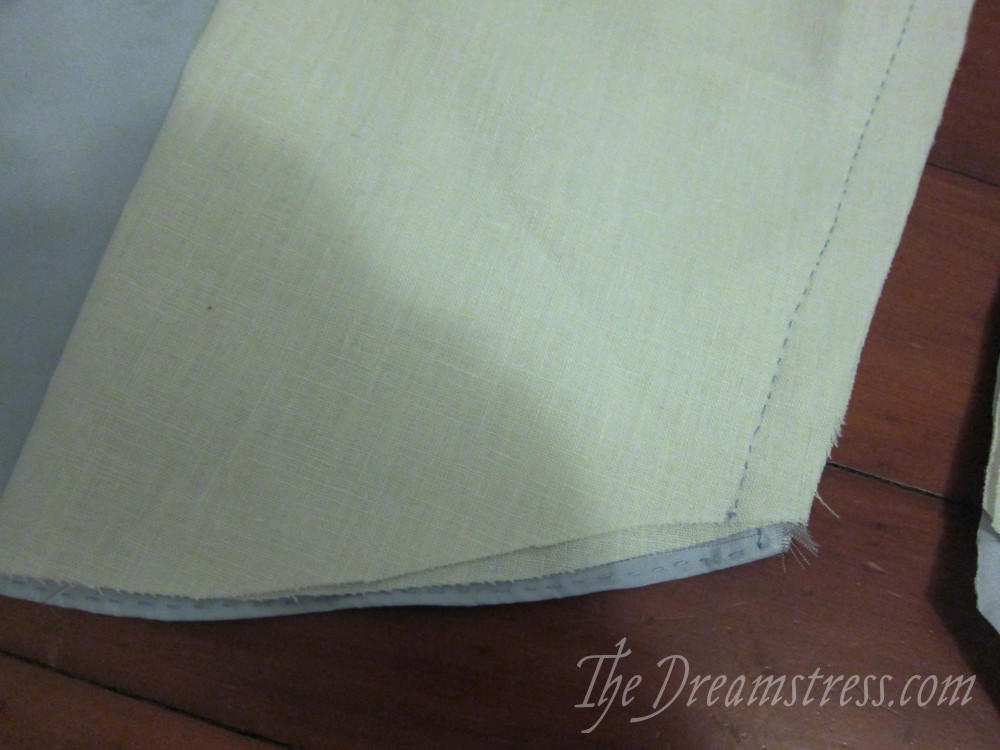
Frou Frou Francaise Sleeve thedreamstress.com

The fun part of sleeves, is, of course, sleeve ruffles!

I based the punch pattern on my sleeve ruffles on this sacque in the V&A.
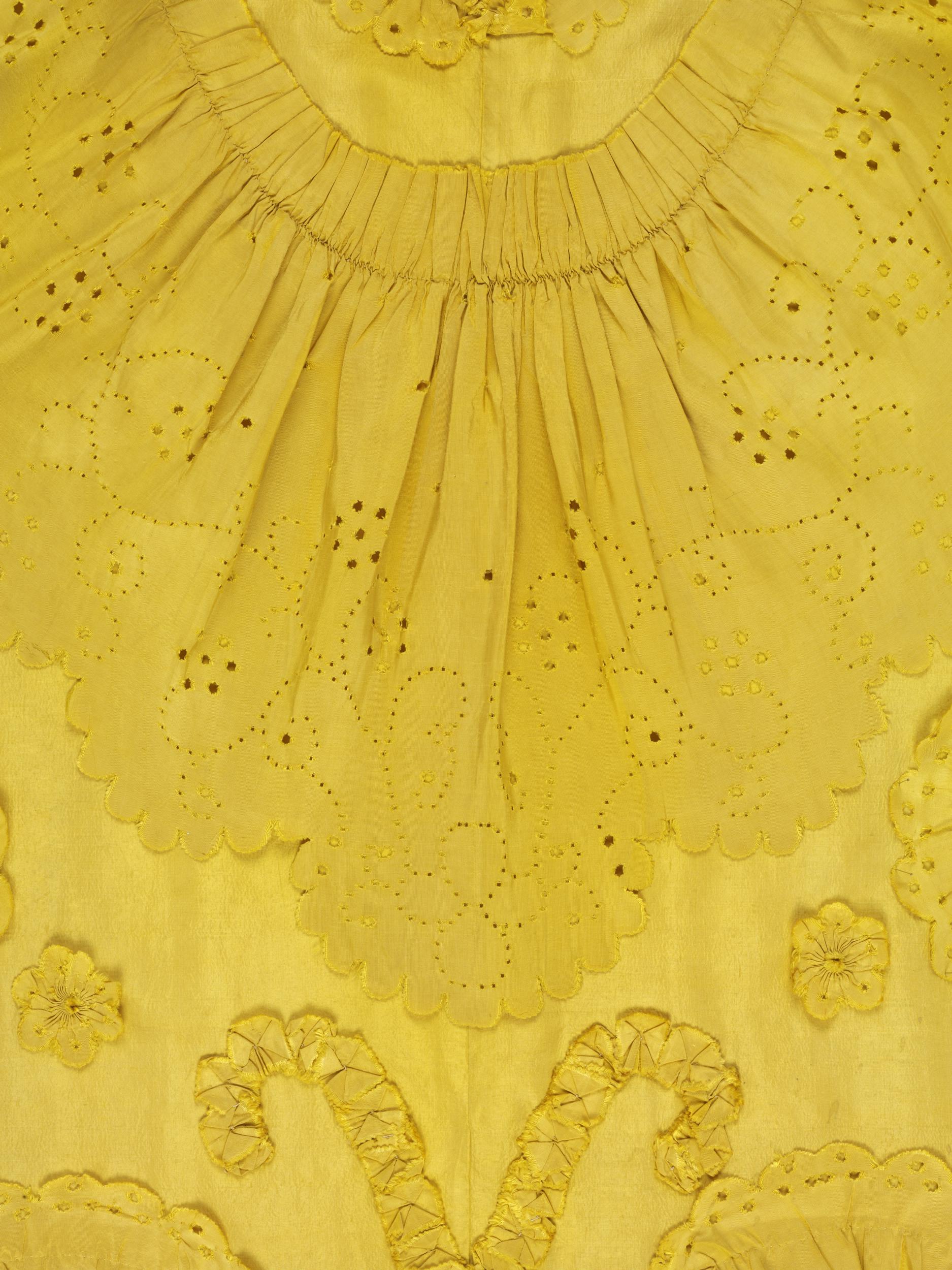
There is a close-up image of the sleeve details in the 18th century Historical Fashion in Detail book (page 176 if you want to see it), but this image of the petticoat ruffle should give you a good idea of what the punch detailing looks like.

To create my pattern I used the sleeve ruffle patterns from the American Duchess book (in retrospect I really wish I’d used the ruffle that corresponds with the Janet Arnold sleeve, but oh well) , and sketched out a punch design.
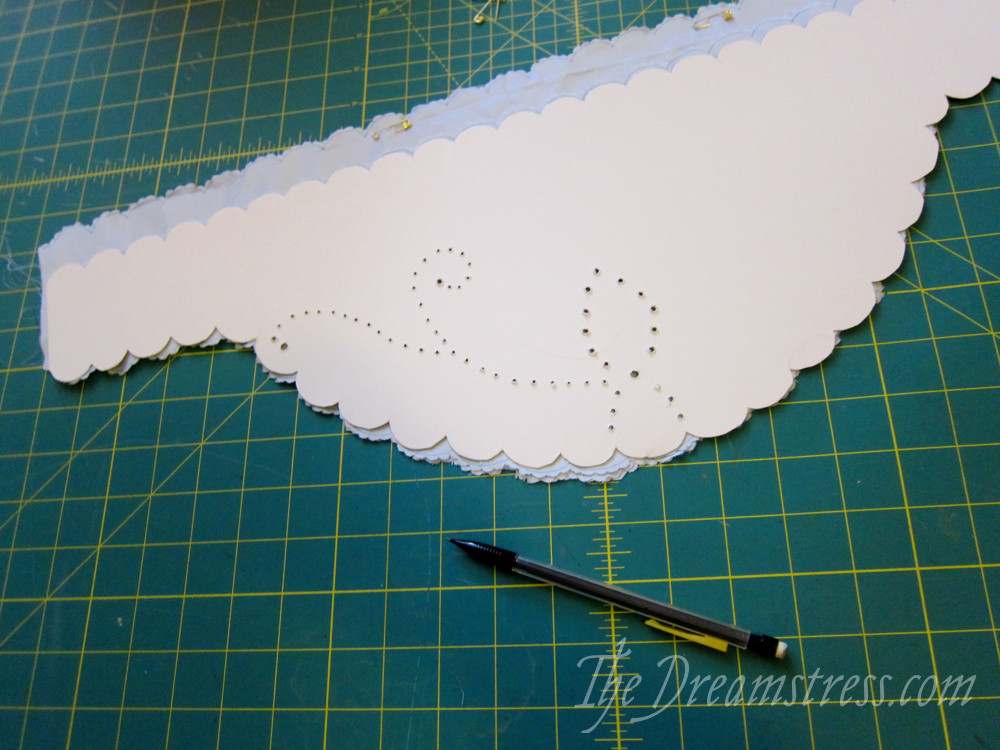
Frou Frou Francaise Sleeve thedreamstress.com

I poked holes in it, and used a pencil to transfer them to my sleeve ruffles, flipping the pattern over to create a symmetrical design.

I then pinned all four of my sleeve ruffles together, so I could punch all four of them at once.
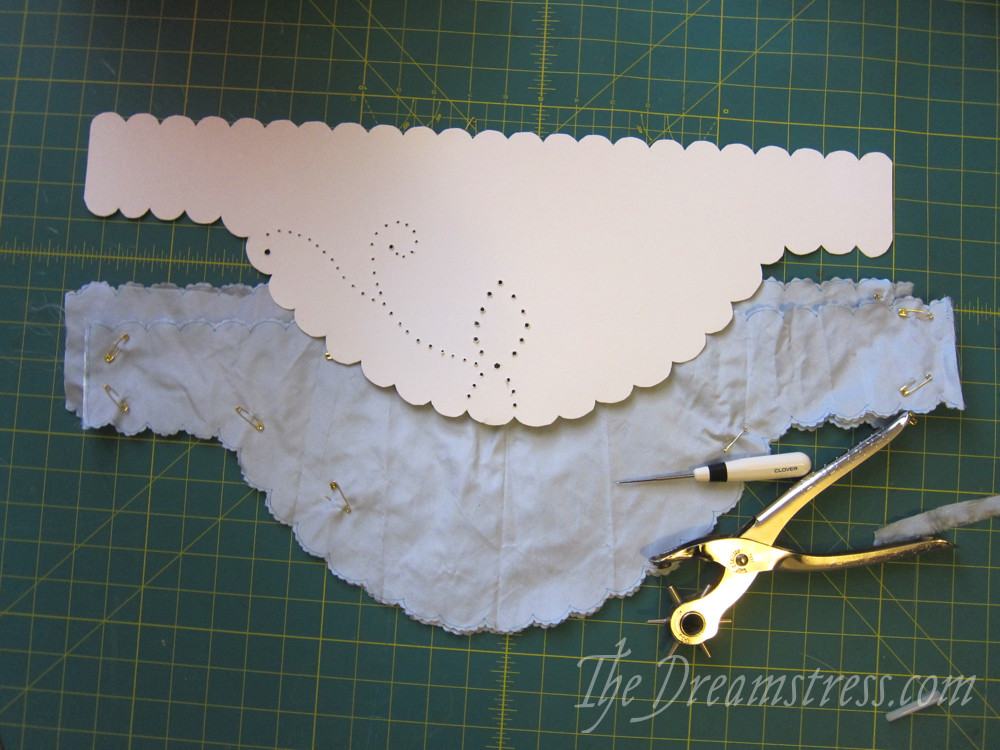
Frou Frou Francaise Sleeve thedreamstress.com

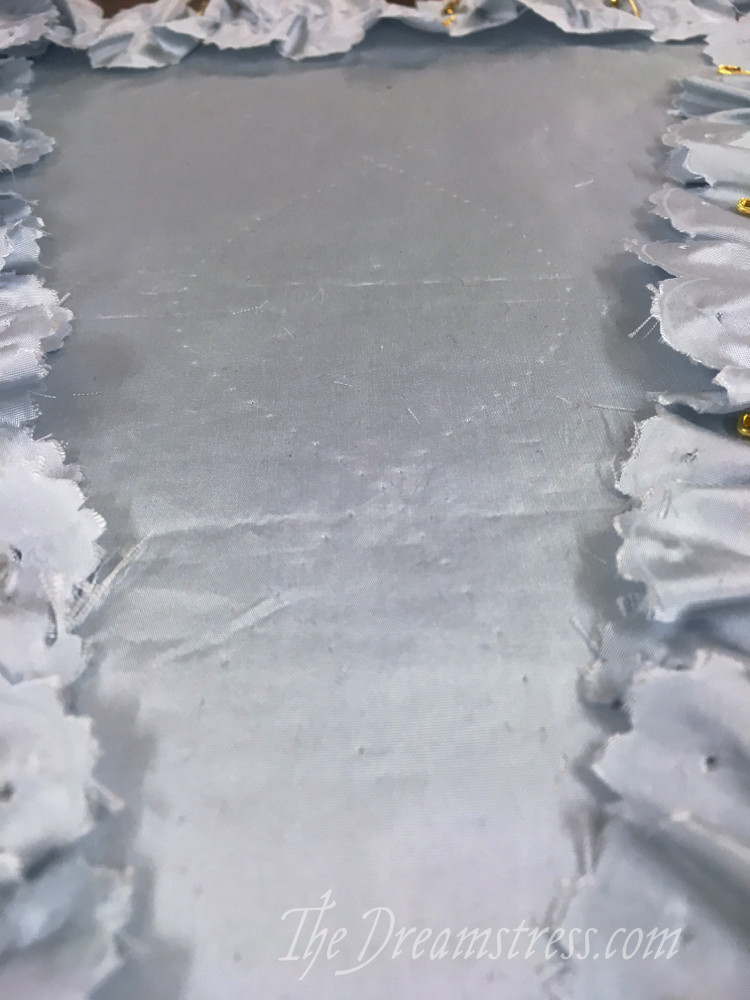
Because I wanted very small punch holes, I tried simply poking them with a large needle, but they closed when I pulled and manipulated the fabric.
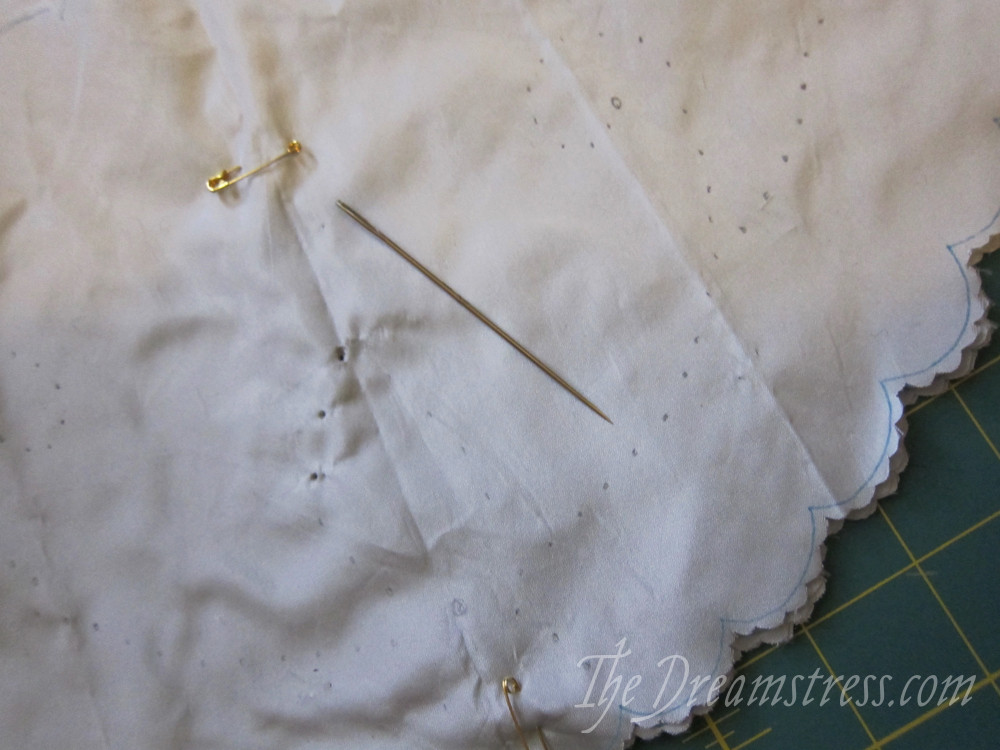
Frou Frou Francaise Sleeve thedreamstress.com


So I turned to my awesome leather punch, and used the smallest setting of that for my tiniest holes, and a larger setting for contrast holes.
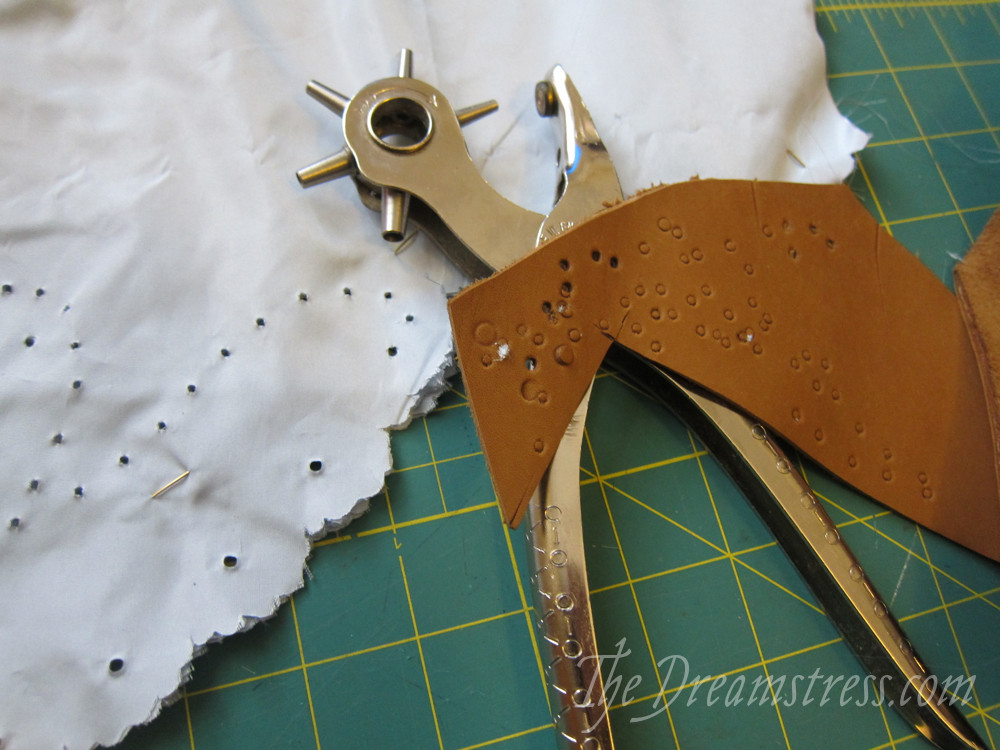
Frou Frou Francaise Sleeve thedreamstress.com

The leather punch needs something with squish to punch into in order to get through the crisp taffeta, so I used some scrap leather for that.
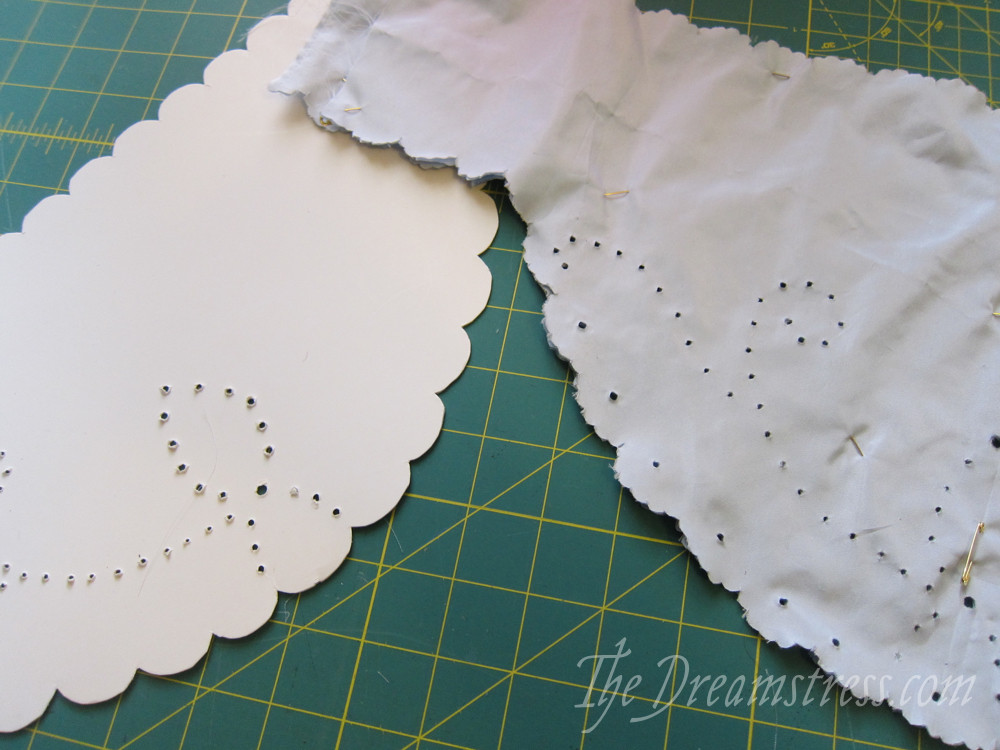
Frou Frou Francaise Sleeve thedreamstress.com

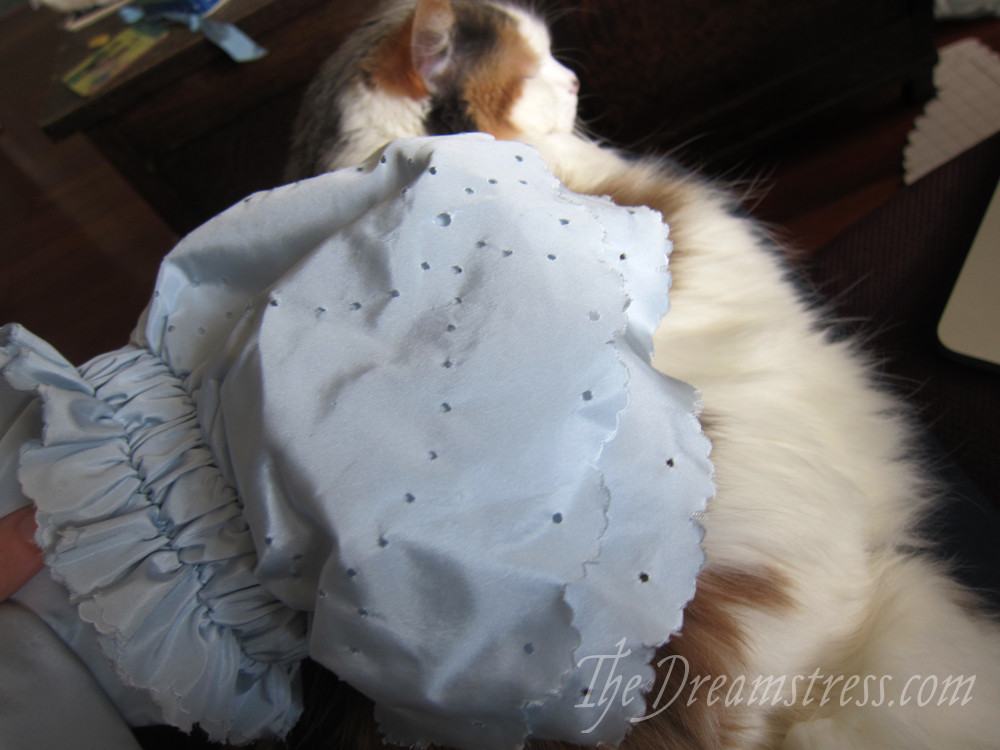
With the ruffles punched, it was time to gather!

Nope.

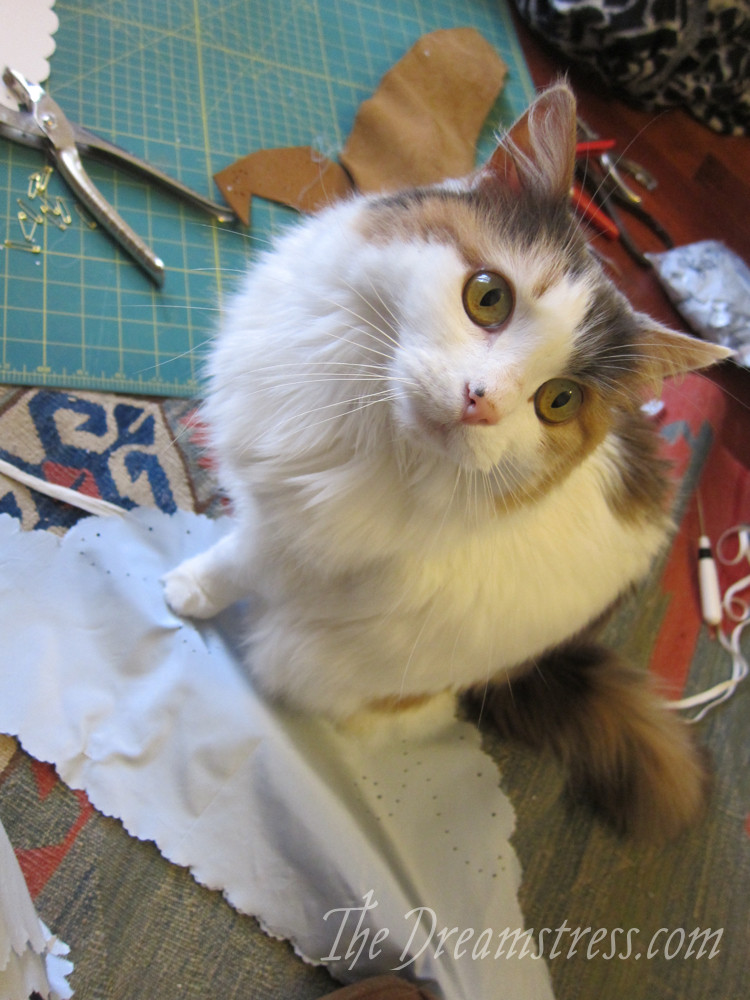
It was time for a cat mandated petting break!
Frou Frou Francaise Sleeve thedreamstress.com

Look at that little face!  How could I possibly deny it?
Frou Frou Francaise Sleeve thedreamstress.com

Cat duties satisfied, it was time for gathering!

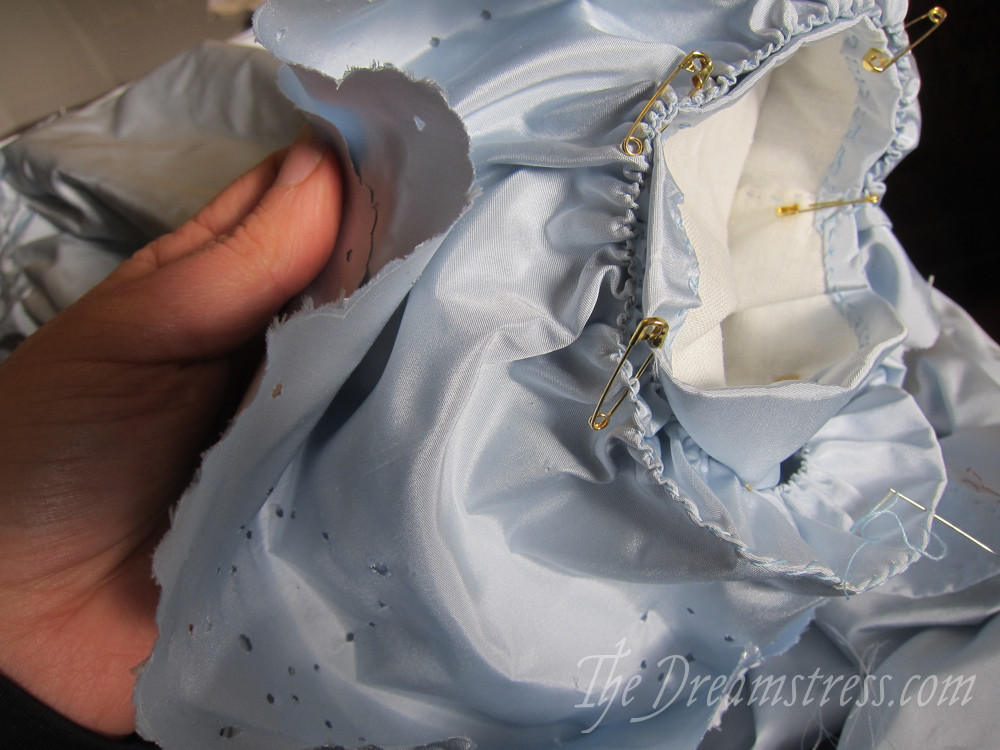
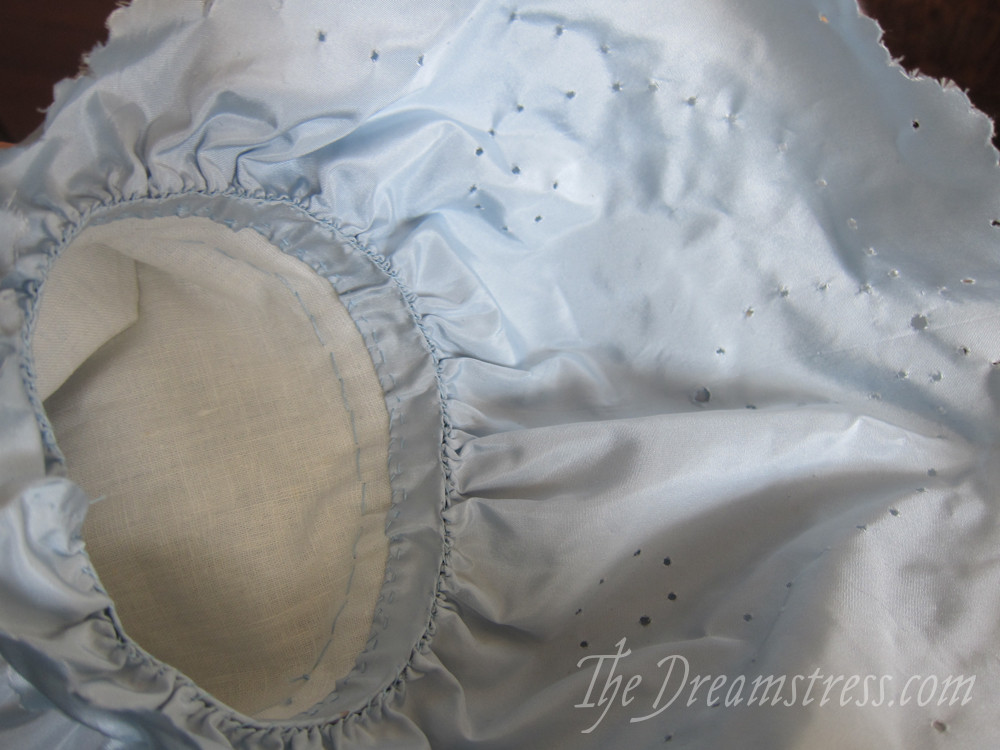
I sewed two lines of whip-gathering into the sleeves, pinning and adjusting the gathers to fit the bottom of the sleeves as I went.  (Amber of Lady of the Wilderness & Virgils Fine Goods put me on to the idea of using safety pins for securing things as I work and it’s pretty much the best thing ever).
Frou Frou Francaise Sleeve thedreamstress.com

It was a fun thing to do while hanging out with Mr D.
Frou Frou Francaise Sleeve thedreamstress.com

Frou Frou Francaise Sleeve thedreamstress.com

And Miss F!

Frou Frou Francaise Sleeve thedreamstress.com

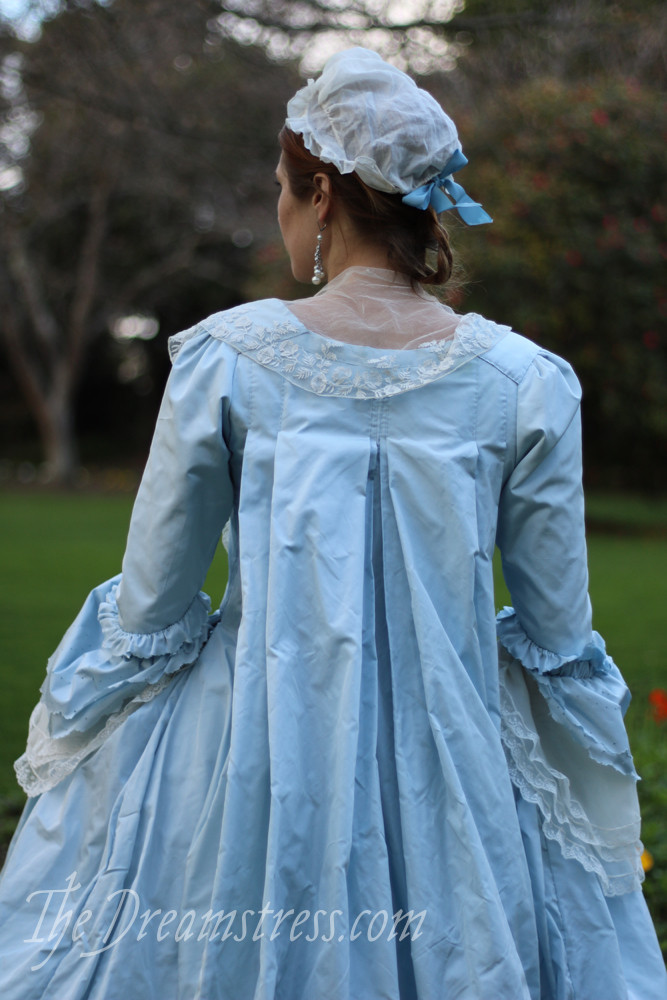
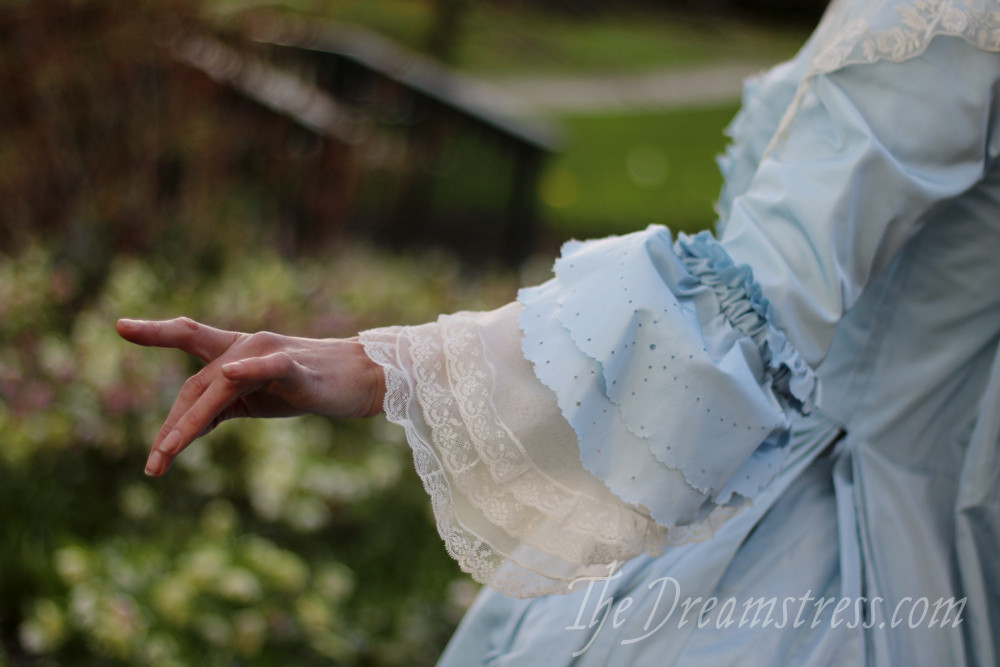
And here is the finished result!

Frou Frou Francaise Sleeve thedreamstress.com


Aaaaaand…the whole sleeve is about 3″ too long, and possibly a little too big, though I’m trying to decide if that’s just my modern sensibilities talking.

More on the sleeve fit later.
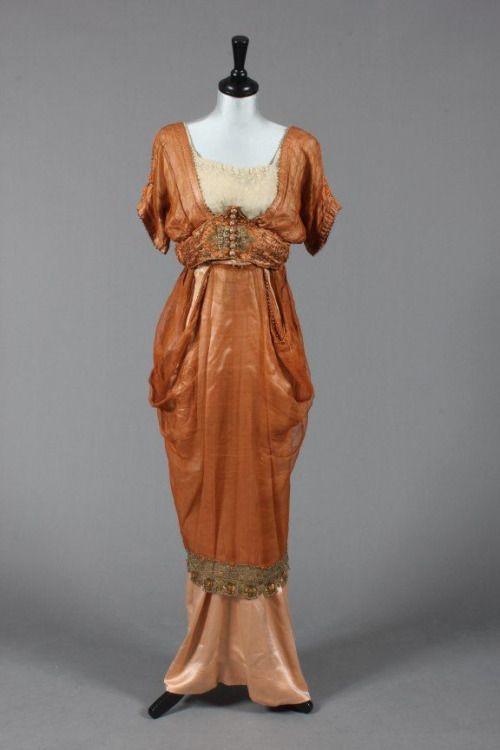
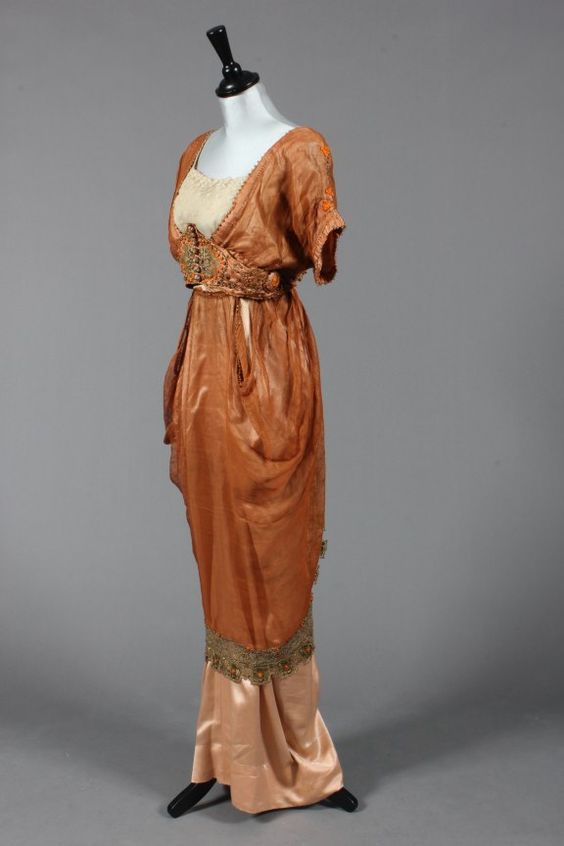
Madame Ernest Ltd cinammon gauze silk and satin evening gown, circa 1910, sold by Kerry Taylor Auctions

Rate the Dress: Spiced peaches in the 1910s

I’m on holiday, but the blog is not, and so far my holiday Rate the Dress picks have been a spectacular success.  Last week’s pick was tropical sea and flower gardens, this week’s is mango and sand – or, as the title says, spiced peaches!

Last week: a Robe a la Francaise in sea blue floral silk

The blue francaise was a tropical dream.  It received a warm and sunny reception, with no hurricanes of criticism lurking on the horizon.

The Total: 9.8 out of 10

Divine!

This week: a 1910s dress in peach pink and cinnamon silk

Peach pink and coppery cinnamon brown were both very fashionable colours in the 1910s, and I’ve shown a few dresses of that era in variations of those shades over the years, to mixed reviews.

Madame Ernest Ltd cinammon gauze silk and satin evening gown, circa 1910, sold by Kerry Taylor Auctions

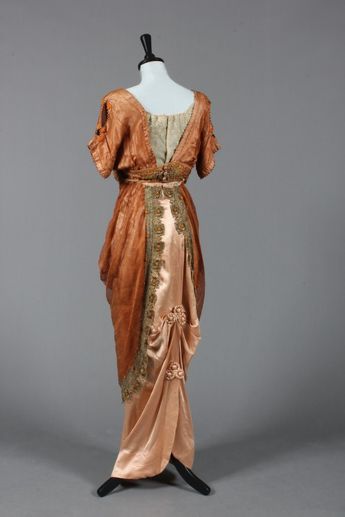
This dress layers cinnamon silk gauze over peach satin, and combines them with gold metallic lace (also an extremely fashionable 1910s element) and ivory, all accented with embellished details in brighter orange and darker gold.

Madame Ernest Ltd cinammon gauze silk and satin evening gown, circa 1910, sold by Kerry Taylor Auctions

Madame Ernest Ltd cinammon gauze silk and satin evening gown, circa 1910, sold by Kerry Taylor Auctions

The cut of the dress is as eclectic and layered as the fabrics: the cinnamon gauze overskirt is draped to create swags at the front, and reveals the peach satin in back, it too draped and caught up to create a back slit for ease of walking.

Madame Ernest Ltd cinammon gauze silk and satin evening gown, circa 1910, sold by Kerry Taylor Auctions

Madame Ernest Ltd cinammon gauze silk and satin evening gown, circa 1910, sold by Kerry Taylor Auctions

There are definitely a lot of elements to this dress: textures, fabrics, colours, drapery, square necklines and scooped necklines and V necklines and drapes and swags.

Will they all come together for a successful rating?

Rate the Dress on a Scale of 1 to 10

A reminder about rating — feel free to be critical if you don’t like a thing, but make sure that your comments aren’t actually insulting to those who do like a garment.  Our different tastes are what make Rate the Dress so interesting.  It’s no fun when a comment implies that anyone who doesn’t agree with it, or who would wear a garment, is totally lacking in taste.

(as usual, nothing more complicated than a .5.  I also hugely appreciate it if you only do one rating, and set it on a line at the very end of your comment, so I can find it!  Thanks in advance!)

Frou Frou 1760s Stomacher thedreamstress.com

A frou-frou stomacher (based on an extent original) and making buckram

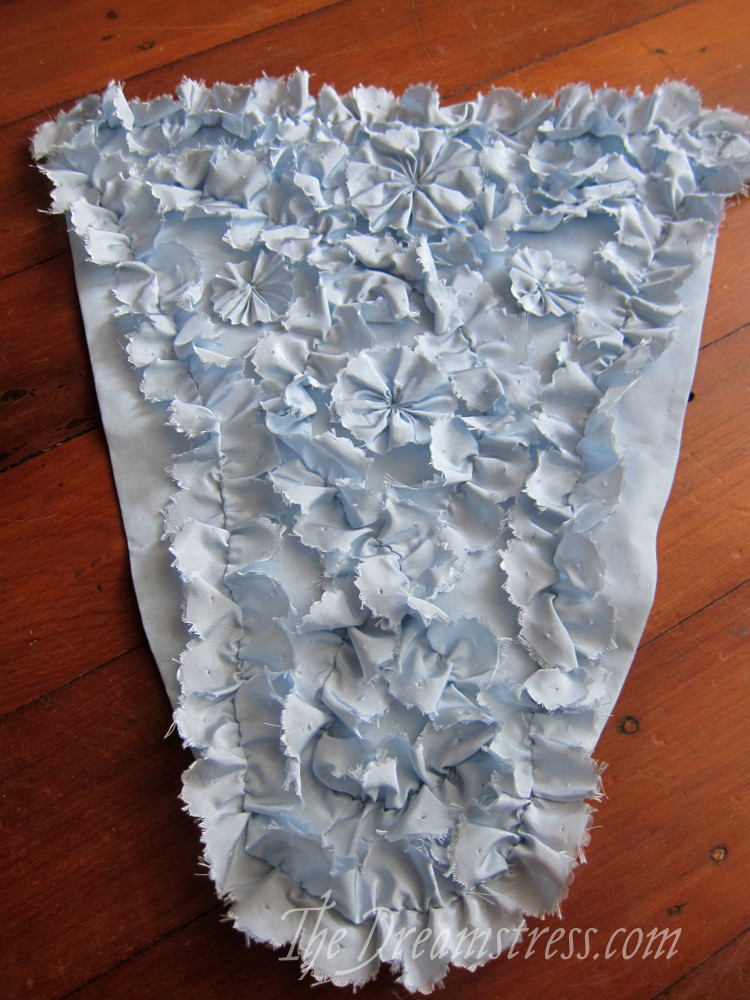
I made a very, very frilly stomacher to go with my Frou Frou Francaise!

Frou Frou 1760s Stomacher thedreamstress.com

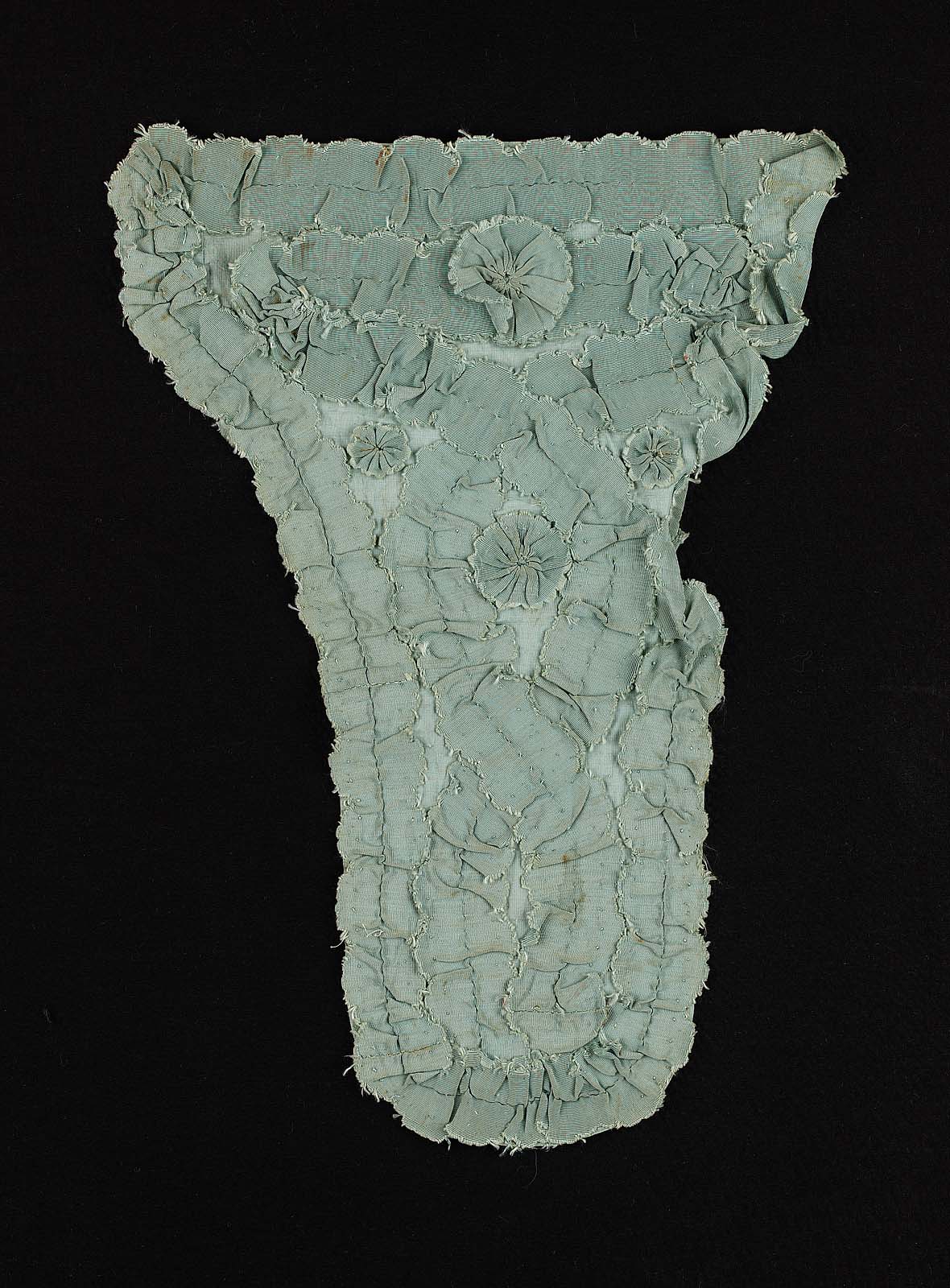
I based it on this stomacher, from the MFA Boston:

Stomacher, American, mid 18th century, silk , Boston Massachusetts, MFA Boston 49.918

Stomacher, American, mid 18th century, silk , Boston Massachusetts, MFA Boston 49.918

I was searching for stomacher inspiration to go with my Frou Frou Francaise, because I wanted something a little more dynamic and interesting than the usual stripes-of-ruffles or bows (not that they aren’t charming, but this one just needed something different), and I stumbled across this one, and it was perfect, and (amazingly) it’s also the only extant plain blue silk stomacher that I know of.

I realised that it would be the perfect project for the HSF Challenge #8: Extant originals, where you copy a period garment that is still in existence.

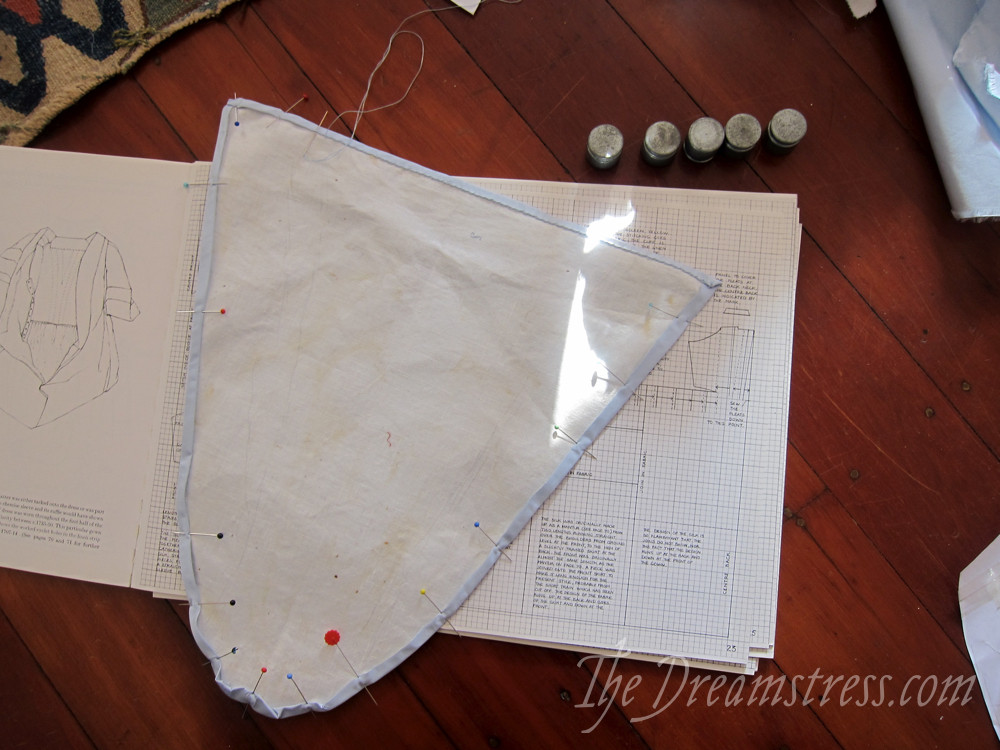
I tried to replicate the exact shape & dimensions of the stomacher, but I just couldn’t get it to pin onto me and into my francaise and looking right.

So instead I worked with a shape and dimensions that did fit my body and my dress, and adapted the trim to fit.

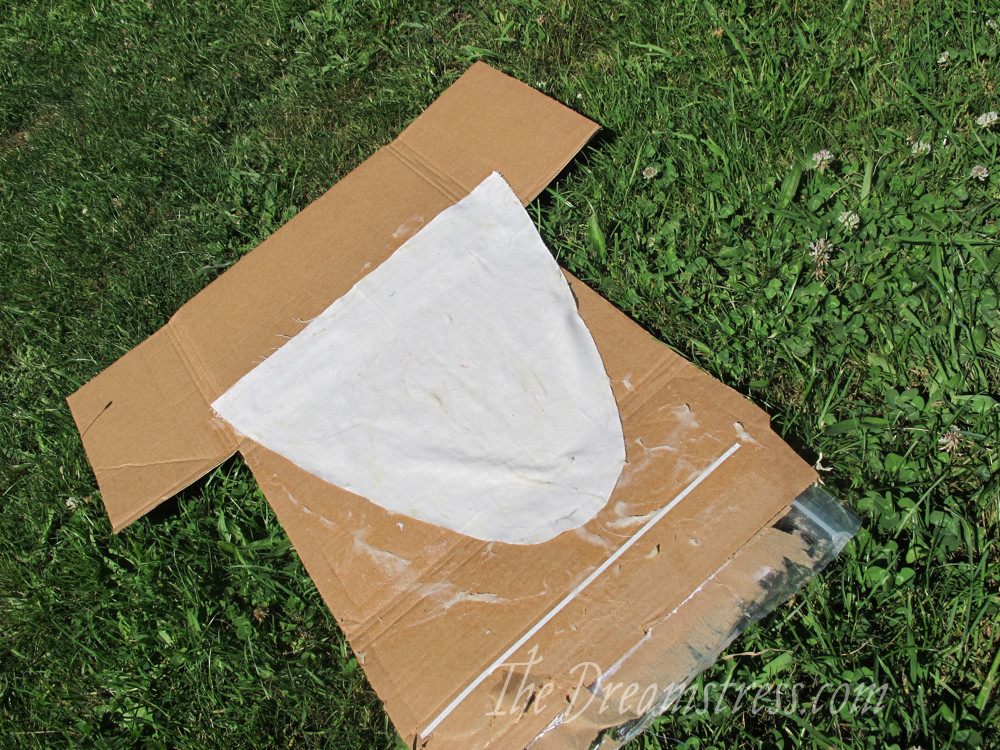
To make my stomacher first I made linen buckram for the backing:

Frou Frou 1760s Stomacher thedreamstress.com

Making Buckram:

Burnley & Trowbridge have an excellent youtube tutorial on how to make your own, which I mostly followed, but had to adapt slightly based on what I could get in NZ in a reasonable timeframe.

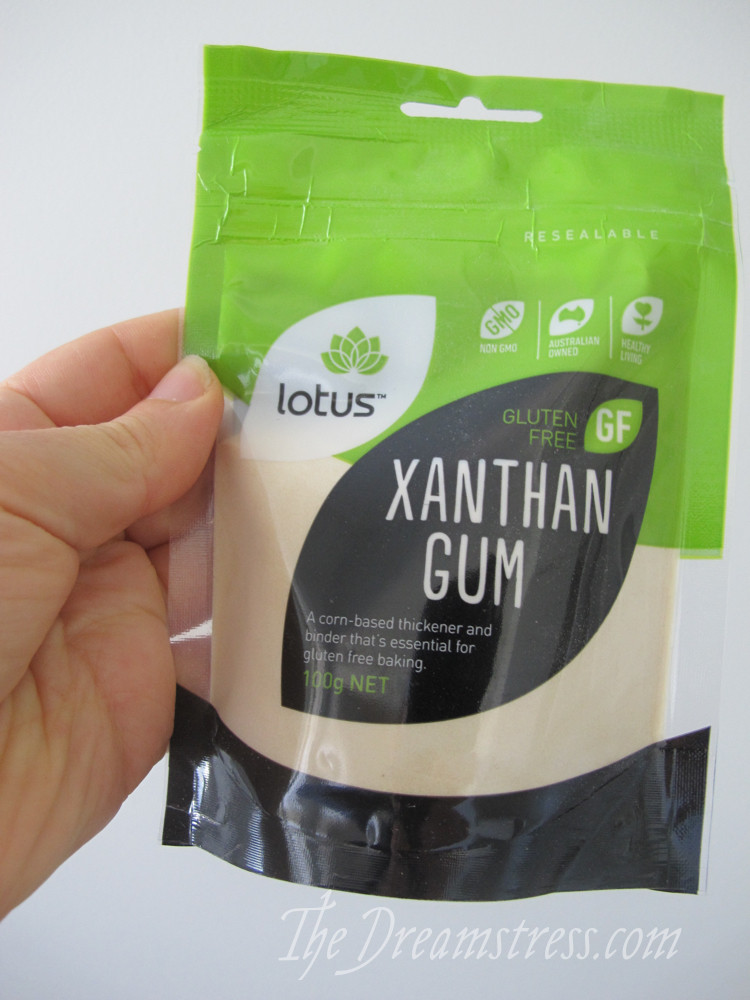
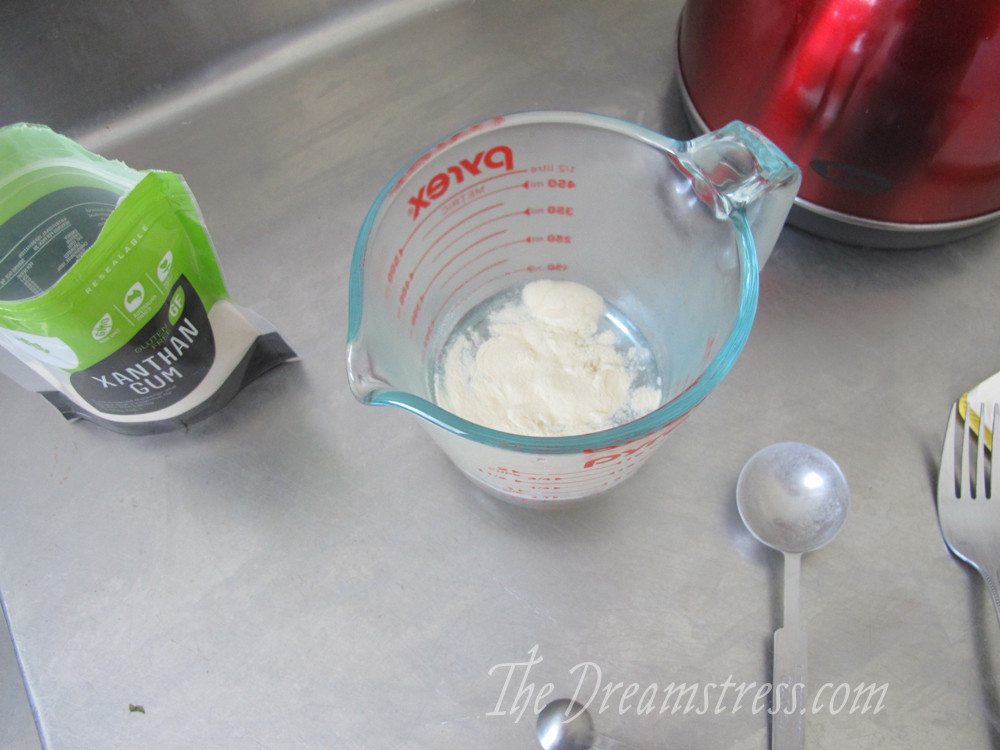
Gum tragacanth is the most easily accessible modern ingredient that was used in 18th century buckram making, but I couldn’t find any in Wellington, and I did some research and it turns out that most stuff that is sold as GT is actually xanthan gum anyway.  That you can get in Wellington – it’s not historically accurate, but I decided to try it to see if it would work.

Making Buckram thedreamstress.com

I mixed it with hot water:

Making Buckram thedreamstress.com

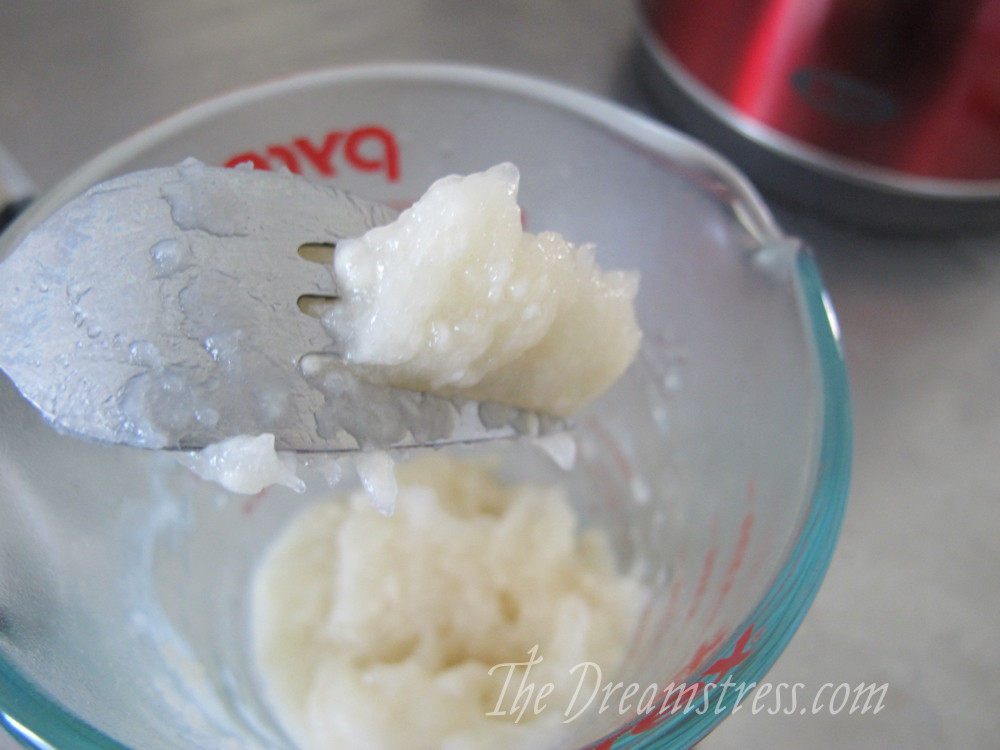
Probably not enough hot water: 2T in half a cup of water made a VERY thick and gloopy paste.

Making Buckram thedreamstress.com

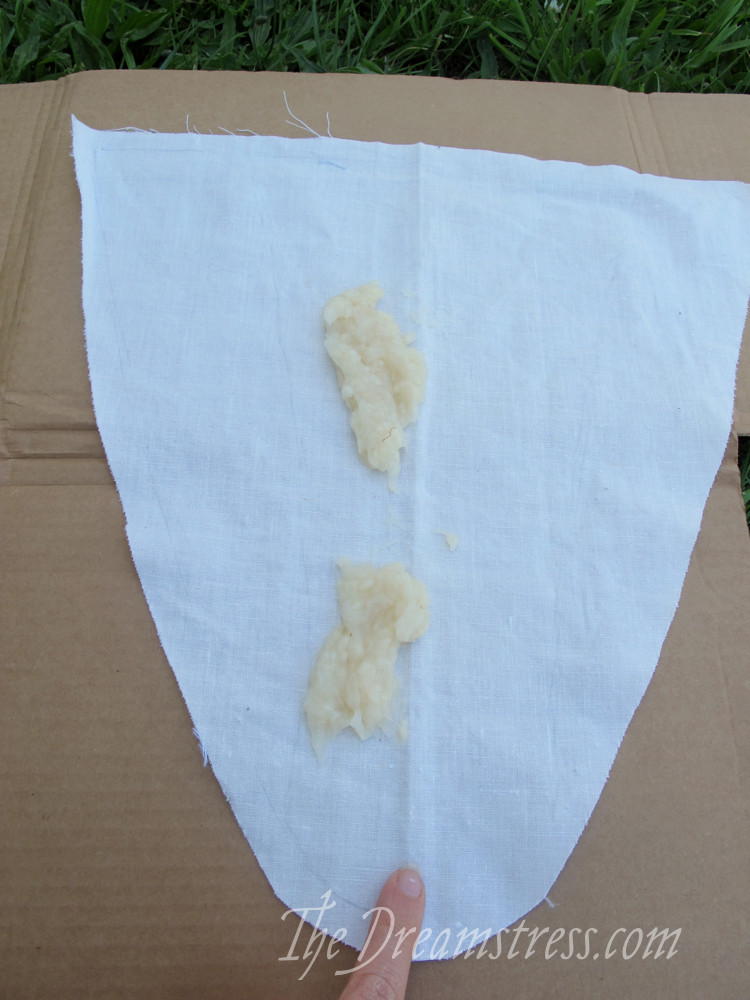
But I decided to try it as it was, so I dropped it on my linen…

Making Buckram thedreamstress.com

….and spread it around.  It was quite gross and mucos-y.

Making Buckram thedreamstress.com

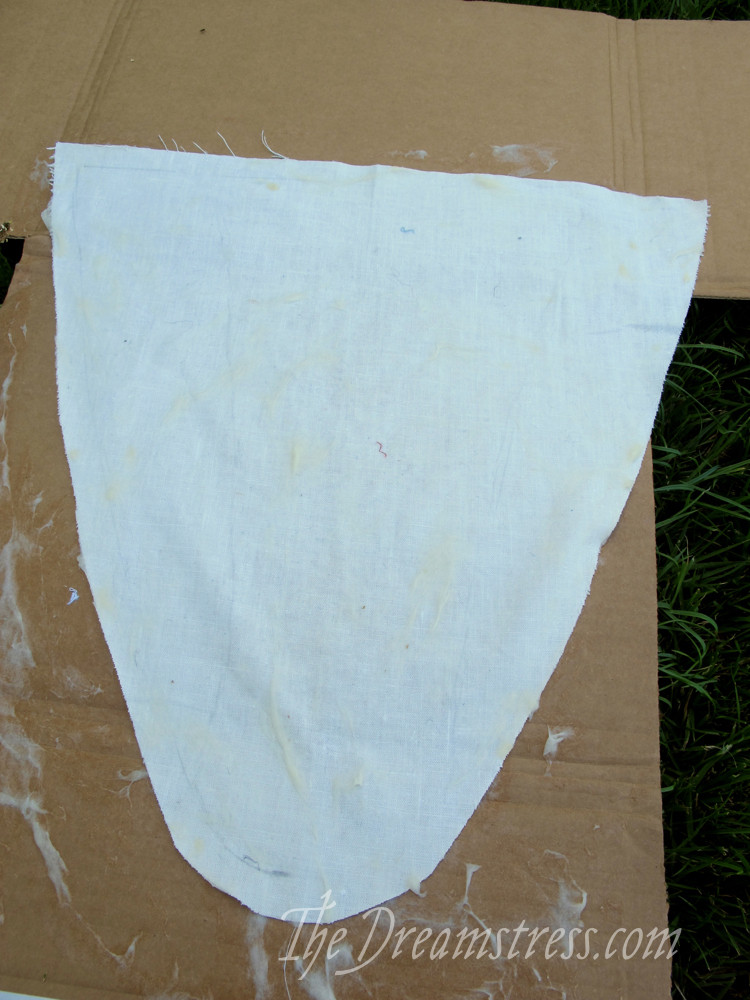
And then left it to dry in the sun:

Making Buckram thedreamstress.com

And the end result was very buckram-y.

Making Buckram thedreamstress.com

The next time I would definitely add less XG, and make my buckram as a whole cloth, and then cut my fabric later.

Making my stomacher:

To make the stomacher I cut a piece of silk 1.5cm wider than my buckram base on all sides.  I folded the excess silk over the edges of the buckram base:

Frou Frou Francaise Stomacher thedreamstress.com

And then hemstitched it down, so the stitches caught only through the buckram, not through the outer silk.

Frou Frou 1760s Stomacher thedreamstress.com

For the trim, I took the MFA Boston image, and scaled it up to the dimensions they give for the stomacher.

I then printed it out, and used the design to develop one that fit on my slightly shorter, slightly wider stomacher.  I transferred the design to my stomacher with pinpricks.

Frou Frou 1760s Stomacher thedreamstress.com

I hand-cut scalloped trim from my silk (I dream of owning a real pinking chisel, but as far as I know no-one is making replicas at the moment, and original ones don’t come up very often).

Frou Frou 1760s Stomacher thedreamstress.com

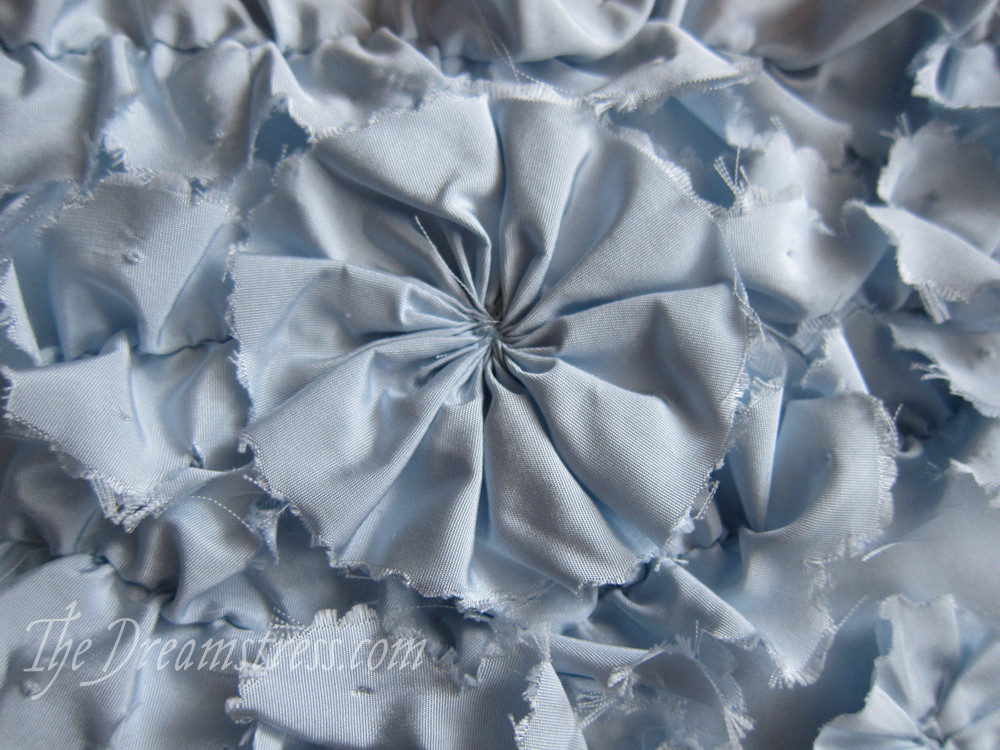
The original appears to have small holes punched in the ruffles as well.  I experimented a bit, and finally discovered that the sort of hollow-needle that tag guns (the ones that put in those plastic clothing tags in shops) use was exactly right for punching a tiny hole that still lasted.

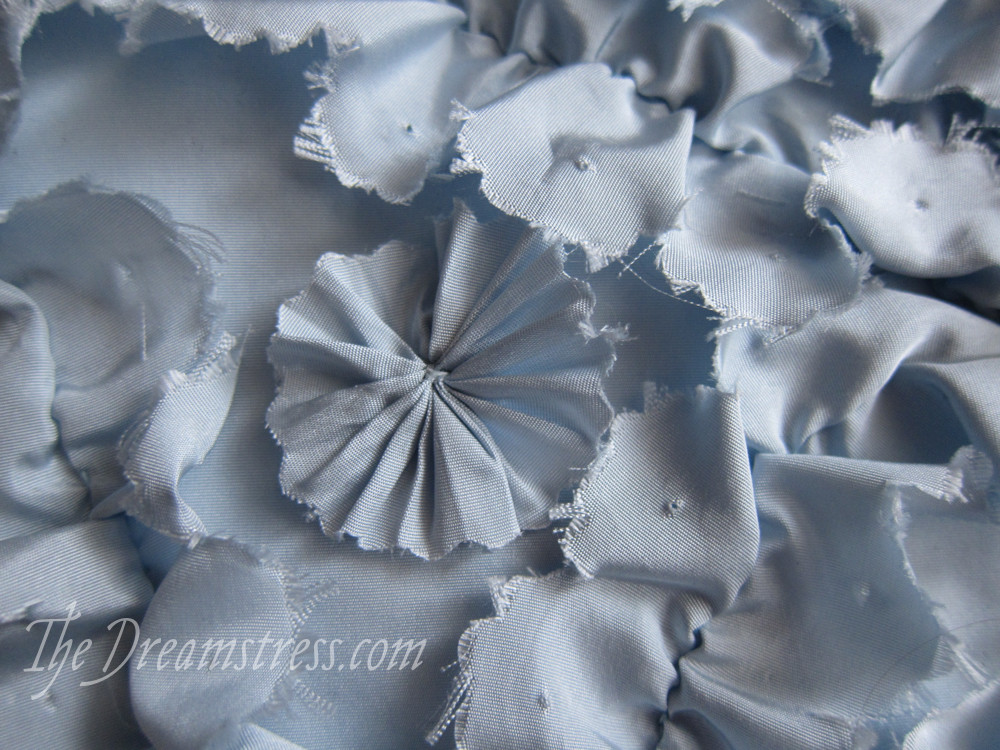
With scallops cut and holes punched, I  ruched my trims with whipped gathers.  My trim did come out being much frillier and more gathered than the original: I think that’s both a combination of too-much gathers, and the original being crushed and flattened with age.

Frou Frou 1760s Stomacher thedreamstress.com

I’m also wondering if there is a chance that the originals ruffles are sewn down along the sides as well.  Maybe that’s what I’m seeing instead of punched holes…

Stomacher, American, mid 18th century, silk , Boston Massachusetts, MFA Boston 49.918

Stomacher, American, mid 18th century, silk , Boston Massachusetts, MFA Boston 49.918

So my stomacher isn’t quite as close to the original as I’d hoped, but at least it’s attractive and works.

And the HSF info…

What the item is: a 1760s stomacher

Which extant original did you copy: a mid 18th century stomacher from the MFA Boston, 49.918

Material: silk taffeta, silk thread, and linen buckram (linen & gum)

Pattern: none, based on period examples.

Year: ca. 1760

Notions: silk thread

How historically accurate is it? Pretty close!  But not perfect, because it’s not a perfect match, and the xantham gum etc.

How close is it to the original? My blue is less blue-green, and I wasn’t able to get the exact dimensions of the original to work on me/with my francaise, so I used a different shape base, and copied the outline of the original stomacher for my trim. My trim is much more ruffly and three dimensional – I’m trying to decide if that’s because the original has been flattened with age, or if the ruffles are actually sewn down.

Hours to complete: About 15

First worn: Not yet.

Total cost: About $10, if you count how much of the silk taffeta I used.