Latest Posts

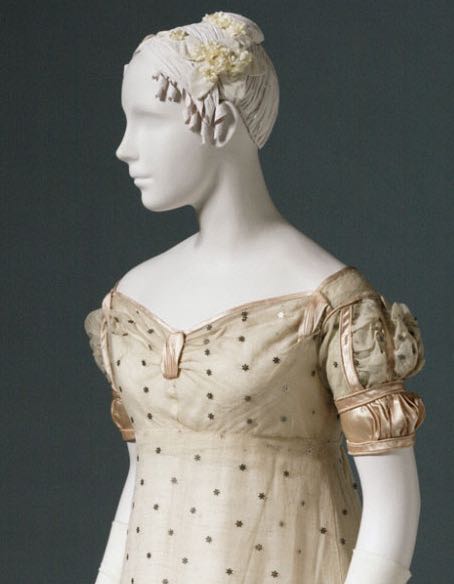
Evening Dress, French, c. 1817, silk and wool gauze with silk satin, iron floral pailettes, silk embroidery, silk-wrapped paper, cording of silk around metal core, and glass beads, Philadelphia Museum of Art, 1958-74-1

Rate the Dress: Puffed sleeves & pailettes

Post an ‘interesting’ dress, get an ‘interesting’ set of responses!  This week’s puffed sleeves & pailette embellished Rate the Dress pick is a little more subtly interesting: possibly somewhere between last week and the week before.  Let’s see what you make of it!

Last week: late bustle-era velvet, beading, and patterns

Not surprisingly, there was a wide range of reactions to last weeks late 1880s bustle dress.  Ratings ranged from 3 to 10.  It was not a dress that was compromising, or trying to please.  It was a dress with a definite viewpoint, and a definite opinion.

The Total: 8

I strongly suspect that the wearer of the dress wouldn’t have cared a fig what we rated it, and whether we liked it or not.  She liked it, and that was the only opinion that mattered!

And that fact rather makes me like it even more.

This week: a late Regency era evening dress

This week I’ve gone simple and classic, but with hopefully enough interesting details to keep it from being boring, with a ca. 1817 evening dress.
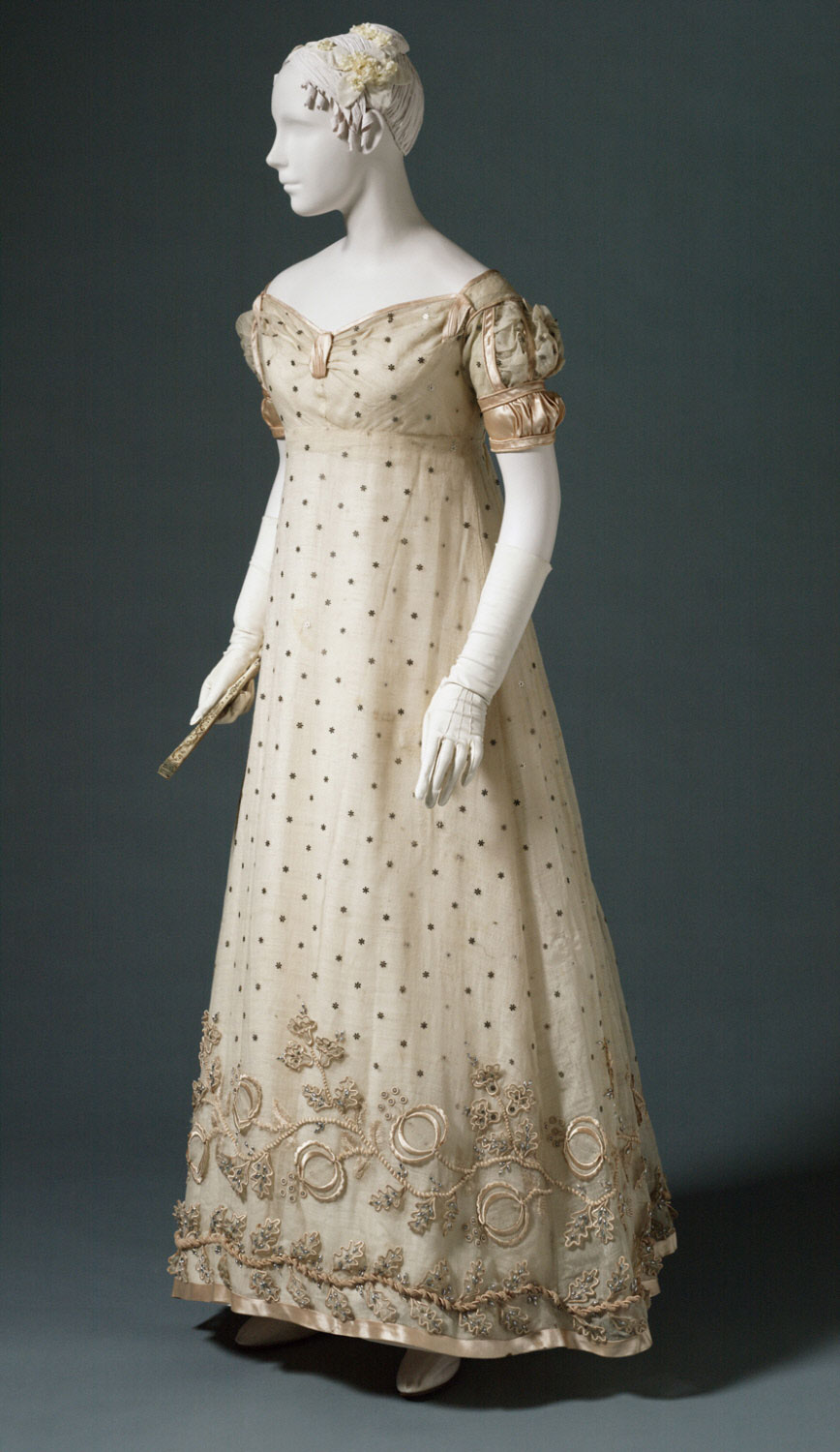
This week’s dress keeps to the most popular evening dress colour scheme of the first half of the 19th century: whites and very pale, muted shades.  These pale hues stood out in dimly lit rooms, reflecting the glow of candles.

This dress also features star-shaped pailettes, glass beads, and other and touches of metallics in the elaborate hem embellishment, which would have added further gleams, glitters, and sparkles to the frock.   The wearer would have twinkled her way across the dance floor, or caught the eye across the table every time she turned to her dinner partner.

What do you think?  Are the embellishments enough to suitably enliven this simple white frock?

Rate the Dress on a Scale of 1 to 10

A reminder about rating — feel free to be critical if you don’t like a thing, but make sure that your comments aren’t actually insulting to those who do like a garment.  Our different tastes are what make Rate the Dress so interesting.  It’s no fun when a comment implies that anyone who doesn’t agree with it, or who would wear a garment, is totally lacking in taste.

(as usual, nothing more complicated than a .5.  I also hugely appreciate it if you only do one rating, and set it on a line at the very end of your comment, so I can find it!  Thanks in advance!)
Ramsay to Renoir thedreamstress.com

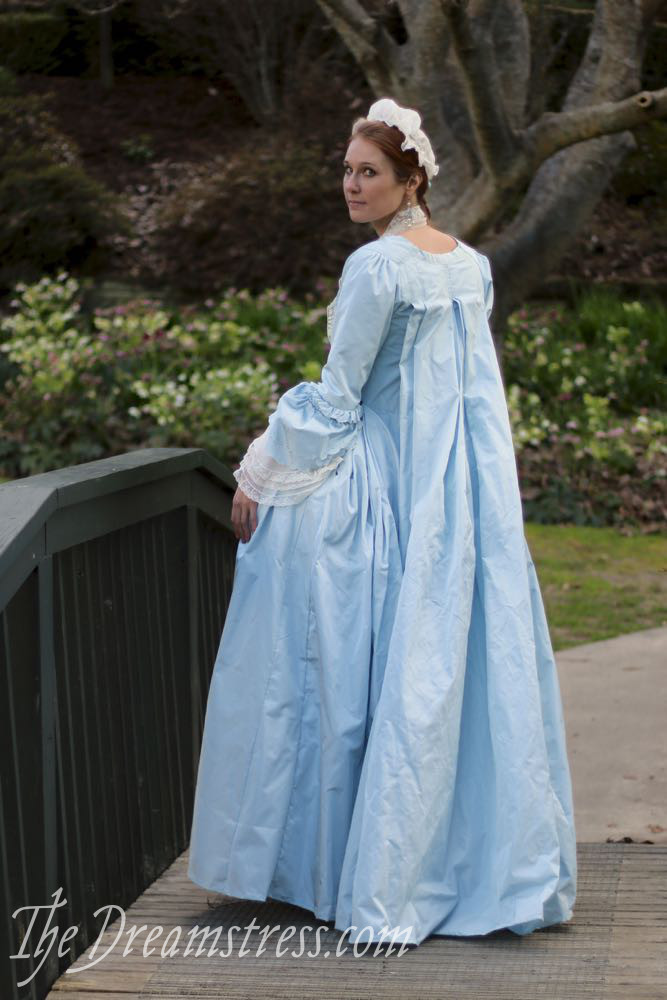
Ramsay to Renoir in photos

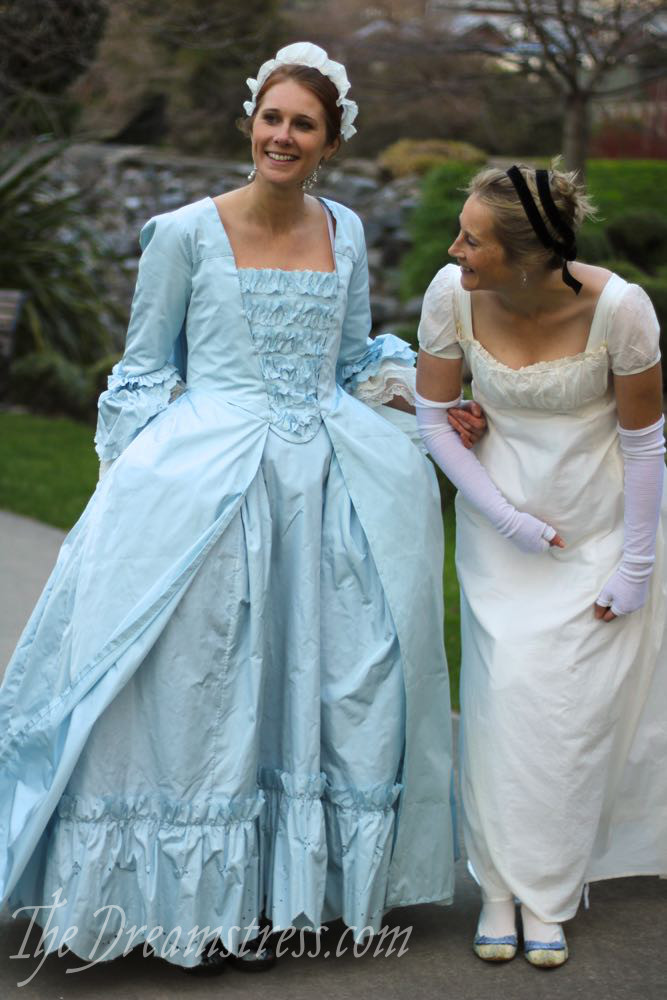
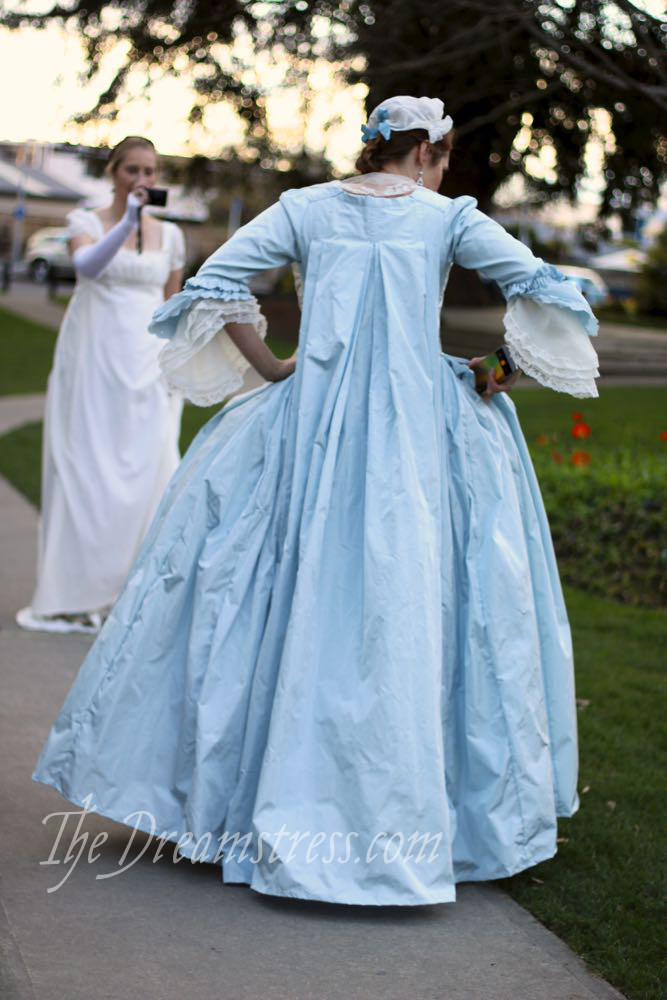
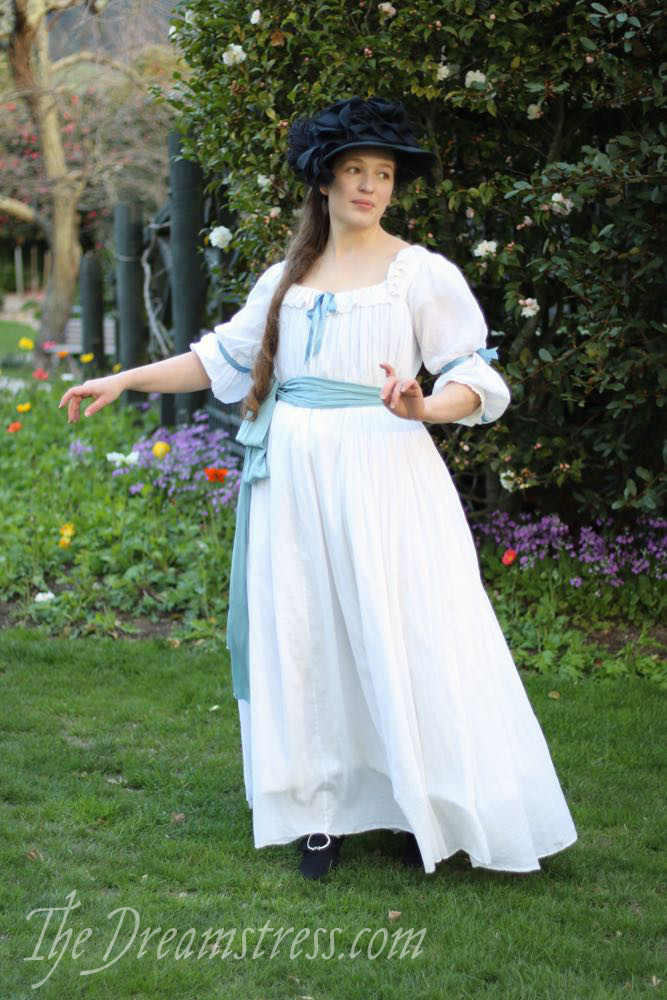
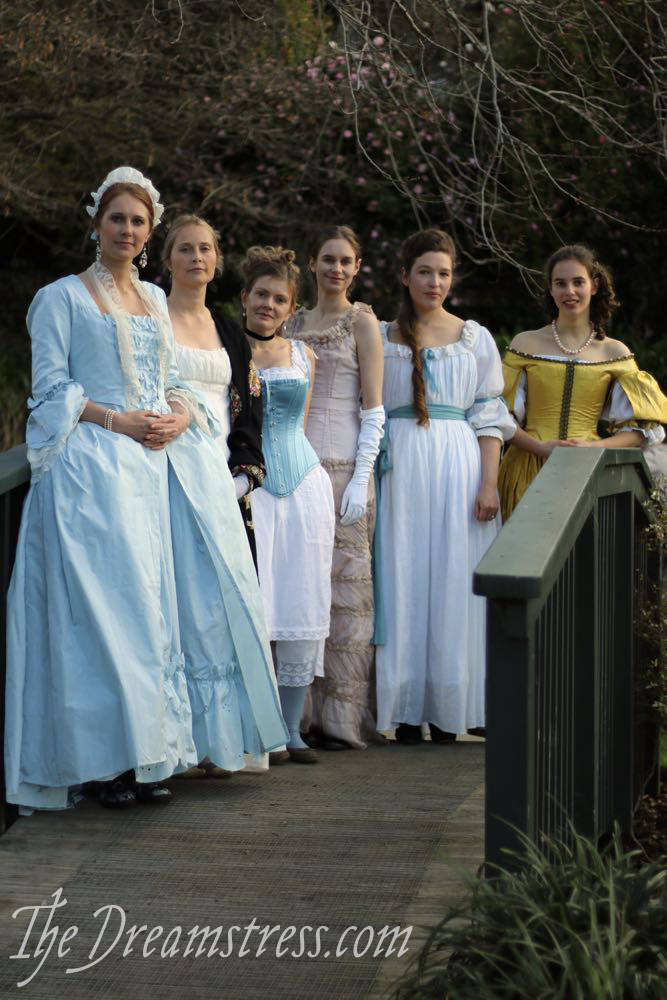
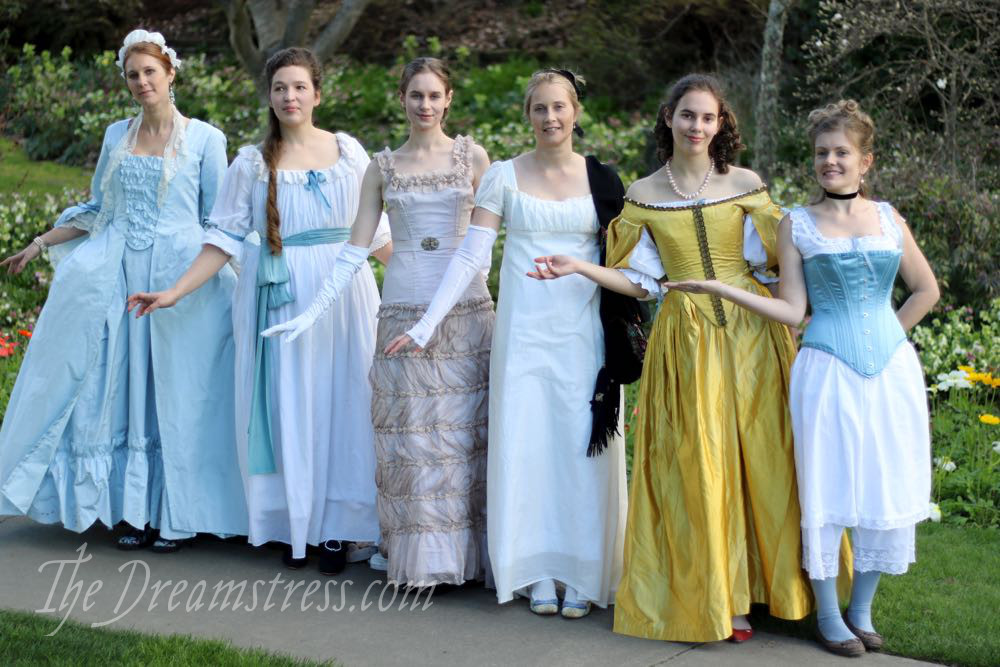
My charity talk for LifeLinc went off beautifully last weekend, thanks to fantastic organisation on their part, and an absolutely wonderful set of models.

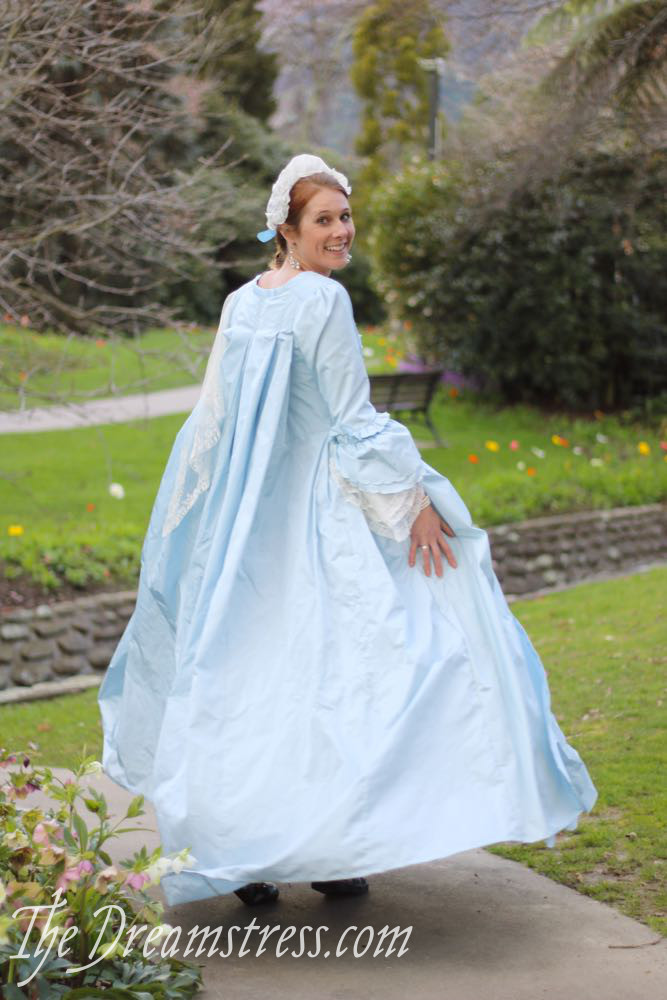
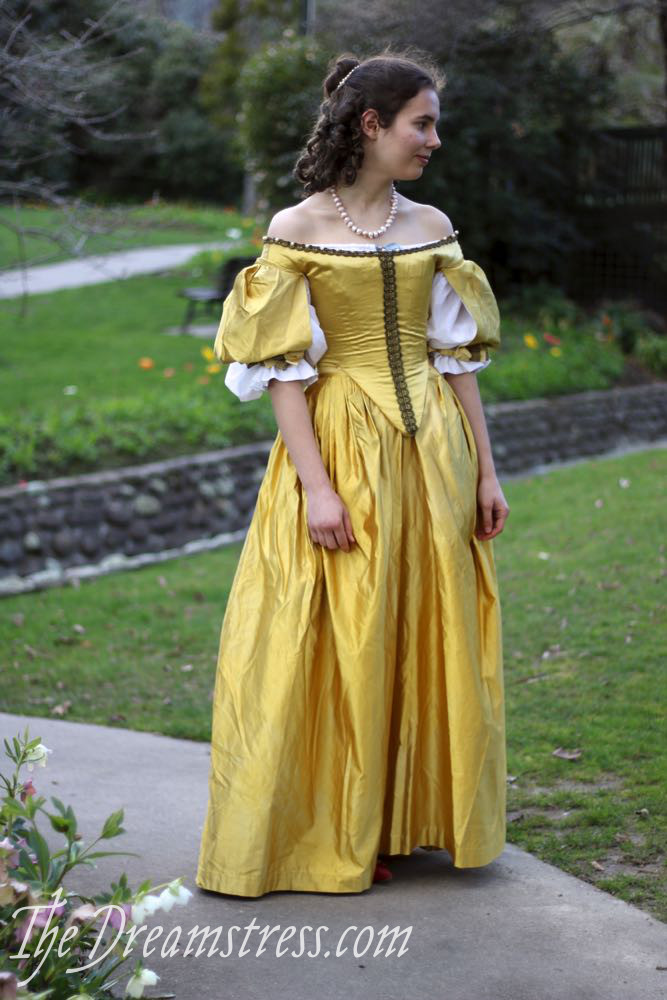
Here are my favourite photos of the day:

Ramsay to Renoir thedreamstress.com

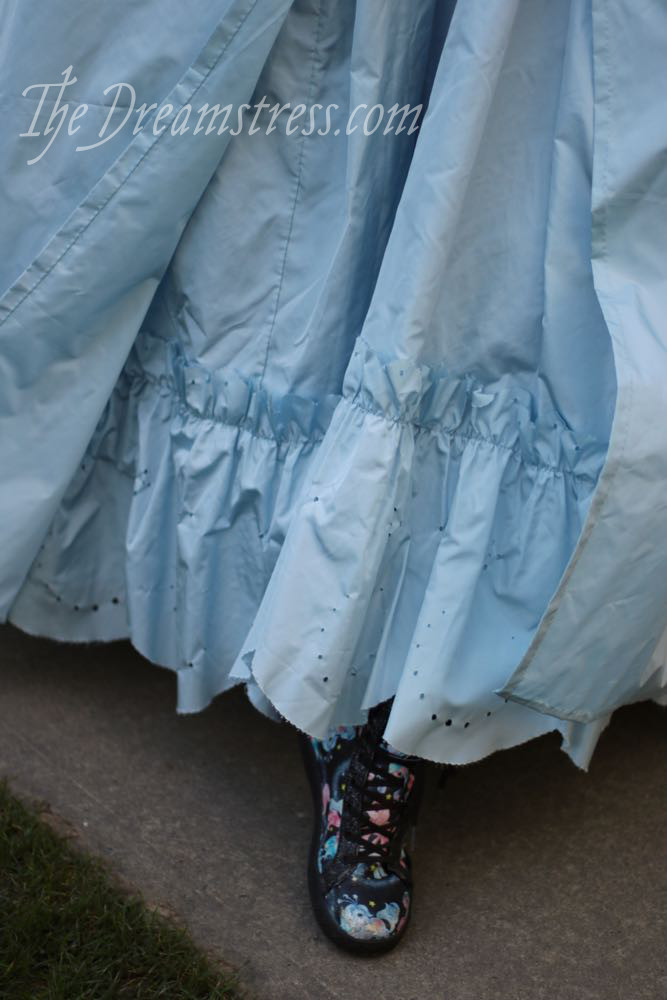
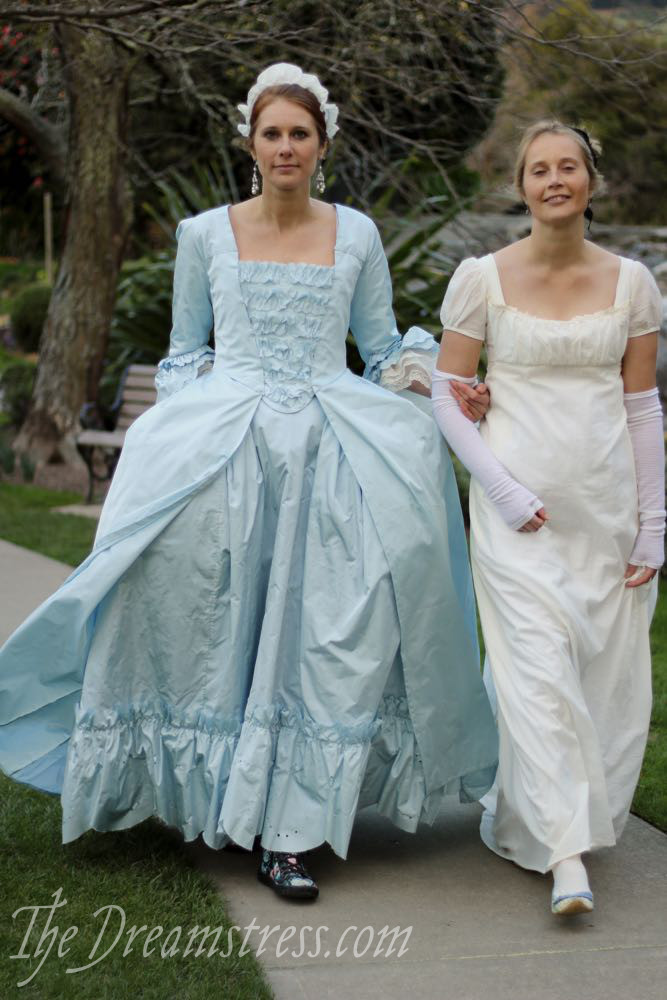
I couldn’t bring a full contingent of shoes down to Nelson, and the ones I did bring didn’t fit Miss Francaise that well, so we had fun with her shoe collection.

Sometimes it’s nice to be historically accurate, and sometimes it’s nice to rock My Little Pony high tops.

Ramsay to Renoir thedreamstress.com

The Frou Frou Francaise was wearable-done, but needed more trimming.  Having seen it on a model, I’ve decided I’m not totally happy with the back pleats or sleeves, and am going to re-do those.

Ramsay to Renoir thedreamstress.com

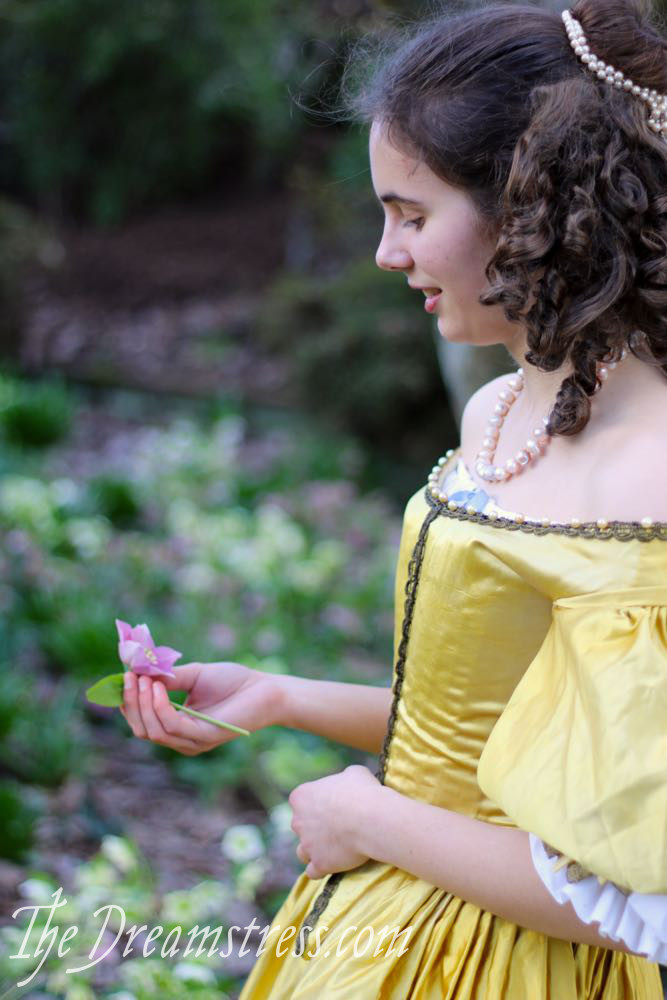
Miss Ninon was the youngest model I’ve ever worked with, and looked absolutely perfect.

Ramsay to Renoir thedreamstress.com

Ramsay to Renoir thedreamstress.com

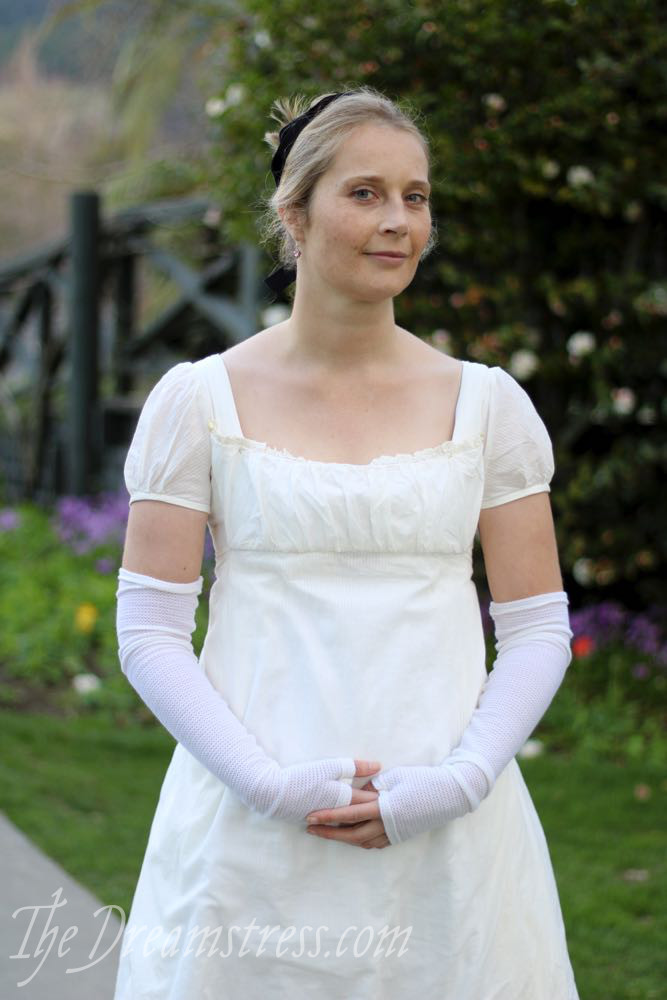
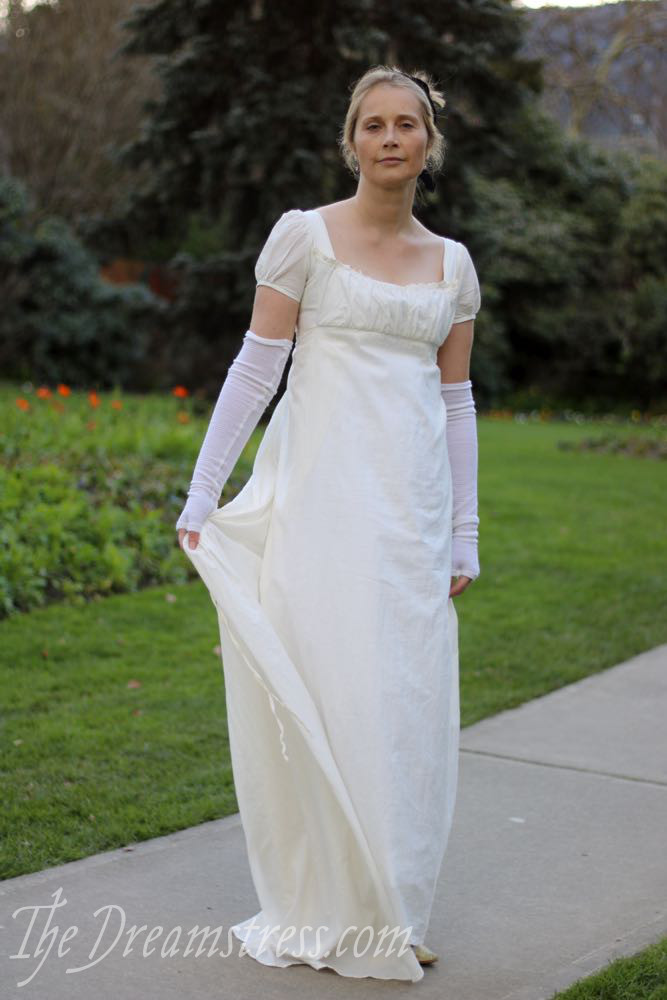
And what luck to get a model who looks exactly like Jane Bennet!

Ramsay to Renoir thedreamstress.com

Ramsay to Renoir thedreamstress.com

Ramsay to Renoir thedreamstress.com

Ramsay to Renoir thedreamstress.com

Ramsay to Renoir thedreamstress.com

Ramsay to Renoir thedreamstress.com

Ramsay to Renoir thedreamstress.com

Thank you thank you to all the models, and to everyone who came.

http://www.metmuseum.org/art/collection/search/159169

Rate the Dress: Late Victorian totally un-neutral

Last week’s dress was deemed quietly elegant and almost offensively in-offensive.  Beautiful (excepting, perhaps the sleeve bows), but too retiring and neutral to inspire much passion on either end (excepting, perhaps, once again, when it came to the bows).  So this week I’ve chosen a dress, that while in (technically) neutral shades of browns & blacks, and sleek in silhouette, is determinedly un-neutral in every other respect.  You might, in the end, decide it is also elegant, but not for reasons of quietude!

Last week: early Victorian neutrals

Things I took away from your responses:

  1. You thought the dress was pretty but ultimately a little boring.
  2. You don’t like brown.
  3. You really, really didn’t like those sleeve bows.
  4. But even if you don’t like brown and bows you recognise and reward good construction.

The Total: 8.4

Exactly the rating that a dress that would be supremely appropriate at any event without ever drawing attention to itself would be expected to get.  And I learned a lot about early Victorian trims that kind of look like tatting, so totally worth it!

This week:

The brief for this week’s dress was ‘shades of brown & black with a simple silhouette”  (well, 1880s simple), “but definitely not boring”.

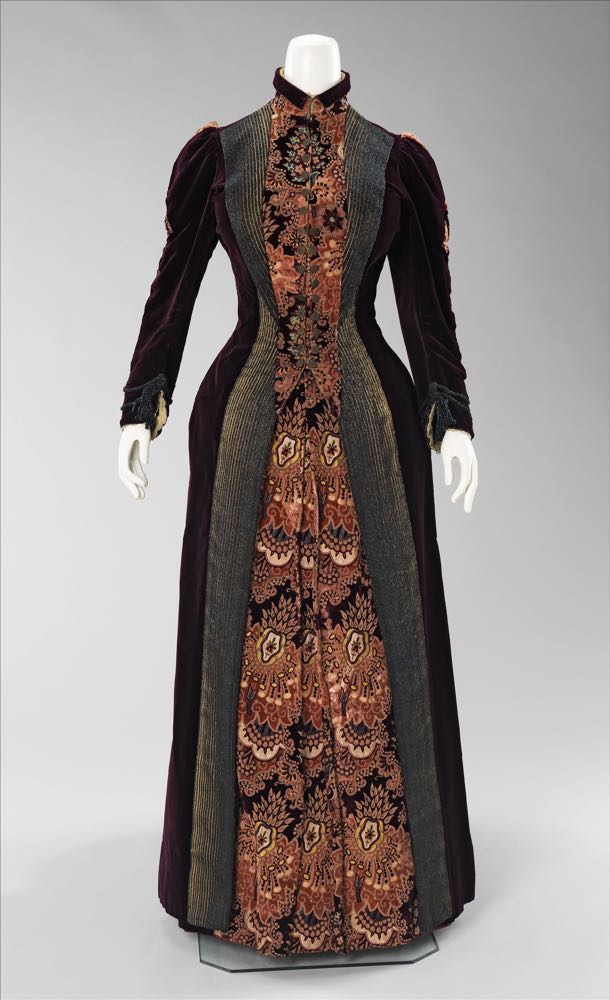
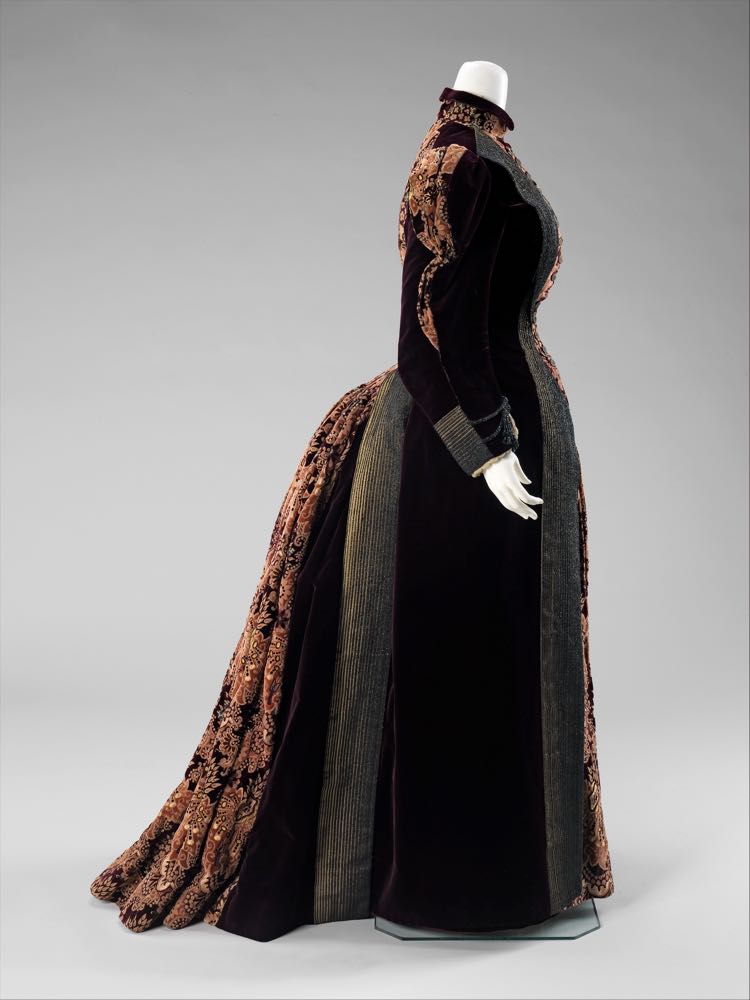
And the dressmaker/couturier (the extremely high-end American based Mme Uoll Gross) delivered.

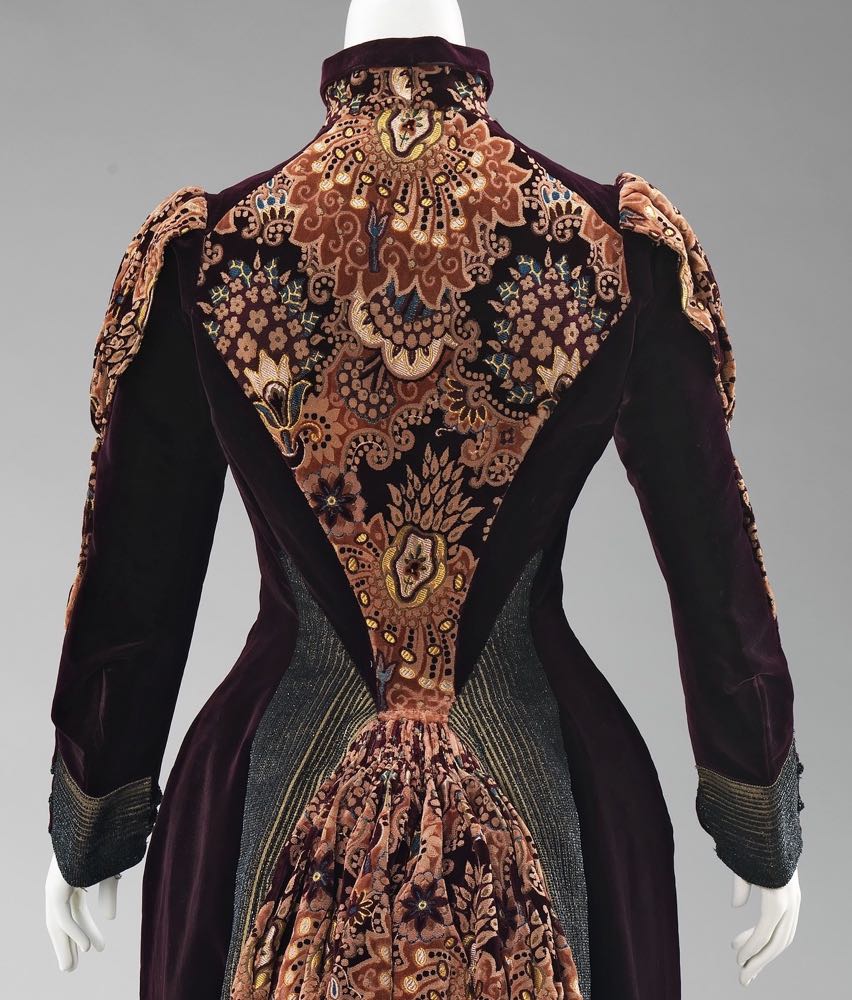
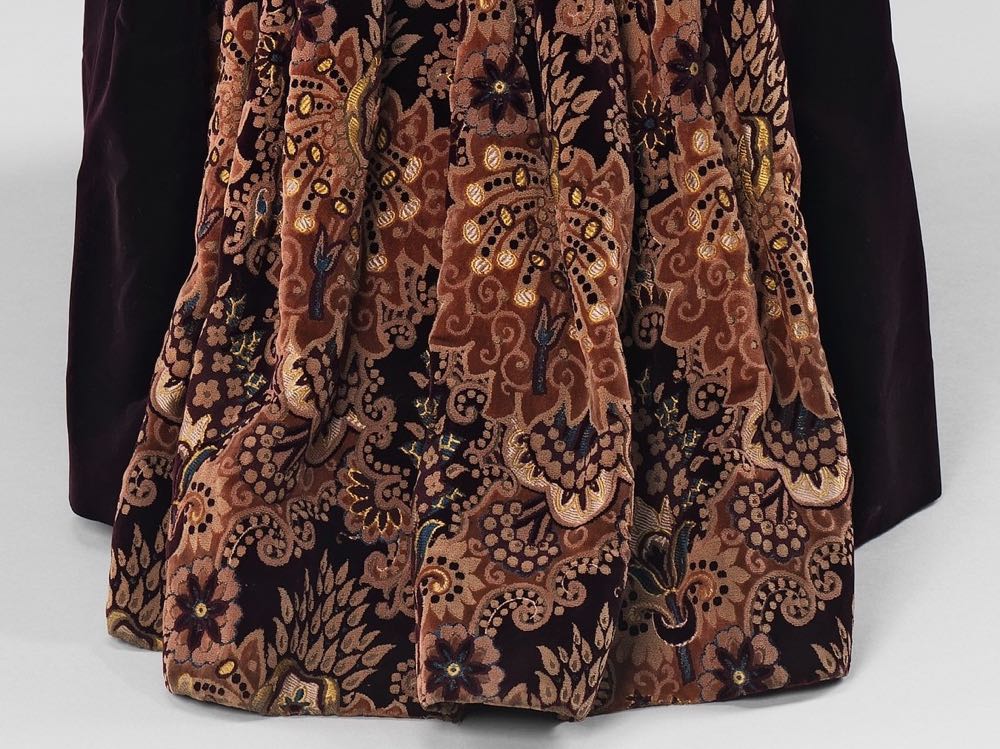
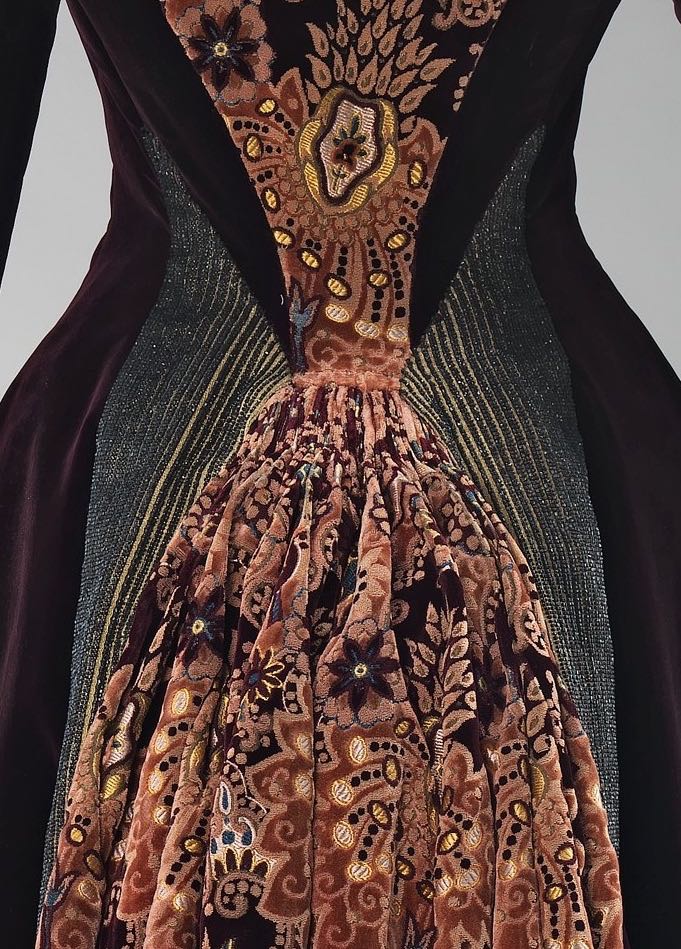
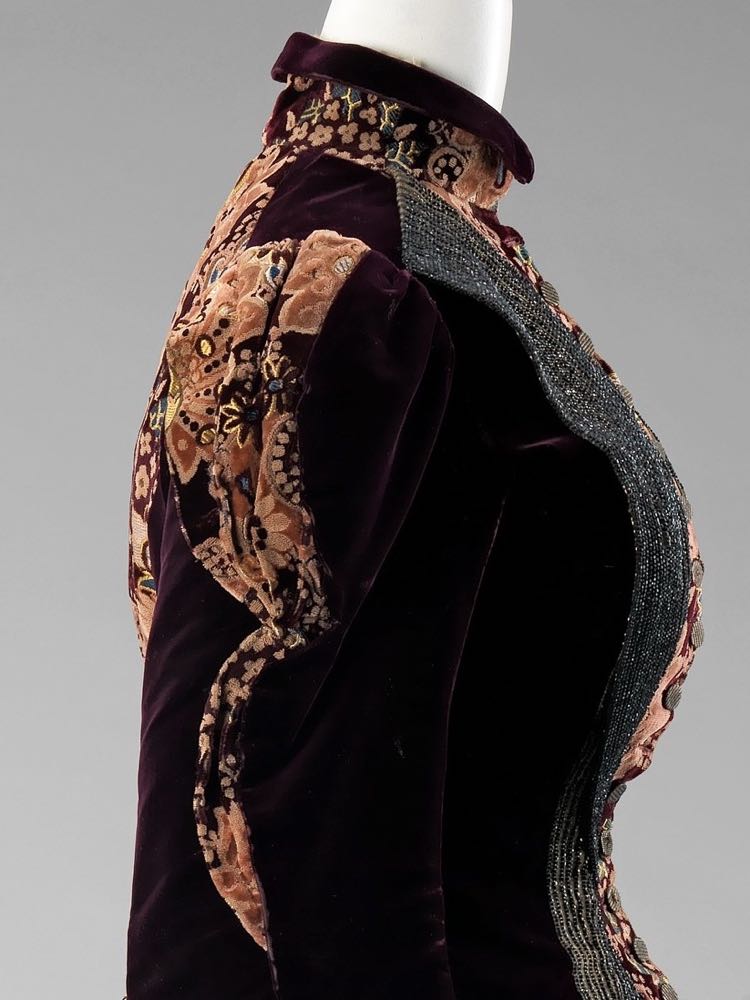
She took rich plum-brown velvet, and paired it with a wildly pattern art-nouveau meets bizarre silk in shades of rust, peach, and bronze, with hints of blue & bronze.

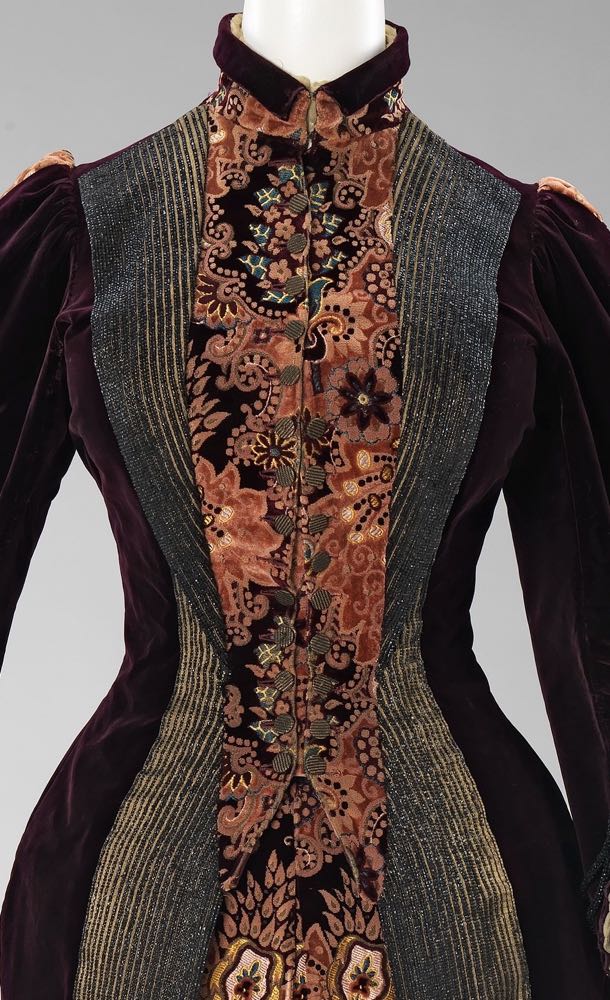
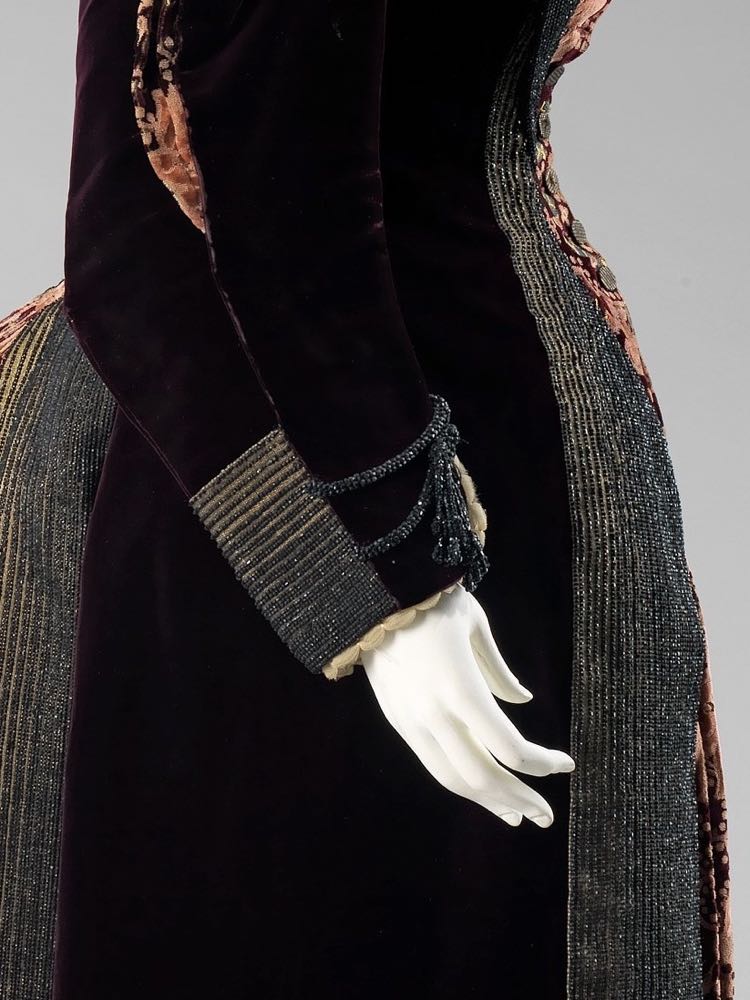
To this she added beads (I’m 90% sure they are cut steel) in shimmering graphite black, arranging them in subtly variegated lines on fawn brown to create a trompe l’oeil effect which enhances the continuous princess lines and nipped waist of the late second-bustle-era silhouette.

On the back of the dress, the beads highlight the bustle, sculpted of the heavily pleated patterned silk (which almost seems to include a velvet or chenille texture).

On the front of the dress the lines of beading are echoed in the stripes of the buttons that frame the front of the dress.  Sadly some of the buttons appear to be missing.  It’s not clear if a full 5-6 buttons are missing at the top of the bodice, or if it switches from double buttons to single from the bustline upwards.

The contrasting textures and lines of the dress create a continual play with the silhouette, and the interplay between compression and volume, soft and hard, tailoring and drapery.

Mixing textures, materials, and fabric trims and manipulation techniques are quite common in later Victorian fashion.  This example is, however, particularly innovative and experimental in its mix.

Retiring it is not.  At the same time, it somehow manages to avoid being quite as shouty as a basic description would suggest.

What do you make of it?

Rate the Dress on a Scale of 1 to 10

A reminder about rating — feel free to be critical if you don’t like a thing, but make sure that your comments aren’t actually insulting to those who do like a garment.  Our different tastes are what make Rate the Dress so interesting.  It’s no fun when a comment implies that anyone who doesn’t agree with it, or who would wear a garment, is totally lacking in taste.

(as usual, nothing more complicated than a .5.  I also hugely appreciate it if you only do one rating, and set it on a line at the very end of your comment, so I can find it!  Thanks in advance!)