I’m very excited about this week’s Rate the Dress choice, because it’s a dress I’ve actually examined* in person. It’s not often that I get to show one of those! I may love it because I’ve seen it, but will you love it for what it looks like?
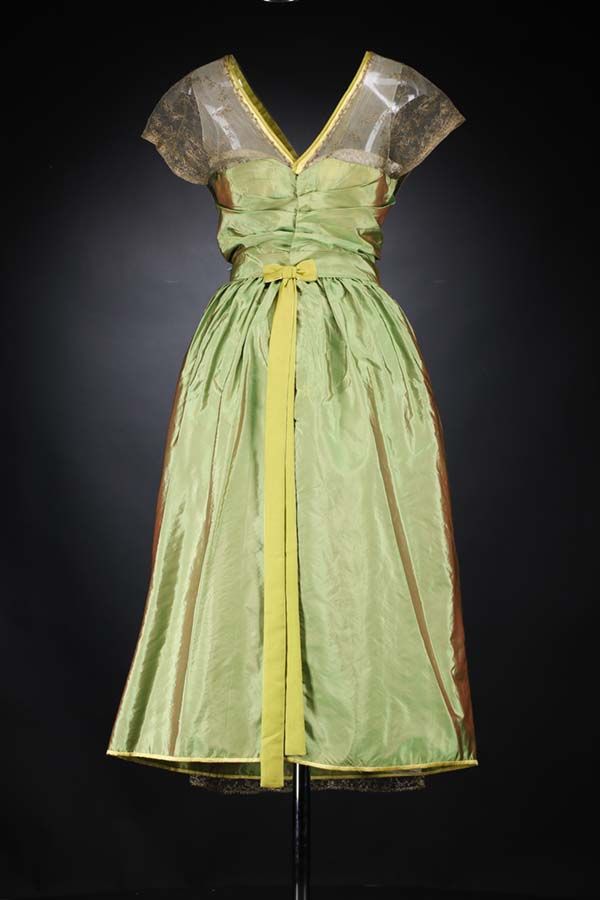
Last week: a late 1910s Lucile dress
Well, Lady Luck doesn’t wear green as far as Lucile is concerned, because a lot of you DID NOT like the dress – though the vivid green colour was one of the few elements that was almost universally popular.
There were a few people who did like the dress for the overall impression it created, but for most of you, it just wasn’t working.
The Total: 5.8 out of 10
Ouch. Anything below a 6 is pretty unusually bad!
This week:
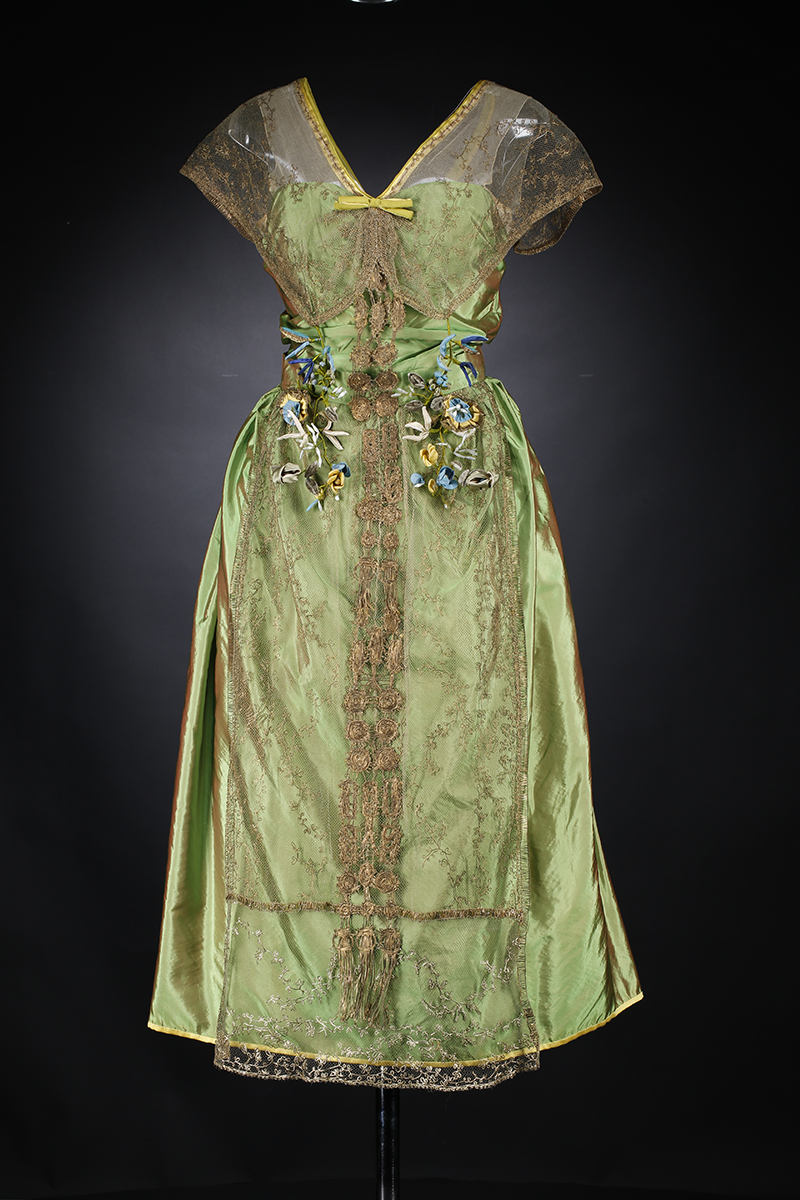
Last week’s Lucile dress may have been a little too heavy on the quirkiest details of 1910s fashions (though you may be surprised to find how many examples of dangling-bust-trim were made in the 1910s), so this week’s pick is an example pared back to the most classic elements of the fashion of its era:

This ball gown is pure late 1830s, from the pale pink-brown shade, to the gentle bell skirt, to the pleated bertha, wide neckline, and little sleeves.
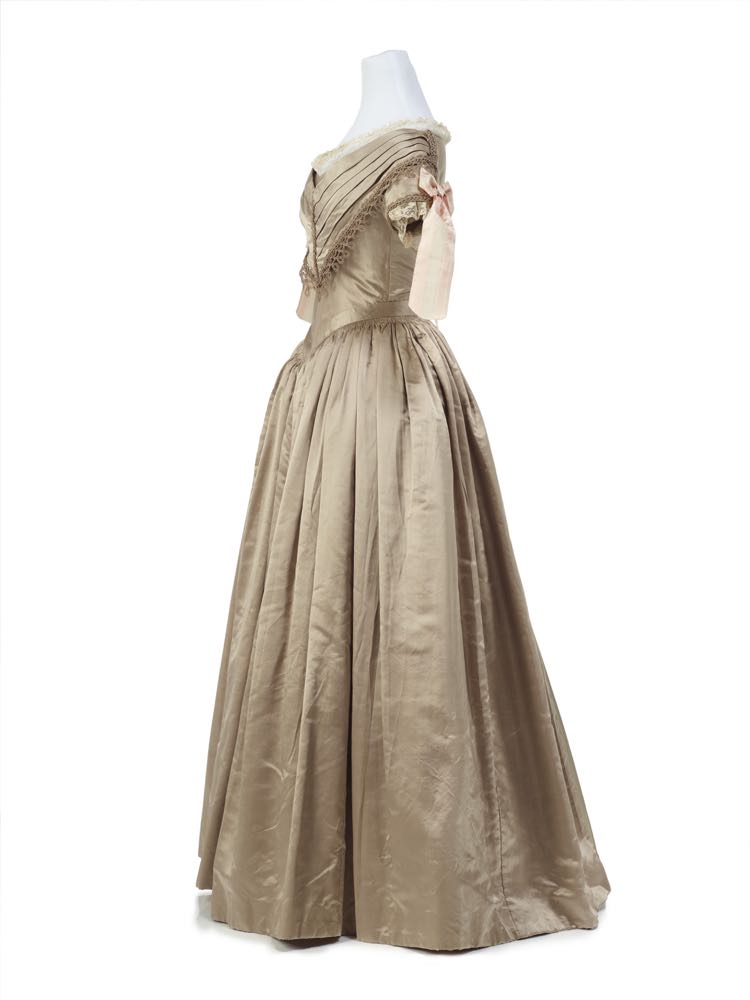
In an era dominated by a small set of standard design elements, the exact application of those elements, and their finish, were what set a garment apart.
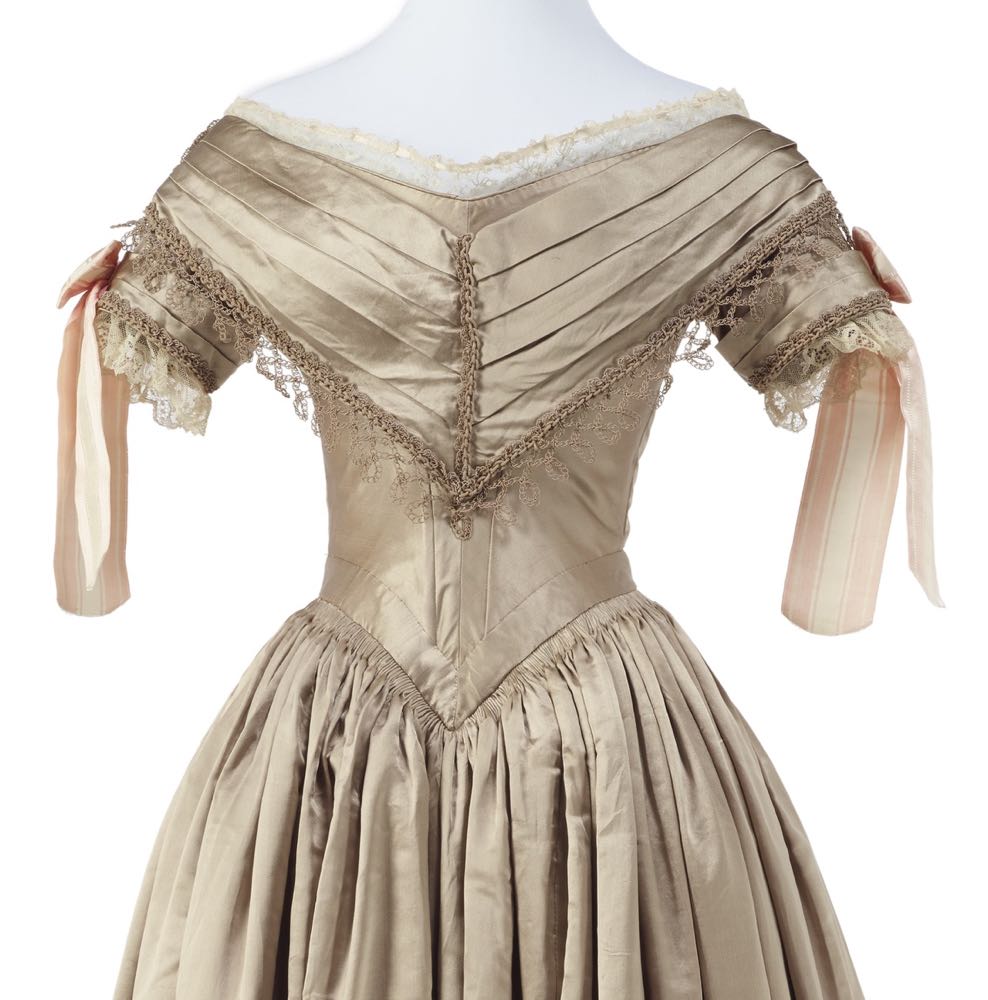
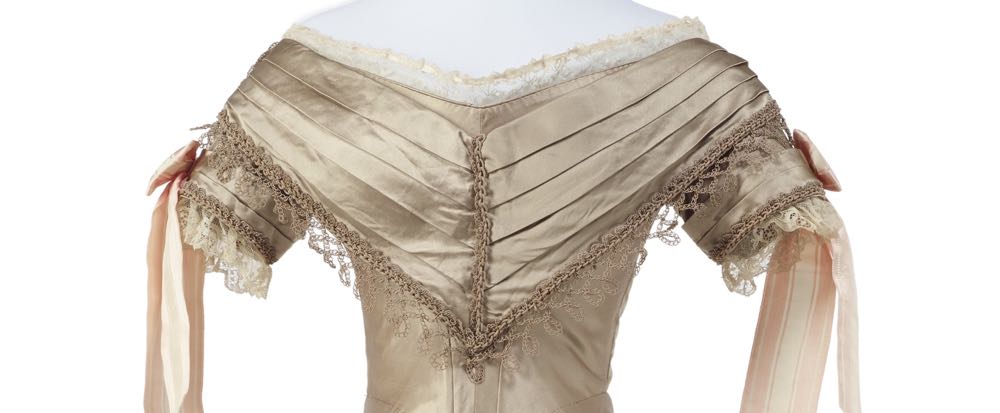
This dress is noteworthy for the tatted trim that edges the berthe and sleeves (possibly a later addition, but I saw no obvious indication of this when I saw it in person – though I wasn’t looking for that), and for the pointed band that frames the waistline, highlighting the tiny, beautifully worked cartridge pleats.
The only elements of contrast are the sleeve bows, which may also have been replaced, but most likely in-period, simply to update and change the look of the dress.
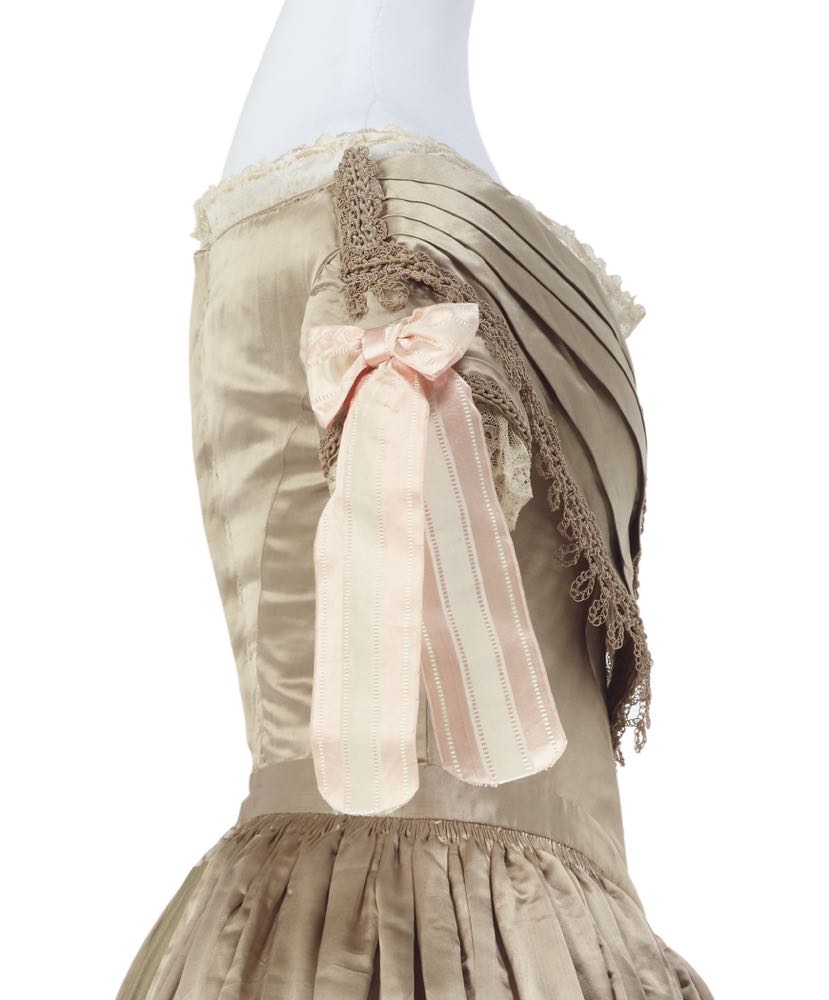
At some point one of the back skirt panels was damaged or removed (I have visions of the wearer standing too close to the fire and scorching her skirts, a la Jo March), so the skirt has been stabilised and conserved with an alternative panel.
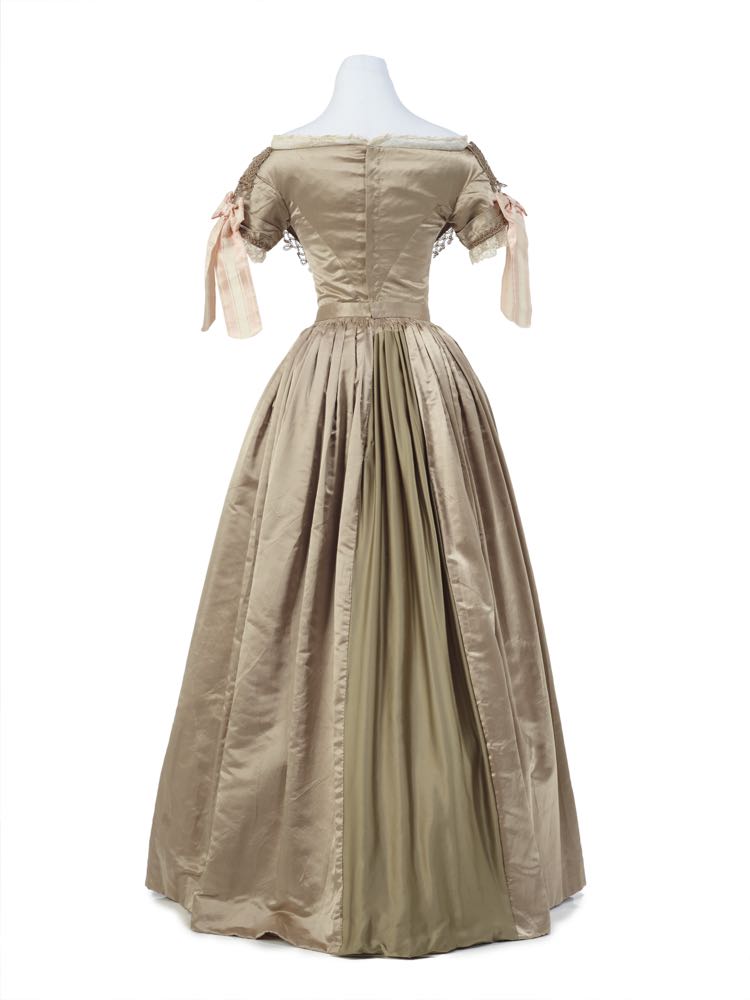
The back view of the dress allows us a clear view of the mechanics of the dress. If I recall correctly it hooked through hand-worked eyelet holes to close.

What do you think? Is this classic ca. 1840s ballgown a classic beauty, or a basic bore?
Rate the Dress on a Scale of 1 to 10
A reminder about rating — feel free to be critical if you don’t like a thing, but make sure that your comments aren’t actually insulting to those who do like a garment. Our different tastes are what make Rate the Dress so interesting. It’s no fun when a comment implies that anyone who doesn’t agree with it, or who would wear a garment, is totally lacking in taste.
(as usual, nothing more complicated than a .5. I also hugely appreciate it if you only do one rating, and set it on a line at the very end of your comment, so I can find it! Thanks in advance!)
*albeit not in-depth, and I didn’t take notes.