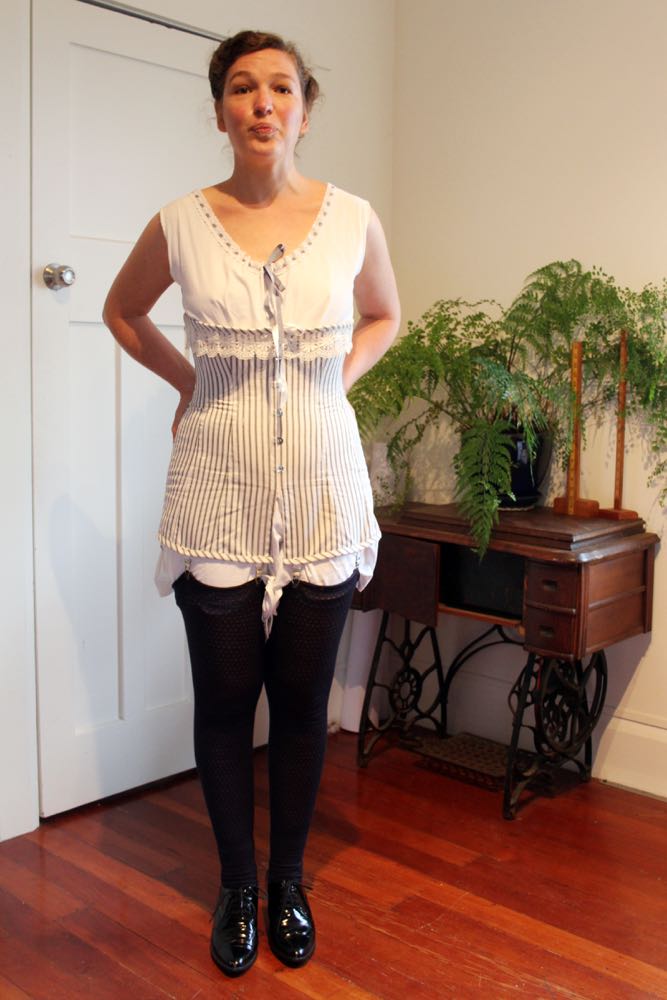
Latest Posts

Rate the Dress: Crinoline Era Purple Stripes

The response to last week’s Rate the Dress was quite a surprise to me, so this week I’ve picked something surprising: a crinoline era dress that combines a very traditional silhouette, and very traditional trimmings, with very unusual fabric, in a very unusual layout.  What will you make of it?

Last week: A blue bustle-era dress with embroidered roses

I can never exactly predict how a garment will be received, but sometimes I can make a pretty good guess.  Less often, I am totally and completely wrong.  Last week was one of those.  I thought the dress was an awful mish-mash of unrelated ideas, in a very unflattering colour combination.  Most of you, however, did not agree!

The Total: 9.2 out of 10

It’s quite unusual for me to think a dress is a 6, and most of you think it’s a 9 or 10 – usually it’s exactly the opposite.  It’s great though: lovely to see totally different perspectives.

This week:

This striking purple and grey number makes full use of its bold, big stripes to accentuate the design details, from the wide collar, to the darts that shape the bodice.

Rows of tasselled fringe in perfectly matched colours, provide a textural counterpoint to the shiny taffeta, and a visual balance to the strong vertical lines.

The front tassels mimic the desired silhouette, and create the faux-front effect fashionable in the 1850s.

Interestingly the fabric layout mixes balanced and unbalanced stripes, and the dressmaker chose to showcase an unbalanced pattern across the back of the dress, creating an interesting visual asymmetry in a dress that is otherwise completely balanced from side to side.

The various available images show a range of colours, from muted pinky-mauves, to almost blue-purple.

What do you think of the stripey-tassle-y concoction?

Rate the Dress on a Scale of 1 to 10

A reminder about rating — feel free to be critical if you don’t like a thing, but make sure that your comments aren’t actually insulting to those who do like a garment.  Our different tastes are what make Rate the Dress so interesting. However it’s no fun when a comment implies that anyone who doesn’t agree with it, or who would wear a garment, is totally lacking in taste.

(as usual, nothing more complicated than a .5.  I also hugely appreciate it if you only do one rating, and set it on a line at the very end of your comment, so I can find it!  Thanks in advance!)
SaveSave

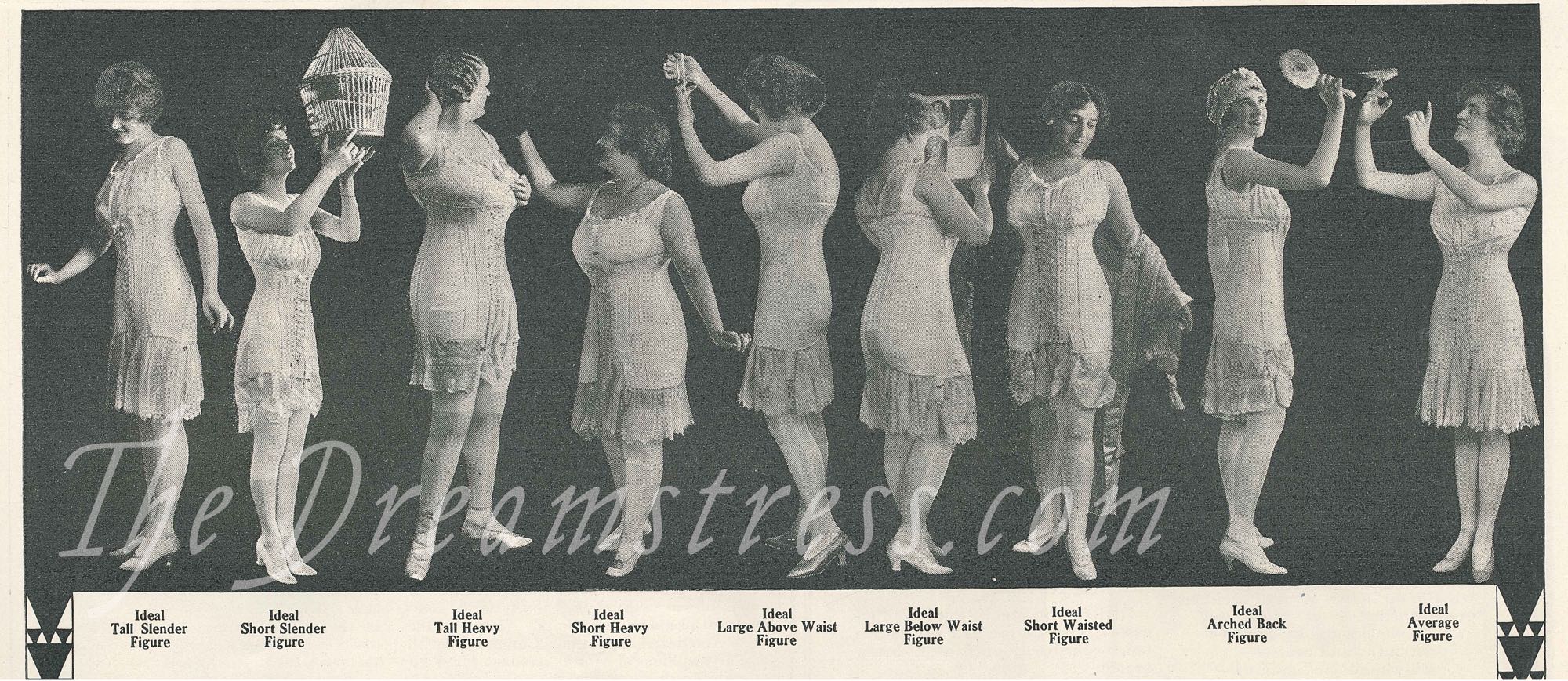
Gossard Corsets ad, The Designer Oct 1916, thedreamstress.com

Building your own 1910s & WWI Wardrobe: The Undergarments

It’s less than a month until Costume College 2018, and my instagram and facebook feeds are full of people panic-sewing for the event.  I’m not going this year, but all the excitement has reminded me of the talks I did last year, and how I’ve never put most of that information online.

In a timely coincidence, a number of people have asked me recently what my favourite Edwardian & WWI era patterns are, and how I built my wardrobe for my Fortnight in 1916 living-history project.

One of my talks at Costume College last year was ‘The Great War Wardrobe‘: an in-depth exploration of WWI era home-front fashion, along with a guide on how to build a complete wardrobe from the period.  I’m still working out how to turn the fashion history side of the class into workable blog posts, but will (hopefully) get those sorted and polished soon.

For now, here is a quick series on where to get patterns to make a 1910s (with a focus on 1914-19) era wardrobe.

Other posts in the series include:

The patterns I’ve included here are from pattern companies I’ve made items from, or have helped students or friends make items from, and can recommend on that basis.

I have not included pattern companies that I do not recommend, or pattern companies I have seen or tested in any way.  I did not include patterns that are essentially modern blocks updated with a period aesthetic: I find that they rarely give the correct look.

Today’s post is all about your 1910s unders – because every good impression starts with your foundations.  My Fortnight in 1916 really demonstrated how much your undergarments change how you stand, and move in your garments, and think about your personal space, and movements, so I really, really recommend making the proper underthings to achieve an accurate impression.

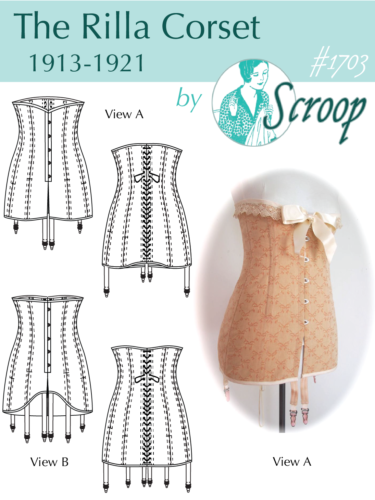
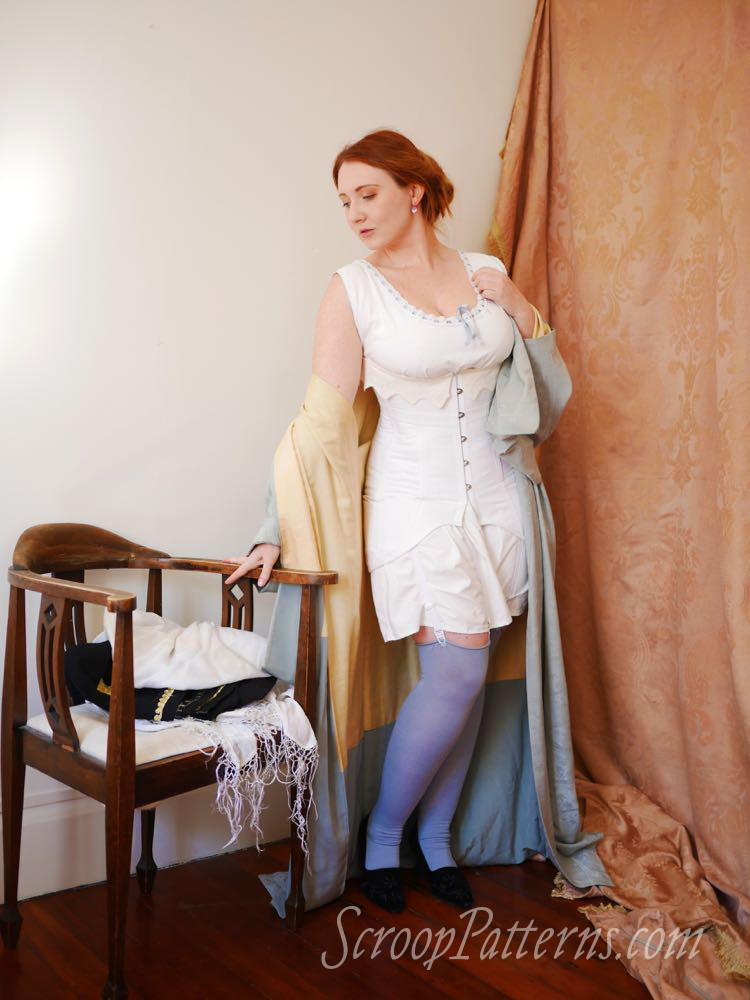
For your WWI wardrobe, first of all, of course you need a corset:

The Scroop Rilla Corset Pattern Scrooppatterns.com

Corsets:          

For more on what you’re looking to achieve with your corset, check out my series on Body Ideals & Corsetry 1913-1921

WWI era corset, Rilla Corset, 1910s Corset, Corset pattern

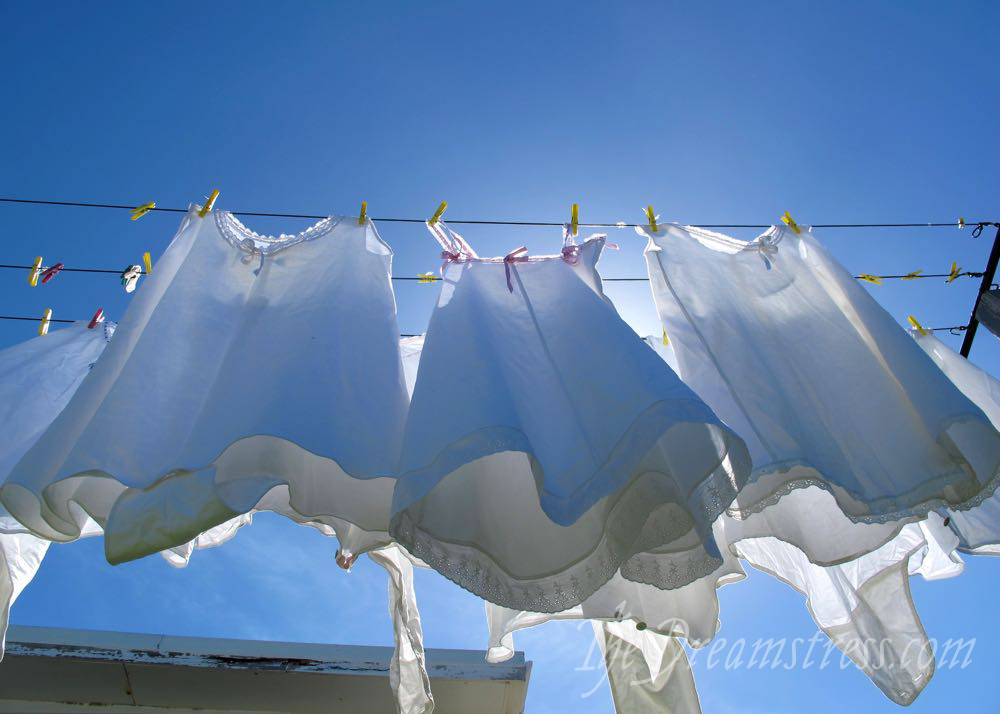
Under your corset, you’ll need some form of undergarments to protect the corset from you, and you from the corset:

Under the Corset:

Multi Sized:  

Single Sized:

See also Wearing History’s excellent research into knit undergarments in the Edwardian era.

1917 combinations and petti-slips thedreamstress.com

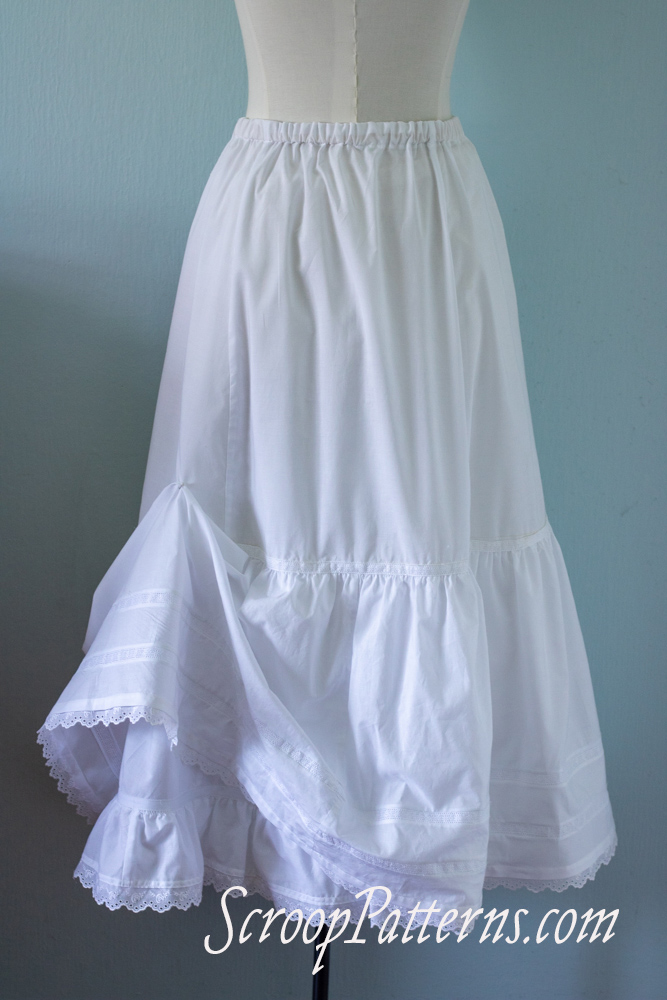
Over the Corset:

Multi Sized:  

The Scroop Patterns Ettie Petticoat View C scrooppatterns.com

The Scroop Patterns Ettie Petticoat View C scrooppatterns.com

Negligee:

Single Sized

Because every well-dressed WWI era lady needs an elegant robe or negligee to swan about the house in!

Books:

There are also lots of books that include scaled patterns for corsets and other undergarments from this era (well, primarily corsets).  I recommend:

  • McNealy, Marion. Corset Cutting & Making (this book is amazing)
  • Salen, Jill. Corsetmaking: Historical Patterns & Techniques
  • Waugh, Nora. Corsets & Crinolines

I’ll be putting up the rest of my guide over the next two weeks!

Clothing for a Fortnight in 1916, thedreamstress.com

Blue-grey silk faille day dress with applique, embroidery, and beading, Label- Mme. Chamas, 66 rue des Petits Champs, Paris, France, ca. 1890, Kentucky State University Museum 1983.1.178 ab

Rate the Dress: Bustle Era Roses

Last week’s dress wasn’t exactly a universal success.  But it did spark a lot of very interesting conversations about what it was worn for, and what inspired its design.  And interesting discussions are what Rate the Dress is really about.  So, whether you like it or not, hopefully this week’s pick will be equally interesting.

Last week: A young lady’s formal day dress, ca 1915

Half of you loved the ca. 1915 day dress, or could at least see what it was going for, and rated it consequently.  But the other half of you didn’t like, well, so many things: the not quite white colour; the almost symmetrical front and back; the way the ruffles didn’t carry around to the front of the skirt; the fussiness; the details on details; and most of all, the vertical bow.

I really enjoyed all of the suppositions about the design influences and purpose of this garment: Mrs C showing how effective it would be in black and white photography, Hvitr’s guess that it might very well be inspired by the Knossos excavations, Susan pointing out that it would be perfect for a piano recital.  Interestingly, no one online noticed that the vertical bow that vexed so many of you was probably based on obi.

The Total: 6.9 out of 10

I hope our young lady did better at her piano recital!

This week:

Since rose red wasn’t such a hit last week, this week I’m trying for literal roses: or at least figural ones, embroidered on an 1880s skirt.

I think we’ll all have to agree that the embroidery on this dress is spectacular.

It’s lush, opulent, and unique.  And the pairing with the appliques is quite striking.

I really wish there were more images of this dress, showing the details and the angles.  Sadly, we’ll have to rate it just on the front view.

What do you think?  Is embroidery + applique a success?

Rate the Dress on a Scale of 1 to 10

A reminder about rating — feel free to be critical if you don’t like a thing, but make sure that your comments aren’t actually insulting to those who do like a garment.  Our different tastes are what make Rate the Dress so interesting. However it’s no fun when a comment implies that anyone who doesn’t agree with it, or who would wear a garment, is totally lacking in taste.

(as usual, nothing more complicated than a .5.  I also hugely appreciate it if you only do one rating, and set it on a line at the very end of your comment, so I can find it!  Thanks in advance!)