Latest Posts

1795-1800 muslin dress thedreamstress.com

A mental meh and a very-end-of-the-18th-century muslin gown

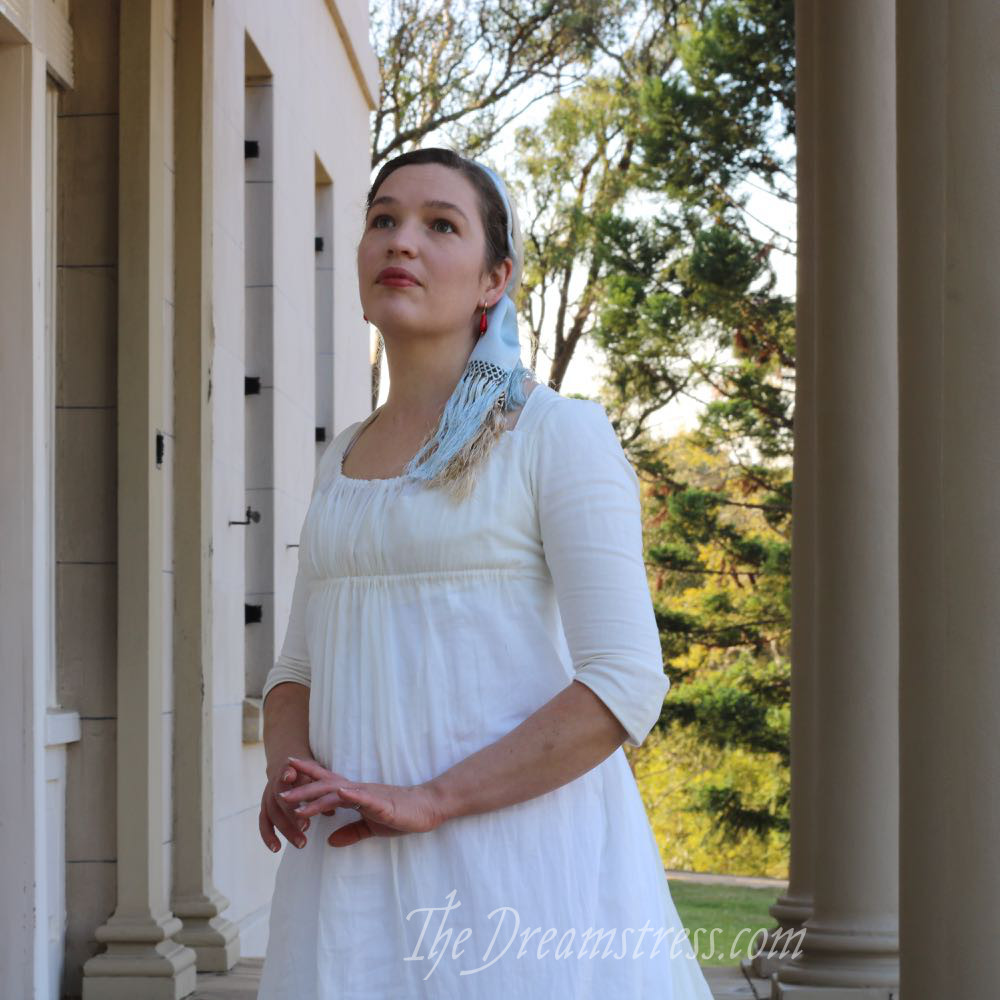
I was really excited about my trip to Australia, and an opportunity/excuse to make a new ca. 1800 dress.

I’ve done very little historical sewing since last Costume College, and I’m definitely missing it.  Regency has been on my sewing wishlist for quite a while.  I had a length of muslin I found at an op-shop that was just asking to be a simple almost-white dress.

Should be perfect!
1795-1800 muslin dress thedreamstress.com

Unfortunately I’m pretty meh about the result.

I’m not sure if it’s really the dress, or simply in my brain.

I’m currently going through a really hard patch as a costumer and historical sewer.  Mentally, I need a certain amount of time to focus on a project in order to really do a good job.  And I also need to keep in practice in order to not only to keep growing as a historical sewer, but to just stay at the levels of sewing that I’ve achieved in the past.

And for the last few years I just haven’t managed to make that time.  Between starting Scroop Patterns, teaching sewing, buying+painting+repairing a house, blogging*, running the Historical Sew Monthly, and some big personal life stuff, I’ve had little space for large-scale historical costuming.  There have been no more Ninons.

(*And you’ll probably have noticed that I haven’t been nearly as prolific at blogging as I was in the past…)

I’ve made a lot of great little things for the HSM, and my stocking and chemise stash is in pretty good shape, but full outfits?  Impressive dresses?  It doesn’t feel like it.

Emotionally I’m finding it really hard.  I see all these other costumers making all this amazing stuff, and the few bigger things I’ve managed to make I feel like I need to totally take-apart and re-make to get them to where I want them to be.  On a logical level, I know I’ve been doing an impressive amount of things over the last couple of years – they just haven’t been costumes.  But emotionally my brain beats me up for not making as much as I think I should be able to, and not making them as well as I know I can.

I’ve been making some pretty big life changes that will hopefully give me a bit more time for costuming (though on a pragmatic level, I will be spending most of the extra time on Scroop), so that’s something to look forward to.

For now, I’m just trying to decide if I like this gown as it is, or if its another thing that’s going on the re-make pile.  Or if I should just leave be and turn my energy to the next thing, even if I’m not happy with the dress as it is.
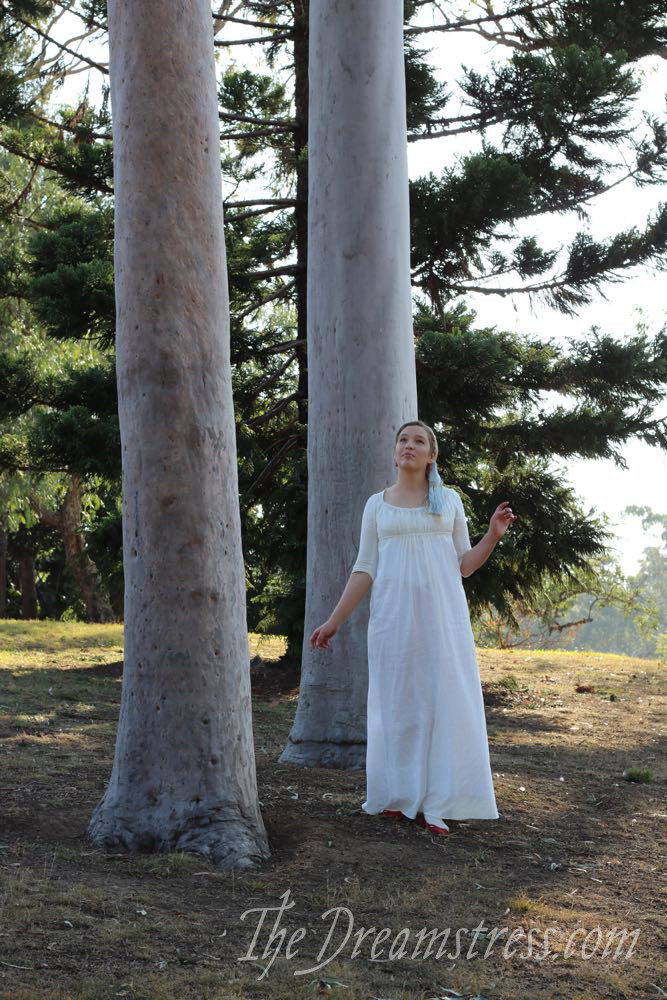
1795-1800 muslin dress thedreamstress.com

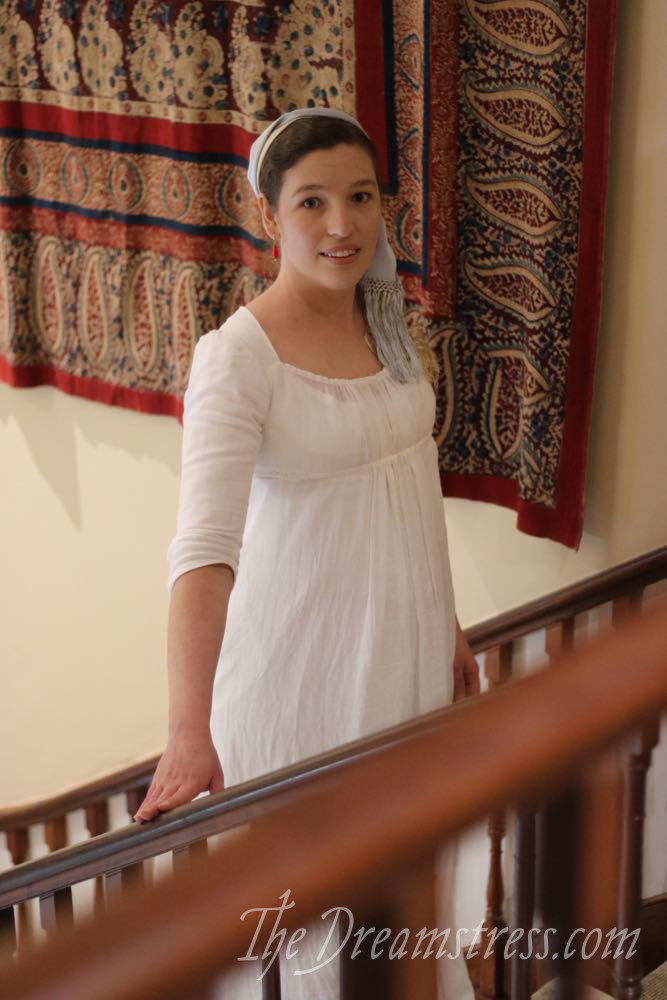
I’m not even sure why I’m so un-thrilled with this dress.  I gave myself enough time to make it (just), and managed to make and finish it pretty much as I’d intended and hoped.  The long seams are machine sewn, and everything else is hand-done and finished.
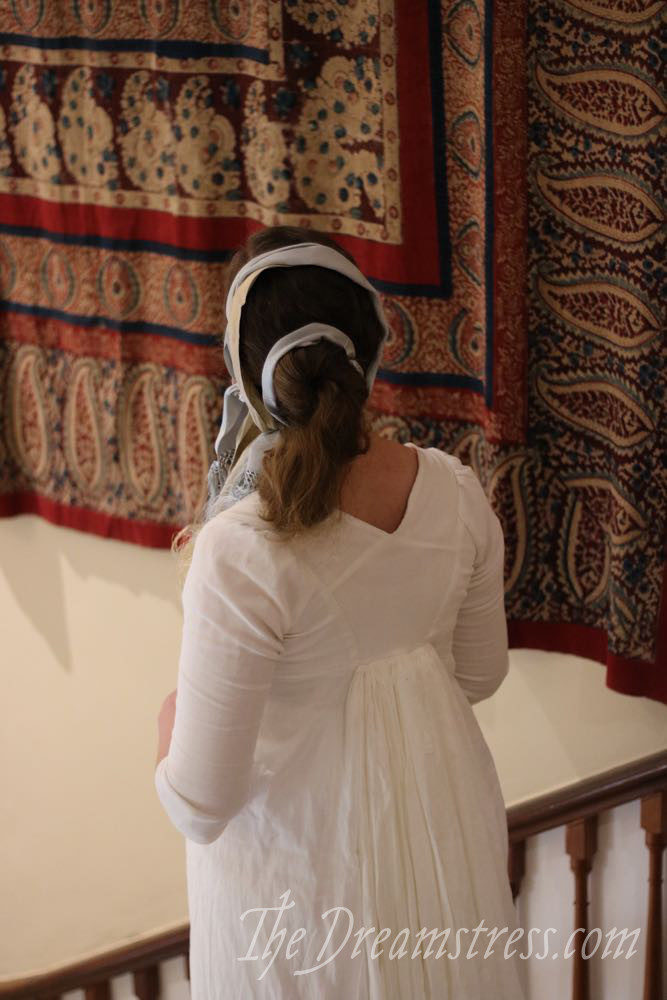
1795-1800 muslin dress thedreamstress.com

I didn’t get the back neckline quite right, which is causing some slight rippling along the neck seam.  However, it’s easily fixable with a little more pressing and some stabilising stitching.

I also need to tweak the fit of the sleeves a tiny bit, but that is also easily fixable, and something I expected: I put the sleeves in without time to check their fit, and planned on adjusting them as needed.
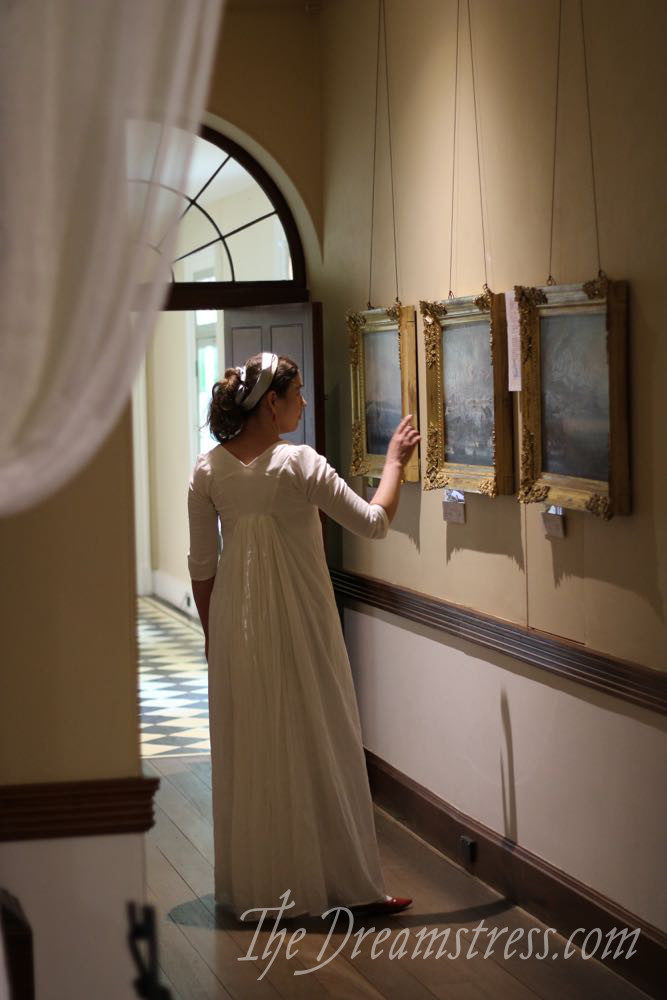
1795-1800 muslin dress thedreamstress.com

I’m not entirely convinced by the bulk of back gathers.

My base patterns was the silk 1795-1800 round gown from the Daughters of the American Revolution  An Agreeable Tyrant catalogue.  I made almost no adjustments to the bodice (I graded it up less than a size).  When it came to the skirt, I used the pattern piece sizes, tweaked slightly to best fit my fabric, but I completely ignored the skirt pleating of the original.  I just made the front fullness match that of the bodice, and gathered all the rest to match the triangle of the back bodice, inspired by portraits like this.

It’s fun, but it’s a LOT of gathers in one place.
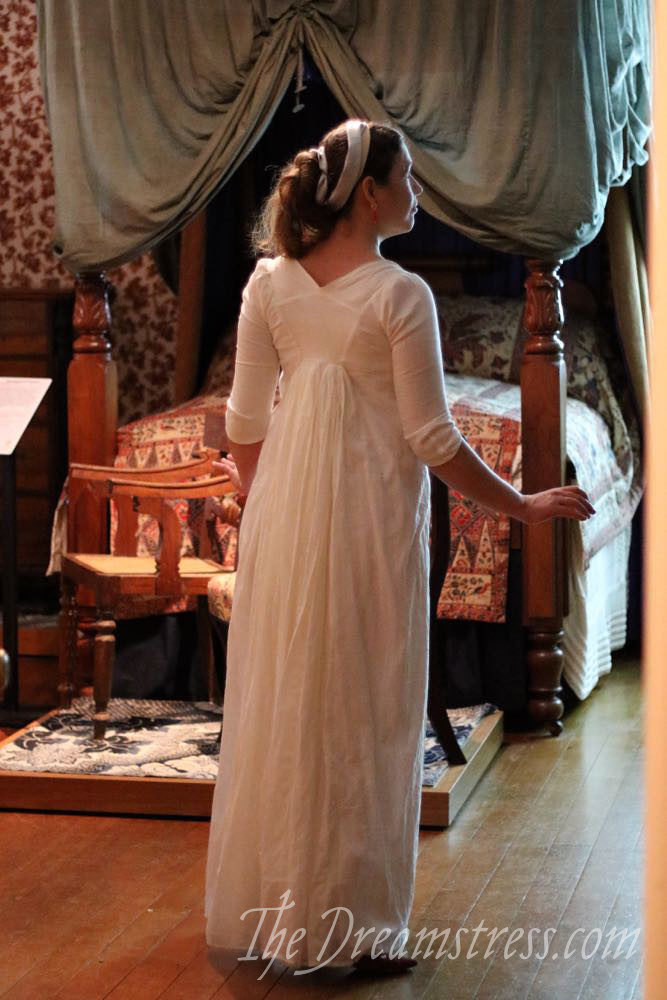
1795-1800 muslin dress thedreamstress.com

Maybe my ambivalence is that the dress, while lovely, isn’t exciting or memorable.
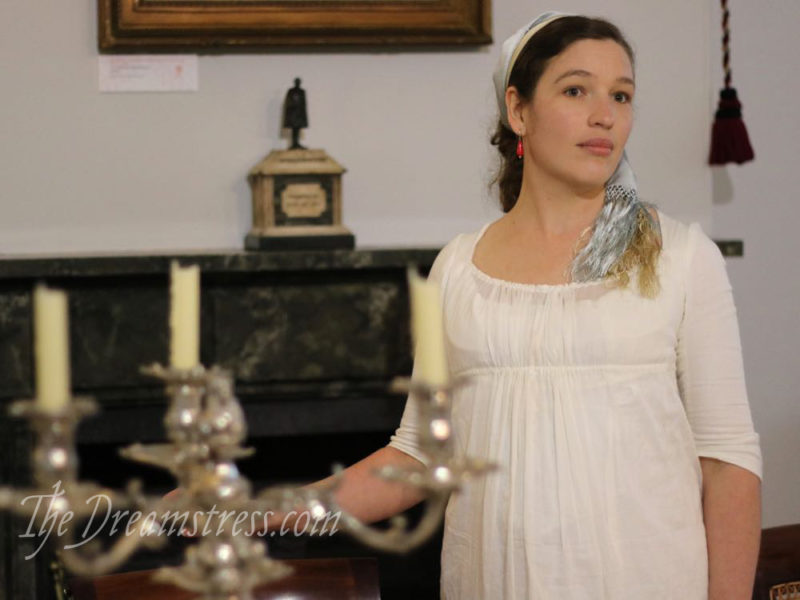
1795-1800 muslin dress thedreamstress.com

Or maybe it’s that, as I was making it, I had a design epiphany. I was checking the fit of the bodice and realised the muslin is so sheer that it looked beautiful on its own over my skin.  It would look beautiful as something like the dress in  Lefèvre’s Portrait of a Woman Holding a Pencil:
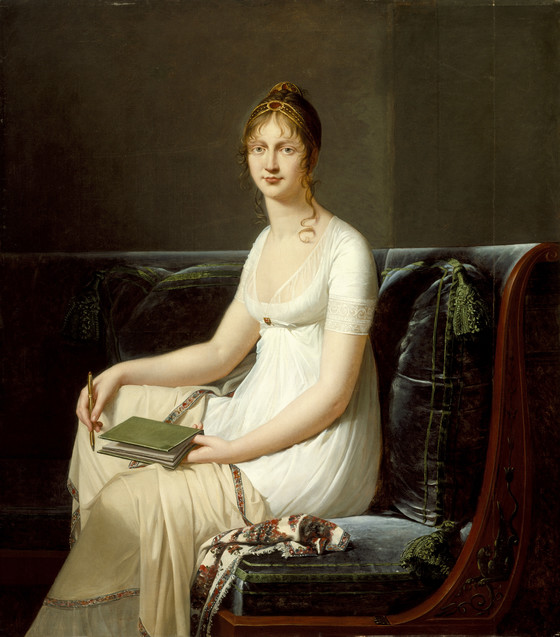
Portrait of a Woman Holding a Pencil and a Drawing Book Robert-Jacques Lefèvre (France, 1755-1830) France, circa 1808, LACMA, M.73.91

Portrait of a Woman Holding a Pencil and a Drawing Book, Robert-Jacques Lefèvre (France, 1755-1830) France, circa 1808, LACMA, M.73.91

I didn’t have the time to re-make the dress to fit my new idea – and I wasn’t even sure it would work.  It would have required turning it into a wrap-front dress (because there would be no way to get in and out of it otherwise), completely unpicking the skirt, and re-adjusting the fullness to accomodate the wrap.

I might still do it, but I certainly couldn’t in the last day before I headed of to Sydney – so I finished it as it was, and I don’t love it.  Or at least I don’t love at this exact moment.

1795-1800 muslin dress thedreamstress.com

It is however, done, and making a thing is pretty exciting.

AND it qualifies for the June Historical Sew Fortnightly challenge: Rebellion & Counter Culture.

HSM #6 2018: Rebellion & Counter Culture

While simple cotton classically-inspired dresses were the predominant fashion of the last years of the 18th century, and the first years of the 19th, they were both a sartorial rebellion against the lavish silk gowns that were associated with the ancien regime, and later, against Napoleon’s attempts to support the French silk industry by dictating that silk dresses must be worn at court.

In Europe at least, they were most strongly linked with fashionable women who challenged societal standards, from Madame Recamier, to Lady Hamilton.

Because I was making my dress to be worn at a Regency era house in Australia, I tried to find a more local inspiration for it.  I found a basis in a woman who was associated with a more political rebellion: Elizabeth Macarthur, wife of John Macarthur, who was responsible for instigating Australia’s Rum Rebellion.

While John was a bit of a loose canon and perpetual rebel, Elizabeth was so kind and charming and tactful that she was accepted everywhere, even when her husband was technically a criminal in exile. Elizabeth was the first soldier’s wife to arrive in the infant Sydney, and ran her husband’s farms on the (numerous) occasions he had to flee Australia because of legal troubles.

Her ability to retain respect, and remain in control in spite of adversity, could be considered a counter-rebellion: using tact and helpfulness to change a situation, instead of the open rebellion her husband favoured. I felt this modest version of a ca. 1800 frock was both suited to the New South Wales climate, and to descriptions of Elizabeth as quietly elegant in her dress.
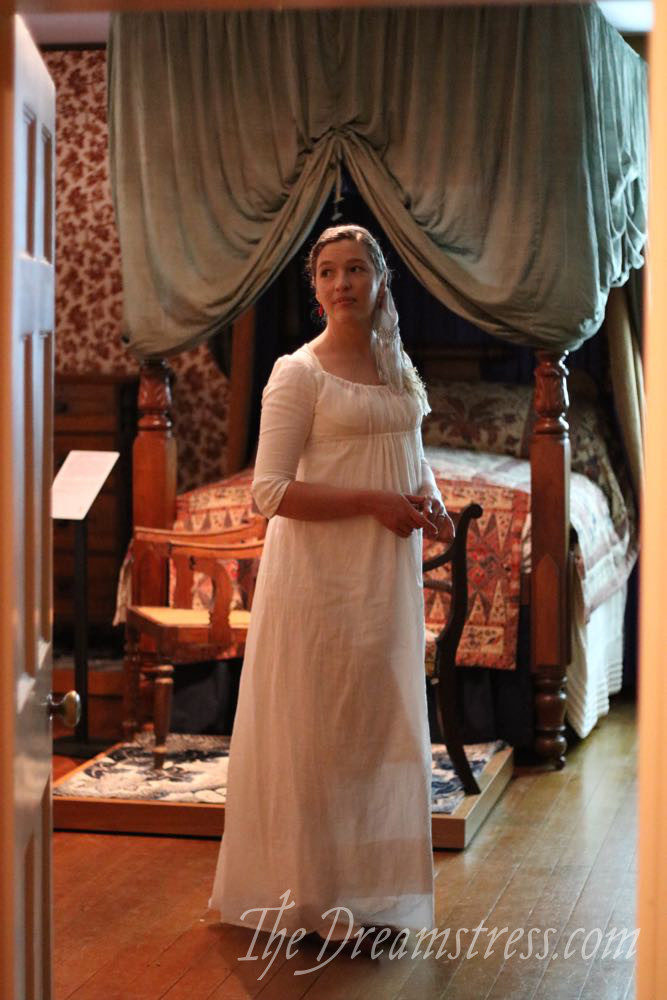
1795-1800 muslin dress thedreamstress.com

Just the facts ma’am:

Material: 3.3m of cotton mull, 1m of linen

Pattern: primarily based on the late 1790s bib-front gown in An Agreeable Tyrant, with the quirks from altering the dress from an older style removed, the front adapted to be a round-gown instead of a bib-front, and the back pleats changed to gathers.

Year: ca. 1800  (keeping in mind that Australia would have been slightly behind the times in terms of fashion)

Notions: cotton thread, cotton tapes

How historically accurate is it? I machine sewed the long skirt seams, and made my best guess as to how a round-gown would be adapted from the pattern. My armscye seam finishes are based on Modern Mantua Maker’s 1800s gown which she made based on one of the Agreeable Tyrant dresses – her research is impeccable, so I trust her when she says this is an accurate finish, but I did not do the research myself, and have never seen the technique on an extant garment. Because I can’t verify all my techniques, I’d say 70%

Hours to complete: 20-30

First worn: Sat 26 June, to give a talk about the Indian influence on Western fashion for the National Trust of NSW, and then for a photoshoot at Old Government House, Parramatta. Elizabeth Macarthur almost certainly visited OGH, and was friends with Elizabeth Macquarie, the Governor’s wife, despite their husband’s mutual enmity.

Total cost: I found the mull at an op-shop for $4 (!!!), and the linen was also an op-shop purchase, so the whole thing cost less than $10.
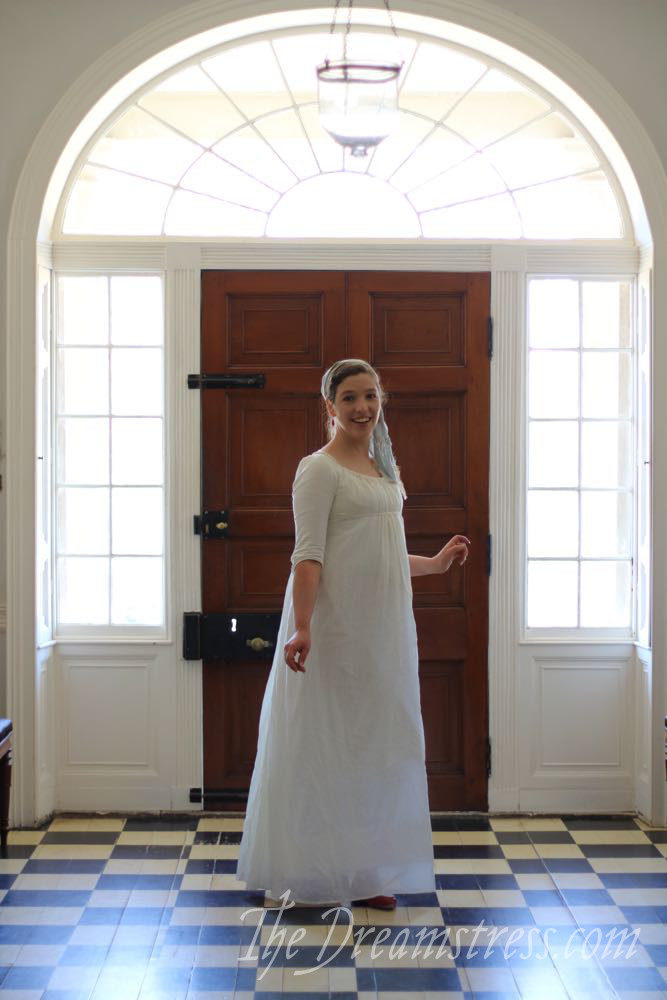
1795-1800 muslin dress thedreamstress.com

SaveSave

SaveSave

SaveSave

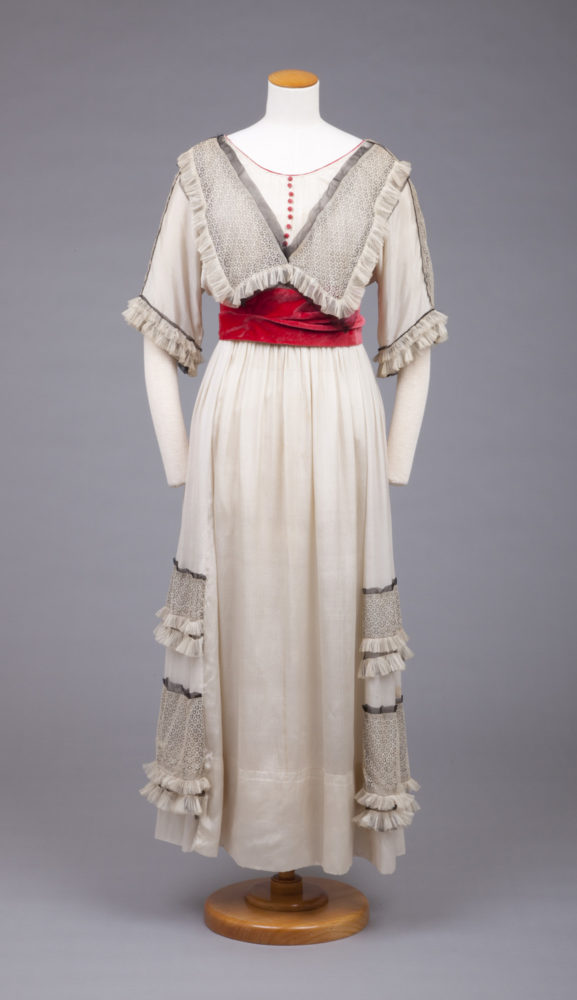
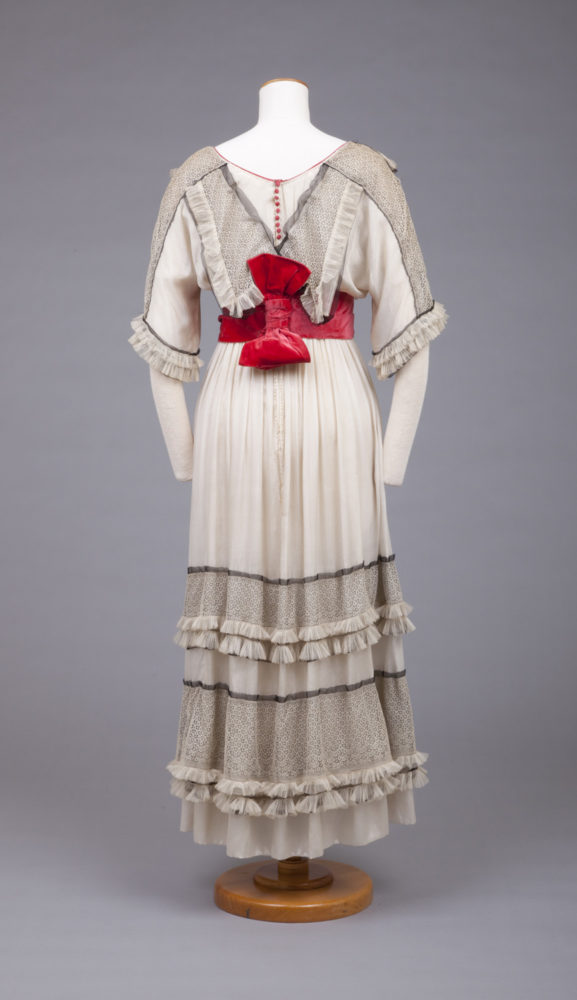
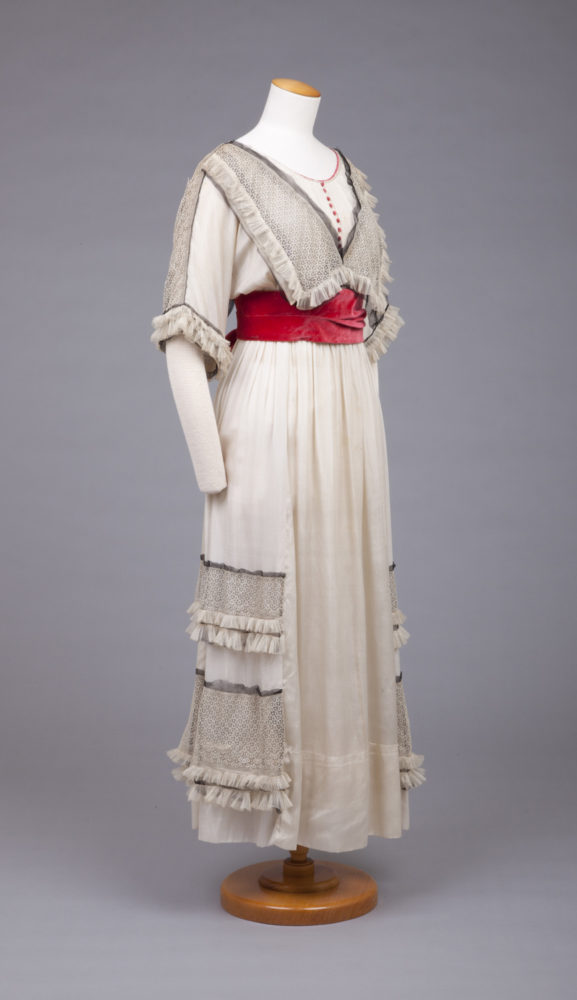
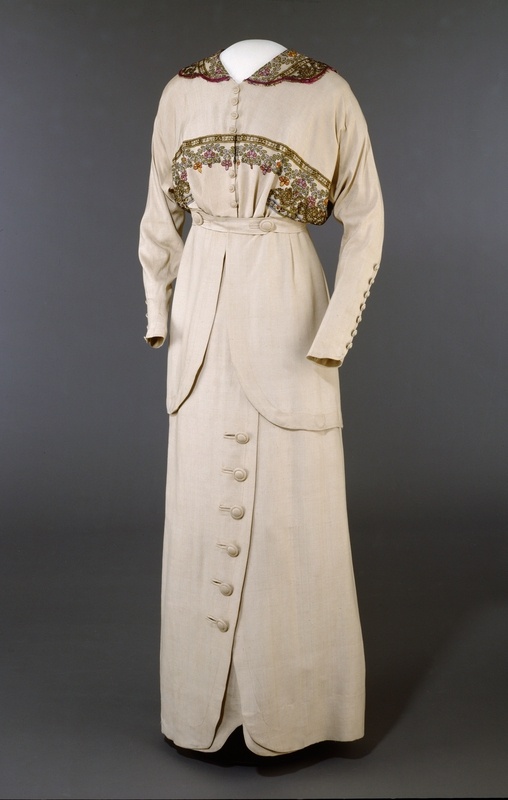
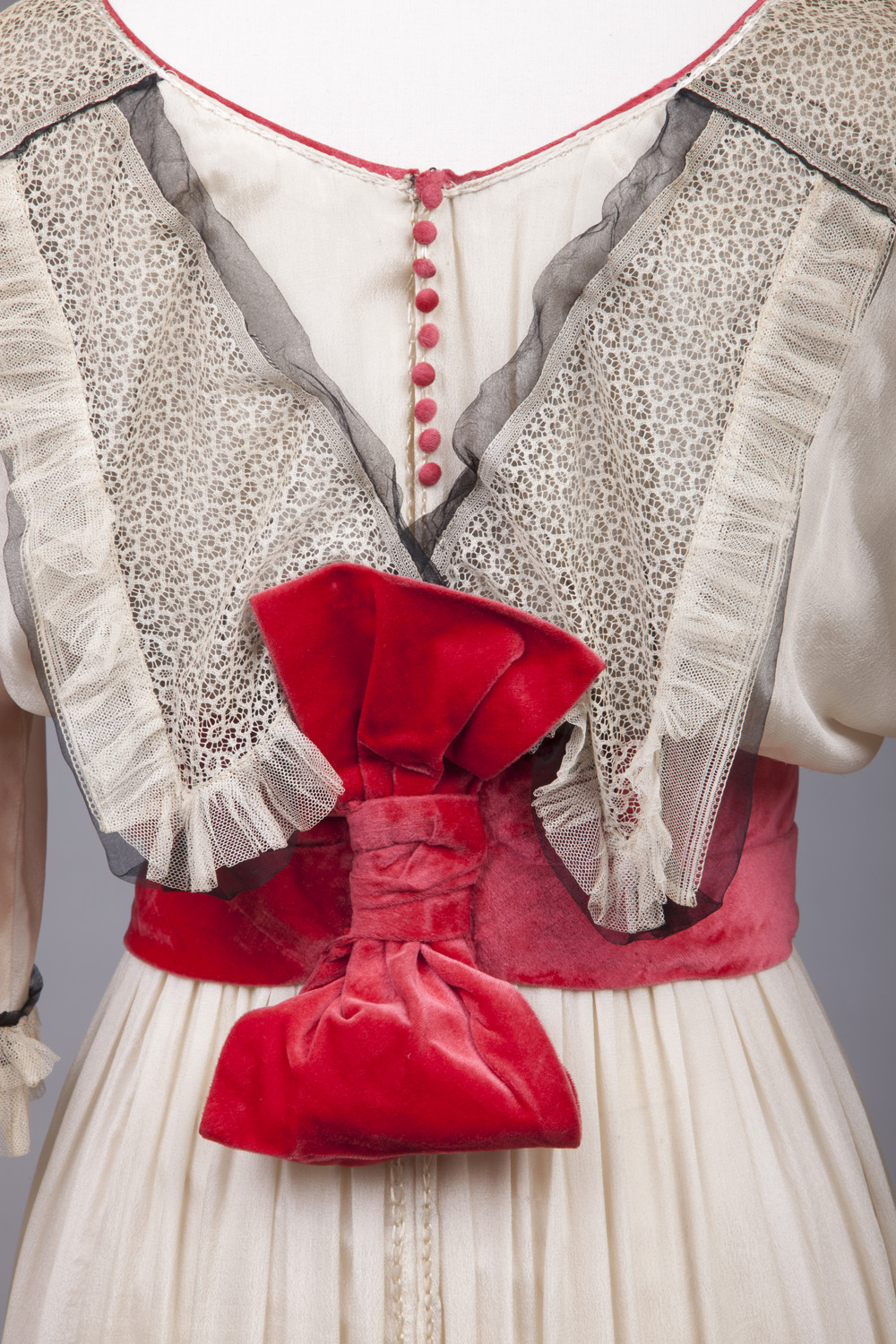
White Crepe De Chine Afternoon Dress With Rose Velvet Waist Girdle, 1910-1915, Goldstein Museum of Design, 1977.031.004

Rate the Dress: Not-Quite Snow White & Rose Red 1910s Day Dress

We’ve been on a great run of high scores for Rate the Dress.  Last week’s dinner dress elicited lots of words like ‘smart’ and ‘restrained’ and ‘elegant’.  I feel pretty confident predicting that this week’s 1910s day dress won’t be getting quite those words – but there are other ways to compliment a frock!  Let’s see if it is compliments, or criticism.

Last week:  A ca. 1820 dinner dress in chine silk

As mentioned, very positive reactions.

The Total: 9.2 out of 10

Another winner!

This week:

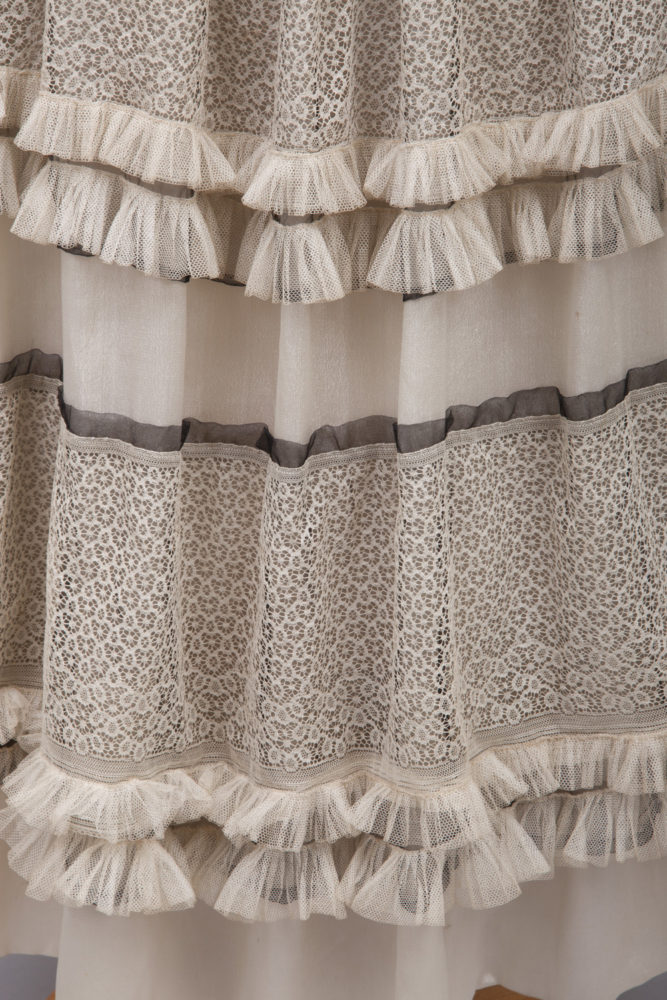
This week I’m going from dark to light, but to a garment and era that actually repeats many of the same shapes and design lines seen ca. 1820, just not in an immediately obvious way.  Start looking, and you’ll see how many are there, from the V-shaped upper bodice interest, to the horizontal hem embellishments.

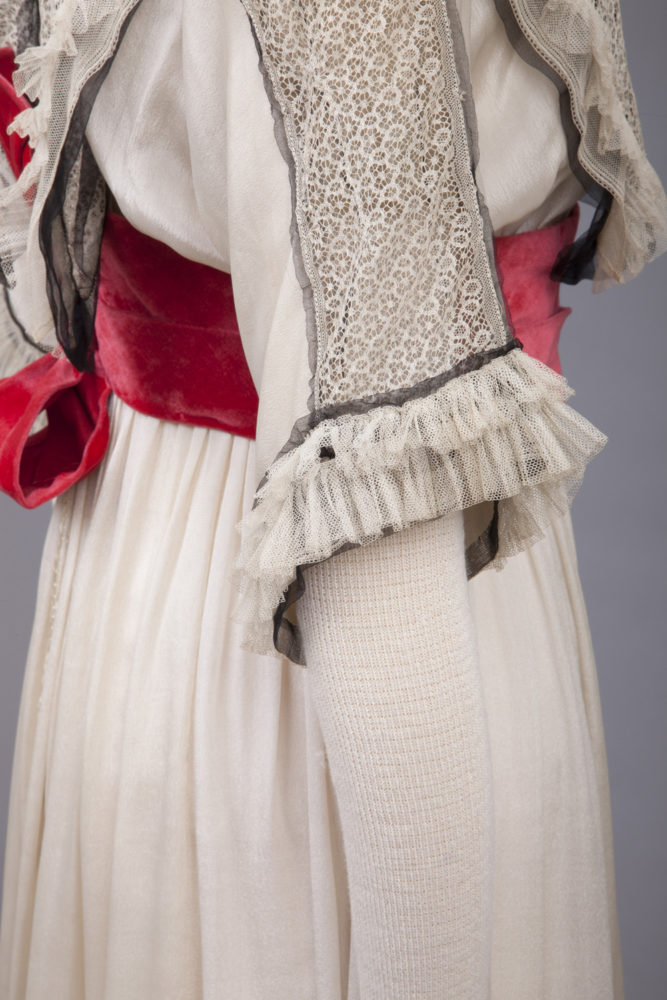
The long sleeves and general design of the dress mark it as daywear.  However, the layering of luxe silk and lace fabrics, and inclusion of the bold rose-red velvet sash are elements more typical of evening fashions.   This suggests the dress was worn for quite a formal daytime event.

It’s definitely a youthful garment: something for a girl’s high-school or college graduation perhaps.

The inclusion of the bright rose-red, and the black tulle, do give it a definite sense of aspiring maturity peeking out from the sweet girlhood overtones of the white ruffles.

Though the silhouette is still relatively long and slim, the gathered skirt, and nod towards side and back gathering in the trim that covers the sides and back of the skirt hint towards the growing volume of 1910s skirts.  The volume would peak in 1916 with the brief vogue for the bell-shaped crinoline-revival silhouette.

What do you think?  Does this balance youth and innocence with its aspirations to be a bit daring and avant garde?  Does the mix of textures and colours add depth and interest, or just make it not-one-thing or the other?

SaveSave

SaveSave

Bridesmaid dress, House of Worth (French, 1858—1956), silk with pearl trim, 1896, American, Metropolitan Museum of Art

The Historical Sew Monthly 2018: Inspiration for Challenge #7: Sleeves

The July Challenge in the Historical Sew Monthly 2018 is Sleeves, and I’m extremely excited to see what people do with it.  It’s such an easy challenge to interpret and fulfil, and there are so many possibilities.

Because it’s such an easy challenge to find a project for (just make anything with sleeves that are in some way interesting and significant!)  I’m just going to show you some of my favourite (or, in the case of late 16th century examples, least favourite) sleeves from throughout history.

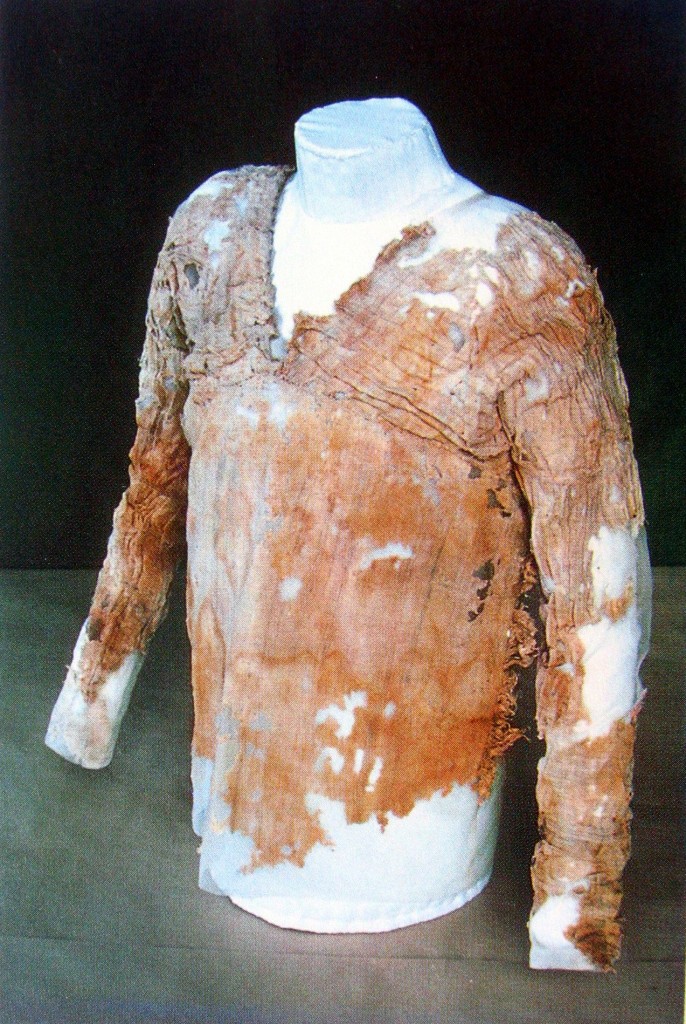
And I mean it when I say throughout history, because the oldest known extant garment, this 5,000 year old tunic/shirt, has fascinating sleeves which have been purposefully pleated or ruched to give them shape and interest:

Pleated tunic, Ancient Egyptian. 1st dynasty, c. 3100-2890 BC. Werner Forman Archive/ University College London, Petrie Museum

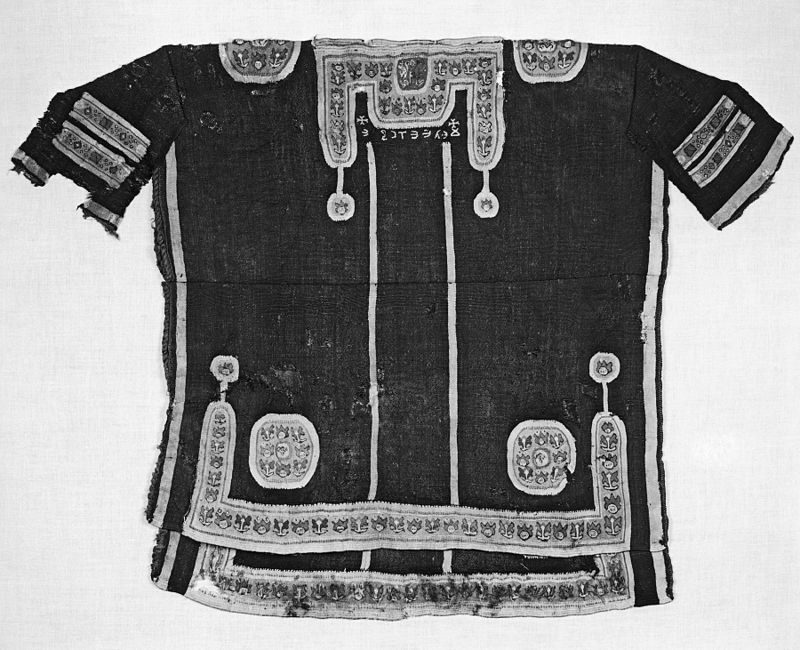
Only 3,400 years later, this Coptic tunic from the same area of the world features quite simple sleeves, but beautifully decorated:

Coptic-Byzantine wool tunic, 6th century AD, Walters Art Museum

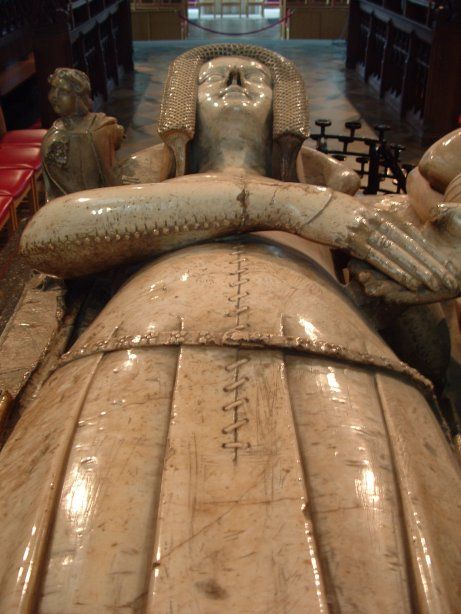
I love Medieval fitted sleeves, especially ones with lots of buttons.  If you’re trying to fit your own pair of 14th century sleeves, you may find my post showing how I fitted and patterned mine quite helpful.

Effigy of Katherine, Countess of Warwick, died 1369

The late Middle Ages are full of fantastic sleeves, with five different kinds of amazing sleeve-ness shown below, from enormous dagged houpeland sleeves, to very fitted short sleeves with falling tippets.

Full-bodied houppelandes with voluminous sleeves worn with elaborate headdresses are characteristic of the earlier 15th century. Detail from Très Riches Heures du Duc de Berry

Houppelandes with voluminous sleeves, 1412-16, Detail from Très Riches Heures du Duc de Berry

For early 16th century examples, I couldn’t go past an example of Northern German sleeves with their horizontal stripes, interesting slashing, and elongated cuffs.

Portrait of Catherine of Mecklenburg by Lucas Cranach the Elder, 1514

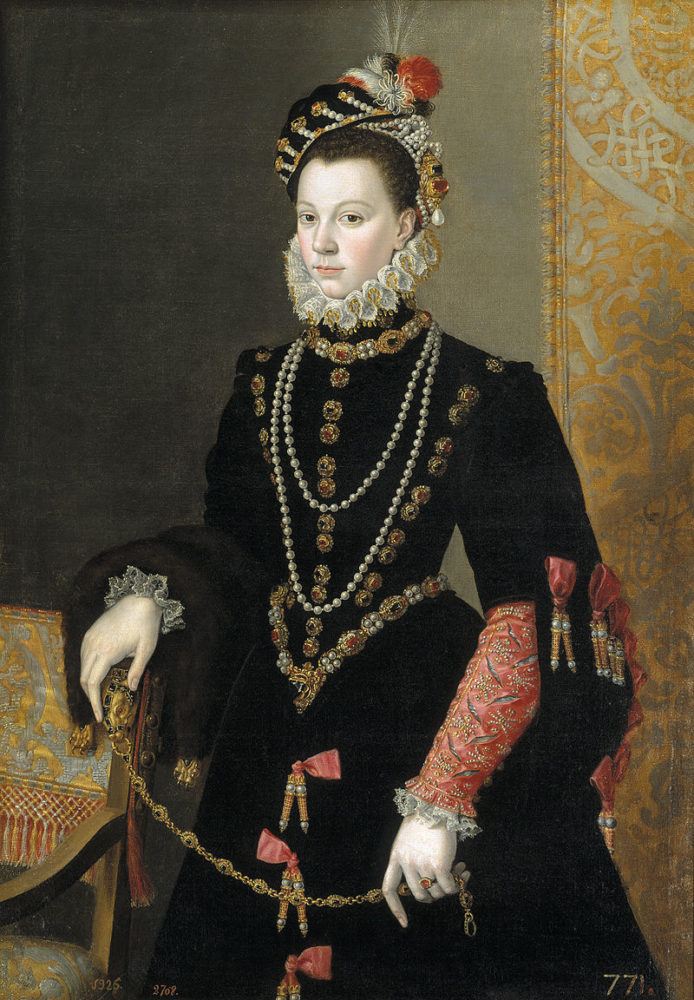
I adore the more restrained slashing and elaborate oversleeves with their tie embellishments on  Ã‰lisabeth de Valois’ dress.

Élisabeth de Valois, by Juan Pantoja de la Cruz, 1565

While they aren’t as extravagant as the more aristocratic high-fashion examples of the era, I really love the different kinds of sleeves shown on peasants in  Brueghel the Elder’s paintings:

Pieter Brueghel the Elder, the Dance, 1568

Halfway between the two, showing sleeves that are fashionable and practical, is Moroni’s tailor:

The Tailor, Giovanni Battista Moroni, ca 1570

And then, from those perfectly nice, elegant, totally practical sleeves, fashion moved into what I would argue were the ugliest sleeves ever devised: 1580s & 90s maggot grubblet sleeves:

Ball at the Court of Henry III of France, unknown artist, ca 1580, the Louvre (detail)

Everything about that guy in the centre who coyly turns to face us gives me the heebie jeebies.  I’m absolutely convinced that one day I’m going to glance at the painting and his limbs are going to wriggle off him and start crawling across the page.

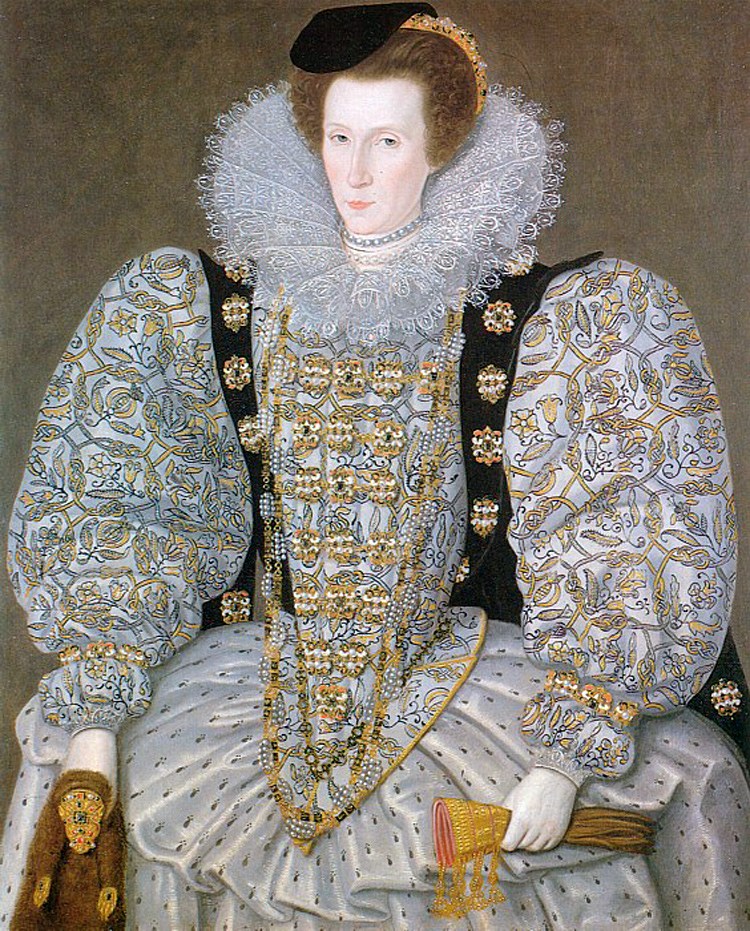
These ones are less creepy, but have the distinction of managing to combine individual elements that are all phenomenally beautiful in their own right (that embroidery on the bodice and sleeves!) into an unabashedly unattractive whole.

Portrait of a Lady, attributed to William Segar, c. 1595

17th century sleeves are a huge improvement in my opinion, from the slim examples of the 1610s:

Marcus Gheeraerts the younger (Flemish artist, 1561-1635) Frances Howard, Countess of Hertford, 1611

To the soft, romantic puffed sleeves of the 1630s:

Queen Henrietta Maria, 1632, Anthony van Dyke

And the fanciful sleeves of the 1660s, like these ones, that look back to early 16th century slashing:

Caspar Netscher (circa 1639—1684), Lady at the Window, 1666, Von der Heydt-Museum

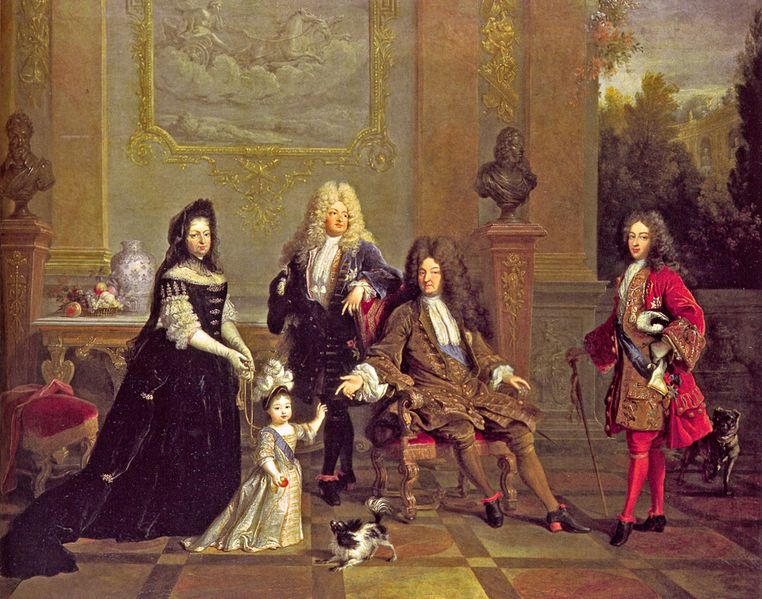
The 18th century did equally beautiful sleeves, like the ruffle trimmed lace sleeves seen on robe de cour, like the ones seen on the governess, and the wide sleeves of men’s justacorps:

Louis XIV and heirs with the royal governess, Formerly attributed to Nicolas de Largillière, now unknown, circa 1710

Or the ones on this Robe Volante, with pleating that equals the back pleats of the loose gown:

Robe Volante, 1720-1735, Musee Galliera de la Mode de la Ville de Paris

Robe Volante, 1720-1735, Musee Galliera de la Mode de la Ville de Paris

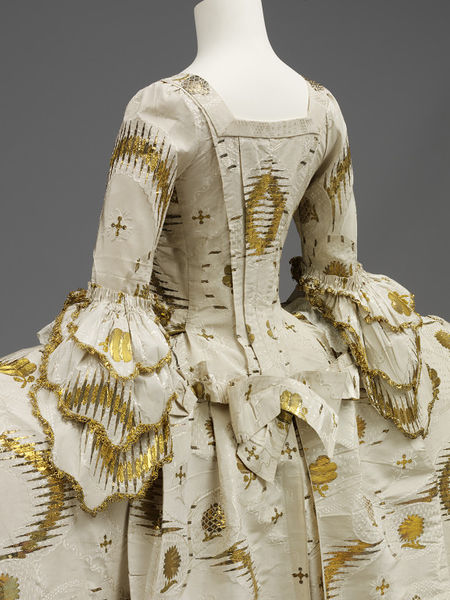
And the classic ruffle-trimmed 3/4 length sleeves that we know from so many mid-century Française and Anglaise, and early mid-century Mantua, like this one:

Mantua, English from French fabric, 1755-1760 from fabric woven between 1753-1755, Silk, silver-gilt thread, linen thread, silk thread, hand-sewn, V&A

The way the 18th century used stripe placement is so fascinating, and it’s particularly obvious on sleeves:

Portrait of a Young Woman Holding Two Roses. Agustín Esteve y Marques, ca. 1790

Early 19th century sleeves carried on construction and design traditions from the 18th century, but added in new inspiration and shapes, including sleeves which referenced classical drapery:

Elisabeth Alexandrovna Stroganoff countess Demidoff (1779-1818) by Robert Lefèvre, ca. 1805 Hermitage Museum St Petersburg

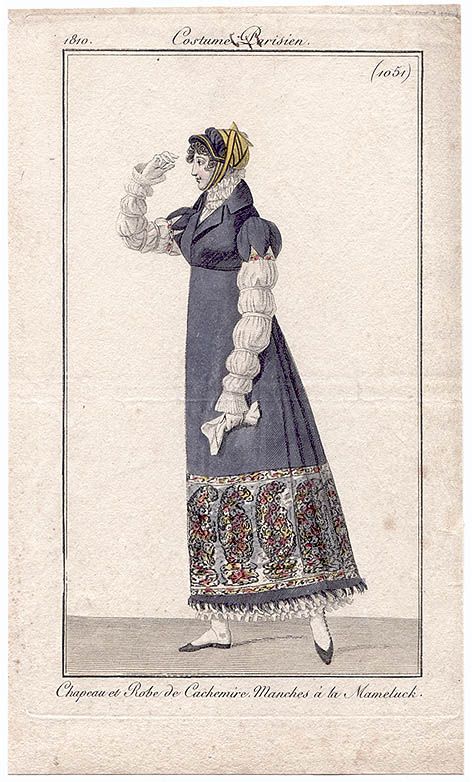
They also looked to the past, and to a variety of ‘exotic’ cultures for inspiration, as seen in these mameluke sleeves, which reference fashions seen in the Ottoman Empire (or at least claim to).

Robe de Cachemir with Mameluke sleeves, 1810

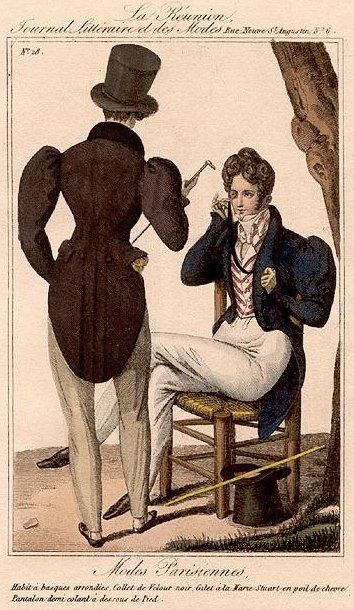
1820s sleeves are pretty much the last time men got to have fun with their sleeve fashions, with puffed sleeves that created an exaggerated, curvaceous silhouette.

Late Regency fashion plate, 1827

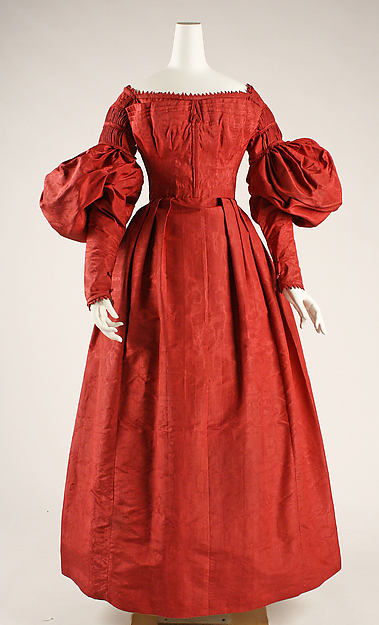
And women’s sleeves of the 1820s & 30s are famously inventive and whimsical (or, simply mad, depending on your perspective):

Dinner or reception dress, ca. 1837, American, silk, Metropolitan Museum of Art, 37.192

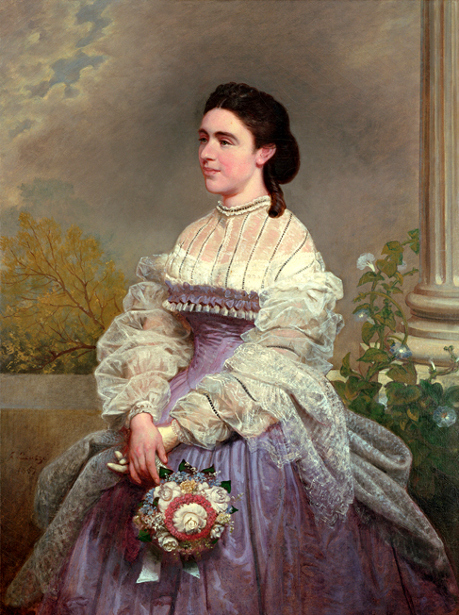
A whole variety of sleeve styles were fashionable in the 1860s, but I quite like the revival of the mameluke, particularly as a sheer blouse:

Frances Adeline ‘Fanny’ Seward by Emanuel Gottlieb Leutze

You can see almost every previous historical period referenced in late Victorian sleeves, like this pair, which use elements of both Renaissance and 18th century sleeve designs:

Reception dress, possibly American, about 1880, Silk velvet trimmed with silk satin and cotton machine lace, MFA Boston, 2007.501

Reception dress, possibly American, about 1880, Silk velvet trimmed with silk satin and cotton machine lace, MFA Boston, 2007.501

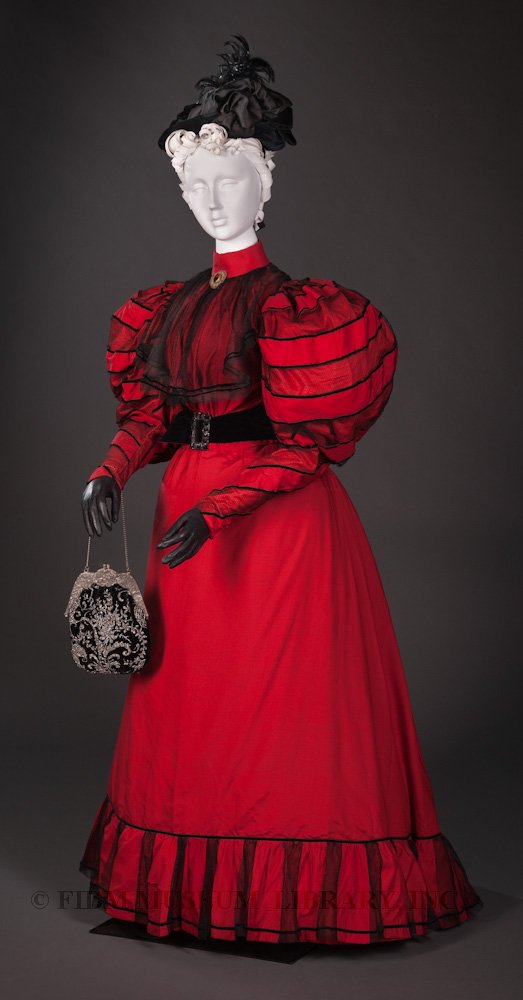
And I couldn’t possible do this post without an example of extremely puffed 1890s sleeves.  I think these might have been a bit much even for Anne:

Woman’s ensemble, 1894-96, Silk, Gift of the Manlove Family, FIDM, S2006.870.22AB

The early 20th century saw a whole range of sleeve innovations which are still being seen in modern fashion, including variations on cut-on sleeves, including kimono sleeves, and Magyar sleeves, like the ones shown here:

Suit, Josefine Hammarbæck (Oslo, Norway)- 1913, silk and cotton, Digitalt Museum

So, happy sleeve sewing!

SaveSave

SaveSave

SaveSave

SaveSave

SaveSave

SaveSave

SaveSave