
I was super excited when Wearing History announced the 1930s Nanette Blouse Pattern, because:
1) it’s adorable, and;
2) I’ve been looking for a ‘girlie’ take on a formal shirt to wear with tails (well, waistcoat and trousers, I usually abandon the tails after 3 minutes), for AGES, and the Nanette Blouse was the perfect design.

I was even more excited when Lauren offered me a review copy. Yay! Free vintage pattern goodness!
So I got the pattern for free. However my opinions on the pattern are totally my own, and not influenced by the free-ness of the pattern.
The Fabric:
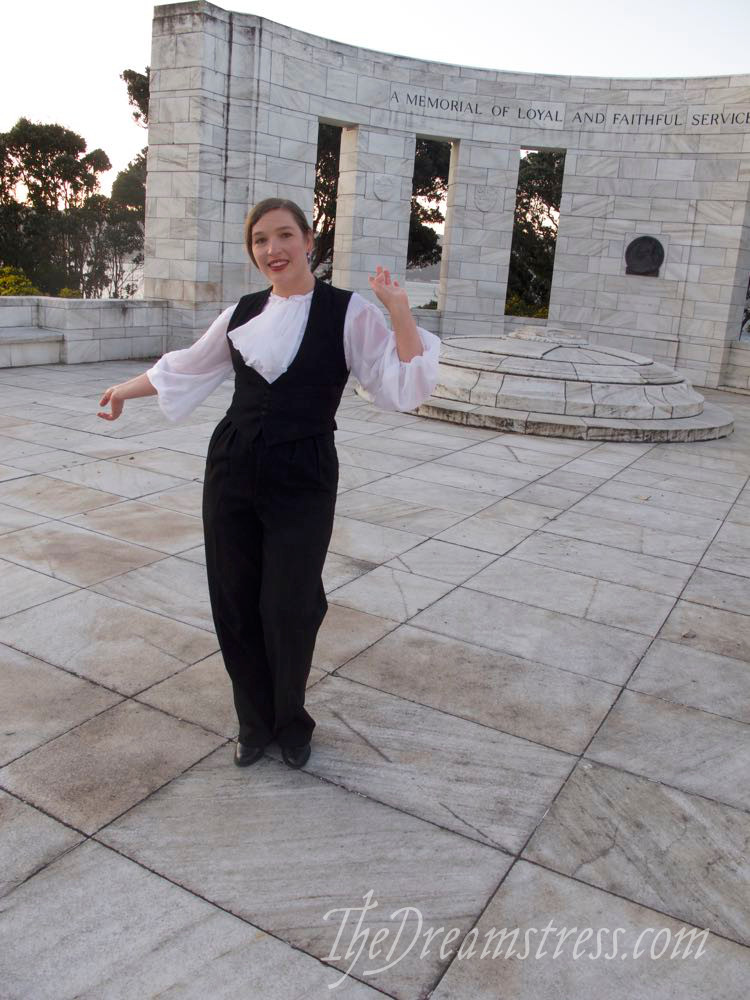
My sewing goal was for my blouse to be ultra-feminine, but also to clearly reference the idea of a formal shirt. I absolutely love the white blouse shown on the cover of the pattern. I wanted to replicate its sheer-sleeve and opaque body effect.
A rummage in my fabric stash unearthed a white silk tissue with a slightly crepe thread, and a subtle stripe effect. It wasn’t an absolutely ideal fabric, but it was the best option I had in stash.
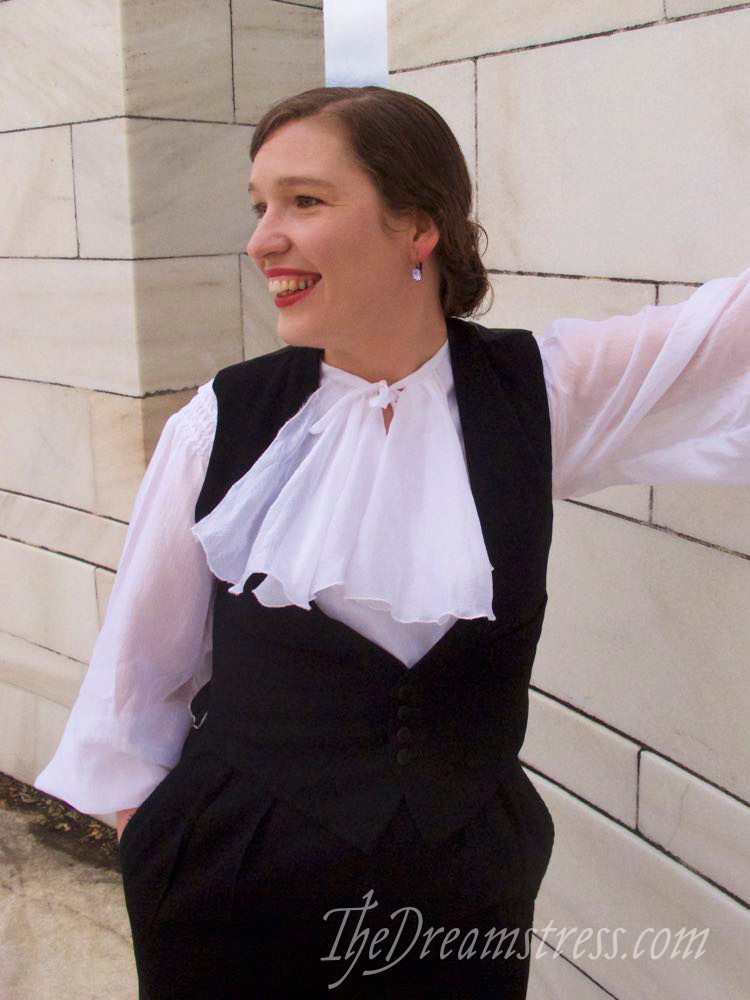
For the opaque body, I used white voile as a flat lining.

The Pattern:
The Nanette Blouse is one of Wearing History’s ‘Resto-Vival’ patterns. This means it starts as an original vintage pattern. The single-sized original is converted to a multi-size pattern. Lauren then updates all the pattern markings for accuracy and clarity, and includes the vintage instructions. Resto-Vival patterns are meant for intermediate-advanced sewers who are familiar with vintage sewing techniques, or are willing to look them up as they go along.
Usually there are no modern instructions with a Resto-Vival Wearing History Pattern. The Nanette is a bit spiffy, and does have additional modern instructions to help with the tricker details. It also has supplements of vintage sewing techniques, such as true picot edging. Finally there are tips on fitting and altering a vintage pattern to a modern body, as the pattern retains the exact fit of the original ’30s pattern it is based on. There are no belt-making instructions, though the pattern is included, so that’s one technique you’d have to look up.
Based on the sizing guide, I made a straight size 38, with no sizing modifications. I did end up making adjustments to the sleeves and armscyes as I sewed (see below).
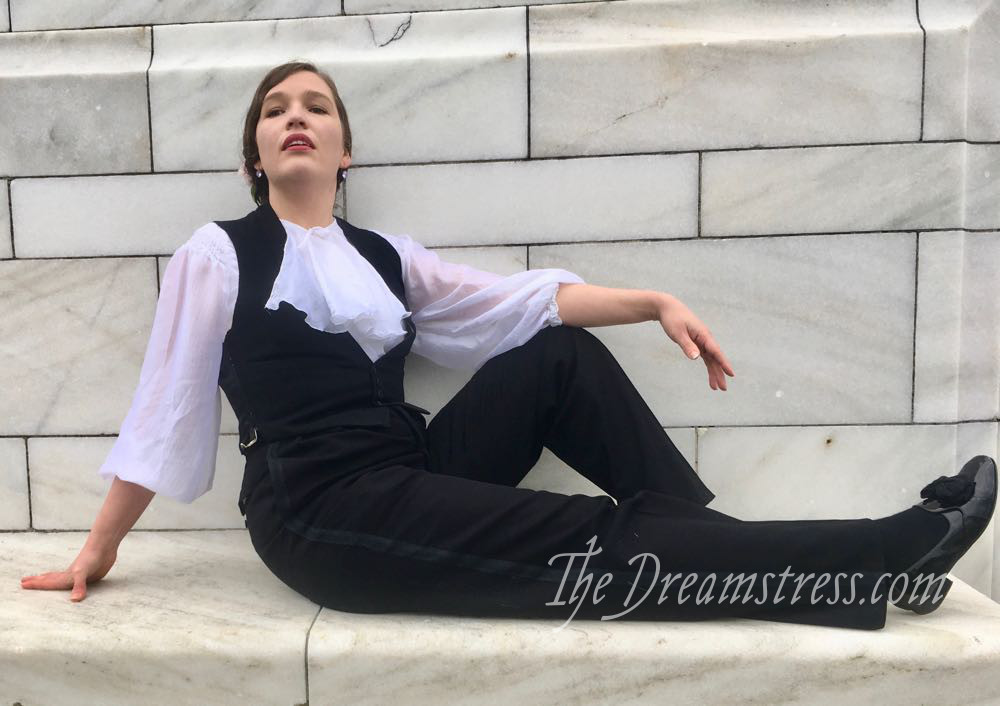
The Sewing:
I ran into a few hiccups as I sewed my blouse. Most of these were caused by the fabric (remember how I mentioned it wasn’t totally ideal?) or me trying to be clever and go off-pattern.
I thought I’d be super smart with the jabot, and just do a faux-picot edge (basically a really tiny zig-zag) on all the raw edges, as the fabric was so fine it didn’t even like doing a rolled hem around curves.
With the edges finished, I tried to fit my jabot to the neckline, and it didn’t match up! It was 1/4″ too big on each matching edge. Cue me grumbling, measuring the original pattern pieces, and trying to figure out what went wrong.
Finally it dawned on me: because I’d done a faux picot, I hadn’t lost the 1/4″ you’d loose in a narrow hem, or a true picot-stitch, where you cut off an edge of the fabric. So I trimmed my jabot pieces down, re-faux-picot hemmed, and it all fit.
Whew!
The only other thing to give me actual trouble were the sleeves. The sleeves in 1930s patterns tend to have LOTS of ease. This pattern, as an exact repro of the vintage fit, was no exception. The shirring lines make the sleeves even harder to measure and fit accurately. To get my fit just the way I wanted I ended up going down two sizes in the sleeves, and lowering the armscye of my pattern.
The lowered armscye is one of the fitting modifications suggested in the pattern, as the original 1930s armhole is very high and tight. I like vintage armholes, but felt that a lowered armhole would look better with my waistcoat.
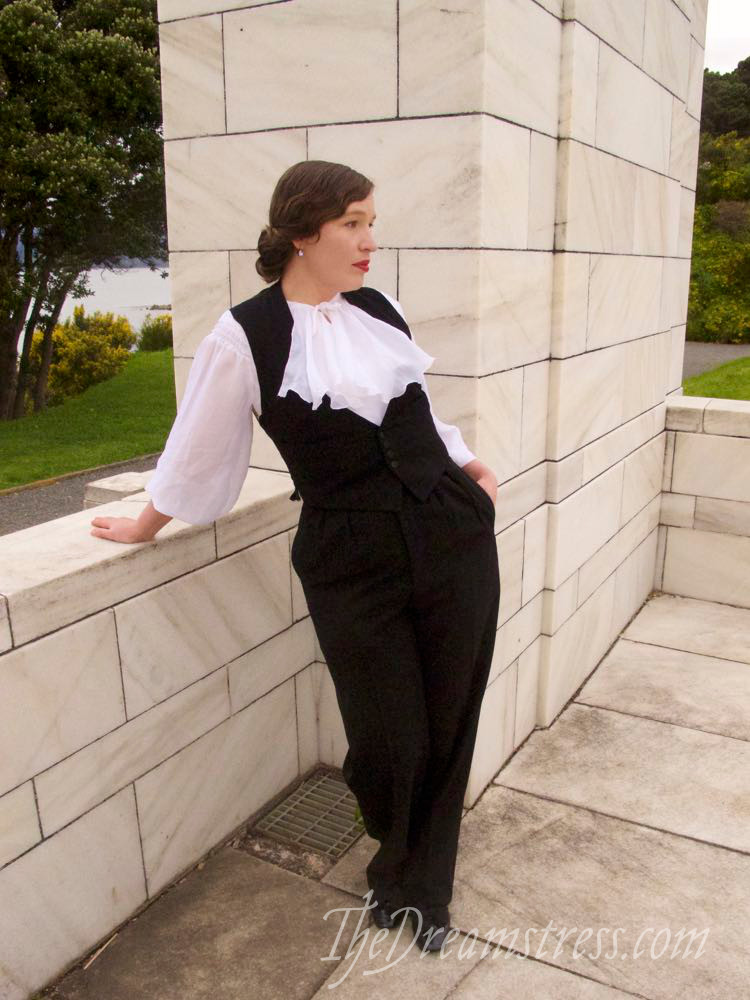
Once I sorted the sleeves, the sewing all went swimmingly. There was only a little bit of muttering about people who chose stupid tricky fabric for all their projects.
I wonder who would do that…
The Verdict:
I love the pattern, and it does EXACTLY what I was hoping: makes a fantastic under for a vintage waistcoat. The sleeves have enough personality to carry the outfit without a jacket, and the jabot is a great nod to a ruffled or pleated front.
The pattern is great for adventurous sewers who want a vintage pattern with just a smidge more help for the modern sewist.
You’ll need to do a bit of fit checking on the sleeves, but other than that, highly recommended!

I think I need a version in white rayon challis, and another in black silk crepe…
I also think that the bodice could easily be attached to a classic ’30s skirt. As a dress, in lightweight wool crepe, it would make the most perfect little black dress. I can see more of these in my wardrobe!

The only problem with the Nanette Blouse is that the jabot blows up and hits my face and gets lipstick marks on it! And I live in a super windy city! Oops!